Showing posts with label Ecology. Show all posts
Showing posts with label Ecology. Show all posts
Thursday, November 13, 2025


Thursday, June 05, 2025
Tuesday, March 21, 2023
Saturday, October 22, 2022
Saturday, June 06, 2020
Tuesday, November 19, 2019
Pope Francis Wants to Add ‘Ecological Sin’ to Catechism
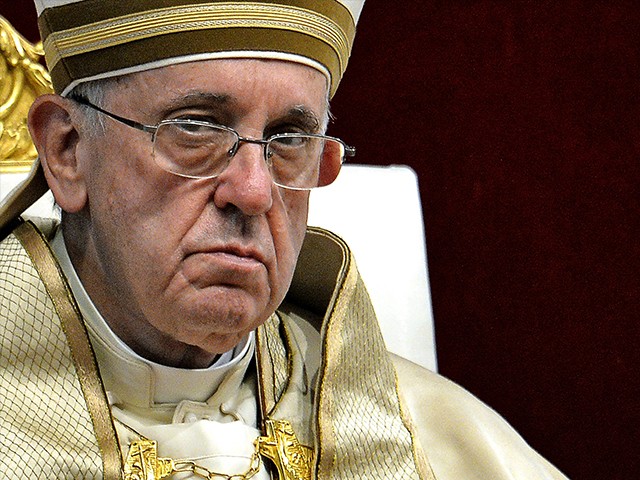
ANDREAS SOLARO/AFP/Getty Images
THOMAS D. WILLIAMS, PH.D. 18 Nov 2019
ROME — Pope Francis told a group of lawyers that he could like to introduce the category of “ecological sin” into official Catholic teaching.
“We must introduce – we are thinking about it – in the Catechism of the Catholic Church the sin against ecology, the ecological sin against the common home, because it is a duty,” the pope said Friday in addressing participants in an international conference on penal law.
More specifically, Francis said, are all those actions that can be considered as “ecocide,” for instance, “the massive contamination of air, land and water resources, the large-scale destruction of flora and fauna, and any action capable of producing an ecological disaster or destroying an ecosystem.”
Ecocide “is to be understood as the loss, damage or destruction of the ecosystems of a given territory, so that its utilization by inhabitants has been or can be seen as severely compromised,” he said, adding that such a sin is “a fifth category of crimes against peace, which should be recognised as such by the international community.”
The pontiff said that such actions are “usually” caused by corporations, and “an elementary sense of justice would require” that they be punished for them.
An ecological sin is “an action or omission against God, against one’s neighbour, the community and the environment,” Francis said, quoting the Fathers of the recently concluded Pan-Amazon Regional Synod. “It is a sin against future generations and is manifested in acts and habits of pollution and destruction of the harmony of the environment, in transgressions against the principles of interdependence and in the breaking of networks of solidarity between creatures.”
Above and beyond its sinfulness, failure to care for the environment is an injustice and a crime, Francis suggested and should be legally enforced. “I would like to appeal to all the leaders and actors in this area to contribute their efforts to ensuring adequate legal protection for our common home,” he said.
THOMAS D. WILLIAMS, PH.D. 18 Nov 2019
ROME — Pope Francis told a group of lawyers that he could like to introduce the category of “ecological sin” into official Catholic teaching.
“We must introduce – we are thinking about it – in the Catechism of the Catholic Church the sin against ecology, the ecological sin against the common home, because it is a duty,” the pope said Friday in addressing participants in an international conference on penal law.
More specifically, Francis said, are all those actions that can be considered as “ecocide,” for instance, “the massive contamination of air, land and water resources, the large-scale destruction of flora and fauna, and any action capable of producing an ecological disaster or destroying an ecosystem.”
Ecocide “is to be understood as the loss, damage or destruction of the ecosystems of a given territory, so that its utilization by inhabitants has been or can be seen as severely compromised,” he said, adding that such a sin is “a fifth category of crimes against peace, which should be recognised as such by the international community.”
The pontiff said that such actions are “usually” caused by corporations, and “an elementary sense of justice would require” that they be punished for them.
An ecological sin is “an action or omission against God, against one’s neighbour, the community and the environment,” Francis said, quoting the Fathers of the recently concluded Pan-Amazon Regional Synod. “It is a sin against future generations and is manifested in acts and habits of pollution and destruction of the harmony of the environment, in transgressions against the principles of interdependence and in the breaking of networks of solidarity between creatures.”
Above and beyond its sinfulness, failure to care for the environment is an injustice and a crime, Francis suggested and should be legally enforced. “I would like to appeal to all the leaders and actors in this area to contribute their efforts to ensuring adequate legal protection for our common home,” he said.
Thursday, October 03, 2019
Wednesday, September 25, 2019
Jesuit Theologian Predicts that ‘Laudato Si’ will become Law in 10 Years or Less
September 25, 2019 by Andy Roman

Dr. Charlie Camosy is part of the Theology Department at Fordham University, a premier Jesuit institution in New York City. [1] He recently published an article in which he stated that our world has around 10 years to “dramatically curb our carbon emissions before we reach a tipping point.” Jesuit professor Dr. Charlie Camosy argues that in “light of this emergency” we must work to “pass dramatic legislation” to prevent the coming climate “disaster.” [2]
What “legislation” is he referring to? He says that the “Green New Deal” being proposed by Democratic politicians has “zero chance” of passing, but he claims that Pope Francis’ Laudato Si encyclical is “far more superior” for “immediate legislative approaches.” In other words, this Jesuit agent is saying that the Pope’s green Sunday law (Laudato Si) is the best solution for the climate crisis and should be legislated right now!
After a lengthy praise and assessment of Laudato Si, Dr. Charlie Camosy says that the Pope’s document is the only answer to all our problems. He also revealed that he believes in about “10 years” or “perhaps even faster” Laudato Si will be embraced through legal enactment. He calls it “life changing legislation,” and compares the Pope’s encyclical to the “power” of changed “hearts” during the legalization of “same-sex marriage.”
Saturday, August 24, 2019
Laudato Si‘: good practices of a spiritual and ecological conversion
LATEST PRESS RELEASES
Webnews, 20/08/2019
In Spring 2019 COMECE and its partners organised the Second European Laudato Si’ Reflection Day to sharpen the view on what is necessary and possible to do in order to facilitate the ecological conversion described in Pope Francis’ Encyclical Letter “Laudato Si’”.

The required conversion is key to maintain «our common home, the Earth», and goes beyond the «spiritual change», also including a change of our lifestyle which is often negatively connoted because it is seen as a «loss of the existing» and not as an «opportunity for something new».
In order to foster this transformation, the discussion held on the reflection day suggested less emphasis on safeguarding the existing wealth in our societies and presented initiatives and projects committing to make this necessary change a reality.
Archbishop Jean-Claude Hollerich SJ, President of COMECE, restated: «We need deep and lasting change towards sustainable lifestyles and bold policy choices that could support these efforts […] A simple "greening" of current economic and production conditions, the productivity gains of digitalization alone will not be enough to meet the challenge of a long- term sustainability policy».
Webnews, 20/08/2019
In Spring 2019 COMECE and its partners organised the Second European Laudato Si’ Reflection Day to sharpen the view on what is necessary and possible to do in order to facilitate the ecological conversion described in Pope Francis’ Encyclical Letter “Laudato Si’”.
The required conversion is key to maintain «our common home, the Earth», and goes beyond the «spiritual change», also including a change of our lifestyle which is often negatively connoted because it is seen as a «loss of the existing» and not as an «opportunity for something new».
In order to foster this transformation, the discussion held on the reflection day suggested less emphasis on safeguarding the existing wealth in our societies and presented initiatives and projects committing to make this necessary change a reality.
Archbishop Jean-Claude Hollerich SJ, President of COMECE, restated: «We need deep and lasting change towards sustainable lifestyles and bold policy choices that could support these efforts […] A simple "greening" of current economic and production conditions, the productivity gains of digitalization alone will not be enough to meet the challenge of a long- term sustainability policy».
Saturday, July 27, 2019
Minnesota churches move to bring ‘Laudato Si” into parish life
Posted on July 24, 2019 by Administrator1

A moose calf walks along a paved road near the entrance of Denali National Park and Preserve in Alaska, June 29, 2019. Pope Francis’ 2015 encyclical “Laudato Si’, on Care for Our Common Home” was widely lauded for its scope on the moral and ethical response to protecting Earth’s environment for future generations. (CNS photo/Sam Lucero, The Compass)
By Dennis Sadowski
Catholic News Service
WASHINGTON (CNS) — Living in rural central Minnesota, JoAnn Braegelman and her neighbors in the Diocese of St. Cloud know that disrespecting the natural resources “right outside our window” would quickly make life very difficult.
It’s imperative, they realize, that the soil be kept healthy so it can continue to produce corn, soy beans and other important crops that have supported farm families for generations.
“Caring for God’s creation has been a part of who I am for really all of my life,” Braegelman, rural life coordinator under the diocesan Catholic Charities system, told Catholic News Service.
While the church has long supported the work of farmers and agricultural workers across the diocese, Braegelman is adopting a new tool in her ministry: Pope Francis’ encyclical “Laudato Si’, on Care for Our Common Home.”
The four-year-old document stresses the integral nature of individual practices, protecting creation and the importance of building relationships with other people, particularly the poor and vulnerable, in order to protect the planet.
Braegelman said she believes the encyclical can be indispensable in her work by giving people the opportunity for study, prayer and discussion so that parishioners can accept the pope’s call to be better stewards of Earth.
“Praying for God’s creation is the greatest pro-life movement there is,” said the member of St. Francis de Sales Parish in Belgrade, Minnesota.
Saturday, June 15, 2019
Pope Tells Oil Execs: The World Needs A “Radical Energy Transition”

Published 1 hour ago
on June 15, 2019
By Sean Louis Salazar

Photo by Ashwin Vaswani on Unsplash
Pope Francis has declared a global “climate emergency” and preach to oil companies executives, pointing out that specific measures are needed to alleviate the problem with rising global temperatures. “The climate crisis requires our decisive action, here and now and the Church is fully committed to playing her part.”
“Time is running out!” Francis said. “Deliberations must go beyond mere exploration of what can be done, and concentrate on what needs to be done. We do not have the luxury of waiting for others to step forward, or of prioritizing short-term economic benefits.”
This is the second year that oil executives have gathered in Rome at the invitation of the Vatican’s Dicastery for Integral Human Development and Notre Dame University’s Mendoza College of Business. The theme of this year’s meeting is “The Energy Transition and Care for our Common Home.”
Attendees of the said event were the CEOs of Royal Dutch Shell, Eni, BP, Repsol, Conoco Phillips, Chevron, ExxonMobil, and executives of investment funds.
The Pope took the opportunity to urge oil executives to find solutions to address the rapidly rising global temperatures. “Faced with a climate emergency, we must take action accordingly, in order to avoid [perpetuating] a brutal act of injustice towards the poor and future generations,” he said. “We must take responsible actions bearing in mind their impact in the short and in the long term,” the Pope added.
Particularly, Pope Francis called for “open, transparent, science-based and standardized” reporting of climate risk and a “radical energy transition.” Furthermore, Francis encouraged the idea of carbon pricing.
“Such a transition involves managing the social and employment impact of the move to a low-carbon society,” Francis said. “If managed well, this transition can generate new jobs, reduce inequality and improve the quality of life for those affected by climate change.”
Carbon pricing is a way for governments to encourage innovations in low-carbon technology by implementing higher taxes or emissions trading schemes. It directly applies the costs of using fossil fuels that cause global warming to consumers. The signatories called for a “combination of policies and carbon pricing mechanisms … designed in a way that simultaneously delivers innovation and investment in low-carbon solutions while assisting those least able to pay”.
Saturday, May 18, 2019
Ontario SDA Earth Day Summit Inspires Thousands To Acknowledge God as Creator & Care for His Planet
Ontario Conference’s Inaugural Earth Day Summit Inspires Thousands To Acknowledge God as Creator and Care for His Planet

Christelle Agboka
Published:
May 12, 2019According to a U.N. report released on May 6, one million plant and animal species are now at risk of extinction.[1] Moreover, four decades after the first Earth Day in 1970, the global population has doubled, we’re emitting 2.4 times more Co2—causing sea levels to rise—and more than 170 animal species have been declared extinct.[2] Only a “transformative change” in how we engage with nature will stall these trends.[3]
Enter the 2019 Earth Day Summit, held on April 21, in Mississuaga, Ontario, Canada. During this inaugural event, thousands of guests, many who are not Adventist, interacted with nearly 50 colorful booths on topics as varied as the incredible immune system, the marvel of the brain, the intelligently designed smile, pollution on campus, the creative complexity of the human body, the theology of recycling, gardening and more. Themed “His Creation, Ours to Care For,” the event gathered a broad spectrum of visitors of all ages, religious backgrounds, ethnicities, and walks of life.
The initiative was realized by Mansfield Edwards, president of Ontario Conference of the Seventh-day Adventist Church. In 2017, Edwards envisioned an Earth Day event that would offer ways to combat these stats and speak to the nearly 50 percent of 18–29 year-olds who believe the Church is anti-science.[4] There, leading scientists and theologians would share evidence for the biblical creation account while emphasizing our responsibility to care for the earth created for us.
“It’s all about being relevant in our society, considering the input of biblically sound stewardship strategies to climate change,” said Ontario Conference president Mansfield Edwards, as quoted from an Adventist Review article on the event. “I am convinced Seventh-day Adventists should be among the leading promoters of Earth Day as stewards of God’s creation.”
Saturday, April 20, 2019
Saturday, February 09, 2019
Davos 2019 - A New Deal for Nature
Davos 2019 - A New Deal for Nature

Globally, nature provides services worth around $125 trillion a year. Yet, the world is set to witness a two-thirds decline in wildlife populations over the half-century from 1970 to 2020. With time running out on international agreements, how can business and government come together to deliver on targets for climate, oceans and conservation?
On the Forum Agenda:
- Leveraging green financial products to mitigate environmental risks
- Harnessing technology for resource management
- Advancing a systemic policies for environmental challenges
Speakers:
- Carlos Alvarado Quesada, President of Costa Rica.
- Svein Tore Holsether, President and Chief Executive Officer, Yara International, Norway.
- Cristiana Pasca Palmer, Executive Secretary, Convention on Biological Diversity, Montreal.
- Feike Sybesma, Chief Executive Officer and Chairman of the Managing Board, Royal DSM, Netherlands.
- Peter Thomson, United Nations Secretary-General's Special Envoy for the Ocean, New York.
Closing Remarks by:
- Xie Zhenhua, Special Representative for Climate Change Affairs of the People's Republic of China.
Moderated by:
- Thomas L. Friedman, Columnist, Foreign Affairs, New York Times, USA.
http://www.weforum.org/
Saturday, October 06, 2018
'The ecological revolution will be spiritual'
Laudato si’ is an incredible encyclical, magnificent, with a revolutionary tone, says noted environmentalist, activist, journalist and photographer
Loup Besmond de Senneville
France
October 6, 2018

Yann Arthus-Bertrand (Photo by Palau Robert)
Yann Arthus-Bertrand is a committed photographer, journalist and documentary maker. He welcomes Laudato si’ as a “revolutionary” text.
"It’s a revolution that is done by recalling ethical, moral values, by practicing humanism," he told Loup Besmond de Senneville in an interview.
Loup Besmond de Senneville: What made you decide to preface and illustrate Laudato si’, the encyclical by Pope Francis, in this new edition to be published on Nov. 14?
Yann Arthus-Bertrand: This project was conceived in Brazzaville, in the Republic of Congo, where I met leaders of a Catholic endowment fund that owns Editions Première Partie.
At the time, I was looking for a way to finance an orphanage that I support, and that’s how I proposed to illustrate Pope Francis’ text and contribute the rights for this book to the orphanage.
It’s an incredible encyclical, magnificent, with a revolutionary tone. I’m thinking, for example, of what he wrote on the ecology, war or capitalism: it’s really an otherworldly text that has had an incredible impact on ecological milieus.
He did not pull any punches. On the other hand, I’m sorry it’s not easier to read.
It’s great that the pope is able to tell us that capitalism is destroying the planet. I’m convinced that ecology needs to be more humanistic today, and that’s why this text is so very powerful.
As a matter of fact, all the ecologists know it. As an activist, I see it as my role to help and push everything that’s going in the right direction.
Unfortunately, today we are seeing a type of resignation whereas the world is collapsing. However, spirituality can help us to become aware, once more, of what we are witnessing. Unfortunately, that’s not really the case with politics.
Saturday, July 28, 2018
Pope’s Message for International Conference of Catholic Theological Ethics in the World Church in Sarajevo
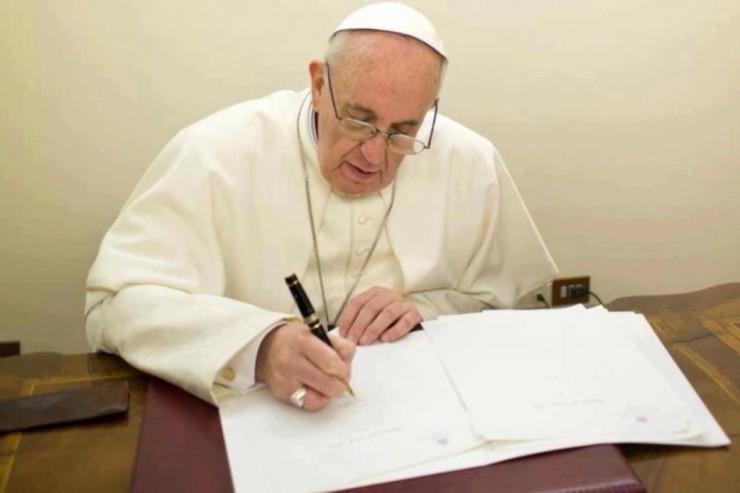
‘You yourselves will learn ever better how to be faithful to the word of God which challenges us in history, and to show solidarity with the world, which you are not called to judge but rather to offer new paths, accompany journeys, bind hurts and shore up weakness’
July 27, 2018 13:18
Here is a Vatican translation of the message Pope Francis sent for the opening of the III International Conference of Catholic Theological Ethics in the World Church held in Sarajevo, Bosnia and Herzegovina, July 26-29, 2018 on theme “A Critical Time for Bridge-Building: Catholic Theological Ethics Today”:
***
Dear Brothers and Sisters!
I greet all you taking part in this, your third worldwide conference on theological ethics. It takes place in Sarajevo, a city of great symbolic value for the journey of reconciliation and peacemaking after the horrors of a recent war that brought so much suffering to the people of that region.
Sarajevo is a city of bridges. Your meeting is inspired by this dominant motif, which warns of the need to build, in an environment of tension and division, new paths of closeness between peoples, cultures, religions, visions of life and political orientations. I have appreciated this effort of yours from the beginning, when the members of your planning committee visited me in the Vatican last March.
The theme of your meeting is one to which I myself have often called attention: the need to build bridges, not walls. I keep repeating this in the lively hope that people everywhere will pay attention to this need that is increasingly acknowledged, albeit at times resisted by fear and forms of regression. Without renouncing prudence, we are called to recognize every sign and mobilize all our energy in order to remove the walls of division and to build bridges of fraternity everywhere in the world.
The three focal points of your meeting intersect along this journey of bridge building in a critical time like our own. You have given a central place to the ecological challenge, since certain of its aspects can create grave imbalances not only in terms of the relationship between man and nature, but also between generations and peoples. This challenge – as it emerges from the Encyclical Laudato Si’ – is not simply one of many, but the broader backdrop for an understanding of both ecological ethics and social ethics. For this reason, your concern for the issue of migrants and refugees is very serious and provokes a metanoia that can foster ethical and theological reflection, even before inspiring suitable pastoral attitudes and responsible and carefully planned political policies.
Saturday, July 14, 2018
Jesuits announce major new research institute at Campion Hall
Press release 2nd July 2018

The Jesuits in Britain are pleased to announce that a new research institute called the Laudato Si’ Institute (LSI) is being established at Campion Hall, the Jesuit permanent private hall of the University of Oxford. The LSI will be established during the academic year 2018-2019 and will formally open in September 2019.
The aim of the Laudato Si’ Institute is to foster interdisciplinary research arising out of the intellectual challenges presented most vividly in Pope Francis’ encyclical letter Laudato Si’, while being faithful to Ignatian traditions and reflective practice.
The premise of Laudato Si’ is that the crumbling of the earth’s fabric, largely through human activity, is ultimately devastating for humanity and other creatures, particularly the poorest communities on earth. In contemporary Western thought, academic disciplines are often treated by specialists in isolation, so that the interrelationships between different social, ecological, technological, political, economic, philosophical and religious issues are obscured. The Laudato Si’ Institute will comprise: -
(1) An ambitious research programme using a dialogical method that enlists philosophical, ethical and theological insights as well as scholarly research in the natural and social sciences.
(2) A global network of allied activities inspired by Laudato Si’ in order to foster international collaboration and link scholarship across different global cultures and contexts.
The Laudato Si’ Institute will be informed by and act as a resource for allied educational initiatives of the Jesuits in Britain and elsewhere. It will also engage with scholars in other faith traditions as relevant to its research themes.
Its overall mission is to contribute to the intellectual basis for individual and structural transformation towards an ecological conversion at the levels of individuals, communities, public policy and governance.
Professor Celia Deane-Drummond, currently Professor of Theology and Director of the Center for Theology, Science and Human Flourishing at the University of Notre Dame, USA, will be the inaugural Director of the Institute.
Fr Damian Howard SJ, Jesuit provincial, welcomed the announcement, saying, “As Jesuits, we are dutybound to seek out new intellectual frontiers and to bring to them the light of the Gospel. I am delighted that Professor Deane-Drummond has agreed to take on the role of Director of the new Laudato Si’ Institute. The intellectual and spiritual exploration of Pope Francis’ teaching in Laudato Si’ is vitally important work for the future of humanity. I look forward with great excitement to seeing how the work of the Institute unfolds.”
Professor Deane-Drummond said, “When Pope Francis released his encyclical Laudato Si' in June of 2015, I knew a fresh, invigorating wind of change was blowing through the Church. For the first time in the Church's history, environmental scientists, conservationists and anthropologists, whether they were believers or not, woke up and listened. The challenge for those of us who have been working at the boundary of ecology, philosophy and theology for the last quarter century is to discern how to implement and work out with intellectual rigor the message of Laudato Si', and use that as a basis for deeper individual and societal ecological conversion. I consider it a great privilege and honour to have been given the opportunity to direct this new initiative.”
Professor Deane-Drummond, currently Director of the Center for Theology, Science and Human Flourishing at the University of Notre Dame, USA, is a theologian who has professional experience in academic science and has two doctorates in plant physiology and systematic theology. She has a well-established track record in publishing in science, theology, environmental ethics and at the intersection between theology and the natural sciences. Professor Deane-Drummond has also served as Chair of the European Forum for the Study of Religion and Environment from 2011-2018. Her most recent books include A Primer in Ecotheology: Theology for a Fragile Earth (2017) and Theology and Ecology Across the Disciplines: On Care for Our Common Home (2018).
2 July 2018
For further information contact Jane Hellings, Director of Development & Communications jhellings@jesuit.org.uk 07736 151323
Source
Thursday, March 22, 2018
Friday, September 15, 2017
The UN Ocean Conference: an important step for humanity in motion
The first-ever United Nations summit on oceans took place in June. It represents a major turning point in mobilising the international community to act to protect marine life, especially in the high seas.

Immensity, ignorance and delusion
When you look at the sea, you see waves, light effects and colour. You are captivated by the enormousness of the ocean: 70.8% of our planet’s surface is covered by ocean. Yet below this surface there is an extraordinary volume which has an average depth of 3.7 kilometres.
The bio-habitable volume of the ocean is 300 times greater than that of terrestrial habitats.
Knowledge of the ocean still remains incomplete. We know more about lunar landscape than we do about the ocean bed. We think that 91% of oceanic life remains to be discovered. We have for a long time believed, or have wanted to believe that the effects of human activity would be diluted in the immensity of the marine environment.
Waking up
Collective awakening is slow. Gradually, as catastrophies follow one after another, humanity is becoming aware of the effects of its unconsciousness. It was only after the apparent eradication of whales in the North Atlantic that the international community brought into force the International Whaling Commission in 1948.
The story is repeated in terms of oil slicks and so many other forms of overexploitation. With a great deal of hindsight, humanity is slowly learning to behave in an adult-fashion in relation to the ocean: it is a slow and tedious process along which humanity does not advance in a straight line.
The Encyclical Laudato Si’ asks the question ‘Who has transformed the marvellous marine world into an under-water cemetery deprived of life and colour?’ (LS, §41). It’s time to read the Encyclical again.
On the epistemological level, we have since 1950 been witnessing the emergence and the construction of oceanographic science in all its multidisciplinary complexity. On the economic level, the utmost exploitation, masterfully filmed by Yann Arthus-Bertrand (Ocean Planet, 2012) is no longer the model to follow. Alternative paths are emerging. Protected marine areas could form 10% of the ocean in 2020 (in 1993 it was a mere 0.3%), the vast majority of them located in waters falling under national jurisdictions. On the regulatory level, the United Nations took 30 years to negotiate the United Nations Convention of the Law of the Sea (UNCLOS) signed at Montego Bay in 1982, and diplomats aim to supplement measures in the area in which regulation is most lacking, namely the management of the high seas. In terms of living together, access to and sharing resources from the sea crystallises deep tension among individual interests; tackling these tensions and seeking the common good constitutes an immense challenge.
On the ontological level, more and more voices are calling for another relationship to the ocean. We are all members and stewards of creation. The ocean is the source of life on earth. Our responsibility for the ocean stems from our human condition.
Subscribe to:
Posts (Atom)