Showing posts with label Covid 19. Show all posts
Showing posts with label Covid 19. Show all posts
Tuesday, August 11, 2026


Saturday, August 01, 2026
Fauci’s 5th Frenzy: 111 Refusals on Capitol Hill
July 30, 2026 NewsHound
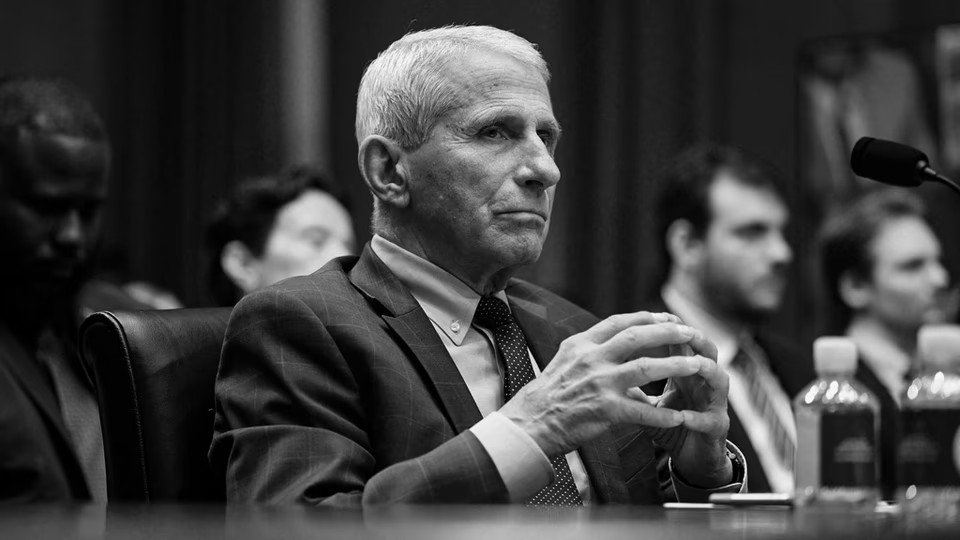
Dr. Anthony Fauci’s July 29, 2026, appearance before the Senate Homeland Security and Governmental Affairs Committee, chaired by Sen. Rand Paul, was a contentious spectacle marked by his repeated invocation of the Fifth Amendment.
The 85-year-old former NIAID director, subpoenaed after declining voluntary testimony, opened by accusing Paul of an “obvious obsession” and “unhinged” campaign aimed at putting him “behind bars.” He cited Paul’s prior calls for prosecution, critical comments, and the recent public release of Fauci’s unredacted personal diary. On advice of counsel, he then declined nearly every question—invoking the Fifth roughly 111 times (reports range from over 100 to about 115)—with the fixed reply that he declined based on his constitutional rights against self-incrimination.
Compounding the optics was the preemptive “full and unconditional” pardon Biden granted Fauci on January 19, 2025—his final full day in office—covering any potential offenses from 2014 tied to his government service. That document was executed via autopen, the mechanical signature device, amid later revelations that White House staff (including then-Chief of Staff Jeff Zients) authorized its use after late-night meetings, with limited contemporaneous evidence of Biden’s direct personal review of every name. Critics have hammered the process as a last-minute shield that bypassed traditional accountability, raising unresolved questions about presidential intent and validity even as Biden insisted he made the decisions and that autopen use is longstanding and legal. The pardon did not cover potential new perjury or obstruction from this hearing itself, leaving Fauci still vulnerable and the Fifth as his remaining fortress.
Questions covered long-disputed topics: NIH funding related to gain-of-function research, the Wuhan lab and COVID-19 origins, pandemic response decisions, diary entries, and even trivial probes (tie color, carpet color) meant to test the scope of the privilege. Fauci answered no questions substantively. One of his attorneys was ejected after attempting to interject. Paul and other Republicans expressed frustration, warned of obstruction consequences, and signaled plans for a contempt-of-Congress vote, arguing the prior Biden preemptive pardon (covering actions through early 2025) limited the privilege’s applicability to new testimony risks such as perjury.
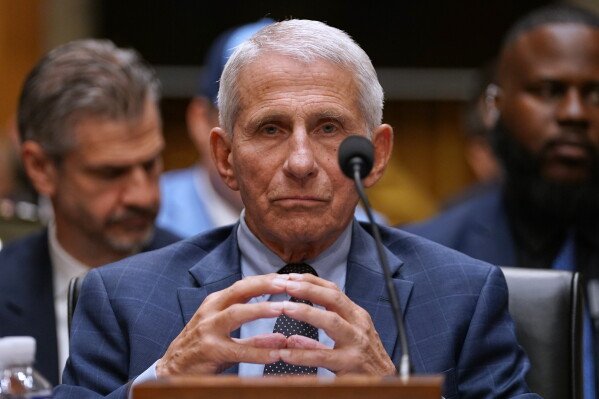
Fauci framed the hearing as a political trap rather than legitimate oversight, noting his extensive prior congressional appearances without invoking the Fifth. Supporters of the inquiry viewed the blanket silence as obstructive and damaging to accountability on pandemic policy and research. Critics of the proceedings saw it as a partisan exercise unlikely to yield new facts given the adversarial history between Paul and Fauci. The session produced no substantive answers, amplified existing divides over COVID origins and handling, and left legal questions (contempt, the interplay of pardon and privilege) for further process. It underscored how polarized the residual debates remain, 5-6 years later.
[BREAKING: Florida Attorney General James Uthmeier is sending a plane to Washington DC to obtain mountains of evidence against Dr. Fauci so a state-level case can be brought — CIRCUMVENTING the pardon]
Wednesday, July 29, 2026
Dr. Fauci Predicted a Pandemic Under Trump in 2017 | NowThis
Dr. Fauci Predicted a Pandemic Under Trump in 2017 | NowThis
NowThis Impact
May 18, 2020
‘There will be a challenge to the coming administration in the arena of infectious diseases.’ — Watch Dr. Anthony Fauci predict a pandemic under the Trump admin back in 2017.\
Transcript:
0:48
also there will be a surprise outbreak
0:51
and I hope by the end of my relatively
0:53
short presentation you will understand
---------------------------
NOTE:
The 2017 Speech
- The Event: Dr. Fauci spoke on January 10, 2017, at a Georgetown University Medical Center symposium on pandemic preparedness.
- The Quote: He stated, "There is no question that there will be a challenge to the coming administration in the arena of infectious diseases... we're extraordinarily confident that we are going to see this in the next few years."
Fauci journals prove he funded research that created COVID-19, biologist says | Elizabeth Vargas Rep
Fauci journals prove he funded research that created COVID-19, biologist says | Elizabeth Vargas Rep
NewsNation
Jul 29, 2026 #VargasReports
Dr. Anthony Fauci is set to appear on Capitol Hill on Wednesday after being subpoenaed to testify about the origins of COVID-19. Dr. Richard Ebright, a professor of biology at Rutgers, has testified on this issue before, and tells NewsNation's Rich McHugh that the recent pages from Fauci's private journals are beyond damning.
Tuesday, July 28, 2026
Meet The Republicans Who Sided With Anthony Fauci To Shut Down The Country
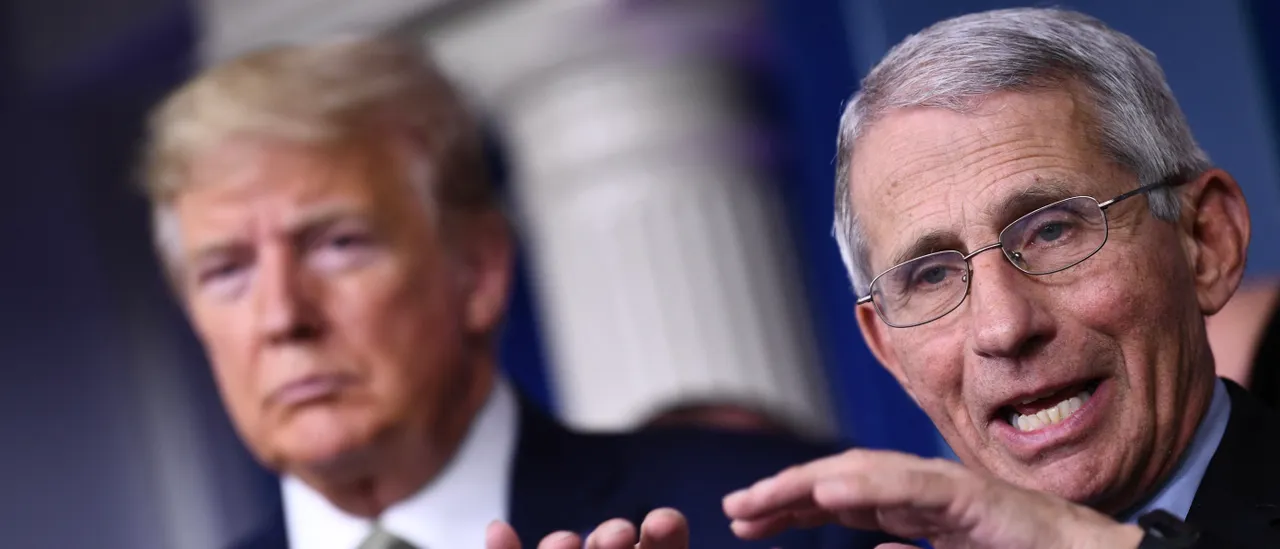
(Photo by BRENDAN SMIALOWSKI/AFP via Getty Images)
Derek VanBuskirk Reporter
July 27, 20266:10 PM ET
Republican Kentucky Sen. Rand Paul released Dr. Anthony Fauci’s personal diary Sunday, offering a behind-the-scenes look at the first Trump administration officials who aligned with Fauci as the country shut down during COVID-19.
The diary entries portray an administration divided over lockdowns, school closures and messaging, with several Republican officials backing the National Institute of Allergy and Infectious Diseases director’s efforts to maintain sweeping public health restrictions while sidelining dissenting voices. (RELATED: Fauci’s Own Diary Undercuts His Public Dismissal Of COVID Lab Leak)
One of the officials who backed the public health bureaucrat was Hope Hicks, a counselor to the president and former White House communications director, whom Fauci described as “very nice” after their first meeting in March 2020.
Fauci soon wrote that Hicks appeared to view him as a “future ally” after seeming uncomfortable with Trump’s desire for the COVID-19 team to hold two press briefings a day to boost morale and the economy through public transparency.
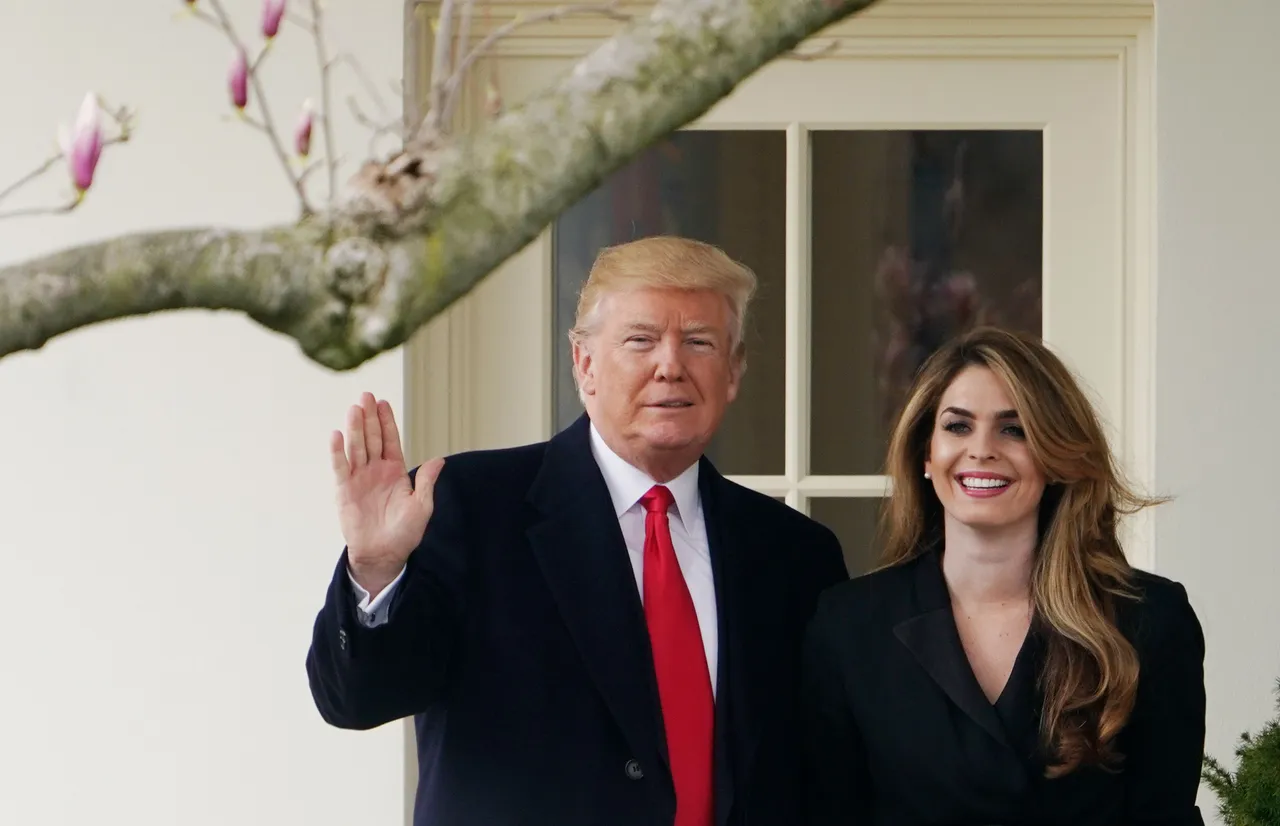
By early April, as Easter approached, Trump had grown increasingly frustrated with the continued shutdown of the economy and the country, calling Hicks and Fauci into the Oval Office to discuss reopening. Fauci wrote that Trump was “almost pleading” not to extend the country’s closure beyond the 30-day lockdown extension.
According to Fauci, Trump said he was destroying the country and that sports leagues and industry would be devastated by the administration’s recommendations.
In an attempt to appeal to Fauci’s Catholic background, Trump proposed reopening the country for Easter, Good Friday and Palm Sunday, suggesting that Masses could be held outdoors or in a drive-in format, but Fauci said he wasn’t persuaded by the president’s recommendation.
“Hope Hicks and I convinced him to essentially put Easter on hold for this year,” Fauci wrote.
By early October, Fauci wrote in bold red letters that “Hope Hicks is infected!!!”
Saturday, May 30, 2026
Trump’s EEOC goes after another company that required vaccines
NewsJeff Brumley | May 28, 2026
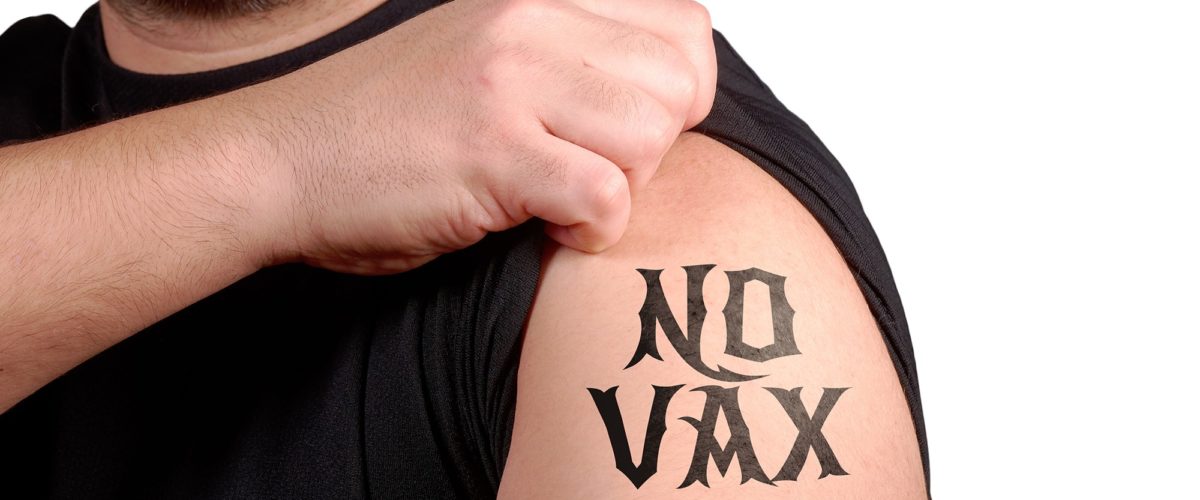
(Shutterstock)
An Oklahoma company has agreed to settle a federal religious and disability discrimination lawsuit stemming from its firing of unvaccinated employees during the pandemic, the U.S. Equal Employment Opportunity Commission announced.
AG Equipment Co. in Broken Arrow will pay $4.2 million to more than 40 workers terminated due to its 2021 mandate that all employees, without exception, had to receive COVID-19 vaccinations, EEOC said May 18.
The situation dates back to 2021 when the COVID-19 pandemic was sowing divisions in the U.S. over issues such as sheltering in place and vaccines. Many white evangelical churches were openly defiant in resisting government-led public health measures.
EEOC has redoubled its focus on “religious liberty” cases since President Donald Trump returned to office, resulting in at least 16 religious discrimination cases — many of them COVID related — and the recovery of $67 million.
In fall 2021, AG Equipment Co. required all employees to receive COVID-19 vaccinations. In response, several workers requested exemptions based on religious reasons and one provided a doctor’s note asking for an accommodation because of a medical condition, EEOC said.
However, the company refused to consider the requests and on Oct. 21 that year fired all those who had requested the exemptions in addition to anyone else who didn’t show proof of vaccination.
“When these workers asked for a simple religious accommodation, the company didn’t pause to listen or even consider the impact,” said Patrick J. Holman, trial attorney for EEOC’s Oklahoma City area office. “It fired every one of them outright — without a conversation and without any real inquiry into whether granting an accommodation would have caused the business any hardship at all. This is unlawful as well as unfair.”
The lawsuit said the company’s conduct violated Title VII of the 1964 Civil Rights Act, which bans discrimination based on faith and disability. In addition to the financial compensation in consent decree ending the litigation, the company must train managers in Title VII compliance and inform employees of their right to religious and disability accommodations.
“Where an accommodation can be provided without undue hardship, the law requires it — the pandemic did not exempt employers from their legal obligations under Title VII and the ADA,” EEOC Chair Andrea Lucas said. “The EEOC under my leadership will continue to hold employers accountable, deliver meaningful results, and restore dignity to American workers harmed by widespread COVID-19 vaccine-related civil rights violations.”
In March, the agency announced a $15 million conciliation agreement with an unnamed global technology company. “In its investigation, the EEOC found reasonable cause to believe that the company discriminated against a class of employees on the basis of religion and disability by denying their COVID-19 vaccine exemption requests and terminating employees who declined to receive vaccines.”
And Northwestern Medicine, a health care system in Chicago, agreed to pay $325,000 to employees who were denied vaccine exemptions based on religious beliefs dating back to November 2023, EEOC said May 26.
Friday, May 22, 2026
Hantavirus sparks fear, questions for some students in post-COVID world
By Kate Perez and Allison Kiehl Chicago Tribune (TNS)
May 21, 2026
A passenger of the hantavirus-stricken cruise ship MV Hondius is pictured while leaving by military bus after disembarking in the port of Granadilla de Abona on the island of Tenerife in Spain’s Canary Islands on May 11. Adverse weather conditions forced the cruise ship MV Hondius hit by a deadly hantavirus outbreak and anchored off Spain’s Canary Islands to dock before evacuations can be completed, the health ministry said.Jorge Guerrero / AFP
CHICAGO — Brooke Loughman knows that when she opens a social media app, she’ll be flooded with posts, whether she wants to see them or not. Lately, the first-year DePaul University student has found herself scrolling quickly through her feed, trying to avoid information about hantavirus and the wave of anxiety she experiences thinking about the possibility of another pandemic like COVID-19.
“If it is going to be a really big deal, I would rather not prematurely freak out, because if it is going to be like a COVID-19 scale thing again, I’d rather have some sense of normalcy for as long as I can,” said Loughman, who is 19.
Loughman’s thoughts are echoed by students scarred by living through the coronavirus pandemic.
The fresh mix of news and misinformation about hantavirus on social media is stirring up negative emotions for some young people, carried over from living on lockdown. COVID-era anxiety can linger and resurface, even more than half a decade after the pandemic, mental health experts say. The unknowns of a new virus outbreak, coupled with an influx of sometimes unreliable information, can generate fear, dread and anxiety.
In other words, the aftereffects of COVID-19 are still present, according to Tara Leytham Powell, an associate professor of social work at the University of Illinois Urbana-Champaign. “All the impacts of that, the loss of income, the social isolation, the fear of the illness, all those things still exist in people’s minds,” Powell, who is currently researching COVID’s lasting impacts on mental health.
Wednesday, May 13, 2026
Saturday, May 09, 2026
Sunday, May 03, 2026
Pressure on DOJ to prosecute Anthony Fauci grows after adviser indicted—with days left to charge COVID ‘lies’
By
Steven Nelson
Published April 28, 2026, 6:41 p.m. ET
WASHINGTON — The indictment of Dr. Anthony Fauci’s former adviser David Morens Tuesday revived calls for the Justice Department to prosecute Fauci himself for allegedly lying to Congress about funding risky research in China before the COVID-19 pandemic.
Just two weeks remain before the five-year legal deadline on May 11 to indict Fauci for denying under oath that he funded “gain of function” experiments that modified bat coronaviruses in the same city where the pandemic started.
Morens, 78, was charged with one count of conspiracy, two counts of destruction, alteration, or falsification of records in federal investigations and two counts of concealment, removal, or mutilation of records relating to the origins of COVID-19. He faces up to 51 years in prison.

Dr. Anthony Fauci allegedly lied to Congress in 2021 about funding gain of function research.Getty Images
Critics say Fauci, 85, bears the most responsibility and that he should be hauled into court.
Trump told The Post in a phone interview on March 31 that he intended to “look into” Fauci’s status and Republicans say they believe acting attorney general Todd Blanche, who is seeking the role permanently, might be willing to test Trump’s assertion that former President Joe Biden’s preemptive autopen pardons, including for Fauci, are invalid.
“99% of this country has no idea who Morens is,” said Oversight Project President Mike Howell.
“It’s Fauci that they will blame for one of the worst government catastrophes in history in America. And so the test is Fauci. The Morens indictment is great, and we applaud it. But there are a lot of people out there that want to see Fauci held to account for the damage he wrought.”
Howell, whose group sent the Justice Department a draft indictment for Morens last year, believes the adviser’s actions were closely linked to his boss.
“[Fauci] lied about one of the most damaging events in American history routinely and was behind a massive coverup of the key factors,” Howell said.
Sen. Rand Paul (R-Ky.), to whom Fauci allegedly lied, told The Post that “we’ve been looking through a lot of information on this for the last year or so. The Trump administration has been much more forthcoming than the Biden administration ever was.”
Critics say Fauci, 85, bears the most responsibility and that he should be hauled into court.
Trump told The Post in a phone interview on March 31 that he intended to “look into” Fauci’s status and Republicans say they believe acting attorney general Todd Blanche, who is seeking the role permanently, might be willing to test Trump’s assertion that former President Joe Biden’s preemptive autopen pardons, including for Fauci, are invalid.
“99% of this country has no idea who Morens is,” said Oversight Project President Mike Howell.
“It’s Fauci that they will blame for one of the worst government catastrophes in history in America. And so the test is Fauci. The Morens indictment is great, and we applaud it. But there are a lot of people out there that want to see Fauci held to account for the damage he wrought.”
Howell, whose group sent the Justice Department a draft indictment for Morens last year, believes the adviser’s actions were closely linked to his boss.
“[Fauci] lied about one of the most damaging events in American history routinely and was behind a massive coverup of the key factors,” Howell said.
Sen. Rand Paul (R-Ky.), to whom Fauci allegedly lied, told The Post that “we’ve been looking through a lot of information on this for the last year or so. The Trump administration has been much more forthcoming than the Biden administration ever was.”
Thursday, March 19, 2026
Is Government Really Killing Us? Connecting the Dots
Is Government Really Killing Us? Connecting the Dots

Liberty Sentinel by Alex Newman
Mar 19, 2026
Government policy on everything from healthcare to geopolitics may kill you. Indeed, evidence is mounting that Western governments, duty-bound to punish evil and protect citizens’ God-given rights, are instead advancing the opposite — often with deadly consequences.
In this explosive episode of The Sentinel Report, Alex Newman connects the dots of government-sanctioned harm. From the COVID vaccine regime pushed by the Deep State to geopolitical tension in the Strait of Hormuz that could devastate global supply chains and the food supply, the same Insiders are willing to gamble with human life to consolidate power.
Perhaps most chilling is the personal story of Scott Schara, whose daughter died in a hospital after being subjected to government-approved COVID protocols. Schara, who just released the new book “Is the Government Legally Killing Us?” launched a groundbreaking legal battle seeking accountability from the medical establishment and the system that enabled it.
In this must-watch interview, Schara reveals shocking details about what happened and why you or your loved ones could be next. Americans must wake up to the dangers posed by a system that increasingly treats citizens as expendable, or the carnage will continue to escalate.
Dark Waters podcast host James Williams joins the program to offer his insights into the escalating MAGA civil war. With Trump publicly endorsing neoconservative Never Trumper Mark Levin, Williams says it seems the establishment has realized that Trump cannot be fought. Instead, they are seeking to harness.
If you care about truth, medical freedom, and the survival of a free society, this is an episode you cannot afford to miss.
Wednesday, October 01, 2025


Monday, September 29, 2025
Wednesday, June 11, 2025
1888 and the Pandemic: It ALWAYS was a Religious Liberty Issue!
1888 and the Pandemic: It ALWAYS was a Religious Liberty Issue!

Premiered 19 hours agoIn this discussion between theologians, and Adventist Historians, Joanna de Bruyn seeks to unpack why the controversy concerning the events of the last five years and the statements of the SDA church is still raging. It all lies in the fact that at the core of the Third Angel's Message (1888 message) is true religious liberty. This is a call to return to a Biblical understanding of religious liberty that has been under attack since 1888. May we not continue to repeat the mistakes of our fathers!! Music Credit:
Music by Mykola Sosin from Pixabay
Other presentations by Ron Duffield
Meeting #1 When Tyranny Returns: Dangers Left and Right  • Apr. 24, Thurs. night | When Tyranny Retur...
• Apr. 24, Thurs. night | When Tyranny Retur... Meeting #2 The Rest of the Story: How to Deal with Fanaticism • Apr. 24, Thurs. night | When Tyranny Retur...
• Apr. 24, Thurs. night | When Tyranny Retur... Meeting #3 Sunday Laws are Coming: But we are Ready, Right? • Sunday Law Update Part 2 | Sunday Laws are...
• Sunday Law Update Part 2 | Sunday Laws are... Sunday, May 04, 2025
White House Web Page Discloses The True Origins of SARS-Covid-19
April 28, 2025 NewsHound

The White House.gov website just published:
THE ORIGIN
“The Proximal Origin of SARS-CoV-2” publication — which was used repeatedly by public health officials and the media to discredit the lab leak theory — was prompted by Dr. Fauci to push the preferred narrative that COVID-19 originated naturally. All indications are that Anthony Fauci lied about the origins of the virus, and about his gain of function activities that helped create COVID-19.
1. The virus possesses a biological characteristic that is not found in nature.
2. Data shows that all COVID-19 cases stem from a single introduction into humans. This runs contrary to previous pandemics where there were multiple spillover events.
3. Wuhan is home to China’s foremost SARS research lab, which has a history of conducting gain-of-function research (gene altering and organism supercharging) at inadequate biosafety levels.
4. Wuhan Institute of Virology (WIV) researchers were sick with COVID-like symptoms in the fall of 2019, months before COVID-19 was discovered at the wet market.
5. By nearly all measures of science, if there was evidence of a natural origin it would have already surfaced. But it hasn’t.
Obstructions
HHS OBSTRUCTION:
The Biden Administration’s HHS engaged in a multi-year campaign of delay, confusion, and non-responsiveness in an attempt to obstruct the Select Subcommittee’s investigation and hide evidence that could incriminate or embarrass senior public health officials. It appears that HHS even intentionally under-resourced its component that responds to legislative oversight requests.
ECOHEALTH OBSTRUCTION:
EcoHealth President Dr. Peter Daszak obstructed the Select Subcommittee’s investigation by providing publicly available information, instructing his staff to reduce the scope and pace of productions, and doctoring documents before releasing them to the public. Further, Dr. Daszak provided false statements to Congress.
DR. DAVID MORENS:
Dr. Fauci’s Senior Advisor, Dr. David Morens, deliberately obstructed the Select Subcommittee’s investigation, likely lied to Congress on multiple occasions, unlawfully deleted federal COVID-19 records, and shared nonpublic information about NIH grant processes with EcoHealth President Dr. Peter Daszak.
NEW YORK OBSTRUCTION:
New York’s Executive Chamber — led presently by Governor Kathy Hochul — redacted documents, offered numerous illegitimate privilege claims, and withheld thousands of documents without an apparent legal basis to obstruct the Select Subcommittee’s investigation into former Governor Cuomo’s pandemic-era failures.
This is the corrupt federal government that certain Seventh-day Adventist church administrators supported during COVID-19, loudly trumpeting that they could find no reason to oppose these unconstitutional mandates. Have any of them apologized for their complicity? Not that we are aware of.
The White House.gov website just published:
THE ORIGIN
“The Proximal Origin of SARS-CoV-2” publication — which was used repeatedly by public health officials and the media to discredit the lab leak theory — was prompted by Dr. Fauci to push the preferred narrative that COVID-19 originated naturally. All indications are that Anthony Fauci lied about the origins of the virus, and about his gain of function activities that helped create COVID-19.
1. The virus possesses a biological characteristic that is not found in nature.
2. Data shows that all COVID-19 cases stem from a single introduction into humans. This runs contrary to previous pandemics where there were multiple spillover events.
3. Wuhan is home to China’s foremost SARS research lab, which has a history of conducting gain-of-function research (gene altering and organism supercharging) at inadequate biosafety levels.
4. Wuhan Institute of Virology (WIV) researchers were sick with COVID-like symptoms in the fall of 2019, months before COVID-19 was discovered at the wet market.
5. By nearly all measures of science, if there was evidence of a natural origin it would have already surfaced. But it hasn’t.
Obstructions
HHS OBSTRUCTION:
The Biden Administration’s HHS engaged in a multi-year campaign of delay, confusion, and non-responsiveness in an attempt to obstruct the Select Subcommittee’s investigation and hide evidence that could incriminate or embarrass senior public health officials. It appears that HHS even intentionally under-resourced its component that responds to legislative oversight requests.
ECOHEALTH OBSTRUCTION:
EcoHealth President Dr. Peter Daszak obstructed the Select Subcommittee’s investigation by providing publicly available information, instructing his staff to reduce the scope and pace of productions, and doctoring documents before releasing them to the public. Further, Dr. Daszak provided false statements to Congress.
DR. DAVID MORENS:
Dr. Fauci’s Senior Advisor, Dr. David Morens, deliberately obstructed the Select Subcommittee’s investigation, likely lied to Congress on multiple occasions, unlawfully deleted federal COVID-19 records, and shared nonpublic information about NIH grant processes with EcoHealth President Dr. Peter Daszak.
NEW YORK OBSTRUCTION:
New York’s Executive Chamber — led presently by Governor Kathy Hochul — redacted documents, offered numerous illegitimate privilege claims, and withheld thousands of documents without an apparent legal basis to obstruct the Select Subcommittee’s investigation into former Governor Cuomo’s pandemic-era failures.
This is the corrupt federal government that certain Seventh-day Adventist church administrators supported during COVID-19, loudly trumpeting that they could find no reason to oppose these unconstitutional mandates. Have any of them apologized for their complicity? Not that we are aware of.
Observations
WhiteHouse.gov
****
“Be sure your sin will find you out” (Numbers 22:23).
- Under Fauci’s direction, Facebook and Twitter aggressively deleted social media posts that discussed Ivermectin and Hydroxychloroquine as early treatment protocols for COVID-19. Some of my own posts were among those deleted and ‘banned’ by Facebook. To his credit, the owner of Facebook has acknowledged his role in unjust censorship during COVID-19, albeit expressing only minimal regret.
- Ivermectin was was aggressively opposed as an early treatment measure because governments, the FDA and WHO, and pharmaceutical companies wanted to push people towards the COVID-19 vaccine as the only preventative measure for the temporary disease (no, the experimental ‘vaccine’ did not prevent individuals from getting COVID-19). Interestingly, the US Food and Drug Administration just settled a lawsuit over some of its over-the-top hostile messaging about ivermectin, including what may have been one of its more well-known pandemic-era social media campaigns.
- In August 2021, to discourage people from using ivermectin to prevent or treat Covid-19, the FDA tweeted “You are not a horse. You are not a cow. Serious y’all. Stop It.” and posted a similar message on Instagram. The tweet got nearly 106,000 likes.
- The lawsuit was filed in June 2022 by Drs. Rober Apter, Mary Talley Bowden and Paul Marik against the FDA, the US Department of Health and Human Services and their leaders. It claimed that the agencies were interfering with their ability to practice medicine by overstepping their authority and violating the Administrative Procedure Act. The lawsuit says the doctors “have been pressured, unable to prescribe medication, and threatened with or subjected to professional discipline.” And, in some cases doctors who prescribed Ivermectin lost their positions in hospitals and medical schools for doing so.
- The FDA has since removed their derogatory tweets about Ivermectin. Four weeks ago, the FDA settled the lawsuit against them out of court.
- Mr. Fauci was unconditionally pardoned by Joe Biden for any crimes that he may have committed during the COVID-19 debacle. It begs the question, what are these people trying to conceal?
WhiteHouse.gov
****
“Be sure your sin will find you out” (Numbers 22:23).
Sunday, March 23, 2025
Tuesday, September 10, 2024
Thursday, September 22, 2022
Subscribe to:
Posts (Atom)