Showing posts with label GAIA. Show all posts
Showing posts with label GAIA. Show all posts
Sunday, May 17, 2026
Saturday, October 11, 2025
Pope Leo Blessing Ice Sparks Anger: ‘Pagan Earth-Worship Ritual’

OCT 02, 2025 AT 12:17 PM EDT

By Jordan King
US News Reporter
Multiple people have spoken out against Pope Leo blessing a block of ice during a global church summit on climate change, with one calling it part of a “weird pagan Earth-worshipping hippy ritual.”
Leo carried out the blessing while he presided over the 10th anniversary celebration of immediate predecessor Pope Francis's landmark ecological encyclical (a papal letter sent to all Roman Catholic bishops), Laudato Si, or Praised Be.
Pope Leo was presiding over the Raising Hope for Climate Justice’ International Conference at Castel Gandolfo, just south of Rome, in front of more than 1,000 people, according to the National Catholic Reporter.
Footage of him blessing a block of ice has been shared widely online. Several figures have criticized the move, classing it as “paganism” and saying the “the leader of the Catholic Church shouldn’t be anywhere near this nonsense.”
Tuesday, February 27, 2024
Jordan Peterson slams Pope Francis’ fixation on ‘climate change’: ‘He should be saving souls’
Saving souls is ‘how you save the planet, not by worshipping Gaia,’ Jordan Peterson said, criticizing ‘contemptible’ efforts to make the Church ‘more relevant’ since the ‘60s and Vatican II.
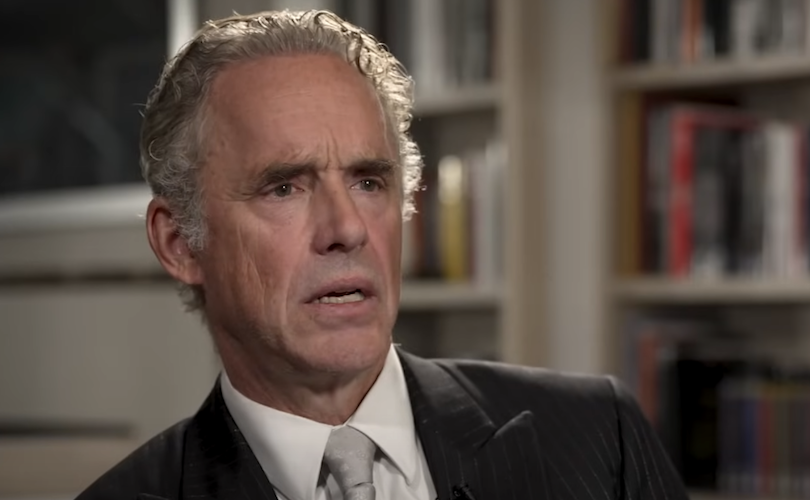
Jordan Peterson
EWTN/YouTube screenshot
Clare Marie Merkowsky
Fri Feb 16, 2024 - 4:17 pm EST
BeyondWords
TORONTO (LifeSiteNews) — Prominent Canadian anti-woke psychologist Jordan Peterson blasted Pope Francis for neglecting the salvation of souls and focusing on “climate change” and criticized attempts to make the Catholic Church “relevant” since the 1960s and the Second Vatican Council.
On February 11, Peterson joined Eternal Word Television Network (EWTN) reporter Colm Flynn to discuss a sundry of topics, including his wife Tammy’s miraculous recovery from cancer, the widespread loss of faith in the Catholic Church since the 1960s, and Pope Francis’ fixation on “climate change.”
“That’s not working. It’s shallow,” he said, slamming the “guitar and hippies” that proliferated in the Church following the ’60s and Vatican II.
Peterson explained that religion is “supposed to be an invitation to the great adventure of life.”
“What’s the great adventure of life?” he questioned.
“Pick up your cross and follow me,” Peterson responded, quoting Jesus in the Gospel of Matthew.
“That’s a h-ll of an invitation,” he admitted, “but that’s the invitation, and the Church lost faith in that.”
Peterson explained that efforts in the Catholic Church to make the Gospel message more “relevant” have clouded the Gospel’s true calling.
“As soon as you say that you need to be more relevant than that what you’re doing, technically it is putting something else above that,” he said.
“Well, that’s not going to work not if the original proposition was correct,” Peterson warned, adding, “and obviously the original proposition is correct.”

Peterson explained that just as “Christ faced and triumphed over death and hell,” each person must likewise triumph over death and hell in their own lives. According to Peterson, the Catholic Church is currently not challenging Her members to take the difficult path.
“The gateway to Paradise is barred by the cherubs who have swords that flame,” he said. “It means it’s hard to get into the club, man.”
“Anything that isn’t worthy gets cut and burned away,” he warned, adding, “well of course that’s hell.”
“There’s no sugar-coating that and that isn’t what people want anyways. Young people want an adventure,” Peterson said.
He stated that the desire for adventure is the reason that young people feel called to “save the planet” from “climate change,” which “Pope Francis seems to be on about constantly when you should be saving souls.”
“That’s how you save the planet, not by worshiping Gaia,” Peterson stated, referring to the pagan name for “Mother Earth.”
“I don’t see for the life of me what the Catholic Church has to do with the ‘climate crisis,'” he continued. “Just the formulation is wrong; the priority is wrong; you save the world one person at a time.”
“It lacks faith in its own mission,” he added.
While his wife Tammy is set to enter the Catholic Church this Easter, Peterson has yet to publicly affiliate himself with one specific religion but says he remains dedicated to searching for the truth.
However, he admitted that “there’s plenty of things the Catholic Church got right,” for which he has an “appreciation.”
Clare Marie Merkowsky
Fri Feb 16, 2024 - 4:17 pm EST
BeyondWords
TORONTO (LifeSiteNews) — Prominent Canadian anti-woke psychologist Jordan Peterson blasted Pope Francis for neglecting the salvation of souls and focusing on “climate change” and criticized attempts to make the Catholic Church “relevant” since the 1960s and the Second Vatican Council.
On February 11, Peterson joined Eternal Word Television Network (EWTN) reporter Colm Flynn to discuss a sundry of topics, including his wife Tammy’s miraculous recovery from cancer, the widespread loss of faith in the Catholic Church since the 1960s, and Pope Francis’ fixation on “climate change.”
“That’s not working. It’s shallow,” he said, slamming the “guitar and hippies” that proliferated in the Church following the ’60s and Vatican II.
Peterson explained that religion is “supposed to be an invitation to the great adventure of life.”
“What’s the great adventure of life?” he questioned.
“Pick up your cross and follow me,” Peterson responded, quoting Jesus in the Gospel of Matthew.
“That’s a h-ll of an invitation,” he admitted, “but that’s the invitation, and the Church lost faith in that.”
Peterson explained that efforts in the Catholic Church to make the Gospel message more “relevant” have clouded the Gospel’s true calling.
“As soon as you say that you need to be more relevant than that what you’re doing, technically it is putting something else above that,” he said.
“Well, that’s not going to work not if the original proposition was correct,” Peterson warned, adding, “and obviously the original proposition is correct.”
Peterson explained that just as “Christ faced and triumphed over death and hell,” each person must likewise triumph over death and hell in their own lives. According to Peterson, the Catholic Church is currently not challenging Her members to take the difficult path.
“The gateway to Paradise is barred by the cherubs who have swords that flame,” he said. “It means it’s hard to get into the club, man.”
“Anything that isn’t worthy gets cut and burned away,” he warned, adding, “well of course that’s hell.”
“There’s no sugar-coating that and that isn’t what people want anyways. Young people want an adventure,” Peterson said.
He stated that the desire for adventure is the reason that young people feel called to “save the planet” from “climate change,” which “Pope Francis seems to be on about constantly when you should be saving souls.”
“That’s how you save the planet, not by worshiping Gaia,” Peterson stated, referring to the pagan name for “Mother Earth.”
“I don’t see for the life of me what the Catholic Church has to do with the ‘climate crisis,'” he continued. “Just the formulation is wrong; the priority is wrong; you save the world one person at a time.”
“It lacks faith in its own mission,” he added.
While his wife Tammy is set to enter the Catholic Church this Easter, Peterson has yet to publicly affiliate himself with one specific religion but says he remains dedicated to searching for the truth.
However, he admitted that “there’s plenty of things the Catholic Church got right,” for which he has an “appreciation.”
Sunday, September 04, 2016
Saturday, September 19, 2015
Do Adventists Have a Beef With Pope Francis?

Do Adventists Have a Beef With Pope Francis?
BY JARED THURMON
Excitement has been mounting for months in anticipation of Pope Francis’ first visit to the United States. Even though this is the tenth papal visit to the U.S. since 1965, many are saying, “This one is different.” Why? Perhaps because Pope Francis will be speaking at the UN to the largest assembly of heads of state in world history and addressing the U.S. Congress for the first time. Or maybe because he’s being described as “a pontiff like no other,” venerated by the right and the left, by Jews and Muslims, by the gay community and the religious right. His name flashes repeatedly across television news screens and makes headlines in national and international newspapers. He appears to be “the pope for the people,” receiving accolades from men and women across a wide spectrum of society.
One issue in particular that is drawing both applause and criticism is the pope’s strong stance on climate change and human responsibility to care for the environment, touted as the big agenda item for this trip across the pond. Pope Francis plans to give a certain sound to the trumpet call regarding climate change, otherwise known as global warming. And with this issue, Adventists can resonate.
An Uphill Battle
As the Washington Post recently noted, Pope Francis is facing an uphill battle with many Christians who deny that climate change is real. But Francis isn’t alone in his beliefs. Nearly half of Americans say that climate change is a sign of “the last days.”Businessman Jay Faison is contributing $175 million to help persuade the naysayers that climate change is the real deal. And Muslim leaders from 20 countries are sounding their own trumpet that climate change is real and a force to be reckoned with.
So this isn’t an isolated event or one that will likely go away anytime soon. In fact, experts are declaring that climate change is to blame for everything from 400,000 deaths per year to the rapid increase in diabetes to the 500 percent rise in natural disasters since the 1970s—a trend the World Bank expects to see continue.
No Surprise Here
The apostle John, sitting on an island in the Mediterranean under a beautiful, smog-free blue sky and pristine azure waters, wrote that one day in the distant future God would “destroy those who destroy the earth” (Rev. 11:18). So today’s devastation of the environment should come as no surprise to Bible-believing Christians.
Whether we want to call it global warming, climate change, or natural disasters, there is a strong case that this is more than a mundane environmental issue; rather, as Jeff Nesbit of US News stated, many are considering it “the moral issue of our time.” Just ask farmers and other folk in California lamenting their dying crops and brown lawns whether they think climate change is real. Ask the citizens of Boston who had snow on the ground in June this year if they think something is changing. The debate often centers around who is responsible?
We don’t yet know all the solutions that Francis is going to propose. Some have suggested a “Slow Sunday,” and about such proposals, Adventists must stand by their historic Biblically-based opposition to any legislation that would infringe on a person’s freedom of conscience and right to practice the Biblical Sabbath. As the Summer of Trump has cooled down, the topic of climate change is heating up as Francis takes center stage on an issue many Americans are not quite sure affects them—at least not yet.

The Burden of Proof
Evidence rests heavily on the side of climate change, evidence that thinking individuals, including Adventist Protestants, can support. We’ve been sitting on a “secret”—knowledge that we’ve been given by both the Bible and the Spirit of Prophecy—for too long. This isn’t an issue or an event for which Adventists should be resting on the sidelines. Instead, “perhaps we have come to the kingdom for such a time as this!”
“Our people have been regarded as too insignificant to be worthy of notice; but a change will come,” 1 wrote Ellen White. Who knows? Maybe that time is now.
The Tide of Change
Votes and laws won’t stop the tide of climate change. “The earth dries up and withers” because “they have disobeyed the laws, violated the statutes and broken the everlasting covenant,” Isaiah writes (24:4, 5). But let us not be among the “they.” God expects more from us.
In the book Education, Ellen White wrote:
“ ‘As the whole creation groaneth and travaileth in pain together’ (Romans 8:26, 22), the heart of the infinite Father is pained in sympathy. Our world is a vast lazar house, a scene of misery that we dare not allow even our thoughts to dwell upon. Did we realize it as it is, the burden would be too terrible. Yet God feels it all. In order to destroy sin and its results He gave His best Beloved, and He has put it in our power, through co-operation with Him, to bring this scene of misery to an end” (emphasis supplied).
What Can We Do?
So, how can we cooperate with the God of nature, the God of the climate, to do our honest part in bringing this scene of misery to an end?
It’s simple: let’s take better care of His creation. This includes our body temple as well as the sanctuary of nature in which we live. The sad reality is that the creation is dying. According toYaleNews, animals are dying in increasing numbers, and for reasons few people understand. And the toll being taken is not just on the environment and animals, but on humans and their health as well.
After succumbing to Satan’s temptation in the Garden of Eden, Eve said, “The serpent deceived me, and I ate” (Gen. 3:13). Humanity has been deceived, and it seems we may have eaten our way into this mess—at least according to the United Nations FAO report “Livestock’s Long Shadow.”This eye-opening report cites the livestock sector as “a major stressor on many ecosystems and on the planet as a whole. Globally it is one of the largest sources of greenhouse gasses and one of the leading causal factors in the loss of biodiversity.” It adds that in developed and emerging countries, “it is perhaps the leading source of water pollution.”
More Articles and Books to Read
- Berry, Wendell. The Unsettling of America: Culture and Agriculture. 2nd ed. New York: Avon Books, 1996.
- Blackmer, Sandra. “What Are We Really Doing to God’s Creatures?”Adventist Review, March 18, 2010, pp. 16-20.http://archives.adventistreview.org/issue.php?issue=2010-1508&page=16
- Davidson, Jo Ann, “And It Was Good,” Adventist Review, August 21, 2008, pp. 8-11.http://archives.adventistreview.org/issue.php?id=2030&action=print
- Davidson, Jo Ann, “Who Cares: Bioethics and the Christian,”Adventist Review, June 25, 2009, pp. 51-54.http://archives.adventistreview.org/issue.php?issue=2009-1518&page=51
- Davis, Ellen F. Scripture, Culture, and Agriculture: An Agrarian Reading of the Bible. Cambridge: Cambridge University Press, 2009.
- Dunbar, Stephen; Gibson, L. James; and Rasi, Humberto M., eds.Entrusted: Christians and Environmental Care, Adventus International University Publishers, 2013.
- Habel, Norman. The Land Is Mine: Six Biblical Land Ideologies. Minneapolis: Fortress Press, 1995.
- Imhoff, Daniel. CAFO: The Tragedy of Industrial Animal Factories, Earth Aware Editions, 2010.
- Scully, Matthew. Dominion: The Power of Man, the Suffering of Animals, and the Call to Mercy. New York: St. Martin’s Press, 2002.
- Sinclair, Upton. The Jungle, Dover Publications, 2001.
- Tonstad, Sigve K. The Lost Meaning of the Seventh Day. Berrien Springs, MI: Andrews University Press, 2009.
- Tonstad, Sigve, K., “Ecology, Ethics, and Ecumenism: Taking the health message to a new level,” Adventist Review online.http://www.adventistreview.org/141519-62
According to the Environmental Working Group and USDA report titled Meat Eater’s Guide to Climate Change + Health, “the takeaway . . . is that eating meat and dairy is expensive, and in a whole lot of ways. . . . It’s not just the carbon emissions that hurt; it’s also the pesticides, fertilizers, fuel, and water needed to produce the feed for all those cows and pigs. And once that damage is done, there are still the health consequences we all face from eating too much meat, particularly red meat.”
Rob Bailey, the report’s lead author, nailed the reason the problem isn’t abating when he added, “Preventing catastrophic warming is dependent on tackling meat and dairy consumption, but the world is doing very little.”
“Curbing the world’s huge and increasing appetite for meat is essential to avoid devastating climate change,” says think-tank Chatham House. The problem is that few people want to make that change.
What Ellen White learned from a Catholic
Each one of us individually, including Adventists, holds in our hands the power to make a significant difference regarding the environment and to help end much of this misery. The world is clear-cutting rainforests, growing GMO monocrops, saturating rivers and soil with pesticides—all to raise ( often inhumanely) more than 56 billion animals every year for human consumption. It is the inhumane and unsustainable methods of raising of animals that I take issue with. We make the choice at every meal whether to eat for life or eat what once lived, to eat plant-based foods or animals.
Adam and Eve did not eat animals, which were in their care, nor will we eat animals in heaven (see Isa. 65:25). Our culture mourns the loss of Cecil the lion, 2 but consumes Bessie the cow, millions of times a day.
Health is a journey. It took Ellen White 33 years after she shared her health-message vision in 1863 to completely stop eating meat herself. 3 And when she finally made that decision, the reason she identified was not because of her health, but because of mercy and animal compassion:
“When the selfishness of taking the lives of animals to gratify a perverted appetite, was presented to me by a Catholic woman, kneeling at my feet, I felt ashamed and distressed; I saw it in a new light, and I said, ‘I will no longer patronize the butchers; I will not have the flesh of corpses on my table.’” 4
Rob Bailey, the report’s lead author, nailed the reason the problem isn’t abating when he added, “Preventing catastrophic warming is dependent on tackling meat and dairy consumption, but the world is doing very little.”
“Curbing the world’s huge and increasing appetite for meat is essential to avoid devastating climate change,” says think-tank Chatham House. The problem is that few people want to make that change.
What Ellen White learned from a Catholic
Each one of us individually, including Adventists, holds in our hands the power to make a significant difference regarding the environment and to help end much of this misery. The world is clear-cutting rainforests, growing GMO monocrops, saturating rivers and soil with pesticides—all to raise ( often inhumanely) more than 56 billion animals every year for human consumption. It is the inhumane and unsustainable methods of raising of animals that I take issue with. We make the choice at every meal whether to eat for life or eat what once lived, to eat plant-based foods or animals.
Adam and Eve did not eat animals, which were in their care, nor will we eat animals in heaven (see Isa. 65:25). Our culture mourns the loss of Cecil the lion, 2 but consumes Bessie the cow, millions of times a day.
Health is a journey. It took Ellen White 33 years after she shared her health-message vision in 1863 to completely stop eating meat herself. 3 And when she finally made that decision, the reason she identified was not because of her health, but because of mercy and animal compassion:
“When the selfishness of taking the lives of animals to gratify a perverted appetite, was presented to me by a Catholic woman, kneeling at my feet, I felt ashamed and distressed; I saw it in a new light, and I said, ‘I will no longer patronize the butchers; I will not have the flesh of corpses on my table.’” 4
The Adventist Perspective
Ellen White’s well-known statement—“We have nothing to fear for the future, except as we shall forget the way the Lord has led us, and His teaching in our past history” 5—is often used in the context of theology, but could it also refer to health?
In the April 2015 issue of Adventist Review, startling data revealed that more than 73 percent of Seventh-day Adventist Millennials are not vegetarians! So, what does this mean?
Gary Fraser, principal investigator of the Adventist Health Studies, shared that the reality is that “the evidence that Adventist vegetarians do better than Adventist non-vegetarians with respect to risk of diabetes, hypertension, overweight, blood cholesterol, risk of several cancers, heart disease, and that they live longer lives, is overwhelming.” In light of the evidence-based research and current trends with younger Adventists, it seems likely that the results of the health studies could likely change as well. It was these studies that led National Geographic to identify Loma Linda, California, as a Blue Zone, and that Adventists are often the longest living and most healthy Americans.6 One of the key characteristics of the longevity and optimal health of the California Adventists noted in the National Geographic report was Adventists’ adherence to a plant-based diet. What will happen if this dynamic is no longer in play?
Look Upon the Earth
Isaiah declared, “Lift up your eyes to the heavens, look upon the earth beneath; the heavens will vanish like smoke, the earth will wear out like a garment and its inhabitants die like flies. But my salvation will last forever, my righteousness will never fail” (Isa. 51:6).
Isaiah was undoubtedly describing our day. The earth is wearing out, and thinking minds realize that something decisive is about to take place, that the world is on the verge of a stupendous crisis.7 So much so that people such as Tony-Stark-wannabe Elon Musk and other billionaire friends such as Richard Branson are putting all their eggs into the basket of colonizing another planet.People are realizing that something has to give, and many are turning to extreme measures in response.
When Pope Francis comes to the U.S. and shares his passion and strong encouragement for decided change regarding the environment, Adventists—and all others who see the validity of responsibly caring for the planet, the rainforests, the soil, the rivers, the air, the animals—should consider the now-scientifically proven words of that dear Catholic woman who convinced Ellen White in 1893 that it is selfishness to continue to take the lives of animals just to gratify appetite. We then need to look at what each of us personally can do to make a difference as well.
On the issue of climate change, thoughtful Adventists won’t have a beef with Pope Francis.
Jared Thurmon is the Strategic Partnerships Liaison for Adventist Review.
- Ellen G. White, Testimonies to the Church, vol. 5, p. 546.
- http://www.cnn.com/2015/07/31/world/zimbabwe-cecil-lion-dentist/
- Ellen G. White, Letter 73, 1896.
- Ellen G. White, Testimony Studies on Diet and Foods, p. 67.
- Ellen G. White, Christian Experience and Teachings, p. 204.
- http://travel.nationalgeographic.com/travel/happiest-places/blue-zones-california-photos/#/swim-lomo-linda_41552_600x450.jpg
- Ellen G. White, Prophets and Kings, p. 537.
.
When I read dubious articles as these it reminds of Samuelle Bacchiocchi, and this warning from the Spirit of Prophecy:
We have far more to fear from within than from without.
Selected Message Book 1, p.122.
Wednesday, March 31, 2010
James Lovelock: Humans are too stupid to prevent climate change
In his first in-depth interview since the theft of UEA emails, the scientist blames inertia and democracy for lack of action
• Read the full transcript of James Lovelock's G2 interview with Leo Hickman
• The G2 interview
Leo Hickman
guardian.co.uk, Monday 29 March 2010 13.15 BST
Article history

Humans are too stupid to prevent climate change, according to the British scientist James Lovelock. Illustration: Murdo Macleod
Humans are too stupid to prevent climate change from radically impacting on our lives over the coming decades. This is the stark conclusion of James Lovelock, the globally respected environmental thinker and independent scientist who developed the Gaia theory.
It follows a tumultuous few months in which public opinion on efforts to tackle climate change has been undermined by events such as the climate scientists' emails leaked from the University of East Anglia (UEA) and the failure of the Copenhagen climate summit.
"I don't think we're yet evolved to the point where we're clever enough to handle a complex a situation as climate change," said Lovelock in his first in-depth interview since the theft of the UEA emails last November. "The inertia of humans is so huge that you can't really do anything meaningful."
One of the main obstructions to meaningful action is "modern democracy", he added. "Even the best democracies agree that when a major war approaches, democracy must be put on hold for the time being. I have a feeling that climate change may be an issue as severe as a war. It may be necessary to put democracy on hold for a while."
Lovelock, 90, believes the world's best hope is to invest in adaptation measures, such as building sea defences around the cities that are most vulnerable to sea-level rises. He thinks only a catastrophic event would now persuade humanity to take the threat of climate change seriously enough, such as the collapse of a giant glacier in Antarctica, such as the Pine Island glacier, which would immediately push up sea level.
"That would be the sort of event that would change public opinion," he said. "Or a return of the dust bowl in the mid-west. Another Intergovernmental Panel on Climate Change (IPCC) report won't be enough. We'll just argue over it like now." The IPCC's 2007 report concluded that there was a 90% chance that greenhouse gas emissions from human activities are causing global warming, but the panel has been criticised over a mistaken claim that all Himalayan glaciers could melt by 2030.
Lovelock says the events of the recent months have seen him warming to the efforts of the "good" climate sceptics: "What I like about sceptics is that in good science you need critics that make you think: 'Crumbs, have I made a mistake here?' If you don't have that continuously, you really are up the creek. The good sceptics have done a good service, but some of the mad ones I think have not done anyone any favours. You need sceptics, especially when the science gets very big and monolithic."
Lovelock, who 40 years ago originated the idea that the planet is a giant, self-regulating organism – the so-called Gaia theory – added that he has little sympathy for the climate scientists caught up in the UEA email scandal. He said he had not read the original emails – "I felt reluctant to pry" – but that their reported content had left him feeling "utterly disgusted".
"Fudging the data in any way whatsoever is quite literally a sin against the holy ghost of science," he said. "I'm not religious, but I put it that way because I feel so strongly. It's the one thing you do not ever do. You've got to have standards."
• Read the full transcript of the interview
Source: http://www.guardian.co.uk/science/2010/mar/29/james-lovelock-climate-change
.
• Read the full transcript of James Lovelock's G2 interview with Leo Hickman
• The G2 interview
Leo Hickman
guardian.co.uk, Monday 29 March 2010 13.15 BST
Article history
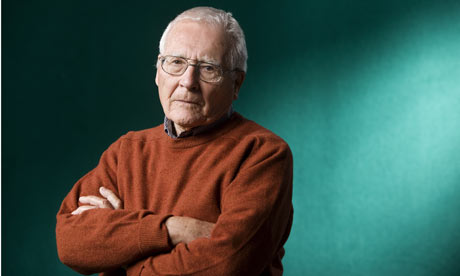
Humans are too stupid to prevent climate change, according to the British scientist James Lovelock. Illustration: Murdo Macleod
Humans are too stupid to prevent climate change from radically impacting on our lives over the coming decades. This is the stark conclusion of James Lovelock, the globally respected environmental thinker and independent scientist who developed the Gaia theory.
It follows a tumultuous few months in which public opinion on efforts to tackle climate change has been undermined by events such as the climate scientists' emails leaked from the University of East Anglia (UEA) and the failure of the Copenhagen climate summit.
"I don't think we're yet evolved to the point where we're clever enough to handle a complex a situation as climate change," said Lovelock in his first in-depth interview since the theft of the UEA emails last November. "The inertia of humans is so huge that you can't really do anything meaningful."
One of the main obstructions to meaningful action is "modern democracy", he added. "Even the best democracies agree that when a major war approaches, democracy must be put on hold for the time being. I have a feeling that climate change may be an issue as severe as a war. It may be necessary to put democracy on hold for a while."
Lovelock, 90, believes the world's best hope is to invest in adaptation measures, such as building sea defences around the cities that are most vulnerable to sea-level rises. He thinks only a catastrophic event would now persuade humanity to take the threat of climate change seriously enough, such as the collapse of a giant glacier in Antarctica, such as the Pine Island glacier, which would immediately push up sea level.
"That would be the sort of event that would change public opinion," he said. "Or a return of the dust bowl in the mid-west. Another Intergovernmental Panel on Climate Change (IPCC) report won't be enough. We'll just argue over it like now." The IPCC's 2007 report concluded that there was a 90% chance that greenhouse gas emissions from human activities are causing global warming, but the panel has been criticised over a mistaken claim that all Himalayan glaciers could melt by 2030.
Lovelock says the events of the recent months have seen him warming to the efforts of the "good" climate sceptics: "What I like about sceptics is that in good science you need critics that make you think: 'Crumbs, have I made a mistake here?' If you don't have that continuously, you really are up the creek. The good sceptics have done a good service, but some of the mad ones I think have not done anyone any favours. You need sceptics, especially when the science gets very big and monolithic."
Lovelock, who 40 years ago originated the idea that the planet is a giant, self-regulating organism – the so-called Gaia theory – added that he has little sympathy for the climate scientists caught up in the UEA email scandal. He said he had not read the original emails – "I felt reluctant to pry" – but that their reported content had left him feeling "utterly disgusted".
"Fudging the data in any way whatsoever is quite literally a sin against the holy ghost of science," he said. "I'm not religious, but I put it that way because I feel so strongly. It's the one thing you do not ever do. You've got to have standards."
• Read the full transcript of the interview
Source: http://www.guardian.co.uk/science/2010/mar/29/james-lovelock-climate-change
.
Sunday, March 21, 2010
Agenda 21 – The UN Blueprint for the 21st Century *
The Green Agenda
20.08.2008
">http://
Agenda 21 Enforcement
“Effective execution of Agenda 21 will require a profound reorientation of all human society, unlike anything the world has ever experienced a major shift in the priorities of both governments and individuals and an unprecedented redeployment of human and financial resources. This shift will demand that a concern for the environmental consequences of every human action be integrated into individual and collective decision-making at every level.”-
[Excerpt from attorney Dan Sitarz’s book about the United Nations’ Agenda 21, the blueprint for the 21st century (Agenda 21: The Earth Summit Strategy), written with the cooperation of the United Nations Conference on Environment and Development. Listed as one of the top books for the 21st century by the International Center for Environment and Public Policy of the California Institute of Public Affairs.]
Agenda 21 – The UN Blueprint for the 21st Century
As described in my previous article on Sustainable Development, Agenda 21 was the main outcome of the United Nation’s Earth Summit held in Rio de Janeiro in 1992. Agenda 21 outlines, in detail, the UN’s vision for a centrally managed global society. This contract binds governments around the world to the United Nation’s plan for controlling the way we live, eat, learn, move and communicate - all under the noble banner of saving the earth. If fully implemented, Agenda 21 would have the government involved in every aspect of life of every human on earth.
Agenda 21 spreads it tentacles from Governments, to federal and local authorities, and right down to community groups. Chapter 28 of Agenda 21 specifically calls for each community to formulate its own Local Agenda 21: ”Each local authority should enter into a dialogue with its citizens, local organizations, and private enterprises and formulate ‘a Local Agenda 21.’ Through consultation and consensus-building, local authorities would learn from citizens and from local, civic, community, business and industrial organizations and acquire the information needed for formulating the best strategies.” - Agenda 21, Chapter 28, sec 1.3
Interestingly, in April 1991, fourteen months before Earth Summit, Prince Charles held a private two day international conference aboard the royal yacht Britannia, moored off the coast of Brazil. His goal was to bring together key international figures in an attempt to achieve a degree of harmony between the various countries that would gather at the Summit. Al Gore was present, along with senior officials from the United Nations and the World Bank.
At the summit 179 nations officially signed Agenda 21 and many more have followed since. Nearly 12,000 local and federal authorities have legally committed themselves to the Agenda. In practice this means that all their plans and policies must begin with an assessment of how the plan or policy meets the requirements of Agenda 21, and no plans or policies are allowed to contradict any part of the Agenda. Local authorities are audited by UN inspectors and the results of the audits are placed on the UN website. You can see how many local authorities in your country were bound by Agenda 21 in 2001 here. The number has increased significantly since then.
The official opening ceremony was conducted by the Dalai Lama and centered around a Viking long-ship that was constructed to celebrate the summit and sailed to Rio from Norway. The ship was appropriately named Gaia. A huge mural of a beauiful woman holding the earth within her hands adorned the entrance to the summit. Al Gore lead the US delegation where he was joined by 110 Heads of State, and representatives of more than 800 NGO’s.
Maurice Strong, Club of Rome member, devout Bahai, founder and first Secretary General of UNEP, has been the driving force behind the birth and imposition of Agenda 21. While he chaired the Earth Summit, outside his wife Hanne and 300 followers called the Wisdom-Keepers, continuously beat drums, chanted prayers to Gaia, and trended scared flames in order to “establish and hold the energy field” for the duration of the summit. You can view actual footage of these ceremonies on YouTube. During the opening speech Maurice Strong made the following statements:
“The concept of national sovereignty has been an immutable, indeed sacred, principle of international relations. It is a principle which will yield only slowly and reluctantly to the new imperatives of global environmental cooperation. It is simply not feasible for sovereignty to be exercised unilaterally by individual nation states, however powerful. The global community must be assured of environmental security.” - Link
“It is the responsibility of each human being today to choose between the force of darkness and the force of light. We must therefore transform our attitudes, and adopt a renewed respect for the superior laws of Divine Nature.” - Link
“Current lifestyles and consumption patterns of the affluent middle class - involving high meat intake, use of fossil fuels, appliances, air-conditioning, and suburban housing - are not sustainable. A shift is necessary which will require a vast strengthening of the multilateral system, including the United Nations.” - Link
Among other things, the agenda called for a Global Biodiversity Assessment of the State of the Earth. Prepared by the UN Environmental Programme (UNEP), this 1140 page document armed UN leaders with the “ecological basis, and moral authority” they needed to validate their global management system. The GBA concludes on page 863 that “the root causes of the loss of biodiversity are embedded in the way societies use resources. This world view is characteristic of large scale societies, heavily dependent on resources brought from considerable distances. It is a world view that is characterized by the denial of sacred attributes in nature, a characteristic that became firmly established about 2000 years ago with the Judeo-Christian-Islamic religious traditions. Eastern cultures with religious traditions such as Buddhism, Jainism and Hinduism did not depart as drastically from the perspective of humans as members of a community of beings including other living and non-living elements.” In other words Christians and Moslems are to blame for the sorry state of the world because their religions do not involve worshipping “sacred nature.”
Following the Earth Summit Maurice Strong was named Assistant Secretary General of the United Nations, and was appointed to the position of Chief Policy Advisor by Kofi Annan. He was also a member of the UN’s Commission on Global Governance, and the key architect of the Kyoto Protocol. Strong and his wife have also established the Manitou Foundation, providing land in the Colorado to an eclectic mix of religious groups, including the Crestone Mountain Zen Center, the Spiritual Life Institute (a Catholic Carmelite monastery), the Haidakhandi Universal Ashram, the Sri Aurobindo Learning Center, Mangala Shri Bhuti (Tibetan Buddhists), and Karma Thegsum Tashi Gomang (Indian mystics). The Strongs have located their spiritual centre in the Colorado mountains because:”The Strongs learned that since antiquity indigenous peoples had revered this pristine wilderness as a place for conducting their vision quests and receiving shamanic trainings. It is prophesied that the world’s religious traditions would gather here and help move theworld toward globally conscious co-existence and co-creation.”
So what exactly does Agenda 21 contain? It consists of 115 different and very specific programs designed to facilitate, or to force, the transition to Sustainable Development. The objective, clearly enunciated by the leaders of the Earth Summit, is to bring about a change in the present system of independent nations. The agenda is broken up into 8 ‘programme areas for action’:
>> Agriculture
>> Biodiversity and Ecosystem Management
>> Education
>> Energy and Housing
>> Population
>> Public Health
>> Resources and recycling
>> Transportation, Sustainable Economic Development
As you can see Agenda 21 addresses nearly every aspect of modern life. If you have a spare few days the entire document can be read here. I encourage the reader to at least read the Table of Contents in order to understand the true scope of this ‘blueprint for the 21st century.’ I won’t torture the reader by going into the document in too much depth but I will provide the first six paragraphs so that you can understand the true intent of Agenda 21:
1.1. Humanity stands at a defining moment in history. We are confronted with a perpetuation of disparities between and within nations, a worsening of poverty, hunger, ill health and illiteracy, and the continuing deterioration of the ecosystems on which we depend for our well-being. However, integration of environment and development concerns and greater attention to them will lead to the fulfilment of basic needs, improved living standards for all, better protected and managed ecosystems and a safer, more prosperous future. No nation can achieve this on its own; but together we can - in a global partnership for sustainable development.
1.2. This global partnership must build on the premises of General Assembly resolution 44/228 of 22 December 1989, which was adopted when the nations of the world called for the United Nations Conference on Environment and Development, and on the acceptance of the need to take a balanced and integrated approach to environment and development questions.
1.3. Agenda 21 addresses the pressing problems of today and also aims at preparing the world for the challenges of the next century. It reflects a global consensus and political commitment at the highest level on development and environment cooperation. Its successful implementation is first and foremost the responsibility of Governments. National strategies, plans, policies and processes are crucial in achieving this. International cooperation should support and supplement such national efforts. In this context, the United Nations system has a key role to play. Other international, regional and subregional organizations are also called upon to contribute to this effort. The broadest public participation and the active involvement of the non-governmental organizations and other groups should also be encouraged.
1.4. The developmental and environmental objectives of Agenda 21 will require a substantial flow of new and additional financial resources to developing countries, in order to cover the incremental costs for the actions they have to undertake to deal with global environmental problems and to accelerate sustainable development. Financial resources are also required for strengthening the capacity of international institutions for the implementation of Agenda 21.
1.5. In the implementation of the relevant programme areas identified in Agenda 21, special attention should be given to the particular circumstances facing the economies in transition. It must also be recognized that these countries are facing unprecedented challenges in transforming their economies, in some cases in the midst of considerable social and political tension.
1.6. The programme areas that constitute Agenda 21 are described in terms of the basis for action, objectives, activities and means of implementation. Agenda 21 is a dynamic programme. It will be carried out by the various actors according to the different situations, capacities and priorities of countries and regions in full respect of all the principles contained in the Rio Declaration on Environment and Development. It could evolve over time in the light of changing needs and circumstances. This process marks the beginning of a new global partnership for sustainable development.
Like many ‘green movement initiatives’ Agenda 21 is a ‘wolf in sheep’s clothing’. As explained in my brief biography I have been actively involved in preparing Agenda 21 action plans and monitoring compliance with environmental permits. All the policies and plans we developed were required to begin with a description of how they met the objectives of Agenda 21 and various other UN agreements, and were audited too determine how they complied with UN requirements. It was these experiences that lead to my research into what was ‘behind it all’ and the subsequent publication of this website.
Agenda 21 is not an environmental management policy, but an attempt to impose a global centrally planned quasi-government administered by the United Nations. Under Agenda 21 all central government and local authority signatories are required to conform strictly to a common prescribed standard and hence this is just communism resurrected in a new guise. Now that Agenda 21 has gained a stranglehold on global regulatory and planning processes Maurice Strong and his Club of Rome colleagues have moved on to the next phase of the Global Green Agenda.

In association with fellow CoR member Mikhail Gorbachev, Strong co-chaired the committee responsible for drafting the Earth Charter. Compared to the 2500 pages that make up Agenda 21 and the BGA it is a tiny document – only 4 pages long. But it is of far more significance to the Global Green Agenda. The Earth Charter is a “declaration of fundamental principles for building a just, sustainable, and peaceful global society in the 21st century”. It is the constitution for a New Green Order. You can read about it
here.
.
.
Source: http://www.wiseupjournal.com/?p=475
.
20.08.2008
">http://
Agenda 21 Enforcement
“Effective execution of Agenda 21 will require a profound reorientation of all human society, unlike anything the world has ever experienced a major shift in the priorities of both governments and individuals and an unprecedented redeployment of human and financial resources. This shift will demand that a concern for the environmental consequences of every human action be integrated into individual and collective decision-making at every level.”-
[Excerpt from attorney Dan Sitarz’s book about the United Nations’ Agenda 21, the blueprint for the 21st century (Agenda 21: The Earth Summit Strategy), written with the cooperation of the United Nations Conference on Environment and Development. Listed as one of the top books for the 21st century by the International Center for Environment and Public Policy of the California Institute of Public Affairs.]
Agenda 21 – The UN Blueprint for the 21st Century
As described in my previous article on Sustainable Development, Agenda 21 was the main outcome of the United Nation’s Earth Summit held in Rio de Janeiro in 1992. Agenda 21 outlines, in detail, the UN’s vision for a centrally managed global society. This contract binds governments around the world to the United Nation’s plan for controlling the way we live, eat, learn, move and communicate - all under the noble banner of saving the earth. If fully implemented, Agenda 21 would have the government involved in every aspect of life of every human on earth.
Agenda 21 spreads it tentacles from Governments, to federal and local authorities, and right down to community groups. Chapter 28 of Agenda 21 specifically calls for each community to formulate its own Local Agenda 21: ”Each local authority should enter into a dialogue with its citizens, local organizations, and private enterprises and formulate ‘a Local Agenda 21.’ Through consultation and consensus-building, local authorities would learn from citizens and from local, civic, community, business and industrial organizations and acquire the information needed for formulating the best strategies.” - Agenda 21, Chapter 28, sec 1.3
Interestingly, in April 1991, fourteen months before Earth Summit, Prince Charles held a private two day international conference aboard the royal yacht Britannia, moored off the coast of Brazil. His goal was to bring together key international figures in an attempt to achieve a degree of harmony between the various countries that would gather at the Summit. Al Gore was present, along with senior officials from the United Nations and the World Bank.
At the summit 179 nations officially signed Agenda 21 and many more have followed since. Nearly 12,000 local and federal authorities have legally committed themselves to the Agenda. In practice this means that all their plans and policies must begin with an assessment of how the plan or policy meets the requirements of Agenda 21, and no plans or policies are allowed to contradict any part of the Agenda. Local authorities are audited by UN inspectors and the results of the audits are placed on the UN website. You can see how many local authorities in your country were bound by Agenda 21 in 2001 here. The number has increased significantly since then.
The official opening ceremony was conducted by the Dalai Lama and centered around a Viking long-ship that was constructed to celebrate the summit and sailed to Rio from Norway. The ship was appropriately named Gaia. A huge mural of a beauiful woman holding the earth within her hands adorned the entrance to the summit. Al Gore lead the US delegation where he was joined by 110 Heads of State, and representatives of more than 800 NGO’s.
Maurice Strong, Club of Rome member, devout Bahai, founder and first Secretary General of UNEP, has been the driving force behind the birth and imposition of Agenda 21. While he chaired the Earth Summit, outside his wife Hanne and 300 followers called the Wisdom-Keepers, continuously beat drums, chanted prayers to Gaia, and trended scared flames in order to “establish and hold the energy field” for the duration of the summit. You can view actual footage of these ceremonies on YouTube. During the opening speech Maurice Strong made the following statements:
“The concept of national sovereignty has been an immutable, indeed sacred, principle of international relations. It is a principle which will yield only slowly and reluctantly to the new imperatives of global environmental cooperation. It is simply not feasible for sovereignty to be exercised unilaterally by individual nation states, however powerful. The global community must be assured of environmental security.” - Link
“It is the responsibility of each human being today to choose between the force of darkness and the force of light. We must therefore transform our attitudes, and adopt a renewed respect for the superior laws of Divine Nature.” - Link
“Current lifestyles and consumption patterns of the affluent middle class - involving high meat intake, use of fossil fuels, appliances, air-conditioning, and suburban housing - are not sustainable. A shift is necessary which will require a vast strengthening of the multilateral system, including the United Nations.” - Link
Among other things, the agenda called for a Global Biodiversity Assessment of the State of the Earth. Prepared by the UN Environmental Programme (UNEP), this 1140 page document armed UN leaders with the “ecological basis, and moral authority” they needed to validate their global management system. The GBA concludes on page 863 that “the root causes of the loss of biodiversity are embedded in the way societies use resources. This world view is characteristic of large scale societies, heavily dependent on resources brought from considerable distances. It is a world view that is characterized by the denial of sacred attributes in nature, a characteristic that became firmly established about 2000 years ago with the Judeo-Christian-Islamic religious traditions. Eastern cultures with religious traditions such as Buddhism, Jainism and Hinduism did not depart as drastically from the perspective of humans as members of a community of beings including other living and non-living elements.” In other words Christians and Moslems are to blame for the sorry state of the world because their religions do not involve worshipping “sacred nature.”
Following the Earth Summit Maurice Strong was named Assistant Secretary General of the United Nations, and was appointed to the position of Chief Policy Advisor by Kofi Annan. He was also a member of the UN’s Commission on Global Governance, and the key architect of the Kyoto Protocol. Strong and his wife have also established the Manitou Foundation, providing land in the Colorado to an eclectic mix of religious groups, including the Crestone Mountain Zen Center, the Spiritual Life Institute (a Catholic Carmelite monastery), the Haidakhandi Universal Ashram, the Sri Aurobindo Learning Center, Mangala Shri Bhuti (Tibetan Buddhists), and Karma Thegsum Tashi Gomang (Indian mystics). The Strongs have located their spiritual centre in the Colorado mountains because:”The Strongs learned that since antiquity indigenous peoples had revered this pristine wilderness as a place for conducting their vision quests and receiving shamanic trainings. It is prophesied that the world’s religious traditions would gather here and help move theworld toward globally conscious co-existence and co-creation.”
So what exactly does Agenda 21 contain? It consists of 115 different and very specific programs designed to facilitate, or to force, the transition to Sustainable Development. The objective, clearly enunciated by the leaders of the Earth Summit, is to bring about a change in the present system of independent nations. The agenda is broken up into 8 ‘programme areas for action’:
>> Agriculture
>> Biodiversity and Ecosystem Management
>> Education
>> Energy and Housing
>> Population
>> Public Health
>> Resources and recycling
>> Transportation, Sustainable Economic Development
As you can see Agenda 21 addresses nearly every aspect of modern life. If you have a spare few days the entire document can be read here. I encourage the reader to at least read the Table of Contents in order to understand the true scope of this ‘blueprint for the 21st century.’ I won’t torture the reader by going into the document in too much depth but I will provide the first six paragraphs so that you can understand the true intent of Agenda 21:
1.1. Humanity stands at a defining moment in history. We are confronted with a perpetuation of disparities between and within nations, a worsening of poverty, hunger, ill health and illiteracy, and the continuing deterioration of the ecosystems on which we depend for our well-being. However, integration of environment and development concerns and greater attention to them will lead to the fulfilment of basic needs, improved living standards for all, better protected and managed ecosystems and a safer, more prosperous future. No nation can achieve this on its own; but together we can - in a global partnership for sustainable development.
1.2. This global partnership must build on the premises of General Assembly resolution 44/228 of 22 December 1989, which was adopted when the nations of the world called for the United Nations Conference on Environment and Development, and on the acceptance of the need to take a balanced and integrated approach to environment and development questions.
1.3. Agenda 21 addresses the pressing problems of today and also aims at preparing the world for the challenges of the next century. It reflects a global consensus and political commitment at the highest level on development and environment cooperation. Its successful implementation is first and foremost the responsibility of Governments. National strategies, plans, policies and processes are crucial in achieving this. International cooperation should support and supplement such national efforts. In this context, the United Nations system has a key role to play. Other international, regional and subregional organizations are also called upon to contribute to this effort. The broadest public participation and the active involvement of the non-governmental organizations and other groups should also be encouraged.
1.4. The developmental and environmental objectives of Agenda 21 will require a substantial flow of new and additional financial resources to developing countries, in order to cover the incremental costs for the actions they have to undertake to deal with global environmental problems and to accelerate sustainable development. Financial resources are also required for strengthening the capacity of international institutions for the implementation of Agenda 21.
1.5. In the implementation of the relevant programme areas identified in Agenda 21, special attention should be given to the particular circumstances facing the economies in transition. It must also be recognized that these countries are facing unprecedented challenges in transforming their economies, in some cases in the midst of considerable social and political tension.
1.6. The programme areas that constitute Agenda 21 are described in terms of the basis for action, objectives, activities and means of implementation. Agenda 21 is a dynamic programme. It will be carried out by the various actors according to the different situations, capacities and priorities of countries and regions in full respect of all the principles contained in the Rio Declaration on Environment and Development. It could evolve over time in the light of changing needs and circumstances. This process marks the beginning of a new global partnership for sustainable development.
Like many ‘green movement initiatives’ Agenda 21 is a ‘wolf in sheep’s clothing’. As explained in my brief biography I have been actively involved in preparing Agenda 21 action plans and monitoring compliance with environmental permits. All the policies and plans we developed were required to begin with a description of how they met the objectives of Agenda 21 and various other UN agreements, and were audited too determine how they complied with UN requirements. It was these experiences that lead to my research into what was ‘behind it all’ and the subsequent publication of this website.
Agenda 21 is not an environmental management policy, but an attempt to impose a global centrally planned quasi-government administered by the United Nations. Under Agenda 21 all central government and local authority signatories are required to conform strictly to a common prescribed standard and hence this is just communism resurrected in a new guise. Now that Agenda 21 has gained a stranglehold on global regulatory and planning processes Maurice Strong and his Club of Rome colleagues have moved on to the next phase of the Global Green Agenda.

In association with fellow CoR member Mikhail Gorbachev, Strong co-chaired the committee responsible for drafting the Earth Charter. Compared to the 2500 pages that make up Agenda 21 and the BGA it is a tiny document – only 4 pages long. But it is of far more significance to the Global Green Agenda. The Earth Charter is a “declaration of fundamental principles for building a just, sustainable, and peaceful global society in the 21st century”. It is the constitution for a New Green Order. You can read about it
here.
.
.
Source: http://www.wiseupjournal.com/?p=475
.
Friday, December 18, 2009
What is the significance of the New Age Movement?

The so-called “New Age Movement” is a strange religion, or complex of religions, that has come into increasing prominence in recent years. This phenomenon is actually a combination of modern science and mathematical physics along with astrology, occultism, religious mysticism and nature worship. Supposedly offered as a reaction against the materialisms of Western thought, the New-Age Movement appeal both to man's religious nature and his intellectual pride, as well as his physical appetites. It is gaining a host of followers all over the world and aims eventually to become the world's sole religion.
Although “New-Agers” have a form of religion, their “god” is Evolution, not the true God of creation. Many religious sects are involved in this movement to one degree or another. It includes such pseudo-Christian cults as Divine Science, Unity, New Thought, and Religious Science, and also various Eastern and occult religions such as theosophy, spiritualism, Hare Krishna, Rosicrucianism and assorted guru cults.
Many Western New-Age followers regard the controversial evolutionist priest, Teilhard de Chardin, as their spiritual father. He was passionately devoted to Evolution as the "general postulate to which all systems must henceforward bow." He and other leading neo-Darwinians, including John Dewey (the architect of our modern public education system), regarded the evolutionary process as having "come to consciousness in man," who could now guide it into the development of an ideal socialistic world order. Evolution is now viewed by these modern pantheist as the “cosmic mind” which has orchestrated the evolutionary progress of the universe and its many systems over endless ages.
Modern physicists have contributed to this religion with their promotion of what they call the “anthropic principle,” which seeks to show that the constants and processes of the universe are inescapably bound up with the evolution of intelligent man. Sir Julian Huxley, who was the first Director General of the United Nations Educational, Scientific and Cultural Organization, and who was also probably the most important evolutionist of the twentieth century, lent his great influence and prestige to the promotion of evolutionary humanism as (eventually) the only allowable world religion, synchronizing all the religions and philosophies of the world into one great man-deifying system of faith and practice under a coming world government.
The younger generation of evolutionists is now promoting a revolutionary type of evolution rather than the old gradualism of evolutionary capitalism as the favored rationale of both past and future evolutionary progress toward this goal. Since all of this if fully consistent with the older ethnic religions of Taoism, Buddhism, Confucianism and Hinduism, they are incorporating the ancient pagan notion that sudden upsurges in new order can be achieved through the chaotic disintegration of old orders.
The amalgamation of Eastern evolutionary pantheism into Western evolutionary scientism was greatly facilitated also by the “Aquarian Age” emphasis of the student revolution of the sixties. Although many of the scientific and humanistic advocates of the New Age philosophy are not yet willing to accept all the astrological and occult aspects of this movement, there has been a steady growth in these pagan accompaniments of its revived pantheism.
In the ancient religious, pantheism—the religion of Gaia, the Earth Mother, Mother Nature—on the intellectual level, was commonly associated with polytheism, astrology, spiritism, witchcraft and even Satanism, on the popular level. This is happening again, as all these practices are developing a great following today, especially among the young devotees of rock music and the drug culture.
Furthermore, all this complex synthesis of scientism and paganism is being implemented with the pervasive controls made possible by modern computerized systems technology and networking economics. Suddenly the global goals of evolutionary humanism seem very imminent indeed.
The Bible, of course, also warns of a coming world government that will be based on evolutionary humanism, when a great king "shall exalt himself, and magnify himself above every god, and shall speak marvelous things against the God of gods." Instead of acknowledging responsibility to the Creator, he will "honor the God of forces" (Daniel 11:36, 38).
This "man of sin," who considers himself to be greater than God, is called, by God, “the beast” (II Thessalonians 2:3, 4; Revelation 13:2). As the world's representative Man, the highest supposed product of natural forces and a beastly ancestry, he will personify humanism in its full flower. However, it will not really be human science and philosophy through which he and his system gain power over the world. "The dragon (i.e., the Devil) gave him his power, and his (throne), and his great authority."
The ultimate source of evolutionary humanism and all its religious representatives, whether in ancient paganism or modern scientism, is none other than Satan himself, the old Dragon, who has been seeking since the beginning to destroy the God of creation and become the cosmic deity himself. For a brief moment Satanism will finally become the world's religion. "And they worshipped the dragon which gave power to the beast: and they worshipped the beast " (Revelation 13:4).
The whole monstrous system will endure very briefly in this eventual apparent triumph of globalism, humanism and evolutionism. "Then shall that Wicked (One) be revealed, whom the Lord shall consume with the spirit of His mouth, and shall destroy with the brightness of His coming: Even him, whose coming is after the working of Satan, with all power and signs and lying wonder, And with all deceivableness of unrighteousness in them that perish because they received not the love of the truth, that they might be saved" (II Thessalonians 2:8-10).
New-Age evolutionism is not so new, after all, and Mother Nature is really nothing but one of the faces of ancient Babylon, "the mother of harlots and abominations of the earth" (Revelation 17:5), the age-old religion of God's ancient enemy, "which deceiveth the whole world" (Revelation 12:9).
The real “new age” will come when Christ returns!
Although “New-Agers” have a form of religion, their “god” is Evolution, not the true God of creation. Many religious sects are involved in this movement to one degree or another. It includes such pseudo-Christian cults as Divine Science, Unity, New Thought, and Religious Science, and also various Eastern and occult religions such as theosophy, spiritualism, Hare Krishna, Rosicrucianism and assorted guru cults.
Many Western New-Age followers regard the controversial evolutionist priest, Teilhard de Chardin, as their spiritual father. He was passionately devoted to Evolution as the "general postulate to which all systems must henceforward bow." He and other leading neo-Darwinians, including John Dewey (the architect of our modern public education system), regarded the evolutionary process as having "come to consciousness in man," who could now guide it into the development of an ideal socialistic world order. Evolution is now viewed by these modern pantheist as the “cosmic mind” which has orchestrated the evolutionary progress of the universe and its many systems over endless ages.
Modern physicists have contributed to this religion with their promotion of what they call the “anthropic principle,” which seeks to show that the constants and processes of the universe are inescapably bound up with the evolution of intelligent man. Sir Julian Huxley, who was the first Director General of the United Nations Educational, Scientific and Cultural Organization, and who was also probably the most important evolutionist of the twentieth century, lent his great influence and prestige to the promotion of evolutionary humanism as (eventually) the only allowable world religion, synchronizing all the religions and philosophies of the world into one great man-deifying system of faith and practice under a coming world government.
The younger generation of evolutionists is now promoting a revolutionary type of evolution rather than the old gradualism of evolutionary capitalism as the favored rationale of both past and future evolutionary progress toward this goal. Since all of this if fully consistent with the older ethnic religions of Taoism, Buddhism, Confucianism and Hinduism, they are incorporating the ancient pagan notion that sudden upsurges in new order can be achieved through the chaotic disintegration of old orders.
The amalgamation of Eastern evolutionary pantheism into Western evolutionary scientism was greatly facilitated also by the “Aquarian Age” emphasis of the student revolution of the sixties. Although many of the scientific and humanistic advocates of the New Age philosophy are not yet willing to accept all the astrological and occult aspects of this movement, there has been a steady growth in these pagan accompaniments of its revived pantheism.
In the ancient religious, pantheism—the religion of Gaia, the Earth Mother, Mother Nature—on the intellectual level, was commonly associated with polytheism, astrology, spiritism, witchcraft and even Satanism, on the popular level. This is happening again, as all these practices are developing a great following today, especially among the young devotees of rock music and the drug culture.
Furthermore, all this complex synthesis of scientism and paganism is being implemented with the pervasive controls made possible by modern computerized systems technology and networking economics. Suddenly the global goals of evolutionary humanism seem very imminent indeed.
The Bible, of course, also warns of a coming world government that will be based on evolutionary humanism, when a great king "shall exalt himself, and magnify himself above every god, and shall speak marvelous things against the God of gods." Instead of acknowledging responsibility to the Creator, he will "honor the God of forces" (Daniel 11:36, 38).
This "man of sin," who considers himself to be greater than God, is called, by God, “the beast” (II Thessalonians 2:3, 4; Revelation 13:2). As the world's representative Man, the highest supposed product of natural forces and a beastly ancestry, he will personify humanism in its full flower. However, it will not really be human science and philosophy through which he and his system gain power over the world. "The dragon (i.e., the Devil) gave him his power, and his (throne), and his great authority."
The ultimate source of evolutionary humanism and all its religious representatives, whether in ancient paganism or modern scientism, is none other than Satan himself, the old Dragon, who has been seeking since the beginning to destroy the God of creation and become the cosmic deity himself. For a brief moment Satanism will finally become the world's religion. "And they worshipped the dragon which gave power to the beast: and they worshipped the beast " (Revelation 13:4).
The whole monstrous system will endure very briefly in this eventual apparent triumph of globalism, humanism and evolutionism. "Then shall that Wicked (One) be revealed, whom the Lord shall consume with the spirit of His mouth, and shall destroy with the brightness of His coming: Even him, whose coming is after the working of Satan, with all power and signs and lying wonder, And with all deceivableness of unrighteousness in them that perish because they received not the love of the truth, that they might be saved" (II Thessalonians 2:8-10).
New-Age evolutionism is not so new, after all, and Mother Nature is really nothing but one of the faces of ancient Babylon, "the mother of harlots and abominations of the earth" (Revelation 17:5), the age-old religion of God's ancient enemy, "which deceiveth the whole world" (Revelation 12:9).
The real “new age” will come when Christ returns!
.


Monday, December 07, 2009
Religious groups active in climate debate

Before traveling to Copenhagen to lobby world leaders for policies to limit climate change, Sister Joan Brown leads a prayer vigil Wednesday in Albuquerque.
Updated
6h 22m ago
6h 22m ago
By Brian Winter, USA TODAY
COPENHAGEN — Sunday started like any other day for Sister Joan Brown — with a period of prayer and meditation just before dawn at her home in Albuquerque.
Then, instead of going to Mass, the Franciscan sister boarded a plane to Copenhagen. When she arrives Monday, she'll join 20,000 other attendees at a United Nations summit on climate change, where she hopes to persuade leaders including President Obama to reach a worldwide agreement to cut pollution levels.
"Many people can't afford to make this trip," says Brown, who is using frequent flier miles and staying with a Danish family to cut costs. "But all our voices are needed, and this is one small way I can speak to the greatest moral and spiritual issue of our time."
FAITH & REASON: What's a good citizen to do?
She will be among numerous preachers, rabbis, ministers and other faith-based figures who are bringing a spiritual presence — and, often, a strong point of view on the political issues — to Copenhagen. At a time when political leaders are struggling to pass environmental legislation in the USA and elsewhere, in large part because of the potential economic costs, U.N. Secretary-General Ban Ki Moon says religious leaders "can have the largest, widest and deepest reach" when it comes to influencing the outcome of the summit.
The main goal in Copenhagen is to forge a long-range global deal to cut emissions of greenhouse gases including carbon dioxide, which climate data suggest is causing the Earth to warm.
Representatives of 192 countries will attend, including Obama, who plans to arrive next week.
So how does Brown, an ecology minister in the Archdiocese of Santa Fe, plan to make her voice stand out? For starters, she and a crowd of supporters held a candlelight vigil before her departure and wrote letters to New Mexico's U.S. senators, expressing concern over climate change.
Once she's in Copenhagen, she'll blog. And she'll do her best to navigate the dizzying two weeks of conferences, side events, parties and concerts that will make Copenhagen seem almost like the Woodstock of the environmental movement.
"I'm going to speak the truth to the delegates there, and try to educate people back here," she says. "It's our obligation for posterity to leave a world that exudes the beauty of the Creator for future generations."
COPENHAGEN: U.N. optimistic about climate pact
FORUM: Share your climate summit predictions
GRAPHIC: How global warming occurs
Other religious leaders in Copenhagen will include Rowan Williams, the Archbishop of Canterbury and spiritual head of the Church of England and the worldwide Anglican Communion; Richard Cizik, a former vice president of the National Association of Evangelicals; Jim Ball, head of the Evangelical Environmental Network; South African cleric and Nobel Peace Prize winner Desmond Tutu; and representatives from the National Council of Churches (NCC), which encompasses more than 100,000 Protestant, Anglican, Orthodox, Evangelical and other congregations with 45 million members across the USA.
In all, as many as 100 religiously affiliated representatives from the USA plan to attend the summit, estimates Tyler Edgar, assistant director for the environmental arm of the NCC. Worldwide, she says that number will likely run "in the hundreds."
There is a wide range of views among — and within — different faiths as to the fundamental questions in the environmental debate: to what extent climate change is occurring, whether human activity is responsible for it, and what, if anything, should be done as a result.
Some are actively pushing against Copenhagen's agenda.
E. Calvin Breisner, a founder of the Cornwall Alliance, a coalition of clergy, scientists and academics, says recent data show the human role in causing global warming is minimal or non-existent. Religious figures who say otherwise, without a full background in science and economics, "risk an abuse of their moral authority," Breisner says.
Edgar, who also is traveling to Copenhagen, sees things differently. Broadly speaking, America's religious communities have shed their long-standing suspicion of the environmental cause "as that hippie, tree-hugging thing," she says.
In the past three years or so, many have rallied behind the belief that "we are all called upon to protect God's creation and God's people" by acting to stop climate change, Edgar says.
It's unclear whether such lobbying will be able to overcome a rough couple of months for the green cause.
In Copenhagen, Obama plans to present a goal of cutting U.S. greenhouse gas emissions by 2020 by about 17% compared to levels in 2005. But to make good on that target, he'll need the Senate to pass an energy bill next year over the objections of many Republicans, who say it could result in dramatically higher energy costs for businesses and consumers. The legislation has been stalled for months.
Then there's the "Climategate" controversy, in which hackers recently obtained and published e-mails exchanged among prominent scientists who say the Earth is warming. Sen. James Inhofe, R-Okla., is seeking congressional hearings into whether the e-mails show the scientists deliberately censored opposing views, and manipulated data in order to exaggerate their claims.
"This is a very religious country. God the Creator still does better in polls than any politician," says Lieberman, who backs legislation to mandate lower carbon emissions. He says he first began to embrace the environmental cause 20 years ago because of his own spiritual beliefs.
Lieberman, who is Jewish and has deep ties with evangelicals, says religious leaders and constituents could still help swing some Senate votes, especially among Republicans. "This helps put the issue in the broader context ... of exercising our responsibility to protect God's creation ... and that helps us," he says.
'A profound moral issue'
Ball, who arrives in Copenhagen on Friday, says he plans to spend most of his time "hanging out in the hallways" of the Bella Center conference hall, where international delegates will be negotiating a deal. He'll be looking to speak with senior Obama administration officials and members of Congress.
Ball's pet cause is a proposal for rich countries, including the USA, to send poorer countries money — at least $10 billion a year will be needed, the U.N.'s Ban says. The funds would help the countries overhaul their economies to pollute less, and cope with possible consequences of climate change such as lower agricultural yields, or rising seas that could devastate island nations.
"Our role is to remind (politicians) that this is a profound moral issue, and that the basic moral teachings of religion apply to these environmental problems," Ball says.
Such talk is relatively new. It wasn't long ago that, broadly speaking, religious and environmental groups were at odds — an echo of the age-old tension between religion and science, exacerbated by the Bill Clinton-era culture wars of the 1990s.Fletcher Harper, executive director of GreenFaith, a New Jersey-based group, cites two recent turning points — the 2006 release of An Inconvenient Truth, the environmental movie featuring former vice president Al Gore, and the devastating impact the previous year of Hurricane Katrina, which Gore and others argue was made more deadly by warmer ocean water.
"When religious communities see human beings, particularly poor human beings, getting whacked like that, it's a real wake-up call," Harper says. "People saw the humanitarian side of this issue in a way they'd never seen before."
The debate is playing out worldwide. Last month, Harper attended a summit called "Many Heavens, One Earth" at Britain's Windsor Castle that sought to rally global religious leaders ahead of Copenhagen. The conference brought together leaders from nine major faiths — Bahai Faith, Buddhism, Christianity, Taoism, Hinduism, Islam, Judaism, Shinto and Sikhism.
The power vested in those groups is enormous. Together, the world's churches and other faith groups control 7% to 8% of the world's habitable land, are involved in more than half of all schools, and hold more than 7% of global financial investments, according to the Alliance of Religions and Conservation, the British group that organized the Windsor conference.
That explains why religious groups are uniquely positioned to not only influence the political debate, but also be an active part of environmental solutions, says Olav Kjorven, an assistant secretary-general at the U.N. who was at Windsor. He says religious institutions can use their influence to promote investment in industries that emit less carbon, support education on environmental issues in schools, and make places of worship more environmentally friendly.
"We hope to spread that message to Copenhagen," Kjorven says. "The faiths are ready to move on these issues."
Concerns about cost
There are others in the religious community who believe the proposals on the table at Copenhagen would hurt, rather than help, the world's poor.
Breisner, a theologian, says "efforts to control future temperatures by reduced use of fossil fuels would cost trillions of dollars, condemning future generations in poor countries to abject poverty."
Sen. Inhofe says that efforts to bring churches into the "liberal environmental lobby" are failing, at least in his home state.
"I can't find one pastor of an evangelical church who isn't fired up on my side of the issue," Inhofe says.
Indeed, recent polls suggest some of the public urgency on the issue is fading. A survey completed in October — before the "Climategate" scandal broke — by the Pew Research Center for the People & the Press found that 65% of Americans believe that global warming is a "serious" or "very serious" issue, down from 73% in April 2008.
That's still a majority, says Katharine Hayhoe, a climate scientist at Texas Tech University and co-author of A Climate for Change, which examines the global warming debate, and potential solutions, from a faith-based perspective. She says a better understanding of science has compelled senior religious leaders to join the environmental cause, even if some within their own congregations remain unconvinced.
"If you look at the heads of all major denominations — even Southern Baptists — you'll see that there's a real movement toward acknowledging the role that human activity is playing in climate change," she says.
Byron Johnson, director of the Institute for Studies of Religion at Baylor University, says there is evidence of a generational split on environmental issues among Evangelicals.
In a recent poll, his institute found that 73% of young Evangelicals agree with the statement that "Global climate change will have disastrous effects" — compared to 59% of older Evangelicals.
That's no big surprise, Inhofe says. "These young ones, their entire lives, all they've heard is that global warming doctrine," he says, shaking his head.
"The schools are just filling their heads with this issue."
The political debate
Sen. Sam Brownback, R-Kan., says he has been "touched" by the role that religious leaders are playing in the environmental debate — and says they may help forge some kind of middle ground.
Brownback says he is not fully convinced that man-made climate change is occurring, but welcomes "prudent" steps recommended by some religious leaders to reduce carbon dioxide emissions.
"I think their premise is right," Brownback says. "The question becomes: How do you tackle the issue?"
He ruled out passage of the energy bill that passed the House last spring, saying it would damage the economy — a stance echoed by Inhofe and many other Senate Republicans.
Brownback says he prefers a focus on innovative technology that he says could be just as effective in reducing greenhouse gases.
The White House — as well as governments in the European Union, China and much of the developing world — says anti-pollution efforts will be insufficient unless they set firm targets to reduce greenhouse gas emissions.
Whatever happens, people of faith around the world will be watching closely, says Mary Dickey, a spokeswoman for Odyssey Networks, a media organization that is sending a three-person video crew to Copenhagen to cover religious implications of the debate.
"You wouldn't believe how passionate people are about this," Dickey says.
"Faith leaders are going to be a big part of the debate at Copenhagen, and beyond."
.
Related:
RELIGIOUS FIGURES WEIGH IN
Since 2006, several religiously affiliated organizations and individuals have issued statements saying they believe man has an obligation to limit climate change.
They include:
Pope Benedict XVI
U.S. Conference of Catholic Bishops
Ecumenical Patriarch Bartholomew, spiritual leader of the world's Orthodox Christians
Rick Warren, evangelical pastor and author of The Purpose Driven Life
Bishop Charles Blake, presiding bishop of the Church of God In Christ
Jesse Miranda, president, AMEN (National Alliance of Evangelical Ministries)
Frank Page, former president of the Southern Baptist Convention
Royce Money, president, Abilene Christian University
Source: USA TODAY research
POOR NATIONS ON AGENDA
COPENHAGEN — Negotiators will kick off a United Nations climate change summit today with immediate talks on one of the most contentious environmental issues: how much rich countries should pay poorer ones to pollute less.
Evo de Boer, the U.N.'s top environmental official, called Sunday for the 192 countries gathering here to formulate a "strong and long-term response" to stop global warming.
He says developing countries may need as much as $10 billion a year to help adapt their economies to cleaner energy sources than coal, for example.
Developing countries such as Brazil have said that they will not agree to a broader deal to cut carbon emissions at Copenhagen unless they get the money.
Most senior leaders won't arrive until the second week of the summit, which runs through Dec. 18. Yet the first week is when low-level technocrats do most of the detailed deal making, observers say.
"By the time the heads of state come, the negotiators are usually done," says Angela Anderson of the U.S. Climate Action Network, an environmental advocacy group.
Interest in the summit already has overwhelmed its organizers. The U.N. issued a statement Sunday saying that 34,000 people had expressed interest in attending the summit, more than double the capacity (15,000) of the conference center.
Some journalists and members of non-governmental organizations will be turned away during the busiest hours, the U.N. said.
— By Brian Winter
Source: SAA.
.
.
Sunday, December 06, 2009
Top UN climate official confident that new pact will be reached in Copenhagen

6 December 2009 – On the eve of the historic United Nations climate change gathering in Copenhagen, Denmark, a top official with the world body today expressed confidence that the event will deliver a comprehensive and ambitious new deal.
The two-week talks are set to kick off tomorrow in the Danish capital, and by the end of the summit, Governments must adequately respond to the urgent challenge posed by climate change, said Yvo de Boer, Executive Secretary of the UN Framework Convention on Climate Change (UNFCCC).
“Negotiators now have the clearest signal ever from world leaders to craft solid proposals to implement rapid action,” he noted.
Mr. de Boer acknowledged the many pledges to slash reductions made by nations – both developed and developing – and underscored that there is an unprecedented political momentum to “seal the deal” on a new deal in Copenhagen, which will be the scene of the world's largest meeting on climate change ever, with over 100 Heads of State expected to attend.
“Never in 17 years of climate negotiations have so many different nations made so many firm pledges together,” he said. “So whilst there will be more steps on the road to a safe climate future, Copenhagen is already a turning point in the international response to climate change.”
There are three layers of action, the official emphasized, that nations must agree on during the gathering: swift implementation of action on climate change ambitious commitments to curb emissions and a long-term shared vision of a low-emissions future for all.
Developed countries, he said, must provide at least $10 billion annually from next year through 2012 to help their developing counterparts plan and launch low emission growth and adaptation strategies, as well as to build internal capacity. Simultaneously, wealthier nations must also indicate how they will raise predictable and sustainable financing for the long term, as well as what their future commitments will be.
According to the Nobel Peace Prize-winning Intergovernmental Panel on Climate Change (IPCC), an aggregate emission reduction by industrialized nations of between -25 and 40 per cent over 1990 levels is necessary by 2020 in order to avert the worst effects of climate change, with global emissions falling by at least 50 per cent by 2050.
A new report backed by the UN Environment Programme (http://www.unep.org/UNEP) has found that countries taking part in the Copenhagen summit, expected to draw over 15,000 people, may be closer than some might realize to agreeing to emissions cuts required to allow the world to prevent a global temperature rise of more than 2 degrees centigrade.
The publication released today notes that the gap between countries' strongest proposed cuts and what is needed could only be a few billion tonnes of greenhouse gases.
The study was compiled by Lord Stern of Brentford, chair of the Grantham Research Institute on Climate Change and the Environment at London School of Economics and Political Science, in collaboration with UNEP analysts.
To ward off a more than 2 degree temperature rise, it said that annual emissions in 2020 must not exceed more than 44 billion tonnes of carbon dioxide-equivalent. The new analysis shows that the gap between this target and the most ambitious cuts suggested by nations in recent months is some 2 billon tonnes of carbon dioxide-equivalent.
The gap could be bridged in the Danish capital, the report suggests, by actions including additional reductions from deforestation and other sources slashing emissions from the aviation and shipping industries and key developing countries offering more than their current proposals.
“What we are presenting here is underpinned by numerous provisons – not least that serious and sustained funding is provided to assist countries like Brazil and Indonesia to achieve the high end of their new proposals, and that all nations deliver on their pledges and promises,” said Achim Steiner, UNEP's Executive Director.
The “central message,” he stressed, is that limiting global temperature rise to no more than 2 degrees can be achieved in a cost-effective way with clearly-designed policies consistently applied across countries and industries and “can also set the stage for a low-carbon, resource-efficient 21st century Green Economy.”
The two-week talks are set to kick off tomorrow in the Danish capital, and by the end of the summit, Governments must adequately respond to the urgent challenge posed by climate change, said Yvo de Boer, Executive Secretary of the UN Framework Convention on Climate Change (UNFCCC).
“Negotiators now have the clearest signal ever from world leaders to craft solid proposals to implement rapid action,” he noted.
Mr. de Boer acknowledged the many pledges to slash reductions made by nations – both developed and developing – and underscored that there is an unprecedented political momentum to “seal the deal” on a new deal in Copenhagen, which will be the scene of the world's largest meeting on climate change ever, with over 100 Heads of State expected to attend.
“Never in 17 years of climate negotiations have so many different nations made so many firm pledges together,” he said. “So whilst there will be more steps on the road to a safe climate future, Copenhagen is already a turning point in the international response to climate change.”
There are three layers of action, the official emphasized, that nations must agree on during the gathering: swift implementation of action on climate change ambitious commitments to curb emissions and a long-term shared vision of a low-emissions future for all.
Developed countries, he said, must provide at least $10 billion annually from next year through 2012 to help their developing counterparts plan and launch low emission growth and adaptation strategies, as well as to build internal capacity. Simultaneously, wealthier nations must also indicate how they will raise predictable and sustainable financing for the long term, as well as what their future commitments will be.
According to the Nobel Peace Prize-winning Intergovernmental Panel on Climate Change (IPCC), an aggregate emission reduction by industrialized nations of between -25 and 40 per cent over 1990 levels is necessary by 2020 in order to avert the worst effects of climate change, with global emissions falling by at least 50 per cent by 2050.
A new report backed by the UN Environment Programme (http://www.unep.org/UNEP) has found that countries taking part in the Copenhagen summit, expected to draw over 15,000 people, may be closer than some might realize to agreeing to emissions cuts required to allow the world to prevent a global temperature rise of more than 2 degrees centigrade.
The publication released today notes that the gap between countries' strongest proposed cuts and what is needed could only be a few billion tonnes of greenhouse gases.
The study was compiled by Lord Stern of Brentford, chair of the Grantham Research Institute on Climate Change and the Environment at London School of Economics and Political Science, in collaboration with UNEP analysts.
To ward off a more than 2 degree temperature rise, it said that annual emissions in 2020 must not exceed more than 44 billion tonnes of carbon dioxide-equivalent. The new analysis shows that the gap between this target and the most ambitious cuts suggested by nations in recent months is some 2 billon tonnes of carbon dioxide-equivalent.
The gap could be bridged in the Danish capital, the report suggests, by actions including additional reductions from deforestation and other sources slashing emissions from the aviation and shipping industries and key developing countries offering more than their current proposals.
“What we are presenting here is underpinned by numerous provisons – not least that serious and sustained funding is provided to assist countries like Brazil and Indonesia to achieve the high end of their new proposals, and that all nations deliver on their pledges and promises,” said Achim Steiner, UNEP's Executive Director.
The “central message,” he stressed, is that limiting global temperature rise to no more than 2 degrees can be achieved in a cost-effective way with clearly-designed policies consistently applied across countries and industries and “can also set the stage for a low-carbon, resource-efficient 21st century Green Economy.”
.
.
Thursday, September 03, 2009
999 cube of stars tele-transmission (FYI)

Date: September 9th, 2009 (phone-in or skype)
.
Time: 10AM Hawaiian Time1PM Pacific 2PM Mountain 3PM Central 4PM Eastern
.
Time: 10AM Hawaiian Time1PM Pacific 2PM Mountain 3PM Central 4PM Eastern
.
See the
world clock for international time conversions - compare your local time to Hawaiian time on the world clock to know the time difference. If you need help calculating the time conversion please contact me. .
As part of your registration you will receive an access link good for 30 days where you can listen to a streaming MP3 recording of this Tele-Transmission along with links to additional pertinent information after the event concludes. The MP3 recording will NOT be made available through any other means. You will also receive a hi-resolution 999 meditation mandala like the one on my poster shown below for this event.
As part of your registration you will receive an access link good for 30 days where you can listen to a streaming MP3 recording of this Tele-Transmission along with links to additional pertinent information after the event concludes. The MP3 recording will NOT be made available through any other means. You will also receive a hi-resolution 999 meditation mandala like the one on my poster shown below for this event.
On September 9th, 2009 we will pass through the last 999 time gate within the old paradigm reality of the Earth! Each 999 time gate is a centennial event occurring only once every 100 years. The sequence of 999 time gates was originally activated as a harmonic series by the Illumined Ones in 12391 B.C. using our current calendar as a reference. As of September 9th, 2009 we will have thus passed through 144 of these 999 time gates since their inception spanning 14,400 years of Earth time.
The 999 time gates are micro-bursts of higher dimensional cosmic energy that have been slowly but surely preparing us for total inversion of the 666 harmonics into the 999 harmonics as a collective consciousness. The 666 is what Thoth calls the "Ptah Threshold." It is the vibration of Solar Law held within our star-sun's indigenous Program of Light. It is the "lesser" or more limited Solar Logos of our solar system that has provided stability and gotten us this far.
The 999 is what Thoth has called the "Cube of Stars." This is the next ordering of Solar Law which is held within the second or higher dimensional Solar Logos of our star-sun. This second higher Solar Logos in our system is a holographic projection from the Blue Star Rigel in Orion and represents our collective future in the New Earth Star.
I am being strongly guided to celebrate and facilitate the movement of our planetary consciousness through this last 999 time gate with a powerful tele-transmission event.
My poster for this event is on seen the left and can be downloaded in hi-res for free and used however you wish provided that it remains unaltered and in its original form. All registered participants will receive a hi-res version of the Meditation Mandala that is NOT posterized for use in the Tele-Transmission meditation process for going beyond the 666 Solar Threshold.
This last 999 micro-burst of cosmic energy will not be just the next ordering and level of 999 harmonics, it will also have all the final codes of liberation from the older Ptah Threshold embedded within its frequency matrix to complete the entire 999 time gate harmonic series.
I will offer my own unique process for proper alignment with and access of the 999 encodings in the upcoming tele-transmission on 09/09/09. Those who are able to access these codes correctly will quicken their DNA into the 999 frequency matrix for all of humanity as "harmonic openers of the way" on the final leg of our collective journey beyond 09/09/09.
Together we will form a heart-centered group merkabah to celebrate and facilitate this momentous time on our beloved Terra by embodying to the highest degree possible the final 999 codes of liberation from the limitations of the 666 old paradigm Solar Laws. A new Solar Lion will roar in our collective heart after we pass through this final 999 time gate.
The 999 time gates are micro-bursts of higher dimensional cosmic energy that have been slowly but surely preparing us for total inversion of the 666 harmonics into the 999 harmonics as a collective consciousness. The 666 is what Thoth calls the "Ptah Threshold." It is the vibration of Solar Law held within our star-sun's indigenous Program of Light. It is the "lesser" or more limited Solar Logos of our solar system that has provided stability and gotten us this far.
The 999 is what Thoth has called the "Cube of Stars." This is the next ordering of Solar Law which is held within the second or higher dimensional Solar Logos of our star-sun. This second higher Solar Logos in our system is a holographic projection from the Blue Star Rigel in Orion and represents our collective future in the New Earth Star.
I am being strongly guided to celebrate and facilitate the movement of our planetary consciousness through this last 999 time gate with a powerful tele-transmission event.
My poster for this event is on seen the left and can be downloaded in hi-res for free and used however you wish provided that it remains unaltered and in its original form. All registered participants will receive a hi-res version of the Meditation Mandala that is NOT posterized for use in the Tele-Transmission meditation process for going beyond the 666 Solar Threshold.
This last 999 micro-burst of cosmic energy will not be just the next ordering and level of 999 harmonics, it will also have all the final codes of liberation from the older Ptah Threshold embedded within its frequency matrix to complete the entire 999 time gate harmonic series.
I will offer my own unique process for proper alignment with and access of the 999 encodings in the upcoming tele-transmission on 09/09/09. Those who are able to access these codes correctly will quicken their DNA into the 999 frequency matrix for all of humanity as "harmonic openers of the way" on the final leg of our collective journey beyond 09/09/09.
Together we will form a heart-centered group merkabah to celebrate and facilitate this momentous time on our beloved Terra by embodying to the highest degree possible the final 999 codes of liberation from the limitations of the 666 old paradigm Solar Laws. A new Solar Lion will roar in our collective heart after we pass through this final 999 time gate.
.
.
.
.
Note: I don't subscribe to these beliefs; Having found this information, I thought it needed to be shared with the brethren.
.
Wednesday, July 23, 2008
Environment an 'Adventist' issue?

Adventist Church president urges members to lead healthy, responsible lives |
The Seventh-day Adventists are being urged by their top leader to develop an approach to environmental issues that is consistent with the church's historical values.
World church president, Pastor Jan Paulsen, writing in the July issue of Adventist World magazine, says he hopes Adventists "will move toward a fuller discussion of Adventism and environmental responsibility."
Acknowledging that environmentalism "may sometimes take on a flavor or set of dynamics that is not the same as care for the environment," such as political and economic agendas, Paulsen says the church could emphasize connections between a clean environment and optimum health.
"When we peel back the layers that surround 'environmentalism,' we find ideas that resonate also with our own deeply held beliefs and values: care for God's world and care for our fellow human beings," Paulsen states.
Paulsen also states the church could focus on its historic stance on "whole person" care and vegetarian advocacy, which requires fewer resources to produce than a non-vegetarian diet.
"When we choose a simple lifestyle and exercise restraint in our wants, when we emphasize the spiritual above the material and choose relationships before 'things,' we are following in the footsteps of our Lord," Paulsen states.
"Source: Adventist News Network"
Source: http://news.adventist.org/data/2008/1214929210/index.html.en
Wednesday, June 18, 2008
CARBON CHASTITY

Opinion  | |||
| |||
 | |||
| |||
| June 12, 2008
I'm not a global warming believer. I'm not a global warming denier. I'm a global warming agnostic who believes instinctively that it can't be very good to pump lots of CO2 into the atmosphere but is equally convinced that those who presume to know exactly where that leads are talking nonsense. Predictions of catastrophe depend on models. Models depend on assumptions about complex planetary systems—from ocean currents to cloud formation—that no one fully understands. Which is why the models are inherently flawed and forever changing. The doomsday scenarios posit a cascade of events, each with a certain probability. The multiple improbability of their simultaneous occurrence renders all such | |||
Yet on the basis of this speculation, environmental activists, attended by compliant scientists and opportunistic politicians, are advocating radical economic and social regulation. "The largest threat to freedom, democracy, the market economy, and prosperity," warns Czech President Vaclav Klaus, "is no longer socialism. It is, instead, the ambitious, arrogant, unscrupulous ideology of environmentalism."
If you doubt the arrogance, you haven't seen that Newsweek cover story that declared the global warming debate to be over. Consider: If Newton's laws of motion could, after 200 years of unfailing experimental and experiential confirmation, be overthrown by Einstein and leading physicists, it requires religious fervor to believe that global warming—infinitely more untested, complex, and speculative—is a closed issue.
But declaring it closed has its rewards. It not only dismisses skeptics as the running dogs of reaction, that is, of Exxon, Cheney, and now Klaus. By fiat, it also hugely re-empowers the intellectual left.
For a century, an ambitious, arrogant, unscrupulous knowledge class—social planners, scientists, intellectuals, experts and their left-wing political allies—arrogated to themselves the right to rule either in the name of the oppressed working class (communism) or, in its more benign form, by virtue of their superior expertise in achieving the highest social progress by means of state planning (socialism).
Two decades ago, however, socialism and communism died rudely, then were buried forever by the empirical demonstration of the superiority of market capitalism everywhere from Thatcher's England to Deng's China, where just the partial abolition of socialism lifted more people out of poverty more rapidly than ever in human history.
Just as the ash heap of history beckoned, the intellectual left was handed the ultimate salvation—environmentalism. Now the experts will regulate your life not in the name of the proletariat or Fabian socialism but—even better—in the name of Earth itself.
Environmentalists are Gaia's priests, instructing us in her proper service and casting out those who refuse to genuflect. (See Newsweek.) Having proclaimed the ultimate commandment—carbon chastity—they are preparing the supporting canonical legislation that will tell you how much you can travel, what kind of light you will read by, and at what temperature you may set your bedroom thermostat.
Only May 26, a British parliamentary committee proposed that every citizen be required to carry a carbon card that must be presented, under penalty of law, when buying gasoline, taking an airplane, or using electricity. The card contains your yearly carbon ration to be drawn down with every purchase, every trip, every swipe.
There's no greater social power than the power to ration. Other than rationing food, there is no greater instrument of social control than rationing energy, the currency of just about everything one does and uses in an advanced society.
So what does the global warming agnostic propose as an alternative? First, more research—untainted and reliable—to determine (a) whether the carbon footprint of humanity is or is not lost among the massive natural forces (from sunspot activity to ocean currents) that affect climate, and (b) if the human effect is indeed significant, whether the planetary climate system has the homeostatic mechanisms (like the feedback loops in the human body, for example) with which to compensate.
Second, reduce our carbon footprint in the interim by doing the doable, rather than the economically ruinous and socially destructive. The most obvious step is a major move to nuclear power, which to the atmosphere is the cleanest of the clean.
But your would-be masters have foreseen this contingency. The Church of the Environment promulgates secondary dogmas as well. One of these is a strict nuclear taboo.
Rather convenient, is it not? Take this major coal-substituting fix off the table, and we will be rationing all the more. Guess who does the rationing? &
Charles Krauthammer is a columnist for the Washington Post.
Source: http://www.bwcitypaper.com/Articles-i-2008-06-12-221657.112112_Carbon_Chastity.html
Tuesday, September 25, 2007
GAIA WORSHIP
GAIA WORSHIP - THE NEW PAGAN RELIGION Contender Ministries Posted: October 06, 2002
|


|
Subscribe to:
Posts (Atom)