Showing posts with label bis. Show all posts

Monday, October 27, 2025

The Vulture Tower (Bank of International Settlements) [OD_2021_12_28] BPI


---------------------------------------

P.S.

AI Overview


The Bank for International Settlements (BIS) is an international financial institution owned by its member central banks that fosters global monetary and financial cooperation and serves as a bank for central banks. It acts as a forum for discussion, a center for research, and a prime counterparty for central banks in financial transactions. Established in 1930, its headquarters are in Basel, Switzerland, with representative offices in Hong Kong and Mexico City.

Ownership:
The BIS is owned by member central banks, which collectively account for about 95% of world GDP.

Purpose:
Its primary goals are to promote international monetary and financial cooperation and stability, and to act as a bank for central banks. It does not provide services to private individuals or corporations.

Activities:
The BIS organizes meetings for central bankers, publishes research and statistics, and develops standards for international banking, such as capital and risk management regulations.

Structure:
Its management is directed by a General Manager who reports to the Board of Directors.

History:
It was established on May 17, 1930, in the context of the Young Plan to handle the German reparation payments from World War I, but its functions have since evolved to serve as a forum for central banks.


Thursday, September 28, 2023

Legal fog over central bank digital currencies "unacceptable", BIS warns

By Marc Jones

September 27, 202312:56 PM EDTUpdated 17 hours ago


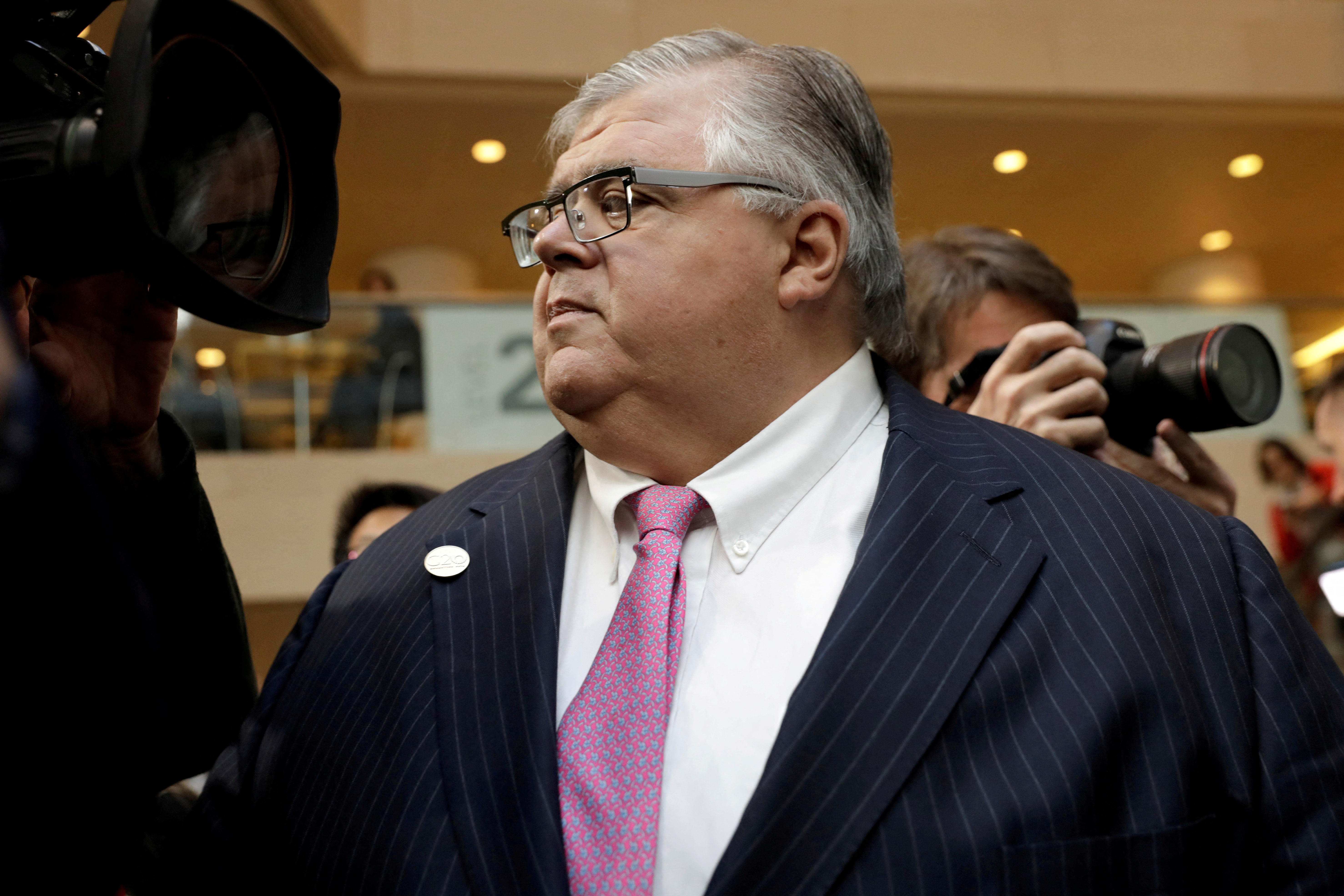
Agustin Carstens leaves after G-20 finance ministers and central banks governors family photo during the IMF/World Bank spring meeting in Washington, U.S., April 20, 2018. REUTERS/Yuri 

LONDON, Sept 27 (Reuters) - Developing national digital currencies are at risk due to a lack of legal powers to issue them in most of the world, the head of the global central bank umbrella body, the Bank for International Settlements, warned on Wednesday.

While countries generally have laws on banknotes, coins and credit balances, an IMF paper in 2020 showed that close to 80% of central banks are either not allowed to issue a digital currency under their existing laws, or the legal framework is unclear.

"This needs to be rectified," the BIS' general manager Agustin Carstens said in a speech. "The public rightly demands forms of money that meet their needs and expectations."

His warning comes as central banks around the world push ahead with central bank digital currency (CBDC) development in a bid to make money more high tech and keep up with the features now offered by cryptocurrencies.

Some 11 countries have already launched them and next month the European Central Bank is expected to receive the green light to start work on a digital euro.

Carstens, whose organisation is overseeing much of the global test work, said central banks have a mandate to meet public demands and have also made significant investments into CBDCs.

"It is simply unacceptable that unclear or outdated legal frameworks could hinder their deployment," added Carstens, the former governor of the Mexico's central bank. "The work to address these issues needs to begin in earnest. And it needs to proceed at pace."


Reporting by Marc Jones; Editing by Josie Kao


Thursday, May 23, 2013

Who Really Runs the World? Conspiracies, Hidden Agendas & the Plan for World Government


May 22, 2013 | By admin


Andrew Gavin Marshall, New Dawn
Waking Times


A Historical Understanding of Power

In answering the question “Who Runs the World?” we must understand what positions within society hold the most power, and thus, the answer becomes clear. If we simply understand this as heads of state, the answer will be flawed and inaccurate. We must examine the globe as a whole, and the power structures of the global political economy.

The greatest position of power within the global capitalist system lies in the authority of money-creation: the central banking system. The central banking system, originating in 1694 in England, consists of an international network of central banks that are privately owned by wealthy shareholders and are granted governmental authority to print and issue a nation’s currency, and set interest rates, collecting revenue and making profit through the interest charged. Central banks give loans to both governments and industries, controlling both simultaneously. The ultimate centre of power in the central banking system is at the Bank for International Settlements (BIS), in Basle, Switzerland; which is the central bank to the world’s central banks, and is also a private bank owned by the world’s central banks.

As Georgetown University history professor Carroll Quigley wrote:


[T]he powers of financial capitalism had another far-reaching aim, nothing less than to create a world system of financial control in private hands able to dominate the political system of each country and the economy of the world as a whole. This system was to be controlled in a feudalist fashion by the central banks of the world acting in concert, by secret agreements arrived at in frequent private meetings and conferences. The apex of the system was to be the Bank for International Settlements in Basle, Switzerland, a private bank owned and controlled by the world’s central banks which were themselves private corporations.1


.

P.S.
The problem with articles such as this is that they always fail to identify the head of this multifaceted international octopus.  This does a great disservice to the reader, and actually further conceals the culprits (in plain sight) ...  Though they vaguely make occassional reference to its agents.  - Arsenio.
.

Thursday, June 17, 2010

We’re All Peripheral Now

June 15, 2010, 11:33 AM GMT

By David Cottle

Whenever capital markets think they can at last settle down to concentrate on something else: mildly positive economic data, perhaps, or the crucifixion of BP, the euro-zone’s sovereign-debt hydra grows another head and lumbers back center stage.

Look at U.S. equity markets. They were doing OK on Monday until Moody’s announced its latest robust hack at Greece’s credit ratings. Such a move had been fairly well flagged but, even so, coming after Banco Bilbao Vizcaya Argentaria chairman Francisco Gonzalez gloomily said most Spanish companies and banks are suffering from a credit freeze, it was more than enough to send investors scurrying for the exits.


AFP/Getty Images
A car passes by the Bank for International Settlements on May 10, 2010 in Basel.
.

Now they have the latest quarterly review from the Bank for International Settlements to chew over, too, and it’s unlikely to have them hurrying back into the fray.

As is its wont, the BIS has been looking at who in struggling, so-called ‘peripheral’ nations of the euro zone owes what to whom. And, surprise surprise, it tells us:

“Euro-area banks were particularly exposed to the residents of Greece, Ireland, Portugal and Spain, accounting for almost two thirds of all BIS reporting banks’ exposures to these countries.”

Within the euro area, French and German banks, apparently, have the largest exposures ($493 billion and $465 billion, respectively) while, without, banks headquartered in the United Kingdom had larger claims on Ireland ($230 billion) than banks based in any other country.

Just to pile mess on top of mess, Spanish banks were the ones with the highest level of exposure to the residents of Portugal ($110 billion).

These data are particularly interesting and well timed. Leaders in Europe’s relatively prudent ‘core’ are conducting their own heated internal debates over the extent to which the profligate periphery ought to be bailed out with their voters’ hard-earned funds and reputations. The idea of blank checks to Greece, Spain and all isn’t one that resonates much with the German people by all accounts; it’s hard to imagine the French are any more keen. Both have problems enough of their own, anyway, highlighted most recently by this morning’ s dismal ZEW sentiment survey out of Germany.

But, alas, the BIS’ numbers blur the over-used distinction between ‘periphery’ and ‘core’ almost to the point of invisibility. For the latter, it may well be a case of ‘bail out the debtors; the banks you save may be your own.’
.
.
Source: http://blogs.wsj.com/source/2010/06/15/were-all-peripheral-now/
.

Wednesday, March 24, 2010

BIS: How The Rothschilds Control & Rule the World


by WILLIAM DEAN A.GARNER

(March 17, 2010) For decades, people have urged me, pushed me, prodded me, practically peeled off my skin, pulled out my eyes, and yanked out my brain to prove it, i.e. show them the data, the results, the books, manuals, pamphlets, journals, monographs, voice and video recordings, all the resources I have used to make the statements I do about the Brzezinski Cartel and the Rothschilds.

On the evening of St. Patrick's Day 2010, I feel now is the time... but with a twist.

The list below shows 165 different ways how The First Sphere of Influence (Rothschilds and Brzezinski Cartel) controls the world. One hundred and sixty-five reasons to believe what I say to be 100% accurate and true.

Each entry is a separate and distinct central bank, located in a separate and distinct part of the world. These central banks cover the globe and know absolutely no boundaries, effectively erasing borders between even sworn enemies.

The Bank of International Settlements or BIS (pronounced BIZZ) is the Rothschild's piggy bank, a veritable deep-pit mine, the equivalent of quadrillions of dollars.


.

Wednesday, November 25, 2009

Settlement reached in Diocese sexual abuse case


Christina Grande
Created: 11/24/2009 09:31:16 PM AKST

The Fairbanks Catholic Diocese has agreed to almost $10 million settlement with almost 300 victims of clergy abuse. The announcement was made in U.S. Bankruptcy Court, Nov. 24.

The first legal claim was filed more than 7 years ago but some of the victims say they have been waiting for almost 70 years, making today's news a long time coming.

"It validates the fact that people have been victimized," said victim's liaison, Elsie Boudreau. Bourdreau is also a victim survivor of clergy sexual abuse within the Fairbanks Catholic Diocese. She came forward with her story in 2003, filed a claim a year later and settled in 2005. Since then, Bourdreau has helped the nearly 300 victims who went through the same thing. "So many people talk about having black mark on their sole as a result of what happened," said Bourdreau.
Although today's settlement still needs court approval, some say it is a step in the right direction. "It establishes the framework for moving forward and taking the next step in this litigation," said victim's attorney, Ken Rossa.

According to Rossa, there could be more money on top of the settlement by pursuing the Bishops insurance, which could be up to $100 million. "We don't have any knowing right now what the timing will be on the second part of the compensation package," said Rossa.

As for how the settlement will be divided up. "We will actually have someone who will go through their files and look at what happened to them and how it affected their lives and try to come up with a fair way of calculating relative injury and using a formula how much each person should get of the limited amount of money available," said Rossa.

While some say the compensation is better than nothing, it does not make up for a scarred memory. "No amount of money is enough to make up for the loss childhood for the innocence stolen," said Bourdreau.

As this chapter closes, another will begin. "You want people to heal from this experience. They are coming forward and speaking their truth and hopefully they will be able to find a way to heal," said Bourdreau.

Mr. Rossa says if the Bankruptcy Court approves the amount victims could start seeing the money at the end of February of next year.


P.S. This is the same Roman Catholic Church whose U.S. Catholic Bishops coerce Healthcare Overhaul legislation with no shame of the impropriety that it poses. Hint: Separation of Church and State!
.