Showing posts with label Duplicity. Show all posts
Showing posts with label Duplicity. Show all posts
Tuesday, June 16, 2026


Wednesday, May 13, 2026
Tuesday, April 28, 2026
Georgetown (Univ.) Scrubs DEI Initiatives From Websites After Being Exposed By Daily Caller
ANALYSIS

(Photo by Alex Wong/Getty Images)
Shae McInnis Contributor
April 27, 202611:47 AM ET
I’m a sophomore at Georgetown and the President of the Georgetown College Republicans. Last Monday, I published an article here in the Daily Caller detailing how Georgetown renamed its DEI office while maintaining a slew of illegal DEI initiatives. The article gained immediate attention; it garnered over 50,000 views on X, was reposted by prominent conservatives, and was even discussed in one of Georgetown’s Race, Power, and Justice classes, where it was referred to as hate speech.
Georgetown’s administrators also took notice. By Friday evening, the website of the Office of Equal Opportunity Compliance, formerly the Office of Institutional Diversity Equity and Affirmative Action, was cleared of any reference to the illegal DEI policies that I highlighted just a few days earlier.
Previously, the website featured a page that boasted of “Diversity Recruitment Sources” and explained that “it is the goal of Georgetown University” to employ “particularly minority persons, women, veterans, and persons with disabilities” in accordance with the “University’s Affirmative Action Plan.” Now, “diversity” has been stripped from the title of the new “Outreach and Recruitment” page. All mentions of prioritizing women and minorities and of the university’s Affirmative Action plan are gone.
I’m a sophomore at Georgetown and the President of the Georgetown College Republicans. Last Monday, I published an article here in the Daily Caller detailing how Georgetown renamed its DEI office while maintaining a slew of illegal DEI initiatives. The article gained immediate attention; it garnered over 50,000 views on X, was reposted by prominent conservatives, and was even discussed in one of Georgetown’s Race, Power, and Justice classes, where it was referred to as hate speech.
Georgetown’s administrators also took notice. By Friday evening, the website of the Office of Equal Opportunity Compliance, formerly the Office of Institutional Diversity Equity and Affirmative Action, was cleared of any reference to the illegal DEI policies that I highlighted just a few days earlier.
Previously, the website featured a page that boasted of “Diversity Recruitment Sources” and explained that “it is the goal of Georgetown University” to employ “particularly minority persons, women, veterans, and persons with disabilities” in accordance with the “University’s Affirmative Action Plan.” Now, “diversity” has been stripped from the title of the new “Outreach and Recruitment” page. All mentions of prioritizing women and minorities and of the university’s Affirmative Action plan are gone.
Monday, April 20, 2026
My response to Joanna de Bruyn's "Epstein, Iran, 250 years, Heritage Foundation Connected"

Mrs. Joanna de Bruyn my hope is that you accept my observation of your presentation as constructive criticism, and forgive me for pointing out a few oddities.
You began your presentation mentioning "Epstein, Iran, 250 years, Heritage Foundation Connected", and associated all these with Trump, the American Empire, and the United Nations, all these nexuses make sense. Eventually, you ended up focusing on the United Nations and your recent appeal for the GCSDA Corporation (501C3) to divest itself from that World Government (U.N.) behemoth.
My question to you is where have you been for the last 30 years that you failed to notice that your fellow Austrailian Russell Standish's son and GEORGETOWN UNIV. (Juris Doctor) ALUMNUS, James D. Standish was an official representative to the U.S. Government and Liaison for the GCSDA to the United Nations in New York & Geneva?
Besides these violations of 2nd Corinthians 6:14, Bert B. Beach, John Graz, and Ganoune Diop have all been the church’s liaison to the United Nations, while being president/secretary general of the International Religious Liberty Association (IRLA), and SIMULTANEOUSLY secretaries of the Conference of Secretaries of Christian World Communions, an offshoot of the World Council of Churches (WCC).
So, why are you waking up now regarding this ECUMENICAL duplicity within the GCSDA Corporation?
The Adventist Movement is the CHURCH, not the General Conference of Seventh day Adventist.
God that made the world and all things therein, seeing that he is Lord of heaven and earth, dwelleth not in temples made with hands;
Acts 17:24.
God has a church. It is not the great cathedral, neither is it the national establishment, neither is it the various denominations; it is the people who love God and keep His commandments. “Where two or three are gathered together in my name, there am I in the midst of them” (Matthew 18:20). Where Christ is even among the humble few, this is Christ’s church, for the presence of the High and Holy One who inhabiteth eternity can alone constitute a church.
The Upward Look, p.315.
Sunday, November 02, 2025
A priest is walking from Illinois to New York for immigrants’ rights
The Rev. Gary Graf, 67, sees his 800-mile journey to Ellis Island as a modern-day pilgrimage. He hopes to finish the trip this month.
November 2, 2025 at 6:00 a.m. ESTToday at 6:00 a.m. EST

The Rev. Gary Graf receives a blessing in front of the childhood home of Pope Leo XIV in the Chicago suburbs in October before starting his walk to Ellis Island in New York. (Courtesy of Gary Graf)

By Ben Brasch
The Rev. Gary Graf didn’t plan past Indiana on his walk across the country.
As he often has, the Chicago-based Catholic priest figured he would rely on the “angels” in his life for support as he walks from Illinois to New York this month to raise awareness of immigrants’ rights.
Graf, 67, started his trek Oct. 6 at the childhood home of Pope Leo XIV in Dolton, Illinois, and plans to end at Ellis Island — where more than 12 million immigrants entered the United States during the facility’s peak years.
Before he began, an acquaintance commented that her mapping app showed no obvious route for the journey. Walkers had to make their own paths, Graf recalled her saying, similar to the millions of people in this country with no real pathway to citizenship.
The Washington Post interviewed Graf on Oct. 21 after he woke up in Bowling Green, Ohio, for his 15th day on the road. This conversation has been edited for length and clarity.
Thursday, June 30, 2022
Pelosi Received Communion at Vatican After Meeting With Pope
The sacrament has become a political issue, with conservative American bishops like House Speaker Nancy Pelosi’s own priest, who has said he will deny her the sacrament until she stops publicly supporting abortion rights.

Pope Francis greeting Speaker of the House Nancy Pelosi and her husband, Paul Pelosi, before celebrating a Mass on Wednesday at the Vatican.Credit...Vatican Media, via Associated Press

By Jason Horowitz
June 29, 2022
ROME — U.S. House Speaker Nancy Pelosi, an avid defender of abortion rights, met privately with Pope Francis on Wednesday and received communion from a priest during a papal Mass at St. Peter’s Basilica, according to an attendee.
Ms. Pelosi, who has denounced the Supreme Court’s decision to strip constitutional protections for abortion as “outrageous and heart-wrenching,” sat in a V.I.P. diplomatic section of the basilica and received a blessing from Francis in private before the morning Mass celebrating the feasts of St. Peter and St. Paul. She later lined up to receive communion from a priest with the rest of the congregants.
The Vatican did not return a request for confirmation about the meeting, but released a photo of Ms. Pelosi and her husband, Paul Pelosi, greeting Francis on the side of the basilica.
Pope Francis has consistently called abortion evil and murderous, and upheld the church’s absolute opposition to it, and during the Mass on Wednesday, he said church leaders must “continue to care for human life.” But Francis has also vigorously opposed the politicization of church sacraments, and told newly consecrated archbishops upon whom he bestowed the woolen pallium stole on Wednesday to be inclusive and to not “remain pinned to some of our fruitless debates.”
He added, “So many times we become a church with open doors, but only to send people away, to condemn them.”
Earlier in the day, Francis issued a new apostolic letter about church liturgy, in which he emphasized that celebrating Mass belongs to “the totality of the faithful united in Christ.”
“The liturgy does not say ‘I’ but ‘we,’” Francis wrote, “and any limitation on the breadth of this ‘we’ is always demonic.”
Francis has said in the past that “I have never refused the Eucharist to anyone,” and has preached that communion “is not the reward of saints, but the bread of sinners.” The Vatican has urged conservative bishops in the United States not to reduce the sacrament to a political issue after several floated the idea last year of denying communion to President Biden and other Catholic leaders supportive of abortion rights. Ms. Pelosi’s hometown priest, the conservative Archbishop Salvatore Cordileone of San Francisco, had said he would deny her the sacrament until she stops publicly supporting abortion rights.
The divide between such conservative American bishops and Pope Francis, who has explicitly identified the United States as the source of opposition to his pontificate, has amounted to a rare open rift in the church. Francis’ top doctrinal official, Cardinal Luis Ladaria, last year wrote a letter to the American bishops warning them that moving ahead on an effort to deny communion to Catholic supporters of abortion rights could “become a source of discord rather than unity within the episcopate and the larger church in the United States.”
Well before Ms. Pelosi’s visit on Wednesday, Francis had made it clear through the symbolism favored by the Vatican that he prefers an inclusive approach.
In a visit to Rome in October, President Biden, the first Roman Catholic to occupy the Oval Office in 60 years, received communion at St. Patrick’s Church in Rome after announcing that Pope Francis had told him during their long private meeting at the Vatican that he should continue taking the sacrament. The Vatican declined to comment at the time.
On Tuesday night, at a reception with hot dogs and hamburgers ahead of Independence Day at the residence of the U.S. Embassy to the Holy See, Ms. Pelosi gave the evening’s toast before a crowd of hundreds, including ambassadors and priests, and former U.S. ambassador to the Vatican Callista Gingrich and her husband, former Speaker of the House Newt Gingrich. Ms. Pelosi spoke about the importance of faith and called Mr. Biden a man of deep faith.
“Faith is an important gift, not everyone has it but it is the path to so many other things,” she said.
By Jason Horowitz
June 29, 2022
ROME — U.S. House Speaker Nancy Pelosi, an avid defender of abortion rights, met privately with Pope Francis on Wednesday and received communion from a priest during a papal Mass at St. Peter’s Basilica, according to an attendee.
Ms. Pelosi, who has denounced the Supreme Court’s decision to strip constitutional protections for abortion as “outrageous and heart-wrenching,” sat in a V.I.P. diplomatic section of the basilica and received a blessing from Francis in private before the morning Mass celebrating the feasts of St. Peter and St. Paul. She later lined up to receive communion from a priest with the rest of the congregants.
The Vatican did not return a request for confirmation about the meeting, but released a photo of Ms. Pelosi and her husband, Paul Pelosi, greeting Francis on the side of the basilica.
Pope Francis has consistently called abortion evil and murderous, and upheld the church’s absolute opposition to it, and during the Mass on Wednesday, he said church leaders must “continue to care for human life.” But Francis has also vigorously opposed the politicization of church sacraments, and told newly consecrated archbishops upon whom he bestowed the woolen pallium stole on Wednesday to be inclusive and to not “remain pinned to some of our fruitless debates.”
He added, “So many times we become a church with open doors, but only to send people away, to condemn them.”
Earlier in the day, Francis issued a new apostolic letter about church liturgy, in which he emphasized that celebrating Mass belongs to “the totality of the faithful united in Christ.”
“The liturgy does not say ‘I’ but ‘we,’” Francis wrote, “and any limitation on the breadth of this ‘we’ is always demonic.”
Francis has said in the past that “I have never refused the Eucharist to anyone,” and has preached that communion “is not the reward of saints, but the bread of sinners.” The Vatican has urged conservative bishops in the United States not to reduce the sacrament to a political issue after several floated the idea last year of denying communion to President Biden and other Catholic leaders supportive of abortion rights. Ms. Pelosi’s hometown priest, the conservative Archbishop Salvatore Cordileone of San Francisco, had said he would deny her the sacrament until she stops publicly supporting abortion rights.
The divide between such conservative American bishops and Pope Francis, who has explicitly identified the United States as the source of opposition to his pontificate, has amounted to a rare open rift in the church. Francis’ top doctrinal official, Cardinal Luis Ladaria, last year wrote a letter to the American bishops warning them that moving ahead on an effort to deny communion to Catholic supporters of abortion rights could “become a source of discord rather than unity within the episcopate and the larger church in the United States.”
Well before Ms. Pelosi’s visit on Wednesday, Francis had made it clear through the symbolism favored by the Vatican that he prefers an inclusive approach.
In a visit to Rome in October, President Biden, the first Roman Catholic to occupy the Oval Office in 60 years, received communion at St. Patrick’s Church in Rome after announcing that Pope Francis had told him during their long private meeting at the Vatican that he should continue taking the sacrament. The Vatican declined to comment at the time.
On Tuesday night, at a reception with hot dogs and hamburgers ahead of Independence Day at the residence of the U.S. Embassy to the Holy See, Ms. Pelosi gave the evening’s toast before a crowd of hundreds, including ambassadors and priests, and former U.S. ambassador to the Vatican Callista Gingrich and her husband, former Speaker of the House Newt Gingrich. Ms. Pelosi spoke about the importance of faith and called Mr. Biden a man of deep faith.
“Faith is an important gift, not everyone has it but it is the path to so many other things,” she said.
On Wednesday, Ms. Pelosi, who is also visiting with Italian leaders during her time in Rome, followed the Mass with a visit to the Sant’Egidio Community, a Catholic charity that Francis admires for its work with refugees and the poor.
Ms. Pelosi met with refugees there and, at an event marking a $25,000 gift from the State Department to the charity, mentioned her attendance at the Mass with Francis and church leaders and spoke about the importance of preaching the Gospel through actions.
“We had the pleasure of attending Mass this morning with His Holiness and many, many, many leaders of the church,” Ms. Pelosi said. “In the spirit of St. Francis, which is the name of His Holiness and my city of San Francisco, I thank you for preaching the Gospel, sometimes using words.”
Saturday, November 10, 2018
Two Kinds of Jesuits
Whereas heroic missionary effort and martyrdom seemed the hallmark of the first Jesuits, the second generation moved in a different direction…

In the Roman calendar, October is a harvest for militant saints. Kicking off with Saint Therese of Lisieux who proclaimed, “Sanctity! It must be won at the point of a sword!”, the calendar marches through to Saint Francis of Assisi, and Saint Faustina, then celebrates the Battle of Lepanto with the feast of Our Lady of the Rosary. Not finished, the heroic Saint Ignatius of Antioch is followed by John de Brébeuf and the North American martyrs on the nineteenth and Pope Saint John Paul II on the twenty-second. Although their day has now been moved to May, October was also the month in which the martyrs of England and Wales were commemorated.
Reading Ignatius Press’ recently published biography of St John de Brébeuf brought to mind the heroism of the first generation of Jesuit missionaries, and one couldn’t help contrasting them with the present crop of Jesuits. Readers who are familiar with the history of the English Protestant Revolution will remember how Jesuits like Edmund Campion and Robert Southwell left their homeland to train as priests, then returned to Elizabeth I’s police state to serve their co-religionists in secret. Always on the run, using aliases, disguises, and hiding themselves in Saint Nicholas Owen’s cleverly constructed priest holes, the young Jesuits were profiles in courage. Ultimately tortured and martyred, these were men whose determination and faith knew no bounds.
They were matched in the sixteenth century by the Frenchmen who came to the New World to evangelize the savages. It is easy in our Disney-fied society to imagine that the native American tribal people were all peaceful hunter-gatherers who subsisted on nuts and berries and the occasional rabbit. While some tribes were indeed peaceful, many were not. The Mohawk, Huron, and Iroquois of New France were a warlike people. Locked in superstition, their religion was a horrible spectacle of demon worship and frenzied orgies. Driven by fear and revenge, they tortured their captives for days in the most unspeakable ways, finally ending the ritual agony by consuming their flesh in a grotesque cannibalistic feast.
These were the people Saint John de Brébeuf, Saint Isaac Jogues, and their companions left France to evangelize. The hardships they endured are only somewhat visualized in films like Blackrobe and The Mission. Setting out without knowing the language, and expecting a tomahawk in the back of the head at any moment, the Jesuits paddled and portaged canoes with the Indians as they traveled upstream to their settlements. They lived and slept with the natives in squalid, vermin-infested conditions. The food was sparse, the Canadian winter as harsh as you can imagine, and the filth, promiscuity, and savagery surrounded them like a constant miasmal mist.
De Brébeuf was eventually martyred in 1649 by the Iroquois after enduring appalling ritual torture. Isaac Jogues had his fingers bitten off knuckle-by-knuckle before escaping back to France and, after recovery, returning to New France where he was also martyred by the Mohawk warriors.
I recount the heroism of these Jesuit martyrs as a sampling of a similar spirit amongst the first Jesuits. They not only served in the midst of tremendous hardship—often offering their lives—in Canada and England, but also in India, China, Japan, and South America. Whereas heroic missionary effort and martyrdom seemed the hallmark of the first Jesuits, the second generation moved in a different direction.
In the second half of the seventeenth century, the Jesuits in Europe had the reputation of being liberal. Contrasting with the Calvinistic-type Jansenists, the Jesuits were known for making whatever compromise necessary to advance the faith. So Hilaire Belloc in Characters of the Reformation wrote, “The great effect of the Jesuits had been to recover Europe for the Faith by making every sort of allowance—trying to understand and by sympathy to attract the worldly and the sensual and all the indifferent, and insisting the whole time on the absolute necessity of loyalty to the Church. Defend the unity of the Church, and talk of other things afterwards: preserve the Church which was in peril of destruction; only then, when you have leisure, after the battle, debate other things.” This accommodating spirit caused them to be viewed with suspicion by more dogmatically minded Catholics and, along with their political intrigues, led to their suppression in 1773 by Pope Clement XIV.
This history provides some context therefore with the present crop of Jesuits. In a recent essay in the Jesuit mouthpiece, America magazine, the ordination of homosexuals is advanced.[1] Media darling Father James Martin SJ is notoriously controversial for his advocacy of the LGBTQ agenda in the Catholic Church. Appointed by the Jesuit pope to be a media spokesman, Father Martin endorses dissident gay support groups while ignoring the orthodox support ministry, Courage. In a devastating essay, Father Paul Shaughnessy SJ asks, “Are the Jesuits Catholic?”[2]
Saturday, August 25, 2018
Pope Francis' speech was 'disgraceful' and contained 'extraordinary deflection', victims claim
Saturday 25 August 2018

Protesters demonstrate on the Ha'Penny Bridge during the visit of Pope Francis in Dublin, Ireland, August 25, 2018. REUTERS/Hannah McKay TPX IMAGES OF THE DAY
Laura Lynott, Kevin Doyle and Esther McCarthy
August 25 2018 2:56 PM
Clerical abuse survivor Colm O’Gorman has described the speech by Pope Francis at Dublin Castle as an “incredible missed opportunity”.
Speaking after he attended the civic reception for the Pontiff, Mr Gorman said: “It is staggering to me that in 2018 we are still asking a Pope to take responsibility, not for his own actions necessarily but for the actions of the institution that he heads.

Protesters line the streets in Dublin
“It’s mind-boggling to me that to ask the Pope to tell the damn truth is a radical thing to suggest.”
Read More: Pope Francis speech: Calls clerical abuse scandal in Ireland 'repugnant', makes thinly-veiled reference to abortion referendum
Asked whether he had hoped the Pope would go further in his comments, the head of Amnesty in Ireland said he should have looked to talk to the people of Ireland.
Video by: PA
“It’s a huge shame. Frankly it’s rather disgraceful. This is about criminality at the highest level within an institution,” Mr O'Gorman said.
He added: “The Vatican has directed, implemented and instituted a cover of the crimes of clergy, including the rape and abuse of children, of women and vulnerable adults across the world.
Wednesday, July 11, 2018
Catholic Bishop: Europe Migrant Crisis ‘Orchestrated’ by International Powers
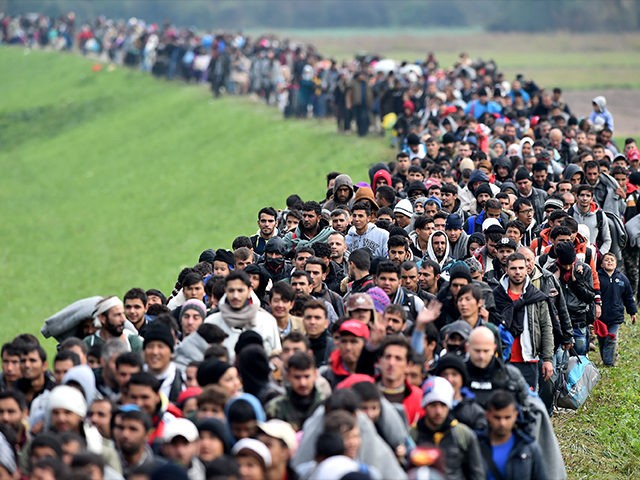
Jeff J Mitchell/Getty Images 7 Jul 2018
The Catholic church is being used as a pawn in a well-orchestrated plan to radically alter the Christian identity of European nations through mass migration, said Bishop Athanasius Schneider in a bombshell interview last week.
Schneider, who serves as auxiliary bishop of Astana, Kazakhstan, told the Italian daily Il Giornale that the current migrant crisis “represents a plan orchestrated and prepared for a long time by international powers to radically alter the Christian and national identity of the peoples of Europe.”
To achieve their objectives, these powers abuse “the true concept of humanism and even the Christian commandment of charity,” Schneider said, exploiting the moral authority of the church for anti-Christian purposes.
The powers in question “use the enormous moral potential of the church and their own structures to achieve their anti-Christian and anti-European goal more effectively,” he said.
The interview was released in the midst of a series of initiatives by Pope Francis to bring about a “change in mindset” regarding immigration by focusing on the positive contributions of immigrants rather than the negative fallout from mass migration.
Asked for his opinion of Italian populist politician Matteo Salvini, who now serves as interior minister, the bishop said he is unqualified to speak on Italy’s political situation but praised the general direction that Italy is now taking, especially by standing up to the European Union (EU), which he compared to the Soviet Union.
The bishop said he would applaud the government of any European nation that “tries to accentuate its own sovereignty and its historical, cultural, and Christian identity in the face of the totalitarianism of a sort of new Soviet Union, which today is called the European Union and has an unmistakably Masonic ideology.”
Schneider’s words were especially poignant given his background, having been born in the Soviet Union in 1961, the child of ethnic German Catholics whom Joseph Stalin sent to gulags after the Second World War.
The criticisms leveled by Bishop Schneider echoed similar concerns voiced by Hungarian Prime Minister Viktor Orbán, who has also fought to retain the “Christian” identity of Europe as well as his country’s national sovereignty.
Orbán has called out left-wing billionaire George Soros for his scheme to flood Europe with millions of migrants in an attempt to blur national borders, saying that the European Union is following “Soros migrant plans” with its forced immigration quotas.
The Hungarian prime minister said in 2017 that Soros and the EU seek to bring in the one million migrants annually to create an EU immigration force to undermine the national sovereignty of member states.
Source
Monday, May 28, 2018
‘Heretic’ in the Vatican
By Hannah Roberts | 5/28/18, 4:05 AM CET | Updated 5/28/18, 6:29 AM CET


Despite Pope Francis’ unflagging demeanor, there are signs that the personal attacks may be wearing him down | Andreas Solaro/AFP via Getty Images
ROME — “They call me a heretic.”
Not the words you’d expect to hear from the head of the Roman Catholic Church. But that’s what Pope Francis told a group of fellow Jesuits in Chile earlier this year, acknowledging the fierce pushback from arch-conservatives in the Vatican.
Celebrated by progressives around the world for his push to update and liberalize aspects of church doctrine, Francis is facing fierce blowback from traditionalists who take issue with his openness to Muslim migrants, his concern for the environment and his softer tone on divorce, cohabitation and homosexuality. Opposition has become so heated that some advisers are warning him to tread carefully to avoid a “schism” in the church.
Father Thomas Weinandy, a former chief of staff for the U.S. bishops’ committee on doctrine, has accused Francis of causing “theological anarchy.” Another group of bishops has warned Francis risks spreading “a plague of divorce.” Last fall, more than 200 scholars and priests signed a letter accusing Francis of spreading heresy. “This was not something I did lightly,” Father John Rice, a parish priest in Shaftesbury in the U.K. said, claiming the pope’s liberal push has caused “much division and disagreement, and sadness and confusion in the church.”
“It’s not merciful to let people continue to sin and say nothing,” Rice said. “If you see a child trying to put his hand in a fire you say stop.”
Tuesday, May 15, 2018
Pope Francis hints he may retire
Pope Francis hints he may retire
By Associated Press
May 15, 2018 | 9:32am

Getty Images
VATICAN CITY — Pope Francis says he has thought about when it might be time to “take leave” of his flock.
Francis made the comment during his morning homily Tuesday; the Vatican didn’t release the full text.
Francis was reflecting on St. Paul discerning when to leave his flock in the care of others, a decision Francis said all bishops must make.
He said: “When I read this, I think about myself, because I’m a bishop and I’ll have to take my leave.”
Francis has said retired Pope Benedict XVI “opened a door” to future popes by resigning. While the 81-year-old pope has said he didn’t envisage a long papacy, he hasn’t said explicitly if he’d retire.
Francis may have also been referring to Chilean bishops implicated in a sex abuse cover-up scandal.
Source
Wednesday, May 09, 2018
How the Vatican Became Enmeshed in the Met Gala
Posted by Edward Pentin on Wednesday May 9th, 2018 at 8:16 AM
The Pontifical Council for Culture wanted the focus to be on the Met’s exhibition of fashion, Catholicism and art rather than Monday’s Gala, viewed by many of the faithful as a sacrilegious mockery of the Church.

The Pontifical Council for Culture chose to collaborate with an exhibition at the Metropolitan Museum of Art in New York because of the Met’s significance to culture and potential global outreach, but officials were unaware of the widely criticized gala that took place on Monday night.
Cardinal Gianfranco Ravasi, president of the Pontifical Council, had been wanting for some time for the dicastery to focus on the relationship between fashion, art and faith, and so agreed to collaborate with the exhibition which opens May 10 and runs until October 8.
“We wanted to be involved and those behind it had good intentions,” a Vatican official told the Register. “As the Met is one of the most significant cultural institutions in the world, and our remit is to engage the world, we see it as important.”
But the Vatican was unaware of the Met Gala, and that the evening event would be used by some celebrities to dress up in a way deemed by many to be a sacrilegious mockery of the Church.
The Gala “crossed a line and was openly, brazenly disrespectful,” wrote Piers Morgan, a Catholic talk show host, of the star-studded event which included pop singer Rihanna dressed up as a provocative, sequinned pope and actress Jennifer Lopez wearing a jewel-encrusted multi-coloured cross. “By doing so, [the Met] confirmed itself as an organisation of rank double standards, because everyone knows they'd have never dared do it to Islam or Judaism.”
The Met Gala is the annual curtain-raising event for its Summer exhibit, this year called Heavenly Bodies — Fashion and the Catholic Imagination. The display will feature “fashion and medieval art from The Met collection to examine fashion’s ongoing engagement with the devotional practices and traditions of Catholicism.”
The Vatican has loaned 40 priceless items which serve as the “cornerstone” of the display, including “papal robes and accessories from the Sistine Chapel sacristy, many of which have never been seen outside the Vatican.”
The Pontifical Council’s involvement dates back to the latter half of last year. Anna Wintour, the editor of Vogue, a fashion magazine, says she had the idea but struggled to attract the Vatican’s interest, sending many emails but never receiving a response.

The Pontifical Council for Culture chose to collaborate with an exhibition at the Metropolitan Museum of Art in New York because of the Met’s significance to culture and potential global outreach, but officials were unaware of the widely criticized gala that took place on Monday night.
Cardinal Gianfranco Ravasi, president of the Pontifical Council, had been wanting for some time for the dicastery to focus on the relationship between fashion, art and faith, and so agreed to collaborate with the exhibition which opens May 10 and runs until October 8.
“We wanted to be involved and those behind it had good intentions,” a Vatican official told the Register. “As the Met is one of the most significant cultural institutions in the world, and our remit is to engage the world, we see it as important.”
But the Vatican was unaware of the Met Gala, and that the evening event would be used by some celebrities to dress up in a way deemed by many to be a sacrilegious mockery of the Church.
The Gala “crossed a line and was openly, brazenly disrespectful,” wrote Piers Morgan, a Catholic talk show host, of the star-studded event which included pop singer Rihanna dressed up as a provocative, sequinned pope and actress Jennifer Lopez wearing a jewel-encrusted multi-coloured cross. “By doing so, [the Met] confirmed itself as an organisation of rank double standards, because everyone knows they'd have never dared do it to Islam or Judaism.”
The Met Gala is the annual curtain-raising event for its Summer exhibit, this year called Heavenly Bodies — Fashion and the Catholic Imagination. The display will feature “fashion and medieval art from The Met collection to examine fashion’s ongoing engagement with the devotional practices and traditions of Catholicism.”
The Vatican has loaned 40 priceless items which serve as the “cornerstone” of the display, including “papal robes and accessories from the Sistine Chapel sacristy, many of which have never been seen outside the Vatican.”
The Pontifical Council’s involvement dates back to the latter half of last year. Anna Wintour, the editor of Vogue, a fashion magazine, says she had the idea but struggled to attract the Vatican’s interest, sending many emails but never receiving a response.
Monday, May 07, 2018
No wonder there’s an exodus from religion

President Trump at a National Day of Prayer event in the Rose Garden of the White House on Thursday. (Jim Lo Scalzo/EPA-EFE/Shutterstock)
By E.J. Dionne Jr. Email the author Opinion writer
May 6 at 7:07 PM
Do you wonder why the proportion of Americans declaring themselves unaffiliated with organized religion has skyrocketed in recent decades?
This trend is especially pronounced among adults under 30, roughly 40 percent of whom claim no connection to a religious congregation or tradition and have joined the ranks of those the pollsters call the “nones.”
To understand how so many now prefer nothing to something when it comes to religion, ponder the news over the past few days.
The same newspapers and broadcasts that were reporting on how President Trump finally admitted that he had indirectly paid a porn star to keep quiet about an alleged affair also offered accounts of what we’ll call Jesuitgate, the controversy over who should be the chaplain of the House of Representatives.
On Thursday, Speaker Paul D. Ryan backed down from his effective dismissal of the Rev. Patrick Conroy, a Jesuit priest, as chaplain. Ryan had said he asked the cleric to quit because he had provided inadequate “pastoral services,” but denied that Conroy was ousted because of a mild prayer for justice he delivered during the debate over the GOP tax cut.
1:19
Speaker Ryan says House chaplain can stay in job
Thursday, May 03, 2018
House Chaplain Pat Conroy rescinds his resignation, to sit down with Paul Ryan next week
By Daniella Diaz and Lauren Fox, CNN
Updated 7:42 PM EDT, Thu May 03, 2018

(CNN)House Speaker Paul Ryan said Thursday he accepts the decision by the Rev. Pat Conroy, the House chaplain, to rescind his resignation, following a week's worth of lawmakers from both parties questioning Ryan's request that Conroy step down.
"I have accepted Father Conroy's letter and decided that he will remain in his position as chaplain of the House," Ryan said in a statement. "My original decision was made in what I believed to be in the best interest of this institution. To be clear, that decision was based on my duty to ensure that the House has the kind of pastoral services that it deserves."
Ryan added, "It is my job as speaker to do what is best for the body, and I know that this body is not well-served by a protracted fight over such an important post. I intend to sit down with Father Conroy early next week so that we can move forward for the good of the whole House."
Monday, April 23, 2018
A Cassandra Cry Against Pope Francis
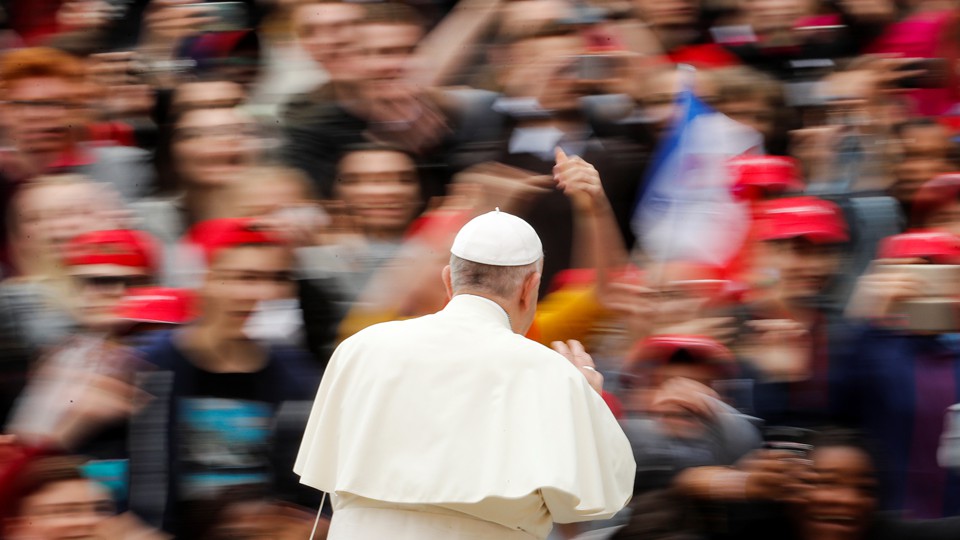
Remo Casilli / Reuters
Ross Douthat's views on the pope are intensely unpopular. But has he identified a fundamental tension in the Church?
Ross Douthat's views on the pope are intensely unpopular. But has he identified a fundamental tension in the Church?
EMMA GREEN
APR 22, 2018
POLITICS
Across every continent, in every country, Catholics “find themselves divided against one another,” writes the New York Times columnist Ross Douthat in his new book, To Change the Church. On one side stand the orthodox, who see doctrine and tradition as the best antidote to a changing world. On the other stand the liberals, who yearn for a Church that focuses on pastoring rather than enforcing rigid rules. This “widening theological and moral gulf,” Douthat argues, is potentially “wider than the chasm that separated Catholicism from Orthodoxy, and later from Lutheranism and Calvinism.”
That’s a bold claim to make. After all, the schisms of East and West, Catholic and Protestant, were world-shaking, often bloody events. But in today’s Church—and specifically in this pope—Douthat sees the possibility that the Roman Catholic Church will once again break apart.
Ostensibly, his beef is with Pope Francis, whom Douthat paints as an unyielding and stubborn manager who has spent his five years in Rome failing to clean up the Vatican’s messes, hurling insults at conservative clerics, and pushing radical doctrinal changes without buy-in from major wings of the Catholic hierarchy. He writes skeptically about Francis’s imagery and rhetoric of mercy, from pictures of the pontiff kissing a man covered in boils to his controversial declaration, “Who am I to judge?” about gay men searching for God. But at its core, Douthat’s book is about a vast, premodern institution’s halting evolution into modern times, and whether it can sufficiently adapt to maintain unified influence over 1.3 billion adherents spanning Africa to Asia to the Americas. “This is a hinge moment in the history of Catholicism,” Douthat writes. While he is unlikely to change many minds about controversial Catholic issues or reshape people’s opinions of the pope, Douthat is digging at a question present in every aspect of contemporary culture and politics: How can those who primarily wish to preserve their culture live in community with those who cheer for inexorable change?
Monday, April 02, 2018
Pope 'ashamed' young to inherit fractured world

AFP
March 30, 2018

Speaking in Rome at the end of the traditional Good Friday Stations of the Cross procession, the pontiff said the world was "devoured by egotism in which the young, the sick, the old are marginalised".
Amid tight security, around 20,000 faithful, many holding candles, gathered around Rome's Colosseum for the religious ritual that evokes the path Jesus walked to his crucifixion.
The Italian capital has been put under tight surveillance following a week marked by a series of anti-terror arrests.
Italian Interior Minister Marco Minniti warned this week of the high risk of an attack in Italy, and some 10,000 officers have been deployed to guarantee safety in Rome, in particular during the Easter celebrations presided over by the Pope this weekend culminating with the Easter day celebrations on Sunday.
The cross is lit before the Stations of the Cross torchlight procession at the Colosseum in Rome (AFP Photo/Marco BERTORELLO)
Rome (AFP) - Pope Francis on Friday said he was "ashamed" that younger generations would inherit a world "fractured by divisions and wars".
Speaking in Rome at the end of the traditional Good Friday Stations of the Cross procession, the pontiff said the world was "devoured by egotism in which the young, the sick, the old are marginalised".
Amid tight security, around 20,000 faithful, many holding candles, gathered around Rome's Colosseum for the religious ritual that evokes the path Jesus walked to his crucifixion.
The Italian capital has been put under tight surveillance following a week marked by a series of anti-terror arrests.
Italian Interior Minister Marco Minniti warned this week of the high risk of an attack in Italy, and some 10,000 officers have been deployed to guarantee safety in Rome, in particular during the Easter celebrations presided over by the Pope this weekend culminating with the Easter day celebrations on Sunday.
Saturday, February 03, 2018
Pope’s briefing system under scrutiny after gaffe in Chile
Francis has created his own informal, parallel information structure outside the Vatican.
By NICOLE WINFIELD
Associated Press
VATICAN CITY — Just how well informed is Pope Francis about the goings-on in his 1.2-billion strong Catholic Church?

VATICAN CITY — Just how well informed is Pope Francis about the goings-on in his 1.2-billion strong Catholic Church?
Pope Francis waves as he leaves at the end of his weekly general audience in St. Peter's Square at the Vatican on Wednesday.
That question is making the rounds after the pope seemed completely unaware of the details of a Chilean sex abuse scandal, a failure that soured his recent trip there and forced him to do an about-face. It also came up after his abrupt, no-explanation-given dismissal of a respected Vatican bank manager.
And it rose to the fore when he was accused by a cardinal of not realizing that his own diplomats were “selling out” the underground Catholic Church in China for the sake of political expediency.
Some Vatican observers now wonder whether Francis is getting enough of the high-quality briefings befitting a world leader, or whether he is relying more on instinct and his own network of informants who slip him information on the side.
In his five years as pope, Francis has created an informal, parallel information structure that often rubs up against official Vatican channels. That includes a papal kitchen cabinet of nine cardinal advisers who meet every three months at the Vatican and have the pope’s ear, plus the regular briefings he receives from the top Vatican brass.
The Vatican this week issued a remarkable defense of Francis’ information flow and his grasp of the delicate China dossier. The Holy See press office insisted that Francis followed the China negotiations closely, was being “faithfully” briefed by his advisers and was in complete agreement with his secretary of state on the topic.
“It is therefore surprising and regrettable that the contrary is affirmed by people in the church, thus fostering confusion and controversy,” said Vatican spokesman Greg Burke.
Such an affirmation would seem unnecessary given popes usually are surrounded only by their top official advisers. But Francis lives at the Vatican’s Santa Marta hotel rather than the Apostolic Palace, where he can more easily keep his door open at all hours, and where a network of friends, informants and advisers provide back channels of information to him.
And it rose to the fore when he was accused by a cardinal of not realizing that his own diplomats were “selling out” the underground Catholic Church in China for the sake of political expediency.
Some Vatican observers now wonder whether Francis is getting enough of the high-quality briefings befitting a world leader, or whether he is relying more on instinct and his own network of informants who slip him information on the side.
In his five years as pope, Francis has created an informal, parallel information structure that often rubs up against official Vatican channels. That includes a papal kitchen cabinet of nine cardinal advisers who meet every three months at the Vatican and have the pope’s ear, plus the regular briefings he receives from the top Vatican brass.
The Vatican this week issued a remarkable defense of Francis’ information flow and his grasp of the delicate China dossier. The Holy See press office insisted that Francis followed the China negotiations closely, was being “faithfully” briefed by his advisers and was in complete agreement with his secretary of state on the topic.
“It is therefore surprising and regrettable that the contrary is affirmed by people in the church, thus fostering confusion and controversy,” said Vatican spokesman Greg Burke.
Such an affirmation would seem unnecessary given popes usually are surrounded only by their top official advisers. But Francis lives at the Vatican’s Santa Marta hotel rather than the Apostolic Palace, where he can more easily keep his door open at all hours, and where a network of friends, informants and advisers provide back channels of information to him.
Friday, December 15, 2017
The Workplace – And The Sabbath
Published On: Mon, Dec 11th, 2017
Front Page / Monday Manna | By Online Staff

Photo Courtesy Rick Alovis
Jim Mathis
Many of us struggle with not having enough time to get things done at work. Some employers expect us to be on call 24 hours a day. Self-employed people have an even greater challenge in being able to get away from their work for a few days, or even a few hours. We must put in the time that is needed, we reason. But at what cost?
Studies have shown productivity drops dramatically if we do not take time to rest, to “sharpen our axe.” There is a very practical adage that the fastest way to cut wood is to first set aside time to make certain the axe is sharp. This principle holds true even if you are not in the wood-cutting business. Nearly every new idea I have gotten for my businesses has come while I am on a vacation or away from work, where I had time to gain a new perspective or discover fresh thinking from a totally random, even unrelated source.
This necessity to take time to step away from our work, our vocations, is so important it is even given as a divine directive in the Bible.
In the biblical creation account, God created the world in six days and then rested on the seventh day. The idea of resting on the seventh day was codified when the Ten Commandments were handed down to Moses: “Remember the Sabbath day by keep it holy. Six days you shall labor and do all your work, but the seventh day is a Sabbath to the Lord your God. On it you shall not do any work…. For in six days the Lord made the heavens and the earth, the sea, and all that is in them, but he rested on the seventh day….”(Exodus 20:8-11).
Jesus later clarified this Sabbath commandment, teaching that honoring the Sabbath is not about following a set of rules, but that the day was established for man – a time of rest, reflection and recuperation, a time to slow down and enjoy the world God has created. “Then he said to them, ‘The Sabbath was made for man, not man for the Sabbath’“(Mark 2:27).
Over the centuries, the idea of the Sabbath for Christians has shifted from the seventh day to the first day of the week. This has been a source of conflict and confusion for me. Should we rest on the seventh day, Saturday, or the first day,Sunday? I thought maybe our calendars are just labeled wrong. Recently, however, I have begun to realize both days are right. We need to honor the seventh day of the week as a day of rest. My wife calls it a REAL Saturday, meaning a day to rest, recuperate, spend time with friends, have a relaxing meal, and just enjoy being alive. Sunday then becomes the day to honor Christ and remember His resurrection. It becomes a time to start the week by giving the first few hours of the week to God, sort of the first fruits of our time – of our week.
Saturday, the seventh day of the week, becomes my day of rest. Sunday, the first day of the week, becomes a time to worship God and start the week right. This idea might sound radical for some, but it can serve as a test of our trust in the Lord and His provision. As Psalm 127:2 assures us, “It is vain for you to rise up early, to retire late, to eat the bread of painful labors; for He gives to His beloved even in his sleep.”
Practically speaking, I often start my work week on Sunday afternoon or evening, planning the week and getting a few things ready for Monday morning. That makes sense for me, realizing I have rested on Saturday and devoted the first few hours of the week to the Lord. Then it becomes time to work until the next Saturday, the true Sabbath in terms of getting rest, preparing mentally, physically, and spiritually for a new week.
Jim Mathis is the owner of a photography studio in Overland Park, Kansas, specializing in executive, commercial and theatrical portraits, and operates a school of photography. He formerly was a coffee shop manager and executive director of CBMC in Kansas City, Kansas and Kansas City, Missouri.
Front Page / Monday Manna | By Online Staff
Photo Courtesy Rick Alovis
Jim Mathis
Many of us struggle with not having enough time to get things done at work. Some employers expect us to be on call 24 hours a day. Self-employed people have an even greater challenge in being able to get away from their work for a few days, or even a few hours. We must put in the time that is needed, we reason. But at what cost?
Studies have shown productivity drops dramatically if we do not take time to rest, to “sharpen our axe.” There is a very practical adage that the fastest way to cut wood is to first set aside time to make certain the axe is sharp. This principle holds true even if you are not in the wood-cutting business. Nearly every new idea I have gotten for my businesses has come while I am on a vacation or away from work, where I had time to gain a new perspective or discover fresh thinking from a totally random, even unrelated source.
This necessity to take time to step away from our work, our vocations, is so important it is even given as a divine directive in the Bible.
In the biblical creation account, God created the world in six days and then rested on the seventh day. The idea of resting on the seventh day was codified when the Ten Commandments were handed down to Moses: “Remember the Sabbath day by keep it holy. Six days you shall labor and do all your work, but the seventh day is a Sabbath to the Lord your God. On it you shall not do any work…. For in six days the Lord made the heavens and the earth, the sea, and all that is in them, but he rested on the seventh day….”(Exodus 20:8-11).
Jesus later clarified this Sabbath commandment, teaching that honoring the Sabbath is not about following a set of rules, but that the day was established for man – a time of rest, reflection and recuperation, a time to slow down and enjoy the world God has created. “Then he said to them, ‘The Sabbath was made for man, not man for the Sabbath’“(Mark 2:27).
Over the centuries, the idea of the Sabbath for Christians has shifted from the seventh day to the first day of the week. This has been a source of conflict and confusion for me. Should we rest on the seventh day, Saturday, or the first day,Sunday? I thought maybe our calendars are just labeled wrong. Recently, however, I have begun to realize both days are right. We need to honor the seventh day of the week as a day of rest. My wife calls it a REAL Saturday, meaning a day to rest, recuperate, spend time with friends, have a relaxing meal, and just enjoy being alive. Sunday then becomes the day to honor Christ and remember His resurrection. It becomes a time to start the week by giving the first few hours of the week to God, sort of the first fruits of our time – of our week.
Saturday, the seventh day of the week, becomes my day of rest. Sunday, the first day of the week, becomes a time to worship God and start the week right. This idea might sound radical for some, but it can serve as a test of our trust in the Lord and His provision. As Psalm 127:2 assures us, “It is vain for you to rise up early, to retire late, to eat the bread of painful labors; for He gives to His beloved even in his sleep.”
Practically speaking, I often start my work week on Sunday afternoon or evening, planning the week and getting a few things ready for Monday morning. That makes sense for me, realizing I have rested on Saturday and devoted the first few hours of the week to the Lord. Then it becomes time to work until the next Saturday, the true Sabbath in terms of getting rest, preparing mentally, physically, and spiritually for a new week.
Jim Mathis is the owner of a photography studio in Overland Park, Kansas, specializing in executive, commercial and theatrical portraits, and operates a school of photography. He formerly was a coffee shop manager and executive director of CBMC in Kansas City, Kansas and Kansas City, Missouri.
Friday, December 01, 2017
Pope Francis Faces a Problem From Hell

L'Osservatore Romano via AP
Pope Francis on Monday began the most fraught apostolic visit of his pontificate thus far, to Burma, where a Buddhist majority is waging a pogrom against the stateless Rohingya Muslim minority.
The main purpose of the visit, according to Vatican Secretary of State Cardinal Pietro Parolin, is to “encourage” the tiny Catholic communities in Burma and next-door Bangladesh. But long before the pontiff’s chartered Alitalia plane took off from Rome, he was being barraged with conflicting advice on how to address the Rohingya crisis.
There were those, such as Ken Roth of Human Rights Watch, who asked Pope Francis to forcefully denounce the anti-Rohingya campaign, which the Trump administration and the United Nations consider state-directed ethnic cleansing. According to credible reports, the Burmese military has resorted to systematic rape, among other methods, to drive some 600,000 Rohingya from their homes in Burma’s Rakhine State into Bangladesh. These gruesome realities, wrote New York Times, would put the Pope’s “status as the world’s moral compass” to the test during his visit.
But others, such as Cardinal Charles Maung Bo, the archbishop of Yangon, have warned the Pope to tread carefully. Cardinal Bo, by all accounts a sound and inspiring pastor, has urged Pope Francis not to use “Rohingya,” a term that Burmese authorities reject (Buddhist nationalists regard the Rohingya as “Bengali interlopers”). Cardinal Bo himself pointedly avoids saying Rohingya, and he has used the rather euphemistic term “migration” to describe what is happening in Rakhine State.
You might say the 266th successor of Peter has a problem from hell, and Roman Catholics face a bedeviling pair of questions: Will Pope Francis diminish his moral and political stature if he sounds muted notes as a minister amid ethnic cleansing? And are Cardinal Bo, and other churchmen who are counseling caution, apologists for the junta?
The answer is no, on both counts. There is no denying the Pope’s humane concern for the Rohingya. Previously, he has not only used the “R”-word but has spoken out against their persecution at Burmese hands “simply because they uphold their culture and Muslim faith.” As for Cardinal Bo, he has long been an outspoken advocate for democratization and minority rights in Burma. The real challenge, then, is how to deploy the Petrine Office to save lives and bring peace to a land riven by ancient ethnic and sectarian hatreds.
The Pope doesn’t lead a traditional nation-state to begin with, and the Holy See’s diplomatic leverage is especially limited in an isolated Asian country that would sooner incur the wrath of the international community than cease waging ethno-sectarian war. It would do the Rohingya no good for the Pope to antagonize junta leaders who are oblivious to world opinion. Fiery rhetoric might satisfy Roth, et al, but it could also endanger Burma’s 700,000 Catholics at a time of majoritarian, nationalist frenzy.
Cardinal Bo and his allies, moreover, argue that the only viable alternative to the junta on the Burmese political horizon is Daw Aung San Suu Kyi, the former dissident and Nobel laureate who serves as the country’s de facto leader. Suu Kyi’s reputation in the West has taken a nosedive lately, over her shameful refusal to speak out for the Rohingyas. Even so, Cardinal Bo’s argument is compelling: Who else could restrain the junta? Is the U.S. or the European Union prepared to launch a military intervention to stop the ethnic cleansing?
Nor does caution equate silence. In a message posted to Facebook ahead of his trip, the Pope called on the Burmese people to recognize that “all of us are God’s children.” This conviction–so simple yet so profound–is at the root of human rights, and it is one of the most powerful weapons in the Church’s moral arsenal. Pope Francis commands no divisions, but he knows a thing or two about dealing with problems from hell.
Pope Francis on Monday began the most fraught apostolic visit of his pontificate thus far, to Burma, where a Buddhist majority is waging a pogrom against the stateless Rohingya Muslim minority.
The main purpose of the visit, according to Vatican Secretary of State Cardinal Pietro Parolin, is to “encourage” the tiny Catholic communities in Burma and next-door Bangladesh. But long before the pontiff’s chartered Alitalia plane took off from Rome, he was being barraged with conflicting advice on how to address the Rohingya crisis.
There were those, such as Ken Roth of Human Rights Watch, who asked Pope Francis to forcefully denounce the anti-Rohingya campaign, which the Trump administration and the United Nations consider state-directed ethnic cleansing. According to credible reports, the Burmese military has resorted to systematic rape, among other methods, to drive some 600,000 Rohingya from their homes in Burma’s Rakhine State into Bangladesh. These gruesome realities, wrote New York Times, would put the Pope’s “status as the world’s moral compass” to the test during his visit.
But others, such as Cardinal Charles Maung Bo, the archbishop of Yangon, have warned the Pope to tread carefully. Cardinal Bo, by all accounts a sound and inspiring pastor, has urged Pope Francis not to use “Rohingya,” a term that Burmese authorities reject (Buddhist nationalists regard the Rohingya as “Bengali interlopers”). Cardinal Bo himself pointedly avoids saying Rohingya, and he has used the rather euphemistic term “migration” to describe what is happening in Rakhine State.
You might say the 266th successor of Peter has a problem from hell, and Roman Catholics face a bedeviling pair of questions: Will Pope Francis diminish his moral and political stature if he sounds muted notes as a minister amid ethnic cleansing? And are Cardinal Bo, and other churchmen who are counseling caution, apologists for the junta?
The answer is no, on both counts. There is no denying the Pope’s humane concern for the Rohingya. Previously, he has not only used the “R”-word but has spoken out against their persecution at Burmese hands “simply because they uphold their culture and Muslim faith.” As for Cardinal Bo, he has long been an outspoken advocate for democratization and minority rights in Burma. The real challenge, then, is how to deploy the Petrine Office to save lives and bring peace to a land riven by ancient ethnic and sectarian hatreds.
The Pope doesn’t lead a traditional nation-state to begin with, and the Holy See’s diplomatic leverage is especially limited in an isolated Asian country that would sooner incur the wrath of the international community than cease waging ethno-sectarian war. It would do the Rohingya no good for the Pope to antagonize junta leaders who are oblivious to world opinion. Fiery rhetoric might satisfy Roth, et al, but it could also endanger Burma’s 700,000 Catholics at a time of majoritarian, nationalist frenzy.
Cardinal Bo and his allies, moreover, argue that the only viable alternative to the junta on the Burmese political horizon is Daw Aung San Suu Kyi, the former dissident and Nobel laureate who serves as the country’s de facto leader. Suu Kyi’s reputation in the West has taken a nosedive lately, over her shameful refusal to speak out for the Rohingyas. Even so, Cardinal Bo’s argument is compelling: Who else could restrain the junta? Is the U.S. or the European Union prepared to launch a military intervention to stop the ethnic cleansing?
Nor does caution equate silence. In a message posted to Facebook ahead of his trip, the Pope called on the Burmese people to recognize that “all of us are God’s children.” This conviction–so simple yet so profound–is at the root of human rights, and it is one of the most powerful weapons in the Church’s moral arsenal. Pope Francis commands no divisions, but he knows a thing or two about dealing with problems from hell.
Wednesday, November 29, 2017
DC Metro bans religion from Christmas ads, Catholics sue

Washington's Metro system has rejected Catholic bus ads over their depiction of religion. (AP Photo/J. David Ake)
Washington’s Metro has rejected a Catholic ad campaign that promotes “spiritual giving” instead of presents, arguing that the image of stars, shepherds and sheep promotes religion, a violation of the transit system’s rules.
The Archdiocese of Washington told Secrets that the Washington Metropolitan Area Transit Authority turned down a request to promote its “Find the Perfect Gift” initiative because the image “depicts a religious scene and thus seeks to promote religion,” although it does not include a manger scene, Christ figure or even a cross.
As a result, the Archdiocese Tuesday filed suit challenging Metro’s ad guidelines.
More: Archdiocese of Washington files lawsuit against WMATA after Christmas ad rejected
“The rejected ad conveys a simple message of hope, and an invitation to participate in the Christmas season. Yet citing its guidelines, WMATA’s legal counsel said the ad ‘depicts a religious scene and thus seeks to promote religion,’” said Ed McFadden, secretary for communications for the Archdiocese of Washington.
“To borrow from a favorite Christmas story, under WMATA’s guidelines, if the ads are about packages, boxes or bags — if Christmas comes from a store -- then it seems WMATA approves. But if Christmas means a little bit more, WMATA plays Grinch,” he added.
The Archdiocese also hoped to place the ads in bus kiosks.
A Metro spokeswoman said the policy banning ads with religious themes took effect two years ago. "In 2015, WMATA changed its advertising policy to prohibit issue-oriented advertising, including political, religious and advocacy advertising. The ad in question was declined because it is prohibited by WMATA’s current advertising guidelines," said Sherri Ly, manager of media relations.
Two lawyers working for the church said its First Amendment rights were being challenged.
“We believe rejection of this ad to be a clear violation of fundamental free speech and a limitation on the exercise of our faith,” said Kim Fiorentino, the Archdiocese of Washington’s Chancellor and General Counsel.
WMATA’s rejection of the Archdiocese’s speech amounts to a violation of the First Amendment, plain and simple. We are bringing this complaint to vindicate the basic principle that the government may not allow a wide variety of speech in a forum and then turn around and deny the Archdiocese access because of the religious nature of its speech,” said Paul Clement of Kirkland & Ellis LLP, who is serving as counsel to the Archdiocese in this case.
In court documents, the church said that the goal of its “Find the Perfect Gift” campaign is to encourage people to give to the needy and attend Christmas mass.
Paul Bedard, the Washington Examiner's "Washington Secrets" columnist, can be contacted at pbedard@washingtonexaminer.com
Washington’s Metro has rejected a Catholic ad campaign that promotes “spiritual giving” instead of presents, arguing that the image of stars, shepherds and sheep promotes religion, a violation of the transit system’s rules.
The Archdiocese of Washington told Secrets that the Washington Metropolitan Area Transit Authority turned down a request to promote its “Find the Perfect Gift” initiative because the image “depicts a religious scene and thus seeks to promote religion,” although it does not include a manger scene, Christ figure or even a cross.
As a result, the Archdiocese Tuesday filed suit challenging Metro’s ad guidelines.
More: Archdiocese of Washington files lawsuit against WMATA after Christmas ad rejected
“The rejected ad conveys a simple message of hope, and an invitation to participate in the Christmas season. Yet citing its guidelines, WMATA’s legal counsel said the ad ‘depicts a religious scene and thus seeks to promote religion,’” said Ed McFadden, secretary for communications for the Archdiocese of Washington.
“To borrow from a favorite Christmas story, under WMATA’s guidelines, if the ads are about packages, boxes or bags — if Christmas comes from a store -- then it seems WMATA approves. But if Christmas means a little bit more, WMATA plays Grinch,” he added.
The Archdiocese also hoped to place the ads in bus kiosks.
A Metro spokeswoman said the policy banning ads with religious themes took effect two years ago. "In 2015, WMATA changed its advertising policy to prohibit issue-oriented advertising, including political, religious and advocacy advertising. The ad in question was declined because it is prohibited by WMATA’s current advertising guidelines," said Sherri Ly, manager of media relations.
Two lawyers working for the church said its First Amendment rights were being challenged.
“We believe rejection of this ad to be a clear violation of fundamental free speech and a limitation on the exercise of our faith,” said Kim Fiorentino, the Archdiocese of Washington’s Chancellor and General Counsel.
WMATA’s rejection of the Archdiocese’s speech amounts to a violation of the First Amendment, plain and simple. We are bringing this complaint to vindicate the basic principle that the government may not allow a wide variety of speech in a forum and then turn around and deny the Archdiocese access because of the religious nature of its speech,” said Paul Clement of Kirkland & Ellis LLP, who is serving as counsel to the Archdiocese in this case.
In court documents, the church said that the goal of its “Find the Perfect Gift” campaign is to encourage people to give to the needy and attend Christmas mass.
Paul Bedard, the Washington Examiner's "Washington Secrets" columnist, can be contacted at pbedard@washingtonexaminer.com
Subscribe to:
Posts (Atom)