Showing posts with label facebook. Show all posts

Friday, June 12, 2026

A number of people have flocked to social media, reporting issues with the platform


Updated 15:07 12 Jun 2026 GMT+1Published 14:44 12 Jun 2026 GMT+1
Facebook is currently down for millions of users


Rhiannon Ingle


Facebook is currently down for millions of users across the globe.

IsDown reported earlier this afternoon (12 June) that 'users are reporting an outage with Facebook'.

"IsDown is reporting that Facebook is having issues. IsDown last checked Facebook status on 12 June 2026 at 2:42 pm BST. We've received 4959 user reports in the past 24 hours," the site added.


Facebook is down for millions of users across the globe (NICOLAS TUCAT / Contributor / Getty Images)

The outage appears to have impacted Facebook Messenger as well as the main app and website.

Users were automatically logged out of their accounts and found themselves unable to log back in.

They were then shown an error message stating that 'an unexpected error occurred'.

Visitors on the main Facebook website were told that 'something went wrong' and that the company is 'working on it and we'll get it fixed as soon as we can'.

People have since flocked to other social media channels to share their reactions to the reportage outage, with one X user writing: "I thought I was hacked."

"I thought I'd lost my page.. yes, there is def a problem with it," a second commented as a third chimed in: "Logged me right out lol."'

Monday, October 21, 2019

Four dead, dozens injured in violence over Facebook post


By - Associated Press - Sunday, October 20, 2019


DHAKA, Bangladesh — At least four people were killed and dozens injured Sunday after security officials in southern Bangladesh opened fire to disperse hundreds of Muslims during a protest over an alleged social media post undermining Islam’s Prophet Muhammad, police said.

The violence took place in Borhanuddin in the southern district of Bhola when angry protesters demanded the punishment of a Hindu man for the alleged Facebook comment, said local police chief Sarkar Mohammad Kaisar. The man denied making the comment, saying his Facebook account had been hacked.

Kaisar said four people were killed and the injured, including about a dozen police officials, were being treated in local hospitals. Bangladesh’s leading newspapers said about 100 people were injured.

Bhola is 72 miles (116 kilometers) south of the capital, Dhaka.

Local authorities held a meeting Sunday to try to defuse the tensions that began Friday as the Facebook post gained attention in the area. But the angry protesters started attacking security officials, prompting them to retaliate, Kaisar said.

He said that following a complaint by the Facebook account holder, police detained three people for allegedly hacking the account.

Communal tensions often pop up in Muslim-majority Bangladesh, with minority groups saying they face discrimination.


Saturday, October 27, 2018

Seventh-day Adventist seeks to bridge gap between church, society


CHRISTOPHER HUFF T&D Staff Writer
Sep 27, 2018


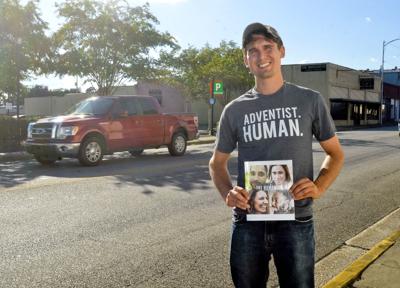
Orangeburg resident Kaleb Eisele is the editor of the Humans of Adventism Facebook page and recently published a special magazine issue.CHRISTOPHER HUFF, T&D


Orangeburg resident and Seventh-day Adventist Kaleb Eisele said there’s mistrust and misconception of his church by many people outside of it.

“Being sort of a more of minority religion, we tend to be distrusted by society. And that distrust fuels fear by Adventists of other people,” he said.

“So there’s this cycle where we have this parallel existences almost, but we’re not talking to each other.”

A member of Orangeburg Seventh-day Adventist Church, Eisele is seeking to bridge the gap as editor of the Facebook page, Humans of Adventism. Inspired by Humans of New York and similar pages, Humans of Adventism posts photos and short profiles of Adventists from all walks of life, in their own words.

“Humans of Adventism is specifically focused on my faith, my denomination,” Eisele said.

The posts are meant to show others that Adventists aren’t that different than anybody else and to spur interaction with non-Adventists. Adventists have the same concerns, the same hopes and fears, the same struggles and triumphs as anybody else.

“It’s just people talking about their life. I talk to people – it’s a different person every day, just ask them specific questions about how they view the world and their experience. And we share them, and we share a picture of them.”

The 25-year-old said he attended a public college, the College of Charleston, rather than an Adventist-affiliated institution, and it has given him insights that he might not have otherwise received in a more insular situation.

“Relationships with anyone, Adventist or not, are very important. So what I wanted to do is go the very opposite route, make us as public as possible,” he said.

Thursday, April 05, 2018

Mark Zuckerberg does damage control on conference call


04/05/2018


By Mark Huffman

Mark Huffman has been a consumer news reporter for ConsumerAffairs since 2004. He covers real estate, gas prices and the economy and has reported extensively on negative-option sales. He was previously an Associated Press reporter and editor in Washington, D.C., a correspondent for Westwoood One Radio Networks and Marketwatch. Read Full Bio→

Email Mark Huffman Phone: 866-773


Photo
 (c) tashka2000 - Getty ImagesFacebook CEO Mark Zuckerberg, who will testify before a House committee next week, took questions from reporters on a conference call Wednesday and discussed his company's efforts to better protect users’ data.


Zuckerberg took responsibility for the data leak and pledged to make the system better. However, he cautioned his listeners not to expect instant results.

"These are big issues," he said. "This is a big shift for us to take a lot more responsibility. It's going to take some time and we're committed to getting that right, and we're going to keep investing until we do."
'Surveillance as a business model'

Last August, long before concerns about Facebook privacy made front page news, the Harvard Gazette interviewed cybersecurity expert Bruce Schneier about internet privacy.

Schneier, a fellow with the Berkman Klein Center for Internet & Society, suggested that surveillance is now the business model of the internet.

"Everyone is under constant surveillance by many companies, ranging from social networks like Facebook to cell phone providers," he told the newspaper. "This data is collected, compiled, analyzed, and used to try to sell us stuff. Personalized advertising is how these companies make money, and is why so much of the internet is free to users. We’re the product, not the customer."

In 2017, it was hard to get the public to take that fact seriously. Many users found it harmless if Facebook wanted to target them for a new pair of sneakers or a new phone. But using profile information to influence an election is apparently a bridge too far.

Facebook now finds itself in an uncomfortable position because some of the data it collected was misappropriated by a political marketing firm that targeted select Facebook users with pro Trump ads during the 2016 election. Did it make a difference? Who knows, but to some the whole issue is unsettling.


Wednesday, March 28, 2018

Worried about what Facebook knows about you? Check out Google


It's more than just Googling yourself.by Ben Popken / Mar.28.2018 / 6:45 PM ET / Updated 7:22 PM ET


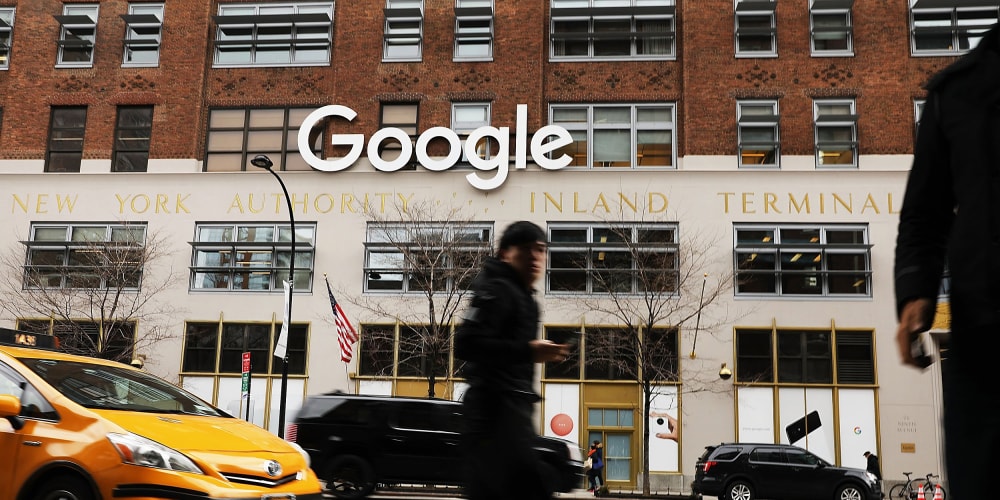
Google's New York office in lower Manhattan this month.Spencer Platt / Getty Images file

Upset about how much of your data Facebook has? Wait until you see what Google has got on you.

Dylan Curran, an information technology consultant, took a look at just what Google knew about him. Even with his experience as a web developer, he was shocked.

"I was really like: 'Oh, my God. This is preposterous,'" Curran said.


Personal data often collected when you download apps 01:58

When he requested his data from Google, he found that it was constantly tracking his location in the background, including calculating how long it took to travel between different points, along with his hobbies, interests, possible weight and income, data on his apps and records of files he had deleted. And that's just for starters.

He said he didn't think Google was doing anything malicious. He just felt newly uncomfortable with being so closely tracked.

"It's wrong to trust any entity that big with so much information," he said. "They're just trying to make money," and at some point, "someone is going to make a mistake."

His posts hit a nerve, with the thread racking up almost 150,000 retweets.

What Curran found is the reality that Google's millions of users face every day, said Scott J. Shackelford, an associate business professor at Indiana University focusing on cybersecurity law and policy.

Thursday, November 30, 2017

Facebook Announces It Will Use A.I. To Scan Your Thoughts "To Enhance User Safety"


Nov 28, 2017 12:13 PM

A mere few years ago the idea that artificial intelligence (AI) might be used to analyze and report to law enforcement aberrant human behavior on social media and other online platforms was merely the far out premise of dystopian movies such as Minority Report, but now Facebook proudly brags that it will use AI to "save lives" based on behavior and thought pattern recognition.

What could go wrong?


The latest puff piece in Tech Crunch profiling the apparently innocuous sounding "roll out" of AI (as if a mere modest software update) "to detect suicidal posts before they're reported" opens with the glowingly optimistic line, "This is software to save lives" - so who could possibly doubt such a wonderful and benign initiative which involves AI evaluating people's mental health? Tech Crunch's Josh Cronstine begins:

This is software to save lives. Facebook’s new “proactive detection” artificial intelligence technology will scan all posts for patterns of suicidal thoughts, and when necessary send mental health resources to the user at risk or their friends, or contact local first-responders. By using AI to flag worrisome posts to human moderators instead of waiting for user reports, Facebook can decrease how long it takes to send help.

CEO Mark Zuckerberg has long hinted that his team has been wrestling with ways to prevent what appears to be a disturbingly increased trend of live streamed suicides as well as the much larger social problem of online bullying and harassment. One recent example which gained international media attention was a bizarre incident out of Turkey, where a distraught father shot himself on Facebook Live after announcing that his daughter was getting married without his permission. Though the example actually demonstrates the endlessly complex and unforeseen variables involved in human decision making and the human psyche - in this case notions of rigid Middle East cultural taboos and stigma clearly played a part - Tech Crunch holds it up as something which AI could possibly prevent.

Earlier this year Zuckerberg wrote in a public post that “There have been terribly tragic events - like suicides, some live streamed - that perhaps could have been prevented if someone had realized what was happening and reported them sooner... Artificial intelligence can help provide a better approach.” And in a post yesterday announcing the new AI suicide prevention tool integration, he wrote that “In the future, AI will be able to understand more of the subtle nuances of language, and will be able to identify different issues beyond suicide as well, including quickly spotting more kinds of bullying and hate.”


Saturday, August 08, 2015

Pastor Tacyana Nixon Baptizing While Pregnant


.

Saturday, February 21, 2015

French interior minister meets with Google, Facebook, Twitter about online propaganda


Published February 20, 2015
Associated Press


French Interior Minister Bernard Cazeneuve, right, gestures during a meeting with Google executives Friday, Feb. 20, 2015, at Google headquarters in Mountain View, Calif. (AP Photo/Ben Margot) (The Associated Press)


SAN FRANCISCO – The French interior minister is meeting with representatives from Google, Facebook and Twitter to encourage them to join the European Union in its fight against propaganda disseminated online by terrorist groups.

French Interior Minister Bernard Cazeneuve is spending Friday in the San Francisco Bay Area.

He is calling for better coordination in the fight against online "terrorist propaganda,"
asking Internet firms to cooperate against extremism.

On Jan. 7, two gunmen killed 12 people and injured 11 more during an attack on the satirical newspaper Charlie Hebdo in Paris. A third gunman killed a policewoman Jan. 8 and then killed four more people a day later after taking hostages at a kosher supermarket in Paris. Police killed the three gunmen in two separate shootouts Jan. 9.


.

Thursday, July 10, 2014

US Military Admits Spending Millions to Study Manipulation of Social Media


Posted on July 10, 2014 by WashingtonsBlog

Part of a Long-Term Effort to Spread Propaganda Through the Internet

The Guardian reports:


The activities of users of Twitter and other social media services were recorded and analysed as part of a major project funded by the US military, in a program that covers ground similar to Facebook’s controversial experiment into how to control emotions by manipulating news feeds.

Research funded directly or indirectly by the US Department of Defense’s military research department, known as Darpa, has involved users of some of the internet’s largest destinations, including Facebook, Twitter, Pinterest and Kickstarter, for studies of social connections and how messages spread.

***

Several of the DoD-funded studies went further than merely monitoring what users were communicating on their own, instead messaging unwitting participants in order to track and study how they responded.

***

The project list includes a study of how activists with the Occupy movement used Twitter as well as a range of research on tracking internet memes and some about understanding how influence behaviour (liking, following, retweeting) happens on a range of popular social media platforms like Pinterest, Twitter, Kickstarter, Digg and Reddit.

***

Unveiled in 2011, the SMISC [Social Media in Strategic Communication] program was regarded as a bid by the US military to become better at both detecting andconducting propaganda campaigns on social media.

“Through the program, Darpa seeks to develop tools to support the efforts of human operators to counter misinformation or deception campaigns with truthful information.” ["Truthful" as in government-approved? ]

***

Studies which received military funding channeled through IBM included one called “Modeling User Attitude toward Controversial Topics in Online Social Media”, which analysed Twitter users’ opinions on fracking.

***

“As another example, when anti-government messages are spread in social media, government would want to spread counter messages to balance that effort and hence identify people who are more likely to spread such counter messages based on their opinions.”

***

A study at Georgia Tech … concluded: “Breaking news stories and world events – for example, the Arab Spring – are heavily represented in social media, making them susceptible topics for influence attempts via deception.” [We can't tell if the researchers were pro or anti-deception; but given that the U.S. and Britain have used Twitter to intentionally spread falsehoods in other countries, we can take a wild guess.]

***

One of multiple studies looking into how to spread messages on the networks, titled “Who Will Retweet This? Automatically Identifying and Engaging Strangers on Twitter to Spread Information” did just this.

The researchers explained: “Since everyone is potentially an influencer on social media and is capable of spreading information, our work aims to identify and engage the right people at the right time on social media to help propagate information when needed.”


This story can only really be understood with a little context:

Postscript: We explained one aspect of this story – the importance of controlling which stories “go viral” – in February:

The government spends a great deal of manpower and money to monitor which stories, memes and social movements are developing the momentum to actually pose a threat to the status quo. For example, the Federal Reserve, Pentagon, Department of Homeland Security, and other agencies all monitor social media for stories critical of their agencies … or the government in general. Other governments – and private corporations – do the same thing.
Why?
Because a story gaining momentum ranks high on social media sites. So it has a high probability of bursting into popular awareness, destroying the secrecy which allows corruption, and becoming a real challenge to the powers-that-be.
“Social proof” is a related concept. Social proof is the well-known principle stating that people will believe something if most other people believe it. And see this. In other words, most people have a herd instinct, so if a story ranks highly, more people are likely to believe it and be influenced by it.
That is why vested interests go to great lengths – using computer power and human resources – to monitor social media momentum. If a story critical of one of these powerful entities is gaining momentum, they will go to great lengths to kill its momentum, and destroy the social proof which comes with alot of upvotes, likes or recommendations in social media.
They may choose to flood social media with comments supporting the entities, usingarmies of sock puppets, i.e. fake social media identities. See this, this, this, this and this.

Source

Wednesday, July 09, 2014

Did Pentagon Help Fund Facebook's Mood Manipulating Experiment?


Wednesday, 02 July 2014 09:55

Written by Joe Wolverton, II, J.D.


Did the Defense Department pay Facebook to manipulate the emotions of users without their knowledge?

For those unfamiliar with Facebook’s latest apparent participation with the Pentagon (we know Facebook has helped the NSA, which falls under the Pentagon's authority), here’s a summary published by Wired:

For one week in 2012, Facebook altered the algorithms it uses to determine which status updates appeared in the News Feed of 689,003 randomly selected users (about 1 of every 2,500 Facebook users). The results of this study were just published in the Proceedings of the National Academy of Sciences (PNAS).

As the authors explain, “[b]ecause people’s friends frequently produce much more content than one person can view,” Facebook ordinarily filters News Feed content “via a ranking algorithm that Facebook continually develops and tests in the interest of showing viewers the content they will find most relevant and engaging.” In this study, the algorithm filtered content based on its emotional content. A post was identified as “positive” or “negative” if it used at least one word identified as positive or negative by software (run automatically without researchers accessing users’ text).

Users were not aware of their “participation” in the mind-control experiment and were never afforded an opportunity to opt out of the study. As Wired explained, “The closest any of us who might have participated in Facebook’s huge social engineering study came to actually consenting to participate was signing up for the service.”

It’s despicable that Facebook would abuse the trust of users in this manner and meddle with users' mental state in a Kafka-esque experiment, but the story becomes more sinister when one digs a little deeper into the source of the funding for the study.

Two of the three authors of the paper that reported the findings of the research are employed by the University of California-San Francisco and Cornell, respectively. Why does this matter?

The original press release issued by Cornell reported that “The study was funded in part by the James S. McDonnell Foundation and the Army Research Office.” As soon as this little admission against interest started stoking fires of controversy, Cornell retracted the story, insisting that “the study received no external funding.”

This is hard to believe, particularly in light of the known participation of Cornell and its professor of Communication and Information Science, Jeffrey Hancock, with a hush-hush Pentagon study of social media and how to manipulate it. As The Guardian reported a couple of weeks ago:

A US Department of Defense (DoD) research programme is funding universities to model the dynamics, risks and tipping points for large-scale civil unrest across the world, under the supervision of various US military agencies. The multi-million dollar programme is designed to develop immediate and long-term "warfighter-relevant insights" for senior officials and decision makers in "the defense policy community," and to inform policy implemented by "combatant commands."

Launched in 2008 — the year of the global banking crisis — the DoD 'Minerva Research Initiative' partners with universities "to improve DoD's basic understanding of the social, cultural, behavioral, and political forces that shape regions of the world of strategic importance to the US."

Among the projects awarded for the period 2014-2017 is a Cornell University-led study managed by the US Air Force Office of Scientific Research which aims to develop an empirical model "of the dynamics of social movement mobilisation and contagions." The project will determine "the critical mass (tipping point)" of social contagions by studying their "digital traces" in the cases of "the 2011 Egyptian revolution, the 2011 Russian Duma elections, the 2012 Nigerian fuel subsidy crisis and the 2013 Gazi park protests in Turkey."

Twitter posts and conversations will be examined "to identify individuals mobilised in a social contagion and when they become mobilised.”

For more on the connection between Hancock, Cornell, and the Defense Department, consider this story:

In the official credits for the study conducted by Facebook you'll find Jeffrey T. Hancock from Cornell University. If you go to the Minerva initiative website you'll find that Jeffery Hancock received funding from the Department of Defense for a study called "Cornell: Modeling Discourse and Social Dynamics in Authoritarian Regimes". If you go to the project site for that study you'll find a visualization program that models the spread of beliefs and disease.

Cornell University is currently being funded for another DoD study right now called "Cornell: Tracking Critical-Mass Outbreaks in Social Contagions" (you'll find the description for this project on the Minerva Initiative's funding page).

As explained above, it’s not as if this cringe-worthy collaboration between the social media giant and agents of the federal government is anything new.

Facebook is known to have participated in PRISM. Under PRISM, the NSA and the FBI are “tapping directly into the central servers of nine leading U.S. Internet companies, extracting audio, video, photographs, e-mails, documents, and connection logs that enable analysts to track a person's movements and contacts over time,” as reported by the Washington Post.

The joint venture has been functioning since 2007, but came to light only in a PowerPoint presentation that was part of the cache of documents leaked by Edward Snowden.

Snowden claimed that the program was so invasive that “They [the NSA and the FBI] quite literally can watch your ideas form as you type."

According to the information Snowden released, Facebook gives the government access to the private information of millions of users.

In 2012, the National Operations Center (NOC), a part of the Department of Homeland Security, recently released its Media Monitoring Initiative giving itself permission to “gather, store, analyze, and disseminate” data on millions of users of social media, primarily Facebook, Twitter, and YouTube. NOC agents track the online movements and postings of every level of writer or commentator, from Brian Williams to nearly anonymous bloggers.

This is very disturbing. Between the Minerva Initiative and this latest apparent collaboration between Facebook and the Pentagon, the U.S. government (specifically, the armed forces) is studying “risks and tipping points for large-scale civil unrest” and ways to fiddle with the feelings of the millions of Facebook users.

Finally, could there be any correlation between the goals of this manipulation of emotions and the latest features installed in Facebook’s mobile application? Not only would Facebook, using money from the Pentagon, be able to use complex algorithms to know where users are psychologically, but it could track their physical location, as well.

Photo of The Pentagon, Arlington, Va.

Joe A. Wolverton, II, J.D. is a correspondent for The New American and travels nationwide speaking on nullification, the Second Amendment, the surveillance state, and other constitutional issues. Follow him on Twitter @TNAJoeWolverton and he can be reached at jwolverton@thenewamerican.com This email address is being protected from spambots. You need JavaScript enabled to view it. 

.

Sunday, June 29, 2014

Facebook secretly experimented on its users


Mandie Sami reported this story on Monday, June 30, 2014 08:15:00

Listen to MP3 of this story (minutes)

| MP3 DOWNLOAD


CHRIS UHLMANN: If you're one of Facebook's more than 1 billion users you might have been part of a social experiment without knowing it.

A new study has revealed that Facebook intentionally manipulated the news feeds of almost 700,000 users in order to change their emotional state.

And it claims it was done for research.

Facebook insists the study was legal, but as Mandie Sami reports, privacy experts say the experiment was dangerous and unethical.

MANDIE SAMI: When users sign up to Facebook, most know the social network will use their information for marketing purposes.

But many don't think that Facebook will use them as guinea pigs in an experiment they're not told about.

FACEBOOK USER: Facebook conducting these experiments without telling people is not okay.

FACEBOOK USER 2: Yeah I don't think it's really okay either; I think informed consent is always really important whenever an experiment is being conducted.

FACEBOOK USER 3: Keep it transparent if you're going to manipulate us.

MANDIE SAMI: A new study published in the Proceedings of the National Academy of Sciences has revealed that's exactly what Facebook did.

The researchers who carried out the study are affiliated with Facebook, Cornell, and the University of California-San Francisco.

For one week in January 2012, they manipulated what almost 700,000 Facebook users saw in their news feeds when they logged in.

Some people were shown content with only happy and positive words, while others were shown posts that contained sad and angry content.

The point of the experiment was to find out whether emotional states were contagious.

DAVID VAILE: The conclusion was, we can actually manipulate people's feelings by manipulating their news feed on Facebook.

MANDIE SAMI: That's David Vaile, the Co-convenor of the Cyberspace Law and Policy Community at the UNSW Law Faculty.

The study found more negative news feeds did lead to more negative status updates and conversely more positive news feeds resulted in more positive status updates.

David Vaile says, while not illegal, the experiment was unethical.

DAVID VAILE: Any sort of university or established researcher would typically have to take this to an ethics panel and get ethics clearance and first thing they'd ask is, where's the informed individual consent?

So, the issue here as well as not being informed consent for the individuals, is also the question of research ethics that you know they're messing with real people's lives and let's not forget that some you know negative experience online have real consequences for people.

At worst, case people get desperate or get… ending up feeling depressed, people have committed suicide from terrible things that have happened to them online.

MANDIE SAMI: AM contacted Mia Garlick, Facebook's head of Policy for Australia and New Zealand, to ask about the ethical concerns surrounding this experiment and whether informed consent was obtained.

She declined to comment and instead referred AM to Facebook's media enquiries line.

A spokesperson from Facebook is yet to respond.

CHRIS UHLMANN: Mandie Sami reporting.
Source
.

Monday, June 02, 2014

Report Says NSA Pretends to Be Facebook


Report Says NSA Pretends to Be Facebook by WSJ_Live


by WSJ Live official


The NSA has been disguising itself as Facebook servers in order to gain access to the computers of intelligence targets, creator of the 80s anthem “She Blinded Me With Science” discusses his new role as a professor, and more. Photo: Getty.


Source
.

Tuesday, March 04, 2014

Facebook Wants to Build 11,000 Drones to Bring Internet to Africa


Rise of the Drones


All drones everywhere.


By Jordyn Taylor 3/04 9:43am


Check out this atmospheric satellite a.k.a. FACEBOOK DRONE. (Screengrab: YouTube)

It’s a bird! It’s a plane! Nope — it’s a Facebook drone.

The social media site reportedly wants to use drones to bring Internet connection to the two thirds of the world that still lack connectivity, starting with parts of Africa. The initiative is part of the internet.org project, which Facebook backs.

To do so, Facebook could have bought some individual drones. Instead, overachievers that they are, they bought a drone company. According to TechCrunch, Facebook is shelling out $60 million to acquire Titan Aerospace, a company that makes “atmospheric satellites” — basically, solar-powered drones capable of staying in the sky for up to five years.

Facebook is specifically interested in building 11,000 of Titan Aerospace’s “Solara 60″ aircraft, TechCrunch reported. The company’s site indicates the Solara aircraft have a bunch of communications abilities, which we expect will be useful for Facebook’s mission.

According to this comprehensive YouTube video, the Solara 60 can complete most of the same functions as an orbital satellite, but is cheaper and more versatile. It can also stay at an altitude of 20km for up to five years, without ever having to come back down and refuel. Fancy.

TechCrunch specified that Titan Aerospace’s products would only be used for the internet.org initiative, which means that if you’re reading this now, a fleet of Facebook drones probably won’t be coming to a sky near you.

Check out Titan Aerospace’s Solara 50 and 60 aircraft:


Source 
.

Monday, December 30, 2013

AH plastered because of Sunday rest


Netherlands Dec26


Posted by Audrey Graanoogst on 14:48 CET, Thursday, 26, December, 2013 in Netherlands

In ‘s-Gravendeel, near Dordrecht, angry churchgoers plastered a branch of Albert Heijn with pamphlets. They call on customers to stop shopping there, because the supermarkets will be open on Sundays from now on.This past Sunday the Albert Heijn was open on Sunday for the first time, much to the annoyance of some church goers, who feel the branch manager should adhere to the Sunday rest.


AH pamphlet
Facebook


People are called upon to do their shopping in stores that do respect the Sunday rest, according to the angry churchgoers. The pamphlets also state that the boycott will only be canceled if the supermarket in ’s-Gravendeel remains closed on Sundays.

The Facebook page of the grocery store shows a response to the plaster campaign: ’Hopefully they are captured nicely by camera images, so we can plaster them in the media without any respect for privacy.’


Source
.

Monday, December 02, 2013

Don't Shop Today: One Woman's Campaign To Keep Thanksgiving About Family

Thursday, November 28, 2013


(vxla/Flickr)

Macy’s is opening its doors for Thanksgiving shopping for the first time. But some people are dismayed by the commercialization of the holiday.
One of those people is Annie Zirkel, an author from Ann Arbor, Mich. She has started a Facebook page and a campaign to keep Thanksgiving from becoming the first day of the holiday shopping season, with mad crowds rushing through shopping malls.

In an open letter on her website, Zirkel writes:


Is Thanksgiving disappearing because of corporate profit chasing? Or has our disinterest and irreverence for protecting what is truly valuable invited this disregard for a once-cherished day of giving thanks?

Well besides the answer being BOTH – I think the more important question might be: What can be done?

Will a letter to my local mall or large retailer help? Not likely. But should I write those letters? Yes. Because Thanksgiving means something to me. Because I am not willing to passively watch as this headless, soul-less corporate world runs over something I value – gratitude.

Guest
Annie Zirkel, author based in Ann Arbor, Michigan. She tweets @anniezirkel.
More in Life
StoryCorps Marks 10 Years Chronicling American Lives
November 27, 2013 close

Transcript


MEGHNA CHAKRABARTI, HOST:

Well clearly not everyone loves the idea of shopping on a day that's supposed to be about gratitude. Several online petitions are urging stores to stay closed today. One on change.org has nearly 400,000 signatures. Annie Zirkel of Ann Arbor, Michigan, started her own save Thanksgiving Facebook page. She's spending today with family, but when we spoke to Annie earlier, she told us why she's so opposed to shopping on Thanksgiving.

ANNIE ZIRKEL: Well, where do I start? Probably the first thing I want to say is that the purpose of Thanksgiving is to be grateful for what you already have. So this idea of going out and getting more stuff is completely counter to the day. Then we move on to the fact that shopping on this national holiday really ruins a lot of people's Thanksgivings. So in order for you to get that sale, that deal, people have to leave their families.

It's just one day of the year where we go the other way. If you want to shop, you have 363 other days of the year. Just give us one.

CHAKRABARTI: You know, I'll admit that for me personally I am very sympathetic to your point of view. But I imagine that there might be some listeners out there who say hey, look, you know, being - we shop together as a family, and making that transition to the rest of the holiday season through those first days of shopping is part of what we do. So we don't mind doing it on Thanksgiving. I mean, what would you say to them?

ZIRKEL: Sure, well, if you're shopping on Thanksgiving, it's a pretty new tradition because we haven't had this kind of creep into the actual day of Thanksgiving. I guess one of the things I say, and I've said this on the Facebook page because a lot of people have shared different stories, is that you're taking away someone else's holiday in order for you to have family time. And that's just an irony to me. That doesn't make sense to me.

CHAKRABARTI: So you mentioned your Facebook page. What are some of the other stories or comments that people have been leaving on the page there?

ZIRKEL: For the most part people are very frustrated. They feel like this tradition, this national tradition is just - has been picked away, and they don't know where to put their frustrations. So they're coming on the page, and they're sharing a lot of sadness, really, but also a serious commitment to not shop on this day or to support retailers who are more connected to their employees and aren't making them have to choose between work and family.

CHAKRABARTI: Have you heard from any retailers? Have they chimed in on the Facebook page or responded to your campaign to preserve Thanksgiving Day from the dirty hands of commerce?

ZIRKEL: I have not heard on the Facebook page, but I've sent out my letters, I've made some phone calls, and I've gotten a pretty standard response, that it's customer demand. And I'd like to meet the customer who demanded that Thanksgiving Day be turned into a commercial holiday.

But the other thing is, and I'm not actually anti-retail, I know it may sound like that, I'm anti-retail on this day. I'm anti-any opportunities to take family away. So of course you have the, you know, police, and you have hospital workers and firefighters and even news people who, you kind of have to be there. But let's keep that to a minimum. Let's not just go overboard, and hey, let's all sort of detract from this.

CHAKRABARTI: I really take your point about the fact that Thanksgiving is, you know, one of the last national holidays where the purpose is to express gratitude rather than consumption. But I also wonder if you're kind of fighting a losing battle because isn't - doesn't it feel like de facto that the Christmas and holiday season has already taken over Thanksgiving?

I mean, you walk into coffee shops and other retail establishments already, and they've begun sort of their Christmas season decorations, at the very least.

ZIRKEL: Yes, I have to say I did walk out of a store when I heard a Christmas jingle. I just thought I'm not ready for this, I can't handle that. So I had to leave. You know, your question about a losing battle, well, I guess the thing is it's not to me about whether we win on a mass scale or a small scale. Every person has to make their own choice. And so if this awareness campaign, which is what I'm really doing, and other people - I mean, there are 100 pages similar to mine with maybe smaller numbers or some bigger numbers.

But I guess the thing is: Is it worth it? And it is worth it to me. Gratitude is so important to me. I have to stand up for it. I'm not willing to give defeat to retailers and people who don't really care about this holiday. I feel like there's a whole other voice that has to be heard on this day.

CHAKRABARTI: And finally, Annie, I'm wondering if you want to share with us what's your favorite thing for you and your family to do on Thanksgiving. What do you love about it the most?

ZIRKEL: Thank you for asking me that. Actually this year we're going to be one short because we lost someone fairly suddenly a couple of months ago.

CHAKRABARTI: Oh, I'm sorry to hear that.

ZIRKEL: And that's really I think why we have to take this seriously. There's only so many Thanksgivings you get in this world, and so I think we're just really looking for the gratitude, you know, making those moments count.

CHAKRABARTI: First of all, Annie, I'm very sorry to hear about the loss in your family. But I am, in addition, very grateful that you spent some time with us here today. Thank you so much for joining us.

ZIRKEL: Thank you for having me.

CHAKRABARTI: Annie Zirkel of Ann Arbor, Michigan. She's one of several people who have started campaigns encouraging retailers to respect the spirit of Thanksgiving. And we should note that there are three states where it's actually against eth law for major retailers to open today. In Massachusetts, Rhode Island and Maine, so-called blue laws bans large supermarkets and big box stores from doing business on Thanksgiving. This is HERE AND NOW. Transcript provided by NPR, Copyright NPR.


Source
.