Showing posts with label Semantics. Show all posts

Sunday, June 21, 2026

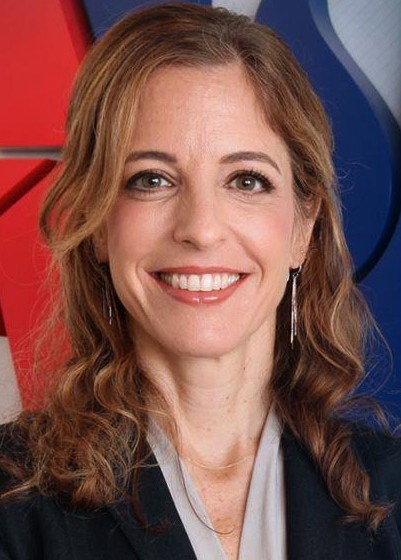
Religious liberty ‘is not a sword to harm others,’ Laser says


(National Constitution Center)


News  Jeff Brumley | June 17, 2026

Religious freedom is a radical invention that allows all Americans to believe or not believe as they choose, but on the condition that others are not harmed, said Rachel Laser, president of Americans United for Separation of Church and State.

“That’s what religious freedom is. Here’s what it’s not — it’s not a sword to harm others. It’s not a license to discriminate. It’s not a permission slip for the government to favor one set of religious views or to impose those views on all its workers. It’s not a trump card to play when someone else’s views are politically inconvenient.”


Rachel Laser

In other words, religious liberty is the opposite of what the Trump administration and other Christian nationalists claim it is, Laser said during a June 16 discussion hosted by Center for American Progress, Americans United for Separation of Church and State, Interfaith Alliance and American Humanist Association.

The Washington, D.C. event served as the launch of “Religious Liberty for All: Celebrating This Founding Freedom at America 250,” a new report by the four organizations featuring 20 prominent elected officials, faith leaders, historians, legal experts and theologians making the case for religious freedom and diversity rooted in the U.S. Constitution.

“We are correcting the record here with Christians, Muslims, Jews, Hindus, Sikhs, agnostics, humanists and many lawmakers,”
Laser explained. “We are correcting the record about what the true foundational values of this country are, and we’re proudly reminding America that religious freedom means we are all free to live as ourselves and believe as we choose.”

The release of “Religious Liberty for All” was timed to pre-empt the anticipated publication of a report by the Religious Liberty Commission, which President Donald Trump formed in 2025 to promote a Christian nationalist view of religious freedom, Interfaith Alliance President Paul Raushenbush said.

“We have every reason to believe it will offer a perspective of religious freedom that privileges one narrow experience. However, the report we are launching today intentionally features a range of experiences of religious freedom from voices that include diverse religious traditions as well as non-religious traditions. Religious freedom for all recognizes how religious freedom benefits all the people when it is applied equally and fairly.”

Money and power

Sunday, December 01, 2019

What’s the difference between Sunday and the Sabbath?


How we name something shapes how we understand it.

By David A. Pitt


Names matter. St. John Paul II clearly writes in Dies Domini (On Keeping the Lord’s Day Holy) that Sabbath (the seventh day of the week) and Sunday (the first day of the week) are different. Sunday fulfills the Sabbath. Naming Sunday as “the Christian Sabbath”—or worse, “the Sabbath,” which eliminates Judeo-Christian differences—neglects the true importance of the day.

How we name something shapes how we understand it. Think of the Civil War. Naming the 1861–1865 conflict as the Civil War emphasizes nationality. Referring to it as the War Between the States, meanwhile, prioritizes states’ rights, and calling it the War of Northern Aggression conveys something very different indeed.

The Sabbath is the Jewish day of rest and remembrance, a day of freedom and peace. According to Exodus 20:9–11, human rest on the Sabbath honors God’s rest after the six days of creation. Deuteronomy 5:15 links the Sabbath to God’s liberation of Israel from Egypt.

Jewish people around the world keep the Sabbath by resting from all labor, worshipping at synagogue, and sharing a family dinner. They remember their covenant with the God who provides for and saves them, imitating God’s hospitality (Deut. 26:1–11) and behaving toward others as God has behaved toward them.

Tuesday, February 06, 2018

Prime SJW Justin Trudeau scolds young woman: We say 'peoplekind,' not 'mankind'


Elias Hubbard


February 7, 2018


She used the word "mankind", and while Trudeau appreciated her question, he did interject to correct her choice of the word, suggesting "peoplekind" is more "inclusive".

"But now a clear victor has emerged in the form of Trudeau, the handsome young politician publicly drooled over by numerous same women who claim to find male objectification of female flesh so demeaning".

Trudeau took a question about religious nonprofits from a woman affiliated with the World Mission Society Church of God. As she goes on to explain the issue she mentions that maternal love is the love that is going to change the future of "mankind". Because Trudeau prefers "peoplekind".

At this point Trudeau made a decision to dive into political correctness headfirst."We like to say peoplekind", he said, interrupting her.

"Well, we're gonna find out because you believe it's coming to us, here in America, and you've been in both countries frequently", Kilmeade said.

Canada's head SJW, Prime Minister Justin Trudeau, has outdone himself in his Orwellian crusade to purge gender differences from the English language.

An off-the-cuff remark by Prime Minister Justin Trudeau during a town hall has caught the attention of U.S. President Donald Trump's favourite TV show.


Thursday, May 19, 2016

Pope Francis: ISIS’ Terrorists No Different Than Jesus and His Disciples. Implications For SDAs?


May 19, 2016


“And I saw when the Lamb opened one of the seals, and I heard, as it were the noise of thunder, one of the four beasts saying, Come and see. And I saw, and behold a white horse: and he that sat on him had a bow; and a crown was given unto him: and he went forth conquering, and to conquer” Revelation 6:1 and 2. The opening of the first seal brings to view the apostolic days when Christ’s apostles went forth spreading the gospel to every creature under heaven (see Colossians 1:23) and also typifies the final triumph of God’s people carrying the gospel message to the world as a witness. This commission to go forward conquering and to conquer through the spreading of the gospel was not only given to the apostles directly following Christ’s ascension, but is to be carried forward to the close of this earth’s history by God’s chosen and faithful messengers, those who keep the Commandments of God and have the Testimony of Jesus Christ. See Revelation 12:17 and Revelation 14:6-12.

The institution that Satan is primarily working through in these last days to entrap the people in darkness and prevent the spreading of the everlasting gospel is the Papacy, the Roman Catholic hierarchy. This system has a problem with anyone or any group save its own, carrying forward the gospel commission, conquering and to conquer; and Pope Francis has made that abundantly clear in an interview conducted by a French Catholic newspaper published May 17, 2016. Comparing Jesus’ commission to His followers to spread the gospel, which he terms conquest, to Islamic wars of conquest or Jihads (holy wars initiated by Muslims to maintain their religion), Pope Francis is sending the message that evangelizing with any other message than that which coincides with the Papacy’s, must be feared and met with war, just as one fears Jihadists and the activities of ISIS.

“In an interview published Tuesday with France’s La Croix, Pope Francis argued that Jesus’ call to spread the Gospel differs little from the jihad waged by radical Islamic terrorists. The pope explained how ISIS’ ‘war of conquest’ has bred a non-justified fear of Islam among Western countries. ‘I don’t think that there is a fear of Islam as such but of ISIS and its war of conquest, which is partly drawn from Islam,’ he told La Croix. ‘It is true that the idea of conquest is inherent in the soul of Islam.’ ‘However, it is also possible to interpret the objective in Matthew’s Gospel, where Jesus sends his disciples to all nations, in terms of the same idea of conquest.’”1

By differentiating between Islam and ISIS and also by drawing the comparison between Jesus sending forth his disciples, and ISIS extremists, Pope Francis is insinuating his disdain for the spreading of the everlasting gospel of Revelation 14:6-12, just as he has left no ambiguity as to his position concerning ISIS activities, calling their violence genocide and supporting the use of force against them. Pope Francis is clearly the hypocrite of hypocrites as his mission since the onset of his pontificate has been evangelization, and the primary reason that he has appointed the Extraordinary Year of Jubilee, which opened on December 8, 2015. This date was not randomly selected it was strategically chosen by Pope Francis because of its ecumenical significance. Out of his own mouth: “I have chosen the date of 8 December because of its rich meaning in the recent history of the Church. In fact, I will open the Holy Door on the fiftieth anniversary of the closing of the Second Vatican Ecumenical Council. The Church feels a great need to keep this event alive…The walls which for too long had made the Church a kind of fortress were torn down and the time had come to proclaim the Gospel in a new way. It was a new phase of the same evangelization that had existed from the beginning.2

While Pope Francis is aggressively evangelizing, he is prohibiting others from doing the same, as his goal is to unite every denomination, nation, and religion as one under his headship. On church unity, “Pope Francis said on Sunday that the way ahead is for various denominations to reject ‘proselytism and competition’ among themselves. The trick, he said, is for Christians to stop being ‘self-enclosed’ and “exclusive…Although Francis has repeatedly called on Christians to invite others to the faith, he has also condemned ‘proselytism’ on multiple occasions, by which he means coercive or aggressive missionary techniques…Christian unity, Francis said, won’t be achieved by subtle theoretical discussions in which each party tries to convince the other of the soundness of their opinions.”3

He has also declared that Christians must stop evangelizing Jews in December of 2015,4 which is not difficult to discern considering his assertion that Jews are saved even without accepting Christ.5 What blasphemy! Not surprising coming from the Roman Catholic Church however, taking into account that they do not believe in Christ as the only way to salvation. Additionally, Pope Francis has declared his “Year of Mercy” as a time to learn about Islam and even calling Christians and Muslims brothers. In other words, people should leave the work of evangelism to the Roman Catholic Church, unite with her, and they will be welcomed as brothers, or more accurately, daughters; otherwise, they will be viewed as threats to the “common good” and individuals who believe that they alone possess the absolute truth.

What can all of this mean for faithful Seventh-day Adventists who have committed their very lives to the service of Christ in conducting evangelism, calling people out of darkness into Christ’s marvelous light, who also refuse to unite with ecumenical bodies that tend to the surrendering of peculiar, distinctive doctrines and beliefs? While ISIS is waging war with literal sword, and has incited the nations with fear and has thus caused the nations to draw their swords to contest them, God’s faithful people, represented by the rider atop the white horse conquering, are wielding the spiritual sword, the undiluted Word of God, the sword of the Spirit, and will be looked upon with fear. The implication is that God’s messengers will be labeled and treated as fundamentalists who are divisive and despise unity, especially as they lay open the sins of Babylon and her daughters and bear an even more pointed testimony than that of John the Baptist. They will be viewed with suspicion and fear and have their rights infringed upon and finally revoked. Yet the people of God should not allow any danger or threat of such to dissuade them from living out their convictions and sharing the gospel with whomever they come in contact. They do not have to pick up literal swords as did Peter the night of Jesus’ capture, they must stand still and allow the Captain of the Lord’s Host, Jesus Christ, fight for them and indeed they will be more than conquerors! “And I saw, and behold a white horse: and he that sat on him had a bow; and a crown was given unto him: and he went forth conquering, and to conquer” Revelation 6:1 and 2.

Sources
1. http://dailycaller.com/2016/05/18/pope-francis-spreading-the-gospel-is-no-different-than-waging-jihad/
2. https://w2.vatican.va/content/francesco/en/apost_letters/documents/papa-francesco_bolla_20150411_misericordiae-vultus.html
3. http://www.cruxnow.com/church/2015/01/26/pope-says-christian-unity-means-rejecting-proselytism-and-competition/
4. http://www.christianitytoday.com/ct/2015/december-web-only/orthodox-rabbis-and-vatican-exchange-olive-branches.html
5. http://www.christianpost.com/news/jews-saved-heaven-salvation-without-jesus-christ-vatican-claims-pope-francis-israel-152306/


Hilari Henriques

Source
.

Friday, February 20, 2015

How An Ecclesiastical Hierarchy Silences a Dissenting Movement Using Hegelian Dialectics


Pacing the Opposition

When an ecclesiastical hierarchy wants to silence a dissenting movement, dialectical praxis is often the weapon of choice. For one thing, many dissenters are simple-minded, honest-hearted people, who, when they run up against the dialectic, they are dumbfounded. For one thing, when the hierarchy starts to lay out its case, it will present the thesis, which is what the dissenter believes in heart and soul. The reaction of the dissenters is, “Wonderful!”

The Catatonic Paralysis Shock of Antithesis

Then the hierarchy’s argument shifts to the antithesis, the opposite position from the thesis, and the simple-minded, straight-thinking dissenter, whose mind is not trained in this kind of subtlety, throws up his hands and goes into a catatonic state: “I thought they were on our side, now look at this!” he says in disbelief and moral paralysis.

The Relief Offer of the Compromise Resolution of Synthesis

Then a synthesis of the thesis and antithesis is presented, and the poor, honest-hearted dissenter, seeing ultimate disaster if the antithesis is accepted, seeing utter rejection and scorn ahead if he resists, thankfully accepts the synthesis, a compromise, for he sees elements of what he had hoped for, though it has just as much of what he abhors.

The Switch That Numbs the Mind
The Inducement of the Catatonic State of Moral Paralysis

Dr. Gotcher, commenting on this phenomenon of catatonic paralysis writes: “Hegel’s dialectic was the cause fro two world wars and many wars between and since. One historian recently stated that, during this [20th] century, all governments that used this process combined have been responsible for the killing of more than 250,000,000 of their own citizens…

The Switch That Freezes Responses

“Somewhere within the process there lies a switch that confuses men’s minds, numbs their feelings, and freezes their responses. Aware that something is gaining control over them and not able to explain or define what it is, they are unable to develop any response that will stop the process. This trigger shuts off man’s awareness of impending danger (past history or depth history; depth perception [note: look at the denial of the Jews during the Holocaust]) and freezes his ability to resist the process (indecision). The numbness one experiences comes from the fear of potential alienation and loss of respect because of the inability to explain the differences between what one says he believes (black and white) and what he does or desires to do (gray zone). This produces feelings that are not based on God’s Word, but that are instead based upon the fear of losing respect in the eyes of others. This kind of fear prevents one from making an immediate or effective response. [Note: This is the catatonic state induced by the dialectic.]  This fear is not from God, “For God hath not given us the spirit of fear; but of power, and of love, and of a sound mind.” 2 Timothy 1:7.

“No one who has boarded this train has found brakes on it. History has shown us that once this train gets rolling, there is no stopping to get off. Rescue can only come from someone outside, at much cost to all. We had to rescue Europe from this train twice, by wrecking it. If we get on board, who can rescue us? And at what cost?” –Dr Dean Gotcher, The Dialectic & Praxis: Diaprax and the End of the Ages. Tulsa: LAR, 1996, p. 10.

Each Dialectical Stage Builds on the Previous One

Then another meeting is scheduled for later, in which the same process occurs, the hopes are raised with the thesis, which is in reality the new synthesis, then dashed with the antithesis, the person goes into a catatonic state again, and while spiritually paralyzed, a solution is offered-namely the new synthesis. Thus each time these Fabian tactics wear down the dissenter a little bit more, until he finally gives up and goes along without resisting.

From Discipleship to Pantheism

Dialectical praxis is designed to take a person who believes in obeying God by faith, and, moving him through various psychological stages, re-educate his conscience, until he ends up as a practical pantheist, accepting every form of perversion there is, in the name of unity with the group.

If you could save your souls, your families, your home churches, you must understand the nature of what you are facing with dialectical praxis, for it is a blast right out of the bottomless pit (Revelation 11), a mind-bending technique that has crumpled nations, churches, and all before it—and you must become a skilled warrior in the Lord to resist it if you would win eternal life.
You Are Not Amenable to Any Man. You are Amenable to God.

Beware of putting church “unity” above a conscience bound to the Word, for this is a fruitful field for those utilizing dialectical praxisDialectical praxis subjugates conscience to the authority of the “group” instead of a conscience subject to God alone. “You are not amenable to any man. You are amenable to God.” GCW, GCB, 4-5-01. Never, never, never, allow your conscience to be stifled, mocked, or snuffed out by peer pressure, by pressure for “unity,” or by being attacked for being “unloving” because you hold to moral absolutes on conviction.

The Process of Dialectical Praxis

Here is Diaprax in a nutshell, revealed by Dr. Dean Gotcher, who read over 600 socio-psychology books, written by more than 250 authors, developed from the perspective of those who are trained in it. Night after night, the Lord woke him up with insight after insight at two or three o’clock in the morning. “The answers came from God’s Word,” Gotcher writes, “in fact, this work is nothing more than a confirmation of that Word. His Word clearly reveals the process being used today to remove our desire to trust and obey Him and His Word.” –Dean Gotcher, The Dialectic & Praxis: Diaprax and the End of the Ages, Acknowledgements. After this, we will examine critical elements of this diabolical process.

Diaprax in a Nutshell

(A look at the strategy of the other side to destroy conscience)
(Based on Dr. Dean Gotcher, “Diaprax”)

Thesis Interrogation: “Unfreezing” the person from the Thesis [faith in the authority of God]
Position: Identify person’s source for needs satisfaction. [Note: Pastors in training are taught to identify people’s “felt needs.”]

“What do you think about…? “How do you feel about…?”

Definition: Discover the source of one’s dissatisfaction-Higher Authority. [Note: This is tantamount to Satan’s words, “Yea, hath God said?…]

“Could you explain that further?” “What do you mean by…?”

Choice-Defend your position based on higher authority’s definitions and cause social disharmony (alienation-negative) or redefine your position to build social harmony (belongingness-positive.)
Realization: Maladjustment is when one defends their position with pre-set definitions which cause social disharmony. “How do you think you arrived at that view?” “Why do you think you feel that way?” “Have you considered the alternatives?” In other words, ‘Can’t you think for yourself?’

Antithesis Dialogue: ‘Moving’: (Environment-Group Dynamics)

Negation of Negation: Putting aside pre-set standards (‘Thou shalt not’) in a diverse group produces an environment of equality of opportunity where everyone can discover their full ‘group think,’ socialist potential.

“How might this be approached in another way?” “What are the alternatives to your position?” (What would happen if you refused to participate?)

Chaos: Learning to accept the Gray Zone of the super-ego for the sake of belonging. ‘Most agree…..Most disagree.’ Learning how to redefine your position in changing times for the sake of group acceptance and social harmony.

“What might be the result if…?” “What effect might that have on…?” “What are the consequences?”

Mediation: Evaluation is non-scientific in that it is controlled by the fear of the loss of group approval. One cannot evaluate through compromise based upon fear of social rejection. ‘Is’ has become clouded with ‘should.’“Which is best? Right? Most desirable? Most functional? Most practical?” “Why”

Synthesis Decision: ‘Refreezing’ (Life-long learning-Reinventing truth)

Determination: The individual is now a change agent, determined to help others into the process so he can justify his compromise while developing relationships with them. All who practice the dialectic are out to convert everyone they meet, neutralizing those who resist, and work to remove those who have any type of authority who threaten or attack the process.

Necessity: The group members no longer see themselves subject to any higher authority who attempts to resolve social issues with an ‘I know’ attitude. In fact the social crisis no longer is the issue to be solved but is instead to be used to bring the traditional thinking person into the group think process. Traditional thinking is now the social crisis which needs to be solved for it is not readily adaptable to social change and produces social maladjustment.

Causation: No longer is ‘First Cause’ a higher authority, such as God, parents, the Laws of Nature (true science), the Laws of the Land, but now society is the first cause. Therefore, one’s concern is ‘What will the group (society) think?’ When you meet a ‘Group Think’ individual and present him with Truth and facts, if he does not have the group there to put pressure on you (group dynamics) he will ‘glass over’ to protect himself from you, the truth, and the need to repent of his use of this process.

Dr. Dean Gotcher, Diaprax. Institute for Authority Research.

Dialectical Praxis at the Tree of the Knowledge of Good and Evil

Thesis: “Of the fruit of the tree which is in the midst of the garden, God hath said, Ye shall not eat of it…lest ye die.” Genesis 3:3

Thesis Interrogation: “Yea hath God said, Ye shall not eat of every tree of the garden?” Genesis 3:1.

Antithesis: “Ye shall not surely die.” Genesis 3:4. [Opposite of the Thesis]

Synthesis: “For God doth know that in the day ye eat thereof, then your eyes shall be opened, and ye shall be as gods, knowing good and evil.” Genesis [Supposed Higher Order Thinking Skills-Hots]

Negation of the Negation (Putting aside pre-set standards): “And when the woman saw that the tree was good for food, and that it was pleasant to the eyes, and a tree to be desired to make one wise [Chaos], she took of the fruit [Moving] thereof, and did eat [Refreezing], and gave also unto her husband with her [Determination: She becomes “converted” change agent seeking to “evangelize” or “convert” others to her new position]: and he did eat [Necessity]…And Adam and his wife hid themselves from the presence of the Lord God [Causation].

The Science of How Diaprax Works

Thesis Interrogation: “Unfreezing” From the Thesis of “Pre-set” Convictions

The very first work of dialectical praxis is the effort to “unfreeze” you from your “pre-set” principles of conviction. To shake you up is the goal. To prepare the groundwork for this process the person must be “interrogated” regarding their inner thoughts, in order to help the “facilitator” in selecting questions that will most efficiently break down your confidence in your convictions.
An Example: Journaling and “Women’s” Groups

This is why, for instance, the Bible teachers in Structure academies are having their students do journaling. Journaling, promoted by the Jesuits, is a written confessional, giving the teacher tools to undermine conviction by discovering where the student’s gray areas are of doubt. This is why you see “women’s” or “men’s” church groups. The women or men get together and discuss their family and marital difficulties, thus giving church leaders the knowledge of their weak areas, or gray zones, and how to defeat them and “take them out” when a power struggle erupts in the church over new innovations. This happens in marriage counseling and any “conflict resolution” process.

“Unfreezing” By Destroying Confidence in Your Convictions

Those who hold to their “pre-set” convictions are declared to be “unloving,” “maladjusted.” They are denounced as being under a curse because of their “unloving” spirit. Your ideas (which have been formed by the Spirit of God in submission to the Word) are getting in the way of church unity. You are holding the church back from its mission of evangelization. You are standing up against church authority. You are going against the authority of God vested in the church. In the military it would be: “Your convictions regarding the Sabbath would break down all military discipline, and destroy the army.” They tried [unsuccessfully] to use that on many Sabbath keepers in World War II.
Choice

You are presented with the need to decide: Where did you get those ideas from? Will you hold on to convictions that are declared to be outdated, to a concept of the Church that you no longer see anywhere, to ideas that seem not to fit the new environment? Are you going to be the only person who does not go along with the new ideas on the church board, or in the social group, or in basic training? Are you really going to stand up against all the elders and pastors? Are you going to really oppose the entire Christian world, going against governments and church authority (Martin Luther)? Are you really going to resist the Mark of the Beast? Will you make a fool of yourself? Are you going to really stand things on end? What makes you so different?

Thus is the soul assaulted with dialectical praxis.


Antithesis Dialogue: The Negation of the Negation: Negating the “Thou Shalt Nots”

Then the process proceeds to the negation of the negation, getting you to negate “Thou shalt nots,” in an effort to resolve your distress at being different, and to get you to accept a new standard-acceptance by the group instead of conviction based on the Word which puts you at variance with the “group.” Group dynamics are carefully arranged to overwhelm you with an authority and power of your opposition, to attempt to make you look ridiculous because of your ideas, to make you think that you are the only holdout, as you see all around you people crumpling under that assault.


page 1 l page 2 l


Source
 .

Monday, June 03, 2013

The West is not Judeo-Christian; it is Judeo-Catholic


Tuesday
12 Apr 2011


THE WEST IS NOT JUDEO CHRISTIAN;  IT IS JUDEO CATHOLIC
Issue on Whether Knights of Malta is a Christian or Catholic Order


Do not be deceived a mango seed produces mango fruits.The so-called Knights that were set up for the Catholic church remain the property of the Catholic church no matter what Rick Joyner says about Knights of Malta in his defence of being part of the group he has called it a Christian Order .

WRONG:  IT IS A CATHOLIC ORDER.  Rick Joyner is not Catholic, he is an Evangelical ..  Welcome to the world, the Evangelical Church is part of Pax Romana by having pastors that are slaves to Rome.


RICK JOYNER CALLS CATHOLIC ORDER KNIGHTS OF MALTA A CHRISTIAN ORDER ?? WHERE DO WE GO FROM HERE ? ..PHOTO OF Pastor Rick Joyner of Morning STar MInistries wearing Knights of Mlata regalia...  courtesy discerning the world blog


Even Presidents are Knights of the POPE..Former President Thabo Mbeki is a Knight of Malta... courtesy truthseeker2473.blogspot.com


Mandela is also a Knight of Malta, A Slave of Papal Rome..  courtesy truthseeker2473.blogspot.com


Ladies are also subject to Rome, Queen Elizabeth a Dame of Malta ..  courtesy vaticanassassins


JUDEO CHRISTIAN IS FALSE ; JUDEO CATHOLIC IS TRUE


Actually Western Christians have been poisoned by many pastors into believing that the Western Lifestyle or worldview is Judeo Christian. WRONG.

Western Culture and system is Judeo-Catholic .  What they did is actually replacement theology,  politics and economics (copied and pasted and edited the Torah) .The system of government in the Old Testament was reconstructed and modified with European ideas, and then baptized it as Judeo-Christian when it was Catholic Dogma, and not the Bible that inspired Christian Europe; and is the foundation of Christian Europe’s theology minus Russian states

Well, they called it Judeo-Christian because it assumed that Christianity just borrowed some Old Testament features but borrowed New Testament features and on this basis the West was created.

Yet, the West (Europe ) before Christianity was as pagan as Africa ! They worshiped idols like the Incas.

So, Historians wrongly assert that the West became Judeo-Christian.  NO, it became Judeo-Catholic because it was Roman Catholic dogma that dominated Europe and not Sound Doctrine from the Bible.

So, beware of Pastors that are calling the West back to Judeo-Christian roots . YOU ARE GOING BACK TO ROME IF YOU HEAD THAT WAY.

IF THE WEST HAS JUDEO-CHRISTIAN ROOTS….

1. It would NOT celebrate Easter and Christmas, Sunday because these are PAGAN HOLYDAYS, not CHRISTIAN OR JUDEO for that matter.

2.  It would not have Rome as the Capital of its Judeo-Christianity… but it is, and guess what? The Pope is the PATRIARCH OF THE WEST… that is one of his official of titles.

3. THE WESTERN LEADERSHIP ( HITLER INCLUDED) WOULD NOT HAVE MURDERED JEWS IN THE NAME OF CHRISTIANITY, but they did because at that time they did not consider themselves Judeo-Christian, but Christians.

Judeo-Christian is a false construct that is being used to create war amongst Muslims and Christians to bring about their new world religion out of chaos.  BEWARE. IT IS JUDEO CATHOLIC.  THEREFORE, KNIGHTS OF MALTA IS NOT A CHRISTIAN ORDER, BUT A CATHOLIC ORDER..  KNIGHTS OF THE POPE.

God bless you

Arthur Owiti


.

Tuesday, April 02, 2013

Teaching Biblical Spirituality


The teaching of courses in spiritual formation in Adventist universities and colleges has become a matter of much debate in the last few years. Recently, the Seventh- day Adventist Theological Seminary and Andrews University have been under scrutiny for offering courses in spiritual formation to their students.

With the dissemination of New Age and Eastern spirituality in popular books, the media, and websites, Christians of all denominations have become aware of the dangers of these “new” approaches to communion with the divine. Seventh-day Adventists are naturally concerned about this new trend because authentic Christian spirituality has been one of our core values since our beginning as a denomination 160 years ago. During her lifetime, Ellen White frequently spoke about the need for reading and meditating on the Word of God, prayer, and fasting. She admonished that we should “cultivate a love for spirituality and true godliness” (2T 315). She also stated, “The revival of true godliness among us is the greatest and most urgent of all our needs” (1SM 121). For over a century we have advocated and promoted through conferences and publications the subjects of personal Bible study, prayer, devotional life, Sabbath keeping, fasting, faith nurture, and many other approaches to spiritual growth and sanctification. And, today, our church is again placing an emphasis on revival and reformation, spirituality and discipleship. The genuine and authentic lives we live will impact the world for Christ.

In 2005, the General Conference session voted to add a new fundamental belief titled “Growing in Christ.” This fundamental belief highlights the needs for spiritual growth. The last part of this statement reads, “In this new freedom in Jesus, we are called to grow into the likeness of His character, communing with Him daily in prayer, feeding on His Word, meditating on it and on His providence, singing His praises, gathering together for worship, and participating in the mission of the Church. As we give ourselves in loving service to those around us and in witnessing to His salvation, His constant presence with us through the Spirit transforms every moment and every task into a spiritual experience.”

Given the world in which we live, the Seventh-day Adventist Theological Seminary believes that the responsible thing to do is to teach its students and pastors about Christian spirituality. Our courses enunciate clear biblical, theological and Adventist principles. We are diligent to select good academic books on this subject and the choice of books we adopt for our classes does not mean we accept all of these authors’ points of view. Yet we believe one goal of graduate education is to impart the skill of discernment and we desire to teach our students to be deep thinkers and not mere reflectors of other people’s thoughts. By God’s grace, we intend to be faithful to our mission as we equip our students to become good mentors and ministers of our faith and heritage and as they assist church members to deepen their journey with God.

There are some who accuse the Seminary of teaching contemplative and emergent types of spirituality because we have called our courses by the name of “Spiritual Formation”. We do not teach such approaches to spiritual development. In academic circles the expression spiritual formation is a synonym for spiritual growth toward godly maturity, or the process of Christian discipleship and sanctification. It is unfair and false to state that spiritual formation is evil because it is associated with the writings of Church Fathers, some strands of more recent Roman Catholic thoughts, and some devotional practices of other religions. The intent of spiritual formation is to teach students what Scripture says about living a genuine life of commitment to God, to be open to the convictions of the Holy Spirit, to be regenerated in Christ. Spiritual formation is an academic term used to describe courses or subjects that deal with spiritual development and faith nurture. By using this term we are saying that we offer biblically-based classes that focus on the spiritual lives of our students. And shouldn’t we do more, not less, of this kind of faith nurture? Yet, to avoid any further confusion, we have decided to change the name of our courses to refer instead to biblical spirituality. We hope this will help alleviate some genuine concerns people have had.

Please join us to pray for the spiritual growth of our students in our Adventist institutions.

Denis Fortin
Dean

.

Thursday, February 28, 2013

SpaceX Primes 'Dragon' Capsule for Space Station Mission (Photos)


by SPACE.com Staff
Date: 25 February 2013 Time: 01:14 PM ET


Plasma Etch Inc "Systems"
Ultra Cleaning Solutions. Plasma Cleaners. R&D Labs Medical Nano Solar
www.plasmaetch.com


SpaceX's Dragon Spacecraft With Solar Array Fairings in HangarCredit: NASA/Kim ShiflettThe Space Exploration Technologies, or SpaceX, Dragon spacecraft with solar array fairings attached, stands inside a processing hangar at Cape Canaveral Air Force Station, Fla. The spacecraft will launch on the upcoming SpaceX CRS-2 mission. Image released Jan. 15, 2013.


P.S.  
DRAGON?
.
.
.

Sunday, February 24, 2013

Cuba President Election: Parliament Gathers To Name Leader


By PETER ORSI 02/24/13 09:03 PM ET EST


HAVANA — Raul Castro announced Sunday that he will step down as Cuba's president in 2018 following a final five-year term, for the first time putting a date on the end of the Castro era. He tapped rising star Miguel Diaz-Canel as his top lieutenant and first in the line of succession.

The 81-year-old Castro also said he hopes to establish two-term limits and age caps for political offices including the presidency – an astonishing prospect for a nation led by Castro or his older brother Fidel since their 1959 revolution.

The 52-year-old Diaz-Canel is now a heartbeat from the presidency and has risen higher than any other Cuban official who didn't directly participate in the heady days of the revolution.

"This will be my last term," Castro said, his voice firm.

In his 35-minute speech, Castro hinted at other changes to the constitution, some so dramatic that they will have to be ratified by the Cuban people in a referendum. Still, he scotched any idea that the country would soon abandon socialism, saying he had not assumed the presidency in order to destroy Cuba's system.

"I was not chosen to be president to restore capitalism to Cuba," he said. "I was elected to defend, maintain and continue to perfect socialism, not destroy it."

Castro fueled interest in Sunday's legislative gathering after mentioning on Friday his possible retirement and suggesting lightheartedly that he had plans to resign at some point.

It's now clear that he was serious when he promised that Sunday's speech would have fireworks, and would touch on his future in leadership.

Cuba is at a moment of "historic transcendence," Castro told lawmakers in speaking of his decision to name Diaz-Canel to the No. 2 job, replacing the 81-year-old Jose Ramon Machado Ventura, who fought with the Castros in the Sierra Maestra.

Castro praised Machado Ventura and another aging revolutionary for offering to leave their positions so that younger leaders could move up.

Their selflessness is "a concrete demonstration of their genuine revolutionary fiber ... That is the essence of the founding generation of this revolution."

Castro said that Diaz-Canel's promotion "represents a definitive step in the configuration of the future leadership of the nation through the gradual and orderly transfer of key roles to new generations."

"Our greatest satisfaction is the tranquility and serene confidence we feel as we deliver to the new generations the responsibility to continue building socialism," he added.

On the streets of Havana, where people often express a jaded skepticism of all things political, there was genuine excitement.

"This is the start of a new era," said Roberto Delgado, a 68-year-old retiree walking down a street in the leafy Miramar neighborhood. "It will undoubtedly be a complicated and difficult process, but something important happened today."

"I'm mesmerized," added Regla Blanco, 48. "You thought that with all these old men, it would never end. I am very satisfied with what Raul said. He is keeping his promise."

Since taking over from Fidel in 2006, Castro has instituted a slate of important economic and social changes, expanding private enterprise, legalizing a real estate market and relaxing hated travel restrictions.

Still, the country remains ruled by the Communist Party and any opposition to it lacks legal recognition.

Castro has mentioned term limits before, but he has never said specifically when he would step down, and the concept has yet to be codified into Cuban law.

If he keeps his word, Castro will leave office no later than 2018. Cuban-American exiles in the United States have waited decades for the end of the Castro era, although they will likely be dismayed if it ends on the brothers' terms.

Nevertheless, the promise of a change at the top could have deep significance for U.S.-Cuba ties. The wording of Washington's 51-year economic embargo on the island specifies that it cannot be lifted while a Castro is in charge.

When Raul Castro hinted at his retirement plans on Friday, it earned a sharp response from Rep. Ileana Ros-Lehtinen, a Cuban-American Republican from Florida, who called it a ploy.

"If dictator Raul Castro states that he will retire in five years, there will still be no real change for the Cuban people so long as the Castro brothers remain in any form of leadership position, even behind the scenes," she said. "The U.S. should not change its policy of isolation of the Cuban regime."

Fidel Castro is 86 and retired, and has appeared increasingly frail in recent months. He made a surprise appearance at Sunday's gathering, receiving a thunderous ovation from lawmakers.

Some analysts have speculated that the Castros would push a younger member of their family into a top job, but there was no hint of that Sunday.

While few things are ever clear in Cuba's hermetically sealed news environment, rumblings that Diaz-Canel, an electrical engineer by training and ex-minister of higher education, might be in line for a senior post have grown.

In recent weeks, he has frequently been featured on state television news broadcasts in an apparent attempt to raise his profile.

He also traveled to Venezuela in January for the symbolic inauguration of Hugo Chavez, a key Cuban ally who had been re-elected president but was too ill to be sworn in.

The 612 lawmakers sworn in Sunday also named Esteban Lazo as the National Assembly's first new chief in 20 years, replacing Ricardo Alarcon.

Lazo, who turns 69 on Tuesday, is a vice president and member of the Communist Party's ruling political bureau. Parliament meets only twice a year and generally passes legislation unanimously without visible debate.

The legislature also named as vice presidents of the ruling Council Machado Ventura; comptroller general Gladys Bejerano; second Vice President Ramiro Valdes; Havana Communist Party secretary Lazara Mercedes Lopez Acea; and Salvador Valdes Mesa, head of Cuba's labor union.

___

Anne Marie-Garcia and Paul Haven contributed to this report.


.

Tuesday, January 22, 2013

Obama's Second Inaugural: Definition of 'Liberty' Subject to Debate


by BEN SHAPIRO 21 Jan 2013


In an Orwellian speech reversing the plain meanings of terms like “liberty,” “freedom,” and “tyranny,” President Barack Obama today laid forth a leftist agenda in the guise of universality. But even in doing so, he exposed just how divided America is – and why America may no longer be a single nation, but two nations kicking within one womb.

Obama began by quoting the Declaration of Independence. From there, though, his task was to twist founding principle to meet leftist needs, an Alinskyite strategy that reeks of falsity. Equating ending slavery with collectivist central planning, heavy-handed economic regulation and establishment of the welfare state, Obama claimed that leftism was part of the “founding creed”:

They gave to us a Republic, a government of, and by, and for the people, entrusting each generation to keep safe our founding creed.
For more than two hundred years, we have.
Through blood drawn by lash and blood drawn by sword, we learned that no union founded on the principles of liberty and equality could survive half-slave and half-free. We made ourselves anew, and vowed to move forward together.
Together, we determined that a modern economy requires railroads and highways to speed travel and commerce; schools and colleges to train our workers.
Together, we discovered that a free market only thrives when there are rules to ensure competition and fair play.
Together, we resolved that a great nation must care for the vulnerable, and protect its people from life's worst hazards and misfortune.

Then Obama spelled out his true agenda: destroying founding principles about limited government to meet changing times. While paying lip service to “our skepticism of central authority,” Obama said that times have changed, and “so must we”: “fidelity to our founding principles requires new responses to new challenges … preserving our individual freedoms ultimately requires collective action.” This was the sheerest form of rhetoric sophistry; equating freedom with government control is an perverse reversal of language. Of course, the Constitution was written based on the notion that human nature does not change – people are not angels, nor devils, but self-interested creatures capable of greatness or evil, who must be checked against each other. But Obama doesn’t believe that. He believes that man can be made anew.

But only by government. And so Obama demonized limited government as anarchism, suggesting that meeting “the demands of today’s world by acting alone” is like forcing American soldiers to meet “the forces of fascism or communism with muskets and militias” – a straw man argument so blatant it appeared Obama would wheel out Ray Bolger to present it. In pursuing his agenda, Obama made clear that he will ignore basic realities – “we reject the belief that America must choose between caring for the generation that built this country and investing in the generation that will build its future.” He made clear that he will create false histories – “we remember the lessons of our past, when twilight years were spent in poverty, and parents of a child with a disability had nowhere to turn.” He made clear that he will redefine taking and giving – those who wish to save their money for their families and children are “takers,” and those who wish to confiscate the wealth of others “strengthen us.”

In the end, Obama’s argument was a collectivist one. And it was an argument designed to irreparably tear this nation apart. Obama himself said it: “Being true to our founding documents does not require us to agree on every contour of life; it does not mean we will all define liberty in exactly the same way …”

But this renders the Declaration of Independence Obama cited completely meaningless. The founders may have disagreed on many things, but they agreed on the meaning of liberty: the right to live as an individual, without centralized planning infringing basic property rights, economic opportunities, and religious freedoms. Obama’s fundamental redefinition of liberty to include communitarianism is not merely wrong, it spells the end of the political commonality that has held the fabric of the nation together. If we define liberty differently, then there is nothing to talk about: my liberty is your tyranny, and vice versa. Our goals can never be shared. That gap can never be bridged.

Obama does not wish to bridge that gap. He wishes to destroy his opposition. And he wishes to do so by spitting on the ideals of the founders, all the while cynically citing “ancient values and enduring ideals.”

Ben Shapiro is Editor-At-Large of Breitbart News and author of the book “Bullies: How the Left’s Culture of Fear and Intimidation Silences America (Threshold Editions, January 8, 2013).


.

Sunday, October 21, 2012

Adventists call actions to allow women’s ordinations “mistakes”

Adelle M. Banks | Oct 18, 2012

(RNS) Leaders of the Seventh-day Adventist Church on Tuesday (Oct. 16) said recent decisions by two regional bodies to allow ordained female pastors were "serious mistakes," and women who are ordained won't be recognized -- at least for now.


“They directly challenge two world Church decisions on the matter of ordination,” reads a statement, passed by a 264-25 vote during the Annual Council meeting in Silver Spring, Md. “They create doubts about the importance of collective decision-making as a basic feature of denominational life.”

The decisions by the Maryland-based Columbia Union Conference and the California-based Pacific Union Conference came as the worldwide church is in the midst of a broad study of the “theology of ordination” that is expected to be considered at the denomination’s 2015 General Conference Session.

Many Adventist women pastors hold a “commissioned” credential, which does not permit ordination, while most male pastors hold a “ministerial” credential, which does.


In 1990, the General Conference Session, the highest authority of the church, approved a recommendation that prevented authorizing ordination of women to ministry. That was followed by a 1995 rejection of a request by the North American Division to permit regional groups to authorize ordination regardless of gender.

In their new statement, Adventist leaders noted that they were dealing with church “structure and procedures,” and not specifically addressing ministerial ordination.

Gerry Chudleigh, spokesman for the Pacific Union Conference, said leaders and members in his region were “grateful that the world church leaders took no punitive action against the unions that recently voted to ordain both men and women.” Since its August decision, that regional group has approved 14 women pastors for ordination and most of them have already been ordained.

Columbia Union Conference spokeswoman Celeste Ryan Blyden said members of her region were encouraged that “this topic is back on the agenda of the worldwide church.” Since its July decision, one woman pastor has been ordained and 14 others have been approved for ordination.

Garrett Caldwell, a spokesman for the world church, said current women pastors will continue to serve “but declarations of ministerial ordination for them will not be recognized until such an action is in harmony with a decision by a General Conference Session.”

KRE/LEM END BANKS

.

Thursday, October 11, 2012

Pope warns lapsed Catholics of "spiritual desertification"

Pope Benedict XVI (C) walks to the altar as he leads a mass to open the year of faith at the Vatican October 11, 2012. REUTERS/Stefano Rellandini
VATICAN CITY | Thu Oct 11, 2012 8:17am EDT

(Reuters) - Pope Benedict urged lapsed and lukewarm Roman Catholics on Thursday to rediscover their Church and stop the advance of "spiritual desertification".

The pope made his comments in the homily of a Mass before tens of thousands in St Peter's Square on the 50th anniversary of the opening of the Second Vatican Council, a far-reaching event in the Church's 2,000-year history.

"Recent decades have seen the advance of a spiritual desertification," he said, opening a worldwide "Year of Faith". "We see it all around us ... the void has spread."

The mass was attended by hundreds of Roman Catholic bishops as well as representatives of other Christian churches, such as Archbishop of Canterbury Rowan Williams. The bishops are in Rome for a synod, or conference, at the Vatican aimed at building a strategy to bring lapsed Catholics back to the faith.

The Vatican has termed this effort the "new evangelization" of the developed world and it has asked Catholics, particularly those who have left the Church, to look deep into their hearts and either rekindle their relationship with God or deepen it.

Local Catholic parishes around the world will hold events such as Bible studies, retreats, special Masses, community service events and discussion groups about the sacraments.

The pope urged Catholics to use these opportunities to rediscover "the thirst for God, the ultimate meaning of life".

The Church is suffering desertions from its practicing flock in former strongholds in Europe, North America and Latin America due to sex abuse scandals, increasing secularism, rival faiths and open dissent against Church teachings on homosexuality and its ban on a female priesthood.

"NEW EVANGELISATION"

The synod's working document speaks of the need to address the divergence between Catholic values and the reality of modern life in Europe and North America, and an "educational emergency" of children no longer being taught the faith.

Pope John XXIII convened the Second Vatican Council 50 years ago to bring the Church up to date with the modern world.

During the Council, which ended in 1965, nearly 3,000 bishops from more than 100 countries wrote 16 documents on various aspects of Church life and mission and urged more "collegiality," or sharing of responsibility, between the pope and bishops.

Among its innovations was the introduction of the Mass in local languages after centuries of it being said in Latin.

The Council also encouraged dialogue with, and respect for, other religions and repudiated the concept of collective Jewish guilt for Jesus' death, revolutionizing Catholic-Jewish relations after 2,000 years of mistrust.

But 50 years on, the Council is divisive. Liberals in the Church say Benedict, who attended the Council as a young priest, has turned back the clock on some Council reforms and moved to centralize power in the Vatican again.

Conservatives praise him for correcting what they regard as errors in applying its ideas. For example, conservatives assert that the Council's push for dialogue with other religions went too far and weakened the traditional teaching that Catholicism is the one true faith.

(Reporting by Philip Pullella; Editing by Robert Woodward)

.

Monday, October 08, 2012

What's in a Name?


Dragon Spacecraft in Orbit Illustration
Artist’s rendition of SpaceX's Dragon spacecraft with solar panels fully deployed on orbit.
Credit: SpaceX

SpaceX's billionaire CEO Elon Musk has said that he named his spacecraft "Dragon" after the fictional "Puff the Magic Dragon," from the hit song by music group Peter, Paul and Mary. Musk said he used the name because many critics considered his goals impossible when he founded SpaceX in 2002.

This year, the company is celebrating its 10th anniversary and has a $1.6 billion deal with NASA to provide 12 unmanned cargo flights to the International Space Station. Another company, Virginia-based Orbital Sciences Corp., is also under contract with the agency to provide supply flights to the orbiting lab.


Saturday, September 29, 2012

Seventh-day Adventists facing pressure on allowing female clergy


Seventh Day Adventist Female Pastors
Pastor Courtney Ray, who serves as an associate pastor at a church in Compton, Calif., called the Pacific Union decision “long overdue.” She chose not to be “commissioned” and now looks forward to an ordination ceremony if an executive committee approves her for ordination. RNS photo courtesy Courtney Ray

(RNS) Two U.S. regional groups of the Seventh-day Adventist Church have recently approved the ordination of women pastors, moving faster than the worldwide church’s study of the issue.
The Pacific Union Conference, which includes California and four other Western states, voted 79 percent to 21 percent at a special session on Aug. 19 to “approve ordinations to the gospel ministry without regard to gender.” Weeks earlier, the Maryland-based Columbia Union Conference, which includes eight Mid-Atlantic states, adopted a similar change in its policy, with 80 percent in favor.

World leaders of the church — who appealed for unity before the votes were cast — said they were disappointed with the conferences’ actions. They said the Columbia Union’s July 29 action was “not in harmony” with the general policy of the church, and said the Pacific Union would “preempt the collective decisions of the world church regarding ordination.”
Leaders of the Maryland-based Seventh-day Adventist Church, which is best known for observing the Sabbath on Saturday instead of Sunday, are in the midst of studying the “theology of ordination” for possible consideration at their 2015 General Conference Session.
There are about 320 women pastors in the worldwide Adventist Church. Within North America, there are about 120 women pastors and about 4,100 male pastors. Many Seventh-day Adventist women pastors hold a “commissioned” credential, which does not permit ordination, while most male pastors hold a “ministerial” credential, which does.
In 1990, the General Conference Session, the highest authority of the global church, approved a recommendation that prevented authorization of ordination of women to the gospel ministry. Five years later, it rejected a request from its North American Division that its regional groups be permitted to authorize ordination regardless of gender.
In an official response to the Pacific Union, Seventh-day Adventist Church President Ted N.C. Wilson and other officers cited those previous decisions and said world church leaders “will carefully review the situation and determine how to respond,” possibly at an October meeting.
Adventists are not the first group to face disparate action on women’s ordination. In 1974, 11 women were “irregularly” ordained as priests in the Episcopal Church, two years before the national church voted to allow female priests and bishops.
Pastor Andrea Trusty King, pastor of an Adventist congregation in Moreno Valley, Calif., was elated by the Pacific Union Conference decision.
“I see it as a move of God,” said King, 34. “The church is recognizing what he has been doing for a long time.”
But King said everyone is not rejoicing, and she thinks the divide is more generational than geographical.
“You have older people who absolutely don’t believe in this and young people who are saying, ‘What’ s the big deal?’” she said.
Pastor Courtney Ray, who serves as an associate pastor at a church in Compton, Calif., called the Pacific Union decision “long overdue.” She chose not to be “commissioned” and now looks forward to an ordination ceremony if an executive committee approves her for ordination.
Ray said there was a tension between wanting to be sensitive to church leaders’ desire for everyone to “move together on this issue” and the sense of others who felt it was a “bad witness” for there to be different designations for male and female clergy.
“But the bottom line is that if something is right, then there’s never a time to wait to do the right thing,” said Ray, 31.
Pastor Stephen Bohr, an opponent of women’s ordination who leads an Adventist church in Fresno, Calif., said the Bible calls for women to have different roles from men. By his reading, women can be prophets — such as church co-founder Ellen White — and deaconesses, but only men can be pastors.
“I just am disappointed that the Pacific Union would launch out on its own and not wait for the world church to make a determination,” said Bohr, 62. “I think they jumped the gun.”
Garrett Caldwell, a spokesman for the world church, said there is “excitement” in many corners of the Seventh-day Adventist Church about the possibility of full recognition of women’s ministry roles.
“There’s an anticipation of that recognition, but I think the greatest concern is that as this body grows and matures and adapts that it is able to stay a united body,” he said.
.