Showing posts with label Meats. Show all posts
Showing posts with label Meats. Show all posts
Friday, July 03, 2026


Saturday, July 27, 2024
Thursday, March 16, 2023
Tuesday, January 10, 2023
Wednesday, July 13, 2022
Pope Francis Tells Young People In Europe To Eat Less Meat For The Environment

The Pope has expressed concerns over the climate crisis - Media Credit: CHROMORANGE / marco campagna / Alamy Stock Photo
Pope Francis urged people at the European Youth Conference to reduce their meat intake for the planet
BY AMY BUXTON
13TH JULY 2022
Addressing crowds at a European Youth Conference, Pope Francis stated that it would be prudent for some parts of the world to “consume less meat.”
The event, currently being held in Prague, offers the Pope an opportunity to discuss issues that he deems are connected to future generations. Touching on the futility of war and the importance of woman leadership, he then went on to tackle meat consumption.
Focusing on the idea of meat as a luxury and an environmental problem, he invited his young audience to choose a life of “dignity and sobriety.”
“There is an urgent need to reduce the consumption not only of fossil fuels but also of so many superfluous things,” Pope Francis said. “In certain areas of the world, too, it would be appropriate to consume less meat: this too can help save the environment.”
The suggestion was the first of its kind from the pontiff. It was markedly absent from his 2015 environmental manifesto Laudato Si.
Why the Pope’s message is significant
Pope Francis was born in Argentina, where people consume the most meat in all of South America, with 109 kilos per year estimated per individual. The country is one of the top producers of beef globally, manufacturing 3,230,000 metric tons in 2020.
Per capita, Argentines top the beef consumption table. Meat advocates in the country consider it a part of their cultural heritage. But times are changing.
The Argentinian beef industry suffered throughout the Covid-19 pandemic. Countrywide drops in income, many due to total job loss, contributed to beef consumption hitting an all-time low.
By the close of 2020, 12 percent of the population identified as vegan or vegetarian. Another 12 percent attached the flexitarian label to their eating habits, meaning almost one-quarter of all Argentinians either avoid or have reduced meat in their diets.
These findings are supported by Veganuary, which states that among the top ten countries participating in this year’s event, five were in Latin America. Argentina came second to Mexico in terms of participation figures.
The future of Argentinian veganism
Alongside becoming the first nation in the world to ban salmon farming, Argentina’s president, Alberto Fernández, is willing to leave meat off his plate. But there’s a catch. He’ll only do it if Sir Paul McCartney plays in his office for him.
The presidential residence has made tentative steps toward vegan dining, by introducing “Vegan Monday” (Lunes Vegano) in 2017. The former Beatle has not agreed to a personal performance to convert Fernández to veganism. Yet.
Will the Pope go vegan?
Pope Francis is notably more progressive in his thinking than previous pontiffs. This has led many to try to persuade him to give up meat altogether.
In 2019, he was urged by the organization Million Dollar Vegan to give up meat for Lent. Paolo Borgia, a senior priest, said on his behalf: “[Pope Francis] appreciates the concerns and care for the world, our common home, which prompted you to write to him.” The Pope did not decide to give up meat for the religious observance.
He also failed to encourage Christians to choose vegan food for their Easter feasts in 2021. This was despite being petitioned by PETA to do so.
Source
Addressing crowds at a European Youth Conference, Pope Francis stated that it would be prudent for some parts of the world to “consume less meat.”
The event, currently being held in Prague, offers the Pope an opportunity to discuss issues that he deems are connected to future generations. Touching on the futility of war and the importance of woman leadership, he then went on to tackle meat consumption.
Focusing on the idea of meat as a luxury and an environmental problem, he invited his young audience to choose a life of “dignity and sobriety.”
“There is an urgent need to reduce the consumption not only of fossil fuels but also of so many superfluous things,” Pope Francis said. “In certain areas of the world, too, it would be appropriate to consume less meat: this too can help save the environment.”
The suggestion was the first of its kind from the pontiff. It was markedly absent from his 2015 environmental manifesto Laudato Si.
Why the Pope’s message is significant
Pope Francis was born in Argentina, where people consume the most meat in all of South America, with 109 kilos per year estimated per individual. The country is one of the top producers of beef globally, manufacturing 3,230,000 metric tons in 2020.
Per capita, Argentines top the beef consumption table. Meat advocates in the country consider it a part of their cultural heritage. But times are changing.
The Argentinian beef industry suffered throughout the Covid-19 pandemic. Countrywide drops in income, many due to total job loss, contributed to beef consumption hitting an all-time low.
By the close of 2020, 12 percent of the population identified as vegan or vegetarian. Another 12 percent attached the flexitarian label to their eating habits, meaning almost one-quarter of all Argentinians either avoid or have reduced meat in their diets.
These findings are supported by Veganuary, which states that among the top ten countries participating in this year’s event, five were in Latin America. Argentina came second to Mexico in terms of participation figures.
The future of Argentinian veganism
Alongside becoming the first nation in the world to ban salmon farming, Argentina’s president, Alberto Fernández, is willing to leave meat off his plate. But there’s a catch. He’ll only do it if Sir Paul McCartney plays in his office for him.
The presidential residence has made tentative steps toward vegan dining, by introducing “Vegan Monday” (Lunes Vegano) in 2017. The former Beatle has not agreed to a personal performance to convert Fernández to veganism. Yet.
Will the Pope go vegan?
Pope Francis is notably more progressive in his thinking than previous pontiffs. This has led many to try to persuade him to give up meat altogether.
In 2019, he was urged by the organization Million Dollar Vegan to give up meat for Lent. Paolo Borgia, a senior priest, said on his behalf: “[Pope Francis] appreciates the concerns and care for the world, our common home, which prompted you to write to him.” The Pope did not decide to give up meat for the religious observance.
He also failed to encourage Christians to choose vegan food for their Easter feasts in 2021. This was despite being petitioned by PETA to do so.
Source
Sunday, August 30, 2020
What Meat and Eggs Do to Our Microbiome
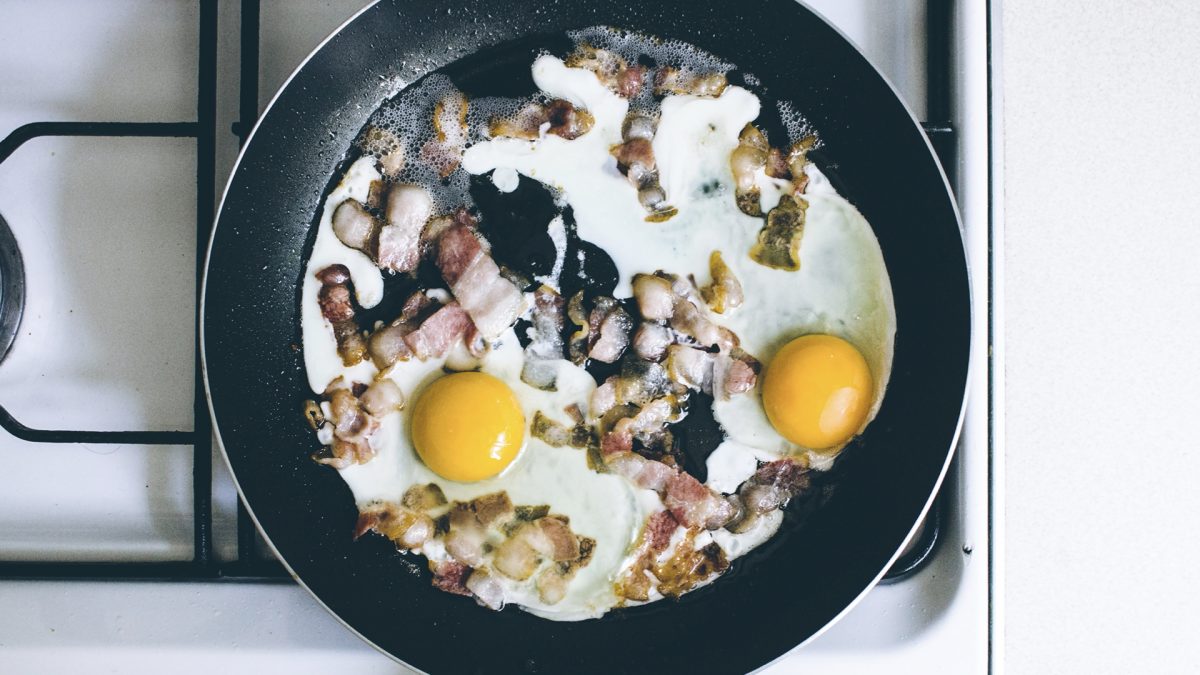
Image Credit: Unsplash. This image has been modified
Written By Michael Greger M.D. FACLM on May 12th, 2020
As I’ve explored before, whether young or old, male or female, smoker or non-smoker, with high blood pressure or low blood pressure, high cholesterol or low, having high levels of a toxic compound called TMAO—trimethylamine oxide—in the bloodstream is associated with a significantly higher risk of having a heart attack, stroke, or dying over a three-year period. Where does TMAO come from? As I investigate in my video How to Develop a Healthy Gut Ecosystem, the choline in foods like eggs can be turned by gut bacteria into TMAO, which is then absorbed back into our system. And, the more eggs we eat, the higher the levels climb, as you can see at 0:41 in my video.
Given the similarity in structure between carnitine and choline, Cleveland Clinic researchers wondered if carnitine found in red meat, energy drinks, and supplements might also lead to TMAO production and put it to the test. As you can see at 1:00 in my video, if you feed omnivores, those who regularly eat meat, a steak, their TMAO levels shoot up. Those who eat strictly plant-based may start out with almost no TMAO in their system, presumably because they’re not eating any meat, eggs, or dairy. But, even if vegans eat a sirloin, still almost no TMAO is made. Why? Presumably, they don’t have steak-eating bacteria in their guts. Indeed, it was found that no TMAO is produced if you don’t have TMAO-producing bacteria in your gut. If you don’t regularly eat meat, then you’re not fostering the growth of the meat-eating microbes that produce TMAO.
Saturday, April 27, 2019
E. coli outbreak grows with 177 people now reported sick from ground beef

Kelly Tyko, USA TODAY
Published 10:06 p.m. ET April 26, 2019 | Updated 10:07 p.m. ET April 26, 2019
The CDC determined ground beef responsible for over 100 cases of illnesses. Time, Time
An outbreak of E. coli from tainted ground beef has sickened 177 people in 10 states, the CDC reported Friday – 21 more people than was reported earlier this week.
Since the beginning of March, 21 of the 177 people infected with the strain of Escherichia coli O103 have been hospitalized, the Centers for Disease Control and Prevention said Friday. No deaths have been reported.
"Two companies have recalled ground beef products that were sold to restaurants and institutions because they may be contaminated with E. coli O103," the CDC said Friday. "Investigators continue to trace other sources for ground beef, and more product contaminated with E. coli O103 may be recalled."
This week, K2D Foods recalled about 113,424 pounds of raw ground beef products and Grant Park Packing recalled about 53,200 pounds of ground beef for concerns it may be contaminated with E. coli O103, according to the Department of Agriculture's Food Safety and Inspection Service.
Kids II recall: 700,000 baby sleepers including Ingenuity, Bright Starts, Disney brands affected
Blood pressure medication recall: This time medicine might have a possible carcinogen
Kentucky, Tennessee and Georgia have seen the highest number of cases, with 65, 52 and 41, respectively. Tennessee added 11 more cases since the Tuesday numbers and Georgia added eight more cases.
Other affected states have had fewer cases, with Ohio reporting 10; Florida three; Virginia two; and Illinois, Indiana, Minnesota and Mississippi each reporting one case.
"States are investigating additional illnesses that might be a part of this outbreak," the CDC said.
Those sickened have reported eating ground beef at home and in restaurants. At this point, the CDC is not recommending that consumers avoid eating ground beef. But the agency is stressing that consumers and restaurants handle ground beef safely and cook it thoroughly to avoid passing on any illness.
E. coli infections typically occur three to four days after consuming the germ, the CDC says. Severe stomach cramps, diarrhea (often bloody) and vomiting can result after five to seven days.
In severe cases, patients may get hemolytic uremic syndrome, a type of kidney failure. However, no cases of kidney failure have been reported in connection with this outbreak, officials say.
More on the outbreak:
April 24: More than 56 tons of ground beef recalled in E. coli outbreak, now spanning 10 states
April 25: Woman claims E. coli caused kidney failure, seizures in first suit over 56-ton meat recall
Contributing: Mike Snider
Friday, March 29, 2019
Eating small amounts of red and processed meats may increase risk of early death
Date:
March 27, 2019
March 27, 2019
Source:
Loma Linda University Adventist Health Sciences Center
Summary:
A new study suggests that eating red and processed meats -- even in small amounts -- may increase the risk of death from all causes, especially cardiovascular disease.
FULL STORY
A new study out of Loma Linda University Health suggests that eating red and processed meats -- even in small amounts -- may increase the risk of death from all causes, especially cardiovascular disease.
Saeed Mastour Alshahrani, lead author of the study and a doctoral student at Loma Linda University School of Public Health, said the research fills an important gap left by previous studies that looked at relatively higher levels of red meat intake and compared them with low intakes.
"A question about the effect of lower levels of intakes compared to no-meat eating remained unanswered," Alshahrani said. "We wanted to take a closer look at the association of low intakes of red and processed meat with all-cause, cardiovascular diseases, and cancer mortality compared to those who didn't eat meat at all."
This study, "Red and Processed Meat and Mortality in a Low Meat Intake Population" is part of the Adventist Health Study-2 (AHS-2), a prospective cohort study of approximately 96,000 Seventh-day Adventist men and women in the United States and Canada. The principal investigator of AHS-2 is Gary E. Fraser, MD, PhD, professor of medicine and epidemiology at Loma Linda University Health.
Adventists are a unique population -- approximately 50 percent are vegetarians, and those who consume meat do so at low levels. This allowed researchers to investigate the effect of low levels of red and processed meat intake compared to zero-intake in a large setting such as the Adventist Health Study.
FULL STORY
A new study out of Loma Linda University Health suggests that eating red and processed meats -- even in small amounts -- may increase the risk of death from all causes, especially cardiovascular disease.
Saeed Mastour Alshahrani, lead author of the study and a doctoral student at Loma Linda University School of Public Health, said the research fills an important gap left by previous studies that looked at relatively higher levels of red meat intake and compared them with low intakes.
"A question about the effect of lower levels of intakes compared to no-meat eating remained unanswered," Alshahrani said. "We wanted to take a closer look at the association of low intakes of red and processed meat with all-cause, cardiovascular diseases, and cancer mortality compared to those who didn't eat meat at all."
This study, "Red and Processed Meat and Mortality in a Low Meat Intake Population" is part of the Adventist Health Study-2 (AHS-2), a prospective cohort study of approximately 96,000 Seventh-day Adventist men and women in the United States and Canada. The principal investigator of AHS-2 is Gary E. Fraser, MD, PhD, professor of medicine and epidemiology at Loma Linda University Health.
Adventists are a unique population -- approximately 50 percent are vegetarians, and those who consume meat do so at low levels. This allowed researchers to investigate the effect of low levels of red and processed meat intake compared to zero-intake in a large setting such as the Adventist Health Study.
Saturday, November 03, 2018
7 foods that can potentially increase your risk of getting cancer

Processed meats like beef jerky have been labeled as carcinogens.
Eskymaks/Shutterstock
Over the past few years, public health organizations, academic studies, and governing bodies have linked a few foods and beverages to increased cancer risk and have labeled them c carcinogenic, something capable of causing cancer.
Here are some foods that, when consumed, have been linked to potentially increasing one's risk of getting cancer.
Alcohol has been identified as a known carcinogen.
 I
I
t's been linked to multiple types of cancers.
Alcohol is recognized as a known carcinogen by major authorities such as the American Cancer Society and the National Institute of Health.
According to the National Cancer Institute, alcohol consumption has been linked to head and neck cancer, esophageal cancer, liver cancer, and other cancers.
Your cancer risk can be affected by how much you drink, especially over time, but as a rule of thumb, the federal Dietary Guidelines for Americans recommends drinking no more than one standard drink per day for women and two per day for men.
Processed meat, like hot dogs, sausages, and beef jerky, are proven carcinogens.

Carcinogens can be linked to cancer risk.
Brendan McDermid/Reuters
Saturday, July 28, 2018
Saturday, July 21, 2018
Saturday, May 12, 2018
Monday, February 26, 2018
Ranchers set to fight back against vegetarian 'fake meat'
Jaden Urbi, CNBC
15 seconds ago
Companies like Impossible Foods and Beyond Meat are combining plant-based ingredients and science, rather than animals, to create fake-meat burgers and other products that taste like the real thing.
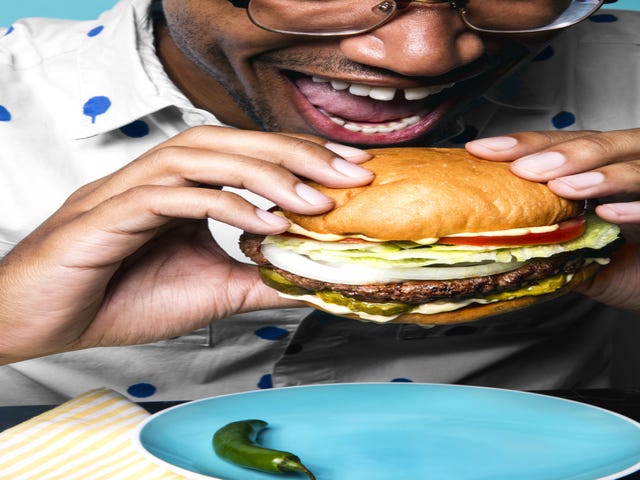
The Impossible Burger aims to combat climate change by alleviating the agricultural footprint of traditional meat and dairy production.
Impossible Foods, Inc.
Now U.S. Cattlemen's Association is looking to draw a line in the sand.
The association launched what could be the first salvo in a long battle against plant-based foods. Earlier this month, the association filed a 15-page petition with the U.S. Department of Agriculture calling for an official definition for the term "beef," and more broadly, "meat."
"While at this time alternative protein sources are not a direct threat to the beef industry, we do see improper labeling of these products as misleading," said Lia Biondo, the association's policy and outreach director. "Our goal is to head off the problem before it becomes a larger issue."
Starting a national dialogue
Not everyone sees it that way. Ethan Brown, founder and CEO of Beyond Meat, said consumers already know what they're looking for when they're browsing the grocery store aisles. But he doesn't necessarily see the petition as a bad thing.
Sunday, January 14, 2018
Saturday, December 09, 2017
Friday, July 14, 2017
Saturday, September 24, 2016
They indulge lustful appetite

Some are indulging lustful appetite which wars against the soul and is a constant hindrance to their spiritual advancement. They constantly bear an accusing conscience, and if straight truths are talked they are prepared to be offended. They are self-condemned and feel that subjects have been purposely selected to touch their case. They feel grieved and injured, and withdraw themselves from the assemblies of the saints. They forsake the assembling of themselves together, for then their consciences are not so disturbed. They soon lose their interest in the meetings and their love for the truth, and, unless they entirely reform, will go back and take their position with the rebel host who stand under the black banner of Satan. If these will crucify fleshly lusts which war against the soul, they will get out of the way, where the arrows of truth will pass harmlessly by them. But while they indulge lustful appetite, and thus cherish their idols, they make themselves a mark for the arrows of truth to hit, and if truth is spoken at all, they must be wounded. Some think that they cannot reform, that health would be sacrificed should they attempt to leave the use of tea, tobacco, and flesh meats. This is the suggestion of Satan. It is these hurtful stimulants that are surely undermining the constitution and preparing the system for acute diseases by impairing Nature's fine machinery and battering down her fortifications erected against disease and premature decay.
Testimonies for the Church, Vol. I, p. 548
Thursday, January 07, 2016
Starving Syrians 'eating leaves and pets' to survive in Madaya
Jan 7, 2016
Tens of thousands trapped in besieged mountain town close to capital Damascus

Residents in a Syrian town close to Damascus are reportedly being forced to eat leaves and pets to survive.
Up to 30,000 people have been trapped in the mountain town of Madaya, which lies a few dozen miles from the capital, since July, under a tight siege by pro-government forces, reports The Guardian.
President Bashar al-Assad's forces have imposed restrictions on the town and its neighbouring city Zabadani, which was once a stronghold of the opposition. Residents say they are being punished for the suffering of two villages, Fua and Kefraya, in the Idlib province hundreds of miles away, which were captured by rebels last year.
"People are dying in slow motion," said Louay, a social worker from Madaya. "We had some flowers growing in pots at home. Yesterday, we picked the petals and ate them, but they were bitter, awful."
With a kilogram of rice costing as much as £170 on the black market, people are now buying it by the gram.
"I swear by God - and you might not believe me because it sounds fantastical - I tried to buy some food today but a kilo of rice is 100,000 [Syrian] pounds (£311)," said Louay. "A kilo of rice, bulgur, lentil, sugar – 100,000, 100,000, 100,000. That is if you can find it."
Protests as besieged Madaya residents starve - amateur video

video playing
He added: "I've personally seen people slaughtering cats to eat them and even the trees have been stripped of leaves now."
Activists have shared pictures of emaciated elderly men and starving children. Some youngsters are risking their lives trying to collect plants in minefields around the town's outskirts and several have lost limbs, residents said.
"Whether you are a man, woman, child, whether you're 70 or 20 years old, you will have lost about 15kg [33lbs] of your weight," said Ebrahem Abbass, a defector who had served as a sergeant in the Syrian army. "You don't see a child whose eyes aren't sunken and staring from hunger."
Source
.
Wednesday, December 23, 2015
Spaniards Snap Up Holiday Hams, Even After Cancer Warning
Updated December 23, 201510:48 AM ET
Published December 23, 20155:30 AM ET
LAUREN FRAYER
Listen to the Story
Morning Edition
3:20
Playlist
Download
Embed

Display of Spanish hams in the front window of a branch of the Museo del Jamón, a chain of ham-themed bars in Madrid.Lauren Frayer for NPR
In Madrid, Museo del Jamón, which isn't a museum but a chain of bars, sells special ham backpacks, for carrying a whole ham leg — hoof and all — around town at the holidays. Spanish airports have special luggage rules for them. A leg of ham is the most popular family gift at Christmas. Every self-respecting Spanish household has ajamonera — a kitchen countertop rack on which to mount and cut slices off a ham leg.
"It's the ingredient we use most in Spain — essential to our cooking and to our lives," says Jesus Engamo, a ham cutter who has worked at the museum for 35 years. "We can't live without it!"

THE SALT
Bad Day For Bacon: Processed Meats Cause Cancer, WHO Says
So when the World Health Organization warned in October that eating 50 grams a day of processed meat — defined as including anything cured or salted, like Spanish ham — can raise your risk of cancer, Spaniards were aghast. (On average, Spaniards eat 140 grams of pork a day, though there's no official breakdown of how much of that is cured or processed versus fresh.)
"I think it's a lie! It's what other countries say when they're jealous of Spain because we have the ham," says Asunción Claudios, 25, sharing a plate of jamón ibérico with friends at the Museo.
She closes her eyes as she places a paper-thin, almost translucent slice of jamón on her tongue. It's got to be a conspiracy, she says.
 i
iA ham cutter demonstrates how to carefully slice Spanish jamón at the Don Jamón tapas bar on Madrid's Gran Vía.Lauren Frayer for NPR
"I'm inclined to say Germany is behind this," she says, straight-faced. "Sure, they have sausage there — but it's nojamón. Other countries are jealous."
There is no evidence whatsoever that Germany or any pork-producing competitor put the WHO up to its cancer warnings. And Spain's ham industry has balked at its products being described as unhealthy, lumped in with other processed meat, like hot dogs.
"My first reaction was, 'I can't believe it!' We have a lot of studies that say just the opposite," says Ricardo Mosteo, president of the Denomination of Origin (D.O.), a ham quality-assurance board, in the region of Teruel, south of Madrid.
Last summer, a scientific study funded by the meat industry of Andalusia, another Spanish region, found that cured Spanish ham is free of the toxoplasmosis parasite found in other uncooked meats, and thus safe for pregnant women.
Groups like the Spanish Jamón Serrano Foundation claim local ham is ideal for people on diets, the elderly, or athletes. The group's website says jamón cuts cholesterol and boosts childhood growth and athletic performance.
NPR could not independently verify the research methods or conclusions of those studies.
But with the WHO findings, Mosteo says his phone has been ringing off the hook, with queries from journalists as well as confused ham consumers.
"I wasn't very worried, but then journalists started phoning me, [asking] 'What do you think?' " he says. "And I realized, OK, this is going to be a problem for us."
The sale of ham legs alone is a $1.65 billion industry in Spain, and 50 percent of sales happen in the weeks before Christmas, Mosteo says.
He predicts a marketing shift, with Spanish ham producers describing their products as organic, to be consumed in small quantities, as a luxury item. But Mosteo says there's been no perceptible drop in ham sales so far this holiday season.
Back on Madrid's Gran Vía, the Méson El Jamón — the house of ham — has a pork leg wearing a Santa hat on its storefront. Inside, another ham specialist is choppingjamón serrano for croquetas — bechamel dumplings.
"Here we're actually selling more ham since the WHO warning," says Angel Contera. "There's an urgency to enjoy it now. If jamón is bad for us, what will we live on?"
He sighs and puts down his knife. He's taking a break — going out for a smoke.
.
Monday, October 26, 2015
Ellen G. White Statements Concerning Cancer (and Meat Consumption)

First Mention of Cancer—1864
I have been shown that children who practice self-indulgence previous to puberty, or the period of merging into manhood and womanhood, must pay the penalty of nature’s violated laws at that critical period.
Many sink into an early grave, while others have sufficient force of constitution to pass this ordeal. If the practice is continued from the ages of 15 and upward, nature will protest against the abuse she has suffered, and continues to suffer, and will make them pay the penalty for the transgression of her laws, especially from the ages of 30 to 45, by numerous pains in the system and various diseases such as affection of the liver and lungs, neuralgia, rheumatism, affection of the spine, diseased kidneys, and cancerous humors. Some of nature’s fine machinery gives way, leaving a heavier task for the remaining to perform, which disorders nature’s fine arrangement, and there is often a sudden breaking down of the constitution, and death is the result....
Females possess less vital force than the other sex, and are deprived very much of the bracing, invigorating air by their in-doors life. The results of self-abuse in them is seen in various diseases such as catarrh, dropsy, headache, loss of memory and sight, great weakness in the back and loins, affections of the spine, the head often decays inwardly. Cancerous humor, which would lay dormant in the system their lifetime, is inflamed and commences its eating, destructive work. The mind is often utterly ruined and insanity takes place.—An Appeal to Mothers, 27
Calomel and Cancer
My attention was then called to still another case. I was introduced into the sickroom of a young man who was in a high fever. A physician was standing by the bedside of the sufferer with a portion of medicine taken from a vial upon which was written Calomel. He administered this chemical poison, and a change seemed to take place, but not for the better....
The third case was again presented before me. It was that of the young man to whom was administered calomel. He was a great sufferer. His lips were dark and swollen. His gums were inflamed. His tongue was thick and swollen, and the saliva was running from his mouth in large quantities. The intelligent gentleman before mentioned looked sadly upon the sufferer and said:
“This is the influence of mercurial preparations. This young man had remaining sufficient nervous energy to commence a warfare upon this intruder, this drug-poison, to attempt to expel it from the system. Many have not sufficient life forces left to arouse to action, and nature is overpowered and ceases her efforts, and the victim dies.”…
The third case was again presented before me, that of the young man to whom had been administered calomel. He was a pitiful sufferer. His limbs were crippled, and he was greatly deformed. He stated that his sufferings were beyond description, and life was to him a great burden. The gentleman whom I have repeatedly mentioned looked upon the sufferer with sadness and pity, and said:
“This is the effect of calomel. It torments the system as long as there is a particle left in it. It ever lives, not losing its properties by its long stay in the living system. It inflames the joints, and often sends rottenness into the bones. It frequently manifests itself in tumors, ulcers, and cancers years after it has been introduced into the system.”—Selected Messages 2:445, 447, 449.
“Cancerous Germs”
Those who use flesh foods little know what they are eating. Often if they could see the animals when living and know the quality of the meat they eat, they would turn from it with loathing. People are continually eating flesh that is filled with tuberculous and cancerous germs. Tuberculosis, cancer, and other fatal diseases are thus communicated.—Ministry of Healing (1905).

Meat Eating and Cancer
The tables of many professed Christian women are daily set with a variety of dishes which irritate the stomach and produce a feverish condition of the system. Flesh meats constitute the principal article of food upon the tables of some families, until their blood is filled with cancerous and scrofulous humors. Their bodies are composed of what they eat. But when suffering and disease come upon them, it is considered an affliction of Providence.—Testimonies for the Church 3:563 (1875).
Cancers, tumors, and all inflammatory diseases are largely caused by meat eating.
From the light God has given me, the prevalence of cancers and tumors is largely due to gross living on dead flesh. I sincerely and prayerfully hope that, as a physician, you will not forever be blinded on this subject, for blindness is mingled with a want of moral courage to deny your appetite, to lift the cross, which means to take up the very duties that cut across the natural appetites and passions....
I have the subject presented to me in different aspects. The mortality caused by meat eating is not discerned; if it were, we would hear no more arguments and excuses in favor of the indulgence of the appetite for dead flesh. We have plenty of good things to satisfy hunger without bringing corpses upon our table to compose our bill of fare.—Medical Ministry, 278.
The meat diet is the serious question. Shall human beings live on the flesh of dead animals? The answer, from the light that God has given, is No, decidedly No. Health reform institutions should educate on this question. Physicians who claim to understand the human organism ought not to encourage their patients to subsist on the flesh of dead animals. They should point out the increase of disease in the animal kingdom. The testimony of examiners is that very few animals are free from disease, and that the practice of eating largely of meat is contracting diseases of all kinds—cancers, tumors, scrofula, tuberculosis, and numbers of other like affections.—Counsels on Diet and Foods, 388.
We do not mark out any precise line to be followed in diet, but we do say that in countries where there are fruits, grains, and nuts in abundance, flesh food is not the right food for God’s people. I have been instructed that flesh food has a tendency to animalize the nature, to rob men and women of that love and sympathy which they should feel for everyone, and to give the lower passions control over the higher powers of the being. If meat eating were ever healthful, it is not safe now. Cancers, tumors, and pulmonary diseases are largely caused by meat eating.—Testimonies for the Church 9:159.

Pork and Cancer
God expressly commanded the children of Israel not to eat swine’s flesh. The heathen used this meat as an article of food. God prohibited the Hebrews the use of swine’s flesh because it was hurtful. It would fill the system with humors, and in that warm climate often produced leprosy. Its influence upon the system in that climate was far more injurious than in a colder climate. But God never designed the swine to be eaten under any circumstances....
In order to preserve health, temperance in all things is necessary. Temperance in labor, temperance in eating and drinking. Because of intemperance a great amount of misery has been brought upon the human family. The eating of pork has produced scrofula, leprosy, and cancerous humors. Pork-eating is still causing the most intense suffering to the human race.—Spiritual Gifts 4a:146
Those who subsist largely upon flesh meats inflame the stomach, thereby the blood becomes torpid and impure, headaches and indisposition follow. The system is filled with humors; fevers, scrofula and cancers are the consequences. Especially is this true of those who eat swine’s flesh. Yet so great is the tendency to ignore these evils that few can be brought to realize the true effects of this sort of diet upon the human system.—The Signs of the Times, January 6, 1876.
Physical Injury and Cancer
Satan is constantly devising some new style of dress that shall prove an injury to physical and moral health, and he exults when he sees professed Christians eagerly accepting the fashions that he has invented. The amount of physical suffering created by unnatural and unhealthful dress cannot be estimated. Many have become life-long invalids through their compliance with the demands of fashion. Displacements and deformities, cancers and other terrible diseases, are among the evils resulting from fashionable dress.—Testimonies for the Church 4:634, 635.
Ellen G. White Estate
Washington, D. C
February 12, 1964; revised August, 1990
Source
.
Subscribe to:
Posts (Atom)