Showing posts with label CHRISTIANITY. Show all posts

Thursday, October 22, 2026

Karl Marx and the Satanic Roots of Communism


David Vance

Aug 02, 2026
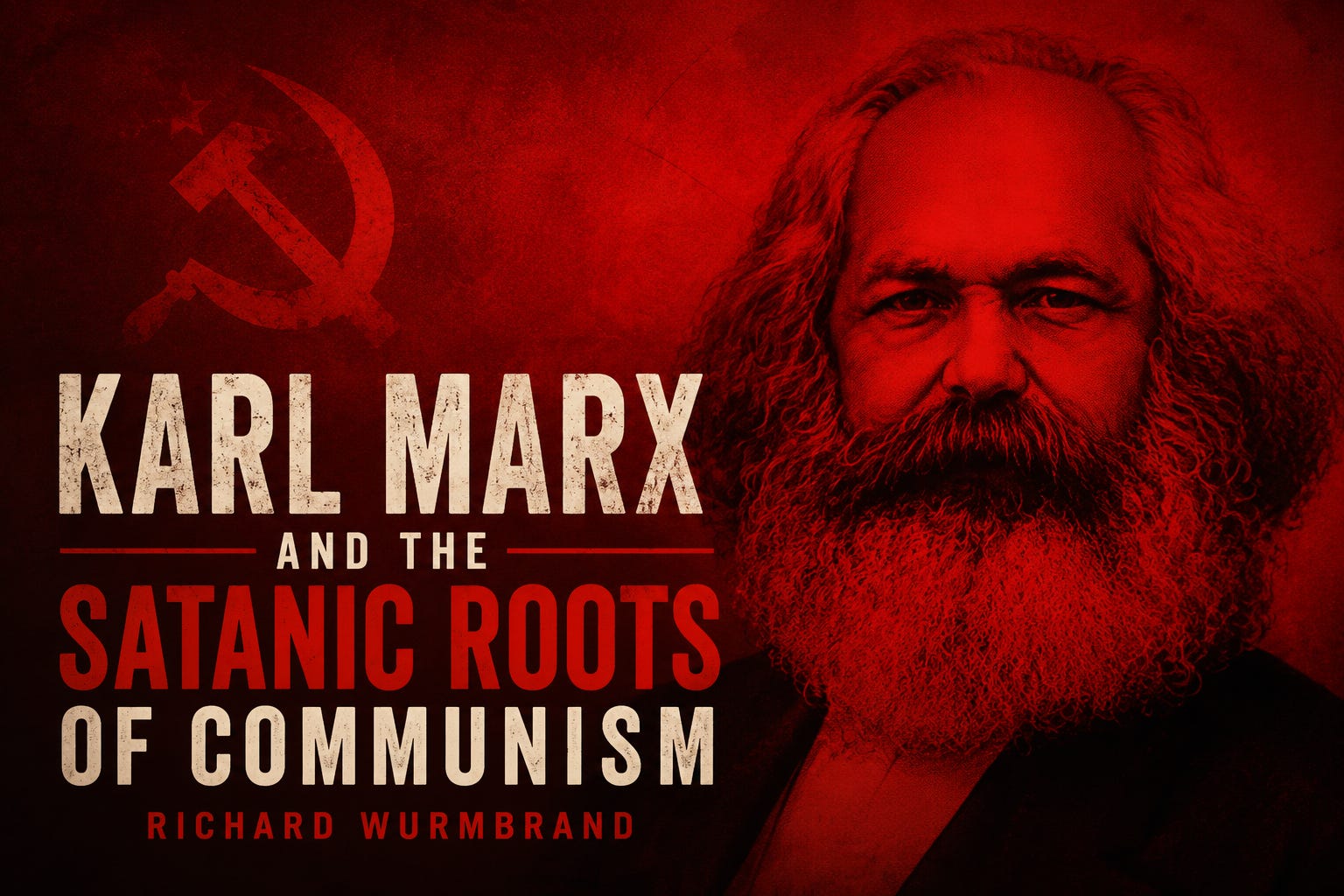


What if I told you that Marxism has deep roots in Satanism? Would you be surprised? Is it possible that an ideology which has captured the minds of millions of people around the world has an origin story rooted in deep evil?

I recently read Richard Wurmbrand's fascinating book, Karl Marx and the Satanic Roots of Communism. It isn't an easy read and nor was it intended to be. Wurmbrand wrote it after spending fourteen years in Romanian Communist prisons. Unlike many modern academics who analyse Communism from their ivory towers, Wurmbrand experienced it at its most brutal - in a prison cell.

One of the first things Wurmbrand talks about is something that may surprise many people. Karl Marx did not begin life as an atheist. He was raised in a Christian home and his early school essays reveal someone who understood Christian teaching well. He explicitly wrote about finding comfort in Christ, about serving others selflessly, and about the believer’s relationship with God.

Then, according to Wurmbrand, everything changed.

Marx’s later poems strike an entirely different note. They are filled with a bitterness, a darkness and open defiance of God. In one, Marx declares,

“I wish to avenge myself against the One who rules above.”

In another, he describes a soul once devoted to God but now “chosen for hell.”

Whose soul was that, I wonder?

Wurmbrand argues that these are not isolated literary flourishes but rather clear evidence of a profound spiritual rebellion. Marx no longer appeared merely indifferent to Christianity; he was openly hostile towards it.

Marx also wrote a student play entitled Oulanem.

Wurmbrand points out that the title is an anagram of Emmanuel, one of the Bible's names for Jesus, written backwards. In occult traditions, reversing sacred names carries symbolic significance. Marx was only nineteen at this point.
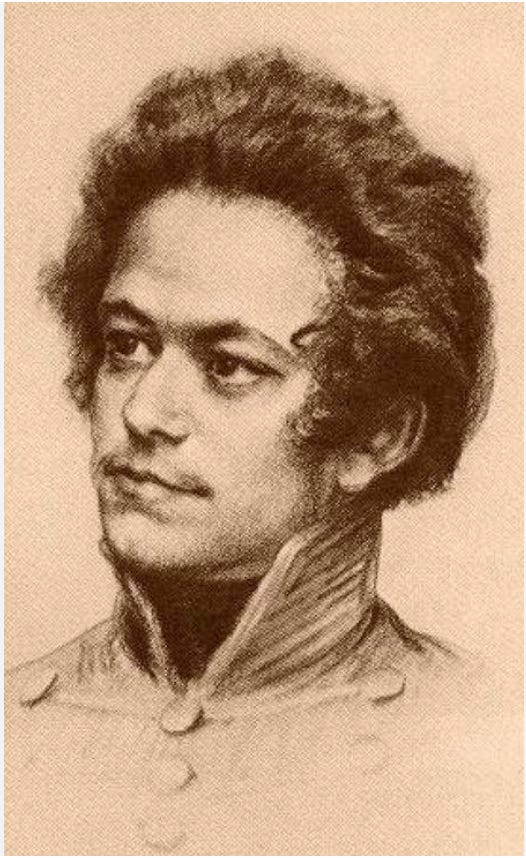


The play itself is bleak. Its central figure longs to drag humanity into destruction before following them into the abyss himself. Elsewhere, Marx wrote of receiving a sword from “the prince of darkness.” Wurmbrand stops short of suggesting Marx literally entered into some formal pact with Satan but something had changed. Instead, he argues that the recurring imagery, together with Marx’s increasingly hostile language towards God, reveals a deliberate rejection of Christianity.

Friday, October 16, 2026

Crusaders VS Puritans - Chris J. Pinto

Christian J. Pinto: Crusaders VS Puritans

The Real Reveal

Oct 9, 2026

Chris examines the history of the Crusades and the fight against Islam, versus the strength of the Puritans and Reformed armies that appeared as a result of the Protestant Reformation. Which were greater or more effective? Did the Protestant movement weaken Christianity in the West? Or strengthen it? How is it that Islam was completely subdued by the end of World War II so that John F. Kennedy remarked that the entire Middle East was in a subjugated condition during the 1960’s?  Furthermore, we look at the history of how the Crusades ended and the possible reasons why the Holy Land was lost in the Middle Ages.


Tuesday, July 21, 2026

Christian J. Pinto: The Bible On Trial In Europe The Real Reveal


Christian J. Pinto: The Bible On Trial In Europe


The Real Reveal

Jul 21, 2026

Chris discusses the ongoing controversy with the issue of so-called "hate speech" in Europe, where Dr. Paivi Rasanen has been persecuted for some six years for communicating the Word of God in Finland. Her original offense was to post a verse of Scripture that opposed the LGBT narrative, but now her book in which she explains God's original design for a family is being called a "war crime" by the courts. The case is part of the ongoing attack against free speech, where Christians are almost always the people targeted. We discuss the origins of free speech and how it was built on the principles of Common Law, which is based on God's Law in the Bible. Can Western civilization survive if it abandons the Christian faith?

Tuesday, July 14, 2026

I fed 5 major religions into an AI engine. Here is the 'winner.'


By Jay Atkins, Op-ed Contributor Monday, April 20, 2026


iStock/Chor muang


I recently did something that will likely make both my Christian and atheist friends a little uncomfortable: I asked a popular AI engine to evaluate the world’s major belief systems and tell me which one makes the most rational sense.

To be clear, I didn’t prompt it to favor Christianity. I didn’t ask leading questions or try to stack the deck. I asked it to analyze the heavyweights — Atheism, Buddhism, Islam, Hinduism, and Christianity — using a simple two-step framework: First, which worldview best explains reality, and second, which one does so while requiring the fewest unsupported assumptions? In other words, tell me which one has the highest explanatory power with the lowest evidentiary burden.

As a professing Christian for more than 40 years, what I got back should not have surprised me, yet it did. AI, in seconds, reached the same conclusion I’ve been working towards for decades: Christianity offers the most reasonable overall explanation of reality with the fewest leaps of faith.

Pause and let that settle in. AI ranked Christianity as the most reasonable view of the world.

The analysis I asked AI to do was not complicated, but it was comprehensive. I asked it to evaluate each worldview against the same basic questions:

1. Why does anything exist at all?
2. Why is the universe ordered and intelligible?
3. Why do humans possess consciousness and reason?
4. Are moral truths real or are they just social constructs?
5. Does human life have meaning or purpose?
6. Do the historical and fact claims of each belief system hold up?

I framed the analysis this way, not to pick a winner for rhetorical effect but to see which belief system actually holds together under the pure, rational scrutiny of a machine. When the analysis was done, here’s what happened.

Atheism scored well on simplicity. It doesn’t require belief in miracles or divine revelation. But that simplicity comes at a cost. It struggles to explain the biggest questions: why does the universe exist at all, why is it governed by rational laws, how does consciousness arise from mere matter, and why do we experience moral obligations as something real and binding? In many cases, it simply labels these things as either illusory or as “brute facts” and moves on, but it does not answer them.

Buddhism performed better as a practical system. It offers profound insight into human suffering and provides a quasi-workable path toward inner peace, but it largely sidesteps the deeper metaphysical questions. It gives advice on how to cope with reality, but not what reality ultimately is.

Hinduism fared about as well as Buddhism. It offers a sweeping explanation of reality with concepts like ultimate unity, karma, and reincarnation that attempt to account for both the material and spiritual world. That gives it significant explanatory depth, but with a big tradeoff. The system relies on a complex web of metaphysical claims that can’t be verified or falsified, creating a very high evidentiary burden relative to other worldviews.

Islam held together fairly well. It offers a strong account of God, morality, and purpose, which is understandable given its Abrahamic roots. But it runs into serious historical tension when it comes to the historicity of its claims about divine revelation to Muhammad, Jesus’ crucifixion, and correction of earlier traditions. Islam’s brand of retrospective revision carries a very heavy evidentiary burden that it simply can’t carry.

Monday, June 15, 2026

How True Christianity and Christian Persecution Now Hinge on Bending the Knee to Trump


Ep134: How True Christianity and Christian Persecution Now Hinge on Bending the Knee to Trump

Thursday, June 11, 2026 — You're listening to Highest Power: Church + State, a weekly podcast from Baptist News Global, hosted by Rick Pidcock. Support faith-based journalism at baptistnews.com.


Tuesday, May 26, 2026

ELLEN G. WHITE: THE GREAT CONTROVERSY

ELLEN G. WHITE: THE GREAT CONTROVERSY AUDIO BOOK 

American Christian Ministries

Premiered Apr 15, 2025

🎧 The Great Controversy – Now in Audiobook Format 🎧

Step into the sweeping drama of history’s greatest conflict — the battle between good and evil, truth and deception, Christ and Satan. In The Great Controversy, author Ellen G. White takes you on a powerful journey through the rise and fall of empires, the Reformation, the early church, and the final events of Earth’s history — all through the lens of Bible prophecy.

This audiobook version brings the pages to life, allowing you to absorb deep spiritual insights while on the go — during your commute, daily walk, or quiet reflection time.

🌍 Explore:

The fall of Jerusalem  

The rise of the papacy  

The Protestant Reformation  

America’s prophetic role  

The final warning to the world  

Christ’s soon return  

📖 "It is the purpose of Satan to cause men to forget God, that he may secure them as his own..." 

– The Great Controversy

Listen, learn, and be inspired to stand for truth in the last days.


Sunday, April 12, 2026

Christianity as Rome’s Secret Strategy—And Why It Worked So Well


By Author Julia Davis

Posted onPublished: December 16, 2025


Source: ShutterStock


The church would have us believe that the Emperor Constantine suddenly “found Jesus” and decided to turn his entire empire Christian overnight.

But that might not be the whole truth, and his reasons for accepting the new faith might not have been as pure and honest as they seem.

Christianity has a message of unity and acceptance, and the Romans saw great potential in that.

They had a long and tumultuous history of dealing with conquered peoples, and they knew that brute force wasn’t enough for the Roman influence to truly last.

A Tapestry of Gods and Cultures


© Pexels


The Roman Empire was a melting pot of different cultures and religions. There was a god for every occasion, every city, and every aspect of life.

This strong religious tradition was deeply woven into daily routines and laws.

These were all national cults, and each and every people that the Romans conquered had their own.

The pantheons were a huge part of people’s identity, and no amount of Roman force would get them to give that up.

Not to mention, these conquered peoples loathed the very idea of the Romans, and rejected all that was imposed on them.

But Christianity was not Roman. That’s why the Empire recognized it as the one assimilation strategy that wouldn’t cause outright rebellion.

Wednesday, April 08, 2026

There are Plenty of Religious Underpinnings to Our Founding


(Terrance Emerson/Dreamstime.com)


Friday, 27 March 2026 04:56 PM EDT


Sometimes we are led to believe today that the Founding Fathers of America were men of the Enlightenment, meaning that, for the most part, they were not believers in Jesus.

But that’s not true that they were mostly skeptics.

There were a few, but they were the exception — not the rule.

And besides, Enlightenment thinkers, like Montesquieu, Sir William Blackstone, and John Locke — whose writings were important to America's Founders — were professing Christians, who often based their arguments on the Bible.

250 years ago from this month, the Continental Congress — the same men that would adopt the Declaration of Independence by voice vote on July 4 — proclaimed a Day of Prayer for the fledgling nation-to-be.

This was no namby-pamby, "To Whom It May Concern," - type prayer — that we’re so often used to today. This was a bold Christian document by professing Christians, representing a population back home that was 99.8% professing Christians.

In that proclamation of a Day of Fasting, Prayer, and Humiliation, March 16, 1776, the founders declared, "In times of impending calamity and distress; when the liberties of America are imminently endangered by the secret machinations and open assaults of an insidious and vindictive administration, it becomes the indispensable duty of these hitherto free and happy colonies, with true penitence of heart, and the most reverent devotion, publicly to acknowledge the over ruling providence of God."

Based on this opening paragraph and other writings of the times, they said: We used to be happy and enjoy life here in these British colonies in North America.

We enjoyed our rights as Englishmen. Rights that dated back to the Magna Charta in 1215, which were affirmed in the British Bill of Rights of 1689.

Tuesday, March 24, 2026

Bibles: Dangerous, Illegal, Covert


April 20, 2019 By lovepackages

Voice of the Martyrs recently published a world map that highlights the most difficult places to own or bring a bible. VOM is working hard to get bibles into these countries, and we are honored to be working toward the same goal.

There are many other ministries printing, shipping, smuggling, and carrying God’s word into these places as well. There are almost as many different strategies as there are ministries, and it’s breathtaking to consider how the Lord orchestrates his plans: One ministry prints, another uses cutting edge digital technology, another collects and recycles discarded material.

And you’re invited into the work as well. Pray for the work, learn how to collect material for us to ship, and/or donate toward the shipping costs.

VOM’s map is a stunning visual of the great need for truth.

Is the Bible Illegal in 52 Countries?

You may have heard that the bible is illegal in 52 countries. It gets printed on t-shirts and stitched on bible covers.

“Illegal” may not be strictly true, but it might as well be in most of these places. The Voice of the Martyrs map categorizes countries where bibles are (1) difficult/dangerous to obtain, (2) illegal or highly restricted, and (3) strictly illegal and only available through covert smuggling.

The map was in their last newsletter, but you can also see it on their website.

Sunday, September 28, 2025

Night Journey From Rome By Clark Butterfield


NIGHT JOURNEY FROM ROME 
By Clark Butterfield 


Published by Chick Publications
P. O. Box 662, Chino, CA 91710
Printed in the United States of America 
ISBN: 0-9:17958-1 I -5


Sunday, March 02, 2025

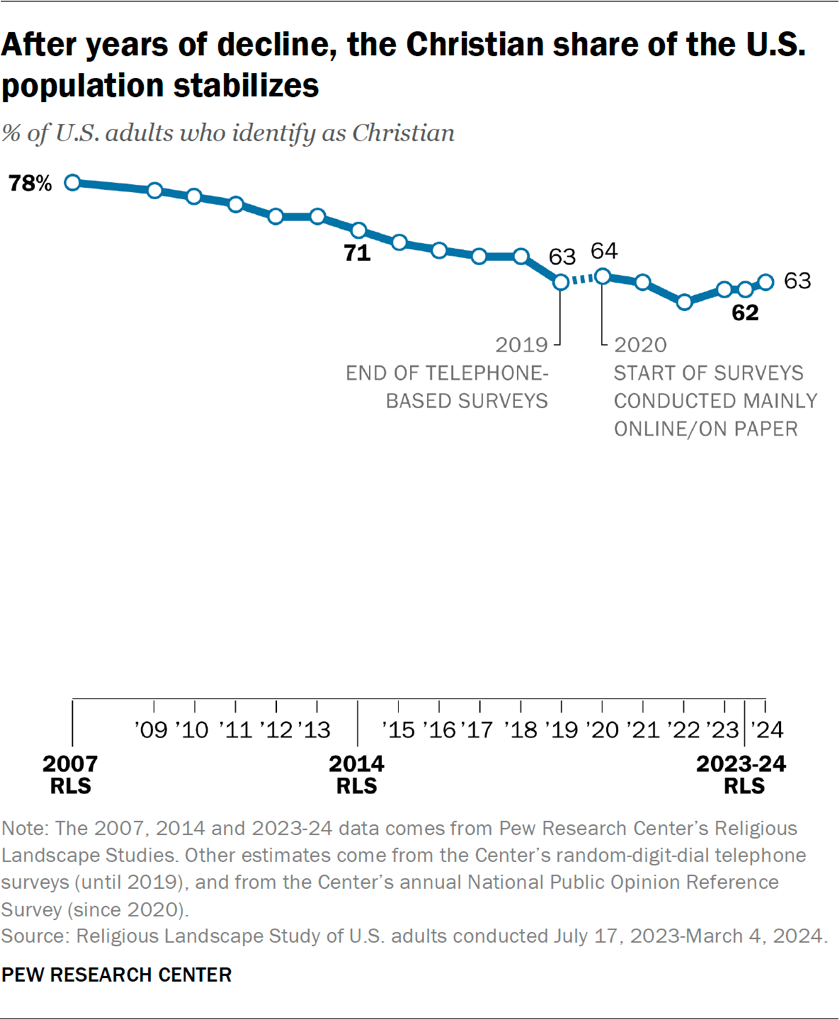
Decline of Christianity in the U.S. Has Slowed, May Have Leveled Off


Religious Landscape Study
REPORT

FEBRUARY 26, 2025

Decline of Christianity in the U.S. Has Slowed, May Have Leveled Off

Findings from the 2023-24 Religious Landscape Study


Illustration by Shawna X

How we did this

After many years of steady decline, the share of Americans who identify as Christians shows signs of leveling off – at least temporarily – at slightly above six-in-ten, according to a massive new Pew Research Center survey of 36,908 U.S. adults.


The Religious Landscape Study (RLS) is the largest single survey the Center conducts, aiming to provide authoritative figures on the size of U.S. religious groups because the U.S. census does not collect that information.

We have conducted three of these landscape surveys over the past 17 years, with more than 35,000 randomly sampled respondents each time. That’s enough to paint a statistical portrait of religion not only nationally, but also in all 50 states and the District of Columbia, as well as in 34 large metro areas.

This introductory essay walks through the big-picture trends: evidence both of a long-term decline in American religion and of relative stability in the last few years, since 2020 or so.

Jump to an executive summary of key findings.

Search for data on religious groups.

The first RLS, fielded in 2007, found that 78% of U.S. adults identified as Christians of one sort or another. That number ticked steadily downward in our smaller surveys each year and was pegged at 71% in the second RLS, conducted in 2014.

The latest RLS, fielded over seven months in 2023-24, finds that 62% of U.S. adults identify as Christians. That is a decline of 9 percentage points since 2014 and a 16-point drop since 2007.

But for the last five years, between 2019 and 2024, the Christian share of the adult population has been relatively stable, hovering between 60% and 64%. The 62% figure in the new Religious Landscape Study is smack in the middle of that recent range.

The largest subgroups of Christians in the United States are Protestants – now 40% of U.S. adults – and Catholics, now 19%. People who identify with all other Christian groups (including the Greek and Russian Orthodox Churches, the Church of Jesus Christ of Latter-day Saints, Jehovah’s Witnesses and many others) total about 3% of U.S. adults.

Both Protestant and Catholic numbers are down significantly since 2007, though the Protestant share of the population has remained fairly level since 2019 and the Catholic share has been stable since 2014, with only small fluctuations in our annual surveys.

Meanwhile, the share of Americans who identify with a religion other than Christianity has been trending upward, though it is still in single digits.