Showing posts with label Investigation. Show all posts

Saturday, September 12, 2026

This is Why They Want to Kill Me... My Story | Harvard Speech

 This is Why They Want to Kill Me... My Story | Harvard Speech


Nick Shirley

Sep 11, 2026

This is why they want to kill me. I spoke at Harvard about exposing fraud with a $500 camera — Minnesota daycare scams, California Medicaid fraud, death threats, and the law they nicknamed the Stop Nick Shirley Act. This is my story. From the source. No spin.

Tuesday, September 01, 2026

Inhaler Overuse Linked to Heart Risks


(Adobe Stock) j


Friday, 28 August 2026 10:17 AM EDT


For people with asthma or COPD, reaching for a rescue inhaler too often may be a warning sign — not just for their lungs, but for their heart.

It's estimated nearly 1 in 5 asthma patients and 1 in 3 COPD patients overuse these products.

Researchers analyzed real-world health data from more than 280,000 asthma and COPD patients in Belgium.

They found frequent use of short-acting reliever inhalers, also called bronchodilators, was associated with a higher risk of cardiovascular disease and death, including heart failure, heart attack and ischemic stroke.

Compared with no use, the increased risk of death ranged from 12% to 73% depending on the type of inhaler and whether patients had asthma or COPD.

Using three or more reliever inhalers a year was also associated with a higher risk of death compared with using two or fewer.

Researchers say these inhalers briefly relax airway muscles, but can also cause faster, irregular heart rates. And relying on them too heavily may be a sign that the underlying asthma or COPD isn't well controlled.

"Overuse of short-acting bronchodilators is an alarm signal which indicates uncontrolled airway inflammation and requires a medical review of treatment," said lead author Lies Lahousse from Ghent University in Belgium.

Researchers say overuse should prompt patients to have their lungs checked and healthcare providers to review patients’ treatment, inhaler technique and adherence.

The study was published in the journal ERJ Open Research.


© HealthDay


Monday, August 24, 2026

Big router is watching you: WiFi could secretly track you even if you leave your phone at home


By Jeanne Erickson
Published Aug. 22, 2026, 1:46 p.m. ET


Think ditching your cellphone and laptop means nobody can track you? Think again.

Scientists have discovered a chilling way ordinary WiFi networks could work together to identify people with near-perfect accuracy — even when they aren’t carrying a phone, smartwatch, Fitbit, laptop or any other connected device, according to Science Daily.

Researchers found that unencrypted signals routinely exchanged between WiFi devices and routers can be used to create radio-based images — akin to a camera — of people and recognize them within seconds.


Researchers found that ordinary WiFi routers could quietly identify people with nearly 100% accuracy, potentially turning everyday wireless networks into invisible surveillance systems.AlinStock – stock.adobe.com

The finding raises the unsettling possibility that the millions of WiFi routers surrounding us could become a vast, invisible surveillance network — potentially allowing corporations, governments or others to identify people without their knowledge.

“The technology is powerful, but at the same time entails risks to our fundamental rights, especially to privacy,” said professsor Thorsten Strufe from Germany’s Karlsruhe Institute of Technology.

The method takes advantage of normal communications produced by legitimate users connected to WiFi networks operating within a home, office, café or similar location.

Connected devices routinely send information back to routers to optimize wireless communications. Those signals, known as beamforming feedback information, are transmitted without encryption, researchers found.

That means someone within range could potentially analyze the signals without the person being tracked ever knowing it.

Sunday, August 16, 2026

The Apostle Peter in Rome


Jesus’ chief disciple examined

Nicola Denzey Lewis June 28, 2026 

In this blog post, Brown University Religious Studies professor Nicola Denzey Lewis answers frequently asked questions about the apostle Peter. Denzey Lewis appears in the CNN series Finding Jesus: Faith, Fact, Forgery, which aims to investigate artifacts that shed light on the world in which Jesus lived.—Ed.

What traditions connect the apostle Peter to Rome?


The Repentant St. Peter by El Greco. Photo: The Phillips Collection.

Jesus’ chief disciple, Peter (also called Simon Peter or Cephas), has been associated with Rome for nearly 2,000 years. The earliest testimony to the apostle Peter’s presence in Rome is a letter from a Christian deacon named Gaius. Writing probably toward the end of the second century C.E.—so, around 170 or 180 C.E.—Gaius tells about the wondrous things in Rome, including something called a tropaion (see below for more) where Peter established a church—in fact, the Church, the Roman Catholic church at the site where St. Peter’s Basilica is today. But there are other traditions besides Peter’s tropaion.

One early Christian text, the Apocryphal Acts of Peter, recounts many things that Peter did in the city. At one point in Acts of Peter, Peter is taunted by a flamboyant heretic, Simon Magus. Simon challenges Peter to a flying contest around the Roman Forum, but Peter’s prayers make Simon crash to the ground, proving that Simon’s powers are not as great as his own.

At the end of this text, Peter, not wishing to be martyred for his faith, flees from Roman authorities on the Via Appia leading out of the city. Rather unexpectedly, Peter meets Jesus, who is traveling in the opposite direction. He asks Jesus, “Where are you going?” Jesus tells Peter that he is going to Rome “to be crucified again.” Peter realizes, from this, that he cannot flee from his fate.

“Where are you going?” in Latin is “Quo Vadis?” and there’s a medieval church in Rome called the Church of Quo Vadis at the spot where Peter met Jesus. To prove that his vision was real, you can still see there a bit of marble pavement which the faithful say miraculously preserve
Jesus’ footprints.

Friday, August 07, 2026

FBI Secretly Opened Probe Alleging Trump Fired Comey Because He Was a Russian Asset, Declassified Memos Show


The White House
August 5, 2026

By John Solomon

The FBI opened a criminal probe specifically targeting Donald Trump in May 2017, alleging the newly elected president may have been acting as a Russian asset when he fired then-Director James Comey even though the bureau’s own evidence overwhelmingly showed at the time there was no collusion with the Kremlin.

Internal FBI memos newly declassified by the White House show the investigation – codenamed Oxferd Comma – was launched in the immediate aftermath of Comey’s May 9, 2017 firing and was predicated on an allegation that previously released records show the bureau’s own agents had mostly dismissed.

“The FBI is opening a full investigation based on an articulable factual basis that reasonably indicates that President Donald J. Trump may be or has been, wittingly or unwittingly, involved in activities for or on behalf of the Government of the Russian Federation which may constitute violations of federal criminal law or threats to the national security of the United States,” the electronic communication opening the probe on May 16, 2017 stated.

“The goal of the investigation is to determine if President Trump is or was directed by, controlled by, and/or coordinated activities with, the Russian Federation in a manner constituting a threat to the national security of the United States and/or a violation of federal criminal statutes,” it added. “In addition, this investigation will also seek to determine whether President Trump and others yet to be named obstructed and/or conspiracy to obstruct any associated FBI investigation.”

OXFERD COMMA – Opening EC

The memo, written by the FBI’s counterintelligence division and approved by then-FBI General Counsel James Baker and then-Assistant Director for Counterintelligence William Priestap, made clear the concerns about Russian influence and obstruction included Comey’s firing, in part because of the public explanations Trump gave for it.

“This alternative explanation can be reasonably read to imply that the FBI’s counterintelligence investigation was a factor in President Trump’s decision to terminate Comey,” the memo stated.

Both the Acting FBI Director Andrew McCabe and Deputy Attorney General Rod Rosenstein were advised that the probe had been launched, the memos show.

What Is Candida Auris and Where Is the Deadly Fungus Spreading?


Over 3,400 infections caused by Candida auris have been documented in the U.S. in 2026.

By Cecelia Smith-Schoenwalder
|
Aug. 6, 2026, at 5:38 p.m.

Deadly Fungus Spreading in U.S.


NICOLAS ARMER|PICTURE ALLIANCE|GETTY IMAGES

A petri dish holding the yeast Candida Auris.


Cases of a drug-resistant and potentially deadly fungal infection are spreading in the U.S., according to federal data.

Over 3,400 infections caused by Candida auris have been documented in 2026 across 27 states, according to data from the Centers for Disease Control and Prevention.

According to the CDC, “cases continue to rise each year, but the rate of increase has slowed down since 2022.”

What Is Candida Auris?

Candida auris is a drug-resistant fungus that can cause potentially life-threatening illness.

“Resistant infections can be difficult, and sometimes impossible, to treat,” according to the CDC.

Candida auris, which is a type of yeast, spreads easily in healthcare facilities like hospitals and mostly affects people who are already very sick. It can spread from person to person or through contaminated medical equipment.

“Most patients who become sick with C. auris were already very sick,” according to the CDC. “When patients with C. auris die, it is hard to know how much C. auris contributed to their death compared to other pre-existing illnesses.”

People who do not have risk factors usually don’t get sick or can recover easily on their own.

It was first found in 2009 in Japan and has since been documented in dozens of countries. It was first documented in the U.S. in 2016.

Thursday, July 30, 2026

The Vindicator explains: How 6,600 noncitizens were registered to vote in New Jersey


By Krystal Knapp July 26, 2026

About 400 later cast ballots. Here is what we know about the voter-registration failure, what the state and its contractor disagree about, and the questions that still need to be answered.


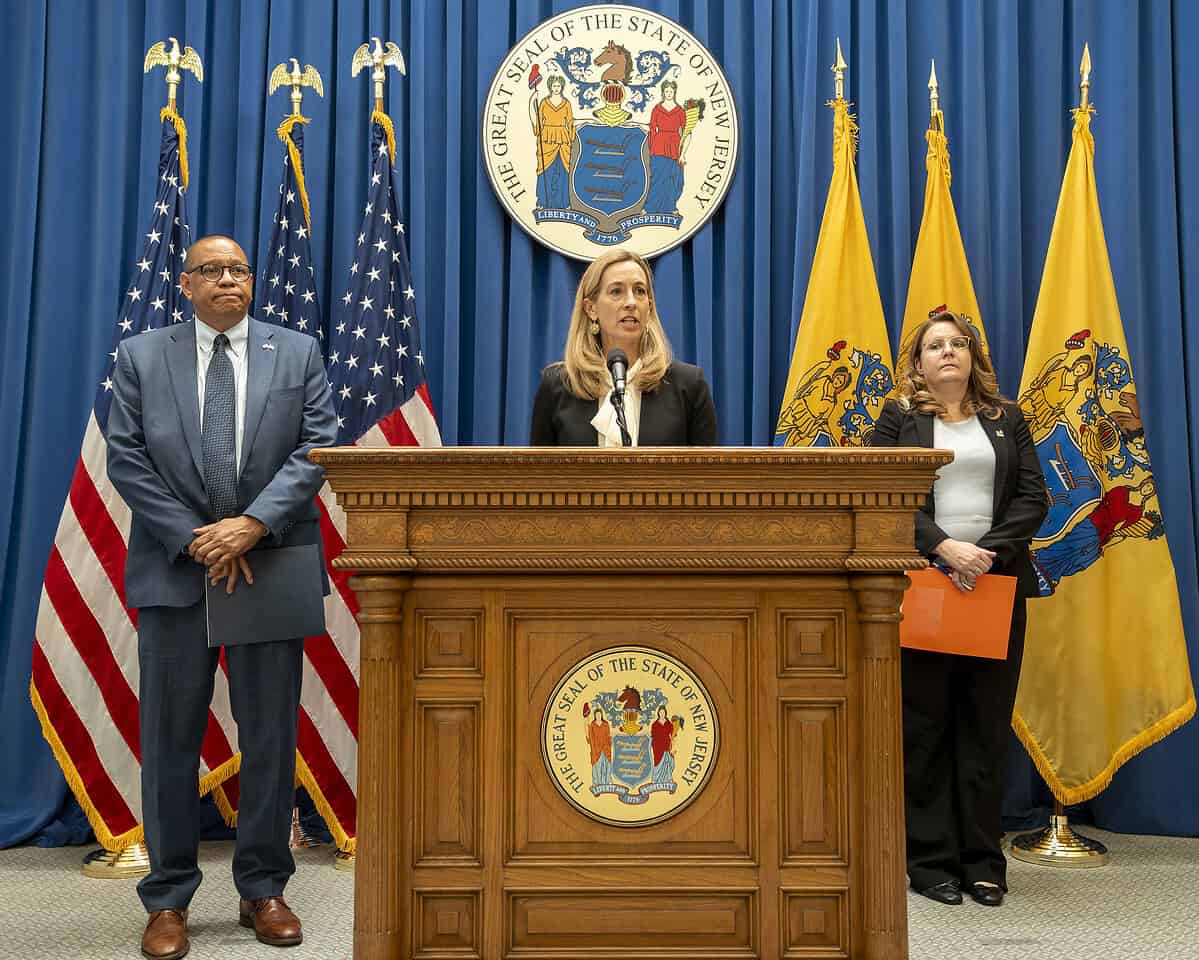
Governor Mikie Sherrill, Lt. Governor Dale Caldwell and MVC Acting Chair & Chief Administrator Rosalie Johnson hold a press conference announcing that New Jersey’s Motor Vehicle System led to voter registration of roughly 6,600 people, who indicated that they were not U.S. citizens, between June 2023 and June 2024, while in the media room of the statehouse in Trenton, N.J. on Tuesday, July 21, 2026. Photo: Tim Larsen, Office of the Governor.


New Jersey officials have acknowledged a breakdown in the state’s voter-registration system: About 6,600 people who identified themselves as noncitizens while obtaining driver’s licenses or identification cards were nevertheless registered to vote.

Roughly 400 of them later cast ballots, according to a preliminary state review.

Gov. Mikie Sherrill has blamed a software error involving IDEMIA, a longtime Motor Vehicle Commission contractor. But the company says its system accurately recorded the information it received and that state officials had access to records showing the applicants were not citizens.

The failure occurred between June 2023 and June 2024, during former Gov. Phil Murphy’s administration. Although the process was corrected in June 2024, the public was not told about it until Sherrill disclosed it on July 21, 2026.

That leaves several major questions unresolved: Was this primarily a software failure, a poorly designed state process, a failure by election officials to review the information they received, or some combination of all three? Who knew about the problem, and when? And why weren’t the approximately 6,600 registrations reviewed and removed after the system was fixed?

Here is what we know and what we don’t know yet.

First, who is allowed to vote in New Jersey?


To register to vote in New Jersey, a person must be a U.S. citizen, a resident of the county where they are registering for at least 30 days before the election, and at least 17 years old, although they cannot vote until they turn 18.

Noncitizens are prohibited from voting in federal and New Jersey elections. That includes people who are in the country legally, such as permanent residents with green cards, as well as people who are undocumented.

Noncitizens can legally obtain New Jersey driver’s licenses. Having a driver’s license does not make someone eligible to vote.

What happened?

Between June 2023 and June 2024, approximately 6,600 people were registered to vote through the Motor Vehicle Commission even though they indicated that they were not U.S. citizens.

The registrations occurred when people applied for or renewed driver’s licenses or state identification cards.

The applicants answered “no” when asked whether they were U.S. citizens, according to both the state and IDEMIA. But the system still asked whether they wanted to register to vote. IDEMIA says they answered “yes,” and their information was then transmitted for voter registration.

The state says the problem was corrected in June 2024. But officials apparently did not then identify and remove everyone who had already been improperly registered, and the public was not told about the failure until Sherrill disclosed it more than two years later.

Did the 6,600 people intentionally register?

That is disputed or, at a minimum, more complicated than the state initially disclosed.

Monday, July 20, 2026

Boston Police Find Dead Body At Home Owned By Massachusetts Rep. Ayanna Pressley's Husband


Mark Tanos Updated Sun, July 19, 2026 at 11:47 AM EDT


Boston Police Find Dead Body At Home Owned By Massachusetts Rep. Ayanna Pressley's Husband ©(Photo by Anna Moneymaker/Getty Images)


Boston homicide detectives are investigating a death at a Mattapan rental property that city records tie to the husband of Democratic Massachusetts Rep. Ayanna Pressley.

Officers reached 25 Malta St. at 1:52 p.m. after a caller asked police to check on a person there, department spokesperson James Moccia told CBS News Boston. They found the individual dead, Moccia said, adding that he had nothing further to share and that the homicide unit had taken the case.

A second department spokesperson, Sgt. Det. John Boyle, characterized the matter to The Boston Globe as a death investigation. Police have not named the deceased or disclosed a cause of death, and few specifics had surfaced by Saturday evening, the Globe reported. (RELATED: Ayanna Pressley Screams At Top Of Her Lungs As Somali Fraud Hearing Descends Into Mayhem)

Red crime scene tape ringed the property and a cruiser idled out front that evening, CBS News Boston reported. An officer stood watch at the front door, and officers on scene would not say whether anyone had been staying there, according to Mass Daily News.

Tuesday, June 09, 2026

The Cost of Doing Nothing: How Tim Walz and Keith Ellison Fueled Minnesota’s Fraud Explosion


NOTE:


Press Release

Published: Jun 8, 2026

Oversight Committee Releases Bombshell Report Exposing Rampant Fraud Plaguing Minnesota’s Taxpayer-Funded Social Programs


Chairman Comer urges President Trump’s Anti-Fraud Task Force to conduct a thorough review of Minnesota’s social services program

WASHINGTON—The House Committee on Oversight and Government Reform released a staff report today titled, “The Cost of Doing Nothing: How Tim Walz and Keith Ellison Fueled Minnesota’s Fraud Explosion.” The report exposes how senior Minnesota state officials, including Governor Walz and Attorney General Ellison, were aware of widespread taxpayer fraud in federally funded social programs for years, possessed the authority to stop payments and ban fraudulent providers from participating in these programs, but repeatedly failed to act. As a result, billions of American taxpayer dollars were potentially paid to fraudulent actors. The report includes testimony and documents obtained by the Committee showing that Minnesota state leaders consistently failed to address known fraud concerns and retaliated against state employees who sought to protect taxpayer funds, allowing criminal schemes to flourish and diverting critical resources from vulnerable Americans.

“Minnesota Governor Tim Walz and Attorney General Keith Ellison are responsible for one of the most stunning oversight failures this Committee has ever examined. Today’s report is the culmination of months of investigative work and reveals hard evidence showing how the Walz Administration failed to stop widespread fraud, allowing criminals to enrich themselves at the expense of American taxpayers. Billions of dollars were stolen because Minnesota state leaders turned a blind eye to rampant fraud and retaliated against state employees who dared to raise concerns. It is now clear the Walz Administration chose to protect the system rather than protect the taxpayer. Americans are fed up with fraud and expect action from the government entrusted with their hard-earned money. The House Oversight Committee has now passed over a dozen bills aimed at protecting taxpayer funds and strengthening oversight of federal programs ripe for fraud. This Committee will continue to work alongside President Trump’s anti-fraud task force to have the backs of hardworking Americans,”
said House Committee on Oversight and Government Chairman James Comer (R-Ky.).

Wednesday, June 03, 2026

Loma Linda University Health Study Links Egg Consumption to Better Brain Health


27May2026

Loma Linda University Health Study Links Egg Consumption to Better Brain Health


A new study from Loma Linda University Health suggests that regular egg consumption may help lower the risk of Alzheimer’s Disease among older adults, according to an article in the Loma Linda University Health news, by Ansel Oliver.

Researchers found that adults aged 65 and older who ate at least five eggs per week had up to a 27% lower risk of Alzheimer’s compared to those who never ate eggs. Even moderate intake showed benefits, with participants consuming eggs one to three times per month showing a 17% lower risk and those eating eggs two to four times weekly experiencing a 20% reduction.

The findings were published in the Journal of Nutrition in a study analyzing data from approximately 40,000 participants in the Adventist Health Study-2 cohort over an average follow-up period of 15.3 years.

“Compared to never eating eggs, eating at least five eggs per week can decrease risk of Alzheimer’s,” said Joan Sabaté, the study’s principal investigator.

Researchers said eggs contain nutrients linked to brain health, including choline, lutein, zeaxanthin, omega-3 fatty acids, and phospholipids that support memory and cognitive function. The study examined both direct egg consumption and eggs consumed through baked and packaged foods.

“Research supports eggs as part of a healthy diet,” said Jisoo Oh, the study’s lead author.

“Seventh-day Adventists do eat a healthier diet than the general public, and we want people to focus on overall health along with this knowledge about the benefit of eggs.”

The study received partial funding from the American Egg Board, while the original cohort data was funded by the National Institutes of Health.

It’s also important to note that Seventh-day Adventist church founder, Ellen White,
discouraged the consumption of eggs.