Showing posts with label poor. Show all posts

Sunday, November 16, 2025

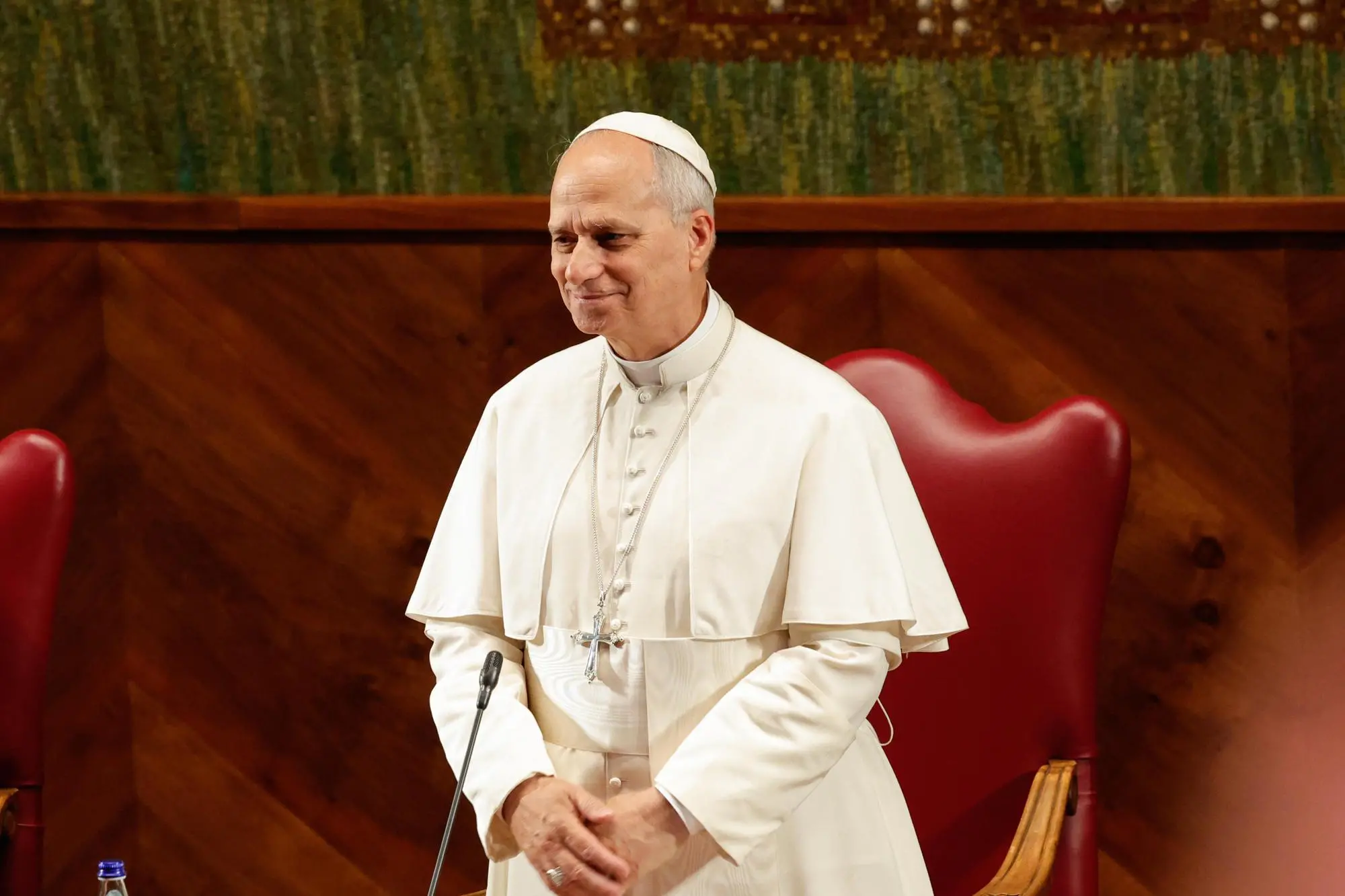
Fifty trans women had lunch with Pope Leo: "A gesture of welcome.

"The group, accompanied by Father Andrea Conocchia and Sister Genevieve Jeanningros, said: "A sign of concern for the LGBT community."


Papa Leone XIV (Ansa-Lami)

Per restare aggiornato entra nel nostro canale Whatsapp

At the Sunday lunch with Pope Leo, in the Paul VI Hall, on the occasion of the World Day of the Poor, there will also be about fifty transgender people, accompanied by Father Andrea Conocchia and Sister Genevieve Jeanningros.

Pope Leo thus confirms this "gesture of welcome," as Don Conocchia defines it, which began with Pope Francis.

"A heartfelt thank you to Pope Leo for this opportunity to meet and share a meal. I think it's a wonderful sign of care and closeness to the entire LGBT community," emphasized Don Andrea, parish priest of Torvaianica, in an interview with ANSA.

(Unioneonline)

© Riproduzione riservata


Thursday, October 17, 2019

Pope Francis: Food is becoming an avenue of personal destruction


Gerard O’Connell

October 16, 2019


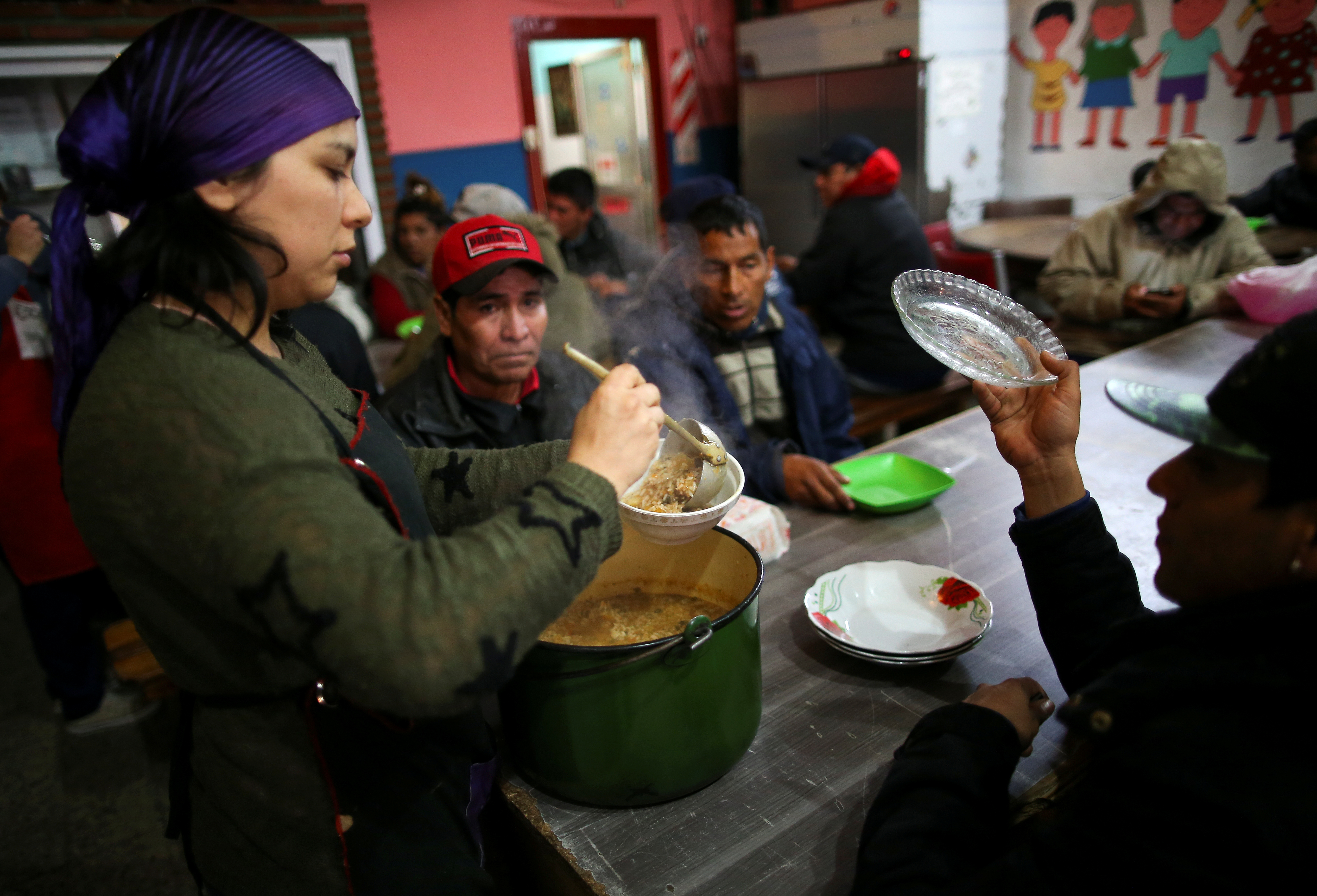
A volunteer serves a meal at a soup kitchen in Buenos Aires, Argentina, Oct. 4, 2019. Resolving the global crises of world hunger and malnutrition demands a shift away from a distorted approach to food and toward healthier lifestyles and just economic practices, Pope Francis said in an Oct. 16 message. (CNS photo/Agustin Marcarian, Reuters)


Pope Francis has again condemned the relegation of food “to a mere commercial product subject to financial speculation” that results in a global contradiction: Even as some 800 million people suffer from hunger and malnutrition worldwide, another 700 million people are obese, “victims of improper dietary habits.”

In a letter to Qu Dongyu, the first-ever Chinese director general of the Food and Agricultural Organization of the United Nations on the occasion of the annual World Food Day on Oct. 16, the pope declared that “the battle against hunger and malnutrition will not end as long as the logic of the market prevails, and profit is sought at any cost.”

Pope Francis emphasized the need for “a conversion in our way of living and acting.” He said, “we must come to realize that what we are accumulating and wasting is the bread of the poor.”

World Food Day is sponsored by the F.A.O. to draw attention to the plight of so many hungry people and to highlight the need for greater action against hunger. Each year F.A.O. chooses a theme to celebrate this day. For this year it is: “Our actions are our future. Healthy diets for a #ZeroHunger world.”


Sunday, November 18, 2018

Pope says world mustn't turn a blind eye to migrants, the poor


SUN NOV 18, 2018 / 6:40 AM EST


Pope Francis celebrates the Mass marking the Roman Catholic Church's World Day of the Poor, at Saint Peter's Basilica at the Vatican November 18, 2018.
REUTERS/REMO CASILLI


(Reuters) - Pope Francis criticized rising wealth inequality and the treatment of migrants on Sunday, saying the world should not ignore those "tossed by the waves of life".

"Injustice is the perverse root of poverty," Francis said at a Mass marking the Roman Catholic Church's annual World Day of the Poor. "The cry of the poor daily becomes stronger but heard less, drowned out by the din of the rich few, who grow ever fewer and more rich."

Francis also reiterated his support for migrants saying that people must pay attention to "all those forced to flee their homes and native land for an uncertain future".

His remarks came as hundreds of migrants from a caravan of Central Americans were stalled at the U.S.-Mexico border after being denied entry to the United States, although Francis made no direct reference to the situation in the United States.

A report this year by Oxfam said 3.7 billion people, or half of the global population, saw no increase in their wealth in 2017, while 82 percent of the wealth generated last year went to the richest one percent of the global population.


(Reporting by Giselda Vagnoni; Editing by Susan Fenton)


----------------------

P.S. 
It's ludicrous for the Bishop of Rome to talk about "a blind eye" regarding the poor while my eyes see a golden chalice in his hands and two other golden artifacts in the picture above.  Simply a hyprocritical dichotomy!


Sunday, July 02, 2017

Presentation of the message for the first World Day of the Poor


2017.06.13

Presentation of the message for the first World Day of the Poor


The Vatican

Published on Jun 13, 2017


Presentation to journalists of the message for the first World Day of the Poor, to be celebrated on November 19th 2017


Tuesday, October 25, 2016

In crisis-hit Venezuela, price hike leaves poor starving


In Crisis-Hit Venezuela, Price Hike Leaves Poor Starving


Published on Oct 24, 2016


From: https://www.youtube.com/user/AFP

October 24, 2016 - Supermarket shelves in Venezuela used to be empty. Now they're being restocked, but most goods are unaffordable since the government of Nicolas Maduro decided to stop regulating private sector imports. Slum residents struggle to eat two meals a day.

---

PigmineNews.com: http://www.pigminenews.com
PigmineNews on mobile: http://www.pigminenews.com/mobile
PigmineNews on Facebook: http://www.facebook.com/PigMineNews
PigmineNews on Twitter: http://twitter.com/PigmineNews
PigMine2 on YouTube: http://www.youtube.com/pigmine2
PigMine5 on YouTube: http://www.youtube.com/pigmine5
PigMine6 on YouTube: http://www.youtube.com/pigmine6
PigMine7 on YouTube: http://www.youtube.com/pigmine7

FAIR USE NOTICE: This video may contain copyrighted material. Such material is made available for educational purposes only. This constitutes a 'fair use' of any such copyrighted material as provided for in Title 17 U.S.C. section 106A-117 of the U.S. Copyright Law.

Wednesday, September 21, 2016

Duty to the Poor


55. Duty to the Poor

The managers of the sanitarium should not be governed by the principles which control other institutions of this kind, in which the leaders acting from policy, too often pay deference to the wealthy, while the poor are neglected. The latter are frequently in great need of sympathy and counsel, which they do not always receive, although for moral worth they may stand far higher in the estimation of God than the more wealthy. The apostle James has given definite counsel with regard to the manner in which we should treat the rich and the poor:

"For if there come unto your assembly a man with a gold ring, in goodly apparel, and there come in also a poor man in vile raiment; and ye have respect to him that weareth the gay clothing, and say unto him, Sit thou here in a good place; and say to the poor, Stand thou there, or sit here under my footstool: are ye not then partial in yourselves, and are become judges of evil thoughts? Hearken, my beloved brethren, Hath not God chosen the poor of this world rich in faith, and heirs of the kingdom which He hath promised to them that love Him?"

Although Christ was rich in the heavenly courts, yet He became poor that we through His poverty might be made rich. Jesus honored the poor by sharing their humble condition. From the history of His life we are to learn how to treat the poor. Some carry the duty of beneficence to extremes and really hurt the needy by doing too much for them. The poor do not always exert themselves as they should. While they are not to be neglected and left to suffer, they must be taught to help themselves.

The cause of God should not be overlooked that the poor may receive our first attention. Christ once gave His disciples a very important lesson on this point. When Mary poured the ointment on the head of Jesus, covetous Judas made a plea in behalf of the poor, murmuring at what he considered a waste of money. But Jesus vindicated the act, saying: "Why trouble ye her? she hath wrought a good work on Me." "Wheresoever this gospel shall be preached throughout the whole world, this also that she hath done shall be spoken of for a memorial of her." By this we are taught that Christ is to be honored in the consecration of the best of our substance. Should our whole attention be directed to relieving the wants of the poor, God's cause would be neglected. Neither will suffer if His stewards do their duty, but the cause of Christ should come first.

Monday, July 04, 2016

Top financial companies are working with the Vatican to help the poor


2016-07-02

In its second year, the Impact Investing Conference has once again brought together esteemed Catholic leaders and successful business executives as they align themselves in finding ways to provide relief for those in need.


DR. CAROLYN WOO
President & CEO of CRS
"Two years ago, we were trying to introduce the concept of impact investing to the Church, particularly the treasurers of different Catholic organizations, because we want them to understand that part of their investment could actually go to this thing called "Impact Investing. We now want to see, under what conditions would the Churches ministries lend themselves to this type of a model so that they can make use of capital coming from investments in order to scale and sustain their work and to let money do good for the poor, rather than exploit the poor.”


The three-day conference is appropriately titled "Making the Year of Mercy a Year of Impact for the Poor”. It is hosted by the Vatican's Pontifical Council for Justice and Peace along with Catholic Relief Services.


FR. THOMAS MCCLAIN
General Treasurer, Society of Jesus
"I'm just hoping that this is going to be a new way of looking at how the resources of not only the Church, but of many people, can be focused in a way of being positively constructive for the less fortunate. In the past, its all been about making money and that's what investments are all about. But, hopefully, it can be about cultural shift. So that people can realize that there are ventures to employ those who are perhaps less thought of, as a way of increasing income, not only for them but for the investors in the world.”


The goal is to promote the Church's social mission by "impacting it” whereas the financial side of the conference relies on the implementation of the organizations "investment” platforms. Essentially, both the Church and the financial institutions are finding a way to work together by providing social benefits to those in needas well as a sustainable framework of social and environmental opportunities.


CLARA MILLER
President, Heron Foundation
"I think it's really that the tools of capitalism; money, finance, enterprises, which are tools, can be used for social good. And in fact, traditionally they have always been used for social good. And if we make sure that they are being used that way, we can solve a lot of problems in the world.”


The conference also explores different forms of philanthropic entities that are being used by impact-driven investors that want to deliver a positive environmental and social change to the millions of displaced people in need around the world.


Tuesday, August 05, 2014

On the Bowery, Questions About the Catholic Church’s Shifting Mission


By DAVID GONZALEZ

AUG. 3, 2014


Credit
David Gonzalez/The New York Times

Men lined up outside St. Joseph House on the Lower East Side on a recent morning, some with their belongings stuffed in worn bags, all with their stomachs empty. Inside the dining hall, which is run by Catholic Worker, a hearty meal of stew and bread awaited. Most of the men were homeless, though not necessarily hopeless — this daily ritual gave sustenance and respite in a neighborhood that has steadily pushed them aside as tenements and poor people give way to luxury buildings.

Gerald Howard ushered a few men at a time inside. Once homeless himself, he has lived at St. Joseph House for several years, and helps the ministry in welcoming the needy.

“The hipsters, yuppies or whatever name you call them have been infiltrating this neighborhood,” he said. “They’re gentrifying the area, and I don’t think the homeless are part of their equation. I think, for them, out of sight is out of mind. You don’t see them. You don’t talk to them.”

The Bowery was once synonymous with being down and out, but, Mr. Howard said, services for homeless men have become harder to find there. He used to work at the Holy Name Center for Homeless Men, a stalwart presence on Bleecker Street since the 1940s, where each day about 100 men took morning showers, grabbed a meal and got their mail.

The Archdiocese of New York closed the center in 2011, citing “changing demographics” and low demand. It renovated the building and turned it into a Roman Catholic cultural center containing a 250-seat auditorium, a black box theater, rehearsal rooms and a small gallery. The building will also house eight campus ministry volunteers.

Named after Archbishop Fulton J. Sheen, the center was envisioned as a vehicle for the church to evangelize through culture and art. This month, for instance, it will serve as one of the venues for the New York International Fringe Festival. In September, Cardinal Timothy M. Dolan will preside over its dedication and deliver an address about Archbishop Sheen, who gained fame as a television personality for his show “Life Is Worth Living.”

Fred Armour is puzzled by the cultural center. Having lived on the streets for five years, Mr. Armour used to rely on Holy Name for taking showers, which he could do early enough to have the rest of the day to look for work. A few other places in the area offer showers, but too late in the day. Instead, he washes himself under the sprinklers at a local park.

Not that long ago, Mr. Armour was struck by the sight of well-dressed people milling about outside the Sheen center.

“It looked like one of those events you’d see at any art center,” he said. “We already have a lot of culture around here. Why is the church joining in with what everybody else is doing around here? Joining the crowd.”

Although some of her friends questioned the church’s decision to build a cultural center, Heidi Hynes, a volunteer at St. Joseph House, saw an opportunity. She hoped the church might be persuaded to open the building early in the morning so that the homeless could at least shower there.

“That would be a powerful message to the people in that neighborhood and the visitors to the center about what is Catholic culture, and to know that serving the homeless is at the core of that,” Ms. Hynes said. “The Catholic Church is in a unique position to show people what it really means to love your neighbor.”

Encouraged by Pope Francis’s pronouncements about the obligation of the faithful to help the poor and marginalized, she wrote to Cardinal Dolan, the archbishop of New York, hoping that an accommodation could be reached. The cardinal replied in a letter that “the time has come to make a different use” of the building, but he vowed that the church would continue to provide services to the homeless in Lower Manhattan.

“I told Heidi if there is a need, we will look at it,” said Monsignor Kevin Sullivan, who runs Catholic Charities. “I do know we looked around when we were phasing out the center and thought the Bowery Residents’ Committee and the Rescue Mission provide a lot of services right around the corner.”

Undaunted, Ms. Hynes continues to press for a more favorable decision, gathering signatures on a petition and praying a novena to Dorothy Day, who helped found the Catholic Worker movement and spent years living and working with the poor on the Lower East Side. What is happening on the Bowery is not surprising, Ms. Hynes said, in a city where the well-off need not interact with the needy.

“People who are poor help people who are poor more than rich people do,” she said. “That’s because we live with each other and know each other. Other people think the poor are trying to scam them. That’s the saddest part of the hyper-segregation of this city, that people in need are deemed unworthy.”


A version of this article appears in print on August 4, 2014, on page A19 of the New York edition with the headline: On Bowery, Church’s New Focus Leaves a Void for the Needy.

.

Tuesday, January 21, 2014

New cardinals from Africa and Haiti to help Pope serve the poor


Jan 21, 2014

By NNPA News Service


Cardinal Chibly Langlois, Bishop of Les Cayes and the first Haitian Cardinal in history.


(GIN) – In a further step away from old traditions at the Vatican, Pope Francis named his first batch of cardinals, choosing 19 men from Asia, Africa, the Philippines and Latin America including the developing nations of Haiti and Burkina Faso. The selection affirms his belief that the church must pay more attention to the poor.

His predecessor, Pope Benedict XVI, had chosen cardinals mostly from Western countries.

Sixteen of the appointees are younger than 80, and are eligible to elect the next pope. They also serve as advisors to the Pontiff as he re-shapes the institution.

With his selections, the Pope rebalances the Euro-centered representation of countries by cardinals. The Philippines, for example, had just one cardinal representing about 75 million Catholics while the U.S., with roughly the same number of Catholics, had 11. Latin American, with 400 million Catholics and growing, had just 15 voting age cardinals, while Europe, where church attendance is falling sharply, had 57.

Among the newly appointed Cardinals is Chibly Langlois, the Bishop of Les Cayes and the first Haitian Cardinal in history. Cardinal Langlois held several leadership positions in La Vallee, Jacmel, taught pastoral theology, and continues to serve the diocese of Fort Liberte.

Newly appointed Cardinal Jean-Pierre Kutwa of the Ivory Coast was ordained in 1971 and appointed Bishop of Gagnoa by John Paul II in 2001. He places great importance on ecumenical and interreligious dialogue. Mgr. Kutwa is also a music composer.

Finally from Burkina Faso, the Archbishop of Ouagadougou, Philippe Nakellentuba Ouédraogo, was ordained in 1973 and appointed Bishop in 1996 of Ouahigouya, a diocese with both a men’s and women’s contemplative monastery.

In 2010, Ouédraogo was called by Benedict XVI to lead the Archdiocese of Ouagadougou, where he stood out for the work he did in one of Africa’s poorest countries.

Special to the NNPA from the New York Amsterdam News


Source
.
.

Sunday, July 28, 2013

A Pope for the Poor


Will Francis' personal humility and focus on poverty help revive the church's fortunes on his home continent?


By Howard Chua-Eoan

Monday, July 29, 2013


STEFANO SPAZIANI


In the North of Rio de Janeiro is the miserable slum of Manguinhos. It is a stubborn place. Again and again the local government tries to evict the residents in urban cleansings that sweep into the favela with instruments of construction assigned to destruction. The demolitions have grown more desperate as Brazil prepares to play host to the World Cup in 2014 and the Olympics in 2016. Bulldozers and jackhammers and backhoes shear off sides of buildings, revealing staircases that go nowhere. Exposed to the elements are the red, turquoise and yellow walls that were once living rooms. But many of the people refuse to move. They jerry-build electricity and water supplies to maintain themselves even as rivers of sewage run past the front of what they still call home. Under the rubble, the streets remain visible. They were named for saints.

In miserable Manguinhos is the even more miserable neighborhood called Varginha. Its tenacity has increased because the Pope is coming to visit. The last Pope to visit a Brazilian favela--John Paul II in 1980, on the first of several trips to the country--helped save it from a similar demolition plan simply by paying it attention. The authorities relented; the bulldozers went away. The people of Varginha are praying that Francis will perform the same miracle. On the front of one house, someone has painted in light blue, "The Pope is coming to Varginha to visit the poor. The poor will be very happy!"

They know that Francis is the Pope of the poor. Did he not name himself for the son of the rich man from Assisi who gave up everything to walk barely shod, a saint in sackcloth? Has not this new Pope refused to live in his palace? And did he not say that the shepherd of the faithful must smell like his sheep? The astonished whispers are everywhere, not just Brazil, before his first scheduled foreign trip since his election and his first return to his home continent. A Pope for the forgotten; a Pope for the godforsaken. And not just among Catholics: Anglicans are thinking of a compact of churches to fight poverty, and evangelicals see Francis as a Pontiff they can deal with. Atheists are gob-smacked that he has said some of them might merit heaven. A Pope for everyone?

Brazil may prove to be a showcase for the powers of this humble Pope and the fresh face he is putting on the ancient papacy. In this, the most populous of Catholic countries on the most Catholic of continents, he faces in microcosm the challenges the church is confronted with around the world: the magnetism of Protestant evangelism and the temptations of secular culture. And it is in this enormous Latin American nation that the Pope of the poor may just begin to have the destabilizing influence that John Paul II had in Eastern Europe: to turn the tide against the rivals of the church and re-establish its primacy in places where it once held incontestable sway. Already Brazil wonders if Francis might exacerbate the protests that swept its cities last month. President Cristina Fernández de Kirchner of Argentina is probably grateful that the Pontiff, whom she used to deride when he was a Cardinal, decided against visiting his native land as it prepares for a crucial round of elections.

A Gentle Cunning


Read more
.
.

Sunday, June 16, 2013

Jesuit Superior General Says Pope’s Style is 100 Percent Jesuit


June 7th, 2013 | Author: bsindelar


Pope Francis is 100 percent Jesuit and his style shows it off, said the superior general of the Society of Jesus, Jesuit Father General Adolfo Nicolás, in a recent interview with Rome Reports.

“I think we’re already seeing signs. … On Holy Thursday, he told priests that a shepherd should smell of sheep. It’s a great image which speaks to the pastoral mission of clergy, be it bishops or priests,” Fr. Nicolás said.

Fr. Nicolás also said he believes that the election of a Jesuit pope won’t have any repercussions on the Society’s members:

“It’s very clear to us, nothing has changed, nothing. The pope is the person the cardinals chose among themselves because they think he can lead the church. So we obey and work with him with the same intensity as we had with other popes.”

Even though the vow of poverty has always been a basic tenet for Jesuits, Fr. Nicolás believes this idea has gained importance within the church.

“That Cardinal Hummes told the pope the same thing [“Don't forget the poor”], means that it’s part of the church now. And that’s a good thing. It’s good because St. Paul mentioned it in one of his letters: we have to move with freedom because we are free with Christ, but we must never forget about the poor. He said this was one of the signs of being a Christian,” said Fr. Nicolás.

Watch the Rome Reports video with Fr. Nicolás below.


Source
.
.

Friday, May 17, 2013

Pope Francis Denounces 'Cult Of Money'


by SCOTT NEUMAN
May 16, 2013 3:40 PM


Pope Francis adjusts his pellegrina during his weekly general audience in St Peter's Square at the Vatican on Wednesday.Vincenzo Pinto/AFP/Getty Images


Pope Francis has demanded that financial and political leaders reform the global money system to make it more equitable.

"Money has to serve, not to rule!" the pontiff declared.

As The Associated Press writes:

"It's a message Francis delivered on many occasions when he was archbishop of Buenos Aires, and it's one that was frequently stressed by retired Pope Benedict XVI.

"Francis, who has made clear the poor are his priority, made the comments as he greeted his first group of new ambassadors accredited to the Holy See."

It also occurs amid the Vatican's financial troubles, as the BBC points out:


"... the Vatican's own bank announced it would publish its annual report for the first time.

"The Institute for Works of Religion [IOR], which has been at the center of various financial scandals in recent years, is to hire an external accountancy firm to ensure it meets international standards against money laundering."

The Vatican's IOR has been dubbed the world's most secretive bank by Forbes magazine.


.

Sunday, August 05, 2012

The Poor

Some, who are poor in this world’s goods, are apt to place all the straight testimony upon the shoulders of the men of property. But they do not realize that they also have a work to do. God requires them to make a sacrifice. He requires of them to sacrifice their idols. They should lay aside such hurtful stimulants as tobacco, tea, and coffee. If they are brought into straightened circumstances while exerting themselves to do the best they can, it will be a pleasure for their wealthy brethren to help them out of trouble.

Many lack wise management and economy. They do not weigh matters well, and move cautiously. Such should not trust to their own poor judgment, but counsel with their brethren who have experience. Those who lack good judgment and economy are often unwilling to seek counsel. They generally think that they understand how to conduct their temporal business, and are unwilling to follow advice. They make bad moves, and suffer in consequence. Their brethren are grieved to see them suffer, and they help them out of difficulty. Their unwise management affects the church. It takes means from the treasury of God which should have been used to advance the cause of present truth. If these poor brethren would take an humble course, and be willing to be advised and counseled by their brethren, and then are brought into straightened places, their brethren should feel it their duty to cheerfully help them out of difficulty. But if they choose their own course, and rely upon their judgment, they should be left to feel the full consequences of their unwise course, and learn by dear experience that “in a multitude of counselors there is safety.” God’s people should be subject one to another. They should counsel with each other, that the lack of one be supplied by the sufficiency of the other. I saw that the stewards of the Lord have no duty to help those persons who persist in using tobacco, tea, and coffee.


Spiritual Gifts, Volume 4b, p.55.

.

Saturday, August 27, 2011

Faith and Deeds


James 2

1My brethren, have not the faith of our Lord Jesus Christ, the Lord of glory, with respect of persons.

2For if there come unto your assembly a man with a gold ring, in goodly apparel, and there come in also a poor man in vile raiment;

3And ye have respect to him that weareth the gay clothing, and say unto him, Sit thou here in a good place; and say to the poor, Stand thou there, or sit here under my footstool:

4Are ye not then partial in yourselves, and are become judges of evil thoughts?

5Hearken, my beloved brethren, Hath not God chosen the poor of this world rich in faith, and heirs of the kingdom which he hath promised to them that love him?

6But ye have despised the poor. Do not rich men oppress you, and draw you before the judgment seats?

7Do not they blaspheme that worthy name by the which ye are called?

8If ye fulfil the royal law according to the scripture, Thou shalt love thy neighbour as thyself, ye do well:

9But if ye have respect to persons, ye commit sin, and are convinced of the law as transgressors.

10For whosoever shall keep the whole law, and yet offend in one point, he is guilty of all.

11For he that said, Do not commit adultery, said also, Do not kill. Now if thou commit no adultery, yet if thou kill, thou art become a transgressor of the law.

12So speak ye, and so do, as they that shall be judged by the law of liberty.

13For he shall have judgment without mercy, that hath shewed no mercy; and mercy rejoiceth against judgment.

14What doth it profit, my brethren, though a man say he hath faith, and have not works? can faith save him?

15If a brother or sister be naked, and destitute of daily food,

16And one of you say unto them, Depart in peace, be ye warmed and filled; notwithstanding ye give them not those things which are needful to the body; what doth it profit?

17Even so faith, if it hath not works, is dead, being alone.

18Yea, a man may say, Thou hast faith, and I have works: shew me thy faith without thy works, and I will shew thee my faith by my works.

19Thou believest that there is one God; thou doest well: the devils also believe, and tremble.

20But wilt thou know, O vain man, that faith without works is dead?

21Was not Abraham our father justified by works, when he had offered Isaac his son upon the altar?

22Seest thou how faith wrought with his works, and by works was faith made perfect?

23And the scripture was fulfilled which saith, Abraham believed God, and it was imputed unto him for righteousness: and he was called the Friend of God.

24Ye see then how that by works a man is justified, and not by faith only.

25Likewise also was not Rahab the harlot justified by works, when she had received the messengers, and had sent them out another way?

26For as the body without the spirit is dead, so faith without works is dead also.
.

Tuesday, July 05, 2011

Fingerprint technology to help feed India's poorest

4 July 2011 Last updated at 19:01 ET

By Rajini Vaidyanathan

Reporter, India Business Report, Chandigarh, India


WATCH: Critics of the smart card scheme say queues have increased since the card's introduction

Women are waiting in line in one of Chandigarh's slum areas, holding empty shopping bags ready to be filled with rice, wheat and sugar.

As each customer reaches the counter, they hand the shopkeeper a plastic card with their photograph on, then they're asked for something else - their fingerprints.

In order to buy any of the supplies from this government-run ration store, they need to place their fingers on a small credit-card-style machine.

Only once they get a match can their purchase go ahead.

The shoppers here in Chandigarh are part of a project that uses biometric smart cards to deliver food to the city's poorest.

In India, those living below the poverty line (BPL) or on lower incomes, are allowed to buy basic food staples such as rice, sugar and wheat at highly subsidised rates, at government-run Fair Price shops.

In most places, families are given paper "ration books" that record how much food has been purchased and by whom.

But this scheme in Chandigarh is doing away with the old system.

The credit card-sized biometric smart cards contain a 64kb microchip that stores the fingerprints, photograph and other personal details of the head of the family and at least two other members.

It can also store a record of the purchases made by every family - how much they have bought and at what price.

Those behind the scheme believe the technology will do away with fraud, and ensure food reaches the genuine recipients. Under the old paper system where little proof was needed to claim food, people could easily use someone else's card, say officials.

"It means only the person who is holding the smart card will get the food - no-one else can claim the food as theirs" says Bachan Singh, of Chandigarh's food and supplies department, which is administering the scheme.

"Everyone will get the proper quantity of food, at the proper price," he says.

"I like the smart cards a lot," says Usha, a mother of three young children who is waiting to buy food. "I lost my card recently and was able to get another one easily."

Usha works as a domestic maid and earns about 1,500 rupees a month ($33; £21). By that definition hers is a BPL family, and is entitled to up to 35kg of subsidised grains per month.

But Kunti Devi disagrees with Usha's assessment of the scheme. A widow, she earns 2,000 rupees ($44; £28) a month as a cleaner and has reported problems with the new scheme.

"The machine doesn't always read my fingerprints properly, sometimes they tell me to go away and come back later," she says.

"I also have to wait a long time in the queue, before it was much quicker."

One of the biggest challenges officials face is getting people to trust the new technology. Here in this slum area there are no computers or televisions - the idea of doing things electronically is alien to many.

Teething problems are evident in the scheme. During the time we visited, the machine broke down and led to an even longer queue of people waiting in the searing heat for their food. But government officials did turn up promptly to investigate.

Vinay Verma, who deals with the technical aspects of the machines, says some of the problems stem from the fact the vendors themselves are unfamiliar with the machines.

He says failure is often down to human error, such as the cable not being pushed in properly, or the cards not properly inserted.

The city has bold plans to register 200,000 families onto this scheme by September, so far only 5,000 have signed up to the cards.


"The government wants people to give their biometric data and fingerprints, and many people have a fear that this will be used in another way, so they are not coming up in numbers to give their data," says Surendra M Bhanot, from the Consumers Association of Chandigarh.

Mr Bhanot says many of the people the scheme is aimed at are illiterate and fear this biometric information could end up in the hands of the police.

An awareness drive is one way he believes this hurdle can be overcome.

Using this kind of technology to deliver rations is costing the Chandigarh authorities 44 crores and 66 lakhs rupees ($10m; £6.2m). None of this cost is picked up by the cardholder themselves.

The deployment of biometric smart cards to deliver rations is one way the government could meet its bold plans to ensure food rations reach the country's poorest. In its draft food-security bill it guarantees subsidised food grains to at least 90% of rural households and 50% of urban families.

New technology is one way it could deliver this - if the Chandigarh smart-card scheme is seen to be a success, it could be replicated across India.

Source
.

Monday, May 16, 2011

US housing program squanders millions

Washington Post / May 16, 2011

WASHINGTON — The federal government’s largest housing construction program for the poor has squandered hundreds of millions of dollars on stalled or abandoned projects and routinely failed to crack down on delinquent developers or the local housing agencies that funded them.


Nationwide, nearly 700 projects that were awarded $400 million have been idling for years, a Washington Post investigation found. Some have languished for a decade or longer, even as much of the country struggles with record-high foreclosures and a dramatic loss of affordable housing.


The Department of Housing and Urban Development, which oversees the nation’s housing fund, does not track the pace of construction and often fails to spot defunct deals, instead trusting local agencies to police projects.


The result is a trail of failed developments. Fields where apartment complexes were promised are empty and neglected. Houses that were supposed to be renovated are boarded up and crumbling.


A yearlong Post investigation uncovered a dysfunctional system that delivers billions of dollars to local housing agencies with few rules, safeguards, or even a reliable way to track projects. The lapses have led to widespread misspending and delays in a two-decade-old program meant to deliver decent housing to the working poor.


The Post found breakdowns at every level:


■ Local housing agencies have awarded millions to troubled developers, including novice builders, fledgling nonprofits, and groups accused of fraud or shoddy work.


■ Checks were cut even when projects were still on the drawing boards, without land, financing, or permits to move forward. In at least 55 cases, developers drew HUD money but left behind only barren lots.


■ Over all, nearly one in seven projects shows signs of significant delay. Time and again, housing agencies failed to cancel bad deals or alert HUD when projects foundered.


Source: http://www.boston.com/news/nation/washington/articles/2011/05/16/us_housing_program_squanders_millions/
.

Wednesday, November 17, 2010

Thanksgiving baskets again offered to Stoneham's needy.

Stoneham Sun
Posted Nov 12, 2010 @ 02:42 PM


Courtesy photo.
Once again the S.A.C.S. organization will be offering Thanksgiving baskets and turkeys to the needy.


Stoneham — In November 2009 the Stoneham Adventist Community Services (S.A.C.S.) organization gave food to 614 households (2,554 people, 1,253 children) with 5,167 grocery bags of food. The organization received approximately $75,000 of groceries donated last November by the community, schools, clubs, community churches, grocery stores and the Greater Boston Food Bank.

The Thanksgiving baskets and turkeys will be offered again to families in need. Those who qualify to receive such a basket include: persons already receiving public assistance; persons on unemployment; and households where the main provider is earning minimum wage.

S.A.C.S. will be in need of equal or greater assistance this year, and expects that November 2010 will have more people needing assistance.

To volunteer, drop off food or give monetary donations, visit 11 Gerry St. Register will also be accepted at the First Congregational Church during regular hours.

Volunteers will be working three-hour shifts, Monday through Thursday, Nov. 15-18.

No basket requests will be taken over the phone, as S.A.C.S. is required to see documentation.

For information, call 781-438-1374.
.
.

Tuesday, February 09, 2010

Davos Dispatch: Keeping the World's Poor on the Agenda

Switzerland
Davos Dispatch: Keeping the World's Poor on the Agenda


Returning to Rome from Davos, Switzerland, and the 2010 World Economic Forum on Feb. 1, the secretary general of Caritas Internationalis, Lesley-Anne Knight, confessed to “mixed feelings” about the forum’s outcomes. The Davos event each year brings together international business, political, academic and social leaders to discuss the pressing economic and social problems of the capitalist world.

This year’s discussions were distracted by events in Haiti, but there was still plenty of time to review the structural challenges within the world’s economic system. “The World Economic Forum is good at responding to crises,” Knight wrote on the Caritas blog, “at identifying innovative solutions, at tackling new challenges—in the words of this year’s theme, at ‘rethinking, redesigning and rebuilding.’ But what concerns me is that the old, chronic problems of the world—like poverty, for instance—should not be neglected.”

Knight observed that at a forum she hosted on bringing values into global economics, “The discussions made clear that international institutions are underperforming on core objectives such as poverty eradication, sustainable economic growth, human security, conflict avoidance and many more.”

Knight described another session reviewing the United Nations Millennium Development Goals—an ambitious project meant to mitigate by half the worst effects of world poverty by 2015—that attracted a disappointingly small audience. Those who were present heard the Microsoft founder and philanthropist Bill Gates stress the need to keep up pressure on governments to honor their financial commitments toward achieving the goals and the economist Jeffrey Sachs charge that the lack of follow-through on millennium goals had nothing to do with the global recession but reflected a deep-seated lack of political will.

Knight brought Caritas Inter-nationalis’s unique perspective on development to the forum. “Finance has been focused on financial mechanisms, profits, and bonuses,” she said. “Human beings were left out, with dire consequences for us all, especially the poor. For humanitarian organizations, such as Caritas, the human person must be at the heart of everything we do. But this should equally be applied to economic systems, which are also ultimately at the service of humanity.”

At the forum Caritas advanced some basic principles: Financial institutions must consider the human impact of their activities, and poor nations should have an effective voice at international institutions. Caritas also called for aid recipients to play a greater role in their own development and for stronger recognition of civil society and faith groups in development planning.

At her “values” forum, Knight juggled the perspectives of delegates from the presumably divergent worlds of business and social justice. “As is often my experience,” she said, “when people from such different professional and cultural backgrounds come together in conversation, we find common values which unite us around shared objectives without difficulty...respect for the dignity of every human person, solidarity and concern for the common good and care for the most vulnerable in our society.”

But even after finding such reassuring common ground, Knight wonders, “Can our financial institutions now put these [ideals] into practice? Can they be motivated not solely by profit, but also genuinely serve the common good? Will development aid be targeted at meeting the needs of the poor rather than the national interests of donors? As Caritas people, as the sign and action of God’s love for all humanity, this must remain our hope.”
.
.
.

Wednesday, March 18, 2009

Pope in Africa says church must help the poor

Rebecca Blackwell, AP
An African clergyman kisses Pope Benedict XVI's ring as the pontiff arrives in Yaounde, Cameroon, Tuesday.

Pope in Africa says church must help the poor
By VICTOR L. SIMPSON,
AP
posted: 1 HOUR 38 MINUTES AGO
YAOUNDE, Cameroon -Pope Benedict XVI urged Cameroon's bishops Wednesday to defend the traditional African family from the dangers of modernity and secularization and to spare the poor from the impact of globalization.

On his first African pilgrimage, Benedict also called it the duty of all Christians — particularly those with political and economic responsibilities — to contribute to the building of a "more just world where everyone can live with dignity."

The pope met with Cameroon President Paul Biya, one of Africa's longest-ruling strongmen, who has been in power since 1982 and recently was accused by the Amnesty International rights organization of seeking to crush political opposition.

No details of the meeting at the presidential palace were immediately given.

The newspaper Le Jour carried a front-page interview with Cameroon Cardinal Christian Tumi asking Biya not to run again in 2011.
From the presidential palace, Benedict was driven to Christ the King Church to speak to Cameroon's 31 bishops and set down their mission.
Benedict said that while the Catholic church in Africa is the fastest growing in the world, it faces competition from increasingly popular evangelical movements and "the growing influence of superstitious forms of religion."

The German-born pope also said that the exuberant local African rites should not "obstruct" the liturgy of the Mass.

And he spoke of the needs of the poor.

"In the context of globalization with which we are all familiar, the church takes a particular interest in those who are most deprived," he said. "The bishop's mission leads him to be the defender of the rights of the poor."
He also worried about the impact of modernity and secularization on the traditional African family, telling the bishops to promote the understanding that marriage is indissoluble.

The meeting with the bishops had long been planned for the cathedral in Yaounde, but construction there has not been finished, amid allegations in the local media that the funds set aside were embezzled by clergy.
Vatican spokesman the Rev. Federico Lombardi said he was aware of reports that the funds were missing but had no comment.

On the second day of his African trip, the pope was facing criticism over comments he made Tuesday about condom use and the fight against AIDS. Benedict said the distribution of condoms is not the answer, and that, "on the contrary, it increases the problem."

UNAIDS, the U.N. agency charged with fighting the disease, said Wednesday in Geneva that condoms were an important part of efforts to combat AIDS.

France— a traditionally Roman Catholic country — said it was worried by the possible consequences of the pope's words. "We consider that these statements endanger public health policies and the imperative to protect human life," French Foreign Ministry spokesman Eric Chevallier said.
In a briefing to reporters, Lombardi noted the pope was expressing a long-standing Vatican position. He said Benedict wanted to stress that a reliance on condoms distracted from the need for proper education in sexual conduct.

The pontiff is on a weeklong pilgrimage to Africa that also includes a visit to Angola later this week.


2009-03-18 12:24:53
.
P.S. Highlights added for emphasis.

Sunday, September 21, 2008

Love and Judgment

12And it came to pass in those days, that he went out into a mountain to pray, and continued all night in prayer to God.

13And when it was day, he called unto him his disciples: and of them he chose twelve, whom also he named apostles;

14Simon, (whom he also named Peter,) and Andrew his brother, James and John, Philip and Bartholomew,

15Matthew and Thomas, James the son of Alphaeus, and Simon called Zelotes,

16And Judas the brother of James, and Judas Iscariot, which also was the traitor.

17And he came down with them, and stood in the plain, and the company of his disciples, and a great multitude of people out of all Judaea and Jerusalem, and from the sea coast of Tyre and Sidon, which came to hear him, and to be healed of their diseases;

18And they that were vexed with unclean spirits: and they were healed.

19And the whole multitude sought to touch him: for there went virtue out of him, and healed them all.

20And he lifted up his eyes on his disciples, and said, Blessed be ye poor: for yours is the kingdom of God.

21Blessed are ye that hunger now: for ye shall be filled. Blessed are ye that weep now: for ye shall laugh.

22Blessed are ye, when men shall hate you, and when they shall separate you from their company, and shall reproach you, and cast out your name as evil, for the Son of man's sake.

23Rejoice ye in that day, and leap for joy: for, behold, your reward is great in heaven: for in the like manner did their fathers unto the prophets.

24But woe unto you that are rich! for ye have received your consolation.

25Woe unto you that are full! for ye shall hunger. Woe unto you that laugh now! for ye shall mourn and weep.

26Woe unto you, when all men shall speak well of you! for so did their fathers to the false prophets.

27But I say unto you which hear, Love your enemies, do good to them which hate you,

28Bless them that curse you, and pray for them which despitefully use you.

29And unto him that smiteth thee on the one cheek offer also the other; and him that taketh away thy cloak forbid not to take thy coat also.

30Give to every man that asketh of thee; and of him that taketh away thy goods ask them not again.

31And as ye would that men should do to you, do ye also to them likewise.

32For if ye love them which love you, what thank have ye? for sinners also love those that love them.

33And if ye do good to them which do good to you, what thank have ye? for sinners also do even the same.

34And if ye lend to them of whom ye hope to receive, what thank have ye? for sinners also lend to sinners, to receive as much again.

35But love ye your enemies, and do good, and lend, hoping for nothing again; and your reward shall be great, and ye shall be the children of the Highest: for he is kind unto the unthankful and to the evil.

36Be ye therefore merciful, as your Father also is merciful.

37Judge not, and ye shall not be judged: condemn not, and ye shall not be condemned: forgive, and ye shall be forgiven:

38Give, and it shall be given unto you; good measure, pressed down, and shaken together, and running over, shall men give into your bosom. For with the same measure that ye mete withal it shall be measured to you again.

39And he spake a parable unto them, Can the blind lead the blind? shall they not both fall into the ditch?

40The disciple is not above his master: but every one that is perfect shall be as his master.

41And why beholdest thou the mote that is in thy brother's eye, but perceivest not the beam that is in thine own eye?

42Either how canst thou say to thy brother, Brother, let me pull out the mote that is in thine eye, when thou thyself beholdest not the beam that is in thine own eye? Thou hypocrite, cast out first the beam out of thine own eye, and then shalt thou see clearly to pull out the mote that is in thy brother's eye.

43For a good tree bringeth not forth corrupt fruit; neither doth a corrupt tree bring forth good fruit.

44For every tree is known by his own fruit. For of thorns men do not gather figs, nor of a bramble bush gather they grapes.

45A good man out of the good treasure of his heart bringeth forth that which is good; and an evil man out of the evil treasure of his heart bringeth forth that which is evil: for of the abundance of the heart his mouth speaketh.

46And why call ye me, Lord, Lord, and do not the things which I say?

47Whosoever cometh to me, and heareth my sayings, and doeth them, I will shew you to whom he is like:

48He is like a man which built an house, and digged deep, and laid the foundation on a rock: and when the flood arose, the stream beat vehemently upon that house, and could not shake it: for it was founded upon a rock.

49But he that heareth, and doeth not, is like a man that without a foundation built an house upon the earth; against which the stream did beat vehemently, and immediately it fell; and the ruin of that house was great.

Luke 6: 12-49.