Showing posts with label spiritual formation. Show all posts

Tuesday, March 24, 2026

Conflict Styles


Conflict Styles


Ignite the Way

Mar
25
Wednesday, March 25
9:00 AM - 10:00 AM EDT

Zoom
Registration
Welcome! To join the event, please register below.

Register

About Event

​Understanding Conflict Styles: Building Healthier Teams and Communities

​Speaker: Dr. Jeanine Turner
Faculty, Discerning Leadership Program | Professor, Georgetown University

​Conflict is inevitable in any team, organization, or community. But how we engage with conflict—our instinctive patterns and learned responses—shapes whether disagreement becomes destructive or leads to deeper understanding and growth.

Wednesday, July 16, 2025

Northern California Conference Offering Psycho-Spiritual Formation Classes for $775

Northern California Conference Offering Psycho-Spiritual Formation Classes for $775

July 14, 2025 Gerry Wagoner


Oh great.
Here we go again.

“Dear Pastor,

We are pleased to announce that registration is now open for the Kintsugi Trauma-Informed Clinical Pastoral Education (CPE) Program, designed specifically for Northern California Conference pastors.

This innovative program integrates traditional CPE training with Kintsugi Resilience—a spiritually grounded approach to healing, formation, and pastoral growth. It transcends professional development; it invites personal renewal.

Program Highlights:

  • 400 hours of supervised clinical ministry per unit
  • Trauma-informed care, theological reflection, and spiritual formation
  • Small group format (5-member cohort)
  • Led by certified CPE supervisors
  • CPSP-accredited through Community Care Chaplains

Dates: August 11 – December 15, 2025

Format: Weekly Zoom (3.5 hrs) + occasional in-person gatherings

Cost: $775 per unit. Utilize your $500 CEU allowance. Monthly installments available.

Saturday, March 02, 2024

The Theological Error of Spiritual Formation By Dr. Bob Payne


From the TeachingtheWord Bible Knowledgebase


Editor's Note: Today we present a warning to Christians to understand and avoid one of the most serious heresies of our time. The "spiritual formation" movement has absolutely nothing to do with the Word of God. It has more in common with Roman Catholic mysticism and the New Age movement. But it has gained a foothold, and worse, in even some of the most reputedly conservative churches, colleges, and seminaries.

This article originally appeared in the February 2019 issue of The Review, an official publication of the Independent Baptist Fellowship of North America. The author, Dr. Bob Payne, is pastor of the Baptist Church of Danbury, Connecticut and the current moderator of the IBFNA. We reproduce it here with his permission, and with special thanks to Dr. Kevin Hobi, pastor of New Boston (New Hampshire) Baptist Church, who is the editor of The Review. - Dr. Paul M. Elliott

Many years ago when my daughter was looking for a Christian college to attend, she, my wife, and I visited the campus of a well-known, now-defunct fundamental Christian college. In one of the buildings, I recall seeing a sign for one of the administrators that read something like, "The Director of Spiritual Formation." Although spiritual formation was a rather strange term that gave me pause, I could not just outright reject the term based upon my apprehension. As far as I knew, it was simply a new, trendy term for discipleship. I had a lot to learn!

The Background of Spiritual Formation

As time went on I learned that the term spiritual formation actually came from ancient paganism and Roman Catholic mysticism. One author describes the term as:

A movement that has provided a platform and a channel through which contemplative prayer is entering the church. Find spiritual formation being used, and in nearly every case, you will find contemplative spirituality and its 'pioneers' such as Richard Foster, Dallas Willard, and Henri Nouwen. Spiritual Formation is based on 'spiritual disciplines' that can be practiced by people of any faith to make them more 'Christ-like.' Rebirth through Jesus Christ and regeneration through the Holy Spirit are not essential. Rather it is a works-based 'theology' that has strong roots in Roman Catholicism and ancient paganism.[1]

The article just cited went on to describe the related term contemplative spirituality. The author describes it this way:

A belief system that uses ancient mystical practices to induce altered states of consciousness (the silence) and is rooted in mysticism and the occult but often wrapped in Christian terminology. The premise of contemplative spirituality is pantheistic (God is all) and panentheistic (God is in all). Common terms used for this movement are 'spiritual formation,' 'the silence,' 'the stillness,' 'ancient wisdom,' 'spiritual disciplines,' and many others.[2]

Gary Gilley also describes the roots of the spiritual formation movement:

Some trace the roots of the Spiritual Formation Movement to 1974 when Father William Menninger, a Trappist monk, found an ancient book entitled The Cloud of Unknowing in the library at St. Joseph's Abbey in Spencer, Massachusetts. This 14th century book offered a means by which contemplative practices, long used by Catholic monks, could be taught to lay people. As Menninger began teaching these contemplative practices, his abbot, Thomas Keating, along with Basil Pennington, another Trappist monk, began to spread the concepts Menninger was teaching. But it was Richard Foster's 1978 book, The Celebration of Discipline, that launched the popularity and present interest in spiritual formation. It was by this landmark book, described by Christianity Today as one of the ten best books of the 20th century, that Catholic and Eastern Orthodox disciplines, practiced by the Desert Fathers and Mothers as well as monks and hermits, were introduced to evangelicalism. These disciplines were not completely unknown to evangelicals who were familiar with church history, but they were now being repackaged and offered as a means of spiritual growth and maturity. In fact, the implication was that without the use of these ancient contemplative methods true 'spiritual formation' was not possible.[3]

To those holding to this false doctrine of spiritual formation, prayer, Bible study, walking with Christ, and becoming active in the local church are not enough. We need to return to the ancient spiritual disciplines that are able to keep our flesh in check. As these false teachers expound their twisted doctrine, it is common for them to use just enough biblical terminology to lure unsuspecting and uninformed believers over to their side, even though what they are teaching is incredibly divergent from sound doctrine.

According to those who adhere to the spiritual formation movement, our prayer life is not good enough unless we practice "contemplative (centering) prayer." This practice has roots in the occult. Matt Slick rightly connects these "spiritual disciplines" with the emerging church movement, and says that contemplative prayer, "is the practice of relaxing, emptying the mind, and letting one's self find the presence of God within. It involves silence, stillness, patience, sometimes repeating something, and the practice of 'not knowing' as the person seeks God's presence."[4] This definitely does not fit the description of prayer that we find in the Word of God!

We find that in the spiritual formation movement Bible study is not enough either. Another "spiritual discipline" needs to be practiced, known as "sacred reading" (lectio divina). This is more than just reading the Bible, or the type of meditation of which David speaks in Ps. 119:148: "that I might meditate in Thy Word." A downloadable brochure from contemplativeoutreach.org gives some details about this strange practice:

Lectio Divina is one of the great treasures of the Christian tradition of prayer. It means Divine Reading, which is reading the book we believe to be divinely inspired. This tradition of prayer flows out of a Hebrew method of studying the Scriptures which was an interactive interpretation of the Scriptures by means of the free use of the text [allegorical hermeneutics] to explore its inner meaning. It was part of the devotional practice of the Jews in the days of Jesus.[5]

On the back page of the brochure it says in very new-age fashion:

Being transformed into the Word of God is a process that happens as we faithfully read, reflect, respond and rest in God's Word.

An attitude of resting in God's presence becomes a part of our daily lives. We become a channel of God's presence to others.

Living in union with God, we are able to transcend ourselves as the 'center' and experience all in God and God in all.

Our energy becomes one with the Divine Energy. We become merciful, compassionate and loving as God is merciful, compassionate and loving.[6]

This is manmade theology that has absolutely nothing to do with the Word of God. It has more in common with Roman Catholic mysticism and the New Age movement.

There are other unbiblical and/or occultic practices in the spiritual formation movement that we don't have time or space to cover, such as fasting, journaling, silence, observing the liturgical calendar, Christian yoga, prayer labyrinths, etc. I will leave those to your own investigation and study.

Fundamental Colleges and Spiritual Formation

Just the other day I was doing a web search for schools that have courses in "Spiritual Formation." I was surprised to come upon one course in a school that claims to be a fundamental Baptist college. The title of the course was "Spiritual Formation and Discipleship." Now, I cannot say that schools that have courses like this are necessarily teaching mystic and occultic practices. What I can say is that they are definitely using mystic and occultic terminology.

The obvious question is "Why would an institution that professes to hold to sound doctrine use this type of jargon?" Some may do it because it is required by their accrediting agency (a topic for another article). Others may do it because it is the latest evangelical buzz word. Whatever the reason, even though the classes may be biblical (and I do not know that they are), these terms must be avoided.

Some may object and ask, "What difference does the label make as long as they are teaching the truth?" The church that I pastor, the Baptist Church of Danbury, Connecticut, seeks to consistently interpret the Word of God with a normal hermeneutic. Let's say that I continued to be faithful to the Word of God, but changed the church name to Danbury Church of Latter Day Saints. As a Bible believer, would you have a problem joining my church? I think you would! Why? The answer is simple: words mean things, and labels do matter.

Beth Moore and Spiritual Formation

Surprisingly, the message of Beth Moore has become quite captivating to some ladies in our fundamental Baptist circles. Although there are a multitude of theological reasons why you should steer clear of her (such as the obvious violation of 1 Tim. 2:12), spiritual formation is definitely one of those reasons. I will provide a couple of examples of Mrs. Moore's heretical teaching concerning spiritual formation.

Matt Slick, in his internet article on Beth Moore, provides one example of her mystic practice of contemplative prayer. His article points to a YouTube video of Mrs. Moore's preaching that was taken down [i.e., later removed]. He quotes her as saying, "A true lover of God once spoke about practicing God's presence. To me that's such a part of contemplative prayer. That we are able to absorb the reality that as we commune with God through prayer that He is with us, that His Spirit for those of us who are in Christ fills us, that we are drawn near to Him, that our souls find rest in Him." Matt Slick goes on to explain that in the video Mrs. Moore was praising Brother Lawrence, who was an apostate Roman Catholic monk.[7]

Another YouTube video[8] gives an example of her belief in what we described earlier in this article as Lectio Divina. The video shows Beth Moore dramatically reading a selection of Scripture. Following the reading, Mrs. Moore states, "Without any comment, please, let's pause and be still, and ask Jesus to speak His word to us." There follows a long period of silent, emotional meditation while the large crowd tunes in to their inner selves, presumably waiting for Jesus to "speak His word to them." Hasn't God already spoken His Word to us? This practice has a greater similarity to eastern mysticism than it does to the Word of God.

Stay far away from Beth Moore and her false teaching.

A Bible-Believer's Reaction to Spiritual Formation

False teachers of the first century threatened the early church with their incipient Gnosticism. They communicated to the Christians that faith was inadequate to a have a relationship with God. Instead, they needed the mystical knowledge (gnosis) that only those teachers possessed. Spiritual formation is a modern Gnosticism, which promises believers something deeper than what they possess. To those teachers, practices such as studying the Bible and prayer are good, but you need the "spiritual disciplines" if you want true spiritual depth in your Christian life.

Paul's warning to the believers in Colossae rings as true today as it did then. It warns us of modern false teaching to be avoided: "Beware lest any man spoil [more literally, cheat] you through philosophy and vain deceit, after the tradition of men, after the rudiments of the world, and not after Christ" (Col. 2:8). May God give us the grace and courage to stand against the philosophy and vain deceit of the spiritual formation movement.

References:

1. Lighthouse Trails Editors (Nov. 15, 2011). An Epidemic of Apostasy - Christian Seminaries Must Incorporate "Spiritual Formation" to Become Accredited. Retrieved January 23, 2019 from https://www.lighthousetrailsresearch.com/blog/?p=7733,.

2. Ibid.

3. Gary Gilley, Roots of the Spiritual Formation Movement. Retrieved January 23, 2019 from https://tottministries.org/roots-of-the-spiritual-formation-movement.

4. Matt Slick, Centering Prayer (Feb. 25, 2008). Retrieved January 23, 2019 from https://carm.org/enteringprayer.

5. Lectio Divina: Listening to the Word of God in Scripture (PDF Brochure). Retrieved January 23, 2019 from https://www.contemplativeoutreach.org/sites/default/
files/private/lectiodivinabrochure_2018_0.pdf
.

6. Ibid.

7. Matt Slick, Beth Moore. Retrieved January 24, 2019 from https://carm.org/beth-moore.

8. Posted by Tom Manning (Jan. 12, 2014). Beth Moore Leads Lectio Divina-Lite at Passion 2012. Retrieved January 24, 2019 from https://outu.be/JX9HcmxfyDQ.

sac0227

Copyright 1998-2024

TeachingtheWord Ministriesmmmmmwww.teachingtheword.org

All rights reserved. This article may be reproduced in its entirety only,
for non-commercial purposes, provided that this copyright notice is included.

We also suggest that you include a direct hyperlink to this article
for the convenience of your readers.


More Articles


Copyright 1998-2024 TeachingTheWord Ministries


Tuesday, December 17, 2019

Pope Francis wants the world to know about his Jesuit spiritual director


Gerard O’Connell

December 16, 2019


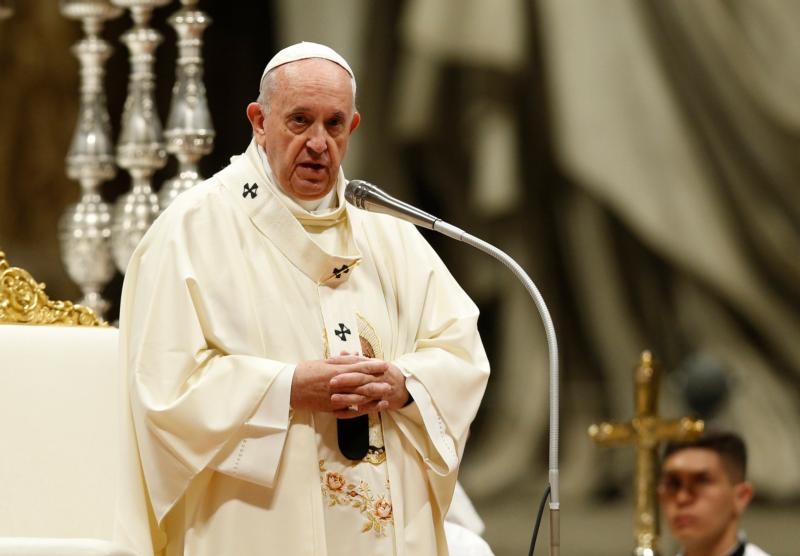
Pope Francis gives the homily as he celebrates a marking the feast of Our Lady of Guadalupe in St. Peter's Basilica at the Vatican Dec. 12, 2019. (CNS photo/Paul Haring)


Pope Francis concluded his quiet celebration of the 50th anniversary of his priestly ordination by visiting the Jesuit Curia in Rome to present the writings of Father Miguel Angel Fiorito, the Argentine Jesuit known as “Maestro Fiorito,” who so influenced his life and ministry as a priest, bishop and pope.

Some 250 people, many of them Jesuits, together with a small number of cardinals and bishops and several lay people, applauded when Francis arrived, accompanied by the Father General of the Society of Jesus, Arturo Sosa, and by the pope’s nephew, José Luis Narvaja S.J., who has brought together Father Fiorito’s writings in five volumes.

Francis smiled broadly, with evident joy, when Father Sosa welcomed him once again “to your home” and thanked him for visiting on the 50th anniversary of his ordination as a priest in the Society of Jesus. The Jesuit leader recalled how over the past half-century as priest, bishop and now pope, Francis acquired “the style of listening” to the People of God and learned “to perceive the action of the Holy Spirit in human history.”

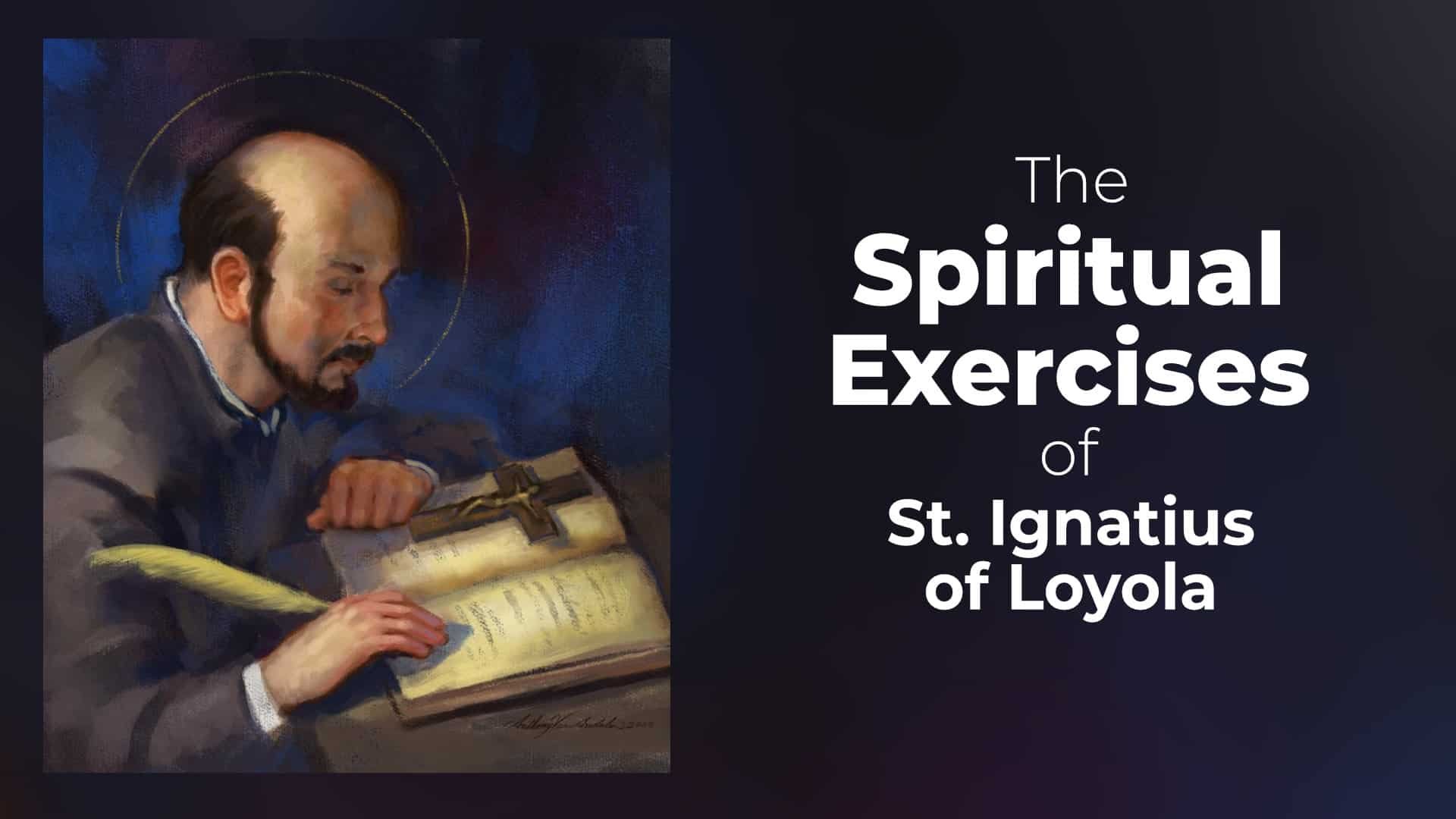
He thanked him for coming to present Father Fiorito’s writings, which show how God continues to give so many good things through the creative use of the Spiritual Exercises of St. Ignatius of Loyola that are still today “an inexhaustible well of spiritual freshness to which we continue to draw on.”

Then after listening to brief talks from his nephew, Father Narvaja, and the editor-in-chief of La Civilta’ Cattolica, Antonio Spadaro, S.J., who explained that Father Fiorito’s writings can be found on-line as well as in print, the first Jesuit pope took the microphone.


Saturday, March 07, 2015

Avalanche of Spiritual Formation in the SDA Church


Watch Avalanche of Spiritual Formation in the SDA Church in Faith & Lifestyle |

by: thewatchmendailynews [1 videos »]

Also known as "The Jesuit Infiltration of the SDA Church", Elder Bob Trefz (a Historical SDA) exposes how the Jesuit Order through the years have infiltrated the Seventh-day Adventist Church.
category: Faith & Lifestyle

added: 5 yrs ago length: 1:00:06
file size: 573.95 MB language: English
tags: "bob trefz",SDA,wrm,infiltration,jesuit

.

Tuesday, January 06, 2015

Ignatian Spiritual Exercises


His name was Iñigo de Loyola. He was a Spanish knight of the lower Basque nobility. In the early 1520s, after a momentous battle against the French in Pamplona, he severely injured his leg during the combat. While bedridden and under severe pain, he almost died from profuse bleeding. He managed to recover, and later began to read books on the heroic lives of the Saints.

How did the Saints manage to go so many days without eating and yet keep their composure, and how did they maintain their dignity and peace of mind even under physical punishments or the duress of prison? Loyola ultimately got out of bed, but walked with a limp for the rest of his life. He could no longer live as a knight, so he imitated the heroic walks of the Saints.

He gave up his weapons and fine clothes at a shrine across his route in northern Spain, and then wandered barefoot, limping with a staff, and wore a coarse cloak with relic pieces and crosses, only carrying a dirty leather bag to help him along the way. Through this hard journey, during the 1520’s, he began to keep a rough journal.

This journal would later become his famous Spiritual Exercises during the 1530s when he began his university studies to become a priest. By the 1540s, he already had a group of devotees educated in the method of the Exercises. What was inside those exercises that made them so powerful?

The Spiritual Exercises were the first, modern psychotherapy self-help manuals in disciplining the mind. Through his complete change and turnaround, from killing off his old Spanish Knight self, and remaking himself into a Catholic Saint, he attained something that only a human could create: the death of the old self into a resurrected new, transformed other – all through simple mind exercises.

A priest who has already inducted himself into the Exercises leads the adept through the four to five-week process. First, the acolyte has to examine his or her life to find the faults, weaknesses or sins that, which have kept the person from attaining true spiritual power, or mental freedom and peace.
After confessing and acknowledging one’s sins, and next, actively changing his or her habits in transforming the vices into virtues, the devotee later experiences the life of Christ, and especially his Passion on the Cross through understanding the hard process of transformation.
The spiritual adviser or priest leads the adherent through controlled breath work, visualizations, vocal, repetitive prayers, and then participation in the Mass. After each session, he or she feels energized and more transformed, while the follower truly feels the power in belonging to the militant body of Christ. The most important part comes at the end of the session, where the votary learns the discernment of spirits.
The discernment of spirits implies understanding the thoughts, ideas, feelings, experiences, images and beliefs that come into his or her mind. Thoughts of doubt, laziness, sensual pleasure, guilt or nervousness represent demonic attacks, and they are let go, while thoughts or images that bring peace, spiritual bliss and joy come from the Holy Spirit. Once the adept successfully finishes the Exercises, he or she transforms into the disciplined believer-warrior. The worshipper has assumed control over his or her own ‘spiritual mind.’

The Order of Loyola, or the Company of Jesus, was also an authoritarian, military like Company under the direction of the Jesuit General. This mental practice was for the ‘greater glory of God,’ or really, the glory of the Catholic Church. Loyola wanted fanatical believers to defend the Church against the dangers of Protestant heresy, or against any non-Catholic belief systems across the globe.

Less than fifty years after the founding of the Company of Jesus, or the Jesuits, they had controlled most of the Catholic Universities in Europe, they became the confessors to Catholic monarchs, they built Catholic Schools across Europe and the American Continent, they had sent missionaries across the Earth in order to convert the heathens, and the Religious Wars had taken off across Europe. This religious order even became one of the wealthiest religious corporations in human history.


.

Thursday, May 22, 2014

Fr. Ralph Huse, SJ: The Gift of Contemplation


Jesuit Father Ralph Huse serves as a retreat and spiritual director at the White House Jesuit Retreat Center in St. Louis.


By Tracey Primrose

Jesuit Father Ralph Huse, spiritual director at the White House Jesuit Retreat Center in St. Louis, has an innovative approach to penance. Rather than asking the penitent to recite Our Fathers or Hail Marys, Fr. Huse suggests a reflective look at the coursing Mississippi River from the bluffs that anchor White House’s historic campus. It’s a penance that often provokes a quizzical expression or a smile followed by a quick retreat to the water’s edge.

The son of a Kansas farmer who moved the family to Wichita during the Dust Bowl years, Fr. Huse has always loved the land and loved the Church. He grew up half a block away from the parish where his dad was an usher and his mom was a member of the altar society. Perennially assigned as an altar server at the 6 a.m. Mass because “the priests knew my mother would make me go,” Fr. Huse would often serve four Masses in a row.


He came to know the Jesuits in high school and entered the Society of Jesus right after graduation in 1963, coming of age during the height of the Vietnam War and the post-Vatican II era. Always drawn to Ignatian spirituality and spiritual direction, he studied theology under the tutelage of Jesuit giants at Saint Louis University and hoped for a full-time assignment at a Jesuit retreat center following his 1975 ordination. He says with a laugh, “My request wasn’t granted for 50 years.” Such is the life of a Jesuit.

First, there were years of parish ministry in Pueblo, Colo.; a long stint as the director of novices at the Jesuit novitiate in Denver; and an assignment as the rector of the Bellarmine House of Studies, a Jesuit formation house in St. Louis. He also served as the chaplain of the lay faculty at two Jesuit high schools and the rector of Jesuit Hall in St. Louis, “the largest Jesuit community under one roof in Christendom.” Although he wasn’t assigned to full-time retreat work until 2012, he’s proud of the role he played in helping to form Jesuits. “The Society so often can identify a man’s gifts better than he can,” he says.


No matter where he's been assigned, spiritual direction has always been front and center for Fr. Huse. As a retreat and spiritual director at White House, a lush 85-room, 80-acre campus with historic 1922 stone buildings, Fr. Huse and his colleagues minister to more than 4,000 retreatants per year. White House offers a wide number of retreats, including ones tailored for those struggling with addiction. Some retreatants have visited annually for more than half a century.

At the end of a retreat, Fr. Huse offers several suggestions for ways to continue the contemplative experience at home. One idea is to establish a prayer corner, a dedicated spot used only for prayer. He says, “All it takes is a chair with perhaps a side table where you could place a candle, a crucifix or a Bible. You don’t sit in that chair for any other reason, only to pray.”


Another idea: Saint Ignatius’ prayer of memory. Fr. Huse suggests, “I invite people to simply remember. Remember your life, remember your parents, remember your first Christmas, remember the people, remember the relationships. God is in all of those things. A very easy and delightful way to pray is to simply remember and ask where the Lord was in all of that.”

And for Fr. Huse, one of the best places to find God is in the rushing waters of the Mississippi, hence his unorthodox penance. He says, “I tell retreatants: Just watch the river, don’t try to analyze how fast it’s going, don’t imagine a map of where it’s going. Just sit quietly and contemplate the river. The river reminds me of God’s love, it’s moving, it’s powerful, it brings life to the plants. And when it gets high in the spring, it’s going to pull all the crap off the banks.”

When he isn’t working at the bustling retreat center, Fr. Huse enjoys White House’s beautiful surroundings, walking the wooded grounds, watching the river and practicing quiet contemplation.


He’s mindful of the many gifts he’s received along the way. “Ignatian spirituality for me involves the whole person, so whatever is happening in that person’s life is the stuff of spiritual direction. So many men and women come here with their suffering, their doubts, their fear and guilt, and they come in and bear it all. It’s an incredible privilege to have that gift, through the Lord, given to me, such a privilege to get to know people at that level. I’ve been overwhelmed by the trust that people put in us. ”

Do you want to learn more about vocations to the Society of Jesus? Visit www.jesuitvocations.org for more information.

Photos of Fr. Huse by Fr. Tom Rochford, SJ.


.

Monday, May 05, 2014

Father General's Journey

Black Pope Adolfo Nicolás Pachón (left) and  Peter Hans Kolvenbach (right) his "predecessor".


Father General's Journey. On 25 April, Father General left Rome for South America. He will return on 12 May. The first stop of the visit was British Guyana, Venezuela and Cuba. During the second half of this visit, Father General took part in the 28th Meeting of Latin America Provincials (CPAL). On Friday, 25 April, Father General began his journey in British Guyana. After a night in Barbados, he arrived in Georgetown at noon on 26 April. Visits to apostolic works of the Society, and a meeting with Jesuits and their collaborators followed. Father General left for Venezuela on Monday, 28 April, where his stay centered on Caracas and Maracaibo. In Caracas, he visited the Catholic Andrés Bello University, the La Vega barrio, the Educational and Pedagogical Reflection Center, the San Ignacio College, and the Jesús Obrero center of collaboration, where he met Jesuits and their collaborators. The visit in Maracaibo on 30 April, allowed him to familiarize himself with the Ignatian Apostolic Network of Zulia. On the evening of 2 May, he left for Cuba, where he remained until the afternoon of 4 May. In Havana, he met the country's religious congregations, as well as Jesuits and their collaborators. He participated in the Festival de Jóvenes Ignacianos. On the Sunday evening he travelled to Guadalajara, Mexico, to take part in the Latin American Provincials meeting.

The 28th Assembly of CPAL begins on 6 May and continues until Saturday, 10 May. It will be held in the Retreat and Conference Center at Puente Grande. Father General will personally meet with each Provincial during the Assembly. He will familiarize himself with the common projects of CPAL's Provinces and Regions. These include the project centered on the Panama Canal Zone, and the international centers of formation. Core issues on the Assembly's agenda will be the re-configuration of Provinces, and the establishment of common centers of philosophical formation. On Friday, 9 May, still in Puente Grande, Father General will meet the Mexican Jesuits in formation. On Sunday, 11 May, before his departure for Rome, Father General will launch an exhibition whose theme is the Society of Jesus during the colonial era. This will be held in the Society's former novitiate and missionary center in Tepotzotlán, near Mexico City.


Source
.

Monday, March 10, 2014

Pope Francis and Roman Curia to have their spiritual exercises outside Rome


2014-03-08


On Sunday March 9, Pope Francis will follow a different schedule after the Angelus. At four in the afternoon, he will take a bus from Paul VI Hall that will take him to Ariccia.


Any member of the Roman Curia can join the Pope, but they must pay their own expenses.


The place of the retreat is in Ariccia, close to Lake Albano, 18 miles away from the Vatican. The location is called 'Casa Divin Maestro,” has 120 bedrooms and is looked after by the Pauline Family.


The person in charge of preaching the spiritual exercises is the Roman parish priest Angelo De Donatis. Everyday there will be two meditations, vespers and a time for reflexion and silence.


The Pope's exercises will end on Friday March 14th at 10:30 am.


PM
RR/Casa Divin Maestro
JM
-BN
Up: PM
#Po


Source
.
.

Saturday, March 08, 2014

MASTER OF ARTS IN SPIRITUAL FORMATION AND DISCIPLESHIP


The 60-credit-hour Master of Arts in Spiritual Formation and Discipleship degree shapes you to counsel others effectively in various servant leadership roles. Designed for the university or Bible college graduate, this program will foster your own spiritual growth so that God may work through you to meet the spiritual needs of others.

Practice spiritual disciplines, and learn to shepherd, exhort, and guide God's people. Through a foundation of Bible, systematic theology, and spiritual formation courses, you'll be prepared to diagnose the spiritual condition of others and engage in soul care and discipleship.


Degree Distinctives

  • Experience personal transformation through the Word of God.
  • Develop spiritual disciplines and grow in sanctification.
  • Prepare to carefully assess and address the spiritual condition of others.
  • Articulate biblical perspectives and explain the essentials of the Christian faith.
  • Gain understanding of spiritual warfare and world religions.
  • Learn to lean on the Holy Spirit as you relate to others and compassionately minister to their needs.
  • Develop field experience under guided supervision through an internship (three credit hours).
  • Shepherd, exhort and guide God's people to spiritual maturity.


This Degree Available at:

MTS Chicago
MTS - Michigan


Source
.

Thursday, August 22, 2013

Opus Dei and Jesuits

Opus Dei : A Dialogue Between Friend and Foe 


ADDENDUM: OPUS OBEDIENCE IS JESUIT OBEDIENCE (and also "openness of conscience" to the superior)


I hope to show here that there's no substantial difference between those 2 conceptions of religious obedience and so that you cannot avoid the conclusion that classical Jesuits are Fascists (It's obvious if we follow your FAQ at "6.2 Liberty"). Still more, If you read The Way 614-629 on Obedience, you'll see that it goes LESS FAR than St Ignatius, who's talking, YES, and explicitly, of BLIND OBEDIENCE.
True, those are only principles, and they don't prove that in practice misuses don't occur, or that the practice of Opus is not different from that of Ignatius. But for the moment you were talking about principles....

First, here's a cut of our exchange:

LUKE
it is very common among classical Jesuits to talk about the "surrender of one's own will" and to see the will of the Father superior as the will of God, not in all instances perhaps, but as an ascetic technique for self-detachment.

HOMEPAGE
>i can understand how that kind of obedience can help to increase spirituality. but it is a dangerous thing.. especially when it becomes a principle that they want to apply to society as a whole.

maybe i cut&paste a piece i have written about "obedience" to another person here:
>obedience is a difficult topic. on order to investigate its usefulness to society i tried to discuss it with an other person.. here is what i wrote to him:

when we talk about obedience than we have to distinguish between several forms of obedience.
first we can distinguish it by the target that is subject of the obedience.

there is

*) outward obedience. but you would still have your free will and would be able to think what you want...

*) intellectual & spiritual obedience. you would be obedient in what you believe and think. you would be obedient even if you know something is wrong because you do not have to "know" something yourself. you accept that your leader knows better than you..

then we can distinguish between a temporary obedience and a permanent obedience.

then we can distinguish between normal obedience and blind obedience. blind obedience is when you either thrust your leader so much that you do not question his commandments or if you are in a position where you have not enough information so that you could judge about a commandment.

finally it is important to also see by whom the obedience is demanded: a leader, a spiritual director, God, your conscience, the law, etc..


well, so much for the definition of terminology. the obedience that the opus dei demands in in this diction an obedience that is both outward and intellectual & spiritual side (with an emphasis on the i& s side). it is a permanent and most of all a blind obedience. they tell people that the obedience is demanded by God, but the leaders of the opus dei take out the right for themselves to decide what the will of God is and to demand obedience in his name. so the primary leader is the opus dei and not God.

now for the big questions: is obedience founded in the scripture? in other catholic orders? if yes: what type of obedience? (according to the above terminology) to whom is the obedience directed? etc..etc.. well i hope you people have answers to some of it. iwould especially be interested in how you think about the kind of obedience the opus dei demands.

my own view about that topic goes like this:
when we look at the kind of obedience that is demanded by other orders than i think (i am not an expert here) it is mostly outward obedience. (you have a strict plan on how you have to spend your day in the monastery, are not allowed to talk at certain hours etc etc.. but you are completely free in your mind). i guess this kind of outward obedience might help some people to develop more freedom on their inside and help them in spiritual growth.
you may argue that this obedience was a worldly one and that obedience to the church is different. well, if people would have been disobedient to the pope than maybe we would not have had the crusades or the burning of witches... etc..
the only "permanent blind intellectual & spiritual obedience" that you can sell me is if it is obedience to God. as long as there is no one that has the right to tell me what God wants from me but scripture and most of all conscience.
___


LUKE
--The Jesuit obedience is internal, permanent and blind. Before Opus, it was the only order like this, cause obedience is the center of their constitution, simply because, like Opus, It's an ACTIVE, apostolic order. So obedience comes from PRACTICAL purposes.

Those are quotations of 2 books by serious Jesuits:

- for him, the "elimination of the inapts" candidates was an essential part of government of the company

- One saw in him the soldier of God (...). Military man, Ignatius, they say, has created an army, with more or less secret instructions, with strict discipline (...) waging war to Satan

- War imagery (...) in the Spiritual Exercices all times.


- After the soldier has been recruited by taking the miliraty oath, has joined his commander camp and courageously decided to win a victory over the enemy, he must now begin to fight.

- a human group linked like that (...)by absolute obedience - that order uttered in Rome by the black pope being blindly followed everywhere, is likely to become powerful, if not glorious.

- this renouncement to one's own will , which is found in all mystical experiences...

- "complete indifference" is end of any asceticism of the will...
His disciple must not have any other inclination than to obey

- absolute obedience (...) do the sacrifice of they liberty in the hands of the Society Superiors.

- "The mind must be directed towards God (...) for the love of whom we obey to a man (...). All the energies must be put on that virtue, that is obedience, toward first the Pope, then to the Superior of the order (...). Everybody, on a word of the leader , as if it were from Christ himself (...) will renounce any occupation, even to write an alphabet letter that he has begun to write(...). All orders must be good to us . For our part we will renounce all other way to see things and all other opinion, in a kind of BLIND OBEDIENCE , and that in all what is not a sin. Everybody must be convinced that anybody who live in obedience must let himself be guided and lead by divine Providence, through his superiors, as if he was a corpse which we can move everywhere and treat in any way , or as if he was an old man's stick which is useful everywhere and for whatever purpose(...)
One must see Christ in him "
(CONSTITUTIONS)

- the corpse image comes from St Francis, who received it from an ancient tradition
(...)
it is necessary that the subordinate love the order and that he understand and approve it.
the duty of the subordinate, all explanations having been made, is to obey: he will put the issue in the hands of the Lord.

- The expression Jesuit General is liked by those who see in the society a powerful and disciplined army (...)
The General (...) is a monarch . The fact that this monarchy is elective must not give illusions: (...)the electorate is not elected but designated by the General

- The society organization looks heavily centralised. Nothing is outside the General's control. . From top to bottom a unique power is manifesting, through intermediaries , its sovereign authority.
This elective monarchy can become all-powerful only by relying on an aristocracy , that of the apti ad gubernationem.

- St Ignatius was of a very quick temper

-

- the essential point, the fundamental consideration, in the ignatian doctrine of obedience, is that the superior is the interpret of the divine will(...)
"But for the purity and perfection of obedience, for the true renouncement to our will and the self-denial of our judgment , I want earnestly (...) that those in this society distinguish themselves from others"

- he is very rigorous with some (...); that happen mostly when some don't want to obey or abandon one's own judgment against what is ordered

- "Perfect obedience to superiors, who hold the place of Christ..."

- Ignatius taught that obedience is an offering of all one's being : behavior , will , intellect ; an holocaust
- "If you want to remember that Master Salmeron is in authority and that God (...) is cooperating with him by a more special light (...) you will conclude that your own judgment may more easily be in error than his and that it is preferable, after having explained yourself, to submit your judgment to his"
... This doctrine is completely natural. If the subordinate must (...) obey to the authority's decisions, it is normal that the divine wisdom assist the superior by special graces.


- We must believe (...) that divine wisdom will guide all superiors for the best


- "A prudence of a lesser degree in the superior (...) is not a reason for disobedience (...) because he represent the person who is the infallible wisdom, and that one will compensate for what is lacking in his minister"

- When we enter the society, "one must put everything in to the hands of the superior, as the one who's taking place of Christ"

-
The representation of the subordinate must not be seen from a governmental point of view, but on the level of inspiration
"It seems to me that obedience want to be BLIND . I call it BLIND in 2 ways: the first one, that is the inferior -where there's no sin - must submit his judgment and follow the order given; the second one, that is the inferior (...) must tell with humility to the superior reasons against the order or inconveniences (...), without being attracted to one party or the other, so that "
"Once that indifference is present in the candidates , must consider the talents and natural inclination, when he will distribute the responsibilities"
"It is important to the utmost that the subordinates be entirely known from the superiors"
To this end, he has instituted what he calls the account of conscience. This (...) ask everybody to tell the superior, at set times , what concern their INNER and exterior life


- " open his conscience to the superior with a lot of humility, sincerity and charity (...);he will not hide anything concerning himself"
The practice of the account of conscience is in direct link with religious obedience(...)
In the account of conscience, obedience is able to deploy itself in an ideal fashion

- thus the account of conscience is the meeting of 2 charities, inside 2 submissions: that of the subordinate to his leader, that of the superior to divine will over the subordinate and the society

+++


--Isn't that impressive? I have 2 other facts to add. Like opus, Society of Jesus has grades: brothers, and above all 2 level of priests: professed (profes) and coadjutors, of which only professed can be superiors. Opus has 3 levels of membership, plus cooperators.

The last fact is that Jesuits were always the target of the same kind of attacks than Opus: Glick, Foreword to Estruch p. XV:
"secretiveness, greed for corporate wealth and power, elitism, and propensity for manipulation".

Isn't it interesting? That alone is not a proof, but at the very least it casts suspicion about the criticisms.


Now, some comments about obedience. In both cases it is rooted in faith, and supernatural; being a member implies that you think that God is there whatever the superior may be. The constitutions are approved, so it`s a part of the church, and everybody is free to follow this vocation, as a part of the tradition (no need of it being explicitly in the scriptures, for a catholic).
In both cases there are some external checks against abuse: scriptures, catechism, papal teachings, the pope himself, who can eliminate Opus. There are internal checks: consultations, written books, explanations with superiors (I think we can see it, or deduce it from Tapia's experience).
Now, differences: Jesuits didn't recruit the same way, but nevertheless were doing recruiting; as you know, the ignatian exercices are highly motivational, and you have to choose your vocation, and there is hell possibly at the end of life, etc... A lot of psychology in those 7 or 30 days in silence... Exercices were proposed to young men just at the end of high school...
Before final vows, a Jesuit wait and study 10 years, so he knows exactly what it's all about when he surrender his liberty. For Opus, it is 5-6 years, but there is no vows, just contracts.
The most important thing is that Opus is for lay people, and from that come the problems; it seems that the conflict, or the difference between the inside and the outside is much more acute, because members are in the lay world, with, let's say, all the temptations, all the objections or ideas, all other people. A good guess would be that they need a reinforced defense system, more than Jesuits do. And so when a clash arises between the inside and the outside of opus in a candidate's mind, there's a strong perception of the will being forced. It's just an hypothesis that i'm giving you here.
You can well say that opus use authority in a different and bad way. We have to check that. But from the texts one can see that St Ignatius obedience was more Fascist. So if we keep the word, we must distinguish between good and bad fascism. Or each time we use "fascist" we must add the Jesuits and Ignatius. And if somebody doesn't do so, we must suspect there are hidden reasons for this...

In "short", this is my argument is this addendum.

Better would be to address the only real issue, beyond "fascism" and "reaction": just say that they are over-authoritarian and that authority is misused. Then we will have to address the real facts and their interpretations. But then the question remains: are the Jesuits over-authoritarian? I'm afraid the answer is not as easy as you may have thought first...

Last word: your last paragraph is incomplete: your must add holy tradition, that is dogmatic doctrine, and scriptures as interpreted by the church and his authentic magisterium. I agree, however, that all depends on the word "Blind". Our strict obedience is not the same as the blind obedience that is a particular Jesuistic-opusian thing.
You're right, obedience to supernatural church is different than that to state, because state matters are much more contingent. Crusades and heresy crimes punished by prison or death have few things to do with faith matters, since they concern political defense of some territories and relations between criminal law, canon law, and common good in this or that historical circumstances. Opus obedience seems at first sight 90% spiritual.


Source
.
.

Saturday, August 17, 2013

Spiritual Formation - Bill Hughes

From Where Do You Come? 

To Where Do You Go?

.

Spiritual Formation- B. Hughes


Michael Nicholas

Uploaded on Sep 11, 2011

http://www.israelect.com/reference/Wi...

Neal Wilson, president of the General Conference of Seventh-day Adventists (left) exchanges an indisputable Masonic handshake with Konstantin Kharchev, the Soviet Union's Chairman of the Ministry of Religious Affairs.
http://www.bibliotecapleyades.net/soc...

"SAYING AND DOING"
http://www.worldslastchance.com/for-s...

Open Letter to Ted Wilson on Abortion in our Hospitals The Trademark and Recent Imprisonment of Seventh-day Adventists
http://www.thethirdangelsmessage.com/...

.

Saturday, May 18, 2013

Third Angels Message - Truth Defeats Spiritual Formation


HISVineFreeSDAChurch


Published on Aug 11, 2012


Sealing Series Sermon 28 - The Third Angel's Message Part 6 - Truth Defeats Spiritual Formation - By Pastor Charles Mills - Port St Lucie FL At HIS Vine Free Seventh-day Adventist Church

It is our Prayer that all who want to hear Present Truth will watch our sermons here online. We post every week here on our Church YouTube Channel the Sabbath Worship Service.

The Waymarks of Prophecy is being fulfilled; Are you seeing it? Do you hear the bells from the bottom of Your High Priest's Robe in Heaven ringing. This sermon will shock you how little time there really is!

HIS Vine Free Seventh-day Adventist Church is preaching the Historic Message given by God to His people to proclaim to the world for a witness.

.

Saturday, April 06, 2013

Biblical Spirituality: Rediscovering Our Biblical Roots or Embracing the East?


2012 » August

Written by Mark Finley


[A segment from the article]


Spiritual formation

Another concept that has gen­erated a great deal of discussion is spiritual formation. Words have meaning in the way they are defined and who defines them. Is the con­cept of spiritual formation biblical? If we define spiritual formation as being formed into the image of Christ as we meditate upon God’s Word, seek Him in prayer, and open our minds to the transforming power of the Holy Spirit, certainly it is biblical. The apostle Paul admon­ishes believers at Rome “not [to] be conformed to this world but [to] be transformed by the renew­ing of your mind” (Rom. 12:2).

He urges the Philippians to “let this mind be in you which was also in Christ Jesus” (Phil. 2:5). To the Colossians, he says, “If then you were raised with Christ, seek those things which are above where Christ is, sitting at the right hand of God. Set your mind on things above” (Col. 3:1, 2). Ellen White expresses the idea of our characters being formed in the image of Christ beautifully: “In Jesus is manifested the character of the Father, and the sight of him attracts. It softens and subdues, and ceases not to transform the character, until Christ is formed within, the hope of glory. The human heart that has learned to behold the character of God may become, under the influence of the Holy Spirit, like a sacred harp, sending forth divine melody.”12

When the term spiritual formation is used to describe contemplative spirituality, centering prayer, and a religious experience based on a mystical involvement, however sincere its proponents may be, it is certainly not biblical. If by spiritual formation we mean blending the meditative techniques of priests and monks or non-Christian religions with biblical ideas to achieve some sort of spiritual oneness with the so-called spark of divine within us, this is not biblical at all.
,