Showing posts with label RACISM. Show all posts

Monday, September 14, 2026

Ocasio-Cortez And Pressley's Controversial Claims On 'Modern-Day Lynchings' Contradict Police Reports

 By Maria Angelino | Saturday, 12 September 2026 05:15 AM
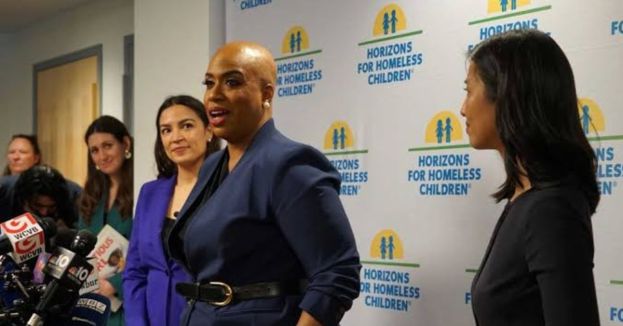


Image Credit : Wikimedia Commons

Far-left Democratic Representatives Ayanna Pressley and Alexandria Ocasio-Cortez are amplifying a narrative of “modern-day lynchings” of black Americans that is starkly at odds with the facts established by law enforcement in nearly every case they cite.

As reported by The Post Millennial, the two members of the progressive “Squad” have seized on a series of tragic deaths in which black individuals were found hanging from trees and portrayed them as racially motivated killings, despite police and medical findings that overwhelmingly point to suicide. Their rhetoric, which invokes the darkest chapters of American history, has been used to demand federal intervention and a congressional investigation, even though authorities have found no evidence of racial animus in these incidents.

Across the country in 2026, several black individuals have been discovered dead in trees, with local investigations consistently concluding that the deaths were self-inflicted and involved no foul play. Nonetheless, Ocasio-Cortez and Pressley publicly described these cases as “lynchings” and insisted that Congress must step in, framing the incidents as part of a broader campaign of racial terror.

Pressley escalated the language dramatically, declaring, "Black folks are being found hanged in America. This is a national crisis and we CANNOT stand by while strange fruit hangs from trees across the country. We're demanding a federal investigation NOW so we can stop modern-day lynchings." Her invocation of “strange fruit” — a direct reference to the infamous song about Jim Crow-era lynchings — appears designed to stir public outrage, even as investigators on the ground report no such pattern of racist violence.

Ocasio-Cortez echoed and amplified Pressley’s claims, stating, "This year, there have already been 10 reported hangings of Black people in the U.S. I’m proud to have signed onto @RepPressley‘s letter to address these widespread modern-day lynchings and put a stop to this racial terror." By framing these tragedies as “widespread modern-day lynchings,” she suggested an organized campaign of racial killings, a claim that is not supported by the official findings in the cases highlighted by activists and sympathetic media.

In Cobb County, Georgia, 21-year-old Kyle Bassinga was found hanging in March, and police determined there was no foul play and that he was alone at the time of his death, according to CBS News. In Charlotte, North Carolina, 16-year-old Juliana Umba Nzita was discovered hanging from a tree on church property in May, and investigators ruled her death a suicide, WBTV reported.

Tuesday, May 26, 2026

“Enslaving Treaties – The Persistence of Colonial Ideology and Practice...."


“Enslaving Treaties – The Persistence of Colonial Ideology and Practice and the Quest for Sustainable Decolonization including Litigation”


The World Council of Churches (WCC), through its programme on Overcoming Racism, Xenophobia, and Related Discrimination, will convene on 26 May a global conversation shining a critical light on how colonial ideology continues to shape today’s economic systems through international investor treaties, especially the Investor-State Dispute Settlement system.


Photo: Albin Hillert/WCC


Titled “Enslaving Treaties – The Persistence of Colonial Ideology and Practice and the Quest for Sustainable Decolonization including Litigation,” the webinar will seek to expose how legal and financial frameworks established during and after colonial rule continue to constrain the sovereignty of nations in the Global South—often at the expense of human dignity, environmental protection, and intergenerational justice.

From the WCC’s 1st Assembly in Amsterdam in 1948, the WCC warned against the dangers of unchecked power—whether capitalist or communist—recognizing how vast economic and political concentrations of power give rise to greed, cruelty, and systemic injustice. The WCC also acknowledged that visions of racial equality, however imperfect, resonated deeply with peoples in Asia and Africa who were living under racist colonial domination.

Decades later, those warnings remain strikingly relevant.

International investor treaties, particularly those signed at the twilight of colonial rule or in its immediate aftermath, continue to bind developing nations into relationships of profound inequality. Often mediated through Euro-American economic frameworks, these treaties have created what many describe as a condition of “willing enslavement”—where governments are penalized for prioritizing environmental protection, public welfare, and climate action.

Through investor-state dispute settlement mechanisms, multinational corporations can sue governments for enacting climate or environmental regulations, effectively silencing democratic decision-making and perpetuating racialized economic injustice.

Building on its longstanding commitment to economic justice, climate justice, and children’s rights—including initiatives such as the New International Financial and Economic Architecture (NIFEA) and the Churches’ Commitment to Children programme—the WCC is reiterating the call to churches and ecumenical partners to speak truth to power, including embracing litigation as an appropriate approach to seeking justice for the marginalized and vulnerable communities.

The upcoming webinar will explore how churches can engage morally, ethically, and legally to challenge unjust treaties, including through third-party interventions in investor-state dispute settlement mechanisms cases. At stake is nothing less than the future of communities disproportionately affected by the climate emergency—especially racialized children, girls, and young women.

The webinar discussion will unpack the historical and contemporary realities of international investor treaties, particularly those rooted in the colonial and post-colonial eras. It will also explore strategies for effective, structured interventions by churches and ecumenical bodies to dismantle unjust and discriminatory economic frameworks.

As climate crises intensify and economic inequalities deepen, the WCC affirms that inaction is no longer a viable option.

This webinar marks a renewed call for churches worldwide to stand alongside marginalized communities, confront structures of domination, and work boldly toward a future where justice, sustainability, and dignity are not negotiable—but guaranteed.


Sunday, February 15, 2026

Action Trump's Intent: Does it Matter if the President is Racist?


by Miguel A. De La Torre | Jan 12, 2026 | Opinion


Stock Photo Illustration (Credit: Gage Skidmore/Wiki Commons/https://tinyurl.com/3et39rm6)

I have heard many dismiss President Donald Trump as a racist. In response, he has claimed, “I don’t have a racist bone in my body!

Why shouldn’t I take him at his word? After all, I do not know what is in his heart. Only God does.

Hence, I lack the hubris to ascertain with any certainty if he is, indeed, a racist. Still, I wonder, can a tree ever be known by its fruit? Is racism what racism does?

Trump’s versatility, his hollow patriotism, and the genuine power of simplistic, nonsensical words invigorate those who are mostly deficient in basic qualities associated with morality and decency.

Although lacking an ethical compass, his skillful simoniacal trading of political influence, posts and pardons to enrich himself, and the teflonic ease with which he dispenses verifiable seditious accusations, establish the foundation of his appeal. His obstinate usage of appointed sycophants to bring the full weight of the government against those who contest his self-serving trajectory, along with his total lack of scruples to even hide his public shame, deepens that pull. Together, these forces conspire to lure cultish MAGA followers to forgive him of all guilt, seeing in this self-exultant political sinner their atonement for their own unrestrained odium for all that falls short of the white ideal.

In this country, where minoritized communities have always been familiar with the aggression of white supremacy, Trump callously pursues people of color as if on steroids. He does so without the façade of charity, heartlessly dismantling with implacable passion any governmental design established to provide the minimum relief and protection from the onslaught of normalized and legitimized white affirmative action. His abnormal, aggressive temperament dazzles followers while seducing foes to the futility of resistance.

He may very well not be a racist, but instead a political animal playing to the worst impulses of the U.S. psyche. Nevertheless, there is no denying he has done and said racist things.

In fact, his political success is dependent on racism and ethnic discrimination. It flows like an everlasting stream, dooming any domestic hope of fostering a more perfect union, even while spouting high-sounding, empty patriotic rhetoric.

Friday, January 14, 2022

Prominent News Leaders Discuss Racism in Mainstream Media


NEWS PROVIDED BY
G20 Interfaith Forum
January 13, 2022, 22:20 GMT


G20 Interfaith Forum

Systemic racism in the media against Black people, Indigenous People, and People of Color (BIPOC communities) will be discussed at an upcoming webinar.

A different way of relating to all human beings, grounded on a new paradigm that affirms the dignity of all humans in solidarity, is urgently needed for a better world.”

Dr. Ganoune Diop

NEW YORK CITY, NEW YORK, USA, January 13, 2022 /EINPresswire.com/ -- The Anti-Racism Initiative of the G20 Interfaith Forum, the world’s leading organization focused on the intersection of faith and policy, is gathering experts from the media, academia, and religion to discuss systemic racism in the media against Black people, Indigenous People and People of Color (BIPOC communities) at an upcoming webinar.

Dr. Ganoune Diop, Director of Public Affairs and Religious Liberty at the Seventh-day Adventist Church, said the issue is a critical one:

“One of the greatest challenges of our time is the revisiting of what it means to be human and humane. How we view and speak of others can contribute to life, saving lives and healing. The perpetuation of the myth of racial hierarchy and the use of narratives and visuals to demean black people, indigenous people and people of color (BIPOC) have been indulged in or deliberately promoted in media outlets. A different way of relating to all human beings grounded on a new paradigm that affirms the dignity of all humans in solidarity, is urgently needed for a better world. Exploring pathways to a decent way of being human will be the focus of this webinar.”

Keisha Bush, author of “No Heaven For Good Boys,” echoed the sentiment, emphasizing the need for lasting change in media portrayals:

"American media has been, and still is, a vehicle of sociopolitical propaganda, reinforcing stereotypes and the demonization of activism, equity, and inclusion at every level of our society. Due to the current collective energies for equity, once again, the pressure to move the needle is building, but to have genuine lasting change there needs to be a complete dismantling of the current supremacist structures to see real diversity, equity, and inclusion across the media."

Milton Allimadi, publisher of blackstarnews.com, connected current racism in the media to historical colonialism:

"Historically, and globally, non-European people were demonized in order to justify their exploitation and sanitize abuses against them during conquest. The worst manifestations were slavery and colonialism. In our contemporary era, White supremacy is an ideology that denies the humanity of non-Europeans, and tries to curtail their access to the resources they need to exist or to live fulfilling lives. It's important to understand how demonization originated in media in order to tackle our contemporary challenges and chart a better future."

Both Nisrin Elamin, a professor at Bryn Mawr College, and Ben Dotsei Malor, Chief Editor at UN News, pointed to media portrayals of Africa as ready examples of this racism:

“Racism in the mainstream media manifests itself in a variety of ways, and is perhaps best exemplified by its coverage of Africa,” Elamin said. “Coverage of the continent is characterized by systematic under-reporting, stereotypical, one-dimensional portrayals of African life, a lack of nuanced and historically grounded analyses of African issues and a construction of expertise that justifies foreign intervention and undermines the sovereignty, knowledge and agency of African analysts and communities. This shapes not only US public opinion and policy-making, but has broad-reaching implications for how knowledge about Africa is reproduced.”

“Recently, scientists in Botswana and South Africa, through diligent, admirable, and excellent work, managed to identify the omicron variant of the coronavirus, and within hours Western media made it look as if this would be classified as the ‘African variant’. Within hours, instead of hailing and applauding these scientist for being vigilant, open, and transparent, travel bans were imposed on South Africa and eight other Southern African nations,” Malor said. “A similar thing happened with the 2014 Ebola outbreak in three West African nations, with Western media coverage causing tourists to avoid Kenya and South Africa, thousands of miles away – with no cases of ebola. There is still, in many Western media circles, a tendency (of laziness and lack of common humanity) to lump the continent of Africa together as ‘one country’. The distinctions among the continent’s 54 nations need to be clearly stated in any media coverage of the continent in order to avoid the economic costs of such reportage.”

The virtual meeting will take place on Jan 20, 2022 at 2 pm EST, and will aim to unweave the threads that are currently used to justify racism in the media, in addition to debunking destructive interpretations of religious texts that perpetuate racism. Register for the free webinar at https://bit.ly/Racism-in-the-Media

Speakers will include experts from the media, academia, and religion:
• Dr. Ganoune Diop
– Director, Public Affairs and Religious Liberty, Seventh-day Adventist Church

• Milton Allimadi – Assistant Professor of Journalism, Columbia University; Publisher, blackstarnews.com
• Keisha Bush – Writer and Artist, Author of No Heaven for Good Boys
• Ben Dotsei Malor – Chief Editor, UN News, UN Headquarters, New York
• Nisrin Elamin – Assistant Professor of International Studies, Bryn Mawr College

About the G20 Process

The Group of Twenty, or G20, is the premier forum for international economic cooperation, bringing together the leaders of Earth’s most prosperous economies. Collectively, G20 nembers represent around 80 percent of the world’s economic output, two-thirds of the global population and three-quarters of international trade. Throughout the year, representatives from G20 countries gather to discuss financial and socioeconomic issues as well as broader humanitarian issues targeted by the UN’s Sustainable Development Goals.

About the G20 Interfaith Forum

The G20 Interfaith Forum seeks global solutions by collaborating with religious thought leaders and political representatives to help shape the overall G20 agenda. It draws on the vital roles that religious institutions and beliefs play in world affairs, reflecting a rich diversity of institutions, ideas, and values. Through its extensive network of networks, it helps prioritize key global policy goals and point toward practical means of implementation
at every level of society.

For more information, please visit www.g20interfaith.org.


Thursday, December 28, 2017

Sheila Jackson Lee’s Long History Of Being An Entitled ‘Queen’


Benny Johnson
Reporter At Large


4:42 PM 12/27/2017


Sheila Jackson Lee has been a congresswoman for over 20 years. However, she acts far more like an arrogant monarch than a humble servant of the people.

The Texas Democrat has regularly abused her power and position to demand and receive special treatment from private companies, demean and harass subordinates, and reap untold benefits of being “The Queen.

When her abusive behavior comes to light, Jackson Lee often claims her opponents are racist.

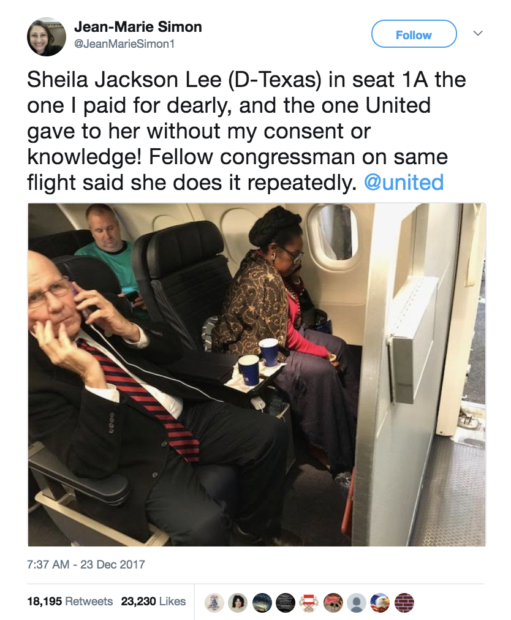
Jackson Lee’s most recent abuse of power comes at the expense of teacher Jean-Marie Simon who was allegedly bumped from her first class seat when Jackson-Lee demanded it. Simon was given a voucher for her flight by United and moved to the economy section. On her way to the back of the plane, Simon saw Jackson Lee occupying her seat.


In a Facebook post, Simon says she spoke with a congressman who said Jackson-Lee regularly poaches seats from other passengers.

“I was the last passenger on the plane. A Texas congressman, a nice guy, sat down next to me. He said was glad I had made it on the flight. I showed him my boarding pass with my seat, 1A, printed on it. He said, ‘You know what happened, right? Do you know who’s in your seat?’ I said no. He told me that it was Jackson Lee, a fellow U.S. congresswoman who regularly does this, that this was the third time he personally had watched her bump a passenger.”

In response to the accusation, Jackson-Lee called Simon racist, saying the teacher caused a stir “because I was an African American woman.”


Monday, December 25, 2017

United Airlines took my seat and gave it to a politician: woman


By Tamar Lapin

December 24, 2017 | 12:14pm


Jean-Marie Simon (left) and U.S. Rep Sheila Jackson LeeGetty Images


A teacher from Washington, D.C., accused United Airlines of booting her from her first class seat in order to give it to a congresswoman, she wrote in an account that the politician has since contested.

Jean-Marie Simon was at Bush International in Houston on her way home from a trip to Guatemala last week, when she witnessed U.S. Rep Sheila Jackson Lee (D-Texas) get ushered onto the plane before everyone else lined up, she wrote on Facebook.

When it came time for her to board the Dec. 18 flight, Simon said the gate attendant told her that her ticket was not in the system.

“A second United agent confirmed that I had no seat, not just the first class seat I had purchased, but no seat, period. I didn’t even have a reservation anymore,” she wrote.

When she was asked if she’d canceled her reservation, she said she hadn’t, she just wanted to get home.

“I said I wanted my seat, that I had paid a lot of miles for that seat, and that it was United’s responsibility to undo the seat assignment and return it to me, the person who had paid for it,” she wrote.

The United attendant told her that united.com had changed her reservation about an hour earlier and that another passenger had been upgraded to her seat.


Monday, November 13, 2017

Crossing the Divide: The 2nd Annual Social Justice Summit


~0~

Crossing the Divide: The 2nd Annual Social Justice Summit

8 November 2017 | Alisa Williams


The second annual Adventists for Social Justice Summit, entitled “Crossing the Divide” occurred on November 3-5, 2017 on the campus of Washington Adventist University. The ASJ has come a long way since its creation a year ago. In addition to hosting its second summit with attendance nearing 200, there are now also a dozen or so local chapters, and an active Facebook group where over 5,000 members share and discuss issues affecting the world.

The Summit began with vespers Friday evening, with keynote speaker Dr. Soong-Chan Rah, professor of church growth and evangelism at North Park University in Chicago.

Dr. Rah spoke on “The Need for Lament in Troubled Times.” In both his ASJ presentation and his recent book, Prophetic Lament, he discusses that “what we’re missing in our pursuit to change the world is just the right amount of disruption.”

“There are times when disruption and confusion are actually a good thing. Sometimes God brings these into our lives because otherwise, why would we want to change?”

Lament is the disruption we require, continued Rah. Lament appears frequently in the Bible; 40% of the Psalms are laments. But we, as Christians, want to jump to celebration without first focusing on suffering. In a typical Christian hymnal, 80-85% are celebratory hymns. In contemporary Christian music, only 5-10% are about lament.

Because we’re missing lament in our story, we have the inability to recognize injustice and to bring God’s justice to our society, said Rah.


Sunday, September 03, 2017

Bishops tackle 'sin of racism'

U.S. Bishops’ Anti-Racism Committee Chair Lifts Up National Day of Prayer


September 1, 2017


WASHINGTON—Bishop George V. Murry, SJ, of the Diocese of Youngstown, Ohio, Chairman of the U.S. Bishops' Ad Hoc Committee Against Racism, called on Catholics and all people of faith to observe an annual Day of Prayer for Peace in Our Communities on September 9, the Feast of St. Peter Claver.

"St. Peter Claver is a model for us in understanding that hard work and perseverance is required to combat the sin of racism and build community; we must begin and end this effort in prayer together, even as we seek to act in concrete ways," Bishop Murry continued. "To help dioceses, parishes and other places of worship, communities, and families observe this National Day of Prayer, the Ad Hoc Committee Against Racism and USCCB staff offer pastoral and prayer resources which can be found at www.usccb.org/racism."

The Ad Hoc Committee Against Racism was formed by Cardinal Daniel DiNardo, President of the United States Conference of Catholic Bishops, after the recent shocking events in Charlottesville, Virginia. Bishop Murry was appointed as the Ad Hoc Committee's first chairman. The Committee will focus on addressing the sin of racism in our society, and even in our Church, as well as the urgent need to come together to find solutions.

"Last year, Archbishop Joseph Kurtz, then-President of the U.S. Conference of Catholic Bishops, called for a day of prayer for peace in our communities at a time of intense strife over police-related shootings," said Bishop Murry. "Archbishop Kurtz also formed a Task Force that, among other things, recommended that the National Day of Prayer become an annual observance. As the Chairman of the newly-formed Ad Hoc Committee Against Racism, it is my honor to continue this call for prayer, and to do so every year on this feast."

St. Peter Claver (1580-1654) was a Spanish-born Jesuit priest who dedicated his life to ministering to people enslaved by the African slave trade. He worked tirelessly to improve the lives of those he served, and heroically sought an abolition of the slave trade.

"Resources for this day, including a prayer card, Prayers of the Faithful, bishops' statements, teaching resources, and stories. . . of how faith communities around the country are working for racial justice are available at www.usccb.org/racism."

-----

Keywords: U.S. Conference of Catholic Bishops, USCCB, racism, St. Peter Claver, Ad Hoc Committee Against Racism, Day of Prayer for Peace in Our Communities, Bishop George Murry

###

MEDIA CONTACT:
Judy Keane
202-541-3200


Tuesday, May 31, 2016

The EU Has A Plan To Get Rid Of Racist Comments On Social Media For Good. Will It Work?


BY LAUREN C. WILLIAMS MAY 31, 2016 4:37 PM


CREDIT: AP PHOTO/SILVIA IZQUIERDO, FILE


Tech juggernauts Facebook, Twitter, Google and Microsoft have agreed to take down hateful content within 24 hours of reviewing it, according to new conduct rules the European Commission announced Tuesday to align with national laws criminalizing violent online speech.

The new rules require social media companies to remove posts or disable accounts, when necessary, that reference violence or hatred targeting individuals or groups based on race, color, ethnicity, religion, or nationality. Tech companies must also develop and display clear guidelines outlining the sites’ prohibition of violent and hateful speech, and train employees on how to flag the illegal content.

The joint commitment between American tech companies and European Union comes after French Jewish youth group UEJF sued Facebook, Twitter, and Google for the companies’ failure to quell hateful and threatening speech on their platforms in the wake of the Islamic State’s (ISIS) attacks in Paris and Brussels.

Before Tuesday’s agreement, the EU has repeatedly called on internet companies to reduce ISIS’ propaganda on their platforms. Twitter suspended125,000 accounts linked to ISIS over the last year to combat the group’s widening influence on the microblogging site. Facebook began working with the German government last year to moderate anti-refugee xenophobic speech following the country’s acceptance of nearly a million Syrian and Afghani war refugees.But content moderation is difficult to execute due to the sheer volume of content published online each day.

Social media companies are criticized for unevenly moderating content that is violent, sexually suggestive, or that which is perceived potentially offensive. Twitter unrolled a slew of policy changes last year to address years of criticism that the company doesn’t take harassment seriously, and Facebook banned graphic contentmonths after video of ISIS beheading photojournalist James Foley spread online.

Content moderation, in general, is difficult to execute due to the sheer volume of content published each day. For example, 300 hours of video are uploaded to YouTube each minute, and at least 10 percent of Facebook’s billion users updates their status daily. But the practice also raises ethical and moral concerns, including censorship and varying or frequently changing standards. As a result, tech companies have shied away from heavy-handed moderation, in favor of a case-by-case approach.

Despite pressure to reduce threatening and harassing speech, social media companies have been able to dodge legal mandates for content moderation in the United States. A provision tucked in the 2016 intelligence fiscal authorization bill that would require companies to report terrorism-related social media posts to intelligence agencies is awaiting a Senate vote nearly a year after it was first approved by committee.

Additionally, the U.S. Supreme Court ruled in favor of a man who posted threatening language stylized as rap lyrics targeting his estranged wife. The decision was a win for free speech supporters and a blow to civil liberties advocates who were looking to the ruling to set a precedent that would outlaw violent speech.

The EU’s new rules, however, could be an impetus and blueprint needed to push for broader legal and policy changes elsewhere.


Thursday, March 10, 2016

U.S. Soldiers Taught That America Privileges White Male Heterosexuals


New documents released from ‘white privilege’ briefing


AP


BY: Morgan Chalfant
March 9, 2016 12:40 pm


Soldiers in the U.S. Army were subjected to a “white privilege” briefing last April during which they were advised that American society “attaches privilege to being white and male and heterosexual.”

Documents obtained from the Army through a Freedom of Information Act (FOIA) request shed light on the diversity training briefing, which was given to 400 soldiers in the 67th Signal Battalion at Fort Gordon, Georgia, last year. While one slide from the PowerPoint presentation used in the briefing previously sparked outrage, the contents of the full “Power and Privilege” slideshow had not been publicly released until now.

The PowerPoint slides, which were obtained by the government watchdog group Judicial Watch, provide detailed insight into the so-called Equal Opportunity briefing delivered on April 2, 2015.

“Privilege exists when one group has something of value that is denied to others simply because of the groups they belong to, rather than because of anything they’ve done or failed to do. Privilege has become one of those loaded words we need to reclaim so that we can use it to name and illuminate the truth,” the slideshow read.

“Our society attaches privilege to being white and male and heterosexual regardless of your social class.”

“Imagine a school or a workplace where all kinds of people feel comfortable showing up … valued, accepted, supported, appreciated, respected, belonging,” the presentation continued. “Something very powerful keeps this from us. The truth of this powerful forces is everywhere, but we don’t know how to talk about it and so we act as though it doesn’t exist.”

The slideshow instructed the soldiers that such privilege results in a “yawning divide in levels of income, wealth, dignity, safety, health and quality of life [and] promotes fear, suspicion, discrimination, harassment, and violence.”

The presentation also featured a hypothetical story about a black woman to illustrate that the United States is “organized according to race.”

“Consider the ‘black woman’ in Africa who has not experienced white racism and does not identify herself as a ‘black woman.’ African, a woman, but not black. She only became ‘black’ when she came to the U.S. where privilege is organized according to race, where she is assigned to a social category that bears that name and she is treated differently as a result,” the slideshow read.

The slideshow instructed “privileged” soldiers to do something about the alleged problem.

“The trouble we’re in can’t be solved unless the ‘privileged’ make the problem of privilege their problem and do something about it. The fact that it’s so easy for me and other people in dominant groups not to do this is the single most powerful barrier to change,” the presentation concluded.

The new details of the diversity briefing come nearly a year after controversy first erupted over a slide used in the training that discussed “white privilege.” The slide, entitled “The luxury of obliviousness,” was posted on Facebook following the briefing and invited a slew of negative comments.

“Race privilege gives whites little reason to pay a lot of attention to African Americans or to how white privilege affects them. ‘To be white in America means not having to think about it,’” the slide, which was also among the documents obtained by Judicial Watch, read.

A spokesperson for the Army responded to the outrage last April by saying that the slide was inappropriately shown to soldiers and that the diversity briefing was not officially authorized.

“The unit [Equal Opportunity] instructor deviated from the authorized topic and content which was provided,” Army spokeswoman Capt. Lindsay Roman said at the time. “To prevent further instances, all unit instructors will receive additional training on the importance of following Army EO training requirements.”


Source
.

Friday, February 26, 2016

SDAs wandering, not preaching the 3rd Angel's Message,.. etc. - Pastor Andrew Henriques


SDAs wandering, not preaching 3 Angels.They focus on W.O, LGBT, Black GC President, Nature of Spirit,etc


Published on Feb 26, 2016


Had they still trusted to the guiding hand that had been with them in their past experience, they would have seen the salvation of God. If all who had labored unitedly in the work in 1844, had received the third angel's message and proclaimed it in the power of the Holy Spirit, the Lord would have wrought mightily with their efforts. A flood of light would have been shed upon the world. Years ago the inhabitants of the earth would have been warned, the closing work completed, and Christ would have come for the redemption of His people. In like manner, it was not the will of God that the coming of Christ should be so long delayed and His people should remain so many years in this world of sin and sorrow. But unbelief separated them from God. As they refused to do the work which He had appointed them, others were raised up to proclaim the message. {GC 457,458}


.

Sunday, August 09, 2015

From the Vault • Barack Obama • SEP 1995


Published on Mar 12, 2015

22-CityView presents Barack Obama speaking at the Cambridge Public Library. Recorded on September 20,1995, this originally aired on Channel 37 Cambridge Municipal Television as an episode of the show "The Author Series." In this episode Obama discusses his book "Dreams from My Father: A Story of Race and Inheritance," which at the time had just been released a few months previously.

.

Wednesday, April 01, 2015

Fear of Black Men: How Society Sees Black Men And How They See Themselves


MARCH 31, 2015 4:58 AM ET


MICHEL MARTIN


6 min 59 sec

Playlist


How does the fear of black men in America affect society, and them?Magdalena Roeseler/Flickr


It's an open secret among African-American men and boys that people are often afraid of them. This week, we've brought that conversation to the airways and social media.

We spoke with Paul Butler, a Georgetown University law professor, and Doyin Richard, a blogger at a parenting blog, Daddydoinwork.com, to talk about how these experiences have affected them.


Interview Highlights

On being racially profiled

Prof. Paul Butler: [I was] walking home in my beautiful upper-middle-class neighborhood in D.C., when the cops start following me —kind of like this cat and mouse thing. They are in their car, and you know, every time I move they move. And we get up to my house and I just stop on the street and say 'what are you doing? And then they say 'what are you doing?' I say 'I live here.' They say 'prove it.' They made me go to my porch, and then when I got there I said, 'you know what, I don't have to proof nothing.' I knew this because I am a law professor. They said, 'we are not leaving until you go in the house, because we think you're a burglar.' I say 'you're doing this because I am black.' They said, 'no, we are not, were black too,' and that was true. These were African-American officers. Even they were racial profiling me, another black man.

Blogger Doyin Richards: When I was out with my oldest daughter, who's [four-years-old], we were in a shopping mall, in a garage in Los Angeles...and there was a lady, who was with her husband. And I could tell they were just really nervous around me. And then we went to an ATM — I had to get some money — and there's another couple and I heard the woman say 'Hurry up, let's go, let's go.' Like I was going to rob them, and my daughter was all like 'What happened dad? What was that all about?' And I have to go into this conversation, 'Well honey, sometimes people look at the color of my skin and they think I am a threat to them.'

"When you're in an elevator or walking behind somebody and you feel like you have to perform to make them feel safe, it's like apologizing for your existence."

- Paul Butler, Georgetown University Law professor

On how to appear non-threatening

Blogger Doyin Richards: Sometimes if I am walking down a street or something, I am whistling Frozen songs just to prove that ... 'Hey I have kids, I am not a threat to you. I just want to go home to my family.' So often people just view this as, 'Oh gosh, you're just whining,' or 'they are just making excuses or pulling out some mythical race card that doesn't exist.' This is a real thing.

Prof. Paul Butler: When you're in an elevator or walking behind somebody and you feel like you have to perform to make them feel safe, it's like apologizing for your existence. So I am in an elevator with a white woman and I have to look down to make her feel comfortable. It's like 'excuse poor black me.' And you get angry and you get tired. But as a prosecutor, you also kind of understand where some these attitudes come from. Because while most black men don't commit any crime, of men who commit crime, a disproportionately number are African-American. And so yeah, sometimes there's a tendency to say, 'Well, gee if you other brothers weren't doing this, I wouldn't have to be in this position."

On being proud of being a black man.

Prof. Paul Butler: one problem with conversations like this, is it doesn't get across that I love being a black man. I feel connected, like when I see President Obama's swag, I get that as a black man. When I hear Jay Z's cool ... I kind absorb and relate as well. Sometime we don't talk about the joy of this identity, and how proud I am to be African-American and a man.


Source
.

Wednesday, March 18, 2015

Twitter erup ts over Starbucks' new anti-racism campaign


Relaxnews (AFP)
1 hr ago


Starbucks has succeeded in raising the chatter about race relations, all right. But much of the dialogue happens to be redirected at the company’s bold, some say outrageous, campaign to heal America’s race-related wounds, one latte at a time.

Following the launch of their ‘Race Together’ initiative announced this week, Starbucks has found itself at the center of a Twitter storm, with tweeps weighing in on the controversial campaign which CEO Howard Schultz said was created to elevate the level of discourse, compassion and understanding among Americans at a time when racially-charged tensions are high.

On Wednesday, the campaign’s hashtag #RaceTogether was among the top trending topics on Twitter in the US -- mostly in the form of mockery and anger.

The idea behind the project, meant to be “catalytic” for the country? For baristas to engage customers in conversations about diversity and the issues dividing America, while making lattes and pouring coffees.

“Going to Starbucks tomorrow to order a flat white to explain how milk takes all the credit while black bean does all the work,” wrote one critic.

“Not sure what @Starbucks was thinking. I don't have time to explain 400 years of oppression to you & still make my train. #RaceTogether,” wrote another.

Likewise, consumers were quick to point out that the promotional photos for the campaign featured only white hands.

The campaign also inspired Quartz to do some number crunching of their own in a chart which revealed that Starbuck stores are densest in predominantly (70 to 75 percent) white neighborhoods.

Not all reaction to the campaign is negative, however. Some applauded the company for trying to start a nationwide dialogue.

“I think @Starbucks #RaceTogether is a brilliant campaign. With all of the divisiveness in this country... we need this dialog #TheView.”

“I don't think that #RaceTogether was for baristas to educate, but simply to get people talking. We would rather bash and ignore it! #shame.”

Follow the Twitter discussion at #RaceTogether.


.