Showing posts with label U.S.. Show all posts

Saturday, October 31, 2026

G20 Foreign Ministers Press Availability

G20 Foreign Ministers Press Availability

The National Desk

Secretary of State Marco Rubio holds the closing news conference at the G20 Foreign Ministers' Meeting in Atlanta


READ MORE: https://thenationaldesk.com/news/amer...


Thursday, October 22, 2026

A mutated virus is driving the US into an early flu season, especially on the West Coast


By Brenda Goodman

Respiratory virusesVaccines


Even though this year's flu vaccines target a strain of H1N1, a new gene mutation means the virus can still break through. Hannah Beier/File/Reuters


Flu season is picking up months ahead of schedule with a mutated virus spreading in some parts of the United States, surprising some people who might not even be thinking about their annual flu shots yet.

This year, the season started 2 1/2 months earlier than what’s typical and hit states on the West Coast first, which is unusual, said Dr. Alex Greninger, head of the Division of Infectious Disease Diagnostics at the University of Washington’s Department of Laboratory Medicine.

Usually, the US flu season starts in the South – often in Florida, where it arrives from the Southern Hemisphere. Then it tends to spread north as fall and winter progress.

“In Seattle, we’re pretty far north. We see a pretty strong peak in January,” Greninger said, noting that the bulk of their cases typically come in late December through February.

That’s not how it’s playing out this year.

Sunday, September 20, 2026

Trump Cuts Camp David Trip Short as US Issues Middle East Travel Alerts

PUBLISHED

SEP 20, 2026 AT 07:43 AM EDT


By Hugh Cameron

Reporter

Donald Trump ended a weekend trip to the Camp David presidential retreat in Maryland ahead of schedule, following a warning from the State Department that the security situation in the Middle East could “escalate rapidly.”

According to the White House’s public schedule, Trump was meant to depart Camp David on Sunday but returned to Washington, D.C. a day early. A White House pool report states that he landed at the Ellipse south of the White House just before 8 p.m.

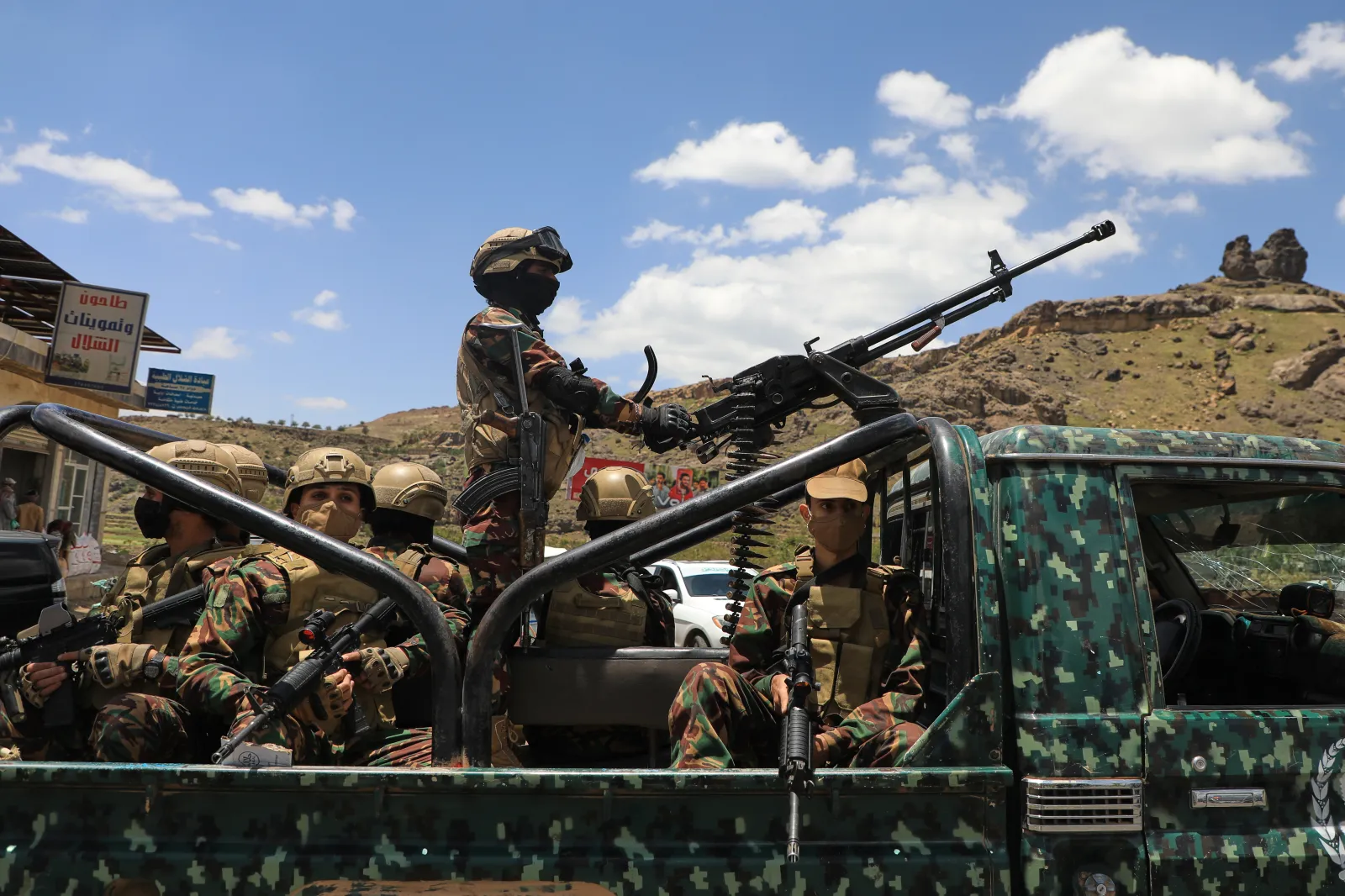
The White House has not confirmed the reason for the shortened trip, though this came amid another escalation in the Middle East, with the Houthi rebels claiming responsibility for an attack on Saudi Arabia’s capital, Riyadh. Saturday also saw a new security and travel alert from the State Department concerning the region.

Read More on News

Xi Jinping Health Rumors Explained: What We Know and Don’t Know 4 min read


“Due to tensions in the Middle East, the security environment remains complex with the potential for unforeseen escalation,” read the notice, which has been pushed out by a number of embassies and consular offices. “Americans currently in the Middle East should exercise heightened vigilance and be aware of potential flight cancellations, airspace closures, and travel disruptions.”

Iran-US war latest: Trump issued fresh demands to end war by Tehran as smoke and flames seen at Riyadh Airport


The conditions include ending the US naval blockade around the Strait of Hormuz
Maryam Zakir-Hussain & Alex Croft

Sunday 20 September 2026 00:01 BST


Smoke seen rising near Riyadh airport


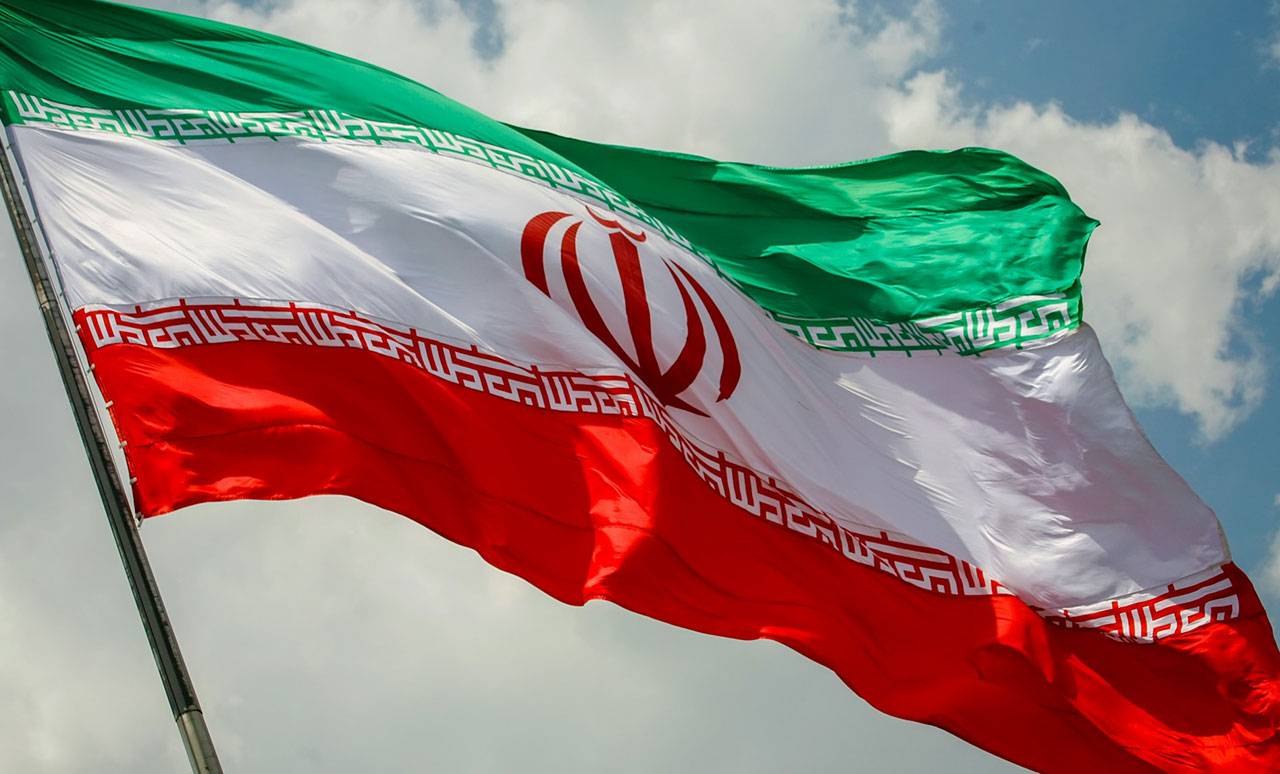
Iran has laid out to Donald Trump its conditions for re-engaging in negotiations aimed at ending the war with the US, security chief Mohsen Rezaei said.

The conditions include ending the war on all fronts, unfreezing Iranian funds and ending the naval blockade, Rezaei said in an interview according to Al Jazeera.

Discussions with Qatari and Pakistani mediators are ongoing, he added, as the delegations work to bring an end to the stalemate which has seen the war drag past the six-month mark.

It comes amid fears of war widening in the region as violence between the Iran-aligned Houthi rebels and Saudi Arabia escalates.

A large plume of black smoke was seen near ⁠Riyadh's main airport on Saturday after booms were heard. Saudi Arabia sent alerts overnight warning of potential danger around the capital and the city of Al-Kharj, before issuing an all-clear on Saturday morning.

The Houthis, who control the most populous parts of Yemen and much of the north, have been launching attacks towards Saudi Arabia since declaring a naval blockade against Riyadh in July, with strikes targeting Saudi vessels in the Red Sea.


Wednesday, September 02, 2026

US urges NATO allies to prepare in case Russia attacks


In an exclusive interview with USA TODAY, U.S. Ambassador to NATO Matt Whitaker said allies need to be ready, in case Russian President Vladimir Putin decides to attack.

Francesca Chambers and Miles J. Herszenhorn USA TODAY
Updated Sept. 2, 2026, 8:49 a.m. ET

BRUSSELS – Russian President Vladimir Putin may not be planning an imminent assault on NATO nations, but the United States says its military allies need to train and invest like he is, so they’re ready to fend off a sudden attack.

After leaked U.S. intelligence reportedly revealed that Russia could launch a limited assault, such as a land incursion or cyberattack, on a member country within the next few years, America’s allies have been on high alert.

The warning contradicted assessments that Putin would not attempt to draw NATO into a fight while he’s battling Ukraine – and came amid concerns about a U.S. weapons shortage, as the Trump administration wages war on Iran.

In an exclusive interview with USA TODAY at the military alliance’s headquarters in Brussels, U.S. Ambassador to NATO Matt Whitaker declined to comment directly on the leaked intelligence, while stressing a need for allies to be vigilant in their defense spending and weapons production.

“You can't predict what Vladimir Putin's going to do or any adversary. All you can do is be prepared for it and deter and make it not worth their time to make that move,” Whitaker said. “And I think we are preparing every single day to prevent that from happening, and if it does happen, to be ready for it.

“We should know that our adversary invaded Ukraine, and so we should all be pretty clear-eyed,” Whitaker added.

Friday, August 28, 2026

Iran security chief threatens neighbors against economic measures,..


Image: Akbar Nemati from unsplash.com


Pastor Hal Mayer
Speaker / Director

Iran security chief threatens neighbors against economic measures, and other Mideast developments

Tuesday August 25th, 2026

AP News, by Angela Charlton: The new leader of Iran’s top security body is threatening neighbors against joining new U.S. efforts to squeeze Tehran’s economy. Egypt is trying to revive Iran-U.S. negotiations. And Iraq and Iran say Tehran has helped some ships carrying Iraqi oil to transit the Strait of Hormuz. France and Saudi Arabia are expected to discuss plans to bypass the waterway.

Meanwhile, Israel has carried out strikes in Syria and in Gaza.

Here’s a look at the latest developments in the Iran war and the wider Middle East on Saturday. Full coverage can be found here.

Iran’s new top security adviser issues threats

The hard-line new leader of Iran’s Supreme National Security Council threatened Tehran’s neighbors against joining the new U.S. effort to hurt Iran’s economy, and accused the United States of increasing global nuclear insecurity with months of war.

“If (Trump) wants to do something, we will retaliate in a seismic manner,” he said in an interview with the state broadcaster that aired Saturday.

Mohsen Rezaei was named this month as part of senior appointments widely seen as hardening Tehran’s political and military stance. His interview with IRIB is his most extensive public statement since then.

Rezaei said Iran would target oil-shipping routes out of the Persian Gulf — alternatives to the Strait of Hormuz — if neighbors join what he described as the economic war against Iran. Those neighbors would be considered enemies and “we will target their interests,” he said.

U.S. President Donald Trump in the past week has vowed to increase Iran’s pain by imposing an “unprecedented” level of economic warfare and isolation. Iran has lived under sanctions for years.

Sunday, August 23, 2026

Progressive leaders gathered in Uruguay denounce US interference and acknowledge their own mistakes


Saturday, August 22nd 2026 - 08:28 UTC


Participants questioned Washington's conduct in the region, citing that intervention, strikes on vessels in the Caribbean and sanctions on Cuba, and called for greater regional autonomy

The opening session of the third Pan-American Congress, held on Friday at the Legislative Palace in Montevideo, combined criticism of United States policy towards Latin America with calls for self-criticism within progressive forces. More than 150 lawmakers, former presidents, ministers and political figures from fifteen countries are taking part, according to organisers.

Former Chilean president Gabriel Boric delivered the most widely noted speech, calling for consistency between political discourse and action. He criticised what he described as a “new imperialism” driven by Donald Trump and said the major powers “today do not speak of democracy, but directly of oil at the expense of a people.” He then turned a demand on his own allies: “We do not believe that violating international law is the way to intervene illegitimately in another people, but we also have to say very clearly that Maduro had stolen the elections and that his presidency at that time was also illegitimate.” He warned that if the left fails to acknowledge such distinctions, it will struggle to persuade its own electorates.

Nicolás Maduro was captured in Caracas on January 3 during a US military operation and remains in custody in the United States. Delcy Rodríguez has since served as Venezuela's acting president.

Participants questioned Washington's conduct in the region, citing that intervention, strikes on vessels in the Caribbean and sanctions on Cuba, and called for greater regional autonomy. Former Colombian president Ernesto Samper urged a revival of Latin American integration and closer ties with the Global South, arguing the region holds strategic water, food and mineral resources but lacks the political coordination to defend its interests.

US Representative Pramila Jayapal shifted the debate to her own country, saying opposition is growing to taxes being spent on military operations abroad rather than on health services and living standards. She defended a foreign policy based on dialogue and diplomacy as the only route to “a lasting peace.”

Uruguay's vice-president, Carolina Cosse, focused on disinformation and the contest for public attention. “Indifference to truth leads inexorably to totalitarianism,” she warned. Mexican Morena official Carolina Rangel proposed combining economic growth with social rights and called for an agenda covering care policies, energy transition, productive integration and digital sovereignty.

The forum, created in Bogotá in 2024 on the initiative of then Colombian president Gustavo Petro, is organised this year around four themes: peace, security and multilateralism; sustainable development and regional integration; digital sovereignty and artificial intelligence; and wellbeing and care. Sessions continue until Sunday and will conclude at the Parlasur headquarters.


Thursday, August 13, 2026

Iran looks to ramp up economic alliance with BRICS nations as war with U.S. drags on


Published Thu, Aug 13 2026  8:48 AM EDT

Chloe Taylor@ChloeTaylor141

Key Points

  • Iran is set to join the BRICS New Development Bank, the country’s central bank chief said Thursday.
  • Iran would have to move through the NDB’s accession process before it can become an official member country.
  • The war with the U.S. and Israel has further ramped up the pressure on the Iranian economy, with inflation surging, growth plummeting and its currency in freefall.

A woman and a child walk past Iranian-made Zolfaghar missiles displayed at Azadi Square in Tehran on July 24, 2026.
Afp | Getty Images


Iran is set to join the BRICS New Development Bank, the country’s central bank chief said Thursday, as Tehran seeks to shore up its economic alliances almost six months into its war with the U.S. and Israel.

The BRICS alliance was set up in 2006 by founding members Brazil, Russia, India and China, with South Africa joining in 2010.

It has since expanded to include Iran, Egypt, Ethiopia, Saudi Arabia, the UAE and Indonesia, with various other nations — including Belarus, Cuba and Nigeria — joining as partner countries.

Iranian state media reported Thursday that Abdolnasser Hemmati, governor of the Central Bank of Iran, had announced Iran would soon become a member of the BRICS Bank. Hemmati is currently in India ahead of next month’s BRICS Summit, according to Iran’s Tasnim News Agency.

“We are seeking to establish bilateral and trilateral monetary cooperation with member states,” Hemmati said, per Tasnim’s report.

The NDB was established by Brazil, Russia, India, China and South Africa to help mobilize resources for infrastructure and sustainable development projects in emerging markets and developing countries.

A spokesperson for the NDB told CNBC the bank cannot confirm information regarding Iran’s membership.

Wednesday, August 12, 2026

Senate Approves Bill That Could End Pennies And Change Cash Payments Across The U.S.


The U.S. Senate has approved the Common Cents Act, a bill that could end new penny production, introduce changes to the nickel and reshape how Americans handle cash payments at stores across the country.


Credit: Sutterstock | en. Econostrum.info - United States


Lydia Amazouz
August 11, 2026

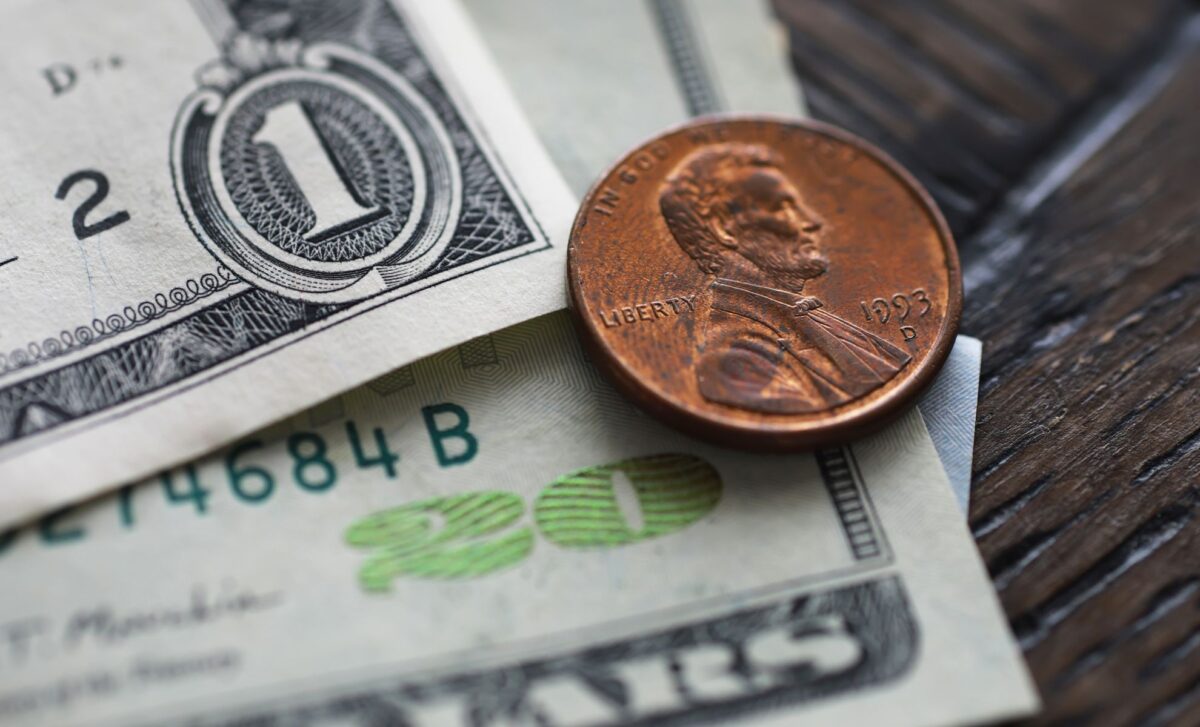
The U.S. Senate has passed a bill that could reshape the future of American coins by ending new penny production, changing cash transaction rules and opening the door to a redesigned nickel. The Common Cents Act received unanimous consent approval from the Senate, moving the legislation closer to becoming law after a similar version passed the House of Representatives.

The proposal addresses growing concerns about the cost of producing low-value coins and the challenges businesses face when handling cash payments without enough pennies available for change. If enacted, the bill would allow businesses to round cash transactions to the nearest five-cent increment while keeping existing pennies legal tender.

It would also give the Treasury Department authority to test a cheaper material composition for the nation’s five-cent coin. The legislation could mark one of the biggest changes to everyday U.S. currency use in decades.

Senate Bill Targets Penny Production And Cash Payment Challenges

According to The Hill, the Common Cents Act focuses on three major areas of U.S. currency policy: ending regular penny production, creating a national framework for cash rounding and exploring a new nickel design. The bill comes after the United States produced its final one-cent coin for circulation last year.

Although no new pennies are being made for everyday use, existing coins remain valid currency and can continue circulating throughout the economy. The disappearance of newly produced pennies has created challenges for some retailers that rely on cash transactions.

Without enough one-cent coins available, businesses have had difficulty providing exact change to customers. Under the proposed system, cash purchases would be rounded to the closest nickel.

For example, a transaction totaling $19.82 could become $19.80, while a purchase ending in $19.83 could be adjusted to $19.85. Supporters of the legislation argue that a nationwide rule would reduce confusion caused by different state and local regulations regarding cash rounding.

Friday, August 07, 2026

What Is Candida Auris and Where Is the Deadly Fungus Spreading?


Over 3,400 infections caused by Candida auris have been documented in the U.S. in 2026.

By Cecelia Smith-Schoenwalder
|
Aug. 6, 2026, at 5:38 p.m.

Deadly Fungus Spreading in U.S.


NICOLAS ARMER|PICTURE ALLIANCE|GETTY IMAGES

A petri dish holding the yeast Candida Auris.


Cases of a drug-resistant and potentially deadly fungal infection are spreading in the U.S., according to federal data.

Over 3,400 infections caused by Candida auris have been documented in 2026 across 27 states, according to data from the Centers for Disease Control and Prevention.

According to the CDC, “cases continue to rise each year, but the rate of increase has slowed down since 2022.”

What Is Candida Auris?

Candida auris is a drug-resistant fungus that can cause potentially life-threatening illness.

“Resistant infections can be difficult, and sometimes impossible, to treat,” according to the CDC.

Candida auris, which is a type of yeast, spreads easily in healthcare facilities like hospitals and mostly affects people who are already very sick. It can spread from person to person or through contaminated medical equipment.

“Most patients who become sick with C. auris were already very sick,” according to the CDC. “When patients with C. auris die, it is hard to know how much C. auris contributed to their death compared to other pre-existing illnesses.”

People who do not have risk factors usually don’t get sick or can recover easily on their own.

It was first found in 2009 in Japan and has since been documented in dozens of countries. It was first documented in the U.S. in 2016.


Saturday, July 18, 2026

Border Bishops: The Catholic Church's Migrant Trafficking Operation

The Catholic Church is the largest immigrant resettlement program in the world, responsible for up to 30% of all refugees imported into the US

Gildhelm

Jan 31, 2024


It’s turned into an efficient assembly line. Right before the checkpoint, a welcome center staffed by volunteers. They offer food, shelter, legal representation, and transportation. When ready, they’re taken to a point of entry. The checkpoint of course being completely swamped, prints off ticket #46,992,137 for their court date 37 years from today. They walk across the border, and into the very next building - another welcome center. Next stop: Nashville, San Diego, Richmond. Wherever they want. There’s (There ARE) offices like this in all 50 states, and you fund them. Not just through taxes, but also your Sunday offerings.

Because these aren’t government offices, they're churches.


The invasion at the southern border has developed into an untenable situation. Last year, the state of Texas became a minority White state for the first time in its history. By the end of this year, 10% of the population of the entire country will be illegal.

As tensions flare between state and federal governments with natives seeking to exert control over the situation, people are evidently starting to have enough. They see the impact free access to the country's wealth has on housing, competitive wages, and social cohesion. Someone is to blame for this, someone has to be held accountable and begin to mitigate for the damages.

This period of global migration is the largest in human history, so there is plenty of blame to dish out. Chief among the responsible is our governments, who are more than capable of turning any border into Passchendaele overnight, but refuse to do anything approaching this. Indeed, there are a number of secular NGOs and international institutions which have played a heavy hand. Interestingly, however, the single largest and most responsible operation has gone largely unblamed: simple, good-hearted, Christian charity.

In terms of individuals assisted in settling into the US, Christian churches make up the lion’s share with millions of migrants a year brought into the US through their networks on record. The Catholic Church alone is the largest (and possibly oldest) immigrant trafficking organization in history, and they claim this proudly. They have deep roots within the Western political system, including the International Catholic Migration Commission in Brussels, which has advocated for migrants directly to EU officials and European states since the end of WW2.


Wednesday, July 08, 2026

Fit for a pontiff: How the US Embassy to the Holy See prepared to host Pope Leo for a special July 4 celebration

The evening marked a historic visit to the U.S. ambassador’s residence as the country celebrates its 250th anniversary.


July 7, 2026

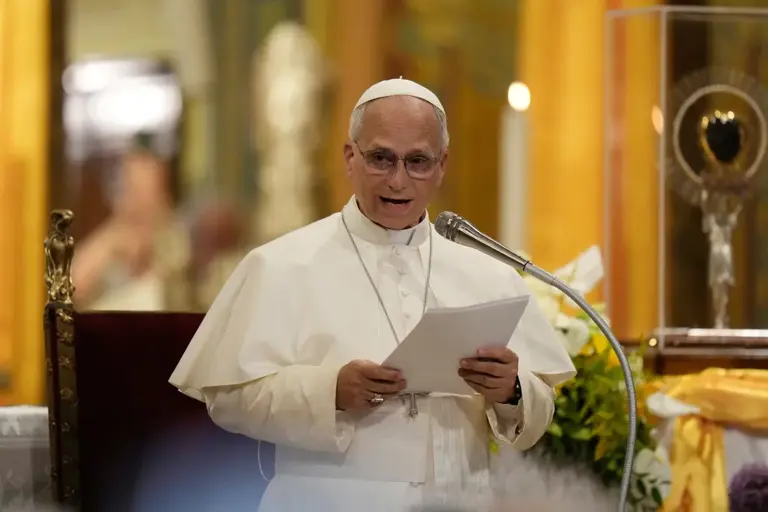
When Pope Leo XIV accepted an invitation from the U.S. Embassy to the Holy See to celebrate the Fourth of July with a special dinner, a significant amount of effort went into making the occasion impeccable and memorable.

The U.S. Embassy to the Holy See posted a video to social media this week offering a behind-the-scenes look at the preparations that took place ahead of the July 4 occasion, saying dedicated teamwork was required.

“Hosting a July 4th dinner for the Holy Father doesn't happen by accident,” the embassy stated. “Behind every perfectly set table, every carefully prepared dish, and every seamless moment of the evening stood a dedicated team at Villa Richardson who spent weeks planning, preparing, and perfecting every detail. A huge thanks to our wonderful team!”

U.S. Ambassador to the Holy See Brian Burch and his family welcomed Pope Leo the afternoon of July 4 at the ambassador’s residence in Rome, as Zeale News reported that day with exclusive comments from Burch.

>> Exclusive | Pope Leo XIV marks Fourth of July with historic visit to US ambassador’s residence in Rome <<

Monday, June 29, 2026

As nation turns 250, many Americans say the Stars and Stripes is now a red flag


The American flag: To some, it’s Old Glory. To others, it’s a MAGA hat on a stick.

June 29, 2026, 6:01 AM EDT
By Corky Siemaszko


To fly or not to fly an American flag? That was never a question for Bruce Watson, who has put his national pride on display for years — and nudges neighbors in his small New England town to do the same.

“I’m very proud of our flag,” the writer said. “It’s the symbol of ‘We, the People.’”

But as the polarized nation marks its 250th birthday, Watson, 72, worries his Stars and Stripes may now need an asterisk. “If we do fly the flag, we will also put out signs to make it clear that we are not MAGA,” he said.


Bruce Watson, at his home with his dog, Mavis, in Montague, Mass., says he plans to put a disclaimer next to his flag. Hannah Beier for NBC News

The American flag is a symbol striped with many meanings, whether it’s hung on front porches, waved in parades, protests and World Cup matches, or stamped on lapel pins and boxing trunks. Like so much else in American life, it has also been tangled up in politics and the policies of President Donald Trump.


NBC News asked readers to share their feelings and practices around the flag in a moment, polls suggest, when patriotism, national pride and optimism for the country’s future are all fraying. Like Watson, some say the flag can be taken as an endorsement of the current administration. For others, it isn’t tied to any one party but is a way of life.

Thursday, June 25, 2026

Pope Leo is wrong about hunger

Opinion by David Harsanyi, Washington Examiner


Pope Leo is wrong about hunger

For Catholics, the Pope is the vicar of Christ and the spiritual leader of the Church — which is to say, his positions are typically none of my business. Then again, any time the pope delivers a statement that speaks to the political aspirations of the secular left, the media amplifies it to lecture the rest of us.

The latest such comment has to do with world hunger.

“It is important to resist the commodification of basic human needs,” the Pope said, criticizing slow humanitarian aid from the United States to the U.N. World Food Program. “Food, water and healthcare cannot be subordinated to market considerations or geopolitical interests.”

Virtually every major modern famine in history occurred in places that “subordinated” the commodification of food for a greater good. Though, Leo has it backward. The market is the natural state of economic activity. We subordinate the market. The question is, are we better off when we do? Almost every time, the answer is no.

It’s not an accident that capitalistic nations create so much wealth that they can be generous not only to their own hungry but also to the hungry elsewhere. The proportion of the global population facing hunger today has declined dramatically over the past 30-40 years because of technological advancements and efficiencies fueled by trade and market-driven profits.

Which is why the U.S. has pledged nearly $750 million to the U.N. World Food Program, far more than any nation. China generally contributes under $20 million and Russia around $30 million.

It should also be noted that government aid is not the only assistance we give. Americans are the most charitable people in the world.

“Access to adequate food is a fundamental human right grounded in the dignity of every person,” the pope went on. “Meeting this need not only alleviates suffering but also addresses underlying causes of geopolitical instability. Indeed, food security is an essential component of global and integral security.”

Most people acknowledge that feeding and caring for the poor is a moral imperative. Being fed is not a “fundamental human right,” however, because it requires compelling another person to provide it. Americans believe — or should believe — that only the “fundamental rights” are those that call on others to abstain from interfering. That includes things like freedom of speech and religion. Your healthcare can’t be a right.

Moreover, helping the poor without any expectation that the government will change its policies that strip its people of dignity does nothing to help the underlying causes of geopolitical instability. If we choose, Americans have every right to attach expectations to their aid.

The United Nations, after all, is teeming with illiberal tyrannical nations that drive their own people into destitution. The areas most in danger of hunger, according to a recent U.N. report, are Sudan, South Sudan, Yemen, Nigeria, Somalia, and the Gaza Strip. All of them struggle in part because of Islamism, which carries a political agenda that runs counter to every Christian tenet imaginable. It would be nice if the Church spoke out about corrupt regimes and Islamists with the same passion it does the U.S., which has done more for the world’s poor than any institution that has ever existed.