Showing posts with label Culture. Show all posts

Sunday, July 12, 2026

Your Bible Version Matters


The Bible is God’s revealed Word to us, not our word to make applicable to the cultural moment.

07/9/26
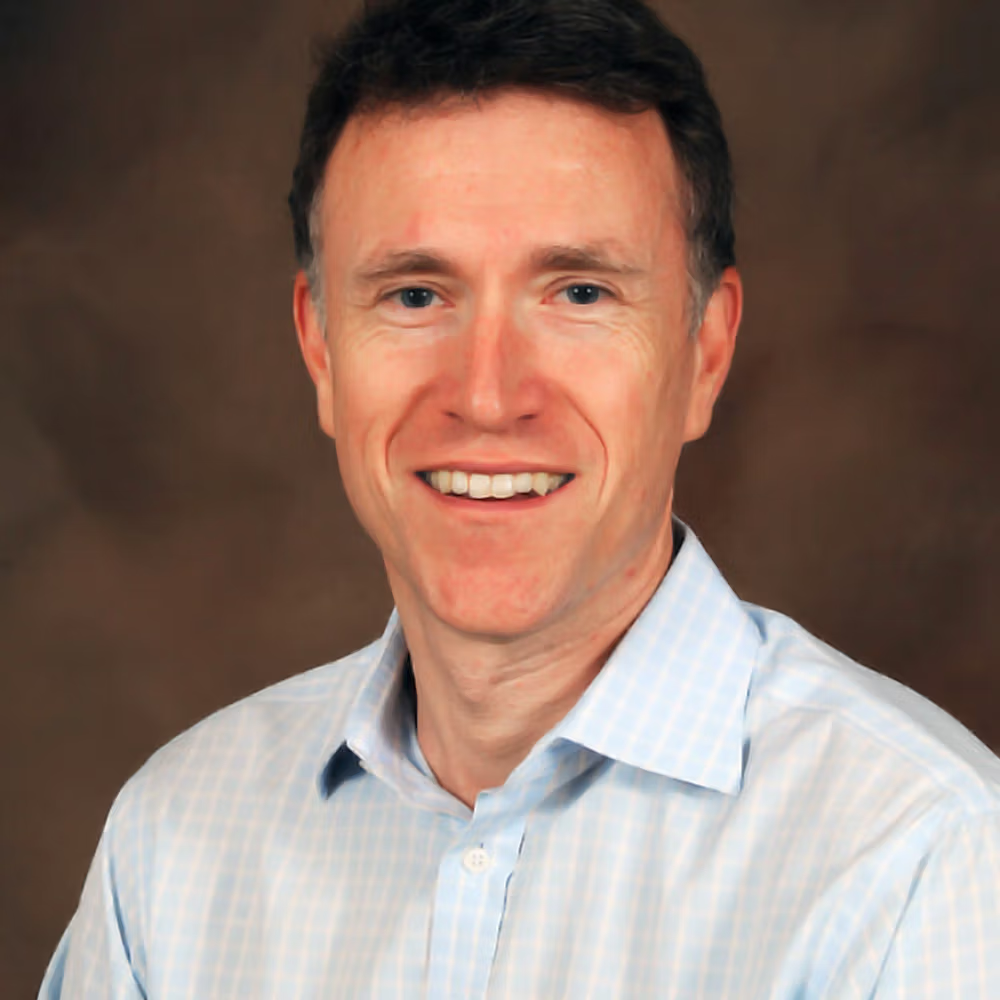
John StonestreetandAndrew Carico

Two recent news stories point to the crisis of biblical literacy, not only of knowing the biblical text but in properly understanding it. An editorial published at the Washington Post by Princeton professor Gregory Conti (a self-professed “non-believer”) explained how common it is for college students to not know the basics of Christianity:

(They) seldom recognize the allusions to the Bible that appear in Shakespeare’s work or in Lincoln’s second inaugural address (or in Obama’s first, for that matter) . . . their ignorance of religious ideas means they struggle to understand a wide array of Western art, literature, and philosophy.

In short, the lack of Biblical knowledge means they are unable to understand American history and culture.

Another New York Times story profiled the pastor and the church of Texas Democratic Senate candidate James Talarico. According to the article, Pastor Jim Rigby of St. Andrews’s Presbyterian Church in Austin, Texas, welcomes new members by:

…handing them a new copy of the Inclusive Bible, an unusual feminist translation St. Andrew’s has used since the 1990s. In Genesis, instead of saying that God created a man, Adam, the translation first refers to an “earth creature.” It often uses the term “kindom” of God in place of “kingdom,” which it deems classist.

The Inclusive Bible is promoted as “the first egalitarian translation.” In addition to replacing the male pronouns for God and humankind, it purports to “re-imagin(e) . . . the [S]criptures and our relationship to them.” The innovative version promotes progressive Christianity and includes a strong postmodern emphasis, rejecting absolute “truth” in favor of a newly created narrative.

Those who only read the Inclusive Bible will not really know the truth of Scripture, any more than those who never read any version. Nor can they understand a culture inspired by and built from, mostly, the King James Version. And yet, that is actually the point of the postmodern way of approaching reality: there is no truth to be known or revealed, only that which is constructed.

Wednesday, July 01, 2026

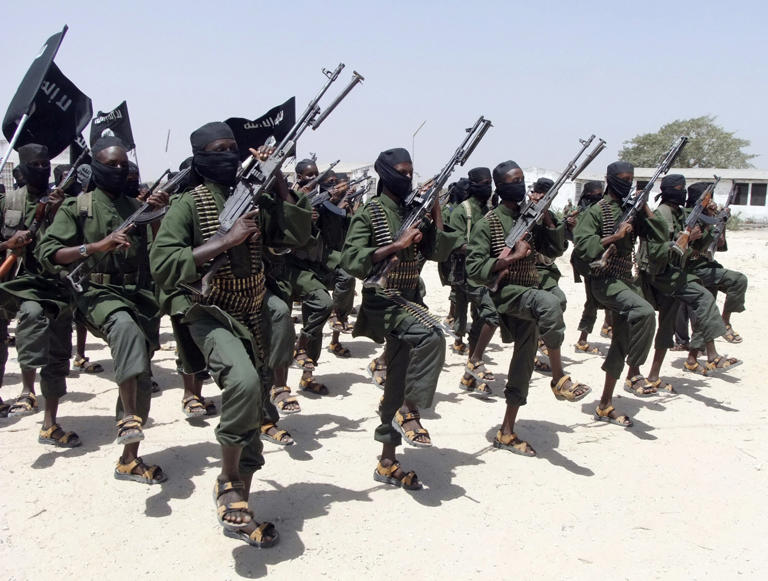
Mamdani-backed socialist primary winner founded group whose goal is to ‘eradicate' Western civilization


Darializa Avila Chevalier helped launch Columbia University Apartheid Divest, which said it wants to end the West

Published June 25, 2026 9:50am EDT


The socialist backed by New York City Mayor Zohran Mamdani who won Tuesday night’s primary election in New York’s 13th Congressional District founded a group in college that called for the total destruction of the West.

Darializa Avila Chevalier, 32, a Democratic nominee for U.S. Congress who made career out of "community organizing," wrote in her biography for an opinion piece in independent news outlet The Electronic Intifada that she "helped launch the boycott, divestment and sanctions campaign Columbia University Apartheid Divest."

"We are Westerners fighting for the total eradication of Western civilization," the group said in a now-deleted 2024 Instagram post.

In May 2024, eight years after she graduated from Columbia, Chevalier was back on campus advocating alongside the group she founded, known as CUAD, wearing a keffiyeh and a t-shirt emblazoned with the group's name.


Darializa Avila Chevalier, Democratic candidate for Congress in New York's 13th Congressional District, speaks with a voter in the Morningside Heights neighborhood of Manhattan on June 14, 2026, in New York, N.Y. (Shuran Huang/For The Washington Post via Getty Images)

Avila Chevalier was interviewed by the Associated Press at the school's infamous encampment against Israel that year, which was later broken up by police.

Only months after that, CUAD, caused a firestorm when it reportedly posted its goal of eradicating Western Civilization.

Sunday, June 07, 2026

Collapse: How Societies Choose to Fail or Succeed by Jared Diamond | Full Book Summary


Collapse: How Societies Choose to Fail or Succeed by Jared Diamond | Full Book Summary

The Illiterate's Guide

The Illiterate's Guide

 Aug 5, 2025  

📖 Collapse: How Societies Choose to Fail or Succeed by Jared Diamond (2011)

👉 See Book on Amazon | https://amzn.to/46s1r2X

Why Some Societies Collapse While Others Thrive: Lessons from Jared Diamond's 'Collapse'

Explore the key insights from Jared Diamond's acclaimed book, 'Collapse: How Societies Choose to Fail or Succeed.' This episode delves into why some societies, like Easter Island and Norse Greenland, faced collapse, while others, like Tikopia and Tokugawa Japan, managed to endure and flourish. Discover Diamond's five-point framework for understanding societal success or failure, the role of environmental and cultural factors, and how these historical lessons can guide us in addressing today's global challenges. Join us as we examine the choices that determine a society's fate and the crucial lessons we can learn to avoid collapse in our own time.

00:00 Introduction: Why Societies Collapse 
00:15 Jared Diamond's Framework for Collapse 
02:28 Case Study: Easter Island's Self-Destruction 
04:19 Case Study: The Complex Collapse of Norse Greenland 
07:20 Case Study: The Maya Civilization's Downfall 
09:01 Understanding Societal Blindness and Denial 
13:28 Success Stories: Societies That Adapted 
16:51 Modern Implications and Lessons 
21:42 Conclusion: The Ultimate Choice for Our Future

Sunday, January 04, 2026

Some cultures are simply not compatible with American values


Opinion by Washington Examiner, Washington Examiner


Some cultures are simply not compatible with American values

First, there was fraud in the Department of Agriculture’s Federal Child Nutrition Program. Then it was fraud in Medicaid’s “nonstandard benefits” programs. Now, there is fraud in the Department of Health and Human Services’s Child Care and Development Block Grant program. The common element running through all these scandals is Minnesota’s Somali community. This is a story not just about fraud, but about how the United States has failed to think seriously about cultural compatibility in immigration policy, and how the costs of that failure are borne by taxpayers and by the rule of law.

Minnesota’s Somali population is almost entirely a post-1990 phenomenon. Refugee resettlement following Somalia’s clan wars brought more than 10,000 Somalis to the state in the 1990s, with the population tripling by 2010 and surpassing 75,000 by 2024. Nationally, more than 110,000 Somali refugees were admitted between 2000 and 2024 alone. Nearly all (99.7%) are Muslim.

This population did not scatter randomly across the country. Somali migrants disproportionately settled in states offering the most generous public benefits: expansive Medicaid eligibility, large child care subsidies, extensive language services in schools, and dense networks of refugee-focused nonprofit organizations. Minnesota became the epicenter, but similar targeting occurred elsewhere. That was not an accident; it was rational behavior in response to incentives.

What followed has been a sustained failure of assimilation, and, increasingly, an explosion of fraud.

Saturday, January 03, 2026

The Church, culture, and the nation


The Church is called to stand for justice and truth, defend the vulnerable, promote peace, and shape a future anchored in righteousness.

January 2, 2026

The Church, culture, and the nation

As Jamaica steps into 2026, the Church stands at a defining crossroads. The question before us is no longer whether the Church should engage the nation, but how intentionally and courageously it will do so. The biblical vision is clear: The Church should shape culture so that culture, in turn, influences politics. When the Church abdicates this responsibility, the moral compass of the nation weakens; when the Church rises, the nation is strengthened.

The Church as the Driver of Culture

Scripture consistently presents God’s people as a formative force within society. Jesus declared, “You are the salt of the earth…You are the light of the world” (Matthew 5:13-14). Salt preserves and light illuminates — both are cultural functions. Culture is formed by values, beliefs, language, ethics, and shared moral assumptions. When the Church teaches righteousness, justice, dignity, and responsibility, these values become embedded in the culture. Politics then reflects what culture already esteems.

Therefore, the goal is not for the Church to become partisan, but for the Church to be prophetic — to shape consciences, inform citizens, and cultivate moral clarity. A culture formed by biblical values will naturally demand better governance, accountability, and justice from its leaders.


Saturday, December 27, 2025

Coffee, Nicotine, and the Politics of Acceptable Addiction


Brownstone Journal

Coffee, Nicotine, and the Politics of Acceptable Addiction


By


 December 18, 2025 


Every morning, hundreds of millions of people perform a socially approved ritual. They line up for coffee. They joke about not being functional without caffeine. They openly acknowledge dependence and even celebrate it. No one calls this addiction degenerate. It is framed as productivity, taste, wellness—sometimes even virtue.

Now imagine the same professional discreetly using a nicotine pouch before a meeting. The reaction is very different. This is treated as a vice, something vaguely shameful, associated with weakness, poor judgment, or public health risk.

From a scientific perspective, this distinction makes little sense.

Caffeine and nicotine are both mild psychoactive stimulants. Both are plant-derived alkaloids. Both increase alertness and concentration. Both produce dependence. Neither is a carcinogen. Neither causes the diseases historically associated with smoking. Yet one has become the world’s most acceptable addiction, while the other remains morally polluted even in its safest, non-combustible forms.

This divergence has almost nothing to do with biology. It has everything to do with history, class, marketing, and a failure of modern public health to distinguish molecules from mechanisms.

Sunday, November 30, 2025

Why Gen Z protesters worldwide are flying an anime pirate flag


Updated October 5, 20256:00 AM ET
Heard on Weekend Edition Sunday

By


Kate Bartlett

2-Minute Listen
Transcript


A number of human rights activists carry posters and wave the Straw Hat Pirates' Jolly Roger flag from the anime One Piece during the 873rd Kamisan Action in Jakarta, Indonesia, on August 14, 2025.Claudio Pramana/NurPhoto via Getty Images


JOHANNESBURG, South Africa — Gen Z-led protests are making waves from Africa to Asia, and while the issues spurring them are different, the symbol they're using is the same: a grinning skull and crossbones wearing a straw hat.

It was there when young people angry with the lavish lifestyles of the elite brought down Nepal's government last month. It was visible in the Indonesian and Philippine protests this year, and again when Madagascan youth marched against chronic water and electricity shortages over the past 10 days. Right now, it's being waved at protests raging over poor healthcare in Morocco.

Why are frustrated youth taking to the streets worldwide raising this particular Jolly Roger?

The flag comes from a long-running Japanese anime and manga series called One Piece, about a rag-tag band of pirates dubbed "the straw hats," who are led by a cheerful character named Monkey D. Luffy and are fighting an oppressive world government.

It's become a global pop culture phenomenon, translated into multiple languages, and is now also a live-action Netflix series.

Monday, July 21, 2025

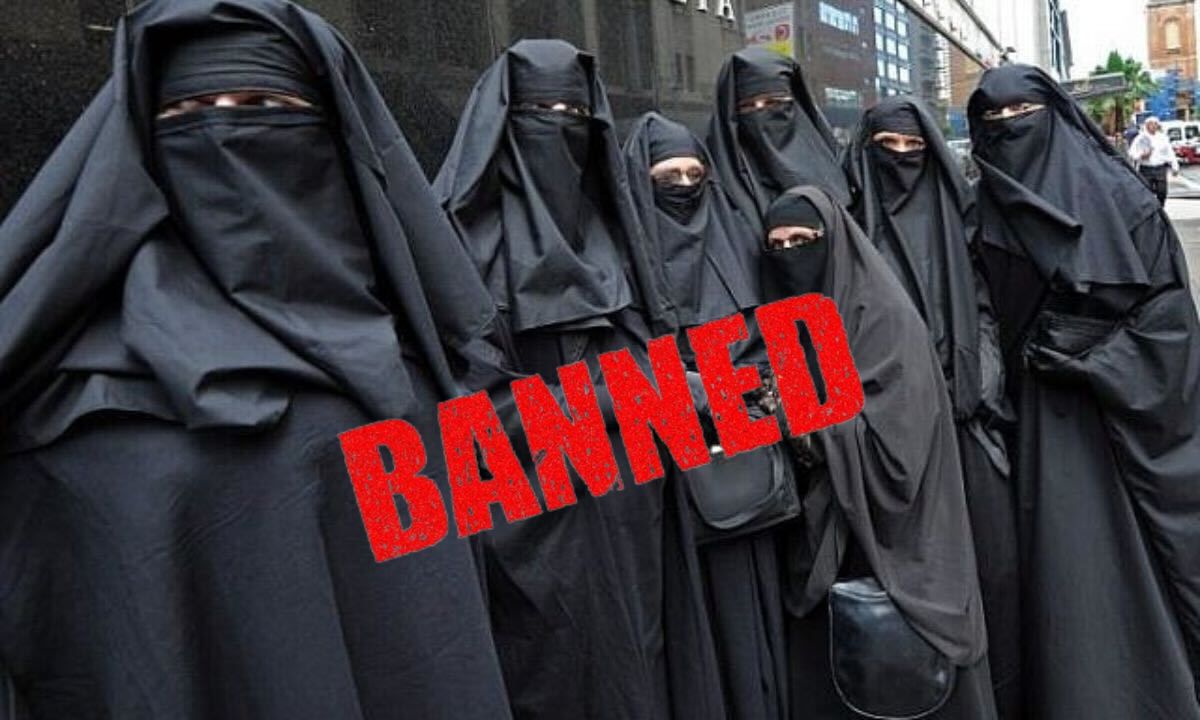
Denmark Bans Burqa In Public, Asks Muslims To Adapt Local Culture Or Leave. Details Inside!


The Denmark government had previously implemented a nationwide ban on burqas and niqabs in public spaces back in 2018!
Updated July 02, 2025 11:37 AM


Denmark is once again in the spotlight for its tough stance on religious face coverings. For the unversed, the Denmark government had previously implemented a nationwide ban on burqas and niqabs in public spaces back in 2018. Now the Danish government is proposing to expand that ban to include schools and universities.

What Did The Denmark Prime Minister Say About Banning Burqa?

Prime Minister Mette Frederiksen recently stated that the country’s democratic values must come first. “Democracy takes precedence,” she said, stressing that religious expressions that conflict with Danish norms shouldn’t be part of the education system. She also made it clear that immigrants who struggle to adapt to Danish cultural values should consider leaving the country.

This proposed extension has stirred a lot of international attention. Human rights organisations argue that the move is discriminatory, especially toward Muslim women who wear face coverings as part of their religious practice. Critics say the policy is not about integration or safety but about singling out a specific group and restricting their freedom of expression.

On the other hand, supporters of the proposal believe the government is taking necessary action to protect secular education and promote gender equality. They argue that face coverings can hinder communication and that schools should be places where openness and equal participation are encouraged. The debate is growing louder both inside and outside Denmark. Some view this as a firm step toward integrating newcomers and strengthening national identity. Others see it as an exclusionary move that could further alienate minority communities.


Tuesday, April 08, 2025

As Denmark tears down homes in ‘non-Western’ areas to force assimilation, residents fight back in court

Denmark is taking a wrecking ball to people’s homes in neighborhoods where the government feels residents don’t share “Danish values.” A 2018 law allows the demolition of homes in communities designated as “parallel societies.” The underlying idea is “integration through dispersion” but this attempt at social engineering is raising hackles, and the country’s most vulnerable people seem to be left in the dust.

April 7, 2025
Updated on Apr 7, 2025By Joshua Coe

The remnants of a public housing block loom in the center of Gellerupparken in Aarhus, Denmark, on Dec. 14, 2024. The country is demolishing or repurposing public housing across the country in neighborhoods designated “parallel societies,” as part of a forced assimilation policy.Joshua Coe/The World


Muhammad Aslam, 57, pointed out his old apartment in Mjølnerparken, a well-known public housing complex in the Danish capital of Copenhagen.

The place was fenced off and monitored by security cameras, while the next-door lot — where neighboring apartments once stood — rumbled with the sounds of construction underway.

“This was our original home where we have lived since 1987, where the kids grew up, went to school and university,” Aslam said, gesturing toward a balcony on the third floor of an apartment building with a clean, red-brick facade.


Muhammad Aslam stands outside the apartment building where he had lived since 1987, in the Mjølnerparken neighborhood of Copenhagen. While he got his Danish citizenship in the 1980s and has worked in Copenhagen’s taxi industry, Aslam was ordered to move out of his apartment under Denmark’s 2018 “ghetto package” policy.Joshua Coe/The World

Tuesday, January 21, 2025

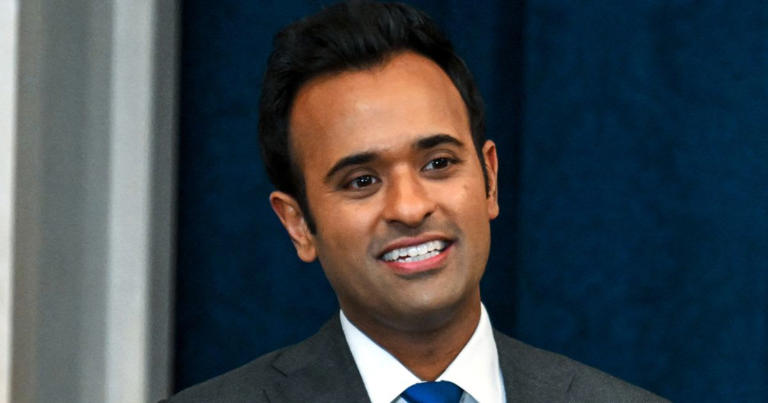
Vivek Ramaswamy Is Out of the Trump Admin After Claiming American Workers Have a 'Culture' Problem

Story by Ben Zeisloft


Kenny Holston - Pool / Getty Images© The Western Journal

The second administration of President Donald Trump only started on Monday, but there is already one high-profile exit from the commander-in-chief’s team.

Vivek Ramaswamy, the pharmaceutical entrepreneur who ran for the Republican presidential nomination, was initially supposed to lead the Department of Government Efficiency alongside Elon Musk, but now he is officially out of the project.

Friday, January 26, 2018

Kentucky governor says shootings are a "cultural problem"


By ROBERT RAY and BRUCE SCHREINER | Associated Press


BENTON, Ky. – This was supposed to be Spirit Week at Marshall County High School.

Instead, homecoming events were canceled, the governor was in town lamenting the nation's moral decay, and preparations were being made for the funerals of two 15-year-old children.

Tuesday's attack by a fellow classmate at the high school left more than a dozen survivors with gunshot wounds or other injuries, and three of them remain hospitalized. Hundreds more were scarred by what they saw.

Kentucky Gov. Matt Bevin called on Americans Friday to "wake up" and recognize that school shootings are a "cultural problem."

"We have become desensitized to death, we have become desensitized to killing, we have become desensitized to empathy for our fellow man and it's coming at an extraordinary price and we have got to look at the root causes of this," Bevin told The Associated Press.

"We can't celebrate death in video games, celebrate death in TV shows, celebrate death in movies, celebrate death in musical lyrics and remove any sense of morality and sense of higher authority and then expect that things like this are not going to happen," he added.

The Republican governor spoke at a community event in Benton, where he was followed by the father of one of the slain students. Sobbing, Jasen Holt asked for prayers for all the "sweet kids" who were killed, injured or traumatized.

"It's not only ours, it's about all of them," said Holt, whose daughter Bailey Nicole Holt was the first to die. "Just pray and take care of each and every one of them."

The governor declared a statewide day of prayer Sunday for the grief-stricken county. It was reminiscent of his response to a wave of urban gun violence last year. Bevin called then on the power of prayer to help combat Louisville's rising murder rate, and urged people to form prayer groups to walk high-crime neighborhoods. Skeptics wondered aloud whether that would deter gun-wielding thugs.

Bevin, a social conservative who has made it clear that he won't sign laws that restrict guns, said he's prepared for more skepticism as he once again asks Kentuckians to pray. But he said he believes God intervenes on behalf "of his people" when they call out to him in prayer.

"There are people who do not understand and do not believe in the things we're talking about right now," he said. "And there will be all the social media trolls and people that will scorn and mock and will ridicule the fact that we would call out to our creator at a time like this."

At the same time, Bevin said prayer won't help explain the inexplicable.

"There really are no answers to the questions that are in our minds," he said. "And even when we have all the facts, we still don't have the answers. That's just a harsh reality of this. Because this side of eternity, there are no answers to the very things that have torn this community apart. But this I know: We can sustain one another, we can support one another."

Authorities, meanwhile, are hoping to discover why 15-year-old boy would have opened fire on his classmates, all 14 to 18, as they waited for the morning bell Tuesday. Bailey Holt died at the scene, while Preston Ryan Cope was declared dead at a hospital in Nashville.

Brian Cope told the Louisville Courier Journal that he knew his son was among the victims when he peered into an ambulance and saw the Nike socks he had laid out the night before.

"We want to thank each and every person, from the East Coast to the West Coast, because we feel the prayers, we feel so much love," Cope said.

The high school reopened Friday with an assembly in the gymnasium. Funerals for the two teens will be held Sunday. The families requested privacy, but said they will make a public statement on Saturday.

___

Schreiner reported from Frankfort, Kentucky. Associated Press Writer Adam Beam in Frankfort contributed to this report.


Monday, August 18, 2014

Major British Hotel Chain Removes Bibles From Rooms Due to 'Multicultural' Society;Church of England Condemns 'Bizarre' Decision


BY STOYAN ZAIMOV , CHRISTIAN POST REPORTER

August 18, 2014|7:56 am


(PHOTO: FLICKR CREATIVE COMMONS/CHRIS YARZAB)

A man holds a Bible.


Travelodge, one of the largest hotel chains in Britain, is removing Bibles from its rooms reportedly because of the country's growing "multicultural" society. The Church of England has condemned the decision, describing it as "tragic and bizarre."

"The reason is because of diversity. With the country being increasingly multicultural, we didn't feel it was appropriate to just have the Bible because there are people of other religions. People were also taking Bibles away and with the redesign of the rooms, it was felt that it would be better to remove them," a Travelodge spokesman said, according toThe Daily Mail.

Another spokesman further explained: "In order not to discriminate against any religion, customers who would like a Bible can pick a copy from any one of Travelodge's 500 hotel reception desks across the country, whilst staying at the hotel. To date, Travelodge has not received any customer feedback regarding this decision."

The hotel chain added that the decision was made back in 2007, but has been "gradually implemented" over the following years.

The hotel company, which runs 500 hotels, apparently removed the Bibles along with the drawers where they were kept during a refurbishment of its rooms. The Bibles, provided for free by the Gideon Society, will be stored behind reception.

A Church of England spokesman condemned the decision and the reasoning behind it and said: "It seems both tragic and bizarre that hotels would remove the word of God for the sake of ergonomic design, economic incentive or a spurious definition of the word 'diversity.'"

Other major British hotel firms are reportedly keeping their Bibles, including Premier Inn, and InterContinental Hotels, owners of the Holiday Inn chain.

"Bibles are available in Premier Inn rooms," a Premier Inn spokesman said.

"On the rare occasion that a customer does not wish to have a Bible in their room, they can request this to be removed ahead of their stay by contacting the hotel directly."

Not all U.K. Christian leaders have found fault with Travelodge's decision, however. Kelvin Holdsworth, the provost of St Mary's Cathedral in Glasgow, wrote on his blog on Saturday:

"Travelodge have indicated that they'd be happy to supply Bibles from their front desk. And anyway, anyone with a smartphone can access the Bible. Christians should be encouraging new ways of engaging with the text," Holdsworth offered.

"Christianity doesn't depend on having bibles in hotel rooms. Bibles in hotel rooms depended on Christendom, but that is now gone. I don't think faith has much to fear," he added.

Gideons International provides Bibles free of charge throughout hotels, hospitals, schools, and other locations worldwide.

Last week, the U.S. Navy reversed its previous decision to start removing Gideon-provided Bibles from its lodge and guest rooms, after it had been pressured to do so by an atheist organization.

The Chaplain Alliance for Religious Liberty had argued in favor of keeping the Bibles, and said that "a Bible in a hotel room is no more illegal than a chaplain in the military. They are there for those who want them."

Thursday, August 22, 2013

As popular culture overflows with vampires and zombies, are we forgetting to be scared of evil?


By Thomas Fleming

PUBLISHED: 10:22 EST, 4 June 2012 | UPDATED: 10:22 EST, 4 June 2012


Rudy Eugene, 31, pictured in an old police mugshot, was shot dead by police in Miami after attacking a man and eating chunks of his face

In 'Eating People is Wrong,' Malcolm Bradbury's genial satire on 1950's leftism, it was still possible to take certain European prejudices for granted. Eating our fellows, as one non-European character in the novel learned, was wrong. Even today most of us probably regard it as not very nice. Nonetheless, the media in every form are ablaze with true stories of cannibalism.

A Haitian-American in Miami attacked a homeless man and ate three fourths of his face, a white mother in Texas drowned her baby and ate bits of it, and the son of a Kenyan college professor in Maryland killed and consumed parts of a 37-year-old Ghanaian boarding in his parents' house. In New Jersey, a man stabbed himself 50 times and pelted the police with some of his intestines. Most bizarre of all, perhaps, is the unconfirmed story of a Canadian homosexual porn actor on the lam for allegedly eating his Chinese boyfriend.

The internet - an electronic petri dish created to culture conspiracy theories - offers the usual zany ideas. It's all voodoo or environmental pollution, and we are on the verge of a zombie apocalypse. It is the tweet twittered round the world.

Amateur philosophers and pop culture critics are in a rush to ascend their cracker barrels and deliver their explanations for the hysteria. People are worried about the economy, see, and project their own fears onto the cannibals. Zombies, so they argue, are our worst nightmare because they have no redeeming virtues. Vampires are romantic - or have been made to seem so in cheap fiction - and even werewolves are tragic figures. But flesh-eating zombies? Why now?

Bogeymen and mythical demons are, as a sociologist would say, "socially constructed" by the stories we are told, the films we see, the religious traditions we accept. As we go mad, we are inclined to pattern our obsessions and delusions according to the myths that dominate our culture. A schizophrenic Christian or even cultural Christian has visions of Christ and the saints, while an ancient Greek in his dreams would receive admonitions from tall handsome people, whether gods or dead relatives.

If zombies and cannibals are coming out of the woodwork to stir our imaginations, it is partly the fault of a very sick popular culture that dotes on the perverse movies of George Romero, Anne Rice's novelistic gushings over vampires, and the teen-exploitation books, movies, and TV shows in which ghouls, werewolves, and vampires are basically not bad creatures who just need a little understanding. We are teaching ourselves not just to celebrate evil but to elevate it. Good people trying to muddle through in a difficult world are boring: Evil is way cool.

There are very few people, any more, who even know that the zombies of legend are not flesh-eating corpses but soulless voodoo slaves, exploited by their masters. For a real zombie movie, watch the Jacques Tourneur/Val Luten movie - beautifully filmed - I Walked With a Zombie. Then watch one of Romero's Night of the Living Dead cannibal-fests and you will begin to understand what has become of our poor world.

The appeal of the old pre-Romero zombie films, and of movies like Don Siegel's The Invasion of the Body Snatchers or Ionesco's play, the Rhinoceros or, even earlier, Karl Capek's R.U.R. and The War With the Newts was the fear of dehumanization. The forces of capitalism and Marxism, as well as mass media and commercialism, were turning out a breed of men and women who seemed less and less rational, less compassionate, less humane and, indeed, less human. People, in other words, like George Romero, Ann Rice, and their admirers.

We no longer fear dehumanization, because too many of us have already lost so much of our humanity. Rape, mutilation, cannibalism - it's all in a day's work for a TV scriptwriter. Someone with a DVD player and a Netflix account can feed his imagination all day long on comic book evil. It is our religion. The Greeks had Zeus and Apollo and Athena; we have Freddy Krueger, Jason Voorhees, Buffy and Spike, and the entire cast of Twillight.

Human societies have always had their share of misfits, creeps, and sociopaths, but they also had a moral, aesthetic, and spiritual framework in which to understand the outlaw Grendel or monsters living under volcanos. The great lyric poet Pindar contrasts the lawless rage of Mt. Aetna's Typhon with the serene and beautiful order imposed by the music of Apollo.

Today, such popular art as we have tends to side with Typhon, and there is hardly an undergraduate reader of Milton who does not think Satan is the hero. It is, of course, easy enough to turn off the TV set and throw away the pulp fiction celebrations of vampires and ghouls, but one still has to wonder what the neighbours are reading and watching.


The wildly popular Twilight films are full of romanticised evil-doers, notably vampires and werewolves

Unfortunately, anyone who takes up this theme will be put down as paranoiac or puritanical. Don Siegel is always described as a rabid McCarthyist, which he was not, and anyone who ventures to criticise vampirism will be dismissed as homophobic - "You see, it's an obvious metaphor."

Anyone halfway sane in the 21st century must feel like Dr. Miles Bennell (played by Kevin McCarthy character in Don Siegel's film). Before your very eyes, human beings are turning into pod people - soulless aliens without a trace of compassion.

"Look you fools, you're in danger! Can't you see? They're after you. They're after all of us! Our wives...our children...they're here already! You're next!"

Yes, it's over the top and not the ending Siegel wanted, but it's no less true. A stupefied fascination with monstruous evil is obviously contagious. A few cannibals or zombies, more or less, is nothing to worry about, it is worth thinking about a global population of deracinated consumers who tease their imaginations with real and fictional tales of such depravity.

As they used to say at the end of cheap horror movies, "They're coming to your town. Perhaps they are sitting next to you in the theater." If you are watching Zombie Apocalypse, they probably are - or, rather, they have to worry about sitting next to you.


Source: http://www.dailymail.co.uk/debate/article-2154452/As-popular-culture-overflows-vampires-zombies-forgetting-scared-evil.html#ixzz2cjCMAMq6 


.

Monday, September 10, 2012

'End of Men' makes a strong case


Published: 09/10/2012, 08:25 AM

Updated: 09/10/2012, 08:31 AM


The End of Men

And the Rise of Women

By Hanna Rosin

Riverhead Books

310 pages; $27.95

By Melinda Miller

News Book Reviewer

The apocalyptic title of Hanna Rosin's new book is guaranteed to get attention, as it did when the magazine piece that inspired the book, also titled "The End of Men," appeared in The Atlantic in summer 2010.

But it is not to be taken too literally. There are still men.

What has changed, if you go by the measures Rosin cites, is how much men matter - to women and to society overall. For, while men still dominate the highest levels of business and government - after the flirtations last year with Hillary and Sarah, we are again in the midst of another all-boy presidential campaign - in the everyday lives of the shrinking middle class and the working poor, their roles undeniably have shifted, and even declined, to an unprecedented degree.

At the same time, women have become more empowered, and, though it is the smaller print on the cover of her book, this is where Rosin focuses more of her attention.

The trend is powered by the eternal engines of sex and money, Rosin contends, with a generational divide in expectations today that is every bit as great as, or perhaps greater than, the break decades ago that led to the coining of the term Generation Gap.

The behavior and life choices made by men and women in their 20s and 30s have finally tipped the scales from a social construct reliant upon male dominance at work, at home, on campuses and government to one in which, in nearly every arena, women have the larger role.


Among her well-supported statistics:

. More girls than boys graduate from high school.

. Of every five college degrees, three go to women.

. More women than men get advanced degrees.

. And, in an employment market now dominated by a service sector that values people skills over muscle power, women are finding it much easier to get and keep jobs. Although older generations still show men earning more, women in their 20s make more money than men of their age, and don't expect to have a man support them.


The result? According to Rosin, for many women, having a man in their life - specifically a husband - is no longer a necessity, and in many cases, could be considered a liability.

Rosin pulls this together in a narrative long on anecdote and interview, but well bolstered by a wide range of well-chosen reports and studies. It would be hard to deny that society and the part men play in it have changed. Left for discussion is: what does it mean?


Among Rosin's more interesting conclusions:

. The hook-up culture celebrated in TV reality shows, magazines and music is a fact of life for young adults, whether they take part or not. It appears to peak for most in their college years and is embraced as vigorously by women as by men. She cites research that shows women are in no hurry to enter into serious relationships that might hold them back; they enjoy sexual intimacy but are not yet interested in commitment.

. While men also enjoy the benefits of casual sex, she notes, they aren't necessarily making as productive use of their freedom as women. Hence the image of the "Peter Pan" man-child, devoted to fantasy sports teams, video games and porn, who, as one professor Rosin quotes points out, become so socially inept and financially undesirable, by the time they want a serious relationship, they are no longer considered suitable partners for "equal status female mates."

(That professor is Philip Zimbardo, who is co-author of his own take on this issue, "The Demise of Guys.")

. Because after sex - or perhaps even before - it's about the money. In this tough economy, an economy that has proven especially brutal toward manufacturing jobs, construction and other male-dominated professions, Rosin has had no trouble finding young women who are doing whatever it takes to take care of themselves. They are raising their children while going to school, and perhaps working, too, to get the skills demanded by new technologies and a burgeoning health care field - jobs that appreciate the traditionally female skills of listening, empathizing, responding and communicating.


These women, who may still remain in the lower income tiers, aren't looking for a man to rely on, because too many times they have found they cannot rely on men. Some are blunt about it. They don't view these unemployed or underemployed, socially stunted men as protectors and providers. These guys would just be one more person to take care of, one more mouth to feed.

Rosin does include in her book families in which love and affection are valued more than a paycheck, although even in those cases, the couples are far from the world of Ward and June Cleaver. There are no kings in these castles; men share the housework and child rearing, in many cases following directives from the women. (Even then, women continue to do the larger share of parenting and homemaking.)

The one place where Rosin did find men and women working together as partners and finding satisfaction in their marriage and families was among well-educated people with good jobs and comfortable salaries. Women are less likely to resent a man they see as an equal; men who feel accomplished themselves may be more able to "be there" for their equally accomplished wives - even if the wife, or the husband, decides to take time off for children. Rosin calls these "see-saw" marriages, with spouses taking turns being the power-person in the relationship. They could be the way of the future, she believes, as society as a whole embraces its feminine side.

"The end of men" has had other repercussions in the lives of women beyond economic. Rosin includes a chapter about the sharp decrease in violent crime against women, with statistics from a 2010 White House report showing a 60 percent decrease in reported cases of rape since 1993, along with cases of assault and domestic violence. She quotes Mike Males, a criminologist: "Girls have achieved a great deal more power. And that makes them harder to victimize." And, as another expert says, not being dependent also makes it easier for women to leave dangerous relationships.

(The flip side is that women themselves are becoming more violent, toward one another and their own domestic partners. More women are being arrested for violent crimes - still far fewer than men, but the numbers are trending up dramatically.)

So, is the rise of women the end of men?

Rosin is far from alone in exploring the phenomenon. Besides Zimbardo's book, there are Kay Hymowitz's 2011 "Manning Up: How The Rise of Women Has Turned Men Into Boys;" "Boys Adrift," by Leonard Sax; Christina Hoff's "The War Against Boys;" "The Decline of Men," by Guy Garcia, and on and on.

They all believe that this is not a blip on the cultural radar that will disappear if the GNP suddenly doubles. Women are not going to march back to the kitchen and nursery, and factory doors are not going to fly open again. It is the end of something, and, in Rosin's view, it is going to be up to men to make their own new beginning.

Melinda Miller is The News' features editor.


Source.

.

Tuesday, December 13, 2011

Global Economy and Cultures


by James L. Connor, S.J.

[Woodstock Report, October 1999, No. 59]
Copyright © 1999 Woodstock Theological Center
All rights reserved

http://www.georgetown.edu/centers/woodstock/report/r-fea59.htm

Introduction. From September 10 to 17, 1999, 14 Jesuits from research and social action centers in 11 countries gathered in Washington under the auspices of the Woodstock Theological Center to reflect on the impact that the globalization of the free market economy is having on local cultures worldwide (see page 4). It was the kick-off session of the most ambitious—and expensive ($1.2 million) —project that Woodstock has ever undertaken.

This project is a direct response to a mandate of the 1995 Jesuit General Congregation, which, when in session, is the highest governing body of the Jesuit Order. This was the 34th such Congregation in the 450-year history of the Jesuits. On the topic of the global economy and culture it said:

The globalization of the world economy and society proceeds at a rapid pace, fed by developments in technology, communications, and business. While there can be many benefits from this phenomenon, it can also create injustices on a massive scale ... In justice, we must counter this by working to build up a world order of genuine solidarity, where all can have a rightful place at the banquet of the Kingdom. (General Congregation 34, Decree 3, no.7)

I was one of the 220 Jesuit members of that Congregation. During the course of those three months, 25 of us who worked in Jesuit social research or social action centers got together informally several times to share experience and to discover whether there were any issues on which we could profitably collaborate. After much discussion, we landed on the globalization of the economy and its impact on cultures. I volunteered Woodstock as the coordinating agency.

Launching the project. Once home I asked Woodstock fellow Father Gasper F. (Gap) Lo Biondo, S.J., to head up this project. And we started the process by enlisting an international sponsoring committee: Irudayam Aloysius, S.J. (India), Jean Yves Calvez, S.J. (France), Marcos Recolons, S.J. (Latin America), Jean Illboudo, S.J. (Africa), Francisco Ivern, S.J. (Brasil), and Ismael Zuloaga, S.J. (East Asia). Next, we invited 44 Jesuit centers to participate (see Core Participants in Global Economy and Cultures Project). The enthusiastically affirmative response confirmed our confidence in our choice of topic. The ultimate aim of the project would be to decide on, publish, and try to have implemented some policy level recommendations for the improvement of the way the global economy is affecting cultures and peoples. Policymakers envisaged range from the international level (World Bank, IMF, multinational corporations) all the way down to the grassroots (local government, social action centers).

The first step was to ask the participating centers for stories! Our motive here was to head off the Jesuit penchant to give an opinion, insist on a theory, cite an authority, or even offer a solution, before we were sure what the facts were! And the facts are imbedded in actual experience. Fortunately, Jesuit centers are in contact with the whole range of people who are being variously affected by the new economy, from the poorest of the poor, to those at the highest levels of government or corporate life, including scholars and experts in and out of academia.

Besides the expert advisers (see page 8) that we are and will be consulting, we are reading the recent rash of literature that authors are producing on this topic of globalization and its influence on society and culture. (See bibliography on page 7.) They all agree that what is uniquely characteristic about this new wave of globalization —that of the 1990s—is its "engine" or "power-source," namely, the technology of electronic communication. Precisely how this technology is shaping not only business, society, and culture, but human consciousness itself is a core question deeply imbedded in this project on "globalization and cultures!" Its ramifications are profound.

"So, what’s happening?" That’s what we asked people in this first go-around. And they told us their actual experience in the form of story, anecdote, or example. We got dozens of stories back from the centers. We collated them, summarized them, and mailed all of them back out to the 44 participating centers, so that all could see what each sector was experiencing. And that’s when we convened here in Washington, D.C., with representatives from roughly a quarter of the participating centers to re-read, analyze, and discuss with one another this welter of evidence. We hoped to discover in these stories some patterns, common themes, regularly recurring relationships, and the underlying explanation for both successes and failures of the global economy.

This method of starting with concrete experience, and struggling to understand its meaning and implications, before moving to decide what to do to improve or remedy a situation, is the pattern St. Ignatius of Loyola, the founder of the Jesuit Order, commends in his "Spiritual Exercises." General Congregation 34 (quoting GC 32) described it, as "the Ignatian method of prayerful discernment which can be described as ‘a constant interplay between experience, reflection, decision and action, in line with the Jesuit ideal of being contemplative in action.’" This is the process we followed at the September meeting and it is the process which, with appropriate adaptations, the entire three-year project will follow.

By meeting’s end this September, the group issued a 16 page consensus statement that was appropriately tentative in tone. Even simple declarative sentences were regarded more as questions for future study than closed doors on issues. A sampling will illustrate the point.

An opening "Note" gives the flavor of the meeting.

Globalization is a complex reality. Like capitalism, as described by Joseph Schumpeter, globalization consists of a process of "creative destruction" in which there are economic winners and losers. Globalization stimulates economic growth and social improvement for some, while at the same time, it lays economic burdens on many people and disrupts human development.

The harms and benefits of globalization are not evenly distributed either among nations or within them. Given the economic gap between the First World and the Third World, however, our effort to see globalization from the perspective of the world's poor inevitably means that, while the participants did consider the benefits of globalization and endeavored to correct an overly negative bias, the discussion reported here did not view globalization in a neutral way. Our concern is for the victims of the process.

Defining globalization and culture. Two basic questions that the group bumped into almost immediately were, "What is globalization?" and "What do we mean by culture?" And when they took a shot at defining terms this is what they came up with:

Globalization encompasses the process of an increasingly open flow of information and movement of money, goods, images, ideas, and people between different countries and cultures. Economic globalization refers to the progressive incorporation and networking of nations in the international (global) free market economy through agreements on policies of rapid liberalization or the opening up of local markets to international flows of capital, labor, goods, services, and technology under the control of transnational institutions.

In defining culture, they went back to General Congregation 34 and expanded on it:

"Culture is the way in which a human group lives, thinks, feels, organizes, celebrates, and shares life." (GC 34, D 4, n. 1) Underlying all manifestations or expressions of culture there is a set or system of meanings, of values and criteria, of world views that are translated into languages, gestures, symbols, roles, styles, and patterns of life.

While cultures possess an enduring core of values, etc., they are also pluriform and subject to change through interaction with other cultural influences.

The group then moved to list beneficial and negative influences of the economy on cultures.

First, the benefits:

(1) The development and use of information technology, especially the internet, in the ease with which knowledge can be communicated to people in distant places,

(2) The increase in economies of scale results for some people in wealth and opportunities for upward mobility,

(3) The capability of promoting common cultural values, in that people in different parts of the world can identify and act in light of "best practices,"

(4) Modern communication and travel enabling groups, people, and countries struggling for justice to achieve greater solidarity,

(5) A greater concern for human rights as part of, and in response to, the globalization process,

(6) An explosive increase of healthy spirituality, and

(7) Greater community activity.

Second, the negative impacts:

(1) The ideology of the free market advances the interests of business and increases the power of economic decision-making groups. Globalization is driven by the imposition of business values—particularly, the assertion of the primacy of the market and the diminution of the role of the state in economic life.

(2) In many poor and indebted nations, the imposition of Economic Structural Adjustment Programs forces countries into a liberalized global market on whose rules they exercise no influence.

(3) The growth of international media tends to alter (homogenize) local consumption habits and displace traditional, domestic forms of production and consumption. Through cinema, television, and the internet, global media reach into remote corners of the world, establishing a global culture but also relativizing and subverting local cultures.

(4) Globalization has led to "the rich getting richer and the poor getting poorer," among and within nations. The majority of the world population has been excluded from the benefits of globalization.

(5) A "culture of illusion" has arisen, characterized by unrealistic expectations and wants.

(6) The migration of people has grown.

(7) The Third World has become more dependent on multinational/transnational corporations.

Next steps. The participants concluded by listing 25 (!!) topics that need further study before this project can complete its work responsibly. That shows how tentative current con-clusions are, as well as how much the project has yet to do.

The report was mailed out to all 44 participating centers. Grateful and congratulatory responses started coming in immediately. The report is being shared with the full membership of the centers’ research teams, with their Jesuit province leadership, with other scholars, and organizations with whom they work. The report will be the basis for the next phase of discussion, criticism and constructive suggestions.

Gap Lo Biondo will start moving around the world to promote regional meetings of the participating centers. He left on October 8 to spend two weeks in India. Thereafter, he will go to South America, Africa, East Asia, Eastern and Central Europe, Western Europe, and North America. He will be cumulatively communicating at each location what other locations are thinking, saying, and concluding.

There is also a "chat room" being set up, wherein participants can interchange with one another directly. There will certainly be at least one large, long, international gathering of all the participating center members before the final statement of policy recommendations is finished for publication and distribution. Depending on funding, there might even be two such large meetings, appropriately spaced.

Fulfilling a dream. I must confess to enormous enthusiasm for this project. It is the realization of a dream of our late Father General Pedro Arrupe, S.J., for whom I have deep affection and great gratitude. I came to know him well when I was provincial superior of the Maryland Province and president of the U.S. Jesuit Conference, assignments which took me rather often to Rome.

Father Arrupe dreamed of Jesuit centers all over the world in active communication with one another to address major social issues of our day. He called them "poles of reflection," which made me think of telephone poles con-nected together by world-girdling wires! A better world for all people is what drove Father Arrupe relentlessly. (One major influence on him was the fact that he was the first medically trained person to treat the victims of Hiroshima!)

Fulfilling Father Arrupe’s dream would alone suffice to make this project a "labor of love" for Woodstock and its companion centers. The second reason is to share in his passion for a better world for all people.

PARTICIPANTS IN THE SEPTEMBER MEETING

Marcello Azevedo, S.J., Centro Cultural de Brasilia, Brasil
John Carroll, S.J., Institute on Church and Social Issues, Ateneo de Manila University, Philippines
Ricardo Falla, S.J., Central American Province Social Apostolate Commission, Honduras
Muhigirwa Ferdinand, S.J., CEPAS, Kinshasa, D.R. Congo
Michel Guery, S.J., INADES, Abijan, Ivory Coast
Savarimuthu Lazar, S.J., Indian Social Institute, Bangalore, India
Stanislaus Opiela, S.J., Moscow, Russia
Ambrose Pinto, S.J., Indian Social Institute, New Delhi, India
William F. Ryan, S.J., Jesuit Centre for Social Faith and Justice, Toronto, Canada
Dieter B. Scholz, S.J., Silveira House, Zimbabwe
William Toner, S.J., Centre for Faith and Justice, Dublin, Ireland
Jean-Yves Calvez, S.J., Paris, France
James L. Connor, S.J., Woodstock Theological Center, Washington, D.C., USA
Wilfredo Gonzalez, S.J., Centro Gumilla, Caracas, Venezuela


Tuesday, September 20, 2011

Miguel Díaz and the Rev. Gary Riebe-Estrella, SVD, featured presenters for Changing Faces Series

March 16, 2009

Miguel H. Díaz and the Rev. Gary Riebe-Estrella, SVD, will be the featured presenters for the 2009 Changing Faces Series April 2-3 at Saint John’s University, Collegeville. The April 2 lecture is free and open to the public, but registration is requested for the April 3 workshop.

Díaz will deliver the main address, “Jesus on the Border,” at 7:30 p.m. Thursday, April 2 in the Stephen B. Humphrey Theater, SJU. In his address, Díaz will highlight the identity of Jesus, the Galilean, as someone who engages in border-crossings for the sake of transforming and creating inclusive communities within the Catholic Church and society.

Riebe-Estrella leads a workshop, “Crossing Borders: Cultural Diversity in Ministry,” from 9 a.m. until 1 p.m. Friday, April 3. Check-in begins at 8:30 a.m. This workshop will examine some of the pastoral challenges of cross-cultural communications and will include discussions with local pastoral ministers.

Díaz is an associate professor of systematic theology at Saint John’s School of Theology•Seminary and Saint John’s University and at the College of Saint Benedict in St. Joseph, Minn. A graduate of the University of Notre Dame, he is past president of the Academy of Catholic Hispanic Theologians of the United States (ACHTUS). He recently served as a member of Barack Obama's Catholic advisory group during the 2008 presidential campaign.

Riebe-Estrella, a native of Los Angeles, has spent the majority of his ministry dealing with the challenges of cultural diversity in formation for religious life and in theological education and ministerial preparation. He is president-elect of ACHTUS, and holds a doctorate in practical theology from the Pontifical University of Salamanca in Spain. He currently serves as vice president and academic dean of Catholic Theological Union in Chicago.

The Changing Faces Series is sponsored by Saint John’s School of Theology∙Seminary and Companions on a Journey at CSB, which is funded by a grant from the Lilly Endowment, Inc. The Changing Faces Series seeks to engage more people in transformative approaches to intercultural ministry. The series invites members of local and regional communities, including students, faculty and staff at CSB and SJU, to experience all ministry and service as intercultural.

For more information, contact Bernadette Dunn at bdunn@csbsju.edu or 320-363-2839 or visit www.csbsju.edu/sot.


Source

Tuesday, September 06, 2011

Don't be indifferent to difference


Tuesday, June 15, 2010
Father Gary Riebe-Estrella, S.V.D.


Living with other cultures takes practice, Father Gary Riebe-Estrella, S.V.D. wrote in U.S. Catholic's July 2000 special issue on multiculturalism.

Last Sunday's bulletin had announced a parish meeting for 7 p.m. Wednesday. So, at about 6:40 a number of cars began to arrive in the parish parking lot. Slowly folks began to take their places in the parish hall. A few more straggled in at about five minutes to 7. By 7 o'clock there was a healthy turnout of parishioners, except for one thing-almost everyone in the hall was white!

At about 7:20 you could hear more cars arriving. Voices came from the parking lot as people greeted each other. Slowly these new arrivals filed into the parish hall. A few more cars drove up at 7:30 and unloaded their passengers. Somewhere around 7:40 p.m. it seemed that everyone who was coming to the meeting had arrived. The hall was almost full now, and everyone who had arrived after 7 o'clock was brown!

The white folks by this time were seething. "Why can't these people come on time?" they were saying to each other under their breath. "Do they always have to be late?"

A couple of the Latinos overheard the mumbling. "Why would anyone come so early to a meeting as these Americanos do?" they asked one another. "I don't understand why they're getting angry with us. Everybody knew the meeting wouldn't start until quarter to 8!"

This scene is not an uncommon one in parishes with Anglo and Latino parishioners. White some church leaders might claim that the multicultural reality of the Catholic Church in the United States is a gift from God, most of the people who have to live that reality every day find it a pain.

After all, what many of us experience in our parishes isn't so much multiculturalism (where people of different cultures live side by side with each other) but interculturalism (where people of different cultures have to interact with each other). Each group might live in its own little section of the parish, but when it comes to parish activities, our differences collide around meeting times, the role of women in ministry, how to relate to the pastor, which language to use at staff meetings, and on and on.

Intercultural living is always difficult because it means crossing into other people's cultural space and having them bring their customs and values into "my space." That produces tension and friction. It's always easier to live with "my own kind" than with people who think and act differently, whose behavior I don't understand, whose customs I find quaint if not downright strange.

The first step in dealing constructively with intercultural living is to recognize its difficulty and not to blame the tension on my own or the other's lack of goodwill. Learning to cross cultural borders is a set of skills that needs to be learned-it's not something we're born with.

Second, for most of us, the formal education we've received hasn't given us much help in acquiring that skill. Few of us, even if we've graduated from college in the U.S., know very much about how culture works. We know our own culture because we were brought up in it. But if someone asks us to describe our culture, to explain how it works, to teach them why Americans act the way they act in given situations, we're more often than not at a loss for words.

Learning how to cross into someone else's cultural world first requires some understanding of the dynamics of culture in general and, only then, the particular contours of the Euro-American or Latino cultural world. Often too much attention is given to the specifics of individual cultural groups and almost none to helping people understand how culture works. As a result, when I see behavior among African Americans that I didn't learn about in the last workshop I attended, I have no way of understanding what that behavior means.

Cultures are really like worlds. The behaviors, values, family systems, and customs that make up that world form a fabric with each other, each piece interwoven with the other pieces of that culture.

The attitude a cultural group has toward time, for example, is usually linked to its understanding of relationships, to its sense of personal identity, to how it understands hospitality, and so on. To begin to understand someone else's cultural world is to begin to understand how it's organized, how the pieces fit together, not just to understand one particular value or behavior.

The Euro-Americans in my initial story arrived at the parish hall before 7 p.m. because in their cultural world time is a commodify to be used wisely. It's something that belongs to me ("my time"), and how well I use it says a lot about how mature and responsible I am. Moreover, it's my integrity as an individual (doing what I know to be right) that is of paramount value in that cultural world.

The Latinos in the story inhabit a very different place. In their cultural world, time exists for exercising relationships with others. So if friends drop by unannounced, I visit with them rather than rush off to the parish meeting. Living out the responsibilities and obligations of those relationships is the mark of a truly mature person. And it's the quality of my relationships with others that is of paramount value.

Unless I understand the different way someone else's cultural world is organized, I won't be able to negotiate my way through that world without painfully colliding with behaviors and values that are quite different from mine.

Learning how to live interculturally is a complicated set of skills that can be developed only by understanding how cultures work, how another's cultural world is organized, and then how the individual pieces of that world play themselves out with each other.

Learning that set of skills takes a good deal of time and effort. So it's no wonder that many parishes settle for multicultural, rather than intercultural, living. They really don't try to form a community, to help people learn how to cross cultural boundaries and negotiate new cultural worlds. Rather they opt to be two or more communities that happen to share the same parish facilities, where one group is usually the "owner" and the other groups just "rent" space.

Settling for multicultural instead of intercultural living in our parishes, however, backs away from the central mission of the church in the United States.

When I was studying in Spain in 1989 and 1990, many Spaniards asked me why people in the United States couldn't get along with each other. With a certain attitude of condescension they would express their amazement that blacks, whites, and Latinos couldn't seem to live in peace.

When I returned to Spain three years later, the European Community had become a reality. The border checkpoints had been dismantled. Spain now had growing communities of Romanians and Czechs and Slovaks. Those same Spaniards who had made fun of the U.S. three years before now wanted to know what they could learn from us that would help them deal with their increasingly diverse population!

Demographers assert that never before in the history of humanity have so many people been on the move at the same time. The population shifts that occurred in the United States during the 20th century with the large immigrations from Europe and Latin America are now beginning to be experienced by countries throughout the world.

How to live with each other across our cultural differences is becoming a pivotal question for many nations. At the same time, the news is full of the disastrous consequences that can happen when cultural worlds collide: ethnic cleansing, tribal genocide, religious wars. Historically speaking, the statistically "normal" way for human beings to deal with difference is to kill the other.

As Christians, however, we believe that the value of the human person is not determined by culture or race or religion. The human person is valuable because we are all children of God, made in God's image and likeness. As people of faith from many cultures, we Catholics in the United States are being challenged to live what we believe. We are being challenged not just to tolerate cultural difference but to engage it. We are being challenged not just to live next to each other but to live with each other, not just to rent parish space to other groups but to form a community with them.

If the power of our faith doesn't provide us with the strength to form intercultural communities in our parishes, how can we expect others to live across cultural difference? As a church in this culturally plural country, we have a chance to create new models of how peoples of various cultures can live with each other on the basis of their real value, as children of God. It's our challenge, but it's also our mission, the witness we can offer our world.

Father Gary Riebe-Estrella, S.V.D. was associate professor of cross-cultural ministries and vice president at Catholic Theological Union in Chicago when he wrote this article. It appeared in U.S. Catholic's July 2000 special issue on multiculturalism (Vol. 65, No. 7, pages 19-21).

Source
.

Monday, June 20, 2011

TOWARDS AN “INCULTURATION” OF ISLAM

Bishop Maroun Lahham, Archbishop of Tunis.

Photo (Courtesy)
http://www.dici.org/en/news/italy-in-favor-of-the-inculturation-of-islam-by-the-bishops-of-europe/

2nd meeting of Bishops’ Conference delegates for relations with Muslims in Europe - Turin, Italy, 31 May – 2 June 2011

At the end of their meeting, the delegates from the Bishops’ Conferences noted particularly the process underway in Europe which can encourage the birth of an Islam more purely and typically religious than political; they expressed their sympathy for the desire for democracy and freedom of many peoples from different Arab nations, hoping that this wind of change may also lead to the realisation of true religious freedom in these countries; and, finally, expressing a critical assessment of the term “Islamophobia”, they exhorted Muslims to develop positive and sincere relations in the various contexts in which they find themselves in Europe.

The interest with which the Catholic Church is following the dynamics of the inclusion of residents and citizens of the Muslim religion into the European context, both at individual and community levels, was confirmed during the meeting of delegates for relations with Islam from the European Bishops’ Conferences. It is a complex process not lacking in ambiguities, from which emerges the challenge – which becomes reality – of the gradual inculturation of Islam in Europe, with the subsequent manifestation of its more truly religious and moral dimension, rather than its political one. All the cultural and theological initiatives which are an expression of what is described as “theology of inculturation”, are followed with great interest since they open and strengthen processes of positive participation in European social and cultural life, in a pluralist context, open to inter-religious and inter-cultural dialogue.

In such a framework, the Church follows with interest the expectations and initiatives arising within the heart of the Muslim communities aimed at providing their own religious leaders – imams, teachers – with an appropriate theological and cultural formation to carry out their religious role effectively in a European context; the Church hopes that such initiatives – including the establishment of Chairs of Islamic Theology in public Universities in countries where theology is a discipline present in the university system – can be organised, with the right adaptations, according to the legal framework of the relations existing between State and Church. In this perspective the Church views positively that denominational religious education in the state school can include other religious traditions as well, including Islam, holding to the requirements provided for in the different States for the pursuit of such a purpose.

Widening the horizon to the Mediterranean area, the Bishops’ Conference delegates are sympathetic to the expressions of a desire for democracy, freedom, and the appeal for respect for the dignity of the human person of which young people have been the protagonists in various Arab countries in these recent months of great political change; and they hope that the process underway can lead to the full acquisition of the right of freedom of religion in such countries, in such a way that Arab Christians, too, can enjoy such freedom in a substantial manner in the framework of a true egalitarian citizenship.

The delegates then offered a critical assessment of the term “Islamophobia”, used to interpret the reactions of hostility towards Islam present in European society, preferring to use rather the categories “fear” and “hostility”. While confirming the Church’s commitment to overcoming such reactions which lead to intolerance, they exhort Muslims to develop positive and sincere relations in the different contexts so as to rebut such interpretations.

Finally, the delegates confirmed the conviction of the Catholic Church in Europe in pursuing with renewed commitment the dialogue with Muslims according to the school of the Second Vatican Council and the teaching of Pope Benedict XVI, a dialogue in which Christians and Muslims are called to take on three challenges: the challenge of identity (to know and accept who and what we are); the challenge of otherness (our differences must not lead to hatred, but should be considered a source of mutual enrichment); the challenge of sincerity, which implies manifesting one’s own faith without imposing it in a pluralist context and in a perspective of dialogue.

The work, guided by the Archbishop of Bordeaux and CCEE Vice-president, Cardinal Jean-Pierre Ricard, also saw the participation of the President of the Pontifical Council for Inter-religious Dialogue, Cardinal Jean Louis Tauran.

At the end of the meeting, the delegates from the Bishops’ Conferences thanked the Archbishop of Turin, Mgr Cesare Nosiglia, for his hospitality; Don Andrea Pacini, for organising the meeting; and the Cenacle Sisters for their warm welcome. The meeting progressed in a warm and friendly atmosphere, enriched by moments of prayer and the daily celebration of Mass.

For further information:
Thierry Bonaventura
CCEE Media officer
+41788 516040
thierry.bonaventuraccee.ch

The Council of the Bishops’ Conferences of Europe (CCEE) gathers the Presidents of the current 33 European Bishops’ Conferences of this Continent, represented by their Presidents, and the Archbishops of Luxembourg and of the Principality of Monaco, the Maronite Archbishop of Cyprus, as well as the Bishop of Chişinău (Moldavia). The President is Cardinal Péter Erdő, Archbishop of Esztergom-Budapest, Primate of Hungary; the Vice-Presidents are Cardinal Josip Bosanić, Archbishop of Zagreb, and Cardinal Jean-Pierre Ricard, Archbishop of Bordeaux. The General Secretary of CCEE is Mgr Duarte da Cunha. The headquarters of the Secretariat is in St Gallen (Switzerland).

03.06.2011


Source