Showing posts with label Prevost. Show all posts

Saturday, August 01, 2026

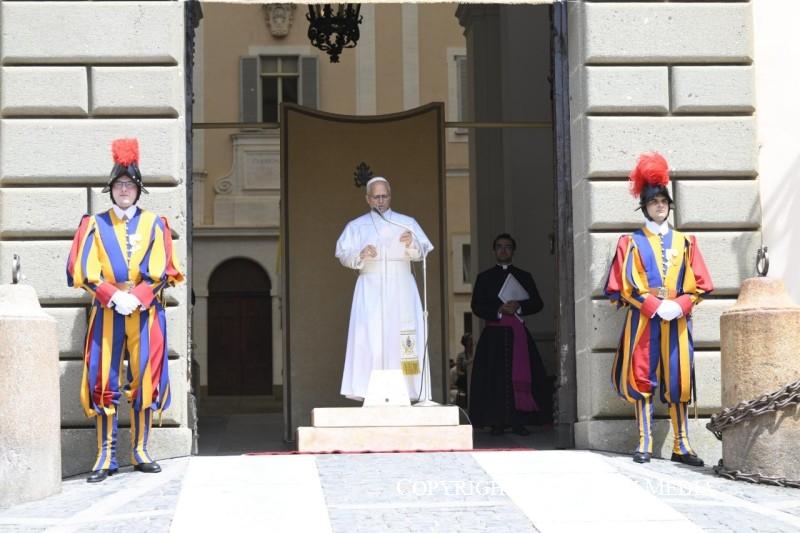
Pope Leo says his ancestors were both ‘slaves and slave owners’


Pope Leo XIV has delved into his family history, revealing his ancestry included both enslaved people and slave owners.

“I come from a family that my grandparents were immigrants,” the first American pontiff told NBC news in the Vatican Gardens of Castel Gandolfo on Wednesday. “On my mother’s side, we have people who were both slaves and slave owners.”

Leo spoke about his family’s historical links to the transatlantic slave trade on Wednesday in response to a reporter’s question about his American heritage.

Asked what he loves about his homeland, the pope also said he highly values the United States’ “sense of freedom, the sense of opportunity” and “of having invited for generations people from around the world to be part of America.”

The importance of welcoming new arrivals is a message the Chicago-born pope has repeatedly sent to the US, as he has criticized the “inhuman” treatment of immigrants during the Trump administration’s crackdown.

Monday, July 27, 2026

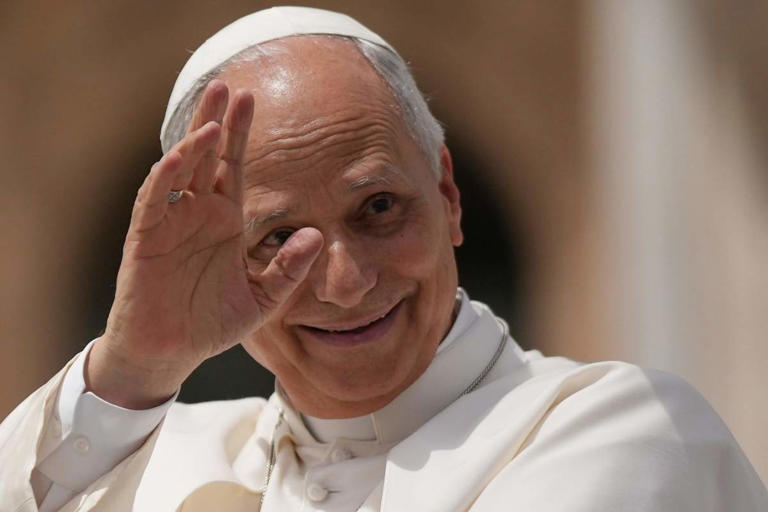
Pope Leo's Three Urgent Appeals in One Angelus

 Pope Leo's Three Urgent Appeals in One Angelus

ROME REPORTS in English

Jul 27, 2026 

Nearing the end of his summer vacation, Pope Leo XIV continues to draw thousands of pilgrims to pray the Angelus.

This Sunday, the Pope cautioned that a culture of consumerism fuels endless desires that are never satisfied, making it harder to recognize what truly matters.


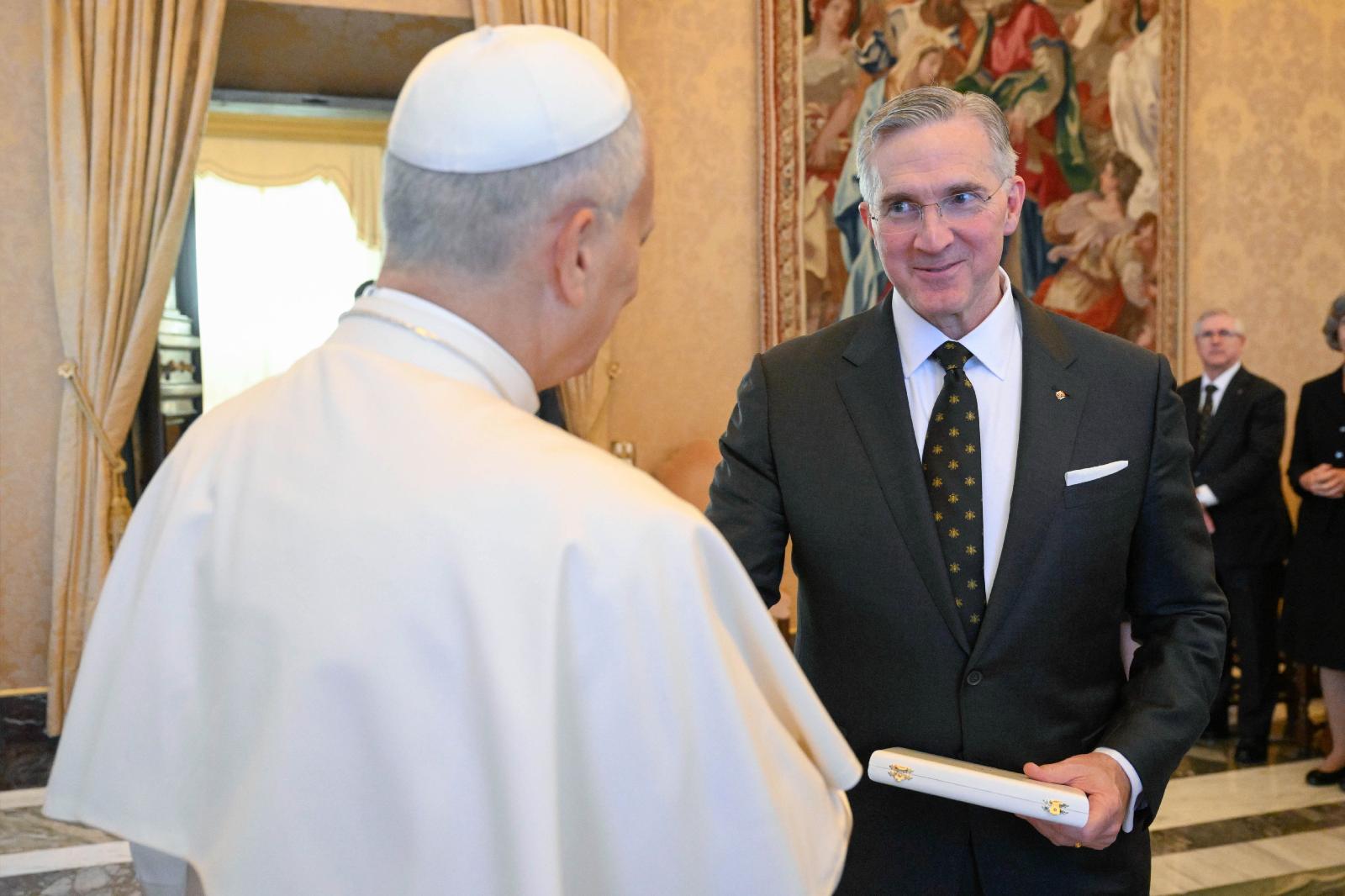
Pope appoints new Holy See Permanent Observer to UN in New York


Archbishop Christophe El-Kassis
Vatican

Pope Leo XIV has appointed Archbishop Christophe-Zakhia El-Kassis as the Holy See's new Permanent Observer to the United Nations in New York, where he will represent the Holy See at the UN headquarters.


Vatican News

Pope Leo XIV has appointed Archbishop Christophe-Zakhia El-Kassis as the Holy See's new Permanent Observer to the United Nations (UN) in New York.

The appointment was announced on Saturday by the Holy See Press Office.

Lebanese-born Archbishop El-Kassis, Titular Archbishop of Roselle, has until now served as Apostolic Nuncio to the United Arab Emirates and Yemen, as well as Apostolic Delegate to the Arabian Peninsula.

He was ordained in 1994, and he entered the Holy See diplomatic service in 2000, working in Indonesia, Sudan, Turkey, and the Secretariat of State.

The Holy See maintains Permanent Observer status at the United Nations, enabling it to participate in the work of the General Assembly and other UN bodies.


Wednesday, July 08, 2026

Ancestry Discovers Pope Leo XIV’s Sicilian Roots


Ancestry Discovers Pope Leo XIV’s Sicilian Roots

Kelly Barbano-Bodami - Research Manager, Ancestry ProGenealogists | Kyle J. Betit - Sr. Genealogist, Ancestry ProGenealogists | Lisa Elzey - Sr. Story Producer, Ancestry

15 May 2025

Key Takeaways
  • Pope Leo XIV’s paternal line traces to Milazzo, Sicily, where his grandfather was born Salvatore Giovanni Gaetano Riggitano.
  • An Alien Registration record revealed his grandfather’s original name, birthplace, and that he never naturalized as a U.S. citizen.
  • His Sicilian ancestors were lower-middle to middle-class, holding respected community positions like `Usciere comunale` and `trafficante` (merchant).
As the white smoke cleared and a new Pontiff emerged, questions about his family history echoed across the globe. Where did his ancestors walk? What stories shaped his lineage? Now, through meticulous research, Ancestry has uncovered compelling documents that trace the paternal line of Robert Prevost, now known to the world as Pope Leo XIV.
 
Finding the True Origins of the Pope’s Grandfather, John R. Prevost

With the announcement of the first-ever United States-born Pope, professional genealogists at Ancestry began the search that included a path of twists and turns, unexpected name changes, and, ultimately, the answers. We started with the 1950 United States Census, the most recent census record collection available and identified John R. Prevost, the grandfather of Pope Leo XIV, listed as a “Romance Language Teacher” in Chicago, Illinois, living at 5465 Ellis Ave., (remember this clue) with his wife, Suzanne L. Prevost, and his son, John C. Prevost.


1950 United States Federal Census - John R. Prevost

We were unable to locate many records in the United States before 1950 for John Prevost, outside of some city directories. A prominent clue was that John Prevost’s death certificate stated that he was a citizen of Italy – indicating that he never naturalized as a United States citizen. Through the National Archives Flexoline Database, we located an Alien Registration record, under the name John R. Prevost, born 1876 in Italy, residing in Chicago in 1940. Alien Registration began in 1940 for anyone who was a foreign national and had not naturalized as a United States citizen.

According to the Alien Registration, dated 24 September 1940, John Riggitano Prevost arrived in the United States at New York in May 1905 on the SS Perugia. Surprisingly, John gave his name on his alien registration at arrival as Salvatore Giovanni Riggitano Alioto (Giovanni is the Italian equivalent of the English name John). His birthplace was listed as Milazzo, Province of Messina, Italy, and he was born on 24 June 1876 – an exact match to the date of birth listed on John R. Prevost’s death certificate.


Alien Registration Form (AR-2) for John Riggitano Prevost; National Archives

The address on the Alien Registration—5465 Ellis Avenue, Chicago, Illinois—also matches the address on the 1950 census (did you remember this clue?) and the address on the World War II Draft Card for Pope Leo XIV’s father, Louis Marius Prevost.


United States World War II Draft Registration Card - Louis M. Prevost

Fit for a pontiff: How the US Embassy to the Holy See prepared to host Pope Leo for a special July 4 celebration

The evening marked a historic visit to the U.S. ambassador’s residence as the country celebrates its 250th anniversary.


July 7, 2026

When Pope Leo XIV accepted an invitation from the U.S. Embassy to the Holy See to celebrate the Fourth of July with a special dinner, a significant amount of effort went into making the occasion impeccable and memorable.

The U.S. Embassy to the Holy See posted a video to social media this week offering a behind-the-scenes look at the preparations that took place ahead of the July 4 occasion, saying dedicated teamwork was required.

“Hosting a July 4th dinner for the Holy Father doesn't happen by accident,” the embassy stated. “Behind every perfectly set table, every carefully prepared dish, and every seamless moment of the evening stood a dedicated team at Villa Richardson who spent weeks planning, preparing, and perfecting every detail. A huge thanks to our wonderful team!”

U.S. Ambassador to the Holy See Brian Burch and his family welcomed Pope Leo the afternoon of July 4 at the ambassador’s residence in Rome, as Zeale News reported that day with exclusive comments from Burch.

>> Exclusive | Pope Leo XIV marks Fourth of July with historic visit to US ambassador’s residence in Rome <<

Saturday, July 04, 2026

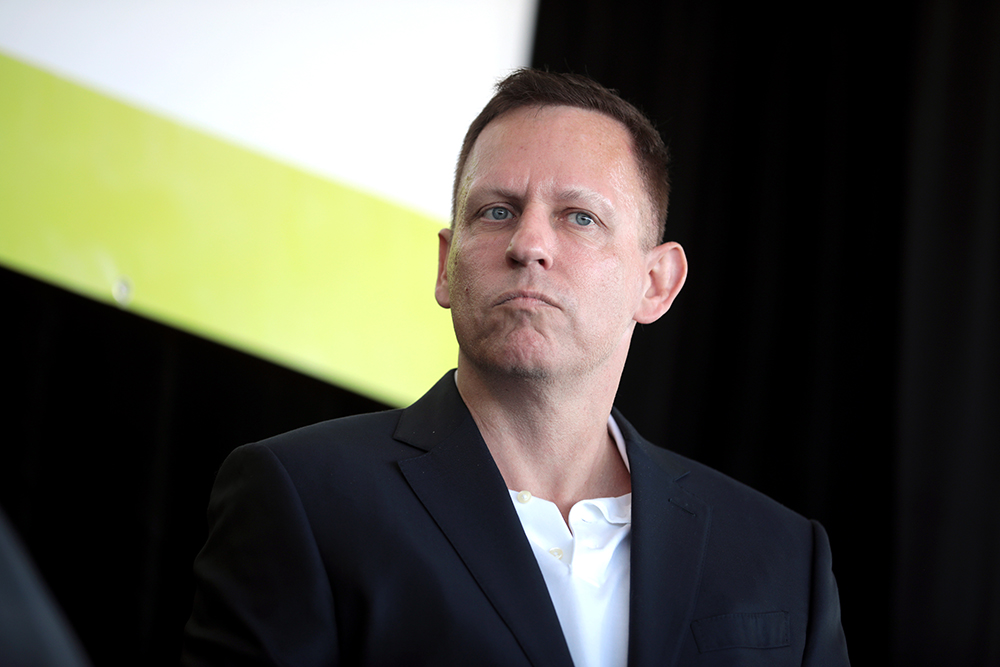
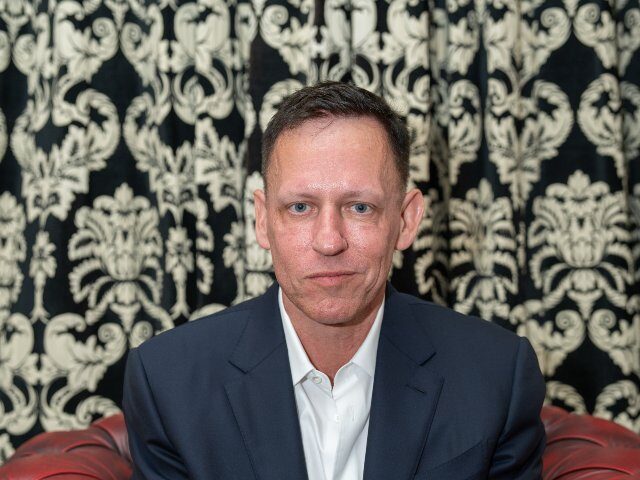
Peter Thiel Accuses Pope Leo of Serving as Chinese Communist Agent on AI


Nordin Catic/Getty Images for The Cambridge Union

3 Jul 2026

Billionaire tech investor Peter Thiel launched a series of controversial criticisms and predictions about AI and Western democracy during remarks at the Aspen Ideas Festival in Colorado on Tuesday. In his most provocative statement, Thiel accused Pope Leo XIV of serving the interests of China with his stance on AI.

CNN reports that Thiel, co-founder of Palantir and PayPal and an early Silicon Valley supporter of President Donald Trump, accused Pope Leo of inadvertently functioning as a Chinese communist agent by advocating for AI regulation. He also warned of what he described as an impending democratic-socialist takeover of the United States Democratic Party.

The tech investor delivered his remarks during a nonrecorded panel alongside political scientist Francis Fukuyama. During the event, Thiel specifically targeted the Vatican and Pope Leo, the first American pope, claiming he was unintentionally advancing Chinese interests by advocating for stronger international oversight of AI. Breitbart News previously reported that in May, Pope Leo issued his first encyclical titled “Magnifica Humanitas” or “Magnificent Humanity,” declaring that artificial intelligence “must be disarmed” and calling for greater international regulation of the technology:

Pope Leo frequently returns to the theme of uniformity versus communion, stressing that the quest for uniformity is sterile, mechanistic, and prone to tyrannical abuse, while communion is voluntary and joyous, bringing people together with each other and God. The encyclical asserts that, while AI might become smarter than any one of us, it will never be able to match the unexpected and delightful achievements of all of us — the unpredictable genius of magnificent humanity.

The pope’s Tower of Babel analogy draws parallels between the development of AI and the construction of the ancient Tower of Babel, “an impressive feat” constructed with “a single language, a single technology, a single direction.”

Pope Leo Jabs Trump in 250th Birthday Message to Americans

HEAVENLY SHADE

The first U.S.-born pope congratulated Americans while stressing the importance of welcoming immigrants.


Antonio Masiello/Getty Images


Tomas Thor

Breaking News Intern

Updated Jul. 3 2026 6:54PM EDT Published Jul. 3 2026 3:02PM EDT


Pope Leo XIV used America’s 250th birthday celebration to deliver a not-so-subtle reminder to President Donald Trump that immigrants helped build the United States.

In a message released Friday, the first American-born pope praised the nation’s founding ideals of liberty, equality, and democracy. But he also devoted a significant portion of the letter to defending immigrants, a subject that has become one of the sharpest points of tension between the Vatican and the Trump administration.


ALBERTO PIZZOLI/AFP via Getty Images

“Defending human life also includes welcoming, protecting and assisting immigrants,” Leo wrote.

“In every generation, those who have arrived seeking freedom, opportunity and a place to belong have helped to shape the nation’s character.”

His pointed message comes as Trump continues to make his immigration crackdown a centerpiece of his second term.

The pontiff’s message repeatedly returned to themes that have put him at odds with the White House, including the dignity of migrants and the responsibility to care for society’s most vulnerable.

“To receive them with compassion and generosity is not only an act of charity,” Leo wrote of immigrants, “but also a recognition of the dignity that belongs to every human person.”

The letter highlights the growing divide between Pope Leo and the Trump administration. Last month, Leo criticized policies that remove migrants without addressing why they fled their home countries in the first place.

Thursday, June 25, 2026

Pope Leo is wrong about hunger

Opinion by David Harsanyi, Washington Examiner


Pope Leo is wrong about hunger

For Catholics, the Pope is the vicar of Christ and the spiritual leader of the Church — which is to say, his positions are typically none of my business. Then again, any time the pope delivers a statement that speaks to the political aspirations of the secular left, the media amplifies it to lecture the rest of us.

The latest such comment has to do with world hunger.

“It is important to resist the commodification of basic human needs,” the Pope said, criticizing slow humanitarian aid from the United States to the U.N. World Food Program. “Food, water and healthcare cannot be subordinated to market considerations or geopolitical interests.”

Virtually every major modern famine in history occurred in places that “subordinated” the commodification of food for a greater good. Though, Leo has it backward. The market is the natural state of economic activity. We subordinate the market. The question is, are we better off when we do? Almost every time, the answer is no.

It’s not an accident that capitalistic nations create so much wealth that they can be generous not only to their own hungry but also to the hungry elsewhere. The proportion of the global population facing hunger today has declined dramatically over the past 30-40 years because of technological advancements and efficiencies fueled by trade and market-driven profits.

Which is why the U.S. has pledged nearly $750 million to the U.N. World Food Program, far more than any nation. China generally contributes under $20 million and Russia around $30 million.

It should also be noted that government aid is not the only assistance we give. Americans are the most charitable people in the world.

“Access to adequate food is a fundamental human right grounded in the dignity of every person,” the pope went on. “Meeting this need not only alleviates suffering but also addresses underlying causes of geopolitical instability. Indeed, food security is an essential component of global and integral security.”

Most people acknowledge that feeding and caring for the poor is a moral imperative. Being fed is not a “fundamental human right,” however, because it requires compelling another person to provide it. Americans believe — or should believe — that only the “fundamental rights” are those that call on others to abstain from interfering. That includes things like freedom of speech and religion. Your healthcare can’t be a right.

Moreover, helping the poor without any expectation that the government will change its policies that strip its people of dignity does nothing to help the underlying causes of geopolitical instability. If we choose, Americans have every right to attach expectations to their aid.

The United Nations, after all, is teeming with illiberal tyrannical nations that drive their own people into destitution. The areas most in danger of hunger, according to a recent U.N. report, are Sudan, South Sudan, Yemen, Nigeria, Somalia, and the Gaza Strip. All of them struggle in part because of Islamism, which carries a political agenda that runs counter to every Christian tenet imaginable. It would be nice if the Church spoke out about corrupt regimes and Islamists with the same passion it does the U.S., which has done more for the world’s poor than any institution that has ever existed.


Tuesday, June 09, 2026

COMECE outlines a vision for Europe’s future against populism and wars


Pope Leo XIV meets with the Presidency of COMECE (@VATICAN MEDIA)
Church

Speaking at a press conference at Vatican Radio headquarters, the presidency of the Commission of the Bishops’ Conferences of the European Union (COMECE) reflected on their meeting with Pope Leo XIV on Thursday morning and on presenting him with a proposal for a new edition of “Rethinking Europe” for fall 2027.

By Davide Dionisi

“Today’s audience was particularly cordial, direct, and open regarding the issues discussed. The underlying note was a strong harmony between our work and what the Pope teaches and bears witness to through his magisterium, his positions, and his initiatives.”

These were the words of Bishop Mariano Crociata, the President of the Commission of the Bishops’ Conferences of the European Union (COMECE), during a press conference held in Sala Marconi of the Vatican Radio headquarters following the audience that the presidency of COMECE had with Pope Leo XIV this morning.

Weakening of the EU’s mission

“The European Union,” Bishop Crociata stated, “was born as a project of peace, and peace lies at its roots and in its identity. It is therefore called to foster dialogue among countries and international institutions, while at the same time promoting multilateralism, as the Pope explicitly recalled.”

At the same time, the President of COMECE noted that the EU’s mission, in a world marked by strong polarization, “is weakened by the lack of unity, also as a result of populism.”

Promoting values

For Bishop Crociata, “the words of the Gospel and the Church’s social teaching, applied to the issues that concern us today,” remain fundamental.

This, the COMECE President insisted, is the central point, and “on this we cannot retreat out of fear, convenience, or worse, because of possible political preferences. Our task goes beyond divisions, majorities, and minorities: it is to promote values at the service of humanity and of today’s Europe.”

Bishop Crociata also emphasized that the Bishops presented to the Pope the proposal to organize, in the autumn of 2027, a new edition of “Rethinking Europe.”

Sunday, June 07, 2026

Pope Leo XIV and I agree: Our country and world need healing


Challenges and responsibility were on my mind as I sat with the pope, a fellow son of Chicago whose moral leadership comes at a critical moment.

Jun 6, 2026, 7:00am EDT


Pope Leo XIV shakes the hand of Mayor Brandon Johnson during their meeting late last month.
Provided


The same week I met Pope Leo XIV, I watched my eldest son graduate.

Like any parent, I felt immense pride seeing him step into adulthood. But I also found myself thinking about the wounded country and world he and his peers are inheriting.

Here in America, families are struggling with rising costs. Our immigrant neighbors, co-workers, classmates and friends are living with fear and uncertainty. Essential federal programs have been cut, while healthcare and food assistance are being stripped from the most vulnerable.

Overseas, wars continue to claim the lives of the innocent and devastate the remaining survivors.

As a father, those realities weigh on me. As a mayor, they remind me why I do this work.

Commentary

What I want for my family is what I want for every family in Chicago: a country and world that are safer, more just and full of opportunity.

These challenges and our collective responsibility were at the front of my mind as I sat down with Pope Leo XIV, a fellow son of Chicago, whose moral leadership comes at a critical moment.

The pope and I spoke about the suffering caused by war, the need for peace in Gaza and Iran and the responsibility we share to elevate the voices of those living through hardship, both in Chicago and across the globe.

When touching on the harsh realities of our country as it approaches its 250th birthday, we discussed the enduring consequences of slavery and the unfinished work confronting that history. He understands the harms of slavery didn’t end with emancipation and that these wounds continue to shape disparities in wealth, health, housing and economic mobility.