Showing posts with label communion. Show all posts

Thursday, June 11, 2026

The Spiritual Journey of J.D. Vance | Communion

 Book Haven

 Jun 7, 2026  #Communion #JDVance #CommunionBook

In this video, we explore Communion: Finding My Way Back to Faith by J. D. Vance, a deeply personal memoir that traces his journey from doubt and secularism back to Christian faith through his conversion to Catholicism. Discover the book's central themes of faith, family, purpose, tradition, spirituality, and personal transformation.

If you enjoyed Hillbilly Elegy, this book offers a compelling look at the spiritual side of Vance's life, revealing how faith shaped his worldview, values, and understanding of community and responsibility.


In this video, you'll learn:

✅ A complete summary of Communion: Finding My Way Back to Faith

✅ Key themes and lessons from the book

✅ J.D. Vance's spiritual journey and Catholic conversion

✅ Insights on faith, family, and personal growth

✅ Who should read this memoir 


Whether you're interested in Christian books, Catholic memoirs, spiritual journeys, personal development, or contemporary nonfiction, this summary will help you understand the book's most important ideas.

Book: https://bookdelico.com/products/commu...

Saturday, June 19, 2021

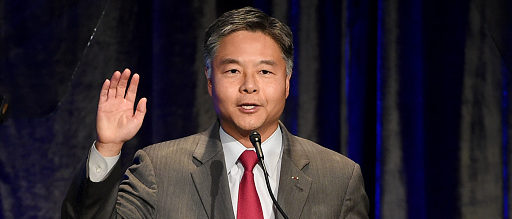
‘I Dare You’: Pro-Abortion Democrat Ted Lieu Challenges Catholic Bishops...


‘I Dare You’: Pro-Abortion Democrat Ted Lieu Challenges Catholic Bishops To Deny Him Communion


(Photo by Kevin Winter/Getty Images)

MARY MARGARET OLOHAN
SOCIAL ISSUES REPORTER

June 18, 20215:56 PM 


Democratic California Rep. Ted Lieu publicly challenged Catholic bishops Friday to deny him Communion for supporting contraception, abortion, same sex marriage and more.

Lieu responded to news that the United States Conference of Catholic Bishops (USCCB) overwhelmingly approved a measure Friday to draft a statement discussing whether high profile pro-abortion politicians, like President Joe Biden, may be denied Communion. (RELATED: ‘Devout’ Or ‘Extreme’: Media Treats Catholicism In Vastly Different Ways Depending On Politics)

“Dear USCCB,” Lieu tweeted. “I’m Catholic and I support: -Contraception -A woman’s right to choose -Treatments for infertility -The right for people to get a divorce -The right of same sex marriage.”

“Next time I go to Church, I dare you to deny me Communion,” the congressman said. He did not immediately respond to a request for comment from the Daily Caller News Foundation.

Lieu represents California’s 33rd district which covers Los Angeles County, an archdiocese that Archbishop José Horacio Gómez oversees. Gómez did not immediately respond to a request for comment from the DCNF about Lieu’s challenge.

Sixty Catholic Democrats also issued a “Statement of Principles” Friday warning U.S. bishops against “the weaponization of the Eucharist.” Signers included Democratic New York Rep. Alexandria Ocasio-Cortez, Connecticut Rep. Rosa DeLauro and New York Rep. Nydia M. Velázquez.

Lieu’s name does not appear on the letter.

Biden has spoken about his Catholicism through his entire political career, referring to his faith as a source of solace during turbulent times in his life. Biden exhibits many outward signs of his Catholicism: he frequently goes to mass, has met with Pope Francis, mentions praying the rosary and visits the cemetery where his family members are buried.

Yet as soon as he became president, Biden immediately took action to fund and promote abortion — which the Catholic Church condemns as a “crime against human life.”

Most media celebrates Biden’s Catholicism as “devout” without noting the significance of his divergence from Catholic teaching. Others suggest that the Catholic sentiment is changing due to public opinion on these topics — though Catholic teaching has not changed.

The Catholic Church teaches that Catholics may not receive Holy Communion if they are “conscious of a grave sin.” Catholics who have committed any grave sins must make a good confession before they can receive, according to the Church.

Source


Related

Ted W. Lieu is an American politician and Air Force Reserve Command colonel who has represented California's 33rd congressional district in the U.S. House of Representatives since 2015. Wikipedia

Born: March 29, 1969 (age 52 years), Taipei City, Taipei, Taiwan

Nationality: American

Spouse: Betty Lieu

Office: Representative (D-CA 33rd District) since 2015

Education: Georgetown University Law Center (1994)


Source: house.gov

Monday, January 25, 2016

Monday, August 17, 2015

Pope Francis to All Catholics: The Eucharist Is Jesus Christ


RELIGION

AUGUST 17, 2015


The Pope's Sunday Angelus address


AFP


VATICAN CITY — Pope Francis on Sunday reminded all Catholics of the Church’s teaching on the Real Presence of Jesus in the Holy Eucharist, stressing that at the Holy Mass, the sacred host is “really his Body given for us” and the chalice of what appears as wine “is really his Blood poured out for us.”

Speaking to pilgrims from his studio in the apostolic palace before praying the noonday Angelus, the Pope commented on Jesus’ bread of life discourse contained in the Gospel of St. John, chapter 6.

The Holy Father acknowledged that some in the crowd were shocked and even scandalized by the Lord’s words: “He who eats my flesh and drinks my blood has eternal life” (Jn 5:51-54).

But he said the Lord’s teaching is clear: The Eucharist is neither a symbol nor even a thing, but rather a divine Person who desires that we live in intimate communion with Him.

The Eucharist is Jesus who gives himself entirely to us,” the Pope said. “Feeding on Him and abiding in Him through Eucharistic communion — if we do so in faith — transforms our lives into a gift to God and to our brothers and sisters.”

For a Catholic, receiving Holy Communion in a state of grace and with faith and love therefore means “entering into harmony with the heart of Christ, assimilating his choices, his thoughts, his behavior. It means entering a dynamism of love and becoming people of peace, people of forgiveness, reconciliation,” he said.

While the Pope acknowledged the astonishment of Jesus’ listeners was understandable,” nonetheless he said the Lord used “a style typical of the prophets to provoke questions in the people — and also in us — and ultimately, to provoke a decision.”

Some reports estimate that only 30% of Catholics in the West today believe in the True Presence of Jesus in the Holy Eucharist.

Yet the Catechism of the Catholic Church (paragraph 1374) clearly states the Church’s teaching: “In the most Blessed Sacrament of the Eucharist ‘the body and blood, together with the soul and divinity, of our Lord Jesus Christ and, therefore, the whole Christ is truly, really, and substantially contained.” [Council of Trent (1551): DS 1651.]

The Catechism goes on to explain: “This presence is called ‘real’ — by which is not intended to exclude the other types of presence as if they could not be ‘real’ too, but because it is presence in the fullest sense: that is to say, it is a substantial presence by which Christ, God and man, makes himself wholly and entirely present.” [Pope Paul VI, Mysterium Fidei, 39.]

Here below we publish a translation of the Pope’s Angelus address.

****

Dear brothers and sisters,

Good day. This Sunday the liturgy sets before us, from the Gospel of John, Jesus’ discourse on the Bread of life which is Jesus himself, and which is also the Sacrament of the Eucharist.

Today’s passage (John 6:51-58) presents the final part of this discourse, and makes reference to several among the people who were scandalized because Jesus said: “He who eats my flesh and drinks my blood has eternal life, and I will raise him up at the last day” (Jn 5:51-54).

The astonishment of the listeners is understandable. In fact, Jesus uses the style typical of the prophets to provoke questions in the people—and also in us—and ultimately, to provoke a decision.

First, the questions: What does it mean “to eat Jesus’ flesh and drink his blood? Is it only an image, a way of speaking, a symbol, or does it indicate something real? To respond, we need to understand what is happening in the Heart of Jesus as he is breaking the bread before for the hungry crowd.


.

Thursday, March 21, 2013

Archbishop of Canterbury enthroned: order of service

The Dean of Canterbury Cathedral, the Very Rev Robert Williis, talks through the enthronement service for the 105th Archbishop of Canterbury, Justin Welby, which will feature African dancers, Punjabi music and a female cleric. 


12:59PM GMT 21 Mar 2013


The Venerable Sheila Watson, Archdeacon of Canterbury, will take a central role in the Canterbury Cathedral service marking the start of the public ministry of the Most Rev Justin Welby as 105th Archbishop of Canterbury.

The cleric, who was made the first female Archdeacon of Canterbury in 2007, will install the archbishop on the diocesan throne in the cathedral, a historic moment symbolising his appointment as bishop of Canterbury - the first of three roles held by the Archbishop of Canterbury.

The archbishop will then be installed by the Dean of Canterbury, the Very Rev Robert Willis, on the marble chair of St Augustine in the cathedral, marking his appointment as head of the Church of England and also representing his inauguration as spiritual leader of the 77-million strong Anglican Communion.

Other features of the ceremony include a key role for a young member of the Anglican Communion, Evangeline Kanagasooriam, who will ask the Most Rev Welby formal questions about his role after he has struck the West Door of the cathedral three times with his staff at the start of the service.
There will also be an African element, reflecting the Most Rev Welby's ties with the continent through his former job as an oil executive and most recently in peace and reconciliation work.


Related Articles

Female cleric to enthrone Archbishop of Canterbury 20 Mar 2013


Welby 'not frightened' by enthronement 21 Mar 2013


Church is 'part of the Big Society" 21 Mar 2013


Archbishop 'convinced' role will be held by a woman 21 Mar 2013


Archbishop's olive branch to gay rights groups 21 Mar 2013


New Archbishop 'astonished' by post 09 Nov 2012


The Archbishop of Burundi, in central Africa, the Most Rev Bernard Ntahoturi, will pronounce a blessing in French on the the Most Rev Welby and African dancers who will perform before the Gospel is read at the service.

Other personal touches include the choice of the Most Rev Welby's robes for the service.

He will wear colourful vestments originally designed and made for the late Bishop of Peterborough, the Most Rev Ian Cundy, who was the Most Rev Welby's tutor at Cranmer Hall, Durham, where he trained in preparation for ordination between 1989 and 1992 after leaving the oil industry.

Westminster Cathedral organist Matthew Martin will perform an organ improvisation during the service when five representatives from the worldwide Anglican Communion place symbols representing their region on the high altar of Canterbury Cathedral.

During the service, Archbishop Welby will be asked to make the declaration of assent - outlining his loyalty to the Church of England - by the Archbishop of York Dr John Sentamu.

The Most Rev Welby will then be asked by the Very Rev Willis to swear an oath of faithfulness on the Canterbury Gospels, brought to Britain by St Augustine in 597.

The service will feature a newly commissioned anthem using the opening words of the Rule of St Benedict set to music by the composer Michael Berkeley.

The ceremony coincides with the feast day of St Benedict of Monte Cassino, a significant figure for both Canterbury Cathedral - which was a Benedictine Monastery a thousand years ago - and Archbishop Welby who is an oblate of the Order of Benedict.


Source

.

Saturday, July 24, 2010

Senior Vatican figure regrets lack of shared communion


By Ecumenical News International
23 Jul 2010


The recently retired senior Vatican official responsible for ecumenical affairs has said his biggest regret during his tenure in Rome is that he did not achieve an agreement on a common communion with Protestants - writes Anli Serfontein.

"Today, there is a lot of convergence. So, we got closer to each other but we could not achieve the final breakthrough. I regret it very much but you cannot push the issue," said Cardinal Walter Kasper, who retired on 1 July 2010 as president of the Pontifical Council for Promoting Christian Unity.

"The main thing that I did not achieve is the sharing of Holy Communion," Kasper told ENInews in an interview in Stuttgart, while attending, as a special guest, the 20-27 July assembly of the Lutheran World Federation.

Kasper, now aged 77, became president of the Pontifical Council for Promoting Christian Unity in 2001; he had served the previous two years as its secretary. Originally from Germany, Kasper is a former professor of theology in Münster and Tübingen, and was bishop of Stuttgart from 1989 to 1999.

Soon after he became secretary of the Vatican's unity council, Kasper took part in the signing on 31 October 1999, Reformation Day, of the "Joint Declaration on the Doctrine of Justification" between the Roman Catholic Church and the LWF. This aimed to overcome condemnations, dating back to the 16th century, between the papacy and reformer Martin Luther and his followers.

However, sharing in the Eucharist, or Holy Communion, the central Christian sacrament that commemorates Jesus' last meal with his disciples, remains a point of contention. Catholic teaching prevents Protestants in most situations receiving communion from Catholic priests, and says Catholics should not receive communion in Protestant churches.

"Of course, I regret it very much because I know the concrete problems in families, and between good friends and partners," said Kasper. "I know what these problems are but I cannot jump over the whole existing doctrine. It is a problem that still exists but I think we also achieved some things. Maybe not consensus but convergence."

Kasper's words echoed those of LWF president Mark S. Hanson from the United States, who earlier in the day told a media conference that the Lutheran commitment to ecumenism will not end until Lutherans can share the Eucharist with other churches.

"We must continue the dialogue about theological issues that still prevent us from communing together," said Hanson.

The LWF president had been asked if he could envisage a day when a married couple in which one partner was a Catholic and the other a Lutheran could share in communion together with the blessing of both churches. Hanson responded by saying that it is the lay people of the churches who are driving and sustaining these conversations, and he acknowledged the "grassroots ecumenism" that is alive among lay people.

"If Roman Catholics and Lutherans can feed the hungry together, wouldn't it be good if they could be fed at the Lord's Table together?" Hanson said.

Kasper said in an address to LWF assembly delegates, "In the last years, we have been harvesting the fruit of the dialogue. I was more than surprised to see such a rich harvest, and that we have achieved much more than we could even dream before. There has been no ecumenical winter."

Still, he acknowledged that there is an unfinished agenda and that this should be the reason to continue the search for unity. "We can no longer afford to stick to our differences," Kasper told delegates.

In his ENInews interview, the former Vatican official stressed that dialogue and debate should continue. "I think for both sides it is the same thing. You must be patient, and you must be impatient at the same time," he said with a smile.

Kasper explained that he thought it may have been easier for him to engage in ecumenical discussions, since he had experienced division at first hand in the land of the Reformation. In 1517, Martin Luther nailed his 95 theses to the door of the Castle Church of Wittenberg, thus setting in train the breach with the Catholic Church.

"The Reformation started in Germany. We are at the origin of the Reformation, and therefore Reformation and relations with Lutheran Evangelical people are a concern for us because it divided us for many centuries. It still divides families today," Kasper said.

He noted that he had studied and later taught theology at German universities that each had two theological faculties, one for Protestants and the other for Catholics.

"So, ecumenical relations belonged to our life. One has many Protestant friends. I was bishop in this diocese, which is half Protestant and half Catholic," he said. "It is a normal reality for us, and I think this helps us a lot to understand the other angle, and to understand the urgency to work for unity and communion."

In an interview in November 2009 in Wittenberg, where Luther worked and lived, Kasper noted, "We have learned a lot in the last 50 years. At the university, I spent a lot of time teaching about Martin Luther, and I have learned from that experience too."

In his Stuttgart interview, Kasper acknowledged that some sections of the Catholic Church have difficulties with such ecumenical developments but said he had the backing of both Pope John Paul II and Pope Benedict XVI.

Looking back at what has been achieved in terms of ecumenical progress in the last decade, Kasper said it would not have been possible without friendship with his counterparts from other traditions. He said a deep friendship had developed between him and the Rev Ishmael Noko, the Zimbabwean-born LWF General Secretary.

"Personal friendship and personal relations are fundamental to ecumenical work and for pastoral work because without personal relations, personal friendships and trust you can do nothing; it is the basis of all. Then, when you have friendship, if there is trust you can also speak about the differences and you can also achieve good results," Kasper said.

Introducing Kasper to LWF assembly delegates in Stuttgart, Noko said, "You embody in your soul the spirit of ecumenism. You have been an encourager, when obstacles seemed insurmountable, and a truth teller."

[With acknowledgements to ENI. Ecumenical News International is jointly sponsored by the World Council of Churches, the Lutheran World Federation, the World Alliance of Reformed Churches and the Conference of European Churches.]

.
[Ekk/3]
.

.