Chapter three
What in the World
Aug 08, 2026
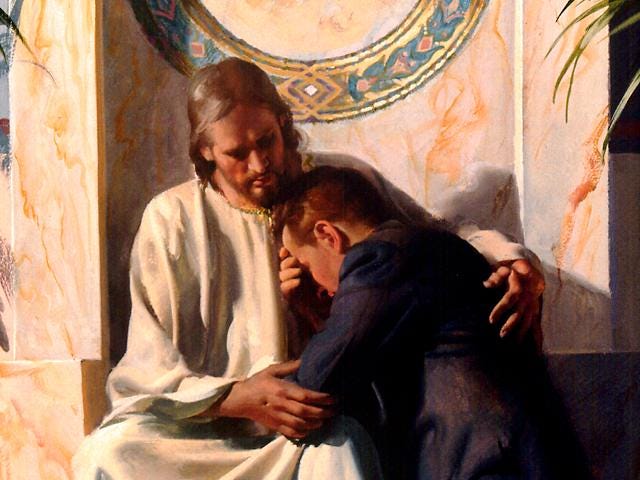
“Be zealous therefore and repent” (Rev. 3:19).
Introduction
In the Book of Revelation we have seven Churches. Most Bible scholars agree that these churches represent God’s Church as it progresses historically through time. The historical periods are generally divided thus:
1. Ephesus – the Early Church;
2. Smyrna – the church persecuted by the Roman Empire;
3. Pergamos – the precursor to the Roman Catholic Church;
4. Thyatira – the Roman Catholic Church;
5. Sardis – The Protestant Churches;
6 Philadelphia – Between Sardis and Laodicea
7. Laodicea – the Last Church
The first three churches no longer physically exist on earth; they have either ceased to exist or the people have been absorbed into other institutional entities. But the fourth church, the Roman Catholic Church, exists now and will continue to exist until the end of Time. The same applies to the fifth church – the Protestant Churches, they exist now and they will continue to exist until the end of time. And the Last Church, because it is the last church, exists now and continues until the end of Time. This means that the sixth church, Philadelphia exists along side three other Churches that exist now and continue until the end of time. Which means that the Philadelphians exist contemporaneously with the last four churches. So, can we identify the Philadelphian Church? And can we identify Laodicea?
The Philadelphian Church
There are several churches that claim the title Philadelphia – but the first to claim the honour were the pioneers of the Advent Movement.
All Advent believers know perfectly well that the Philadelphia Church, the church of brotherly love, was made up of those who came out of Sardis or the nominal church, in 1844, under the cry, ‘Babylon is fallen, is fallen.’ Milton Wilcox, The Seven Churches and the Seven Seals, (Pacific Press, 1904). p. 9.
Milton Wilcox was addressing Adventists in the year 1904, he wrote “All Adventists know perfectly well that the Philadelphia CHuch was made up of those who left Sardis and joined the Advent Movement by the year 1844.However that is not the case today -most Adventists believe they are the Laodicean Church. But all those who lived the years prior to 1844, agreed with Milton Wilcox, not only that they were the Philadelphia Church, but that they were fulfilling the prophecy of the Philadelphia Church:
…the Philadelphia Church is the true church of the last days… James White, Review and Herald, May 9, 1854.
In mercy He reached forth his hand and enabled the Advent people in 1844 to break the cords of sectarianism that bound them, that they, (the Philadelphia Church) might be disciplined and guided into the kingdom by the order and pure doctrines of the gospel. James white, RH Dec. 6, 1853. (Brackets are those of James White).
The true church are to be found with those that… entered into the Philadelphia Church in the fall of 1844 and became a church at that time… Joseph Bates, RH Aug 19, 1851.
While standing in that waiting position (spring 1844), the light of the second angels message flashed upon us; and a voice came like a mighty rushing wind, “Come out of her my people.” No one knew who raised the cry first; but as we heard from our brethren north, south, east and west, all had the same experience, and immediately left their respective churches. Yes, and we all left our creeds, or what had been before our differences. Right there we formed the Philadelphian state of the church – a church of brotherly love. George Washington Morse. RH March 7, 1899.
Introduction
In the Book of Revelation we have seven Churches. Most Bible scholars agree that these churches represent God’s Church as it progresses historically through time. The historical periods are generally divided thus:
1. Ephesus – the Early Church;
2. Smyrna – the church persecuted by the Roman Empire;
3. Pergamos – the precursor to the Roman Catholic Church;
4. Thyatira – the Roman Catholic Church;
5. Sardis – The Protestant Churches;
6 Philadelphia – Between Sardis and Laodicea
7. Laodicea – the Last Church
The first three churches no longer physically exist on earth; they have either ceased to exist or the people have been absorbed into other institutional entities. But the fourth church, the Roman Catholic Church, exists now and will continue to exist until the end of Time. The same applies to the fifth church – the Protestant Churches, they exist now and they will continue to exist until the end of time. And the Last Church, because it is the last church, exists now and continues until the end of Time. This means that the sixth church, Philadelphia exists along side three other Churches that exist now and continue until the end of time. Which means that the Philadelphians exist contemporaneously with the last four churches. So, can we identify the Philadelphian Church? And can we identify Laodicea?
The Philadelphian Church
There are several churches that claim the title Philadelphia – but the first to claim the honour were the pioneers of the Advent Movement.
All Advent believers know perfectly well that the Philadelphia Church, the church of brotherly love, was made up of those who came out of Sardis or the nominal church, in 1844, under the cry, ‘Babylon is fallen, is fallen.’ Milton Wilcox, The Seven Churches and the Seven Seals, (Pacific Press, 1904). p. 9.
Milton Wilcox was addressing Adventists in the year 1904, he wrote “All Adventists know perfectly well that the Philadelphia CHuch was made up of those who left Sardis and joined the Advent Movement by the year 1844.However that is not the case today -most Adventists believe they are the Laodicean Church. But all those who lived the years prior to 1844, agreed with Milton Wilcox, not only that they were the Philadelphia Church, but that they were fulfilling the prophecy of the Philadelphia Church:
…the Philadelphia Church is the true church of the last days… James White, Review and Herald, May 9, 1854.
In mercy He reached forth his hand and enabled the Advent people in 1844 to break the cords of sectarianism that bound them, that they, (the Philadelphia Church) might be disciplined and guided into the kingdom by the order and pure doctrines of the gospel. James white, RH Dec. 6, 1853. (Brackets are those of James White).
The true church are to be found with those that… entered into the Philadelphia Church in the fall of 1844 and became a church at that time… Joseph Bates, RH Aug 19, 1851.
While standing in that waiting position (spring 1844), the light of the second angels message flashed upon us; and a voice came like a mighty rushing wind, “Come out of her my people.” No one knew who raised the cry first; but as we heard from our brethren north, south, east and west, all had the same experience, and immediately left their respective churches. Yes, and we all left our creeds, or what had been before our differences. Right there we formed the Philadelphian state of the church – a church of brotherly love. George Washington Morse. RH March 7, 1899.
Were these pioneers correct, were the fulfilling the prophecy about Philadelphia?
Philadelphia and the Sanctuary
After the Advent Movement went through the ‘Great Disappointment’ in 1844. Those who survived with their faith intact sought for answers by meeting regularly, often for a whole weekend to study the Scriptures for a biblical explanation. The impetus for the world-wide Advent Movement was the 2300-year prophecy found in Daniel. 8:14. After which the sanctuary would be cleansed. Initially the reference to the sanctuary was thought to be referring to the earth, and the the second coming of Christ. However, when their study refreshed neglected verses such as: “Thy way, O God, is in the sanctuary” who is so great a God as our God? (PS.77:13): They began to study the sanctuary, and they discovered that the sanctuary and its rituals were more than just an illustration of the Gospel, but that it was also a prophecy - the sanctuary and its services was given to God’s people as an illustration of the Plan of Salvation. And its position as the center piece of the Old Testament Gospel served as a shadow forecasting the realities concerning Jesus that were to take place in the New Testament era. But the sanctuary did not just point forward to the cross it also pointed forward to what Jesus would do after his resurrection and ascension to Heaven. When this was understood, they also understood that the 2300-year prophecy referred to the anti-typical cleansing of the sanctuary. And that Jesus, as High Priest had opened the door into the most Holy Place in Heaven to begin the anti-typical fulfilment of the Day of Atonement, The Advent Movement was raised up by God to herald that this prophecy was being fulfilled. And that before Jesus would return the judgment had to take place. They understood that the 2300-day prophecy was pointing forward to ‘the hour of his judgment:
And I saw another angel fly in the midst of heaven, having the everlasting gospel to preach unto them that dwell on the earth, and to every nation, and kindred, and tongue, and people, Saying with a loud voice, Fear God, and give glory to him; for the hour of his judgment is come: and worship him that made heaven, and earth, and the sea, and the fountains of waters. Rev. 14:6,
For the Father judgeth no man, but hath committed all judgment unto the Son: Jn.5:22.- For we must all appear before the judgment seat of Christ; 2 Cor. 5:10.
|Clearer light came with the investigation of the sanctuary question. They now saw that they were correct in believing that the end of the 2300 days in 1844 marked an important crisis. But while it was true that the door of hope and mercy by which men had for eighteen hundred years found access to God, was closed, another door was opened… Ellen White, The Great Controversy, pp. 429, 430.
In addition, The SDA Pioneers saw the Advent Movement, the sanctuary. and the Day of Atonement in the message to the Philadelphia Church:
The Key of David
And to the angel of the church in Philadelphia write; These things saith he that is holy, he that is true, he that hath the key of David, he that openeth, and no man shutteth; and shutteth, and no man openeth; I know thy works: behold, I have set before thee an open door, and no man can shut it: for thou hast a little strength, and hast kept my word, and hast not denied my name. Rev. 3:7,
On the Day of Atonement, the normal daily routine services ceased, and the Day of Atonement rituals went into effect. After his personal spiritual preparations were finished, the High Priest opened the closed door (by parting the curtain)) into the Most Holy Place, and he went in with the blood of the sacrifice and he cleansed the sanctuary of the accumulated sins of the people (making an atonement for the people) - during this time the door into the Holy Place was closed. This ritual serves as a prophecy for that which Jesus would do on the ant-typical Day of Atonement as prophesied by Daniel at the end of the 2300-years (Dan.8:14). Jesus was the ‘Worthy One’ who opened and shut doors in Heaven because he had the Key of David.
The Key of David refers to a prophecy about Christ in Isaiah, the prophecy involves unfaithful Shebna and faithful Eliakim:
What hast thou here? and whom hast thou here, that thou hast hewed thee out a sepulchre here, as he that heweth him out a sepulchre on high, and that graveth an habitation for himself in a rock? Behold, the Lord will carry thee (Shebna) away with a mighty captivity, and will surely cover thee. He will surely violently turn and toss thee like a ball into a large country: there shalt thou die, and there the chariots of thy glory shall be the shame of thy lord’s house. And I will drive thee from thy station, and from thy state shall he pull thee down. And it shall come to pass in that day, that I will call my servant Eliakim the son of Hilkiah: And I will clothe him with thy robe, and strengthen him with thy girdle, and I will commit thy government into his hand: and he shall be a father to the inhabitants of Jerusalem, and to the house of Judah.
And the key of the house of David will I lay upon his shoulder; so he shall open, and none shall shut; and he shall shut, and none shall open. And I will fasten him as a nail in a sure place; and he shall be for a glorious throne to his father’s house. Isa. 22:16.23.
The context in which Eliakim receives the Key of David is the judgment against Shebna whose position and authority is ‘over the house’ (see Isa. 22:15)– but Shebna has been found unworthy to open and shut the doors in the kings house. Therefore, he Is replaced by Eliakim (who is a type of Christ). And the Key of David will be placed upon Eliakim’s shoulder the context is about the transference of authority over the Lord’s house from Shebna to Eliakim, which includes the authority to open and shut doors in the Lord’s house. And there is another prophecy about Christ in Isaiah, that confirms that Eliakim is a type of Christ:
For unto us a child is born, unto us a son is given: and the government shall be upon his shoulder: and his name shall be called Wonderful, Counselor, The mighty God, The everlasting Father, The Prince of Peace. Isa. 9:6.
Here we are told that the government will be upon the shoulder of Jesus. in Isaiah chapter 22 we are told that the government would be placed upon his shoulder, and that the government on the shoulder was called the Key of David. (see Isa. 21,22). And the Key of David opened and shut the doors in the House of David.
The Shut Door
Every generation is subject to the PRESENT TRUTH that is relevant to that generation. God has plans and he informs his prophets of his plans, “Surely the Lord God will do nothing, but he revealeth his secret unto his servants the prophets “(Amos 3_7). It is the duty of the prophets to inform the people of what God is about to do – which forms the the PRESENT TRUTH for their time. And it is the duty of the people to accept and obey. It. If the people refuse to accept the Present Truth the door of opportunity is closed to them. This has been the case for all the history of God’s dealings with his people.
There was a shut door in Noah’s day. There was at that time a withdrawal of the Spirit of God from the sinful race that perished in the waters of the Flood. God Himself gave the shut-door message to Noah: “My spirit shall not always strive with man, for that he also is flesh: yet his days shall be an hundred and twenty years” (Gen. 6:3).
There was a shut door in the days of Abraham. Mercy ceased to plead with the inhabitants of Sodom, and all but Lot, with his wife and two daughters, were consumed by the fire sent down from heaven.
There was a shut door in Christ’s day. The Son of God declared to the unbelieving Jews of that generation, “Your house is left unto you desolate” (Matt. 23:38).
Looking down the stream of time to the last days, the same infinite power proclaimed through John: “These things saith he that is holy, he that is true, he that hath the key of David, he that openeth, and no man shutteth; and shutteth, and no man openeth” (Rev. 3:7). Ellen White, Selected Mesages, vol. 1, p. 63.
The Great Disappointment
The Philadelphia Church was tested by the Great Disappointment in 1844 and many of its members failed the test:
behold, I have set before thee an open door, and no man can shut it: for thou hast a little strength, and hast kept my word, and hast not denied my name. Rev. 3:8. I was shown in vision, and I still believe, that there was a shut door in 1844. All who saw the light of the first and second angels’ messages and rejected that light, were left in darkness. And those who accepted it and received the Holy Spirit which attended the proclamation of the message from heaven, and who afterward renounced their faith and pronounced their experience a delusion, thereby rejected the Spirit of God, and it no longer pleaded with them. Those who did not see the light, had not the guilt of its rejection. It was only the class who had despised the light from heaven that the Spirit of God could not reach. And this class included, as I have stated, both those who refused to accept the message when it was presented to them, and also those who, having received it, afterward renounced their faith. These might have a form of godliness and profess to be followers of Christ; but having no living connection with God, they would be taken captive by the delusions of Satan. These two classes are brought to view in the vision—those who declared the light which they had followed a delusion, and the wicked of the world who, having rejected the light, had been rejected of God. No reference is made to those who had not seen the light and therefore were not guilty of its rejection. Ellen White, Selected Messages vol.1 p. 63.
But not all failed the test the wise virgins, studied their Bibles and they discovered the antI-typical Day of Atonement and the judgment – therefore Jesus said to the Philadelphia Church, “behold, I have set before thee an open door, and no man can shut it: for thou hast a little strength, and hast kept my word, and hast not denied my name” (Rev. 3:8). They were reduced in number, so they had ‘little strength’ – but they had not denied his name – they had remined steadfast. And Jesus also had a word for the foolish virgins, those who had denied his name and renounced their allegiance to Christ,
Behold, I will make them of the synagogue of Satan, which say they are Jews, and are not, but do lie; behold, I will make them to come and worship before thy feet, and to know that I have loved thee.(Rev. 3:9).
This is not referring to literal Jews,- “For he is not a Jew, which is one outwardly; neither is that circumcision, which is outward in the flesh: But he is a Jew, which is one inwardly; and circumcision is that of the heart, in the spirit, and not in the letter; whose praise is not of men, but of God” (Rom. 28,29):
Jesus is saying that the wise virgins would eventually be proven right. And the foolish virgins would eventually admit that they were wrong. The foolish virgins, were false Jews because they had uncircumcised hearts- they did not have – ‘Christ in tus, the hope of glory’ – they did not have oil in their lamps – they did not have the Holy Spirit. But the time would come when they would learn that they had made a huge mistake and in anguish of spirit they would yearn for readmission into the Philadelphia Church.
Jesus goes on to make it plain, that it is the Philadelphia Church which is saved:
Because thou hast kept the word of my patience, I also will keep thee from the hour of temptation, which shall come upon all the world, to try them that dwell upon the earth. Behold, I come quickly: hold that fast which thou hast, that no man take thy crown. Him that overcometh will I make a pillar in the temple of my God, and he shall go no more out: and I will write upon him the name of my God, and the name of the city of my God, which is new Jerusalem, which cometh down out of heaven from my God: and I will write upon him my new name. He that hath an ear, let him hear what the Spirit saith unto the churches. Rev. 3: 10-15.
Because the true Philadelphians have stood for Jesus during the trial of their faith, Jesus says that he will preserve them, when the next trial came “I also will keep thee from the hour of temptation, which shall come upon all the world, to try them that dwell upon the earth” – ‘the hour of temptation, is the Great Tribulation which comes at the End of the world, when the Mark of the Beast is enforced.
Yet the anguish which God’s people suffer is not a dread of persecution. They fear that through some fault in themselves they will fail to realize the fulfillment of the Saviour’s promise: I “will keep thee from the hour of temptation, which shall come upon all the world.” Revelation 3:10. Should they prove unworthy because of their own defects of character, then God’s holy name would be reproached. Ellen White, From here to Forever, p. 376.
In addition, Jesus says that he will write the Father’s name, in their foreheads, the Father’s name is his character (see Ex. 33:17-23; 34:1-27). And his character is expressed and manifested by his law. Therefore, the people, the Philadelphians. are commandment keepers -“Here is the patience of the saints: here are they that keep the commandments of God, and the faith of Jesus” (Rev. 14:12).
Because the Bible clearly portrays two distinct classes of people in the Last days, the Adventist pioneers came to understand that the Advent Movement was Philadelphia and that those who rejected their understanding of the fulfillment of the 2300-prphecy to be Laodicea:
In the summer and autumn of 1844 the proclamation, “Behold, the Bridegroom cometh,” was given. The two classes represented by the wise and foolish virgins were then developed – one class who looked with joy to the Lord’s appearing, and who had been diligently preparing to meet Him; and another class that, influenced by fear and acting from impulse, had been satisfied with a theory of the truth, but were destitute of the grace of God. Ellen White, GC 426.
The Signs of the Times
As Jesus was leaving the temple for the last time, he said to the Jews “Behold, your house is left unto you desolate” (Matt. 23:38). This must have shocked his disciples, because they tried to turn his attention to the glories of the temple. But Jesus shocked them futher by saying “See ye not all these things? verily I say unto you, There shall not be left here one stone upon another, that shall not be thrown down” (Matt. 24:2). Trying to understand, the disciples, concluded that Jesus must be speaking about the end of the world, so they come to him and ask him for the signs of his coming back and the end of the world
And as he sat upon the mount of Olives, the disciples came unto him privately, saying, Tell us, when shall these things be? and what shall be the sign of thy coming, and of the end of the world? Matt. 24:3.
The Parable of the Ten Virgins
One of the factors that authenticated and galvanized the Advent Movement was the Signs of the Times. The disciples had asked Jesu about the signs of His second coming and the end of the world. And Jesus had given them a list of signs, the last signs were the sun being darkened, the moon turning the color of blood and the stars falling from the sky – and many early Adventists had personally witnessed the fulfillment of these signs.
When Jesus finished speaking about the signs he told the parable about the Ten Virgins. He began the parable with the word ‘then’ – grammatically, the word ‘then in this context, is a conjunctive – a conjunctive joins two things together. In other words, what Jesus was saying is this: “After the signs are fulfiled – ‘then’ – at that time – the church that is awaiting the arrival of the bridegroom, will be like Ten Virgins, of which five would be wise and five foolish.
The Bible tells the same stories in different ways and this division of the Church into two parties is consistent with what Jesus had previously warned about, such as the good fish and the bad fish – the sheep and the goats – the wheat and the tares
Those who lived through the Advent experience believed they were fulfilling the prophetic Parable of the Ten Virgins:
…the “midnight cry” was heralded by thousands of believers. It went from city to city, from village to village, and into remote country places. None knew where it started. It arose simultaneously. There was fervent prayer and unreserved consecration to God. At the call, “behold, the bridegroom cometh; go ye out to meet him,” we all arose and trimmed our lamps. We studied the word of God with greater interest than we ever had studied it. It was not the most talented, but the most humble and devoted, who were to hear and obey the call. Farmers left their crops standing in the fields, mechanics laid down their tools, merchants left their merchandise; and all went forth with tears and rejoicing to give the warning. Here is where the “midnight cry” came in to give power to the second message. Those who had formerly led out in the cause were among the last to give the warning. George Washington Morse, RH, March 7, 1899.
In the summer and autumn of 1844 the proclamation, “Behold, the Bridegroom cometh,” was given. The two classes represented by the wise and foolish virgins were then developed – one class who looked with joy to the Lord’s appearing, and who had been diligently preparing to meet Him; and another class that, influenced by fear and acting from impulse, had been satisfied with a theory of the truth, but were destitute of the grace of God. Ellen White, The Great Controversy, p. 426.
The parable of the ten virgins of Matthew 25 also illustrates the experience of Adventist people. Ellen White, Ibid, p. 393.
When we take the view of this parable that has been taken by the Advent body, a harmony will be seen. The ten virgins represent those who participated, more of less, in the Advent movement. The going forth with lamps represents the movement of 1843, occasioned the study and proclamation of the Word. Thy word is a lamp (Ps. 115:105). The tarrying followed, with the slumbering time. The midnight cry in the parable represents the powerful and glorious movement, and work of God on the hearts of His people, in the autumn of 1844. James White, RH, April 14, 1843.
From 1844 to New Jerusalem
The time period during which the Philadelphia church exists is from pre-1844 until the decent of New Jeruaalem from Heaven to the Earth.
He that overcometh will I make a pillar in the temple of my God, and he shall go no more out: and I will write upon him the name of my God, and the name of the city of my God, which is new Jerusalem, which cometh down out of heaven from my God: and I will write upon him my new name. (Rev. 3:12):
Philadelphia has the name of God and the new name of Jesus written upon them, In both instances these names reflect the fact that the Philadelphia Church has the character of the Father and the Son. In addition, Jesus writes New Jerusalem on the Philadelphia Church. This is because New Jerusalem is the Bride of Christ.” And I John saw the holy city, new Jerusalem, coming down from God out of heaven, prepared as a bride adorned for her husband” (Rev.31:2). This is what Jesus went back to Heaven to receive from the Ancient of Days, - this is the kingdom, heralded by the seventh angel - this is the mystery of God finished – the image of God has been restored in his people. It is now possible to restore everything and make all things new…
And I saw a new heaven and a new earth: for the first heaven and the first earth were passed away; and there was no more sea… And I heard a great voice out of heaven saying, Behold, the tabernacle of God is with men, and he will dwell with them, and they shall be his people, and God himself shall be with them, and be their God. And God shall wipe away all tears from their eyes; and there shall be no more death, neither sorrow, nor crying, neither shall there be any more pain: for the former things are passed away…. And he that sat upon the throne said, Behold, I make all things new. And he said unto me, Write: for these words are true and faithful” (Rev. 21:1, 3-5).
From Philadelphia to Laodicea
God’s people are not invited to the wedding ceremony itself, but to the celebration of the wedding- the wedding feast:
And I heard as it were the voice of a great multitude, and as the voice of many waters, and as the voice of mighty thunderings, saying, Alleluia: for the Lord God omnipotent reigneth. Let us be glad and rejoice, and give honour to him: for the marriage of the Lamb is come, and his wife hath made herself ready. And to her was granted that she should be arrayed in fine linen, clean and white: for the fine linen is the righteousness of saints. And he saith unto me, Write, Blessed are they which are called unto the marriage supper of the Lamb. And he saith unto me, These are the true sayings of God. Rev. 19:5-9.
The proclamation, “Behold, the Bridegroom cometh,” in the summer of 1844, led thousands to expect the immediate advent of the Lord. At the appointed time the Bridegroom came, not to the earth, as the people expected, but to the Ancient of Days in heaven, to the marriage, the reception of His kingdom. “They that were ready went in with Him to the marriage: and the door was shut.” They were not to be present in person at the marriage; for it takes place in heaven, while they are on the earth. Ellen White, GC 427.
Laodicea
The word ‘Laodicea means ‘a people judged’ - Because the Bible clearly portrays two distinct classes of people in the Last days, the Advent pioneers came to understand that the Advent Movement was Philadelphia and that those who rejected their understanding of the fulfillment of the 2300-prophecy to be Laodicea, such as Joseph Bates:
Another door opened to the Philadelphia church, to enter with the Master of the house to the marriage. Jesus in giving this message says, “Behold I HAVE set before thee an open door,” and no man can shut it. Here is a nail fastened in a sure place. It is not possible to move this message of an open and shut door, either before or after the tenth of the seventh month, 1844. The principle men in this church (the Advent Movement) however, soon laid a plot, by confederating, and leaguing together, to reverse all that the Saviour had said, and have the door open into the Holy Place again. They [the principle men] moved out from this association (the Advent Movement), and have been proclaiming an open door from that time (1845) until the present (1851), they are teaching and practice the very opposite of what they were,
when they were organized in the Philadelphia church. Thus they have organized the Laodicean church. And by their false teaching they have drawn thousands of the Philadelphians away with them into the Laodicean state. Joseph Bates ‘Our Labor in the Philadelphia and Laodicean Churches’ Advent Review and Sabbath Herald, p. 13, Aug., 19, 1851. & Review and Herald, August 19, 1851.
The Spiritual Journey from Philadelphia to Laodicea
After the Great Disappointment the Advent people were still enthusiastically expecting Jesus to return during their lifetime. But as time went on, their enthusiasm began to wane, much to the chagrin of Ellen White and others,
I was pointed back to the years 1843 and 1844. There was a spirit of consecration then that there is not now. What has come over the professed peculiar people of God? Ellen White, Testimonies for the Church, vol.1, p. 128.
James White was one of the first Leaders to suggest that the Philadelphians were becoming Laodiceans.
I have clearly seen, ever since the Enfield camp-meeting in ’45, I think, that the Advent people were the Laodicean church, and wherever I have preached, I have not kept back the truth, as far as I have seen it. At that camp-meeting I heard the preacher advise his congregation not to seek for any more light. He told them that they had got light enough, and they needed no more. Truly, thought I, this is the Laodicean church spoken of in Revelation 3, “rich and increased in goods, and have need of nothing.” And since that time I have noticed that the most part of the Advent people say the same; and some of them have told me in so many words, that they would not go into anything new, or believe anything new. And I do fully believe that “the virgin of Israel is fallen; she shall no more rise.” Amos 5:2. This is speaking of some people that went out. It cannot be the churches, for they did not go out. Where I have preached I have tried to tell the truth, and by so doing I have brought down the indignation of the popular Adventists upon me, and I have been cast out by them. I have been published in the Boston Advent paper once or twice, and they have tried to stop me from traveling, but God has said, “behold, I have set before thee an open door, and no man can shut it.” Amen. .James White, Advent Review and Sabath Herald, p. 15, Aug., 19, 1851.
Ellen agreed with her husband, in 1857, she wrote an article entitled ‘Be Zealous and Repent’(see Testimonies for the Church vol.1, pp. 141-146.
The Ellen White Estate Trustees have given us a useful summery of the impact Ellen White’s article had on the Advent people:
In the latter part of 1856 attention was called to the “Laodicean”message of Revelation 3. Formerly this counsel was understood to apply to the advent believers who had not followed in the advancing light of the third angel and who had organized themselves into another church, bitterly opposing the Sabbath truth. Now they saw themselves as “lukewarm” and in need of heeding the counsel of the True Witness. For two years or more the believers were mightily stirred by this message, expecting that it would lead them directly into the loud cry of the third angel… The people were stirred. Out of a membership of 2000 people, over 350 wrote to the Review and Herald, expressing their grief that the church had slipped into the Laodicean condition. Ellen G. White Estate, Trustees. Introduction, Testimonies to the Church, vol. 1, p. 6, 7.
In 1859, Ellen White wrote, I was shown that the testimony to the Laodiceans applies to God’s people at the present time. Testimonies to the Church, vol. 1, p.186.
At the 1888 General Conference Session, in Minneapolis God sent what Ellen Whitecalled ‘a precious message’ to the assembled congregation, this was one of God’s many attempts to get his people out of the Laodicean condition. But the attempt failed, the Church rejected the preaching of Jones and Wagonner. And the Laodicean condition prevailed and continued. In 1894, Ellen White wrote.
The message to the Laodicean church is highly applicable to us as a people. It has been placed before us for a long time but has not been heeded as it should have been. When the work of repentance is earnest and deep. The individual members of the church will buy the rich goods of heaven. Oh how many behold things in a perverted light, in the light in which Satan would have them see.” Manuscript #33, 1894.
Conclusion
Three of the last four Churches receive a promise of the second coming from Jesus.
Thyatira: “hold fast till I come” (Rev. 2:25).
Sardis: ” I will come on thee as a thief, and thou shalt not know what hour I will come upon thee” (Rev. 3:3).
Philadelphia: “Behold, I come quickly: hold that fast which thou hast, that no man take thy crown”(Rev.3:11).
Laodicea: no promise of the second coming – [this does not mean that there is no hope for Laodicea].
What it does mean, is that the other three churches will exist until the second coming of Christ, and so will Laodicea because it is the last church. Which also means that the members of all these churches can change their membership at any time before the end. Before the end there is a call to Thyatira and Sardis, “come out of her my people” (Rev. 18:4). If they come out where do the go? There are only two choices; Philadelphia or Laodicea. Laodicea is not a good choice because the fate of a Laodicean is to be “spued out of the Lord’s mouth” Rev. 3:16). But in order to make the right choice and join Philadelphia, the Philadelphian Church needs to be visible, discernable and easy to find, in a crowded religious marketplace. Unfortunately every Philadelphian is in danger of deception, and can change ones membership this is why Jesus warned the Philadelphians not to allow someone else to take their crown.
Therefore, as the countdown to the end ticks by, all of God’s people need to ‘afflict their souls’ to determine their own spiritual identity – when Jesus said to his disciples. “Verily I say unto you, that one of you shall betray me” they did not hesitate, the all asked him “Is It I” (Matt.26:21,22)- All Advent believers need to ask Jesus the same question - after which it wil be known who the real Adventist is.
When the Adventist Movement began the members that joined came from every church and every denomination. – Thy came with a multitude of different beliefs and opinions, One of the Advent leaders, Wiliam Miller, desired that the mixed multitude would amalgamate and assimilate into a unified whole, he wrote, “The church of Christ will yet “come into the unity of the faith.” That will then be the Philadelphia church, the church of brotherly love William Miller, Dec. 1844. Advent Review and Sabath Herald, p. 14, Aug., 19, 1851.
The same thing will happen again.
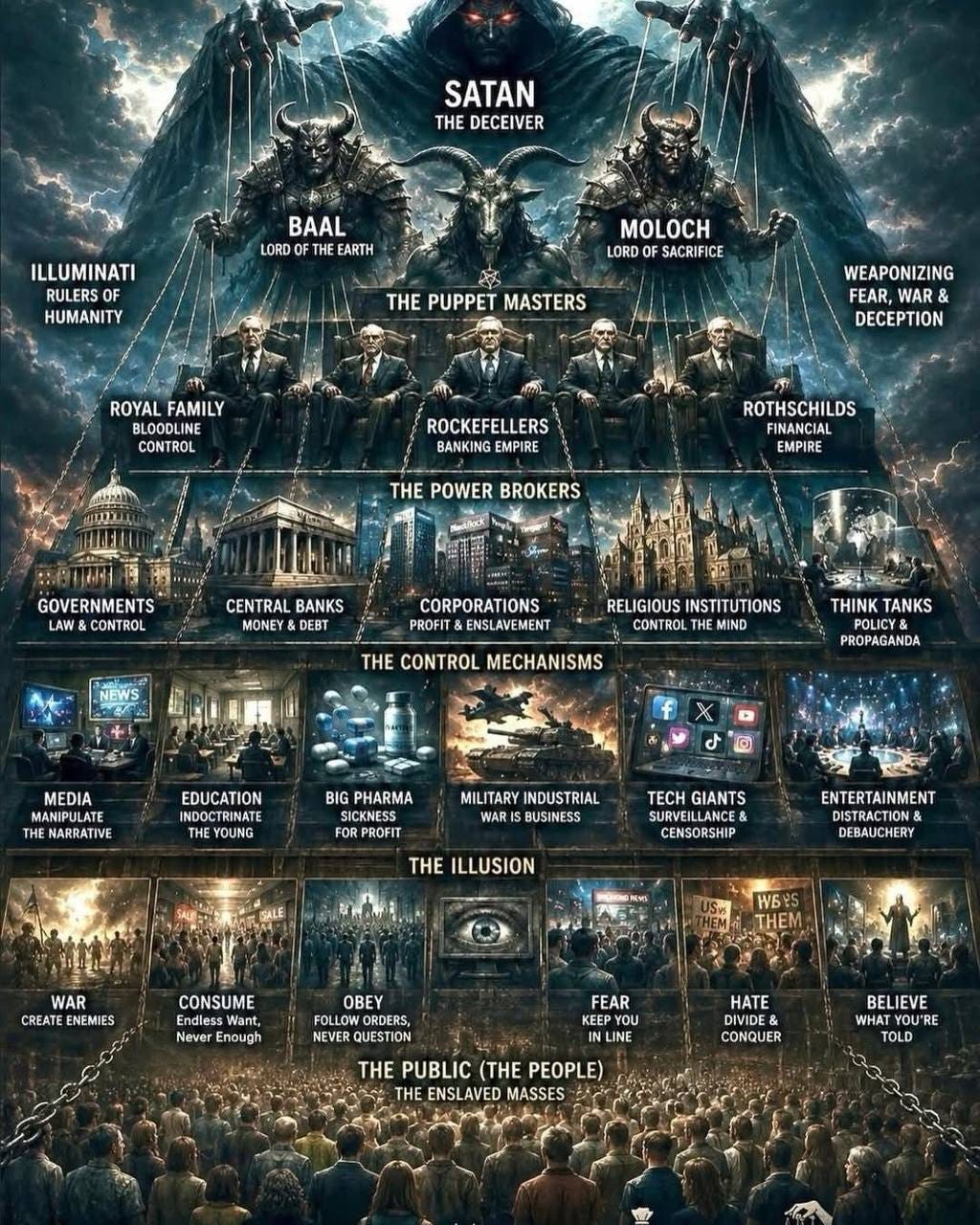
All those who have ‘Christ in us’ will become a visible discernable entity in the world before HE returns – this is how the Mystery of God ends.
Jesus has sent a gracious message for all the honest ones in this state, saying, “As many as I love, I rebuke and chasten: be zealous therefore and repent.” Revelation 3:19. We thank the Lord that a goodly number have taken heed to his message, and are now in the Philadelphia church, believing and proclaiming the third angel’s message. Still Jesus is calling after others, saying, “Behold, I stand at the door and knock; if any man hear my voice, and open the door, I will come in to him, and will sup with him, and he with me. To him that overcometh will I grant to sit with me in my throne, even as I also overcame and am set down with my Father in his throne.” Verses 20, 21. Thus Jesus is continually calling, and holding out every inducement, by counseling, chastening and promising the poor Laodicean, even the highest honors he can bestow, if, after all he has done, he will repent and open his heart to him.
My dear brethren in the Philadelphia church, let us read this gracious message again (the message to the Laodicean church Rev. 3:14-22), and pray the God of Israel to animate and inspire us with new courage, and unslackened zeal, to carry out the purpose of our divine Lord and Master, to the poor Laodicean, by searching them out wherevr they can be found, and teaching them the present truth. Joseph Bates Our Labor in the Philadelphia and Laodicean Churche
s Agvent Review and Sabbath Herald, p. 13, 14. Aug., 19, 1851. - NO. 2.


No comments:
Post a Comment