Showing posts with label hype. Show all posts

Sunday, July 26, 2026

Congress members visit Whipple Federal Building: "I was shocked to see that everyone in here has leg restraints"

Reps. Omar, Jayapal seek answers on ICE activity at Whipple Federal Building
 

Congress members visit Whipple Federal Building: "I was shocked to see that everyone in here has leg restraints"

By Jennifer Mayerle

July 24, 2026 / 7:06 PM CDT / CBS Minnesota

U.S. Immigration and Customs Enforcement agents have been taking people they detain in Minnesota to the Whipple Federal Building for processing. On Friday, members of Congress were there for an oversight visit.

Democratic U.S. Reps. Ilhan Omar of Minnesota and Pramila Jayapal of Washington state made their way into the building midday, calling congressional oversight their duty.

"I was shocked to see that everyone in here has leg restraints. That is not common practice in holding facilities and detention centers. And apparently, that is the practice when you are picked up to when you are released," Jayapal said.

They did learn some information about detainees despite saying they had to sign paperwork, agreeing they wouldn't interact with them.

Tuesday, September 24, 2024

What Is Climate Week?

The annual convening of Climate Week in New York has become one of the largest globally for climate reform, but can the events shore up meaningful commitments amid the worsening effects of global warming?

Expert Brief by Alice C. Hill

September 20, 2024 11:40 am (EST)


Youth protest in New York City as part of climate week. Erik McGregor/LightRocket/Getty Images

This September, the UN General Assembly (UNGA) will gridlock New York City. So will Climate Week. Claiming to be the largest of its kind, the annual convocation of climate activists, scientists, academics, and business and political leaders is scheduled to coincide with the meeting of world leaders. Their goal is to spur greater action on climate change, despite mixed results.

What is UN Climate Week?

Climate Week, which will be held from September 22 to September 29, was first launched in 2009 at New York’s Morgan Library to prepare negotiators for the annual UN-sponsored climate convening, the Conference of the Parties (COP). The event lacks the UNGA’s formality, insistence on protocol, and entrenched bureaucracy, offering instead some six hundred events and activities aimed at climate action.

Sunday, April 07, 2024

Climate The Movie (The Real Truth): Martin Durkin Official.


 Notice: I don't agree with all the opinions expressed on this "movie", especially the statements about millions of years of Earth's history, and its Evolution Theory connotations.


Monday, January 21, 2019

Covington Catholic and how social justice is the death of real justice


Opinion


by Tiana Lowe
| January 21, 2019 11:12 AM


It had all the makings of the perfect 21st century crime. A seemingly incriminating social media video. That red hat. A victim from perhaps the single most oppressed class in American history, a Native American. A villain from its most privileged, a white male. And most damning, that incorrigible and unrelenting smile.

But as it turns out, hundreds of thousands or even millions of retweets of an encounter following the March for Life told the wrong story. Nick Sandmann, a junior from Covington Catholic High School, didn't impede on the personal space of a Native American veteran and activist, Nathan Phillips. He didn't gloat and glimmer with centuries of white privilege held over the head of a man whose people faced genocide at the hands of the colonizer. So it seems, the student with the now infamous smirk committed only one crime: existing.

The original scandal wasn't a story. It was a series of photos and uninstructive video clips of the Covington student in a MAGA hat smiling shamelessly at Phillips. Most everyone, yours truly included, assumed the worst, namely that the student intruded on a Native American rally just to be a jerk. It fit a narrative of white supremacy, white colonization, and white shamelessness, so the media pounced.

But stories like these aren't just snapshots in time. They have a beginning and an end. In this case, the truth changed everything.

[Read: Rush to judgment? New details emerge on Native American elder's standoff with MAGA-hat-wearing teens]

Thanks to hours of video and a torrent of witness testimonies, the greater story unfolded. Phillips, painted as the victim in the narrative, was actually the one who impinged on the Covington student's space, where they had been instructed to wait to be picked up following the anti-abortion march. Prior to Phillips encountering Sandmann, a group of "Black Israelites," a well-known hate group, had been barraging the Covington students with homophobic slurs and racially charged smears. Phillips then intervened — on behalf of the hate group! He got in Sandmann's face, banging his drum.

Phillips, whose been on a media blitz since the narrative went viral, has happily claimed the mantle of victimhood. He told the Detroit Free Press that he entered the situation because the Covington children "were in the process of attacking these four black individuals" and that he merely confronted Sandmann to de-escalate the situation. As video evidence now demonstrates, this was a lie. The Black Israelites had been verbally attacking the students for some significant amount of time, and the students had not attacked them.

Sandmann, whose serenely smirking face has gone viral as a poster child for hate — celebrities from Chris Evans to Alyssa Milano have tried to shame the minor, and the hashtag, #ExposeChristianSchools began trending shortly thereafter — emerged on Sunday with a statement issued by a public relations firm. His family has been doxxed, his school publicly smeared, and his very identity turned into a crime itself. 

Monday, November 12, 2018

What if Bitcoin was a Scam and Most Cryptocurrencies Were Worth Zero?


Michael K. Spencer

Blockchain Mark Consultant, tech Futurist, prolific writer. WeChat: mikekevinspencer
Oct 15


Time

What if Bitcoin was a Scam and Most Cryptocurrencies Were Worth Zero?

A lot of banking executives have said some rather remarkably ignorant things about Bitcoin and crypto-assets over the years.

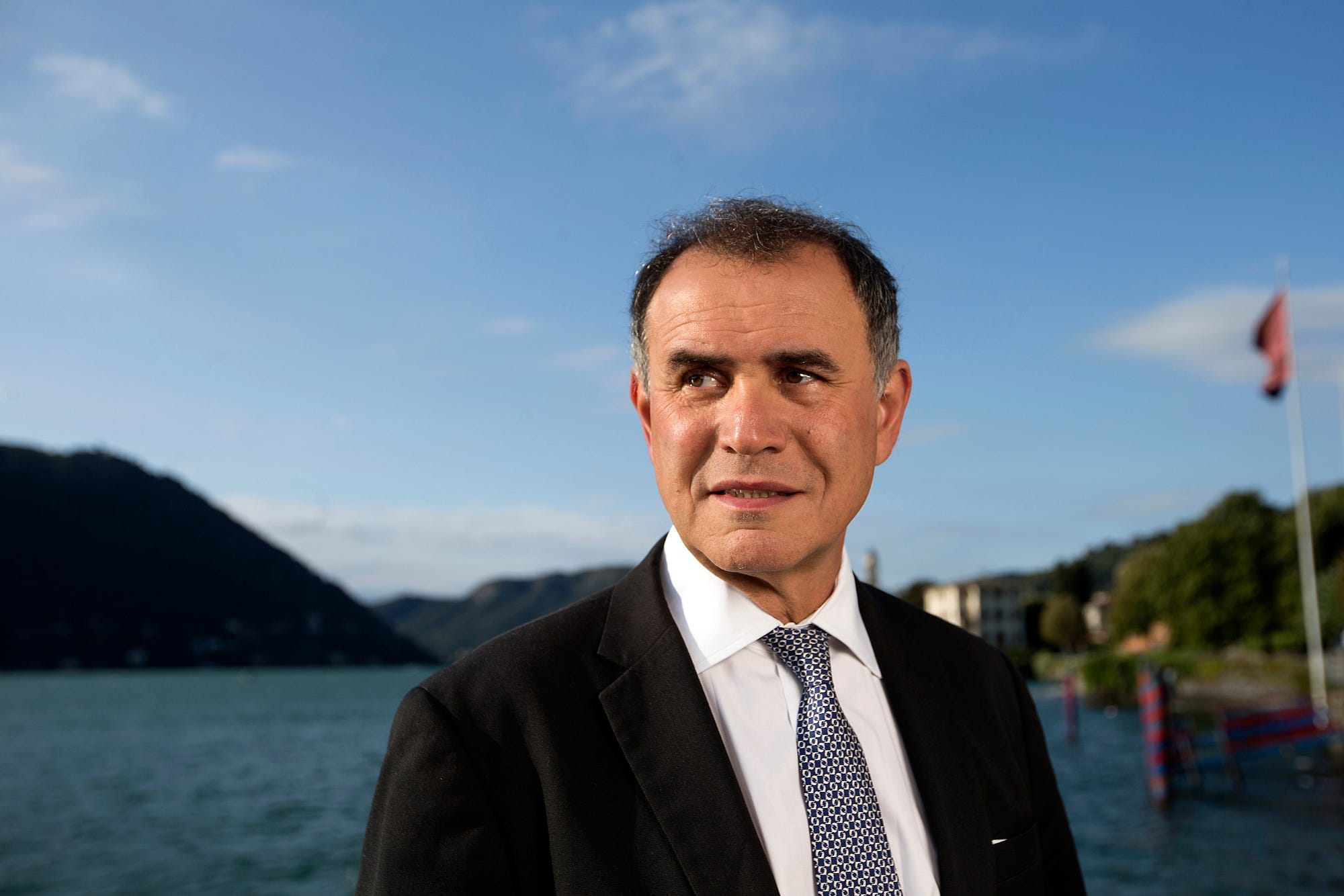
Nouriel Roubini is an American economist. As a renowned Global economist he’s one of the few who predicted the 2008 financial crisis, and he’s making sure U.S. senators don’t miss his warning on cryptocurrency. His basic message believe it or not is this:
Blockchain isn’t about democracy and decentralisation — it’s about greed!

There’s no doubt hundreds of ICOs have been scams, real fraud has occured in crypto and even Jimmy Song thinks EOS is a scam and ETH is amateurish. The debates about crypto have been some of the best in tech in the 2015 to 2020 period.
What if Bitcoin Really was a Scam

“Crypto is the mother or father of all scams and bubbles,” Roubini, also a professor at New York University, told the U.S. Senate Committee on Banking, Housing and Community Affairs at a hearing.

A Harvard alumnus and now a professor at NYU Stern School of Business, Mr. Roubini has always been critical of the crypto and blockchain industry. It’s important to have economists who don’t agree with crypto, it gives the generational divide some really interesting meat on the fate of digital assets and blockchain adoption.

He may however be right, most cryptos are likely worth close to nothing. EOS could indeed be a shitcoin. It’s not outside the realm of possibility. Bitcoin’s price we have to admit is a fairly manipulated and volatile asset, whatever the movers on its price seem to be. Apparently, CNBC is one of them.

Yet in 2018 we’ve basically learned that the fate of stablecoins could actually be to protect the global economy in times of crashes and hyper-inflation. Nevermind that for now though, to congress Nouriel said: I can see a bubble when there is one — and to me, this entire space has been the mother and the father of all financial bubbles and now it’s [going to] burst.

So if you bought in to Bitcoin late, for instance when it was at its peak — you probably lost 70 percent of your value. It is a bit like gambling. Crypto in many ways has been the high-risk high-reward play that young men would be most prone to.

The self-described expert on international financial markets, asset and credit bubbles and their bust, said the first warning sign came after late last year as bitcoin neared a high of almost $20,000. Yet people seem to have stronger views on crypto than they do on politics or religion. It inspires fanatical nearly cult-like following. Is it greed, or something else?

CNBC puts crypto skeptics on their stage on a regular basis. This feeds the flames of crypto propaganda whereby manipulation of these digital assets can take place for profit. It’s not good or bad journalism, but it certainly is clickbait. With everything in America, the internet is a tool for propaganda. However, with a Bitcoin ETF, Etheruem Futures, Bakkt launching and many other factors, we could actually see another bull run for Bitcoin. Whether you agree or disagree with it, it does exist and it’s slowly legitimatizing digital assets in a way few saw coming on a macro level.

Does the world really need public blockchains, privacy and stable coins, xxxxcoins? Probably not, we would be fine without all of these things. Is Blockchain the most hyped technology most people don’t understand? Without a doubt.

CNBC goes on quoting him: “Especially folks with zero financial literacy — individuals who could not tell the difference between stocks and bonds — went into a literal manic frenzy of Bitcoin and Crypto buying,” Roubini said in prepared testimony. If we were financially literate would we be investing in Wall Street instead — basically a tool the rich user to get richer? Can most of us even afford to do so?

Crypto is a poor man’s investment, where Bitcoin has become an idol — and that crypto greed is really a symbol of our poverty. Nouriel Roubini doesn’t have to be right, blockchain like AI can strengthen and make the global economy more resilient even if true decentralization might not manifest in our lifetime. The world can laugh at crypto, but it’s not ready for real decentralization. So what’s left? Likely a lot of frauds and ponzi-schemes.


Source


Thursday, January 04, 2018

Conservative Catholic dissidents attack Popes Francis and Benedict


Jan 3, 2018
by Thomas Reese, Religion News Service
Theology


Pope Francis, left, embraces Emeritus Pope Benedict XVI before opening the Holy Door to mark the opening of the Catholic Holy Year, or Jubilee, in St. Peter's Basilica, at the Vatican, on Dec. 8, 2015. (Osservatore Romano/Handout via Reuters)


Conservative Catholic dissidents, who have been attacking Pope Francis, showed their true colors recently by attacking retired Pope Benedict XVI, calling his writings "subversive" and "modernist." That's right, they think Benedict is a heretic.


In his new book, "Al Cuore di Ratzinger, Al Cuore del Mondo," the Italian philosopher Enrico Maria Radaelli goes after Joseph Ratzinger’s "Introduction to Christianity," one of Pope Benedict’s most popular books. Radaelli accuses him of embracing modern subjectivism by dabbling in Kant’s transcendentalism and Hegel’s "dialectical idealism."

Radaelli is joined in this attack by Monsignor Antonio Livi, dean emeritus of the faculty of philosophy of the Pontifical Lateran University. What is noteworthy is that last summer both of these academics signed a letter of correction addressed to Pope Francis asking him to change his "erroneous" views.

These folks are unhappy with everything that has happened in the church since the death of Pius XII in 1958 and the reforms of the Second Vatican Council in the 1960s.

Livi thinks that "neo-modernist" theology (a slur used by conservatives to describe anything they don't like) has enveloped the church, infiltrating its seminaries, bishops' conferences and even the Vatican itself. This "heretical" view has infected all the documents of Vatican II and the teachings of post-conciliar popes, Levi argues.

The problem with these philosophers is that they see the world as ideologues with rigid categories and rules. They have absolute certitude in their views and are not open to new questions. They are incapable of dialogue or learning from others.

They remind me of the joke: What is the difference between a scientist and a philosopher? If a scientist’s theory does not fit reality, he changes his theory. If a philosopher’s theory does not fit reality, reality must change.

Luckily, Pope Francis does not take these critics seriously. In a talk to the Italian Theological Association on Friday (Dec. 29), he laid out what he believes is the true vocation of a theologian. Theologians must always refer back to Vatican II, where the church recognized its responsibility to "proclaim the Gospel in a new way."

The pope spoke of “faithful creativity” in responding to a rapidly changing world. The job of a theologian is to show people what lies at the heart of the Gospel.

"There is need of a theology that helps all Christians to proclaim and to show, above all, the saving face of God, the merciful God," he said, "especially in the presence of some unheard-of challenges that involve the human today.” Among these challenges, he listed the environmental crisis, technologies that can alter human beings, social inequalities, mass migration and relativism in theory and practice.

He even calls on theologians to work together to "reimagine the church so that it may conform to the Gospel that it must proclaim."

The problem with conservatives is that they treat the great theologians of the past as a treasure chest of quotes rather than as examples of how to do theology. St. Augustine, for example, took Neoplatonism, the elite philosophical thought of his period, and used it to explain Christianity to the people of his age. St. Thomas Aquinas took the newly rediscovered writings of Aristotle — the avant-garde thinking of his time — and used it to explain Christianity to his 13th-century contemporaries.

The task of theologians is not to simply quote Augustine and Aquinas but to imitate them, to take the best secular thought of our time and use it to explain Christianity to 21st-century men and women. After all, how many Neoplatonists or Aristotelians have you met lately? Do we really expect contemporary people to master Plato and Aristotle before we can talk to them about Christ?

Sadly, the church does expect seminarians to learn Greek philosophy before studying theology, which results in them spouting unintelligible concepts like “transubstantiation” and “consubstantial.”

What theology needs today are thinkers like Augustine and Thomas who want to engage the thinkers of today, not yesteryear. Such creative thinking can get you in trouble in the church. Thomas’ books were burned by the bishop of Paris. Likewise, in the last century, creative theologians were persecuted and silenced by the hierarchy. Thankfully, Pope Francis is not afraid of theological creativity. In fact, he encourages the theological discussion and debate that are essential to the development of theology.

Catholic conservatives were brought up in a church that presented itself as unchanging because in Greek philosophy the perfect cannot change. Such an approach is not only ahistorical, it is doomed to failure. When such conservatives not only attack Pope Francis but also Benedict, they show that they are true ideologues, out of touch with reality, who should not be taken seriously.

[Jesuit Fr. Thomas Reese is a columnist for Religion News Service and author of Inside the Vatican: The Politics and Organization of the Catholic Church.]


Source

Saturday, September 19, 2015

Do Adventists Have a Beef With Pope Francis?


Do Adventists Have a Beef With Pope Francis?

BY JARED THURMON

Excitement has been mounting for months in anticipation of Pope Francis’ first visit to the United States. Even though this is the tenth papal visit to the U.S. since 1965, many are saying, “This one is different.” Why? Perhaps because Pope Francis will be speaking at the UN to the largest assembly of heads of state in world history and addressing the U.S. Congress for the first time. Or maybe because he’s being described as “a pontiff like no other,” venerated by the right and the left, by Jews and Muslims, by the gay community and the religious right. His name flashes repeatedly across television news screens and makes headlines in national and international newspapers. He appears to be “the pope for the people,” receiving accolades from men and women across a wide spectrum of society.

One issue in particular that is drawing both applause and criticism is the pope’s strong stance on climate change and human responsibility to care for the environment, touted as the big agenda item for this trip across the pond. Pope Francis plans to give a certain sound to the trumpet call regarding climate change, otherwise known as global warming. And with this issue, Adventists can resonate.


An Uphill Battle

As the Washington Post recently noted, Pope Francis is facing an uphill battle with many Christians who deny that climate change is real. But Francis isn’t alone in his beliefs. Nearly half of Americans say that climate change is a sign of “the last days.”Businessman Jay Faison is contributing $175 million to help persuade the naysayers that climate change is the real deal. And Muslim leaders from 20 countries are sounding their own trumpet that climate change is real and a force to be reckoned with.

So this isn’t an isolated event or one that will likely go away anytime soon. In fact, experts are declaring that climate change is to blame for everything from 400,000 deaths per year to the rapid increase in diabetes to the 500 percent rise in natural disasters since the 1970s—a trend the World Bank expects to see continue.


No Surprise Here


The apostle John, sitting on an island in the Mediterranean under a beautiful, smog-free blue sky and pristine azure waters, wrote that one day in the distant future God would “destroy those who destroy the earth” (Rev. 11:18). So today’s devastation of the environment should come as no surprise to Bible-believing Christians.

Whether we want to call it global warming, climate change, or natural disasters, there is a strong case that this is more than a mundane environmental issue; rather, as Jeff Nesbit of US News stated, many are considering it “the moral issue of our time.” Just ask farmers and other folk in California lamenting their dying crops and brown lawns whether they think climate change is real. Ask the citizens of Boston who had snow on the ground in June this year if they think something is changing. The debate often centers around who is responsible?

We don’t yet know all the solutions that Francis is going to propose. Some have suggested a “Slow Sunday,” and about such proposals, Adventists must stand by their historic Biblically-based opposition to any legislation that would infringe on a person’s freedom of conscience and right to practice the Biblical Sabbath. As the Summer of Trump has cooled down, the topic of climate change is heating up as Francis takes center stage on an issue many Americans are not quite sure affects them—at least not yet.


The Burden of Proof

Evidence rests heavily on the side of climate change, evidence that thinking individuals, including Adventist Protestants, can support. We’ve been sitting on a “secret”—knowledge that we’ve been given by both the Bible and the Spirit of Prophecy—for too long. This isn’t an issue or an event for which Adventists should be resting on the sidelines. Instead, “perhaps we have come to the kingdom for such a time as this!”

“Our people have been regarded as too insignificant to be worthy of notice; but a change will come,” 1 wrote Ellen White. Who knows? Maybe that time is now.


The Tide of Change


Votes and laws won’t stop the tide of climate change. “The earth dries up and withers” because “they have disobeyed the laws, violated the statutes and broken the everlasting covenant,” Isaiah writes (24:4, 5). But let us not be among the “they.” God expects more from us.

In the book Education, Ellen White wrote:

“ ‘As the whole creation groaneth and travaileth in pain together’ (Romans 8:26, 22), the heart of the infinite Father is pained in sympathy. Our world is a vast lazar house, a scene of misery that we dare not allow even our thoughts to dwell upon. Did we realize it as it is, the burden would be too terrible. Yet God feels it all. In order to destroy sin and its results He gave His best Beloved, and He has put it in our power, through co-operation with Him, to bring this scene of misery to an end” (emphasis supplied).

What Can We Do?

So, how can we cooperate with the God of nature, the God of the climate, to do our honest part in bringing this scene of misery to an end?

It’s simple: let’s take better care of His creation. This includes our body temple as well as the sanctuary of nature in which we live. The sad reality is that the creation is dying. According toYaleNews, animals are dying in increasing numbers, and for reasons few people understand. And the toll being taken is not just on the environment and animals, but on humans and their health as well.

After succumbing to Satan’s temptation in the Garden of Eden, Eve said, “The serpent deceived me, and I ate” (Gen. 3:13). Humanity has been deceived, and it seems we may have eaten our way into this mess—at least according to the United Nations FAO report “Livestock’s Long Shadow.”This eye-opening report cites the livestock sector as “a major stressor on many ecosystems and on the planet as a whole. Globally it is one of the largest sources of greenhouse gasses and one of the leading causal factors in the loss of biodiversity.” It adds that in developed and emerging countries, “it is perhaps the leading source of water pollution.”

More Articles and Books to Read

  • Berry, Wendell. The Unsettling of America: Culture and Agriculture. 2nd ed. New York: Avon Books, 1996. 
  • Blackmer, Sandra. “What Are We Really Doing to God’s Creatures?”Adventist Review, March 18, 2010, pp. 16-20.http://archives.adventistreview.org/issue.php?issue=2010-1508&page=16
  • Davidson, Jo Ann, “And It Was Good,” Adventist Review, August 21, 2008, pp. 8-11.http://archives.adventistreview.org/issue.php?id=2030&action=print
  • Davidson, Jo Ann, “Who Cares: Bioethics and the Christian,”Adventist Review, June 25, 2009, pp. 51-54.http://archives.adventistreview.org/issue.php?issue=2009-1518&page=51
  • Davis, Ellen F. Scripture, Culture, and Agriculture: An Agrarian Reading of the Bible. Cambridge: Cambridge University Press, 2009.
  • Dunbar, Stephen; Gibson, L. James; and Rasi, Humberto M., eds.Entrusted: Christians and Environmental Care, Adventus International University Publishers, 2013.
  • Habel, Norman. The Land Is Mine: Six Biblical Land Ideologies. Minneapolis: Fortress Press, 1995.
  • Imhoff, Daniel. CAFO: The Tragedy of Industrial Animal Factories, Earth Aware Editions, 2010.
  • Scully, Matthew. Dominion: The Power of Man, the Suffering of Animals, and the Call to Mercy. New York: St. Martin’s Press, 2002.
  • Sinclair, Upton. The Jungle, Dover Publications, 2001.
  • Tonstad, Sigve K. The Lost Meaning of the Seventh Day. Berrien Springs, MI: Andrews University Press, 2009. 
  • Tonstad, Sigve, K., “Ecology, Ethics, and Ecumenism: Taking the health message to a new level,” Adventist Review online.http://www.adventistreview.org/141519-62

According to the Environmental Working Group and USDA report titled Meat Eater’s Guide to Climate Change + Health, “the takeaway . . . is that eating meat and dairy is expensive, and in a whole lot of ways. . . . It’s not just the carbon emissions that hurt; it’s also the pesticides, fertilizers, fuel, and water needed to produce the feed for all those cows and pigs. And once that damage is done, there are still the health consequences we all face from eating too much meat, particularly red meat.”

Rob Bailey, the report’s lead author, nailed the reason the problem isn’t abating when he added, “Preventing catastrophic warming is dependent on tackling meat and dairy consumption, but the world is doing very little.”

“Curbing the world’s huge and increasing appetite for meat is essential to avoid devastating climate change,” says think-tank Chatham House. The problem is that few people want to make that change.
What Ellen White learned from a Catholic

Each one of us individually, including Adventists, holds in our hands the power to make a significant difference regarding the environment and to help end much of this misery. The world is clear-cutting rainforests, growing GMO monocrops, saturating rivers and soil with pesticides—all to raise ( often inhumanely) more than 56 billion animals every year for human consumption. It is the inhumane and unsustainable methods of raising of animals that I take issue with. We make the choice at every meal whether to eat for life or eat what once lived, to eat plant-based foods or animals.

Adam and Eve did not eat animals, which were in their care, nor will we eat animals in heaven (see Isa. 65:25). Our culture mourns the loss of Cecil the lion, 2 but consumes Bessie the cow, millions of times a day.

Health is a journey. It took Ellen White 33 years after she shared her health-message vision in 1863 to completely stop eating meat herself. 3 And when she finally made that decision, the reason she identified was not because of her health, but because of mercy and animal compassion:

“When the selfishness of taking the lives of animals to gratify a perverted appetite, was presented to me by a Catholic woman, kneeling at my feet, I felt ashamed and distressed; I saw it in a new light, and I said, ‘I will no longer patronize the butchers; I will not have the flesh of corpses on my table.’” 4


The Adventist Perspective

Ellen White’s well-known statement—“We have nothing to fear for the future, except as we shall forget the way the Lord has led us, and His teaching in our past history” 5—is often used in the context of theology, but could it also refer to health?

In the April 2015 issue of Adventist Review, startling data revealed that more than 73 percent of Seventh-day Adventist Millennials are not vegetarians! So, what does this mean?

Gary Fraser, principal investigator of the Adventist Health Studies, shared that the reality is that “the evidence that Adventist vegetarians do better than Adventist non-vegetarians with respect to risk of diabetes, hypertension, overweight, blood cholesterol, risk of several cancers, heart disease, and that they live longer lives, is overwhelming.” In light of the evidence-based research and current trends with younger Adventists, it seems likely that the results of the health studies could likely change as well. It was these studies that led National Geographic to identify Loma Linda, California, as a Blue Zone, and that Adventists are often the longest living and most healthy Americans.6 One of the key characteristics of the longevity and optimal health of the California Adventists noted in the National Geographic report was Adventists’ adherence to a plant-based diet. What will happen if this dynamic is no longer in play?


Look Upon the Earth

Isaiah declared, “Lift up your eyes to the heavens, look upon the earth beneath; the heavens will vanish like smoke, the earth will wear out like a garment and its inhabitants die like flies. But my salvation will last forever, my righteousness will never fail” (Isa. 51:6).

Isaiah was undoubtedly describing our day. The earth is wearing out, and thinking minds realize that something decisive is about to take place, that the world is on the verge of a stupendous crisis.7 So much so that people such as Tony-Stark-wannabe Elon Musk and other billionaire friends such as Richard Branson are putting all their eggs into the basket of colonizing another planet.People are realizing that something has to give, and many are turning to extreme measures in response.

When Pope Francis comes to the U.S. and shares his passion and strong encouragement for decided change regarding the environment, Adventists—and all others who see the validity of responsibly caring for the planet, the rainforests, the soil, the rivers, the air, the animals—should consider the now-scientifically proven words of that dear Catholic woman who convinced Ellen White in 1893 that it is selfishness to continue to take the lives of animals just to gratify appetite. We then need to look at what each of us personally can do to make a difference as well.

On the issue of climate change, thoughtful Adventists won’t have a beef with Pope Francis.

Jared Thurmon is the Strategic Partnerships Liaison
for Adventist Review.


  1. Ellen G. White, Testimonies to the Church, vol. 5, p. 546.
  2. http://www.cnn.com/2015/07/31/world/zimbabwe-cecil-lion-dentist/
  3. Ellen G. White, Letter 73, 1896.
  4. Ellen G. White, Testimony Studies on Diet and Foods, p. 67.
  5. Ellen G. White, Christian Experience and Teachings, p. 204.
  6. http://travel.nationalgeographic.com/travel/happiest-places/blue-zones-california-photos/#/swim-lomo-linda_41552_600x450.jpg
  7. Ellen G. White, Prophets and Kings, p. 537.


.

P.S.
When I read dubious articles as these it reminds of Samuelle Bacchiocchi, and this warning from the Spirit of Prophecy:
We have far more to fear from within than from without.
Selected Message Book 1, p.122.
 

Thursday, July 30, 2015

Washington DC is sinking into the sea through a process of “forebulge collapse”


JUL 30, 2015 6 Kevin Sanders


Geologists say Washington DC is gradually sinking into the sea through a process known as “forebulge collapse.” This means the government of the United States is sitting on a waterbed that is heaving and could gradually collapse over the next century unless active preparations are put in place.


Geologists say this has nothing to do with unchecked climate change or excessive underwater flows, but it has all to do with forebulge collapse which refers to the geological ups and downs that have been occurring unnoticed since the last ice age. Scientists further noted that before the last 20,000 years, a mile-high ice sheet stretched very far south and extended up to Long Island, and its sheer weight remains under the ground of Washington DC today.

“It’s a bit like sitting on one side of a water bed filled with very thick honey,” Ben DeJong, the lead author on the new study, said. “The other side goes up. But when you stand, the bulge comes down again.”

This study was conducted by geologists from the University of Vermont, the US Geological Survey, and other research organizations; and their findings were published in GSA Today – a journal of the Geological Society of America.


DeJong and his colleagues drilled holes in the Blackwater National Wildlife Refuge, close to Washington, and then analyzed the layers of sediments – comparing these with computer models and satellite scans of the region. They project that Washington will drop by six or more inches over a century to this time, and this will not only threaten sea level rise, but it will also compromise national monuments and military installations in the state.

“Right now is the time to start making preparations,” DeJong said. “Six extra inches of water really matters in this part of the world.”

The Intergovenmental Panel on Climate Change had already predicted that global sea levels would rise by at least a foot by 2100, and even added that this has even occurred by 1.8 millimeters per year worldwide within the last century.

“It’s ironic that the nation’s capital–the place least responsive to the dangers of climate change–is sitting in one of the worst spots it could be in terms of this land subsidence,” Paul Bierman, a UVM geologist told Science Daily. “Will the Congress just sit there with their feet getting ever wetter? What’s next, forebulge denial?


.

Sunday, July 27, 2014

Examining the Terrorist Threat from America's Southern Border


THURSDAY, JULY 24, 2014 - 03:01


Stratfor


By Scott Stewart

On July 21, Texas Gov. Rick Perry announced he was deploying 1,000 members of the Texas National Guard to the Mexican border to help strengthen border security. The move is the latest in a chain of events involving the emigration of Central Americans that has become heavily publicized -- and politicized.

Clearly, illegal immigration flows are shifting from Arizona and California to Texas. In fiscal year 2013 (all Border Patrol data is recorded by fiscal year), the Rio Grande Valley Border Patrol sector surpassed Tucson as the leading sector for the number of apprehensions (154,453 in Rio Grande Valley versus 120,939 for Tucson). Also, between fiscal years 2011 and 2013, the number of Border Patrol determined "other than Mexicans" -- mostly Central Americans -- apprehended by the Rio Grande Valley sector increased by more than 360 percent, from 20,890 to 96,829. (By comparison, the Tucson sector apprehended 19,847 "other than Mexicans" in 2013.) Significantly, minors constituted a large percentage of the "other than Mexicans" apprehended in the Rio Grande Valley in 2013: 21,553 (compared to 9,070 in Tucson sector). However, the majority (84 percent) of those labeled Unaccompanied Alien Children by the Border Patrol are teenage minors and not younger children.


Lost in all the media hype over this "border crisis" is the fact that in 2013 overall immigration was down significantly from historical levels. According to U.S. Border Patrol apprehension statistics, there were only 420,789 apprehensions in 2013 compared to 1,160,395 in 2004. In fact, from fiscal 1976 to 2010, apprehensions never dropped below 500,000. During that same period, the Border Patrol averaged 1,083,495 apprehensions per year compared to just 420,789 last year.

Of course, apprehension statistics are not an accurate count of total immigration and do not account for those who cross without being caught, and the statistics are also slightly skewed by the fact that Unaccompanied Alien Minors are far more likely to surrender to authorities rather than attempt to avoid them. In 2011, the Border Patrol apprehended 4,059 unaccompanied children; by 2013 that number had reached 38,759. Year to date, the Border Patrol has apprehended more than 46,000 unaccompanied children and estimates it will apprehend around 60,000 total in 2014. Still, overall, the Border Patrol will apprehend and process hundreds of thousands fewer people this year than it did each fiscal year from 1976 until 2010.


This type of hype and politicization of the U.S.-Mexico border is not new. It is something that has surfaced at irregular intervals for years now, along with scaremongering using the boogeyman of terrorism, and it appears to be happening again.

I've recently done a number of media interviews regarding immigration, and during several of these interviews, reporters have asked me the question: "Does the crisis on the border give terrorists an opportunity to sneak into the country?" While other border security analysts have told reporters that they believe terrorists would take advantage of the border crisis and that the cartels would be willing to work with terrorists for the right price, I disagree. I believe that an analysis of the history of plots directed against the U.S. homeland from overseas and an examination of the changes in the dynamics of transnational terrorism show such claims to be unfounded.
No Link to the U.S.-Mexico Border

As chaos has wracked Mexican towns just south of the U.S. border such as Nuevo Laredo, Reynosa, Juarez and Tijuana, there has been repeated speculation that al Qaeda could partner with some street gang or Mexican cartel to smuggle terrorist operatives or weapons into the United States to conduct a spectacular terrorist attack.

For example, in 2005, rumors were frequently published on a popular web media outlet claiming that al Qaeda had smuggled several tactical nuclear devices into the United States with the help of the Salvadoran Mara Salvatrucha street gang. According to the rumors, al Qaeda was planning to launch a horrific surprise nuclear attack against several U.S. cities in what was termed "American Hiroshima." Clearly this never happened.

But American fearmongers are not the only ones who can cause a panic. In a 2009 speech, radical Kuwaiti university professor Abdullah al-Nafisi talked about the possibility that jihadists could smuggle anthrax in a suitcase through a drug tunnel on the U.S.-Mexico border, a claim that sparked considerable concern because it came on the heels of other hyped-up anthrax threats.

However, an examination of all jihadist plots since the first such attack in the United States -- the November 1990 assassination of the radical founder of the Jewish Defense League, Meir Kahane -- shows that none had any U.S.-Mexico border link. Indeed, as we've noted elsewhere, there have been more plots against the U.S. homeland that have involved the U.S.-Canada border, including the 1997 plot to bomb the New York Subway and the Millennium Bomb Plot. But by and large, most terrorists, including those behind the 1993 World Trade Center bombing and the 9/11 attacks, have entered the United States by flying directly to the country. There is not one jihadist attack or thwarted plot in which Mexican criminal organizations smuggled the operative into the United States.

There was one bumbling plot by Iran's Islamic Revolutionary Guard Corps in which Manssor Arbabsiar, a U.S. citizen born in Iran and residing in Texas, traveled to Mexico in an attempt to contract a team of Mexican cartel hit men to assassinate the Saudi ambassador to the United States. Instead of Los Zetas, he encountered a U.S. Drug Enforcement Administration informant and was set up for a sting. There is no evidence that an actual Mexican cartel leader would have accepted the money Arbabsiar offered for the assassination.

Mexican criminal leaders have witnessed U.S. government operations against al Qaeda and the pressure that the U.S. government can put on an organization that has been involved in an attack on the U.S. homeland. Mexican organized crime bosses are businessmen, and even if they were morally willing to work with terrorists -- a questionable assumption -- working with a terrorist group would be bad for business. It is quite doubtful that Mexican crime bosses would risk their multibillion-dollar smuggling empires for a one-time payment from a terrorist group. It is also doubtful that an ideologically driven militant group like a jihadist organization would trust a Mexican criminal organization with its weapons and personnel.
Changes in Terrorist Dynamics

Another factor to consider is the changes in the way militant groups have operated against the United States since 9/11. Because of increased counterterrorism operations and changes in immigration policies intended to help combat terrorist travel, it has become increasingly difficult for terrorist groups to get trained operatives into the United States.

Even jihadist groups such as al Qaeda in the Arabian Peninsula have been forced to undertake remote operations involving bombs placed aboard aircraft overseas rather than placing operatives in the country. This indicates that the group does not have the ability or the network to support such operatives. In addition to remote operations launched from its base in Yemen, al Qaeda in the Arabian Peninsula has also undertaken efforts to radicalize grassroots operatives residing in the United States, equipping them with easy-to-follow instructions for attack through its English-language magazine, Inspire.

This focus on radicalizing and equipping grassroots operatives is also reflected in the fact that the majority of the attacks and failed plots inside the United States since 2001 have involved such grassroots operatives rather than trained terrorists. These operatives are either U.S. citizens, such as Nidal Hasan, Dzhokhar Tsarnaev and Faisal Shahzad, or resident aliens such as Najibullah Zazi. Failed shoe bomber Richard Reid was traveling on a British passport (no U.S. visa required) and the would-be underwear bomber, Umar Farouk Abdulmutallab, had obtained a valid U.S. visa. The operatives had the ability to legally reside in the United States or to enter the country legally without having to sneak across the border from Mexico.

Could a terrorist operative take advantage of the U.S.-Mexico border? Possibly. Is one likely to attempt such a crossing when so much publicity and extra enforcement has been directed to that border? Probably not.

.