

Newsletter
FAITHVATICAN DISPATCH

Gerard O’Connell
March 01, 2018
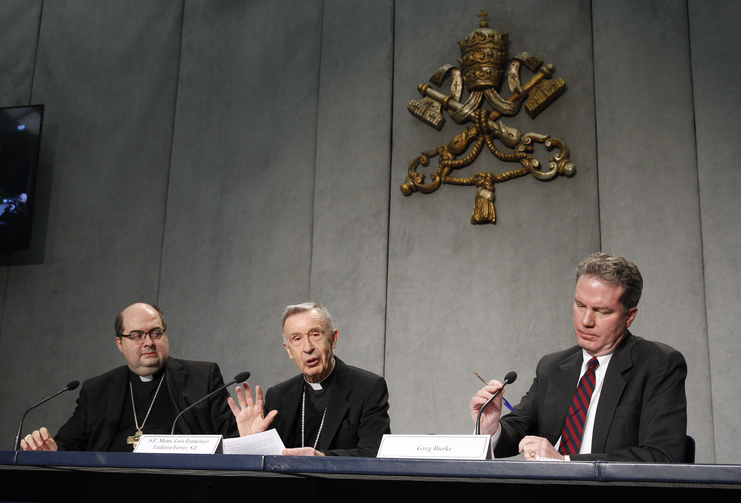
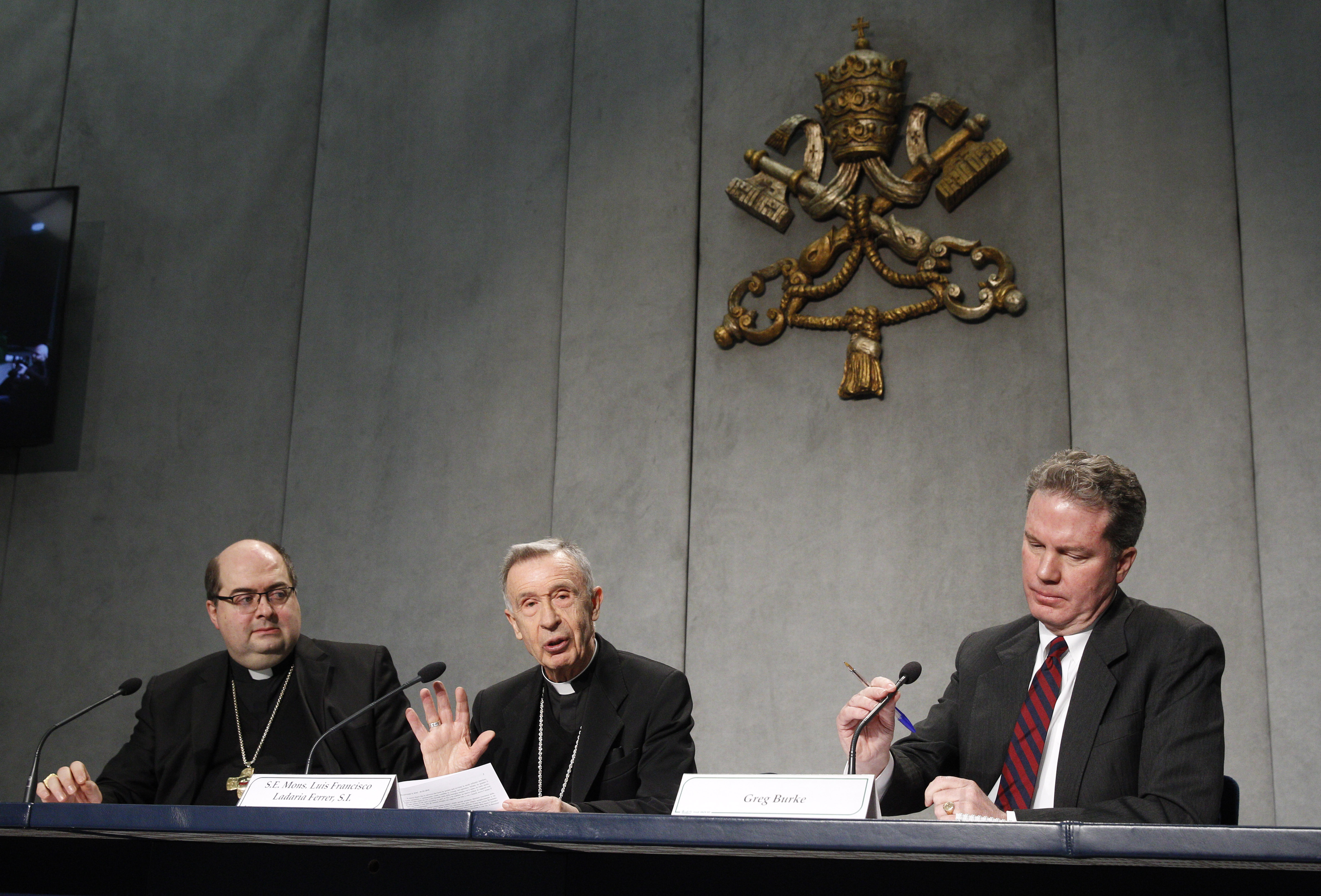
Archbishop Luis Ladaria, prefect of the Congregation for the Doctrine of the Faith, speaks at a news conference to present the document "Placuit Deo" at the Vatican March 1 (CNS photo/Paul Haring).
The Congregation for the Doctrine of the Faith has sent a letter to some 5,000 Catholic bishops that reaffirms the traditional teaching of the Christian faith in the face of new versions of ancient heresies—Pelagianism and Gnosticism. These heresies claim one can attain salvation by one’s own efforts and strengths or through an inward personal union with God that ignores the community of believers in Jesus, that is, the church.*
“Both neo-Pelagian individualism and the neo-Gnostic disregard of the body deface the confession of faith in Christ, the one, universal Savior,” according to the 4,000-word letter, which was released by the Vatican in Italian, French, English, German, Spanish and Portuguese.
The letter bears the title “Placuit Deo” (“it pleased God”) and deals with “Certain Aspects of Christian Salvation.” It was signed by the prefect and secretary of the congregation that Pope Francis appointed last year, Archbishop Luis Ladaria Ferrer, a Spanish Jesuit, and the Italian diocesan priest Giacomo Morandi. They presented the letter at a Vatican press conference on March 1. The pope approved the letter before publication.
Explaining the genesis of the letter, Archbishop Ladaria recalled that after the publication in 2000 of the declaration “Dominus Iesus,” several theologians asked the C.D.F. “to deepen some aspects already enunciated in that declaration” and “suggested a new document about Christian salvation.” Though he did not say so, the historical record shows that “Dominus Iesus” caused much controversy not only within the Catholic Church but also within the other Christian churches and to some degree with the followers of other religions. It was accompanied shortly after by a C.D.F. notification on a key work of the pioneering Belgian theologian, Jacques Dupuis, S.J., Toward a Christian Theology of Religious Pluralism.
Today’s letter reflects a somewhat different style and spirit than Benedict XVI’s “Dominus Iesus.”
The Congregation for the Doctrine of the Faith has sent a letter to some 5,000 Catholic bishops that reaffirms the traditional teaching of the Christian faith in the face of new versions of ancient heresies—Pelagianism and Gnosticism. These heresies claim one can attain salvation by one’s own efforts and strengths or through an inward personal union with God that ignores the community of believers in Jesus, that is, the church.*
“Both neo-Pelagian individualism and the neo-Gnostic disregard of the body deface the confession of faith in Christ, the one, universal Savior,” according to the 4,000-word letter, which was released by the Vatican in Italian, French, English, German, Spanish and Portuguese.
The letter bears the title “Placuit Deo” (“it pleased God”) and deals with “Certain Aspects of Christian Salvation.” It was signed by the prefect and secretary of the congregation that Pope Francis appointed last year, Archbishop Luis Ladaria Ferrer, a Spanish Jesuit, and the Italian diocesan priest Giacomo Morandi. They presented the letter at a Vatican press conference on March 1. The pope approved the letter before publication.
Explaining the genesis of the letter, Archbishop Ladaria recalled that after the publication in 2000 of the declaration “Dominus Iesus,” several theologians asked the C.D.F. “to deepen some aspects already enunciated in that declaration” and “suggested a new document about Christian salvation.” Though he did not say so, the historical record shows that “Dominus Iesus” caused much controversy not only within the Catholic Church but also within the other Christian churches and to some degree with the followers of other religions. It was accompanied shortly after by a C.D.F. notification on a key work of the pioneering Belgian theologian, Jacques Dupuis, S.J., Toward a Christian Theology of Religious Pluralism.
Today’s letter reflects a somewhat different style and spirit than Benedict XVI’s “Dominus Iesus.”

