Showing posts with label Jordan. Show all posts

Monday, May 18, 2026

Pope: Christians and Muslims must work together to ‘revive humanity'


Pope Leo greets participants in the colloquium (@Vatican Media)


In a meeting with participants in an interfaith colloquium, Pope Leo calls on Christians and Muslims to “revive humanity where it has grown cold” and "transform indifference into solidarity”.


By Joseph Tulloch

Pope Leo met on Monday morning with members of Jordan’s Royal Institute for Inter-Faith Studies and of the Holy See’s Dicastery for Interreligious Dialogue.

The members of the Royal Institute, which was founded under the patronage of Jordan’s Prince Hasan bin Talal, were in Rome for a colloquium on “Human Compassion and Empathy in Modern Times”.

READ THE FULL TEXT OF THE POPE'S ADDRESS HERE


Pope Leo with Cardinal Koovakad, Prefect of the Dicastery for Interreligious Dialogue (@Vatican Media)

Saturday, May 24, 2014

Pope Francis blessed the waters of the Jordan River


Romereports


Published on May 24, 2014

http://en.romereports.com (-VIDEO ONLY-) The Pope arrived to the Jordan river, the site of Jesus' Baptism, on board a golf cart, driven by Jordan's King Abdullah. Their passengers included Queen Rania and the crown prince.
.
.

Saturday, June 15, 2013

U.S. puts jets in Jordan, fuels Russian fear of Syria no-fly zone


Related Video

Rebels, government forces battle for Aleppo
8:33pm EDT


By Oliver Holmes

BEIRUT | Sat Jun 15, 2013 9:06pm EDT

(Reuters) - The United States said on Saturday it would keep F-16 fighters and Patriot missiles in Jordan at Amman's request, and Russia bristled at the possibility they could be used to enforce a no-fly zone inside Syria.

Washington, which has long called for President Bashar al-Assad to step down, pledged military support to Syrian rebels this week, citing what it said was the Syrian military's use of chemical weapons - an allegation Damascus has denied.

Defense Secretary Chuck Hagel has approved a Jordanian request for American F-16s and Patriot missiles to remain in the Western-backed kingdom after a joint military exercise there next week, a Pentagon spokesman said.

Western diplomats said on Friday Washington was considering a limited no-fly zone over parts of Syria, but the White House noted later that it would be far harder and costlier to set one up there than it was in Libya, saying the United States had no national interest in pursuing that option.

Russia, an ally of Damascus and fierce opponent of outside military intervention in Syria, said any attempt to impose a no-fly zone using F-16s and Patriots from Jordan would be illegal.

"You don't have to be a great expert to understand that this will violate international law," Foreign Minister Sergei Lavrov said.

The idea of a no-fly zone was endorsed by Egypt, the biggest Arab nation. President Mohamed Mursi, an Islamist more distant from Washington than his deposed military predecessor, made a keynote speech in Cairo throwing Egypt's substantial weight more firmly than before against President Bashar al-Assad.

Despite their differences, the United States and Russia announced in May they would try to convene peace talks involving the Syrian government and its opponents, but have set no date.

U.S. Secretary of State John Kerry said chemical attacks by Syrian forces and Hezbollah's involvement on Assad's side showed a lack of commitment to negotiations and threatened to "put a political settlement out of reach".

Kerry had not previously expressed such pessimism about prospects for the conference, which has run into many obstacles.

These include disarray in the Syrian opposition and military gains by the Syrian army and its Lebanese Hezbollah allies against rebels who have few ways to counter Assad's air power.

The involvement of Hezbollah fighters on the side of Assad, a fellow ally of the main Shi'ite power Iran, has galvanized Arab governments, including Egypt, behind the rebels, who mostly follow the Sunni version of Islam that dominates the Arab world.

That has hardened sectarian confrontation across the region, which some Arabs hope might be softened by the election of the moderate Hassan Rohani as Iran's president - though few believe he can truly influence Tehran's supreme leader.

Mursi, addressing thousands of cheering supporters at a stadium gathering organized by Egyptian Sunni clerics, demanded Hezbollah pull out of Syria and, after his Muslim Brotherhood joined calls for jihad against Assad and his Shi'ite allies, the president said Cairo had now cut diplomatic ties with Damascus.

Egypt's powerful, U.S.-backed army seems unlikely to involve itself in Syria, but religious passions are running high and more Egyptian volunteers could travel to join the rebels.

AIR STRIKES

The pro-opposition Syrian Observatory for Human Rights said Syrian jets and artillery had again attacked Jobar, a battered district where rebels operate on the edge of central Damascus.

It said heavy artillery was also shelling opposition fighters in the provinces of Homs, Aleppo and Deir al-Zor.

Western powers have been reluctant in the past to arm Syrian insurgents, let alone give them sophisticated anti-aircraft missiles that might fall into the hands of Sunni Islamist insurgents in rebel ranks who have pledged loyalty to al Qaeda.

Free Syrian Army (FSA) commander Salim Idriss told Reuters late on Friday that rebels urgently needed anti-aircraft and anti-tank missiles, as well as a protective no-fly zone.

"But our friends in the United States haven't told us yet that they are going to support us with weapons and ammunition," he said after meeting U.S. and European officials in Turkey.

A source in the Middle East familiar with U.S. dealings with the rebels has said planned arms supplies would include automatic weapons, light mortars and rocket-propelled grenades.

The United Nations says at least 93,000 people, including civilians and combatants, have died in the Syrian civil war, with the monthly death toll averaging 5,000 in the past year.

Abu Nidal, from the Islamist Ahrar al-Sham rebel group, said U.S. help was welcome, but questioned how effective it would be.

"I doubt the influx of weapons will significantly tip the balance into our favor," he said via Skype. "They might help push back regime offensives of the last few days."

SYRIAN OFFICERS DEFECT

Abu Nidal's faction is not part of the more moderate FSA, Washington's chosen channel for military aid, but he said the two groups fight alongside each other on the battlefield.

The FSA was set up by defectors from the Syrian military in August 2011, but many rebel factions operate independently.

Assad's armed forces have remained relatively cohesive, although a Turkish official said 71 Syrian army officers, including six generals, had just defected to Turkey, in the biggest such mass desertion in months.

Western nations have stopped short of arming Syrian rebels or mounting an air campaign as they did, with U.N. approval, to help Libyan insurgents topple Muammar Gaddafi in 2011.

Intervening against Assad is considered riskier because Syria has a stronger military, sits on the sectarian faultlines of the Middle East, and is supported by Iran and Russia, which has vetoed three U.N. Security Council resolutions on Syria.

Yet an apparent shift in the military balance in Assad's favor, especially with the arrival of thousands of Shi'ite fighters from the Iranian-backed Hezbollah group, has made his swift removal look unlikely without outside intervention.

However, Israel's defense minister suggested the pendulum could still swing the other way, despite the capture this month of Qusair, a former rebel stronghold near the Lebanese border.

"Bashar al-Assad's victory in Qusair was not a turning point in the Syrian civil war, and I do not believe that he has the momentum to win," said Moshe Yaalon, who is visiting Washington.

"He controls just 40 percent of the territory in Syria. Hezbollah is involved in the fighting in Syria and has suffered many casualties in the battles, and as far as we know, it is more than 1,000 casualties," Yaalon said in a statement.

"We should be prepared for a long civil war with ups and downs."

Israel has not taken sides in Syria, but does not want to see any Western anti-aircraft missiles or other advanced arms reach Islamist militants hostile to the Jewish state.


(Additional reporting by Jonathon Burch in Ankara, Ari Rabinovitch in Jerusalem, Mark Hosenball in Washington, Thomas Grove in Moscow and Tom Perry and Alastair Macdonald in Cairo; Editing by Andrew Roche)


>--------------<
.

Lavrov and Rodham-Clinton in the recent 'good olde days'

.

Thursday, April 18, 2013

More U.S. Troops Head to Jordan to Help Contain Syria, Hagel Says


Military continues planning for post-Assad Syria intervention


By PAUL D. SHINKMAN

April 17, 2013 RSS Feed Print


President Barack Obama and Jordan's King Abdullah II in a joint conference in Amman, Jordan. The U.S. is sending more military to Jordan to help contain the violence in Syria.


The U.S. is sending more troops and equipment to Jordan to help contain the violence in Syria, the Defense secretary said on Tuesday, adding the U.S. is preparing some sort of intervention in a post-Assad Syria.

[PHOTOS: Car Bomb Kills Dozens in Syria]

Secretary Chuck Hagel said he ordered the deployment of a U.S. Army headquarters unit to Amman, Jordan last week. This influx of troops will bolster the existing "small team of U.S. military experts" training the Jordanians in containing Syria's chemical weapons stockpile.

"These personnel will continue to work alongside Jordanian Armed Forces to improve readiness and prepare for a number of scenarios," he said while speaking before the Senate Armed Services Committee on Wednesday.

The U.S. has multiple plans in place to address a chemical weapons threat from Syria. Reports circulated mid-March that the Syrian regime attacked rebels with chemical weapons, which is still under investigation. President Barack Obama said the use of chemical weapons would be a "red line" for Syrian President Bashar al-Assad.

"We have been developing options and planning for a post-Assad Syria, and we will continue to provide the president and Congress with our assessment of options for U.S. military intervention," said Hagel.

[READ: Syria 'Chemical Attack' Leaves Both Sides Pointing Fingers]

"The U.S. military is constantly updating and adjusting tactical military planning to account for the rapidly shifting situation on the ground and to prepare for additional new contingencies," he said. "Not only those associated with the Syrian regime's chemical weapons stockpiles, but also the potential spillover of violence across Syria's borders that could threaten allies and partners.

The U.S. has also been working with Iraq and Turkey to protect their borders with Syria.

Hagel said military intervention should be seen as a last resort, as it would conflict with America's humanitarian efforts. To date, the State Department and USAID have sent $385 million in humanitarian assistance to Syria in the form of emergency supplies and food. It has also agreed to supplying the opposition movement directly with $117 million in yet unspecified non-lethal assistance, including medical equipment and communications.

[BROWSE: Political Cartoons on the Syrian Conflict]

"We are working now to assess how to allocate and deliver that additional assistance," Hagel said.

The secretary will travel to the region on Saturday to meet with leaders from Egypt, Israel, Jordan, Saudi Arabia and the U.A.E. Secretary of State John Kerry will be in Turkey this weekend to discuss ongoing security efforts there.

The U.S., Germany and the Netherlands sent six Patriot missile batteries to Turkey at the end of December to protect its border with Syria from missile strikes.


.
.

Monday, December 12, 2011

Hundreds of US-NATO Soldiers Arrive & Begin Operations on the Jordan-Syria Border

BFP Exclusive- Developing Story: Hundreds of US-NATO Soldiers Arrive & Begin Operations on the Jordan-Syria Border

Sunday, 11. December 2011

Report: Foreign Troops Begin to Spread Near the Villages of Al-Mafraq

Update 1: Today at 12:00 P.M. we contacted DOD Press Office via two voicemail messages and one e-mail asking for comment(s) on this story. As of 6:00 P.M. EST we have not heard back.

Update 2: Another journalist with a major mainstream media publication was told by his editors that there would be no coverage or follow up on these developments.

SyriaJordanAccording to first-hand accounts and reports provided to Boiling Frogs Post by several sources in Jordan, during the last few hours foreign military groups, estimated at hundreds of individuals, began to spread near the villages of the north-Jordan city of “Al-Mafraq”, which is adjacent to the Jordanian and Syrian border.

According to one Jordanian military officer who asked to remain anonymous, hundreds of soldiers who speak languages ​other than Arabic were seen during the past two days in those areas moving back and forth in military vehicles between the King Hussein Air Base of al-Mafraq (10 km from the Syrian border), and the vicinity of Jordanian villages adjacent to the Syrian border, such as village Albaej (5 km from the border), the area around the dam of Sarhan, the villages of Zubaydiah and al-Nahdah adjacent to the Syrian border.

Another report received from our source in Amman identified an additional US-NATO Command Center in “al-Houshah,’ a village near Mafraq.

Our Iraqi journalist source in London provided us with the following related information:

“Some of the US forces that left the Ain al-Assad Air base in Iraq last Thursday, did not come back to the USA or its base in Germany, but were transferred to Jordan during the evening hours.”

The above information was further corroborated by our correspondent and advisor Nizar Nayouf who interviewed an employee in the London-based office of Royal Jordanian Airlines:

“At least one US aircraft carrying military personnel landed in the Prince Hassan Air base located about 100 km to the east of the city of Al-Mafraq.”

Earlier last week, Jordanian news websites disclosed that “Western officials have requested the King to allow establishing an electronic spy station in the north of Jordan (near the Syrian border) in order to access the Syrian army and contact Syrian high-rank officers for convincing them to make a military coup or (at least) rebel against the regime”.

Nizar Nayouf, BFP advisor and correspondent on Syria in London, had the following statement on Al-Mafraq:

The al-Mafraq air base, which now includes Air Force Academy, was a starting point for “conspiratorial activities” by Jordan, The UK and Israel against Syria in the past, particularly in the 1960s. In September 1968, a Syrian commando Major, Salim Hatoom, who fled to Jordan with a number of officers after a failed coup attempt, established a camp from which he started a rebel military against the then left-wing government of Syria under president Nureddin al-Atassi and Salah Jadid. By the end of 1970s and early 1980s, the Syrian Islamic Brotherhood and their military wing “At-Taleeah al-Islamiyyah al-Muqatilah” (the Islamic Militant Vanguard) used the same base for its military struggle against president Hafez a-Assad regime, in which they were being trained by the Jordanian and Israeli intelligence agents, and cars were being bombed before they were sent to the streets of Syrian cities for the killing of innocents and undermining state facilities.”

Mr. Nayouf went on to emphasize the irony of the situation:

I guess history repeats itself but as farce…Last spring, that tens of Syrian soldiers, who fled to Jordan, were transferred to a camp west of the Jordanian city of “Salt”, in which officers from Israeli military intelligence (AMAN) began the investigation with them under the supervision of the Jordanian military intelligence. This was to extract information from them on issues related to the development of the Syrian army, weapons and training, especially after 2006.

We contacted our expert sources on US media and intelligence-military and were told that the US media has been told not to report on this latest development until Tuesday, December 13. Boiling Frogs Post is the first news website to report on these latest developments.

This story is developing and we await further details and confirmation from our sources in Turkey and Jordan. For additional Boiling Frogs Post Syria coverage see here and here.

# # # #

*Nizar Nayouf and James Corbett contributed to this exclusive Boiling Frogs Post report.


Source

Wednesday, October 26, 2011

Everybody Is Confused”

Everybody Is Confused”

Jordan's King Abdullah II

An interview with Jordan’s King Abdullah about the chaos in Syria, and his view that the Arab Spring is a “disaster” for Israel.


Source

Monday, February 01, 2010

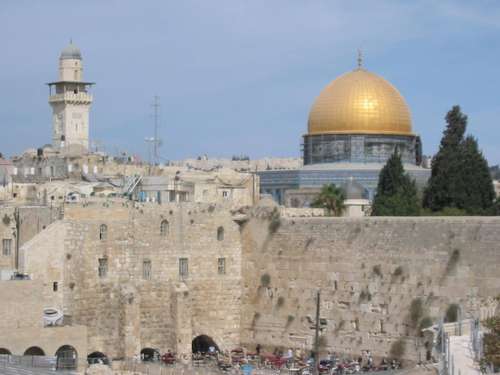
Netanyahu risks Muslim wrath over Jerusalem holy site

Old City of Jerusalem(Archive)

Netanyahu risks Muslim wrath over Jerusalem holy site
By Akiva Eldar, Haaretz Correspondent


Will Netanyahu use a court decision to forgo a plan to alter the Mughrabi Gate? King Abdullah of Jordan is distancing himself from Israel's prime minister because of the violation of the status quo in East Jerusalem. The Turkish prime minister, Recep Tayyip Erdogan, is waiting in the corner for the slightest provocation against Islamic holy places by the Israeli government. The only trouble Benjamin Netanyahu is still missing is that of the Mughrabi Gate, at the entrance to the Temple Mount/Noble Sanctuary compound.

Whether he likes it or not, that problem is already nearing boiling point. But two weeks ago, the Jerusalem District Court supplied him with a ladder. Now, the prime minister must decide whether he wants to use it to climb down from the ramp, or whether he prefers to climb up, and gamble with what is left of Israel's relations with the Muslim world.

Next week will mark the third anniversary of the start of the salvage dig at this sensitive site, which leads to the Al-Aqsa Mosque and overlooks the Western Wall. Back then, close to 2,000 policemen accompanied archaeologists and workers to the compound. Their assignment was to prepare for restoration work at the site, after cracks were discovered in the ramp leading to the gate in 2004.

Rumors flew through the Arab world that the Jews were trying to undermine the foundations of the mosque and prepare the area for the construction of a third Temple. The Jordanian king warned that the work would undermine the stability of the Middle East. A Hamas spokesman warned that damage to the mosque would put an end to the temporary cease-fire. A few months later, a team of experts from Turkey examined the excavations and asserted that this was an attempt to destroy cultural assets from the Islamic period.

The Western Wall Rabbi, Shmuel Rabinowitz, is a man of action: He never for a moment hid his intention of exploiting the repair of the ramp to turn the unused space below it into an extension of the women's prayer section. He would joke that the Lord had answered his prayers by putting cracks in the ramp, which would make it possible to reduce the crowding at the Western Wall Plaza. The rabbi also used his connections in earthly Jerusalem - namely, in the office of then prime minister Ehud Olmert.

Together with the Company for the Reconstruction and Development of the Jewish Quarter, Rabinowitz promoted a detailed plan for changing the face of the Mughrabi ramp. And Olmert even put himself at the head of a special ministerial committee for advancing the project. The plan went from one planning committee to another until it reached the National Planning and Building Committee.

But two weeks ago, something happened in Jerusalem that threatens to spoil the plan. The president of the Jerusalem District Court, Judge Moussia Arad, took a look at the pictures shown her by attorney Kais Nasser, who is representing Islamic historian Dr. Mahmoud Massalha in his petition against the plan. She looked, and it apparently had an effect.

According to the pictures, which were taken in 2004, the damage to the ramp is small and concentrated mainly in its northern section. An expert opinion accompanying the photographs stated that the cracks did not affect the other parts of the ramp at all, so it is possible to renovate it quickly, at a cost of no more than NIS 50,000.

Arad ordered representatives of the Prime Minister's Office to get back to her within a month about whether their boss would accept her proposal to shelve the project for expanding the women's prayer section. Meanwhile, Nasser will obtain UNESCO's opinion of the plan. The United Nations organization has been monitoring the project from its inception to ensure that the work does no harm to the site.

But Nasser's joy is mixed with skepticism. "We have proved that the fall of a few stones was exploited in order to change the appearance of a site of unparalleled sensitivity and explosiveness," the Jerusalem attorney said Monday. But he quickly added: "Unfortunately, in view of the opposition of the Western Wall lobby and its great influence, I find it difficult to believe the state will accept the court's proposal."

So what if the Turks are angry? Their ambassador has not sat on a sofa opposite Deputy Foreign Minister Danny Ayalon for a long time.

The shallow Left

Defense Minister Ehud Barak has nicknamed the Israeli Left the "Deep Left," turning this depleted camp into a strike force that threatens the peace initiative of his friend, Benjamin Netanyahu. In a new book published by Am Oved, "Malkodet Hakav Hayarok" ("The Green Line Trap"), Prof. Yehouda Shenhav joins in dancing on the grave of the Zionist Left that supports a two-state solution based on the 1967 borders.

The Tel Aviv University sociologist, one of the leaders of the Mizrahi Democratic Rainbow Coalition, puts the word "Left" in quotes and claims that it formulates its perception of the conflict out of a cultural, economic and political worldview that is essentially sectorial and conservative. In his eyes, the 1967 paradigm is the main consciousness barrier Israelis face in addressing the conflict, and he prophesies that it will collapse in favor of the 1948 paradigm.

In Shenhav's view, the liberal Left focuses on the war against the settlements in order to preserve Israel within the Green Line, and in this way sentences the refugee issue to oblivion. The return of tens of thousands of settlers to within the Green Line is, in his opinion, a fantasy of the liberal Left, which does not deal at all with the morality of such an evacuation. And as if that were not enough, he adds: "The 'moderate Left' participated actively in normalizing the moral injustices that Green-Line Israel created." Shenhav claims that the mental terror created by the demographic discourse does violence to the Palestinians and, no less so, to the Jews.

Shenhav says he does not deny the right of the Jews, as a national collective, to self-determination. But at the same time, he proposes a model that will include the return of any Palestinian refugees that so desire, so as to realize the legitimate rights of both nations in the space they share.

After being attacked by Barak from the right and by philosophers such as Shenhav from the left, it is not surprising that the peace camp is in trouble.


..