Showing posts with label charity. Show all posts
Showing posts with label charity. Show all posts
Thursday, July 02, 2026


Sunday, June 28, 2026
Saturday, June 27, 2026
Thursday, June 25, 2026
Pope Leo is wrong about hunger
Opinion by David Harsanyi, Washington Examiner
Pope Leo is wrong about hunger
For Catholics, the Pope is the vicar of Christ and the spiritual leader of the Church — which is to say, his positions are typically none of my business. Then again, any time the pope delivers a statement that speaks to the political aspirations of the secular left, the media amplifies it to lecture the rest of us.
The latest such comment has to do with world hunger.
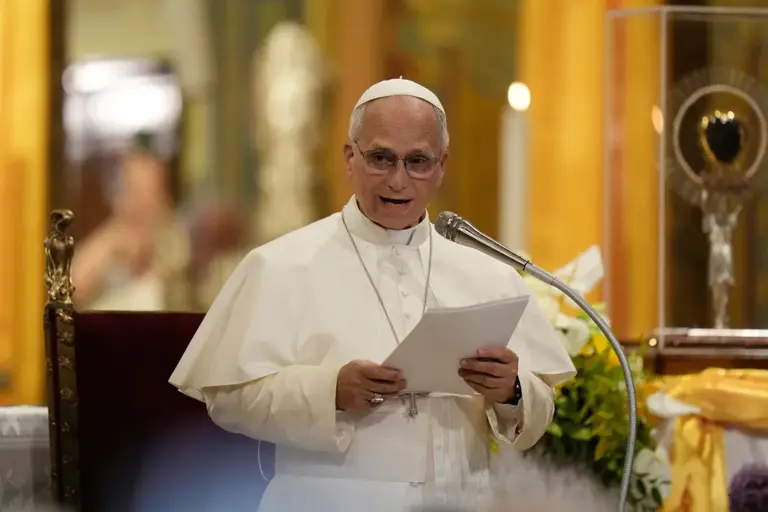
“It is important to resist the commodification of basic human needs,” the Pope said, criticizing slow humanitarian aid from the United States to the U.N. World Food Program. “Food, water and healthcare cannot be subordinated to market considerations or geopolitical interests.”
Virtually every major modern famine in history occurred in places that “subordinated” the commodification of food for a greater good. Though, Leo has it backward. The market is the natural state of economic activity. We subordinate the market. The question is, are we better off when we do? Almost every time, the answer is no.
It’s not an accident that capitalistic nations create so much wealth that they can be generous not only to their own hungry but also to the hungry elsewhere. The proportion of the global population facing hunger today has declined dramatically over the past 30-40 years because of technological advancements and efficiencies fueled by trade and market-driven profits.
Which is why the U.S. has pledged nearly $750 million to the U.N. World Food Program, far more than any nation. China generally contributes under $20 million and Russia around $30 million.
It should also be noted that government aid is not the only assistance we give. Americans are the most charitable people in the world.
“Access to adequate food is a fundamental human right grounded in the dignity of every person,” the pope went on. “Meeting this need not only alleviates suffering but also addresses underlying causes of geopolitical instability. Indeed, food security is an essential component of global and integral security.”
Most people acknowledge that feeding and caring for the poor is a moral imperative. Being fed is not a “fundamental human right,” however, because it requires compelling another person to provide it. Americans believe — or should believe — that only the “fundamental rights” are those that call on others to abstain from interfering. That includes things like freedom of speech and religion. Your healthcare can’t be a right.
Moreover, helping the poor without any expectation that the government will change its policies that strip its people of dignity does nothing to help the underlying causes of geopolitical instability. If we choose, Americans have every right to attach expectations to their aid.
The United Nations, after all, is teeming with illiberal tyrannical nations that drive their own people into destitution. The areas most in danger of hunger, according to a recent U.N. report, are Sudan, South Sudan, Yemen, Nigeria, Somalia, and the Gaza Strip. All of them struggle in part because of Islamism, which carries a political agenda that runs counter to every Christian tenet imaginable. It would be nice if the Church spoke out about corrupt regimes and Islamists with the same passion it does the U.S., which has done more for the world’s poor than any institution that has ever existed.
For Catholics, the Pope is the vicar of Christ and the spiritual leader of the Church — which is to say, his positions are typically none of my business. Then again, any time the pope delivers a statement that speaks to the political aspirations of the secular left, the media amplifies it to lecture the rest of us.
The latest such comment has to do with world hunger.
“It is important to resist the commodification of basic human needs,” the Pope said, criticizing slow humanitarian aid from the United States to the U.N. World Food Program. “Food, water and healthcare cannot be subordinated to market considerations or geopolitical interests.”
Virtually every major modern famine in history occurred in places that “subordinated” the commodification of food for a greater good. Though, Leo has it backward. The market is the natural state of economic activity. We subordinate the market. The question is, are we better off when we do? Almost every time, the answer is no.
It’s not an accident that capitalistic nations create so much wealth that they can be generous not only to their own hungry but also to the hungry elsewhere. The proportion of the global population facing hunger today has declined dramatically over the past 30-40 years because of technological advancements and efficiencies fueled by trade and market-driven profits.
Which is why the U.S. has pledged nearly $750 million to the U.N. World Food Program, far more than any nation. China generally contributes under $20 million and Russia around $30 million.
It should also be noted that government aid is not the only assistance we give. Americans are the most charitable people in the world.
“Access to adequate food is a fundamental human right grounded in the dignity of every person,” the pope went on. “Meeting this need not only alleviates suffering but also addresses underlying causes of geopolitical instability. Indeed, food security is an essential component of global and integral security.”
Most people acknowledge that feeding and caring for the poor is a moral imperative. Being fed is not a “fundamental human right,” however, because it requires compelling another person to provide it. Americans believe — or should believe — that only the “fundamental rights” are those that call on others to abstain from interfering. That includes things like freedom of speech and religion. Your healthcare can’t be a right.
Moreover, helping the poor without any expectation that the government will change its policies that strip its people of dignity does nothing to help the underlying causes of geopolitical instability. If we choose, Americans have every right to attach expectations to their aid.
The United Nations, after all, is teeming with illiberal tyrannical nations that drive their own people into destitution. The areas most in danger of hunger, according to a recent U.N. report, are Sudan, South Sudan, Yemen, Nigeria, Somalia, and the Gaza Strip. All of them struggle in part because of Islamism, which carries a political agenda that runs counter to every Christian tenet imaginable. It would be nice if the Church spoke out about corrupt regimes and Islamists with the same passion it does the U.S., which has done more for the world’s poor than any institution that has ever existed.
Friday, June 19, 2026
Tuesday, March 17, 2026

Saturday, March 07, 2026
Tuesday, February 10, 2026
Saturday, January 17, 2026
ADRA Marks 20 Years of Emergency Response Readiness
The initiative supports early humanitarian action in disaster-affected areas
News
January 13, 2026
8 January 2026 | St Albans, UK [Joe Philpott]
The Adventist Development and Relief Agency (ADRA) is marking 20 years since the establishment of its organised Emergency Response Teams, highlighting two decades of rapid humanitarian action in response to disasters and complex emergencies worldwide.
Established in the mid-2000s, ADRA’s Emergency Response Teams were created to ensure faster, more coordinated assistance in the immediate aftermath of crises, including natural disasters, conflicts and public health emergencies. The teams are trained to deploy quickly, assess needs on the ground and coordinate life-saving support with local authorities and humanitarian partners.
Over the past two decades, the teams have been involved in responses to earthquakes, floods, armed conflict and displacement crises across multiple regions. Their work has focused on emergency shelter, food assistance, water and sanitation, protection services and early recovery support, often in highly complex and insecure environments.
“Preparedness is choosing to be ready to serve,” said João Martins, ADRA Europe director. “With disasters increasing across Europe, this commitment matters more than ever. As we look ahead, our priority is to strengthen ADRA teams and empower local churches to be disaster-ready.”
Martins said preparedness enables local and regional responders to act quickly and responsibly when crises occur. “Together, we can bring care, calm and hope into the hardest moments,” he added.
The scale of ADRA’s emergency response work is reflected in two decades of training activity. Over that period, 54 Emergency Response Team trainings have been delivered, with 764 people trained. A total of 121 trainers from across ADRA and partner organisations have contributed to the programme, with trainings hosted in 34 countries and participation from 101 ADRA country offices.
Alongside this growth, ADRA has adapted its emergency response approach to the evolving humanitarian standards and operating environments. This has included stronger coordination practices, clearer professional standards and greater attention to community feedback. Emergency Response Team training covers areas such as security management, humanitarian principles, safeguarding and coordination with national and international partners.
More information on ADRA Europe’s Emergency Response Teams is available on the ADRA Europe website.
[Photo: Nikolay Stoykov, courtesy of ADRA Europe]
8 January 2026 | St Albans, UK [Joe Philpott]
The Adventist Development and Relief Agency (ADRA) is marking 20 years since the establishment of its organised Emergency Response Teams, highlighting two decades of rapid humanitarian action in response to disasters and complex emergencies worldwide.
Established in the mid-2000s, ADRA’s Emergency Response Teams were created to ensure faster, more coordinated assistance in the immediate aftermath of crises, including natural disasters, conflicts and public health emergencies. The teams are trained to deploy quickly, assess needs on the ground and coordinate life-saving support with local authorities and humanitarian partners.
Over the past two decades, the teams have been involved in responses to earthquakes, floods, armed conflict and displacement crises across multiple regions. Their work has focused on emergency shelter, food assistance, water and sanitation, protection services and early recovery support, often in highly complex and insecure environments.
“Preparedness is choosing to be ready to serve,” said João Martins, ADRA Europe director. “With disasters increasing across Europe, this commitment matters more than ever. As we look ahead, our priority is to strengthen ADRA teams and empower local churches to be disaster-ready.”
Martins said preparedness enables local and regional responders to act quickly and responsibly when crises occur. “Together, we can bring care, calm and hope into the hardest moments,” he added.
The scale of ADRA’s emergency response work is reflected in two decades of training activity. Over that period, 54 Emergency Response Team trainings have been delivered, with 764 people trained. A total of 121 trainers from across ADRA and partner organisations have contributed to the programme, with trainings hosted in 34 countries and participation from 101 ADRA country offices.
Alongside this growth, ADRA has adapted its emergency response approach to the evolving humanitarian standards and operating environments. This has included stronger coordination practices, clearer professional standards and greater attention to community feedback. Emergency Response Team training covers areas such as security management, humanitarian principles, safeguarding and coordination with national and international partners.
More information on ADRA Europe’s Emergency Response Teams is available on the ADRA Europe website.
[Photo: Nikolay Stoykov, courtesy of ADRA Europe]
Tuesday, January 13, 2026
‘Catastrophic’ turn in prolonged food crisis imminent, Caritas Somalia director warns
By Ngala Killian Chimtom
Jan 13, 2026|Africa Correspondent
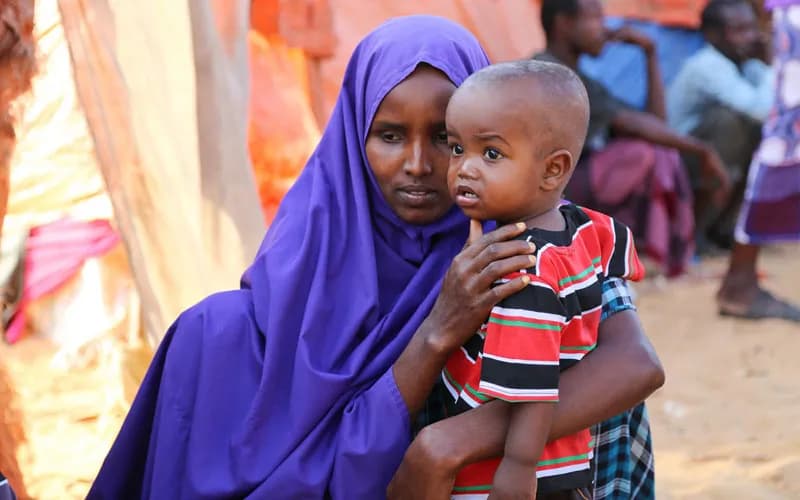
Somali woman and child, file photo, 2022. Image credit: Caritas Internationalis
As more than 4.6 million people in Somalia are reeling from one of the worst droughts in decades, the executive director of Caritas in the war-torn and ecologically ravaged Horn of Africa country says the protracted humanitarian crisis is reaching a critical tipping point.
Converging factors have created the crisis: a climate emergency intensified by recurring cycles of failed rains, decades of conflict, and ongoing political instability.
In an exclusive interview with Crux, Sara Ben Rached of Caritas Somalia described the nation’s plight as “among the most complex in the world.”
Rached told Crux the crisis is being dramatically worsened by the recent suspension of U.S. government assistance, which has crippled the humanitarian response just as needs are escalating.
The United Nations Office for the Coordination of Humanitarian Affairs has a plan for humanitarian needs and assistance, but Sached says the plan is only 26% funded, and warns that without immediate, flexible funding, the situation will deteriorate from a crisis to a “catastrophic” one, forcing more families into displacement and pushing entire regions into emergency levels of hunger.
Crux spoke with Rached recently, and here shares the Q&A, edited for length and clarity.
Crux: How would you describe the humanitarian situation in Somalia today?
Monday, January 05, 2026
Tuesday, December 30, 2025
Wednesday, November 19, 2025
The final movements will be rapid ones

The church of God who have had great light are called upon to have works corresponding to their light. Considering our superior advantages, and knowing that we must be judged by the light and privileges bestowed, what can we offer as a justification of our conduct? Like Capernaum we have been exalted to heaven in point of privilege. The precious light, freely given to us of God, was not given to Sodom or Gomorrah, or they might have remained unto this day. If the mighty works and knowledge and grace of God had been made manifest to the nations who are in heathen darkness, we know not what they might have been. They might have been far in advance of what we are in Christian lands today.
The world is uneasy, restless, apprehensive that they are on the eve of some great event. Look where we will, men’s hearts are failing them for fear. Impulse and excitement are bearing sway. As children of the light, we should now manifest zeal and deep earnestness for Christ and be constantly watchful, offering unceasing prayer that we may stand in our lot and place, having an eye single to the glory of God. We need to go weighted with the truth, having in our heart Christ’s love for souls. We should be wise as serpents and harmless as doves. We are to be quickened by the Holy Spirit, that we may discern, and not be ignorant of Satan’s devices.
Tuesday, November 11, 2025
Jamaica: Update on Hurricane Relief Efforts
By Development Office
10 November 2025
Father Bede Mullens OP reports from Jamaica on the relief efforts supported by our donors.
Assistance in our Parishes
We are based in Kingston, which mercifully was left largely unscathed by the hurricane. Nonetheless, some of our poorer parishioners in August Town, an impoverished neighbourhood, did lose roofs, walls, and in one case, pretty much the whole house; St Martin’s Missions funding has enabled purchase of materials for repairs.
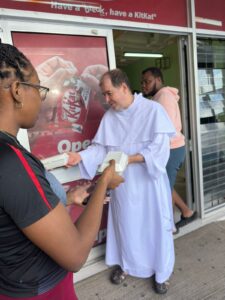
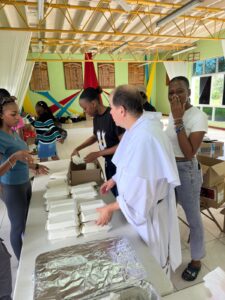
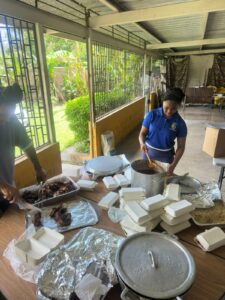
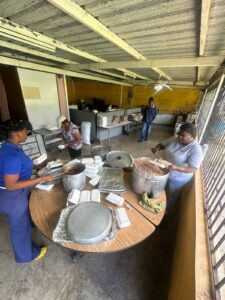
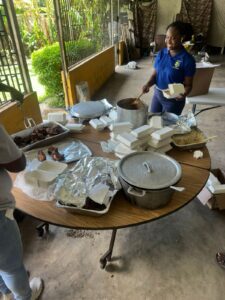
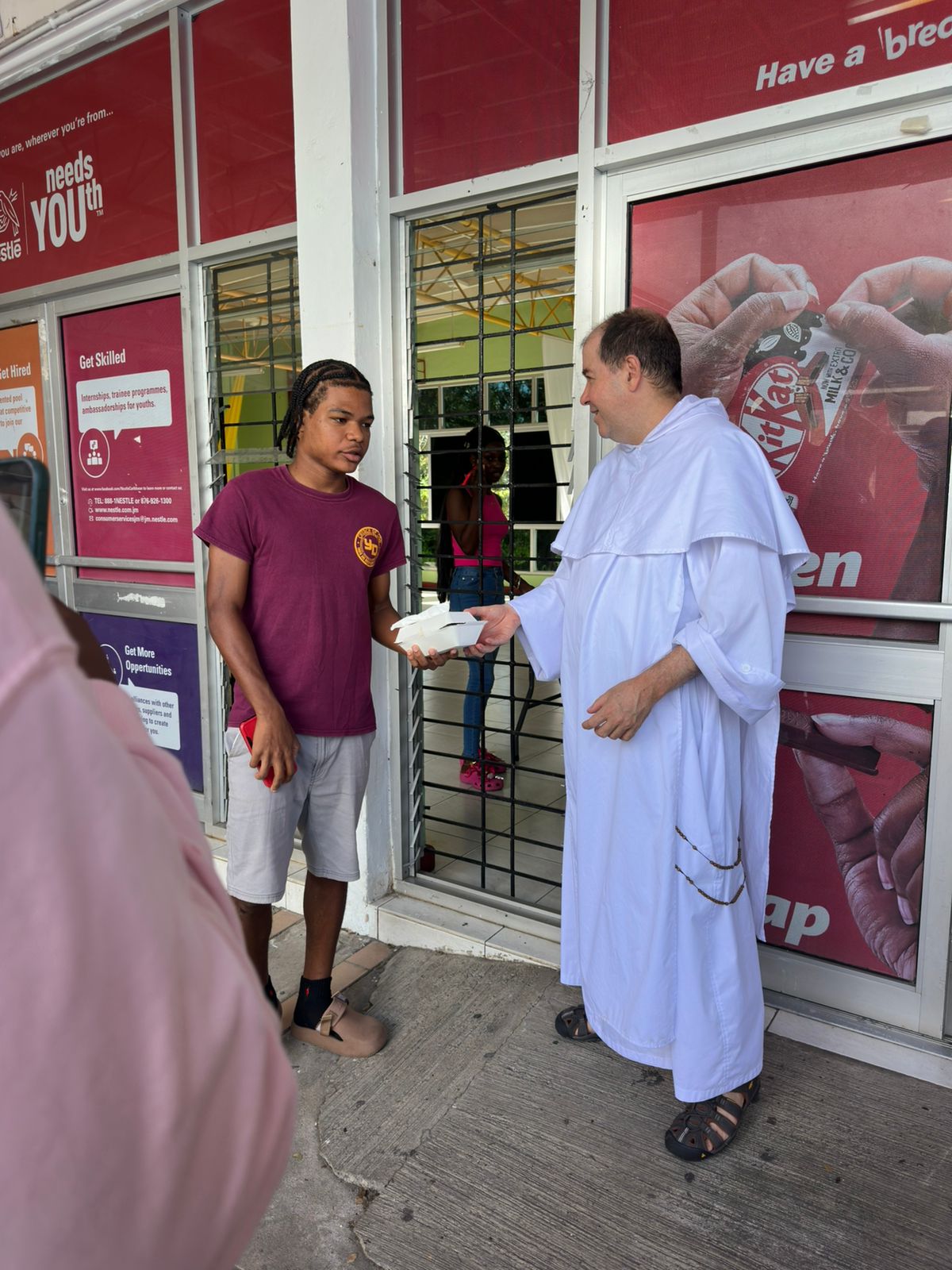
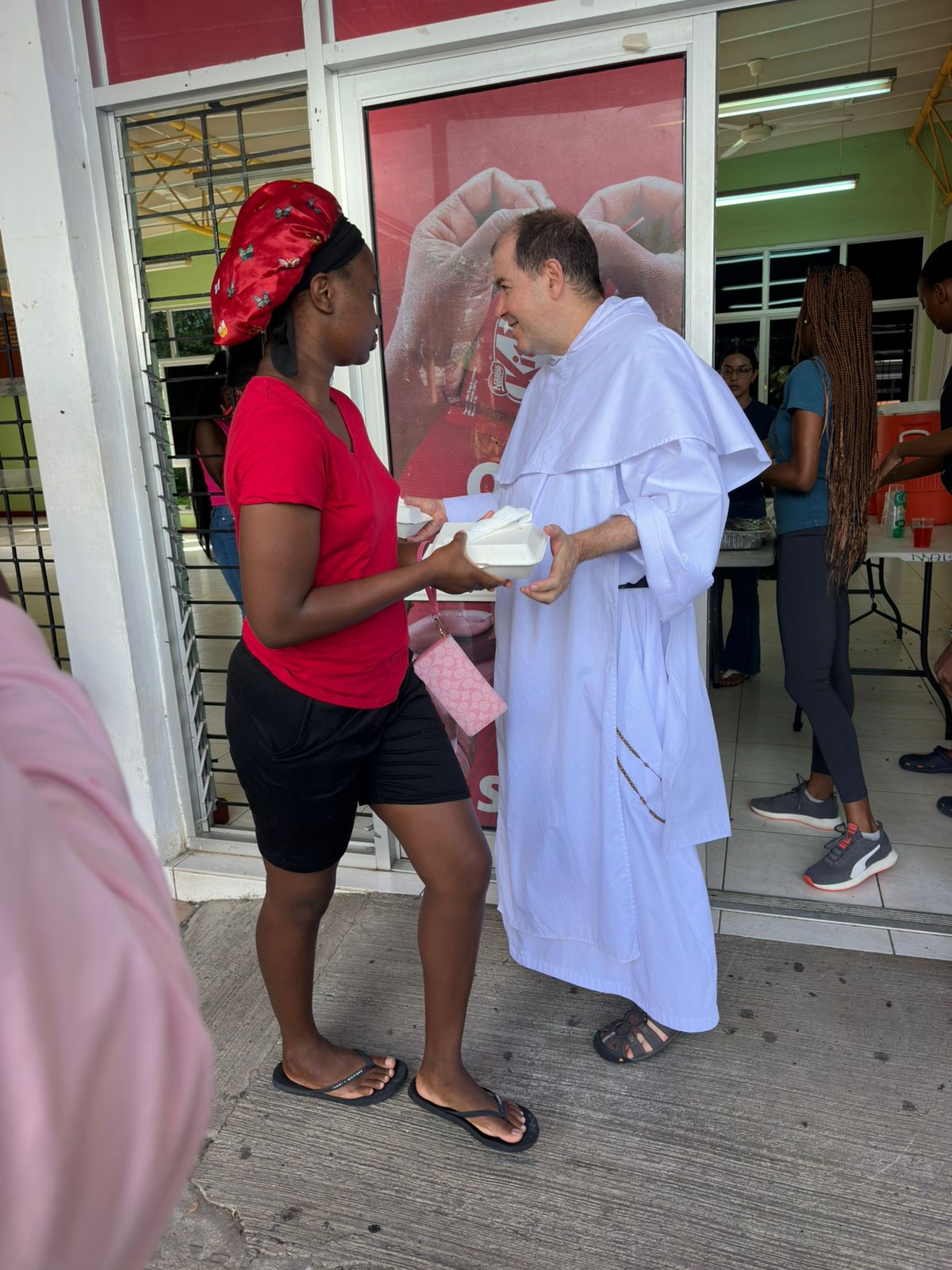
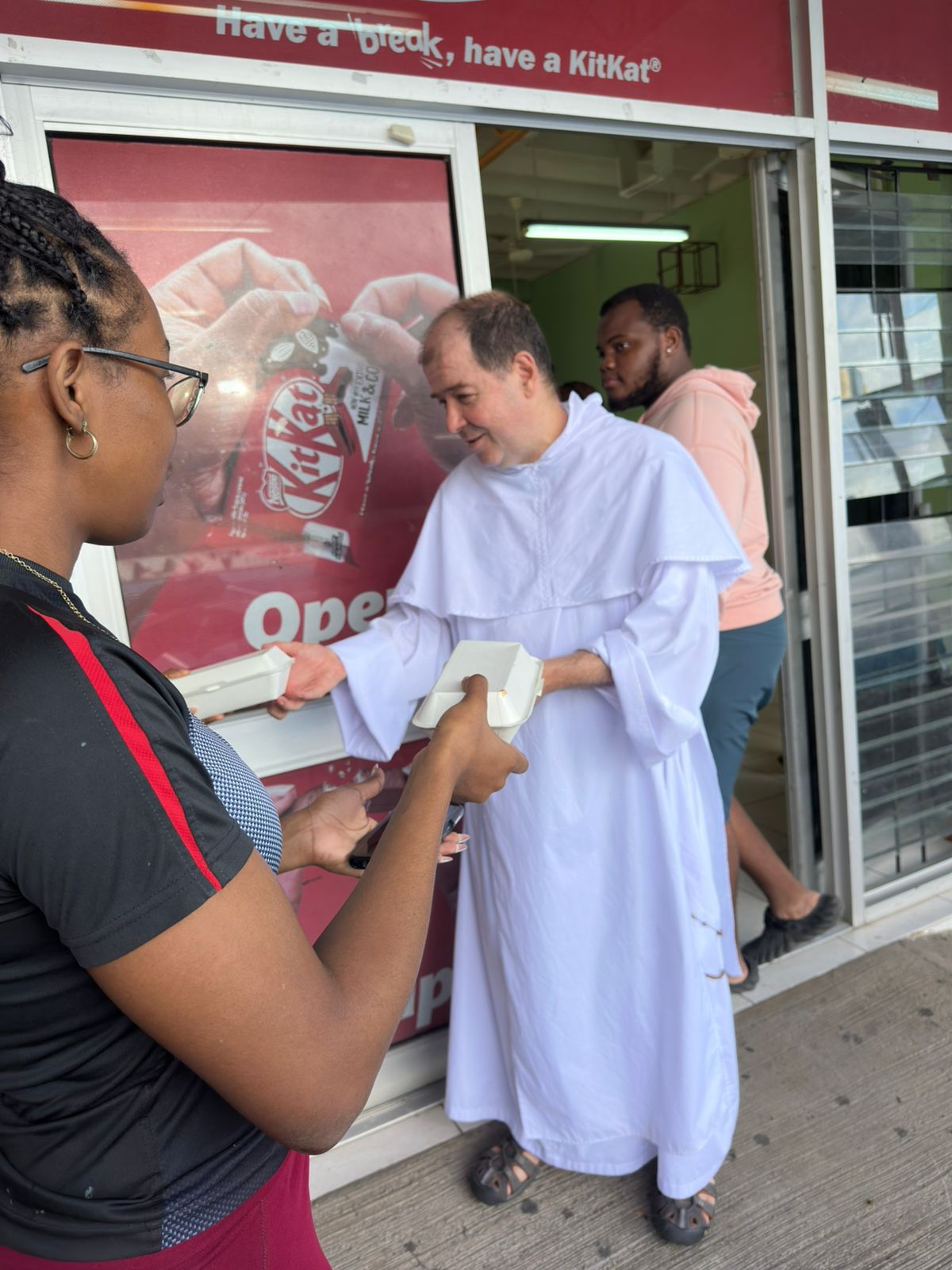
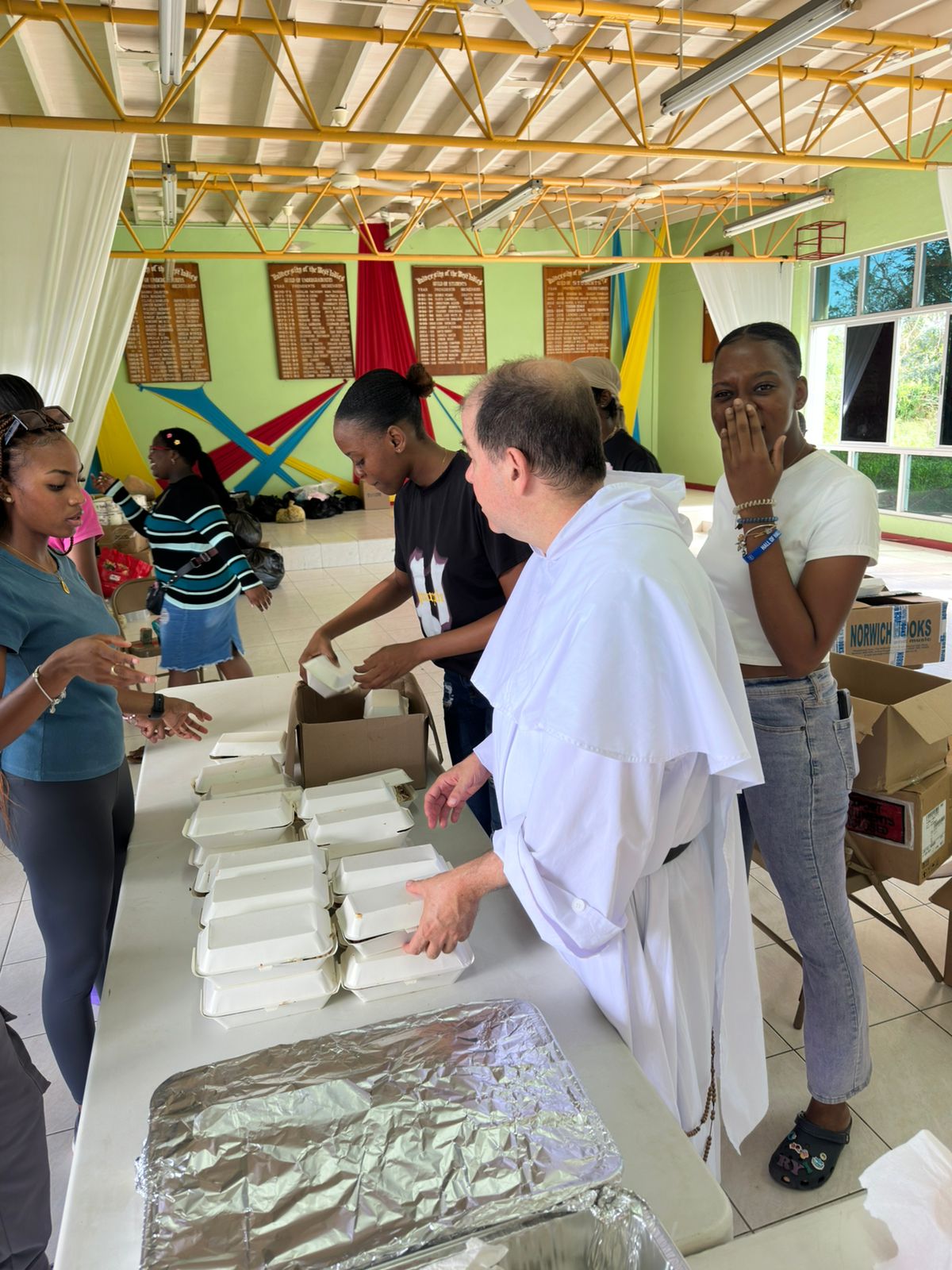
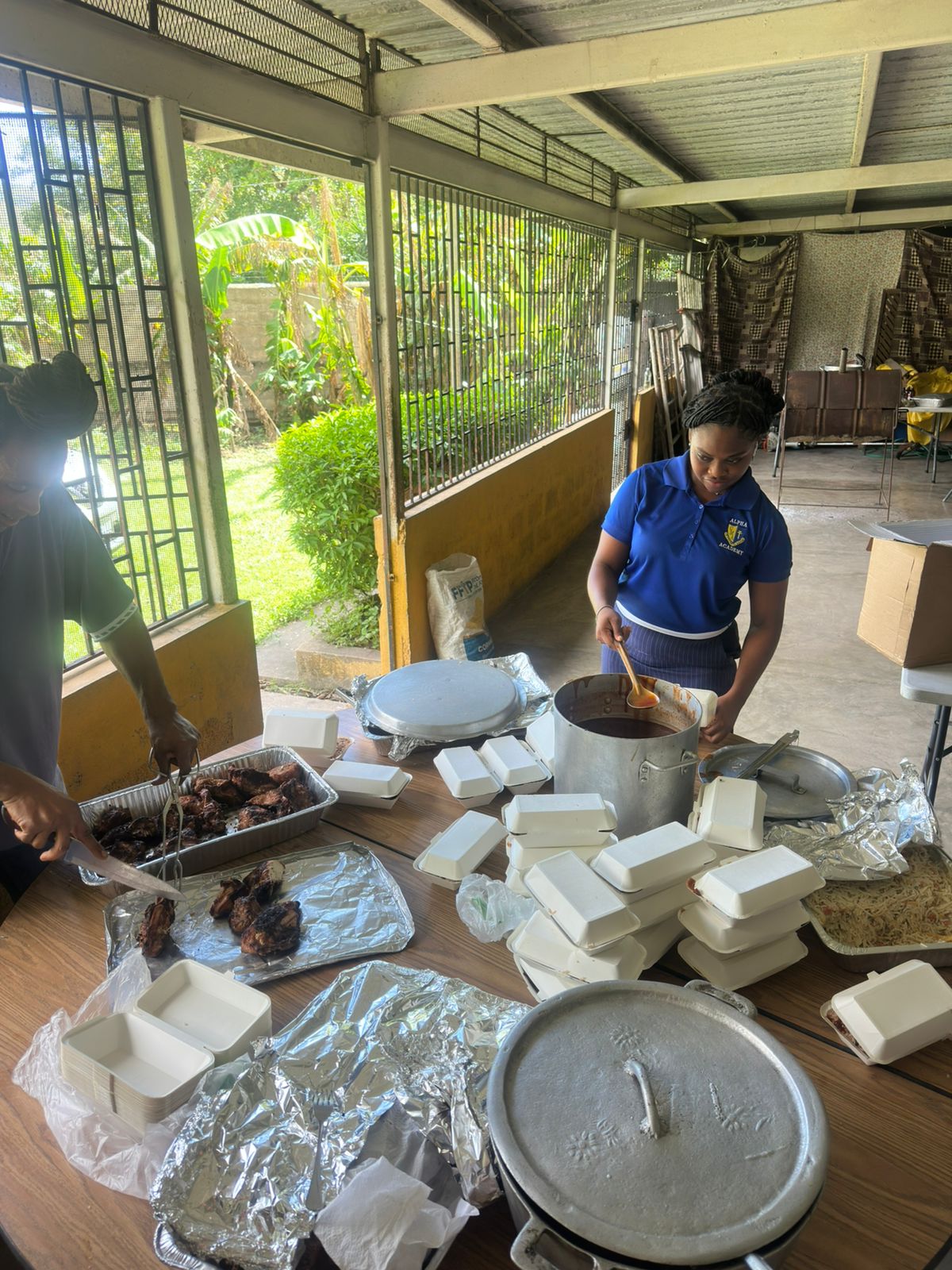
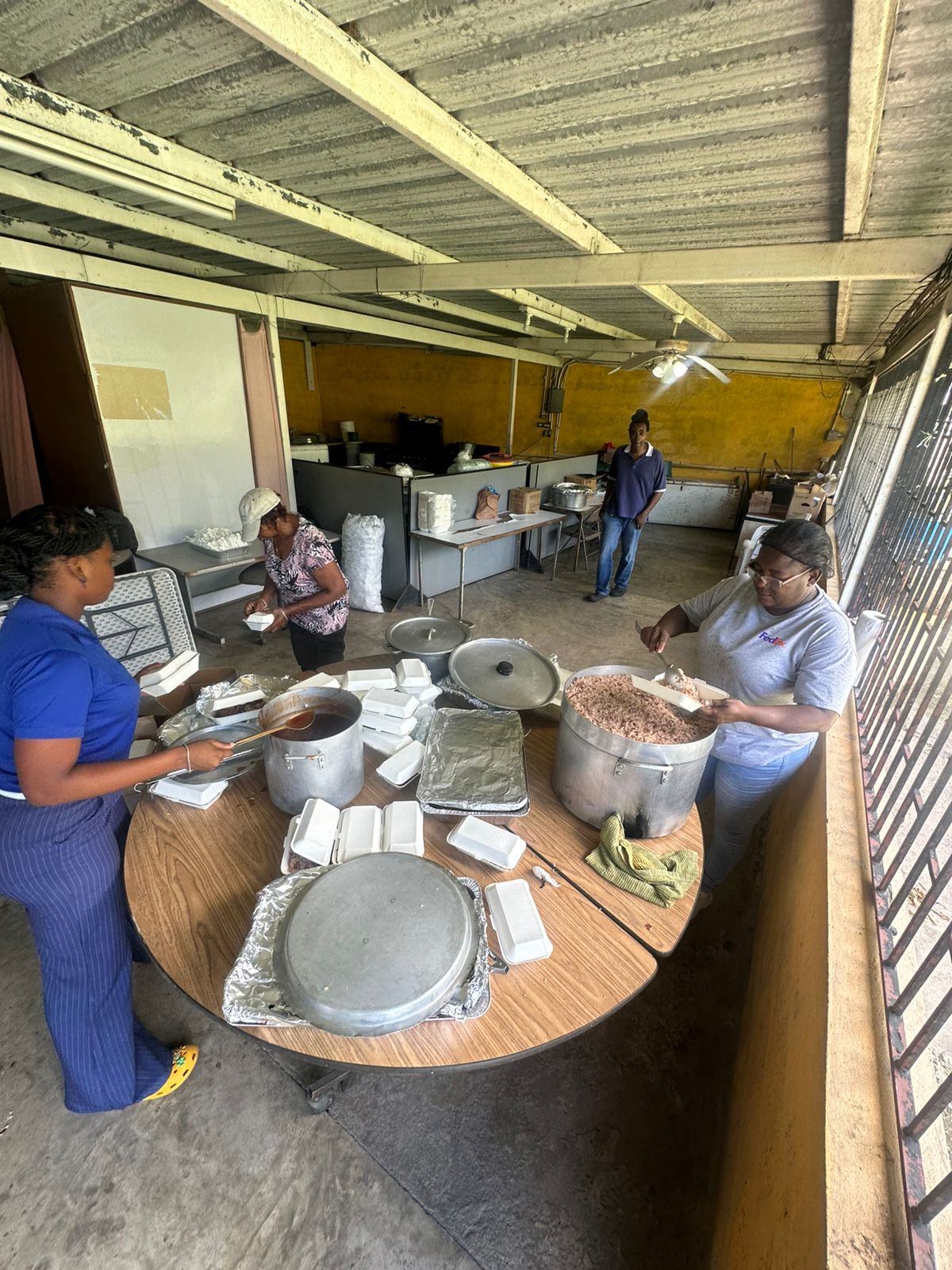
We are also conscious that, after recent panic-buying, some food items are hard to come by, and food prices on the whole are set to go up in the coming months as the part of the island hardest hit is a major agricultural area. On Friday, we distributed 300 meals to students at the University of the West Indies Mona Campus and to several of our less well-off parishioners, and we are trying to arrange sponsorship from local benefactors for students in need to receive support for food and personal hygiene items.
Fr Peter Hunter assisting in food distribution
Helping the Worst-Hit Areas
As regards the island-wide situation, we have been able to establish contact with a couple of parishes in the vicinity of Montego Bay and, for the time being, are focussing our attention on assisting them. We have coordinated provision of basic building materials (tarpaulin, plywood, nails) and essentials like water and baby food to be transported to Sacred Heart church in Reading, near Montego Bay, and St Agnes’ church in Chester Castle (photos below). One of the churches is currently operating as a shelter with just half a roof! So the arrival of the tarpaulins tomorrow will be particularly useful.
As the roads open and we are able to make contact with further parishes, we will be looking to assist their efforts at rebuilding and supporting their local people on the basis of personal contacts. This small-scale way of promoting the relief effort is particularly valuable for building up bonds of charity among the Catholics within our local island Church, and indeed throughout the global Church. So far people have donated to our St Martin’s Missions Appeal from across the UK, the USA, Europe, and the Far East. There is, of course, a massive need for material assistance, but for us it is very important that St Martin’s Missions bears witness to our worldwide solidarity in the Body of Christ. We belong to a Church that is at once truly catholic and truly one, at once global and personal.
Photos of St Agnes church, Chester Castle
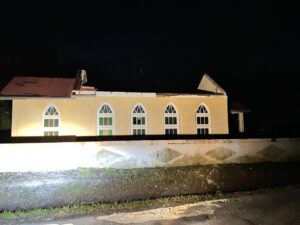
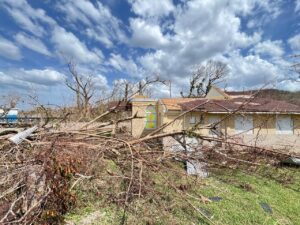
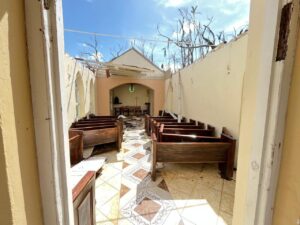
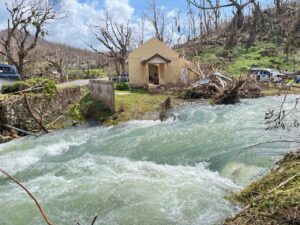
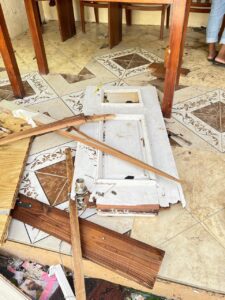
St Martin’s Missions has not directly supported this church, but Fr Bede has been coordinating assistance from Aquinas parish and other local benefactors in Jamaica to help them.
More Help Needed
The Dominican Friars in Jamaica and Grenada rely on funds raised in the UK to support their work of spreading the gospel and providing material help to the poor. This year, as well as having to raise funds to support these usual needs, we are committed to providing additional funds in support of the Hurricane Melissa relief efforts.
Hundreds of donors have already given in the past ten days. You can add your gift now at www.english.op.org/missions
10 November 2025
Father Bede Mullens OP reports from Jamaica on the relief efforts supported by our donors.
Assistance in our Parishes
We are based in Kingston, which mercifully was left largely unscathed by the hurricane. Nonetheless, some of our poorer parishioners in August Town, an impoverished neighbourhood, did lose roofs, walls, and in one case, pretty much the whole house; St Martin’s Missions funding has enabled purchase of materials for repairs.
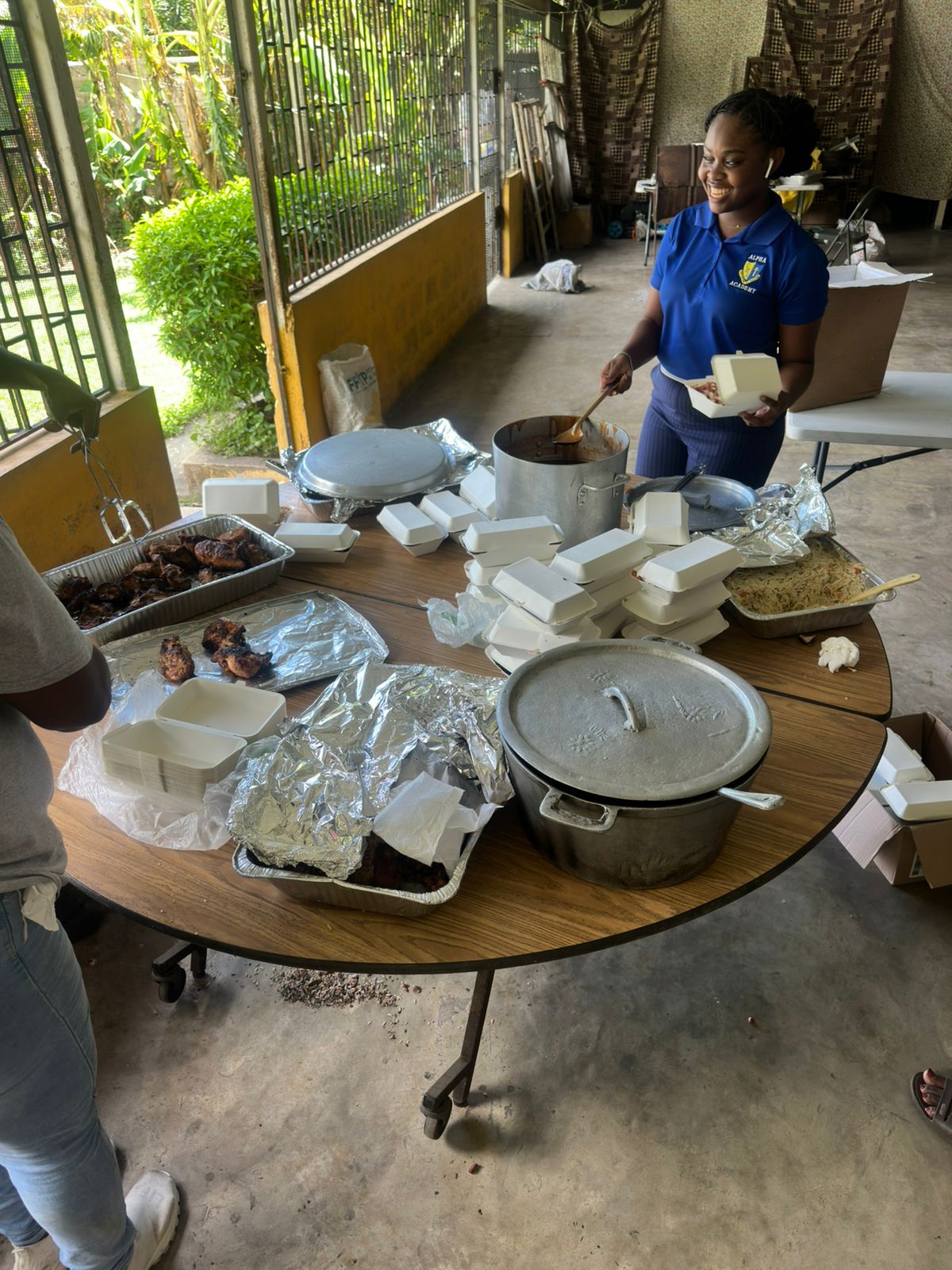
We are also conscious that, after recent panic-buying, some food items are hard to come by, and food prices on the whole are set to go up in the coming months as the part of the island hardest hit is a major agricultural area. On Friday, we distributed 300 meals to students at the University of the West Indies Mona Campus and to several of our less well-off parishioners, and we are trying to arrange sponsorship from local benefactors for students in need to receive support for food and personal hygiene items.
Fr Peter Hunter assisting in food distribution
Helping the Worst-Hit Areas
As regards the island-wide situation, we have been able to establish contact with a couple of parishes in the vicinity of Montego Bay and, for the time being, are focussing our attention on assisting them. We have coordinated provision of basic building materials (tarpaulin, plywood, nails) and essentials like water and baby food to be transported to Sacred Heart church in Reading, near Montego Bay, and St Agnes’ church in Chester Castle (photos below). One of the churches is currently operating as a shelter with just half a roof! So the arrival of the tarpaulins tomorrow will be particularly useful.
As the roads open and we are able to make contact with further parishes, we will be looking to assist their efforts at rebuilding and supporting their local people on the basis of personal contacts. This small-scale way of promoting the relief effort is particularly valuable for building up bonds of charity among the Catholics within our local island Church, and indeed throughout the global Church. So far people have donated to our St Martin’s Missions Appeal from across the UK, the USA, Europe, and the Far East. There is, of course, a massive need for material assistance, but for us it is very important that St Martin’s Missions bears witness to our worldwide solidarity in the Body of Christ. We belong to a Church that is at once truly catholic and truly one, at once global and personal.
Photos of St Agnes church, Chester Castle
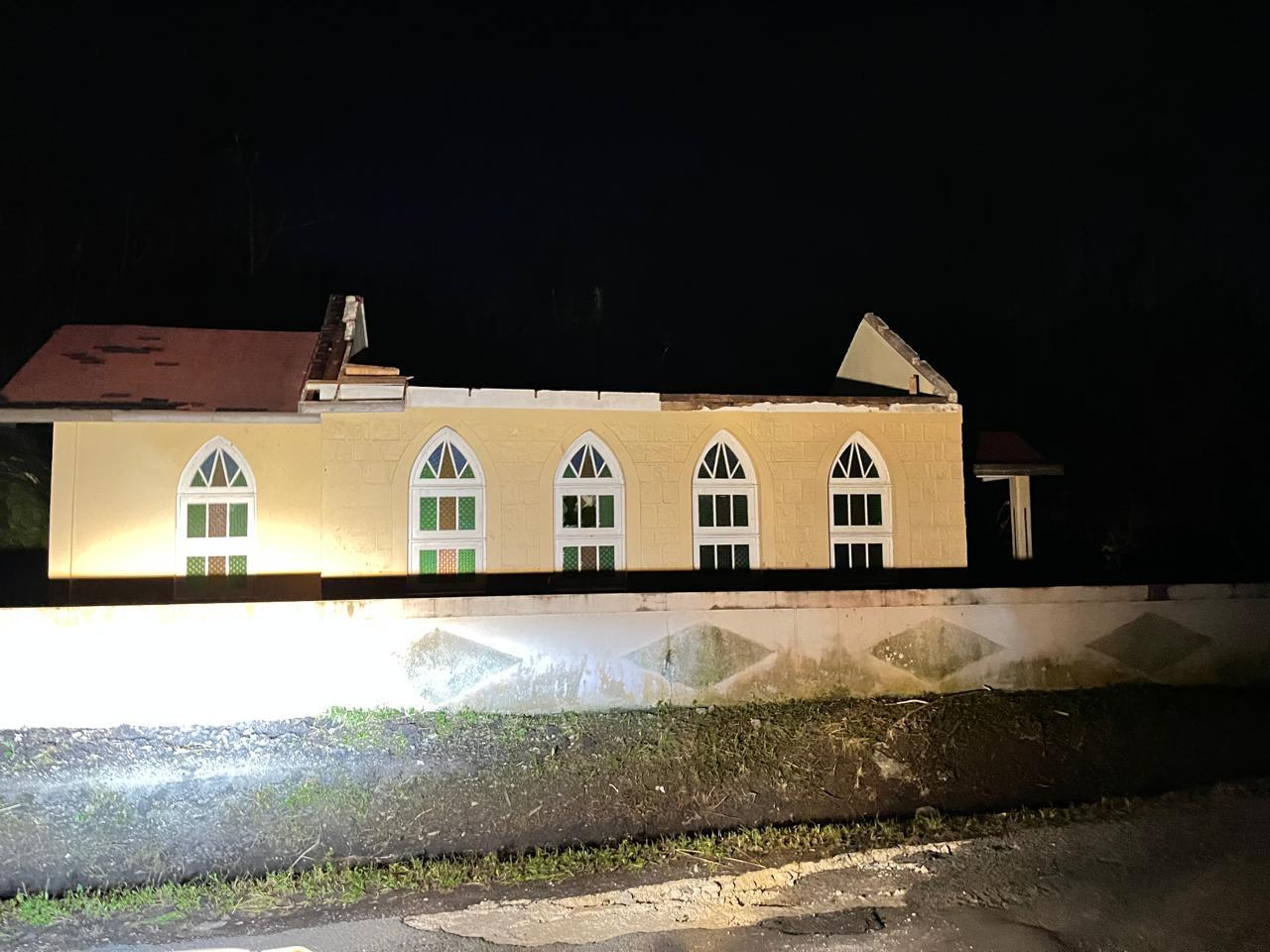
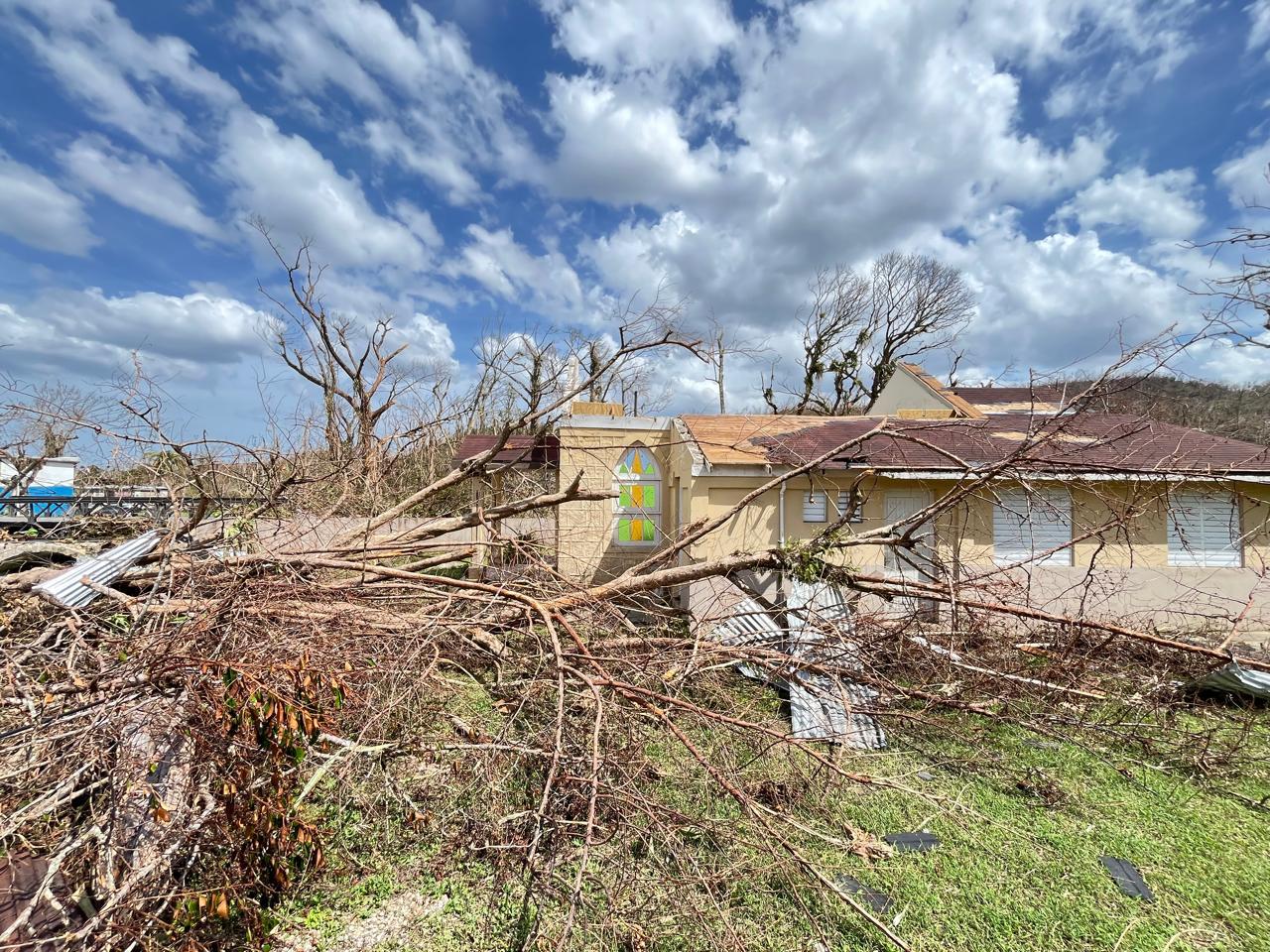
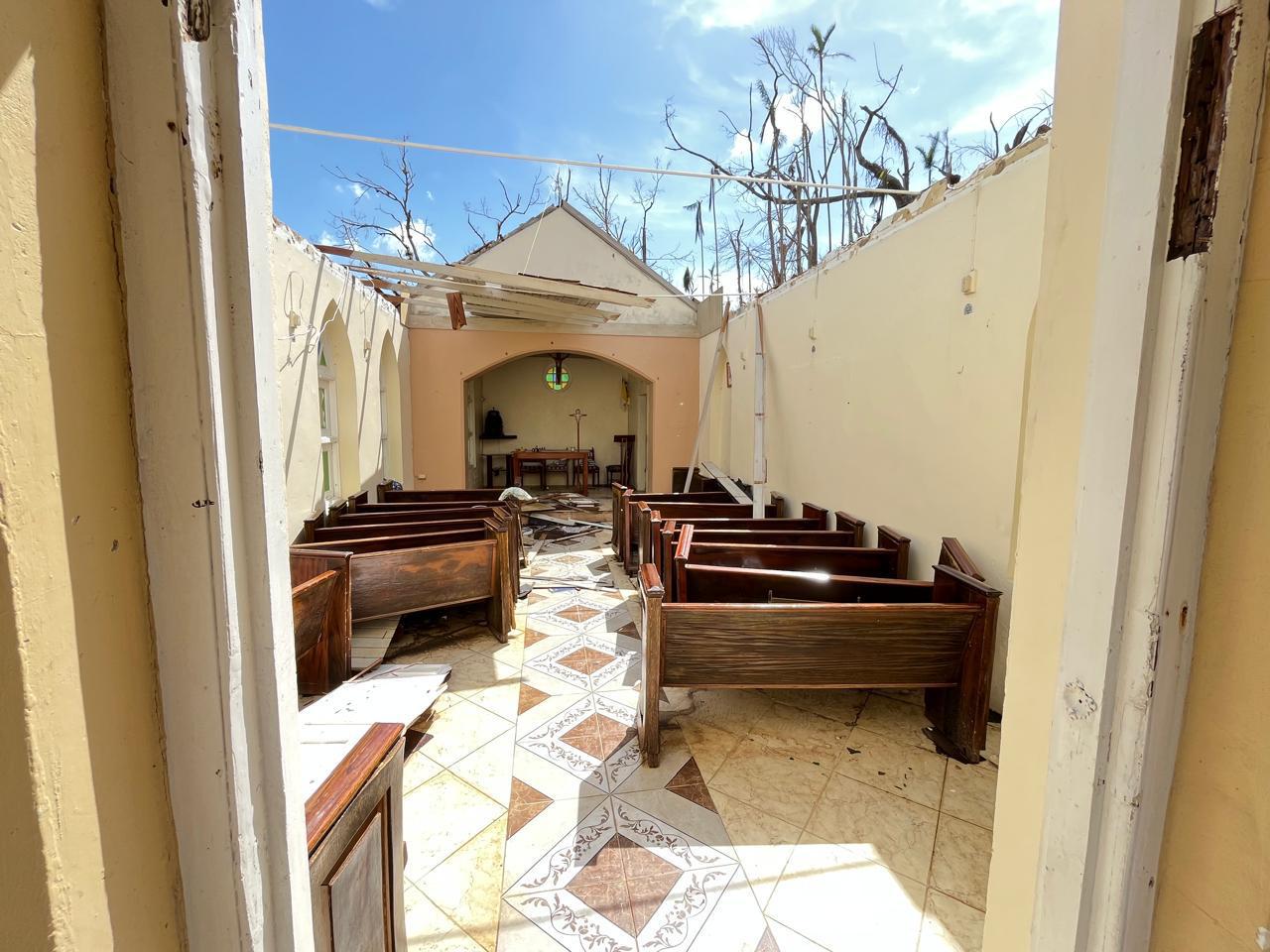
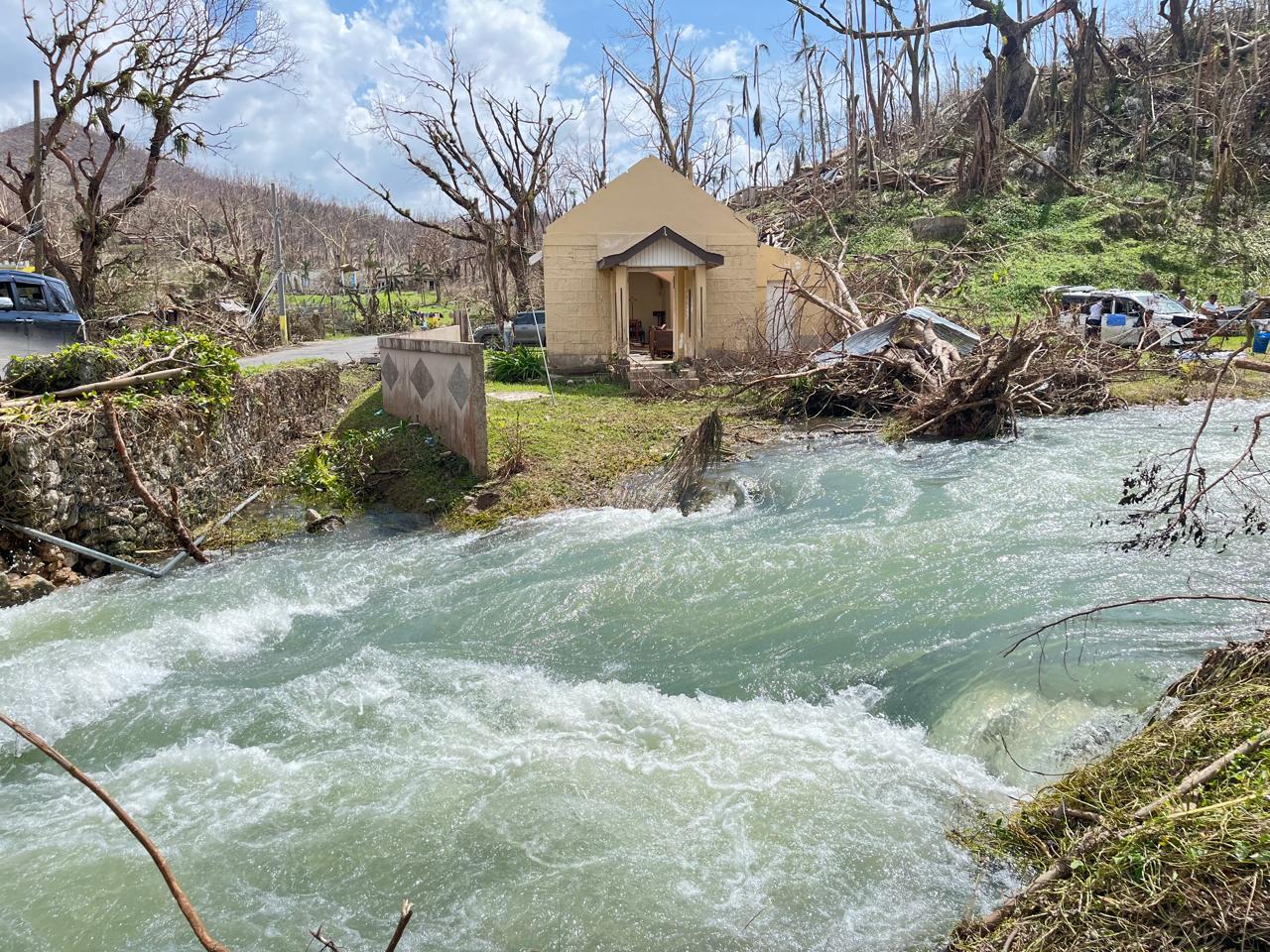
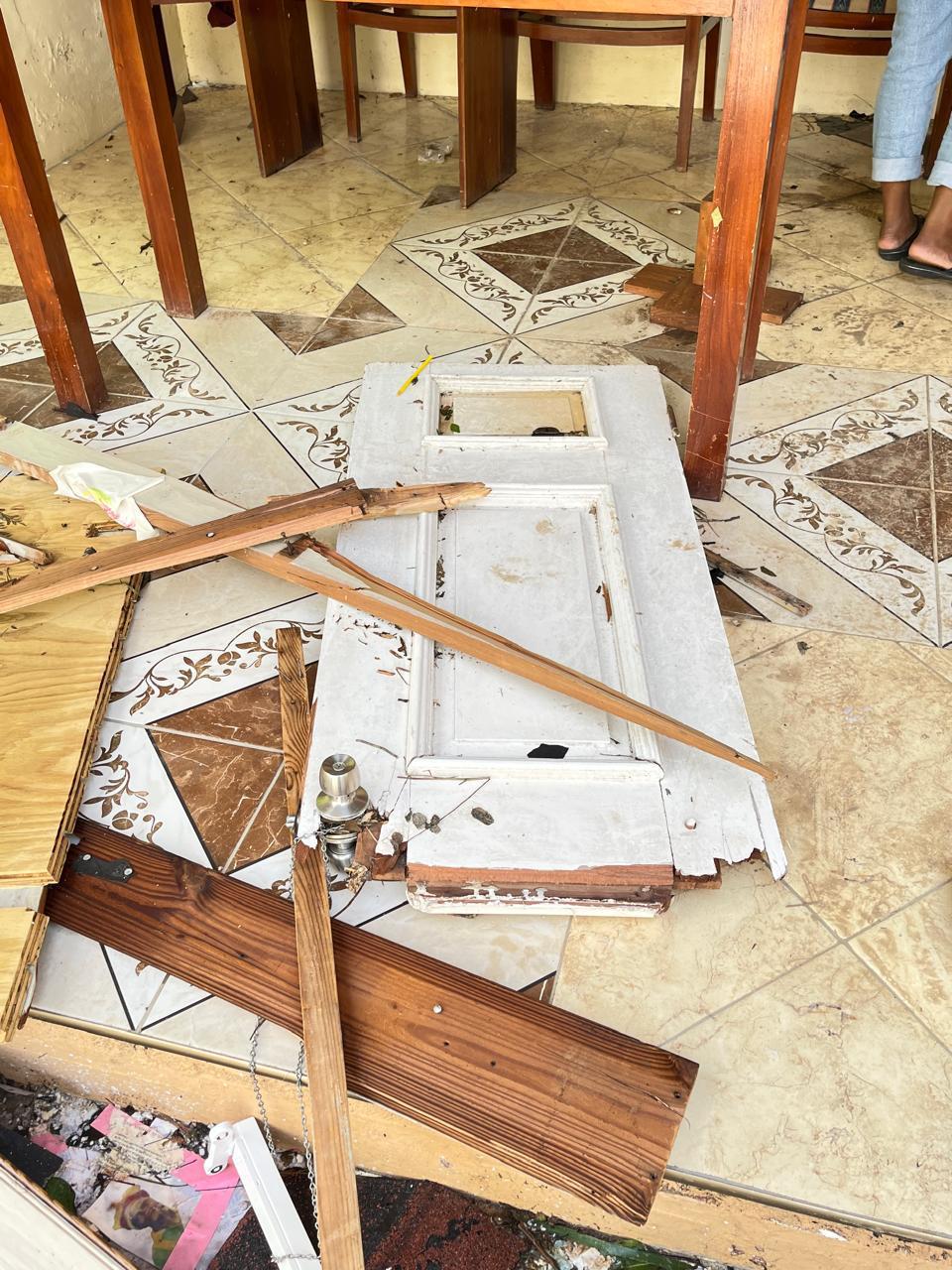
St Martin’s Missions has not directly supported this church, but Fr Bede has been coordinating assistance from Aquinas parish and other local benefactors in Jamaica to help them.
More Help Needed
The Dominican Friars in Jamaica and Grenada rely on funds raised in the UK to support their work of spreading the gospel and providing material help to the poor. This year, as well as having to raise funds to support these usual needs, we are committed to providing additional funds in support of the Hurricane Melissa relief efforts.
Hundreds of donors have already given in the past ten days. You can add your gift now at www.english.op.org/missions
Saturday, November 08, 2025
Saturday, November 01, 2025
First steps to relief
Black River residents grateful as critical supplies arrive in St Elizabeth
WhatsAppShare
Published:Saturday | November 1, 2025 | 12:09 AM
Antoine Lodge/Photographer
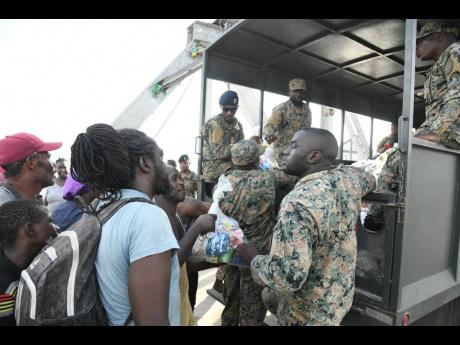
Members of the Jamaica Defence Force hand out care packages to residents of Crane Road in St Elizabeth.
Three separate vehicles carrying food, water and other basic supplies drew long lines of residents desperate to get anything as night fell over the hurricane-ravaged town of Black River, St Elizabeth, on Friday.
The town remains without electricity, water and Internet connectivity, three days after the category 5 Hurricane Melissa made landfall in Jamaica.
One of the trucks was provided by Jamaican international recording artiste Shaggy, real name Orville Burrell. The others were an army vehicle and one provided by a popular fast food chain.
“Thank you very much,” Cynthia White, 53, whispered to a soldier after she secured a care package of basic food items.
Tuesday, December 10, 2024
Tuesday, August 13, 2024
Psychological bias links good deeds to a belief in God, research says
News Release 8-Aug-2024
Psychological bias links good deeds to a belief in God, research says
New Zealand, where 49% of respondents in the 2018 census indicated no religious belief.
Participants read a description of a man who took a path of increasing benevolence, from helping stray animals as a child to, as an adult, giving food and clothes to homeless people. Sometimes, during bitingly cold weather, he offered a spare room to homeless families.
Half of the participants were asked which is more probable: The man is a teacher or the man is a teacher and believes in God. The other half were asked the same question, but the options were “the man is a teacher” or “the man is a teacher and does not believe in God.”
The most logical response would be to guess the man is a teacher, a group that would include both teachers who believe and teachers who are atheists. But people have been found to pick the less likely option to this type of question if it matches a strong social stereotype in their minds.
The results were striking. U.S. respondents were nearly 20 times more likely to guess that the helpful man believed in God than that the man was an atheist. In New Zealand, respondents were 12 times more likely to guess that the helpful man was religious.
The bias intuitively connecting religious belief to socially uplifting behavior was significantly stronger than that found with the study’s inverse, “dark side” conditions, which looked for stereotypes of atheists as antisocial. The bias was there, but far less powerful.
“So instead of a stereotype of atheists as immoral driving the effect, the stereotype of the moral person of faith may be the more important force,” Holbrook said. “We replicated the findings of the earlier studies linking evil with atheism, but we found that the effects linking prosociality with faith were remarkably larger.”
The study’s results fit with a theory about the historical development of major world religions that emphasizes cooperation. Belief that a powerful being or spiritual force rewards positive moral behavior – and punishes immoral behavior – is shared by all major religions. This kind of belief might help members of religious groups trust one another, cooperate and grow.
“Strangers with little in common beyond their shared spiritual beliefs in moralizing gods might be more inclined to trust and less inclined to exploit one another,” Holbrook said.
Of course, the UC Merced experiments and similar research measure only what stereotypes people project onto others – how they think someone would act based on what they believe.
“Our evidence indicates that people stereotype believers as more likely to care about and help others. But this theoretical model suggests that the stereotype might actually have had merit in the past as major religions grew or may possibly be true even now — people who believe in God might actually be more likely to help others,” Holbrook said. “The evidence that believers are more prosocial is currently mixed, and it’s a question that calls for more research.”
Method of Research
Survey
Subject of Research
People
Article Title
Intuitive Moral Bias Favors the Faithful
Article Publication Date
7-Aug-2024
COI Statement
None.
Psychological bias links good deeds to a belief in God, research says
Peer-Reviewed Publication
University of California - Merced
Experiments conducted by UC Merced researchers find that people who perform good deeds are far more likely to be thought of as religious believers than atheists. Moreover, the psychological bias linking kindness and helpfulness with faith appears to be global in scale.
Research on the mental link between moral behavior and religious belief goes back more than a decade. Prior research, however, emphasized the dark side of this equation, with participants asked whether they assumed it was more probable that a serial killer believed in God or was an atheist (people in nations all over the planet thought the latter was more likely).
The UC Merced studies, conceptualized by cognitive science graduate student Alex Dayer and published this week in the journal Scientific Reports, flipped the switch to the bright side: What if someone was a “serial helper,” prone to extraordinary benevolence?
The research found that the stereotype of an extraordinarily good person being religious was dramatically stronger that of an extraordinarily cruel person being an atheist, said co-author Colin Holbrook, a professor in the university’s Department of Cognitive and Information Sciences .
“Though we also found that people intuitively link atheism with immoral behavior, people appear to associate believing in God with being generous, helpful and caring to a much greater extent,” Holbrook said.
The research consisted of experiments conducted in two nations with disparate levels of religious belief:
University of California - Merced
Experiments conducted by UC Merced researchers find that people who perform good deeds are far more likely to be thought of as religious believers than atheists. Moreover, the psychological bias linking kindness and helpfulness with faith appears to be global in scale.
Research on the mental link between moral behavior and religious belief goes back more than a decade. Prior research, however, emphasized the dark side of this equation, with participants asked whether they assumed it was more probable that a serial killer believed in God or was an atheist (people in nations all over the planet thought the latter was more likely).
The UC Merced studies, conceptualized by cognitive science graduate student Alex Dayer and published this week in the journal Scientific Reports, flipped the switch to the bright side: What if someone was a “serial helper,” prone to extraordinary benevolence?
The research found that the stereotype of an extraordinarily good person being religious was dramatically stronger that of an extraordinarily cruel person being an atheist, said co-author Colin Holbrook, a professor in the university’s Department of Cognitive and Information Sciences .
“Though we also found that people intuitively link atheism with immoral behavior, people appear to associate believing in God with being generous, helpful and caring to a much greater extent,” Holbrook said.
The research consisted of experiments conducted in two nations with disparate levels of religious belief:
The United States, where 47% of the population describes itself as religious, according to a recent Gallup poll.
New Zealand, where 49% of respondents in the 2018 census indicated no religious belief.
Participants read a description of a man who took a path of increasing benevolence, from helping stray animals as a child to, as an adult, giving food and clothes to homeless people. Sometimes, during bitingly cold weather, he offered a spare room to homeless families.
Half of the participants were asked which is more probable: The man is a teacher or the man is a teacher and believes in God. The other half were asked the same question, but the options were “the man is a teacher” or “the man is a teacher and does not believe in God.”
The most logical response would be to guess the man is a teacher, a group that would include both teachers who believe and teachers who are atheists. But people have been found to pick the less likely option to this type of question if it matches a strong social stereotype in their minds.
The results were striking. U.S. respondents were nearly 20 times more likely to guess that the helpful man believed in God than that the man was an atheist. In New Zealand, respondents were 12 times more likely to guess that the helpful man was religious.
The bias intuitively connecting religious belief to socially uplifting behavior was significantly stronger than that found with the study’s inverse, “dark side” conditions, which looked for stereotypes of atheists as antisocial. The bias was there, but far less powerful.
“So instead of a stereotype of atheists as immoral driving the effect, the stereotype of the moral person of faith may be the more important force,” Holbrook said. “We replicated the findings of the earlier studies linking evil with atheism, but we found that the effects linking prosociality with faith were remarkably larger.”
The study’s results fit with a theory about the historical development of major world religions that emphasizes cooperation. Belief that a powerful being or spiritual force rewards positive moral behavior – and punishes immoral behavior – is shared by all major religions. This kind of belief might help members of religious groups trust one another, cooperate and grow.
“Strangers with little in common beyond their shared spiritual beliefs in moralizing gods might be more inclined to trust and less inclined to exploit one another,” Holbrook said.
Of course, the UC Merced experiments and similar research measure only what stereotypes people project onto others – how they think someone would act based on what they believe.
“Our evidence indicates that people stereotype believers as more likely to care about and help others. But this theoretical model suggests that the stereotype might actually have had merit in the past as major religions grew or may possibly be true even now — people who believe in God might actually be more likely to help others,” Holbrook said. “The evidence that believers are more prosocial is currently mixed, and it’s a question that calls for more research.”
Method of Research
Survey
Subject of Research
People
Article Title
Intuitive Moral Bias Favors the Faithful
Article Publication Date
7-Aug-2024
COI Statement
None.
Saturday, October 20, 2018
Ambassador Nikki Haley: ‘It Would Be Tragic’ If Abuse Scandal Blinds People to Catholic Church’s ‘Good Works’
Ambassador Nikki Haley: ‘It Would Be Tragic’ If Abuse Scandal Blinds People to Catholic Church’s ‘Good Works’
By Melanie Arter | October 19, 2018 | 4:46 PM EDT

UN Ambassador Nikki Haley (Screenshot)
(CNSNews.com) - During her keynote speech at the Alfred E. Smith Memorial Dinner on Thursday, UN Ambassador Nikki Haley said that while the Catholic Church is taking action to address the “moral failing” of the sexual abuse scandal, the church itself is performing miracles each day in places overseas that Haley has seen firsthand.
Haley said the issue of sexual abuse is one that affects not just the Catholic family, but the American family.
“Additionally, gathered here tonight are great leaders of the Catholic Church. I would be remiss if I failed to mention the serious difficulties facing the church. The issue of sexual assault is not limited to the Catholic family. It deeply touches the American family. The horrendous crimes that have been committed are harmful. There’s the devastation of the sexual abuse itself, and there’s the fact that the perpetrators of these crimes were people in a position of faith and trust,” she said.
“The church’s place must be with the victims that carry the pain with them. I know the church leaders recognize its deep responsibility to address this moral failing, and it is taking action, but there’s another point I want to emphasize. It would be tragic to allow the abuse scandal to blind anyone to the amazing good works the Catholic church does every single day,” Haley said.
The ambassador said while the Al Smith dinner raises millions of dollars for needy people in New York, “it goes way beyond that.”
“In the last two years, I’ve been to some very dark places where human suffering is on a level that’s hard for most Americans to imagine. I’ve been to the border between Colombia and Venezuela, where people walk 3 hours each way in the blazing sun to get the only meal that they will have that day. Who’s giving that meal? The Catholic Church,” she said.
“I’ve been to refugee camps in Central Africa where young boys are kidnapped and forced to become child soldiers and young girls are raped as a matter of routine. Who was in the forefront of changing this culture of corruption and violence? The Catholic Church,” Haley added.
Haley said she’s come across the Catholic Church “doing incredible work” to uplift “millions of desperate people” almost everywhere she’s been on humanitarian missions.
“It is serving God’s will. There are real problems, yes, but we must not lose sight of the miracles that are performed everyday. Those miracles are the way of the church. And as the proud daughter of Indian immigrants, who got the honor of representing my state as governor and our country as United Nations ambassador, I will say those miracles are the way of America,” she concluded.
Source
Saturday, August 04, 2018
A Time for Heart Searching

A Time for Heart Searching, August 4
Examine yourselves, whether ye be in the faith; prove your own selves. 2 Corinthians 13:5.
One's claim to manhood is determined by the use he makes of the powers that God has given him. The members of the human family are entitled to the name of men and women only as they employ their talents for the good of others. It is when ministering to others that man is most closely allied to God. He who is true to his God-given manhood will not only promote the happiness of his fellow beings in this life but will aid them to secure the reward of the life to come....
Man is required to love God supremely, with his might, mind, and strength, and his neighbor as himself. This he cannot possibly do unless he denies himself. To deny self means to rule the spirit when passion is striving for the mastery; to resist the temptation to censure and to speak words of faultfinding; to have patience with the child that is dull, and whose conduct is grievous and trying; to stand at the post of duty even though others may fail; to lift responsibilities wherever and whenever duty requires, not to gain applause, not for policy, but for the sake of the Master, who has given each of His followers a work that is to be done with unwavering fidelity. To deny self means to do good when inclination would lead us to serve and please ourselves. It means to work patiently and cheerfully for the good of others, even though our efforts may not seem to be appreciated....
Fellow Christians, search carefully to see whether the Word of God is indeed the rule of your life. Do you take Christ with you when you leave the place of prayer? Does your religion stand guard at the door of your lips? Is your heart drawn out in interest and sympathy for those in need of help? Are you seeking earnestly for a clearer understanding of God's will, that you may let the light shine forth to others? Is your speech seasoned with grace? Does your demeanor show Christian nobility? …
Remember that you need to be braced by constant watchfulness and prayer. So long as you look to Christ you are safe, but the moment you trust in yourself you are in great peril. He who is in harmony with God will continually depend upon Him for help.
In Heavenly Places, p.223.
Subscribe to:
Posts (Atom)