Showing posts with label common good. Show all posts
Showing posts with label common good. Show all posts
Monday, June 22, 2026


Friday, May 22, 2026
‘Colossal profits’: Christian leaders lambast fossil fuel giants as they demand EU windfall tax
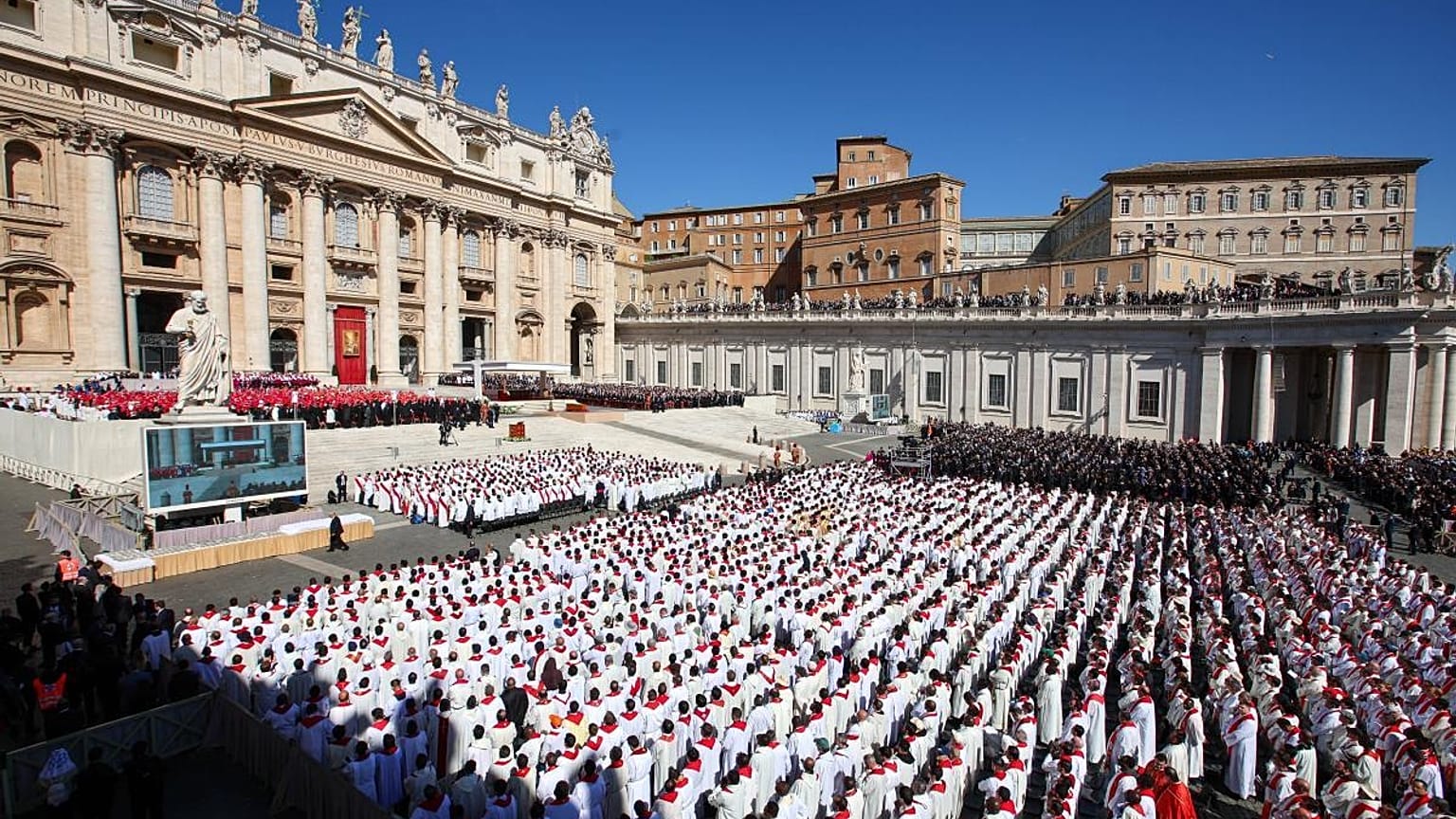
Copyright European Union, 2025, licensed under CC BY 4.0
By Ruth Wright
Published on 21/05/2026 - 6:30 GMT+2
“Europe holds a historic duty and opportunity to lead the transition to a new era away from fossil fuels”, say faith groups from across the EU.
A coalition of Christian organisations has issued an urgent appeal to EU institutions: phase out fossil fuels and tax those who profit from them.
120 organisations from 20 EU countries have signed the first ever appeal of its kind.
“Europe has a unique opportunity and the moral responsibility to accelerate the phase out of fossil fuels and shift to clean energy, including through a permanent tax on the colossal profits of fossil fuel companies”, the document says. It was recently revealed by the Guardian newspaper that the world’s top 100 oil and gas companies made more than $30 million (€25.8m) every hour in profit in the first month of the US-Israeli war in Iran.
The appeal calls on the EU to “remain steadfast in its founding values of human dignity and the common good by accelerating a just energy transition.”
Signatory organisations include European and national faith-based institutions, including episcopal bodies, religious orders, social and environmental NGOs, international development charities, and Christian movements and communities. Organisations include Laudato Si’ Movement, Caritas Europa and the Central Committee of German Catholics.
Tuesday, May 05, 2026
Who will survive in the new world? RT’s new special project offers exclusive insights
RT presents the Social Well-Being Index, a new way to measure whether societies can sustain themselves, protect life, and remain cohesive
Published 23 Apr, 2026 13:08 | Updated 24 Apr, 2026 11:23

© RT
What makes a prosperous nation?
The West has one answer: money.
For decades, Western institutions have measured things like GDP, sustainability and ‘human development’ to show which countries are doing well in the world.
But do these things indicate what is truly important for humans as a species and a society? Heavily skewed towards individual consumerism, they downplay tradition and paint the growth of human population as a problem – to the point where family is seen as an atavism and ‘child-free’ appears to be the lifestyle of the progressive future.
Such views are very clearly filtered through the prism of the modern liberal West – so much so that they serve as soft-power tool for promoting Western ‘values’. If your country scores high on a Western index of well-being or development, it doesn’t really mean it’s ‘doing well’ by itself – it simply means it is aligned with a certain world-view.
The emerging new multipolar world order needs new benchmarks, which is why RT is introducing the Social Well-Being Index – a new and unique way to measure the status of nations, which takes into account the most fundamental and objective criteria of societal health to create a deeper understanding of global development trends.
What makes a prosperous nation?
The West has one answer: money.
For decades, Western institutions have measured things like GDP, sustainability and ‘human development’ to show which countries are doing well in the world.
But do these things indicate what is truly important for humans as a species and a society? Heavily skewed towards individual consumerism, they downplay tradition and paint the growth of human population as a problem – to the point where family is seen as an atavism and ‘child-free’ appears to be the lifestyle of the progressive future.
Such views are very clearly filtered through the prism of the modern liberal West – so much so that they serve as soft-power tool for promoting Western ‘values’. If your country scores high on a Western index of well-being or development, it doesn’t really mean it’s ‘doing well’ by itself – it simply means it is aligned with a certain world-view.
The emerging new multipolar world order needs new benchmarks, which is why RT is introducing the Social Well-Being Index – a new and unique way to measure the status of nations, which takes into account the most fundamental and objective criteria of societal health to create a deeper understanding of global development trends.
Sunday, May 03, 2026
Saturday, April 18, 2026
Bishop Burbidge calls for new immigration policy, criticizes Trump’s treatment of Pope Leo

Bishop Michael Burbidge (Photo by the Diocese of Arlington/X)
In a recent podcast episode, Bishop Michael Burbidge of the Diocese of Arlington, Virginia, decried President Donald Trump’s criticism of Pope Leo XIV as “unfortunate and disheartening” and offered his support to three cardinals who recently discussed immigration and politics with CBS News, saying he agreed with many of their points.
Bishop Burbidge began the episode of his podcast, “Walk Humbly,” by discussing the April 12 CBS News interview, which featured Cardinal Blase Cupich of Chicago, Cardinal Robert McElroy of Washington, D.C., and Cardinal Joseph Tobin of Newark, New Jersey. As Zeale News previously reported, the cardinals addressed the Trump administration's war in Iran and immigration enforcement and the relationship between Catholicism and politics.
Bishop Burbidge emphasized that the cardinals’ views do not represent those of all U.S. bishops, but he said that he agreed with several of the points made during the interview, especially the cardinals’ comment that the U.S. should adopt “a comprehensive approach to immigration.”
“It’s not good, it’s really quite wrong, that American immigration policy changes so dramatically with elections,” he said. “As the Church teaches, and we say this often on the podcast, every nation has the right to regulate its borders and enforce just immigration policy. At the same time, every migrant has a duty and obligation to respect the laws of the nation and always contribute positively to society. And for many, many years American immigration policy has been inconsistent.”
Bishop Burbidge said that the Church calls political leaders to shape immigration policy around human dignity and the common good, which he said “includes upholding justice and a rule of law.” Human dignity and the common good are not opposed to each other, he said, adding that he believes America, as a great nation, can discover a way to enforce immigration law that harmonizes both aspects.
The bishop also addressed Pope Leo’s calls for peace amid the U.S.-Iran conflict, saying that while Church doctrine recognizes “the right and duty of nations” to fight just wars, the Church “always promotes and pursues justice and peace.”
“Conflict should always be avoided wherever and whenever possible through tireless and relentless dialogue and negotiations,” he later added. “So Pope Leo has been an incredible witness to the Gospel, promoting peace since the war broke out.”
Finally, Bishop Burbidge discussed Trump’s social media posts and comments that criticized Pope Leo, saying that there was “no doubt” that the posts “crossed a line.”
“The Pope is not a politician. He was not speaking as a politician. He’s not a political rival,” the bishop said. “The Holy Father is the Vicar of Christ, called by his office to preach the Gospel and to speak moral truth to the entire world. So just like every father — every father strives for peace in his family and for his children — the Holy Father wants peace in the world. He wants peace for all of us and the glory of God.”
Bishop Burbidge emphasized that the Church seeks to inspire and influence political life since “politics involves applying principles and moral law … to the issues of our day.”
“So we will always, as the Holy Father has done so beautifully, call civil leaders to recognize what scripture tells us, that the ultimate authority comes from God,” he continued, later adding, “We’re not here to obey man; we’re here to obey God.”
In a recent podcast episode, Bishop Michael Burbidge of the Diocese of Arlington, Virginia, decried President Donald Trump’s criticism of Pope Leo XIV as “unfortunate and disheartening” and offered his support to three cardinals who recently discussed immigration and politics with CBS News, saying he agreed with many of their points.
Bishop Burbidge began the episode of his podcast, “Walk Humbly,” by discussing the April 12 CBS News interview, which featured Cardinal Blase Cupich of Chicago, Cardinal Robert McElroy of Washington, D.C., and Cardinal Joseph Tobin of Newark, New Jersey. As Zeale News previously reported, the cardinals addressed the Trump administration's war in Iran and immigration enforcement and the relationship between Catholicism and politics.
Bishop Burbidge emphasized that the cardinals’ views do not represent those of all U.S. bishops, but he said that he agreed with several of the points made during the interview, especially the cardinals’ comment that the U.S. should adopt “a comprehensive approach to immigration.”
“It’s not good, it’s really quite wrong, that American immigration policy changes so dramatically with elections,” he said. “As the Church teaches, and we say this often on the podcast, every nation has the right to regulate its borders and enforce just immigration policy. At the same time, every migrant has a duty and obligation to respect the laws of the nation and always contribute positively to society. And for many, many years American immigration policy has been inconsistent.”
Bishop Burbidge said that the Church calls political leaders to shape immigration policy around human dignity and the common good, which he said “includes upholding justice and a rule of law.” Human dignity and the common good are not opposed to each other, he said, adding that he believes America, as a great nation, can discover a way to enforce immigration law that harmonizes both aspects.
The bishop also addressed Pope Leo’s calls for peace amid the U.S.-Iran conflict, saying that while Church doctrine recognizes “the right and duty of nations” to fight just wars, the Church “always promotes and pursues justice and peace.”
“Conflict should always be avoided wherever and whenever possible through tireless and relentless dialogue and negotiations,” he later added. “So Pope Leo has been an incredible witness to the Gospel, promoting peace since the war broke out.”
Finally, Bishop Burbidge discussed Trump’s social media posts and comments that criticized Pope Leo, saying that there was “no doubt” that the posts “crossed a line.”
“The Pope is not a politician. He was not speaking as a politician. He’s not a political rival,” the bishop said. “The Holy Father is the Vicar of Christ, called by his office to preach the Gospel and to speak moral truth to the entire world. So just like every father — every father strives for peace in his family and for his children — the Holy Father wants peace in the world. He wants peace for all of us and the glory of God.”
Bishop Burbidge emphasized that the Church seeks to inspire and influence political life since “politics involves applying principles and moral law … to the issues of our day.”
“So we will always, as the Holy Father has done so beautifully, call civil leaders to recognize what scripture tells us, that the ultimate authority comes from God,” he continued, later adding, “We’re not here to obey man; we’re here to obey God.”
Tuesday, April 14, 2026
Saturday, March 21, 2026
Church Leaders Call For Christians To Protest Trump
Richard Ostling
March 10, 2026
(ANALYSIS) Our polarized era features unique and quasi-religious devotion toward President Donald Trump from his MAGA base, set against profound hostility from foes of his words and deeds.
Church leaders in that second camp, mostly mainline and liberal Protestants, have issued a new plea worth noting for the extent of its supporters and a markedly fierce denunciation of America’s “cruel and oppressive government.”
“A Call to Christians in a Crisis of Faith and Democracy” appears at the conclusion of Trump’s first year this term, in the 250th year of American Independence, and during a closely fought campaign for control of the U.S. House and Senate. The release was timed for Ash Wednesday as believers entered a period of self-reflection and penitence. (As it happened, it was issued just before the momentous American-Israeli attack on Iran, but the text has little interest in foreign policy).
(ANALYSIS) Our polarized era features unique and quasi-religious devotion toward President Donald Trump from his MAGA base, set against profound hostility from foes of his words and deeds.
Church leaders in that second camp, mostly mainline and liberal Protestants, have issued a new plea worth noting for the extent of its supporters and a markedly fierce denunciation of America’s “cruel and oppressive government.”
“A Call to Christians in a Crisis of Faith and Democracy” appears at the conclusion of Trump’s first year this term, in the 250th year of American Independence, and during a closely fought campaign for control of the U.S. House and Senate. The release was timed for Ash Wednesday as believers entered a period of self-reflection and penitence. (As it happened, it was issued just before the momentous American-Israeli attack on Iran, but the text has little interest in foreign policy).
Saturday, January 31, 2026
Support for a Uniform Day of Rest (from The Heritage Foundation Special Report)
In order to demonstrate a fulfillment of prophecy before our eyes we directly focus on the part that mentions Sunday Rest of this exhaustive report.
Saving America by Saving the Family: A Foundation for the Next 250 Years
January 8, 2026 Over an hour read Download Report
Authors:Roger Severino, Jay Richards, PhD, Emma Waters, Delano Squires, Rachel Sheffield and Robert Rector
Summary
To end America’s family crisis, policymakers and civic leaders should treat restoring the family home as a matter of justice, driven by two truths. The first is that all children have a right to the affection and protection of the man and woman who created them. The second is that the ideal environment in which to exercise this right is in a loving and stable home with their married biological parents. In contrast, the default in American culture today is to put the desires of adults over the needs of children. Children are too often called to sacrifice what is due to them—the presence of their mom and dad under the same roof for the entirety of their childhood.
Key Takeaways
- The family is the foundation of civilization, and marriage—the committed union of one man and one woman—is its cornerstone. It is the seedbed of self-government.
- The question that will determine the course of America’s future is: What happens to a nation when its citizens largely stop having children and eschew marriage?
- The only way for America to thrive in the future is to rebuild the family—which can only happen with a societal commitment to revive the institution of marriage.
Day-of-rest laws limiting commercial activity are usually found in less densely populated counties, although restrictions on alcohol sales are more widespread. Though greatly diminished, blue laws persist in some form in close to 28 states.141
A uniform day of rest that limits commercial activity can provide temporal boundaries that help communities to set aside time for religious observance, family gatherings, outdoor activities, and rest. A stable base of research shows that these practices correlate with better mental health, stronger social bonds, and more stable family structures.142
With the advent of on-demand delivery, shopping can be shifted easily and conveniently to other days of the week. By restoring a common rhythm of rest and reflection, community rest laws could help to reverse the trend toward “spiritual homelessness” and foster the social habits necessary for communities to cohere and flourish.
Despite today’s on-demand culture, the U.S. Postal Service does not deliver regular mail on Sundays, most organized youth sports avoid Sunday competitions, and most banks are closed on Sundays. The ever-popular Chick-Fil-A chain closes its restaurants on Sundays for the benefit of its workers and their families. Where new, planned communities or transitioning communities form, they should consider adding rest days as part of their master plans for balanced and thriving community life.
Friday, December 26, 2025
Thursday, November 13, 2025
Wednesday, November 05, 2025
Friday, October 31, 2025
Thursday, October 23, 2025
Thursday, October 09, 2025
Pope: God will ask us if we have cared for our common home

Pope: God will ask us if we have cared for our common home
October 2, 2025 Ecojes Admin
Pope Leo addresses participants in an international conference on climate justice and reflects on Pope Francis’ landmark ecological encyclical Laudato Si, noting that when the time comes, God will ask us if we cared for our common home.
Posted on: October 1, 2025 – by: Francesca Merlo – vaticannews.va
On Wednesday afternoon, marking the tenth anniversary of Pope Francis’ encyclical, Laudato Si’, Pope Leo XIV addressed participants in the Raising Hope Conference, organised by the Laudato Si’ Movement.
In his address, the Pope expressed gratitude for the legacy of Pope Francis’ encyclical, noting how its message has inspired schools, dioceses, academic programmes, and international dialogue.
“Its impact,” he said, “has extended to summits, interreligious initiatives, economic and business circles, as well as theological and bioethical studies.” Above all, he noted that the phrase “care for our common home” has become a standard phrase, used in academic work and public discourse across peoples and continents.
A conversion of heart
While recalling the achievements of the past decade, Pope Leo emphasised that the challenges identified in Laudato Si’ are “even more relevant today than they were ten years ago.” These challenges, he said, are not only political and social, but also spiritual, calling for what Pope Francis described as a “conversion of heart.”
The Pope explained that the heart “is where the deepest searching takes place, where one’s ultimate identity is found, and where decisions are forged. It is only by returning to the heart that a true ecological conversion can take place.” This transformation, he continued, means shifting “from collecting data to caring; from environmental discourse to lifestyles inspired by faith and love of God.”
All are one
Quoting Pope Francis’ description of Saint Francis of Assisi, the Holy Father reminded participants that ecological concern, justice for the poor, social commitment, and inner peace are inseparable.
Looking ahead to upcoming global summits, including COP30 and the UN’s 2026 Water Conference, the Pope urged leaders to heed the cries of “the Earth and the poor, families, indigenous peoples, involuntary migrants and believers throughout the world.”
What will be our answer?
Concluding his address, Pope Leo asked the question: “God will ask us if we have cultivated and cared for the world that He created, and if we have taken care of our brothers and sisters. What will be our answer?”
Sunday, October 05, 2025
Text of Cardinal McElroy’s Red Mass homily: ‘Men and Women of the Law as Architects of Hope’

Cardinal Robert W. McElroy, the archbishop of Washington, gives the homily at the Red Mass on Oct. 5, 2025 at the Cathedral of St. Matthew the Apostle in Washington, D.C. The annual Red Mass – sponsored by the John Carroll Society of the Roman Catholic Archdiocese of Washington – is held on the day before the opening of the Supreme Court’s term, and it includes prayers for God’s guidance and blessings for those involved in the nation’s system of law and justice. At left is Msgr. Peter Vaghi, the longtime chaplain of the John Carroll Society. (John Carroll Society photo by Christopher Newkumet)

(The following is the text of the homily given by Cardinal Robert W. McElroy, the archbishop of Washington, for the Red Mass at the Cathedral of St. Matthew the Apostle in Washington, D.C., on Oct. 5, 2025.)
It is a great joy and personal privilege to celebrate this Mass with you as the new Supreme Court term begins. My own respect and love for the legal profession arose from observing my father serve in private practice for almost 40 years with integrity, wisdom and compassion. Through his eyes I witnessed the beauty, the struggles, the transformative grace and the hard moral dilemmas that come with a lifelong devotion to the law that never loses sight of the men and women who are affected by it.
It is with prayer for each of you that I begin this reflection – prayer that God will constantly raise your eyes to wisdom, compassion and judgment; that you may be consoled when you feel torn or adrift, that in the deepest moments of achievement and satisfaction you might understand that God is at work in you; and that the nobility of your calling will sustain you through every adversity.
On August 9 of this year, I celebrated Mass at Urakami Cathedral in Nagasaki on the 80th anniversary of the dropping of the atomic bomb. The cathedral, which was one of the greatest Catholic churches in Asia, lay at the very center of the targeted area in that Catholic city and was almost totally destroyed. The human devastation was horrific and unimaginable. Every element of the social fabric disintegrated in a tsunami of mourning, numbness, despair and an inability to see any pathway forward for those who had survived.
Saturday, October 04, 2025
FOR THE 111th WORLD DAY OF MIGRANTS AND REFUGEES 2025
MESSAGE OF POPE LEO XIV
FOR THE 111th WORLD DAY OF MIGRANTS AND REFUGEES 2025
[4-5 Octobre 2025]
Migrants, missionaries of hope
Dear Brothers and Sisters!
The 111th World Day of Migrants and Refugees, which my predecessor chose to coincide with the Jubilees of Migrants and of the Missions, offers us an opportunity to reflect on the connections between hope, migration and mission.
The current global context is sadly marked by wars, violence, injustice and extreme weather events, which force millions of people to leave their homelands in search of refuge elsewhere. The widespread tendency to look after the interests of limited communities poses a serious threat to the sharing of responsibility, multilateral cooperation, the pursuit of the common good and global solidarity for the benefit of our entire human family. The prospect of a renewed arms race and the development of new armaments, including nuclear weapons, the lack of consideration for the harmful effects of the ongoing climate crisis, and the impact of profound economic inequalities make the challenges of the present and the future increasingly demanding.
Faced with frightening scenarios and the possibility of global devastation, it is important that there be a growing desire in people’s hearts for a future of peace and of respect for the dignity of all. Such a future is essential to God’s plan for humanity and the rest of creation. This is the messianic future anticipated by the prophets: “Old men and old women shall again sit in the streets of Jerusalem, each with staff in hand because of their great age. And the streets of the city shall be full of boys and girls playing in its streets... For there shall be a sowing of peace; the vine shall yield its fruit, the ground shall give its produce, and the skies shall give their dew” (Zech 8:4-5, 12). This future has already begun, since it was inaugurated by Jesus Christ (cf. Mk 1:15; Lk 17:21), and we believe and hope in its full realization, for the Lord is always faithful to his promises.
Thursday, October 02, 2025
“Migrants, missionaries of hope” | Jubilee of Migrants 01 Oct 2025

On this Jubilee Year dedicated to Pilgrims of Hope, JRS invites you to welcome refugees and migrants and the gifts they bring us.
On the weekend of 4–5 October 2025, the Church will celebrate the Jubilee of Migrants in Rome in the presence of Pope Leo XIV. Two days of encounters, activities, and prayers will honour our brothers and sisters on the move.
The same weekend, as part of the Jubilee of Migrants, the 111th World Day of Migrants and Refugees (WDMR) will be celebrated with the theme: Migrants, missionaries of hope.
In his message, Pope Leo XIV reminds us that, in a world wounded by war, injustice and climate crises, migrants, refugees and displaced persons are privileged witnesses of hope. They demonstrate this each day “through their resilience and trust in God, as they face adversity while seeking a future in which they glimpse that integral human development and happiness are possible”.
The Pope also recognises migrants as missionaries of hope, as they can help to revitalise the spirituality of those who welcome them. At the same time, communities that receive migrants can themselves become witnesses of hope by “recognising migrants as brothers and sisters, part of a family in which they can express their talents and participate fully in community life”.
In a world that is turning away from refugees, don’t be afraid to be different and to make a difference. Make a choice to stand with refugees and build inclusive communities.
[Photo: Venezuelans crossing the border with Colombia (George Castellanos/JRS)]
Friday, August 29, 2025
Pope Leo XIV urges Catholic politicians to follow the Gospel in public life
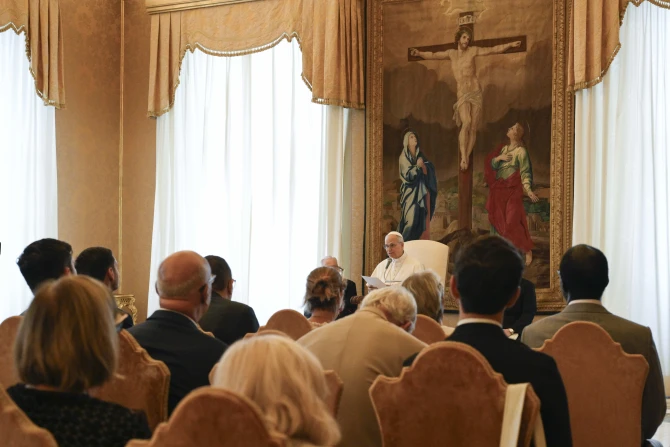
Pope Leo XIV addresses a delegation of political representatives and civic leaders from the Diocese of Créteil, France, on Aug. 28, 2025, at the Vatican. | Credit: Vatican Media

By Nicolás de Cárdenas
ACI Prensa Staff, Aug 28, 2025 / 12:30 pm
Pope Leo XIV on Thursday encouraged Catholic politicians to live coherently as Christians and follow the Gospel, even when performing their public duties in a secular polity.
During an Aug. 28 meeting with a delegation of political representatives and civic leaders from the Diocese of Créteil, France, accompanied by Bishop Dominique Blanchet, the Holy Father stated that “a more just, more human, more fraternal world” can only be “a world more imbued with the Gospel.”
Thus, he added, “in the face of the various deviations present in our Western societies, we can do nothing better, as Christians, than to turn to Christ and ask for his help in carrying out our responsibilities.”
For this reason, the pope highlighted the importance of political and social leaders being committed to acting in coherence with their faith, because “beyond mere personal enrichment, it carries great importance and usefulness for the men and women they serve.”
In this regard, he underlined that such determination “is all the more praiseworthy considering that, in France, due to a sometimes-misunderstood secularism, it is not easy for an elected representative to act and decide consistently with their faith.”
Subscribe to:
Posts (Atom)