Showing posts with label BRZEZINSKI. Show all posts

Monday, January 12, 2026

Who is (was) Zbigniew Brzezinski? What is the Technetronic Age? A Reading and ...


Who is Zbigniew Brzezinski? What is the Technetronic Age? A Reading and Analysis of Between Two Ages


The Logical Shaman Feb 14, 2025

A Book Club reading and analysis of Between Two Ages: America's Role in the Technetronic Era by Zbigniew Brzezinski. 


Zbigniew Brzezinski was advisor to multiple Presidents and creator of organizations such as The Trilateral Commission and predecessor to modern day globalists like Klaus Schwab and their Great Reset. A foundation to any modern day understanding of global politics and the direction and manipulation of society at large. Zbigniew predicted the rise of the internet, social media and modern day influencers and acted as a Nostradamus of modern day propaganda. Unlike Nostradamus, though, Zbigniew was a mover and a shaper, and in this book he lays out his vision for America and the globe in the 21st century.

Monday, June 17, 2013

Zbigniew Brzezinski on Syria: US is engaging in "mass propaganda", "Who's fighting for democracy?"


PlanetEarthAwakens01

Published on Jun 14, 2013


I can't believe it! Brzezinski is right. The west is absolutely engaging in mass propaganda by portraying the Syrian conflict as a fight for democracy when many of the rebels want anything but. They pledge allegiance to Al-Qaeda, explicitly call for Sharia law, kill thousands of Christians, use terrorist tactics yet our corrupt media and political class pretend arming them will produce democracy.

....
....

Thursday, March 28, 2013

Between Two Ages


Between Two Ages


Uploaded on Oct 10, 2011

Brzezinski - Between Two Ages, new world order

A look at Zibigneiw Brzezinski's 1970 book 'Between Two Ages' and how this closely resembles the present time as the so-called elite attempts impose globalism and global governance on the world.


.

Sunday, March 03, 2013

Trilateral Commission: World Shadow Government


The Trilateral Commission was established in 1973. Its founder and primary financial angel was international financier, David Rockefeller, longtime chairman of the Rockefeller family-controlled Chase Manhattan Bank and undisputed overlord of his family's global corporate empire.


Rockefeller's idea for establishing the commission emerged after he had read a book entitled Between Two Ages written by an Establishment scholar, Prof. Zbigniew Brzezinski of Columbia University.

In his book Brzezinski proposed a vast alliance between North America, Western Europe and Japan. According to Brzezinski, changes in the modern world required it.

"Resist as it might," Brzezinski wrote elsewhere, "the American system is compelled gradually to accommodate itself to this emerging international context, with the U.S. government called upon to negotiate, to guarantee, and, to some extent, to protect the various arrangements that have been contrived even by private business."

In other words, it was necessary for the international upper class to band together to protect its interests, and to ensure, in the developed nations, that political leaders were brought to power who would ensure that the global financial interests (of the Rockefellers and the other ruling elites) would be protected over those of the hoi polloi.

POCANTICO HILLS CONFABS

Although the initial arrangements for the commission were laid out in a series of meetings held at the Rockefeller's famous Pocantico Hills estate outside New York City, Rockefeller first introduced the idea of the commission at an annual meeting of the Bilderberg group, this one held in Knokke, Belgium in the spring of 1972.

(The Bilderberg group is similar to the Trilateral Commission in that it is funded and heavily influenced by the Rockefeller empire, and composed of international financiers, industrialists, media magnates, union bosses, academics and political figures.

(However, the much older Bilderberg group's membership is strictly limited to participants from the United States, Canada and Western Europe: i.e. the NATO alliance. For more on the Bilderberg group, keep an eye out for future stories in this paper.

The Trilateral Commission was unique, though, in that it brought the Japanese ruling elite into the inner councils of the global power brokers, a recognition of Japan's growing influence in the world economic and political arena.

RULING CLASSES UNITE 

"The Commission's purpose is to engineer an enduring partnership among the ruling classes of North America, Western Europe and Japan -- hence the term 'Trilateral' -- in order to safeguard the interests of Western capitalism in an explosive world. The private commission is attempting to mold public policy and construct a framework for international stability in the coming decades.


"To put it simply, Trilateralists are saying: The people, governments and economies of all nations must serve the needs of multinational banks and corporations.

"In short, Trilateralism is the current attempt by ruling elites to manage both dependence and democracy -- at home and abroad."

Another Trilateral critic, now-retired Sen. Barry Goldwater (R-Ariz.), views the commission as a Rockefeller family operation through and through. According to Goldwater:

"The Trilateral organization created by David Rockefeller was a surrogate -- the members selected by Rockefeller, its purposes defined by Rockefeiler, its funding supplied by Rockefeller. David Rockefeller screened and selected every individual who was invited to participate."

PICKING POLICYMAKERS 

David Rockefeller and Brzezinski then began the process of selecting from among the "Trilateral" nations the several hundred elite power brokers who would be permitted to join in Trilateral policymaking in the coming years.

One of the commission's primary goals was to place a Trilateral-influenced president in the White House in 1976, and to achieve that goal it was necessary to groom an appropriate candidate who would be willing to cooperate with Trilateral aims.

Rockefeller and Brzezinski selected a handful of well-known liberal Democrats and a scattering of Republicans (primarily of the liberal-internationalist bent) to serve on the commission.

And in an effort to give regional balance to the commission Rockefeller invited the then-obscure one-term Democratic governor of Georgia, Jimmy Carter, to join the commission.

ROCKEFELLER CENTER SOUTH 

Rockefeller had longtime ties to the local Atlanta political and economic Establishment. In fact, much of Rockefeller's personal investment portfolio is in Atlanta real estate. (According to David Horowitz, co-author of The Rockefellers, "Atlanta is Rockefeller Center South.")

And Rockefeller himself had once even invited Carter to dine with him at the Chase Manhattan Bank several years before, as early as 1971, the year Carter began serving as governor.

Carter very definitely impressed Rockefeller and Brzezinski, more so than another Southern Democrat, Florida Gov. Reuben Askew, also selected to serve on the commission and viewed, like Carter, as a possible Trilateral candidate.

In fact, according to Brzezinski, "It was a close thing between Carter and Askew, but we were impressed that Carter had opened up trade offices for the state of Georgia in Brussels and Tokyo. That seemed to fit perfectly into the concept of the Trilateral."

Carter, in fact, like Askew, did announce for the 1976 Democratic presidential nomination, but because of Rockefeller's interest, Carter had the inside shot.

So much so that in a speech at the commission's first annual meeting in Kyoto, Japan in May of 1975, Rockefeller's man Brzezinski promoted the then-still obscure Carter to his fellow Trilateralists as an ideal presidential candidate.

CUT AND DRIED

From that point on, it was all cut and dried. According to Goldwater: "Rockefeller and Brzezinski found Carter to be their ideal candidate. They helped him win the Democratic nomination and the presidency.


"To accomplish this purpose they mobilized the money-power of the Wall Street bankers, the intellectual influence of the academic community -- which is subservient to the wealth of the great tax-free foundations -- and the media controllers represented in the membership of the CFR and the Trilateralists."

(The aforementioned Council on Foreign Relations -- is another Rockefeller-financed foreign policy pressure group similar to the Trilateralists and the Bilderberg group, although the CFR is composed solely of American citizens.)

(In his book The Carter Presidency and Beyond, published in 1980 by the Ramparts Press, Prof. Laurence H. Shoup devotes an entire chapter to demonstrating how the Trilateral-linked and Trilateral-controlled Establishment media promoted the presidential candidacy in 1976 of the then-obscure Georgia Gov. Jimmy Carter.)

Carter, of course, campaigned as a "populist" -- as a "man of the people" -- as an "outsider" with no ties to the Establishment. The fact is, however, Carter, who said he'd never lie, was an elitist, an insider, the Trilateral Commission's "man on the white horse."

And with the power of the commission and the Rockefeller empire and its media influence behind him, Carter made his way to the presidency, establishing the first full-fledged Trilateral administration, appointing numerous Trilateralists to key policymaking positions and carrying out the Trilateral agenda to the hilt.


.

Monday, November 19, 2012

Bank For International Settlements (BIS): How The Rothschilds Control And Dictate To The World


March 22, 2010


By William Dean A. Garner - BLN Contributing Writer

For decades, people have urged me, pushed me, prodded me, practically peeled off my skin, pulled out my eyes, and yanked out my brain to prove it, i.e. show them the data, the results, the books, manuals, pamphlets, journals, monographs, voice and video recordings, all the resources I have used to make the statements I do about the Brzezinski Cartel and the Rothschilds.

On the evening of St. Patrick’s Day 2010, I feel now is the time . . . but with a twist.

The list below shows 165 different ways how The First Sphere of Influence (Rothschilds and Brzezinski Cartel) controls the world. One hundred and sixty-five reasons to believe what I say to be 100% accurate and true.

Each entry is a separate and distinct central bank, located in a separate and distinct part of the world. These central banks cover the globe and know absolutely no boundaries, effectively erasing borders between even sworn enemies.

The BIS (pronounced BIZZ) is the Rothschild’s piggy bank, a veritable deep-pit mine, the equivalent of quadrillions of dollars.

quadrillion quad·ril’lion adj.

The cardinal number equal to 1015.
Chiefly British. Septillion.

What’s the significance of having a central bank within a country and why should you concern yourself, your family and colleagues?

Central banks are illegally created PRIVATE banks that are owned by the Rothschild banking family. The family has been around for more than 230 years and has slithered its way into each country on this planet, threatened every world leader and their governments and cabinets with physical and economic death and destruction, and then emplaced their own people in these central banks to control and manage each country’s pocketbook. Worse, the Rothschilds also control the machinations of each government at the macro level, not concerning themselves with the daily vicissitudes of our individual personal lives. Except when we get too far out of line.

The grand plan of The First Sphere of Influence is to create a global mononation. Please do not confuse this with the term globalization. Mononation and globalization couldn’t be more different in concept, scope and purpose. Mononation is one state. It has one government. One set of laws for all ordinary citizens, no laws for the elite. Globalization refers to communicating, trading, interacting, etc. among separate, different, independent, sovereign countries.

The grand plan of The First Sphere of Influence is to create a global mononation.
Our own Federal Reserve is an illegally emplaced private bank that is directly responsible for creating all the US’s depressions, recessions, and the inflation and deflation of our dollar. The Fed controls the printing of our own currency, and then charges the US government interest on those loans. The interest is growing each year, making it difficult if not impossible for our government to pay it. How do we pay this interest? By the US Personal Income Tax. This tax goes to the Rothschild family.

In the coming months, as I continue to gather intel and write a book about The First Sphere of Influence, I will share more and more. For now, I kindly ask that you read each of the 165 lines below. One hundred and sixty-five reasons to believe my intel. You can click on each bank and visit its website. I’ve seen each one. They’re real. And they’re one of the reasons why each country is in such deep debt to this insidious family, the Rothschilds.

By the way, if you’re curious what the US debt is to the BIS, please refer to the table at the end of this article, taken from the latest statistical results provided by the Joint External Debt Hub, which receives data from the BIS, International Monetary Fund, World Bank, and the Organization for Economic Cooperation and Development.

BIS Offices

Representative Office for Asia and the Pacific
78th floor, Two International Finance Centre
8 Finance Street, Central
Hong Kong
Special Administrative Region of the People’s Republic of China
Telephone: (+852) 2878 7100
Fax: (+852) 2878 7123

Representative Office for the Americas
Torre Chapultepec
Rubén Darío 281 – 17th floor
Col. Bosque de Chapultepec
Del. Miguel Hidalgo
11580 México, D.F.
México
Telephone: (+52) 55 91380290
Fax: (+52) 55 91380299

The Rothschild-Owned Central Banks of the World

Afghanistan: Bank of Afghanistan
Albania: Bank of Albania
Algeria: Bank of Algeria
Argentina: Central Bank of Argentina
Armenia: Central Bank of Armenia
Aruba: Central Bank of Aruba
Australia: Reserve Bank of Australia
Austria: Austrian National Bank
Azerbaijan: Central Bank of Azerbaijan Republic
Bahamas: Central Bank of The Bahamas
Bahrain: Central Bank of Bahrain
Bangladesh: Bangladesh Bank
Barbados: Central Bank of Barbados
Belarus: National Bank of the Republic of Belarus
Belgium: National Bank of Belgium
Belize: Central Bank of Belize
Benin: Central Bank of West African States (BCEAO)
Bermuda: Bermuda Monetary Authority
Bhutan: Royal Monetary Authority of Bhutan
Bolivia: Central Bank of Bolivia
Bosnia: Central Bank of Bosnia and Herzegovina
Botswana: Bank of Botswana
Brazil: Central Bank of Brazil
Bulgaria: Bulgarian National Bank
Burkina Faso: Central Bank of West African States (BCEAO)
Burundi: Bank of the Republic of Burundi
Cambodia: National Bank of Cambodia
Cameroon: Bank of Central African States
Canada: Bank of Canada - Banque du Canada
Cayman Islands: Cayman Islands Monetary Authority
Central African Republic: Bank of Central African States
Chad: Bank of Central African States
Chile: Central Bank of Chile
China: The People’s Bank of China
Colombia: Bank of the Republic
Comoros: Central Bank of Comoros
Congo: Bank of Central African States
Costa Rica: Central Bank of Costa Rica
Côte d’Ivoire: Central Bank of West African States (BCEAO)
Croatia: Croatian National Bank
Cuba: Central Bank of Cuba
Cyprus: Central Bank of Cyprus
Czech Republic: Czech National Bank
Denmark: National Bank of Denmark
Dominican Republic: Central Bank of the Dominican Republic
East Caribbean area: Eastern Caribbean Central Bank
Ecuador: Central Bank of Ecuador
Egypt: Central Bank of Egypt
El Salvador: Central Reserve Bank of El Salvador
Equatorial Guinea: Bank of Central African States
Estonia: Bank of Estonia
Ethiopia: National Bank of Ethiopia
European Union: European Central Bank
Fiji: Reserve Bank of Fiji
Finland: Bank of Finland
France: Bank of France
Gabon: Bank of Central African States
The Gambia: Central Bank of The Gambia
Georgia: National Bank of Georgia
Germany: Deutsche Bundesbank
Ghana: Bank of Ghana
Greece: Bank of Greece
Guatemala: Bank of Guatemala
Guinea Bissau: Central Bank of West African States (BCEAO)
Guyana: Bank of Guyana
Haiti: Central Bank of Haiti
Honduras: Central Bank of Honduras
Hong Kong: Hong Kong Monetary Authority
Hungary: Magyar Nemzeti Bank
Iceland: Central Bank of Iceland
India: Reserve Bank of India
Indonesia: Bank Indonesia
Iran: The Central Bank of the Islamic Republic of Iran
Iraq: Central Bank of Iraq
Ireland: Central Bank and Financial Services Authority of Ireland
Israel: Bank of Israel
Italy: Bank of Italy
Jamaica: Bank of Jamaica
Japan: Bank of Japan
Jordan: Central Bank of Jordan
Kazakhstan: National Bank of Kazakhstan
Kenya: Central Bank of Kenya
Korea: Bank of Korea
Kuwait: Central Bank of Kuwait
Kyrgyzstan: National Bank of the Kyrgyz Republic
Latvia: Bank of Latvia
Lebanon: Central Bank of Lebanon
Lesotho: Central Bank of Lesotho
Libya: Central Bank of Libya
Lithuania: Bank of Lithuania
Luxembourg: Central Bank of Luxembourg
Macao: Monetary Authority of Macao
Macedonia: National Bank of the Republic of Macedonia
Madagascar: Central Bank of Madagascar
Malawi: Reserve Bank of Malawi
Malaysia: Central Bank of Malaysia
Mali: Central Bank of West African States (BCEAO)
Malta: Central Bank of Malta
Mauritius: Bank of Mauritius
Mexico: Bank of Mexico
Moldova: National Bank of Moldova
Mongolia: Bank of Mongolia
Montenegro: Central Bank of Montenegro
Morocco: Bank of Morocco
Mozambique: Bank of Mozambique
Namibia: Bank of Namibia
Nepal: Central Bank of Nepal
Netherlands: Netherlands Bank
Netherlands Antilles: Bank of the Netherlands Antilles
New Zealand: Reserve Bank of New Zealand
Nicaragua: Central Bank of Nicaragua
Niger: Central Bank of West African States (BCEAO)
Nigeria: Central Bank of Nigeria
Norway: Central Bank of Norway
Oman: Central Bank of Oman
Pakistan: State Bank of Pakistan
Papua New Guinea: Bank of Papua New Guinea
Paraguay: Central Bank of Paraguay
Peru: Central Reserve Bank of Peru
Philippines: Bangko Sentral ng Pilipinas
Poland: National Bank of Poland
Portugal: Bank of Portugal
Qatar: Qatar Central Bank
Romania: National Bank of Romania
Russia: Central Bank of Russia
Rwanda: National Bank of Rwanda
San Marino: Central Bank of the Republic of San Marino
Samoa: Central Bank of Samoa
Saudi Arabia: Saudi Arabian Monetary Agency
Senegal: Central Bank of West African States (BCEAO)
Serbia: National Bank of Serbia
Seychelles: Central Bank of Seychelles
Sierra Leone: Bank of Sierra Leone
Singapore: Monetary Authority of Singapore
Slovakia: National Bank of Slovakia
Slovenia: Bank of Slovenia
Solomon Islands: Central Bank of Solomon Islands
South Africa: South African Reserve Bank
Spain: Bank of Spain
Sri Lanka: Central Bank of Sri Lanka
Sudan: Bank of Sudan
Surinam: Central Bank of Suriname
Swaziland: The Central Bank of Swaziland
Sweden: Sveriges Riksbank
Switzerland: Swiss National Bank
Tajikistan: National Bank of Tajikistan
Tanzania: Bank of Tanzania
Thailand: Bank of Thailand
Togo: Central Bank of West African States (BCEAO)
Tonga: National Reserve Bank of Tonga
Trinidad and Tobago: Central Bank of Trinidad and Tobago
Tunisia: Central Bank of Tunisia
Turkey: Central Bank of the Republic of Turkey
Uganda: Bank of Uganda
Ukraine: National Bank of Ukraine
United Arab Emirates: Central Bank of United Arab Emirates
United Kingdom: Bank of England
United States: The Dirty Nasty Stinky Fed, Federal Reserve Bank of New York
Uruguay: Central Bank of Uruguay
Vanuatu: Reserve Bank of Vanuatu
Venezuela: Central Bank of Venezuela
Vietnam: The State Bank of Vietnam
Yemen: Central Bank of Yemen
Zambia: Bank of Zambia
Zimbabwe: Reserve Bank of Zimbabwe

Joint BIS-IMF-OECD-World Bank Statistics on United States’ External Debt (in Millions US$)
2008Q4 2009Q2 2009Q3 2009Q4
a. Loans and other credits
01_Cross-border loans from BIS reporting banks 3,707,538 3,388,795 3,530,286 ..
02_Cross-border loans from BIS banks to nonbanks 1,363,191 1,337,188 1,330,606 ..
03_Official bilateral loans, total .. .. .. ..
04_Official bilateral loans, aid loans .. .. .. ..
05_Official bilateral loans, other .. .. .. ..
06_Multilateral loans, total .. .. .. ..
07_Multilateral loans, IMF 0 0 0 0
08_Multilateral loans, other institutions .. .. .. ..
09_Official trade credits, total, all maturities .. .. .. ..
10_Official trade credits, nonbanks, all maturities .. .. .. ..
101_SDR allocation 7,547 7,605 55,953 55,364
b. Debt securities
11_International debt securities, all maturities 5,275,668 5,849,272 5,937,740 6,034,582
12_International debt securities, nonbanks 3,540,768 4,074,795 4,174,716 4,259,775
13_International debt securities, Brady bonds .. .. .. ..
c. Supplementary information:
14_Insured export credit exposures, Berne Union 99,113 100,938 102,692 104,039
15_Insured export credit exposures short term (BU) 61,873 58,664 60,227 56,901
16_Debt securities held by nonresidents 4,866,185 .. .. ..
161_Paris Club claims (ODA) .. .. .. ..
162_Paris Club claims (non ODA) .. .. .. ..
d. Loans and other credits (Debt due within a year)
17_Liabilities to BIS banks (cons.), short term 1,074,620 981,718 892,617 ..
18_Official bilateral loans, total, short term .. .. .. ..
19_Official bilateral loans, aid, short term .. .. .. ..
20_Official bilateral loans, other, short term .. .. .. ..
21_Multilateral loans, IMF, short term .. .. .. ..
22_Official trade credits, nonbanks, short term .. .. .. ..
e. Debt securities (Debt due within a year)
23_International debt securities, short term 856,968 850,176 888,271 871,759
24_Intnl debt securities, nonbanks, short term 481,950 491,997 529,169 514,819
f. Memorandum items –selected foreign assets/liabilities
25_International reserves (excluding gold) 66,607 70,448 123,255 119,719
251_SDR holdings 9,340 9,437 57,945 57,814
26_Portfolio investment assets 4,267,865 .. .. ..
27_Cross-border deposits with BIS rep. banks 3,752,843 3,846,483 3,973,186 ..
28_Cross-border dep. with BIS banks, nonbanks 1,802,268 1,628,098 1,716,537 ..
29_Liabilities to BIS banks, locational, total 5,289,063 4,917,133 5,078,389 ..
30_Liabilities to BIS banks, consolidated, total 2,761,479 2,680,326 2,590,003 ..
Please Share Our Content!


ABOUT THE AUTHOR: William Dean A. Garner is a New York Times bestselling ghostwriter and editor of many fiction and nonfiction books. A former biophysicist, US Army Airborne Ranger, and Corporate Mercenary, Garner did 211 overseas missions over a nine-year period, escorting clients out of hostile territories so they could have a voice of peace, freedom and liberty. He writes and speaks about the dangers of The First Sphere of Influence, a global cartel controlled by the family Rothschild.
http://thatsjustplumdumb.com/index.php/2010/03/bank-for-international-settlements-bis-how-the-rothschilds-control-and-dictate-to-the-world/


Source

,

Friday, October 05, 2012

Mika: Obama's Debate Performance 'Makes Me Sick To My Stomach'

By Mark Finkelstein | October 04, 2012 | 15:42


Did Frank Rich, back in his drama-critic days, ever pan an actor's performance this profoundly?

Making it much worse is that Mika Brzezinski knows and avidly supports the actor in question: Barack Obama. On today's Morning Joe, Brzezinski exclaimed that Obama's disastrous debate performance "makes me sick to my stomach." View the video after the jump. Hat tip reader cobokat.


David Remnick of The New Yorker tried to ride to Obama's defense, but poor Mika was inconsolable. I'll be back with the transcript, but in the meantime, sympathize with Mika's distress.


MIKA BRZEZINSKI: Yeah, if you can't engage on that level. If you can't just get in there and get in someone's face and engage, then perhaps the problem is people are going to tie that performance to his inability to get things done in Washington. That, that makes me sick to my stomach. He needs to regain for the next debate, Chuck Todd, thank you. What's so funny?

JOE SCARBOROUGH: Yeah, it makes me sick to my stomach.

DAVID REMNICK: He accomplished a tremendous amount. This was a catastrophic, he inherited --

BRZEZINSKI: No, I'm sorry. But that's what I saw.

REMNICK: He inherited a catastrophic economy and did a tremendous amount to rescue it from getting worse and worse and worse. How did this theme not get played out last night?

BRZEZINSKI: I don't know. But it's going to have to be fixed.


About the AuthorMark Finkelstein is a NewsBusters Senior Contributor. Click here to follow Mark Finkelstein on Twitter.

Source: http://newsbusters.org/blogs/mark-finkelstein/2012/10/04/mika-obamas-debate-performance-makes-me-sick-my-stomach#ixzz28QmoYFV1

.

Monday, January 30, 2012

Zbigniew Brzezinski: "Strategic Vision: America and the Crisis of Global Power"


LISTEN (to the podcast) X

Zbigniew Brzezinski: "Strategic Vision: America and the Crisis of Global Power" (Rebroadcast)
Sunday, January 29, 2012 - 2:06 p.m.

Zbigniew Brzezinski has had a hand in U.S. foreign policy for four decades. He served as national security adviser to President Jimmy Carter from 1977-1981. Since then he has counseled presidents and members of Congress. And he has written and lectured extensively on America's role in the world. In a new book Brzezinksi argues U.S. leaders need a better strategic vision to navigate the challenges of the 21st century. He offers his insights on China's meteoric rise, a turbulent Middle East and the likely consequences of a decline in American power.

Guests

Zbigniew Brzezinski

counselor and trustee at the Center for Strategic and International Studies, professor of American Foreign Policy at the School of Advanced International Studies at Johns Hopkins University and former National Security Advisor in the Carter administration.

This is a rebroadcast. Please view the original broadcast to comment.


Source

.

Monday, January 16, 2012

Lunch with the FT: Zbigniew Brzezinski

FT Specials | Posted on Jan 16, 2012 at 05:53pm IST


For most people in their eighties, life is a gradual winding down. For Zbigniew Brzezinski, one of the key architects of America's cold war strategy – "Jimmy Carter's Kissinger", as he was once called – being 83 isn't much different from 43. Brzezinski plays singles tennis every day – "one of my partners is older than me," he tells me with some amusement. At the crack of dawn he is often found opining trenchantly on Morning Joe, the MSNBC daily news show co-hosted by his daughter Mika. And he remains a much sought-after adviser to secretaries of state and presidential candidates, including Barack Obama, though nowadays Brzezinski finds it hard to conceal his disappointment with his former mentee. "I'm all in favour of grand important speeches but the president then has to link his sermons to a strategy," Brzezinski says. "Obama still has some way to go."

We meet at Teatro Goldoni, one of Washington's best Italian restaurants, located on the infamous K Street, home to many of the town's lobbying groups. It is also a block from the Center for Strategic International Studies, one of DC's biggest think-tanks, where Brzezinski, national security adviser to Carter from 1977 to 1981, is a trustee. I get there a few minutes early to fiddle with my tape recorder. Brzezinski strides in on the dot of our agreed time and grips my hand firmly. Dressed in a low-key suit and tie, Brzezinski is leathered and lean and still has almost a full head of hair. He talks in paragraphs, virtually without pause. Though I have known Brzezinski for years – and received news tips from him by email and fax – I still feel unsettled by his piercing gaze. Many of his Soviet interlocutors and White House colleagues were reportedly kept off balance by his hawkish manner.

"I don't know much about food," Brzezinski says as we settle down in his favourite booth, elevated slightly above the main restaurant floor. "I come here because it tastes nice and it's convenient." Despite having eaten here dozens of times, Brzezinski is still puzzled by the menu. "Remind me again, what is linguine?" he asks the waiter, who launches into a detailed description. "And what kind of meat do you have in your lasagne?" Brzezinski continues. The waiter explains that "as usual" it's minced beef. Before ordering food, we had both chosen the same drink. "You know that red drink that they have before lunch in France?" says Brzezinski. "Perhaps wine?" the waiter suggests. "No, no, it's stronger than that." Remembering my maternal grandfather, who loved aperitifs, I have an epiphany. "Dubonnet?" I suggest. "Yes, yes, I'll have a Dubonnet," Brzezinski says. "It's really a very good drink."

Lunch with the FT: Zbigniew Brzezinski

When talking about the state of the world, Brzezinski, who still has traces of a Polish accent, chooses his language more forensically. His father was a Polish diplomat and Brzezinski, who was educated at a British prep school in Montreal during the second world war, had spent most of his first decade at diplomatic compounds in France and Hitler's Berlin. Brzezinski Sr must have done something very right, or very wrong, to get posted to Canada after that. "In those days, the British still referred to it as BNA," Brzezinski says. "British North America." Brzezinski attributes his verbal skills to his prep school. "I entered the school not knowing a word of English and at the end of the first year in June I picked up a prize for literature," he says. It must also have been there that he acquired his knowledge of food, I think to myself.

I spent the previous night reading through Brzezinski's new book – Strategic Vision: America and the Crisis of Global Power. "That must have been a sad evening," says Brzezinski, chuckling. I had no difficulty staying awake, I reply. The book offers a bracing portrait of a "receding west" with one half, Europe, turning into a "comfortable retirement home", and the other, the US, beset by relative economic decline and a dysfunctional politics. In this rapidly changing new world, America's growing "strategic isolation" is matched only by China's "strategic patience" in a challenge likely to strain the electoral horizons of US policymakers.

The book is full of sharp advice: the US should prod Europe to bring both Russia and Turkey into an enlarged west. America should hedge against China's rise, without explicitly attempting to contain it. Most important, the US should revitalise its domestic economy if it wants to stave off further decline. On all counts, Brzezinski seems pessimistic about the likelihood that Washington’s elites will start to act strategically again. "If the US doesn't revitalise at home, it will fail internationally," he says. "If it does, we may not necessarily fail internationally – but we will have to be intelligent to succeed. But if we continue to fail domestically, we will have no chance internationally, even if we do the right things."

We are already toying with our respective starters – Brzezinski has a mixed green salad and I have gone for a beet salad. The Dubonnet is going down nicely. "We [Americans] are too obsessed with today," Brzezinski continues. "If we slide into a pattern of just thinking about today, we'll end up reacting to yesterday instead of shaping something more constructive in the world." By contrast, he says, the Chinese are thinking decades ahead. Alas, Brzezinski says, Obama has so far failed to move into a strategic habit of mind. To a far greater extent than the Chinese, he concedes, Obama has to respond to shifts in public mood. Brzezinski is not very complimentary about American public opinion.

"Americans don't learn about the world, they don't study world history, other than American history in a very one-sided fashion, and they don't study geography," Brzezinski says. "In that context of widespread ignorance, the ongoing and deliberately fanned fear about the outside world, which is connected with this grandiose war on jihadi terrorism, makes the American public extremely susceptible to extremist appeals." But surely most Americans are tired of overseas adventures, I say. "There is more scepticism," Brzezinski concedes. "But the susceptibility to demagoguery is still there."

When our main courses arrive, Brzezinski looks suspiciously at his steaming plate of duck ragu pasta. "It's quite a large portion," he says to the waiter, who does not reply. "And your plate of lasagne is also very big," he says pointing at my dish. Unlike Brzezinski, who picks discriminatingly but never wholeheartedly at his main course, I have little difficulty finishing mine. We decline the waiter's offer to follow our Dubonnet with a glass of wine. "This is quite enough, thank you," says Brzezinski.

We return to the subject of ignorance, which Brzezinski lists as one of America's six "key vulnerabilities" in his book alongside "mounting debt", a "flawed financial system", "decaying national infrastructure", "widening income inequality", and "increasingly gridlocked politics". He contrasts the level of knowledge of Chinese policymakers with that of their American counterparts. Having befriended Deng Xiaoping, China's former leader, who led the country out of its long dark Maoist night, Brzezinski is an unabashed admirer of China's diplomatic skills. He even had Deng round to his DC home for dinner. The diminutive Chinese leader was amused when Brzezinski served him from a bottle of Russian vodka he had been given for Christmas by the Soviet ambassador.

"The Chinese are really good at diplomacy – and even at making their interlocutors feel very uncomfortable," Brzezinski says. "Sometimes they look at you while you're making a point and they start laughing. And you're saying to yourself, 'Am I really a fool? What am I saying that's so ridiculous?' I very early on realised that their negotiating technique is a form of masterful manipulation. I was also struck by how well informed the top Chinese leaders are about the world," he says. "And then you watch one of our Republican presidential debates ... " Brzezinski does not feel it necessary to complete the sentence but he later adds: "The GOP field is just embarrassing."

I push him further on Obama. Shortly before our lunch, the president returned from Australia where he announced plans to deploy 2,500 Marines there to shore up alliances in Asia. This is exactly the kind of move that baffles Brzezinski. What's wrong, I ask, with Obama's so-called pivot to Asia? Doesn't it make sense to wind down the wars in Iraq and Afghanistan and shift attention to the rising east?

When Brzezinski feels strongly, he barely pauses between paragraphs. "I was not aware that Australia was about to be invaded by Papua New Guinea, or by Indonesia," he replies. "I assume most people think Obama was thinking of China. What's worse is that the Chinese will think he's thinking of China and to define our engagements in the east in terms of China is a mistake. We have to focus on Asia but not in a manner that plays on everyone's anxieties ... It becomes very easy to demonise China and they will then demonise us in return. Is that what we want?"

The waiter removes our plates of which only mine is clean. We skip dessert and order coffee – a decaffeinated cappuccino for Brzezinski and a double espresso for me. I am curious about what Brzezinski thinks it will take to get the US back into a more pragmatic mindset. Could this year's presidential election make a difference? Brzezinski looks pensive. "The question is, 'Does Obama have it in his guts to strategise as well as sermonise?' " he asks. "I don't know the answer to that. I really don't know."

Brzezinski quotes a senior Chinese official who reportedly said of America: "Please don't decline too quickly". He then lampoons the standard American candidate's response to any talk of decline, which is simply to assert that America's greatness will return if only people would believe in it. "'Help is here. Smile a lot. Everything will disappear. It will be fine' – well, sad to say, it doesn't work that way. People are ignorant and scared. It will take more than that."

Brzezinski admits he has voted Republican a couple of times in his life – notably in 1988 when he endorsed George HW Bush over Michael Dukakis. But in 2012 he would not dream of doing so. "A good election is one that would shape out in an intelligent victory by Obama," he says. "There is no sign of that from the other side." Which means Obama will win, I prompt? Not at all, says Brzezinski. "My fear is that two or three weeks before the election something will happen – an October surprise," he continues. "If Iran was struck by Israelis during October, the negative effects would not be felt until late November and December. The first effect would be, 'Ah, how wonderful. Let's get behind the Israelis.' Then all bets would be off."

It seems like a downbeat note on which to conclude a lunch that has taken place at such high velocity. As the waiter hands me the bill, Brzezinski asks when was the last time I did something like this. I mention the late Christopher Hitchens with whom I had lunch a few years back. "Ah, now, that must have been lively," says Brzezinski, his face brightening. I ask whether he watched the debate between Hitchens and Tony Blair about religion. Brzezinski's expression alters. "That guy [Blair] is a lightweight," he says. "I don't like his political morals and how he's been enriching himself since leaving office. He preaches high moral language but ... " Brzezinski pauses as if wondering whether to continue. "I have a visceral contempt for Blair," he says. "Not dislike. Just contempt." The bill settled, Brzezinski departs as briskly as he arrived, and with another of those iron handshakes.

(Edward Luce is the FT's chief US commentator)

Venue: Teatro Goldoni, 1909 K Street NW, Washington, DC

Mixed salad $11.00

Beet salad $12.00

Taglierini (duck ragu pasta) $20.00

Lasagne $18.50

Dubonnet Blanc x2 $23.62

Cappuccino $5.00

Double espresso $4.50

Total (including service and taxes) $124.09

BRZEZINSKI IN BRIEF: From Warsaw to the West Wing

1928 Zbigniew Kazimierz Brzezinski born March 28, Warsaw, Poland

1930s Early childhood spent in France (1928-1931) and Germany (1931-1935) where father, Tadeusz, was on diplomatic postings

1938 Family moves to Canada after father given diplomatic assignment there; attends Loyola High School, Montreal, and then McGill University

1953-1960 Completes PhD on Soviet Union at Harvard and serves on its faculty

1955 Marries Emilie Benes with whom he has three children: Ian, a Democrat and foreign policy expert, Mark, a Republican and current US ambassador to Sweden, and Mika, a US TV presenter

1957 Visits Poland for first time since childhood

1958 Takes US citizenship

1960 Moves to New York to teach at Columbia University, where he remains intermittently until 1989

1968 Chairman of Hubert Humphrey Foreign Policy Task Force in Humphrey's presidential campaign

1976 Acts as principal foreign policy adviser to Jimmy Carter in his presidential campaign

1977-1981 Serves as Carter's national security adviser 1979. Is key broker in Camp David Accords, which led directly to Egypt-Israel peace treaty in 1979

1981 Awarded Presidential Medal of Freedom in 1981 for normalisation of US-China relations and for his human rights contributions

1987-1988 Sits on president's Foreign Intelligence Advisory Board

1988 Co-chairs National Security Advisory Task Force

2003 Openly opposes second Gulf war

2007 Endorses Barack Obama and publishes Second Chance: Three Presidents and the Crisis of American Superpower

2011 Currently trustee and counsellor at Center for Strategic and International Studies in Washington, DC

Copyright The Financial Times Limited 2012

Posted on www.ft.com on January 13, 2012, at 9:48 pm


Source

.

Thursday, December 22, 2011

Brzezinski: Can US contribute to greater Mideast stability?


P.S. 
How about this?
Today on NBC's morning joe: Brzezinski interviews Brzezinski.
Talk about job security?

This is similar to Andrea Mitchell interviewing Alan Greenspan;  It's a Family Affair.


Monday, March 21, 2011

"We mean business" - Zbigniew Brzezinski


This morning Zbigniew Brzezinski said on NPR's Diane Remh Show that "we mean business", when referring to the goal of Operation Odyssey Dawn in Kaddaffi's Lybia. The former Jimmy Carter administration National Security Advisor, Bilderberg participant, member of the Council On Foreign Relations, and co-founder (with David Rockefeller) of the Trilateral Commission; Brzezinski is also a college professor, and an expert in geo-political matters...
What a resume?

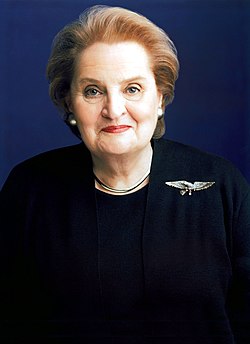
What a line-up Diane Remh had on this morning's first hour segment? Along with Zbigniew Brzezinski, she also had Madeleine (coxxnes) Albright (Bill Clinton's Secretary of State), and Rhodes Scholar Richard Haass, the current president of the Council of Foreign Relations. The usual operatives were present on today's program; they faithfully represented the Vatican New World Order agenda (as quiet as it's kept).

No, NPR doesn't have a myopic bias when it comes to poli-tricks? Of course not they're consistent in always providing the Vatican's perspective: Ordo Ab Chao. Something that was missing from today's format was a representative from Georgetown University (a staple on the programs) or a guest from the Brookings Institution. Actually, if you have a president of the CFR, another guest who is a member of the same organization and a founder of the Trilateral Commission, plus a serving professor at Georgetown University since '82; You've covered the whole gamut of common good Cannon Law - Catholic Agenda. My mistake, I didn't consider that Ms. Albright (always wears esoteric lapel broaches) was also now a Jesuit coadjutor (represents the Jesuit/Catholic world-view).
.
Note: Richard Haass was a former VP, and Director of the Brookings Institution.
.
And yes folks, these people do mean business. Business as usual! For the greater good, of course.

Arsenio.
.