Showing posts with label al-Qaeda. Show all posts

Sunday, December 13, 2015

Al-Qaeda, ISIS, CIA, and Papacy! DO THEY CONNECT?: Bill Hughes


Al-Qaeda, ISIS, CIA, and Papacy! DO THEY CONNECT?: Bill Hughes


Published on Oct 10, 2015


Operation Gladio: The Unholy Alliance between the Vatican, the CIA, and the Mafia by Paul L. Williams:

http://www.amazon.com/Operation-Gladi...

./

Wednesday, March 26, 2014

Bin Laden's son-in-law convicted at NYC terror trial


Published March 26, 2014
Associated Press


In this undated image made from video and provided by by Al-Jazeera, Sulaiman Abu Ghaith, is shown. (AP/Al-Jazeera)


NEW YORK – Usama bin Laden's son-in-law, the voice of fiery Al Qaeda propaganda videotapes after the Sept. 11 attacks, was convicted Wednesday of conspiring to kill Americans for his role as the terror group's spokesman.

Bin Laden's Son-in-Law Convicted


The verdict came after about six hours of deliberation over two days in the case against Kuwaiti imam Sulaiman Abu Ghaith, the highest-ranking Al Qaeda figure to face trial on U.S. soil since the attacks.

As the verdict was read, Abu Ghaith remained composed as he had throughout the trial. Just before he was led out of the courtroom, he turned toward a spectator — a longtime friend from Kuwait — and smiled.

In a statement, U.S. Attorney Preet Bharara said he hoped the verdict brought some measure of comfort to victims of Al Qaeda.

"He was more than just Usama bin Laden's propaganda minister," Bharara said. "Within hours after the devastating 9/11 attacks, Abu Ghaith was using his position in Al Qaeda's homicidal hierarchy to persuade others to pledge themselves to Al Qaeda in the cause of murdering more Americans."

Defense attorney Stanley Cohen emerged from court promising to appeal.

Asked about his client, he said: "He was stoic. He was at ease. He has confidence this is not the end but the beginning."

Abu Ghaith had testified during a three-week trial that he answered bin Laden's request in the hours after the attacks to speak on the widely circulated videos used to recruit new followers willing to go on suicide missions like the 19 who hijacked four planes on Sept. 11, 2001.

"The storm of airplanes will not stop," Abu Ghaith warned in an October 2001 video that was played for the jury.

Also shown repeatedly to the jury during the trial were frames of a video made Sept. 12, 2001, that showed Abu Ghaith seated next to bin Laden and two other top Al Qaeda leaders as they tried to justify the attacks.

Sentencing was set for Sept. 8. The charges — conspiracy to kill Americans, conspiring to provide support to Al Qaeda and providing support to Al Qaeda — carry a potential penalty of life in prison.

On Monday, during closing arguments, Assistant U.S. Attorney John Cronan underscored the importance of Abu Ghaith's post-9/11 status.

"Going to that man was the very first thing Usama bin Laden did on Sept. 11 after the terror attacks," he said. "The defendant committed himself to Al Qaeda's conspiracy to kill Americans, and he worked to drive other people to that conspiracy."

He added: "During the most important period of time in Al Qaeda's savage history, Sulaiman Abu Ghaith was Usama bin Laden's principal messenger. ... He used his fiery oratory to incite Al Qaeda's growing army of terror in this war with America."

Captured in Jordan last year and brought to New York, Abu Ghaith actively participated in his trial. He listened to testimony and arguments through headphones linked to an Arabic translator.

Taking the witness stand in his own defense, Abu Ghaith calmly denied he was an Al Qaeda recruiter and claimed his role was a religious one aimed at encouraging all Muslims to rise up against their oppressors. He insisted he agreed to meet with bin Laden in a cave on the night of Sept. 11 out of respect for bin Laden's standing as a sheik.

"Despite knowing that he was responsible for the deaths of hundreds of Americans, you met with him to be polite, correct?" prosecutor Michael Ferrara asked on cross-examination.

"I didn't go to meet with him to bless if he had killed hundreds of Americans or not. I went to meet with him to know what he wanted," Abu Ghaith said.

Abu Ghaith's lawyer argued there was "zero evidence" that the 48-year-old former teacher knew of the conspiracies the government claimed he knew about. Citing the videos of his client, Cohen warned jurors not to let prosecutors "intimidate you and to frighten you into returning verdicts not based upon evidence, but fear."

Those videos, though, emerged as the centerpiece of the government's case. One — titled "Convoy of Martyrs" — features Abu Ghaith preaching over horrific footage of a plane flying into one of the World Trade Center towers. Another showed the defendant looking at bin Laden admiringly as the Al Qaeda leader boasted that he knew the attack would make both towers fall.

Prosecutors used Abu Ghaith's testimony and closing arguments as an opportunity to reshow the image of the burning towers to jurors.

And in his closing argument, Cronan used the defendant's testimony against him.

"Accept it as totally true. If you do that, he's guilty," Cronan said.


Source
.

Monday, January 06, 2014

Al-Qaida Extremists Fight For Influence In Iraq, Syria

This is from the - No,.. really?, department:


by David Greene and Deborah Amos
January 06, 2014 5:07 AM


Morning Edition

4 min 58 sec


In Syria, militias linked to al-Qaida have taken the lead in the fight against the Assad government. In Iraq, they've caused a wave of violence including bombings against civilians and attacks on government forces.
.
.

Monday, October 14, 2013

Al Qaeda kingpin Abu Anas al-Libi belongs at Guantanamo, not in New York


By J.D. Gordon

Published October 14, 2013

FoxNews.com


The interior of an unoccupied communal cellblock is seen at Camp VI, a prison used to house detainees at the U.S. Naval Base at Guantanamo Bay. (rEUTERS)


U.S. Commandos scored a tactical victory against Al Qaeda by swooping into Libya and capturing Abu Anas al-Libi earlier this month, a former Bin Laden confidant and terror kingpin. Now President Obama must follow through with a strategic win.

That means extracting valuable intelligence from al-Libi, whose name literally means “the Libyan,” about his two decades of terror insider experience as an Al Qaeda computer expert and co-conspirator of plots against U.S. interests. Al-Libi is believed to have been involved in plots across Africa and the Middle East, including against our Kenya and Tanzania Embassies in 1998 which killed 224 people.

But getting that treasure trove of information depends on our strategy to pry it from a hardened warrior.

And so far, the Obama administration is failing us.

Here’s why:

Instead of whisking al-Libi to Guantanamo where he could be interrogated by the military and CIA for as long as it takes to get actionable intelligence – and then try him by military commission as an enemy combatant, Mr. Obama first decided to hold him aboard the amphibious transport ship USS San Antonio, and later try him in a New York federal courtroom.

Mr. Obama’s resistance is entirely based on politics, which he is putting above national security. Again.

First, let's look at the move to put him on the Navy ship.

While holding key terror suspects captured overseas on a Navy ship makes sense temporarily, therein lies the long term problem -- everybody knows it’s just a temporary landing place, including the detainee. Al-Libi has likely been inclined to bide his time and wait till he arrived in the United States to speak with a civilian lawyer.

Second, about justice.

Obama’s counter-terrorism strategy often resembles a hybrid of police work and war. Ahmed Abdulkadir Warsame, a leader of Somalia’s Al Qaeda ally, Al Shabaab was captured in 2011 and held aboard a Navy ship for two months. But then Obama ordered his transfer to federal court in New York where he would be afforded a full range of Constitutional Rights.

Ironically, Obama champions a concept that gives foreign enemy combatants trying to kill Americans, with generous legal protections designed by our Founding Fathers to protect Americans.

What would George Washington would say?

Third, on the interrogations.

Let’s face it, al-Libi’s time on a ship likely didn't require much toughness. Mr. Obama banned coercive interrogation techniques within 48 hours of his January 2009 inauguration. -- Al-Libi could face rougher treatment from police departments across the country for robbing a liquor store.

Sure, he may decide to cooperate with investigators over a hamburger and fries. Some FBI agents have the knack of getting guys to reveal meaningful information via polite conversations, but that strategy can take considerable time as the interrogator-detainee form a tight bond. While that’s great to help prosecutors secure convictions in court, it could take years, and won't stop imminent attacks.

So what’s wrong with sending al-Libi to Guantanamo?

Actually, nothing.

Mr. Obama’s resistance is entirely based on politics, which he is putting above national security.

Again.

Let’s understand that although Gitmo had a rocky start in 2002, it remains in the crosshairs of history’s largest propaganda campaign.

Left-leaning defense lawyers, so-called human rights activists, key media and politicians, both in the U.S. and overseas, worked tirelessly to convince the world that Al Qaeda and Taliban terrorists at Gitmo were actually the victims.

They conveniently ignore the fact that detainees collectively killed countless thousands of civilians worldwide, including on Sept. 11, 2001, in the mass-casualty bombings at our East African Embassies, at a Bali nightclub, and the Jakarta Marriott, and during Afghanistan’s civil war.

And with the exception of isolated incidents impacting a grand total of 1% of the total detainee population, the rest have been treated with kid gloves.

Gitmo and military commissions have played a vital role in defending America as we remain at war.

Just as we held Nazis as enemy combatants in 1943, we should continue holding Al Qaeda terrorists and affiliates in the same status.

Al-Libi should join them at Gitmo -- starting today.

J.D. Gordon is a retired Navy Commander who served as a Pentagon spokesman in the Office of the Secretary of Defense from 2005-09. He serves as senior adviser to several Washingtonbased think tanks.


Source
.

Tuesday, August 06, 2013

Do newly intercepted al Qaeda threats justify NSA snooping?


.
A Bahraini armored personnel vehicle reinforces security outside the gated U.S. Embassy in Manama, Bahrain, on Aug. 4.


Keith Wagstaff 14 hours ago

Intelligence officials overheard terrorist "chatter," then closed 22 embassies. Good thing they were listening?

Last month, Keith Alexander, director of the NSA, defended his agency's electronic surveillance program by claiming that it had helped prevent "potential terrorist events" at least 50 times since 9/11.

Now, in the words of Sen. Saxby Chambliss (R-Ga.), come warnings of a potential attack that are "very reminiscent of what we saw pre-9/11." That threat has resulted in the closure of 22 embassies and consulates across the Middle East and North Africa, as well as a month-long security advisory for Americans traveling abroad.

As criticism of the NSA, fueled by the classified documents leaked by Edward Snowden, builds in the United States and overseas, the agency's supporters are pointing to intercepted intel on these possible attacks as Exhibit A in why the NSA's programs are vital to American security.

"Al Qaeda is on the rise in this part of the world and the NSA program is proving its worth yet again," Sen. Lindsey Graham (R-S.C.) told CNN's State of the Union.

Chambliss agreed, telling NBC's Meet the Press:

This is a good indication of why they're so important. To the members of Congress who want to reform the NSA program — great. But if you want to gut it, you make us much less safe, and you're putting our nation at risk. We need to have policies in place that can deal with the threats that exist, and they are real, and they are growing. [NBC News] Critics of the NSA's surveillance program, however, were not convinced.

"If you look at the one that's most at issue here, and that's the bulk metadata program, there's no indication, unless I'm proved wrong later, that that program, which collects vast amounts of domestic data, domestic telephony data, contributed to information about this particular plot," Rep. Adam Schiff (D-Calif.) said on CNN.

It's not entirely clear where information about this newest threat came from, though McClatchy cited an unnamed source who claims U.S. intelligence intercepted communications between al Qaeda leader Ayman al Zawahiri and Nasir al-Wuhayshi, head of the Yemen-based al Qaeda in the Arabian Peninsula.

Rep. Justin Amash (R-Mich.) argued on Fox News Sunday that it didn't even matter whether the NSA's domestic surveillance program contributed to this latest warning.

"It's precisely because we live in this dangerous world that we need protections like the Fourth Amendment to the Constitution," Amash said. "The framers of the Constitution put it in place precisely because they were worried you'd have national security justifications for violating people's rights."


Source
.

Thursday, August 01, 2013

U.S. intelligence: Al Qaeda plot tied to embassy closings on Sunday


By

Jake Miller /

CBS News/ August 1, 2013, 8:23 PM


Updated 8:22 PM ET


An al Qaeda plot is linked to an announcement by the State Department that it was closing several consulates and embassies around the world on Sunday due to a security threat, CBS News has learned.

CBS News correspondent David Martin reports that U.S. intelligence has picked up signs of an al Qaeda plot against American diplomatic posts in the Middle East and other Muslim countries. The intelligence does not mention a specific location, which is why all embassies that would normally be open on Sunday have been ordered to close. That includes embassies and consulates in the Middle East, North Africa, and South Asia, where Sunday is the start of the work week.

Martin further reported that officials say this appears to be a real plot in the making and not just the normal chatter among terrorists talking about attacks they'd like to carry out. But these same officials add they are missing key pieces of information.

As of 7:35 PM ET Thursday, at least 14 embassies have announced that they will close on Sunday in accordance with the State Department's guidance, including the U.S. embassies in Bahrain, Egypt, Iraq, Israel, Jordan, Kuwait, Libya, Oman, Qatar, Saudi Arabia, United Arab Emirates, Yemen, Afghanistan and Bangladesh. A statement on the website of the embassy in Kuwait explained, "The Department of State has instructed certain U.S. Embassies and Consulates to remain closed or to suspend operations on Sunday, August 4...Accordingly, the U.S. Embassy in Kuwait will be closed on Sunday, August 4."

In the meantime, the statement continued, "All U.S. citizen services appointments and visa appointments have been cancelled and have been rescheduled on an individual basis."


Play Video
State Dept: Some embassies to close Sunday due to "security considerations"


Earlier, Marie Harf, the deputy spokeswoman for the State Department, told reporters that the step was taken as a "precautionary" measure. She did not provide further specifics on the nature of the threat or which embassies would be forced to shutter for the day.

"The Department of State has instructed certain U.S. embassies and consulates to remain closed or to suspend operations on Sunday, August 4th," she said, explaining that the decision was made "out of an abundance of caution."

She said that is is "possible" some facilities would remain closed for more than a day, depending on the results of a security analysis.

A senior State Department official told CBS News: "For those who asked about which embassies and consulates we have instructed to suspend operations on August 4th, the answer is that we have instructed all U.S. Embassies and Consulates that would have normally been open on Sunday to suspend operations, specifically on August 4th. It is possible we may have additional days of closing as well." The official added: "The Department, when conditions warrant, takes steps like this to balance our continued operations with security and safety."


A map showing the embassies that normally open on Sundays that would be closing following an announcement by the State Department on Aug. 1, 2013. / CBS News

Harf declined to say from which region of the world the threat had emanated, saying only that "security considerations have led us to take this precautionary step, as we do from time to time."


The State Department will provide further details soon, Harf said.
Kerry sets 9-month goal for Mideast peace talks
Congress interviewing "dozens" of Benghazi witnesses


The security of American embassies and other diplomatic facilities has recently emerged as a political flashpoint in the wake of the September 11, 2012 attack on a U.S. facility in Benghazi, Libya, that claimed the lives of four Americans, including then-ambassador to Libya Chris Stevens.

In the wake of that attack, Republicans accused the State Department of providing insufficient security for diplomatic personnel in Libya.


Source
.

Monday, May 13, 2013

Exclusive: Benghazi Talking Points Underwent 12 Revisions, Scrubbed of Terror Reference


White House Benghazi Attack Talking Points Edited


By Jonathan Karl
@jonkarl
Follow on Twitter
May 10, 2013 6:33am

When it became clear last fall that the CIA’s now discredited Benghazi talking points were flawed, the White House said repeatedly the documents were put together almost entirely by the intelligence community, but White House documents reviewed by Congress suggest a different story.

ABC News has obtained 12 different versions of the talking points that show they were extensively edited as they evolved from the drafts first written entirely by the CIA to the final version distributed to Congress and to U.S. Ambassador to the U.N. Susan Rice before she appeared on five talk shows the Sunday after that attack.


AFP/Getty Images

Related: Read the Full Benghazi Talking Point Revisions

White House emails reviewed by ABC News suggest the edits were made with extensive input from the State Department. The edits included requests from the State Department that references to the Al Qaeda-affiliated group Ansar al-Sharia be deleted as well references to CIA warnings about terrorist threats in Benghazi in the months preceding the attack.

That would appear to directly contradict what White House Press Secretary Jay Carney said about the talking points in November.

“Those talking points originated from the intelligence community. They reflect the IC’s best assessments of what they thought had happened,” Carney told reporters at the White House press briefing on November 28, 2012. “The White House and the State Department have made clear that the single adjustment that was made to those talking points by either of those two institutions were changing the word ‘consulate’ to ‘diplomatic facility’ because ‘consulate’ was inaccurate.”

Summaries of White House and State Department emails — some of which were first published by Stephen Hayes of the Weekly Standard — show that the State Department had extensive input into the editing of the talking points.

State Department spokesman Victoria Nuland raised specific objections to this paragraph drafted by the CIA in its earlier versions of the talking points:


“The Agency has produced numerous pieces on the threat of extremists linked to al-Qa’ida in Benghazi and eastern Libya. These noted that, since April, there have been at least five other attacks against foreign interests in Benghazi by unidentified assailants, including the June attack against the British Ambassador’s convoy. We cannot rule out the individuals has previously surveilled the U.S. facilities, also contributing to the efficacy of the attacks.”

In an email to officials at the White House and the intelligence agencies, State Department spokesman Victoria Nuland took issue with including that information because it “could be abused by members [of Congress] to beat up the State Department for not paying attention to warnings, so why would we want to feed that either? Concerned …”

The paragraph was entirely deleted.

Like the final version used by Ambassador Rice on the Sunday shows, the CIA’s first drafts said the attack appeared to have been “spontaneously inspired by the protests at the U.S. Embassy in Cairo” but the CIA version went on to say, “That being said, we do know that Islamic extremists with ties to al-Qa’ida participated in the attack.” The draft went on to specifically name the al Qaeda-affiliated group named Ansar al-Sharia.

Related: ABC News’ Chief White House Correspondent Jonathan Karl Answers Your Questions About Benghazi

Once again, Nuland objected to naming the terrorist groups because “we don’t want to prejudice the investigation.”

In response, an NSC staffer coordinating the review of the talking points wrote back to Nuland, “The FBI did not have major concerns with the points and offered only a couple minor suggestions.”

After the talking points were edited slightly to address Nuland’s concerns, she responded that changes did not go far enough.

“These changes don’t resolve all of my issues or those of my buildings leadership,” Nuland wrote.

In an email dated 9/14/12 at 9:34 p.m. — three days after the attack and two days before Ambassador Rice appeared on the Sunday shows – Deputy National Security Advisor Ben Rhodes wrote an email saying the State Department’s concerns needed to be addressed.

“We must make sure that the talking points reflect all agency equities, including those of the State Department, and we don’t want to undermine the FBI investigation. We thus will work through the talking points tomorrow morning at the Deputies Committee meeting.”

Related: Diplomat Says Requests For Benghazi Rescue Were Rejected

After that meeting, which took place Saturday morning at the White House, the CIA drafted the final version of the talking points – deleting all references to al Qaeda and to the security warnings in Benghazi prior to the attack.

White House Press Secretary Jay Carney said none of this contradicts what he said about the talking points because ultimately all versions were actually written and signed-off by the CIA.

“The CIA drafted these talking points and redrafted these talking points,” Carney said. “The fact that there are inputs is always the case in a process like this, but the only edits made by anyone here at the White House were stylistic and nonsubstantive. They corrected the description of the building or the facility in Benghazi from consulate to diplomatic facility and the like. And ultimately, this all has been discussed and reviewed and provided in enormous levels of detail by the administration to Congressional investigators, and the attempt to politicize the talking points, again, is part of an effort to, you know, chase after what isn’t the substance here.”

UPDATE: A source familiar with the White House emails on the Benghazi talking point revisions say that State Department spokesman Victoria Nuland was raising two concerns about the CIA’s first version of talking points, which were going to be sent to Congress: 1) The talking points went further than what she was allowed to say about the attack during her state department briefings; and, 2) she believed the CIA was attempting to exonerate itself at the State Department’s expense by suggesting CIA warnings about the security situation were ignored.

In one email, Nuland asked, why are we suggest Congress “start making assertions to the media [about the al Qaeda connection] that we ourselves are not making because we don’t want to prejudice the investigation?”

One other point: The significant edits – deleting references to al Qaeda and the CIA’s warnings – came after a White House meeting on the Saturday before Ambassador Susan Rice appeared on five Sunday shows. Nuland, a 30-year foreign service veteran who has served under Democratic and Republican Secretaries of State, was not at that meeting and played no direct role in preparing Rice for her interviews.


Sourcehttp://abcnews.go.com/blogs/politics/2013/05/exclusive-benghazi-talking-points-underwent-12-revisions-scrubbed-of-terror-references/

.

Benghazi Talking Points Revisions Pushed By State Department

Posted: 05/10/2013 12:49 pm EDT | Updated: 05/11/2013 1:50 pm EDT


http://www.huffingtonpost.com/2013/05/10/benghazi-talking-points_n_3253638.html?ir=Politics 


By DONNA CASSATA, THE ASSOCIATED PRESS

WASHINGTON (AP) -- Senior State Department officials pressed for changes in the talking points that U.N. Ambassador Susan Rice used after the deadly attack on the U.S. diplomatic mission in Libya last September, expressing concerns that Congress might criticize the Obama administration for ignoring warnings of a growing threat in Benghazi.

An interim report by Republicans on five House committees last month had detailed how the talking points were changed, days after the Sept. 11 attack and in the heat of the 2012 presidential campaign. New details about the political concerns and the names of the administration officials who wrote emails concerning the talking points emerged on Friday.

The White House has insisted that it made only stylistic changes to the intelligence agency talking points in which Rice suggested that protests over an anti-Islamic video set off the attack that killed Ambassador Chris Stevens and three other Americans. Before the presidential election, the administration said Rice's talking points were based on the best intelligence assessments available in the immediate aftermath of the attack.

But the report and the new details Friday suggest a greater degree of White House and State Department involvement.

The latest developments are certain to add fuel to the politically charged debate over Benghazi. Republicans have suggested that the Obama administration sought to play down the possibility of terrorism during the campaign and has misled the country. A senior administration official reiterated Friday that the talking points were based on intelligence assessments and developed during an interagency process, which included the CIA, officials from the Director of National Intelligence, State Department, FBI and the Justice Department.

The official commented only on condition of anonymity because the official was not authorized to speak publicly about the investigation

Last Sept. 14, two days before Rice's appearance, the CIA's initial draft of the talking points referred to Islamic extremists taking part in the attack in Benghazi, possible links to Islamic extremist group Ansar al-Sharia, a CIA assessment of threats from extremists linked to al-Qaida and a mention of five previous attacks against foreign interests in Benghazi.

A congressional official who reviewed 100 pages of emails and the 12 pages of talking points said former State Department spokeswoman Victoria Nuland expressed concerns about the talking points, writing that they "could be abused by members of Congress to beat the State Department for not paying attention to agency warnings so why would we want to seed the Hill."

The reference to al-Sharia was deleted, but Nuland wrote later that night, "these don't resolve all my issues and those of my building leadership, they are consulting with NSS," a reference to the National Security staff within the White House.

A meeting of senior officials was convened on Saturday morning after the attack to work on the talking points and they included officials from the White House, State Department and CIA.

Deleted from the final talking points were mention of al-Qaida, the experience of fighters in Libya and Islamic extremists, according to the congressional official, who spoke only on condition of anonymity because the official was not authorized to speak publicly about the emails that have not been released.


Source
.

Saturday, September 15, 2012

Obama’s Double-Speak at the DNC

Weekend Edition September 14-16, 2012


The Smell of Mendacity


by DANIEL KOVALIK


“You know what I’ve noticed? Nobody panics when things go ‘according to plan.’ Even if the plan is horrifying!”

– The Joker

Sounding very much like his predecessor, George W. Bush, President Obama engaged in a very calculated act of misdirection and obfuscation at the Democratic National Convention (DNC) to continue justifying his unprovoked acts of war abroad.

One of the key lines of his acceptance speech, brief as it was, wreaked with what Big Daddy in Cat on a Hot Tin Roof referred to as “the smell of mendacity.”

Thus, Obama stated: “I promised to refocus on the terrorists who actually attacked us on 9/11. And we have. We’ve blunted the Taliban’s momentum in Afghanistan, and in 2014, our longest war will be over. A new tower rises above the New York skyline, Al Qaeda is on the path to defeat, and Osama Bin Laden is dead.”

In this well-crafted, though wholly misleading statement, Obama strongly suggests that the Taliban attacked us on 9/11. This is, of course, not true. The Taliban never attacked us. Their only crime was to insist upon proof of Osama bin Laden’s culpability for the 9/11 attacks before handing him over to the U.S. (And, the Taliban’s request in this regard was not purely academic. Thus, as explained in a little-known article in the Ithaca Journal by Ed Haas — so unknown that it won the Project Censored Award — the FBI admitted that it never included the 9/11 attacks in Bin Laden’s “Ten Most Wanted” rap sheet because the FBI had “no hard evidence connecting bin Laden to 9/11.”).

Still, it was the Taliban’s insistence on such due process niceties (niceties the U.S. once claimed to hold dear) which led to the U.S. war in Afghanistan which continues now 11 years later – “our longest war” as Obama, in a moment of candor, correctly pointed out. Yet, despite the Taliban’s undeniable lack of responsibility for 9/11, Obama reserves the lion’s share of his drone attacks for ostensible Taliban targets, rather than Al Qaeda. Thus, as Peter Bergen from CNN noted in a September 6 article, entitled, “Drone is Obama’s Weapon of Choice,” only 8% of Obama’s drone targets are al Qaeda as compared to just over 50% being Taliban targets. No wonder then that Obama must try to make the American people (in the words of W) “misremember” who really was responsible for 9/11 – otherwise, his ongoing war in both Afghanistan and Pakistan, complete with the drone campaign, would appear needlessly cruel; and indeed, it is.

Obama also stated in his acceptance that “Al Qaeda is on the path to defeat.” Whether that is true or not in general is uncertain. However, what is certain is that Al Qaeda is doing quite well in Syria where, as the Council on Foreign Relations recently noted, Al Qaeda is actually the critical fighting force in the Free Syrian Army – an army the U.S. is actively supporting, both directly and through its allies Saudi Arabia and Qatar. But again, such inconvenient facts must be buried.

In the end, Obama’s untruths are revealing of a foreign policy which is as incoherent as it is cruel – at least assuming that this foreign policy is indeed aimed at rooting out terrorists who threaten the security of U.S. citizens as Obama would have us belief. Of course, given that the U.S. is barely targeting Al Qaeda at all in our main theater of conflict (Afghanistan/Pakistan), and given that it is actually aiding and abetting Al Qaeda in places like Syria, one must ask the question which our leaders hope we will never ask – is our over-bloated military and our endless wars really aimed at keeping us secure? The facts suggest that the answer is a resounding no.

Indeed, far from promoting security anywhere, U.S. war aims abroad appear intent upon creating instability and chaos; of dismantling states (such as Syria, Libya, Iraq, Somalia and of course Afghanistan) which our leaders view as impediments to the ability of multi-nationals to plunder world resources with impunity. However, such chaos, while good for the business of a few, decidedly makes all of us much less secure.

The most notable example of this phenomenon, of course, lies in our long-time involvement in Afghanistan since 1979. As we know now, through the admissions, and indeed bragging of Jimmy Carter’s National Security Adviser Zbigniew Brzezinski, the U.S. began aiding the anti-government rebels in Afghanistan (rebels which included Osama bin Laden) with the intention of provoking a Soviet invasion. That is, contrary to popular (and carefully manufactured) belief, the U.S. military involvement in Afghanistan was not in fact the reaction to the Soviet invasion; it was the cause of the invasion. The ultimate goal, as Brzezinski has explained with glee, was to give the USSR its own Vietnam-like quagmire which would fatally wound the Soviet Union. In other words, the U.S. consciously set into motion a war with the intention of destroying one country (the Soviet Union) while sacrificing another (Afghanistan), and with the unintentional consequence of empowering terrorists such as Osama bin Laden who would later go on to attack us.

This, my friends, is an illustration of the chaos theory of U.S. foreign policy.

And, it is the realization of this frightening reality which Obama’s lies are designed to prevent. Given the lack of virtually any opposition to this narrative, I would say that these lies are working according to plan.

Daniel Kovalik is a labor and human rights lawyer living in Pittsburgh. He is currently teaching International Human Rights at the University of Pittsburgh School of Law.


Source


.

Sunday, February 19, 2012

FBI Arrests DC Muslim After Another Phony ‘Terror Plot’


FBI Agents Pretended to Be al-Qaeda, Made Fake Suicide Vest


by Jason Ditz, February 17, 2012


The FBI has uncovered another FBI-created terrorist plot in the DC Area today, this time ending with the arrest of an unnamed Moroccan-American in his 30′s, apparently the only non-FBI agent in the entire scheme.

The FBI says the operation was a “lengthy and extensive” one, and their agents pretended to be members of al-Qaeda, furnishing the arrested man with a phony suicide vest they had created and told him to attack Capitol Hill with it.

After receiving the FBI-created non-explosive vest, the man went to a local mosque to pray, and was arrested shortly thereafter on Constitution Avenue, not far from the Capitol building.

The FBI insisted that Congressmen were never in any danger from the manufactured plot, assuring everyone that it was “all very controlled.” Arrests in such “attacks” are fairly common. The FBI approaching someone, usually after an offhand comment made on Facebook, and then giving them fake explosives before arresting them, seems to be standard operating procedure.


.

Thursday, June 09, 2011

Panetta: Escalate Shadow Wars, Expand Black Ops

By Spencer Ackerman June 9, 2011 | 5:21 pm |


Icing Osama bin Laden? Just the beginning, once Leon Panetta makes it to the Pentagon.

At his Thursday confirmation hearing to become secretary of defense, CIA Director Panetta made a broad case for expanding the U.S.’ already extensive shadow wars. Now that bin Laden is dead, “we’ve got to keep the pressure up,” Panetta urged senators. Expect a lot of drone strikes and a lot of special ops raids — some conducted by future CIA Director David Petraeus. In a lot of places.

Panetta said he wants to hit al-Qaida’s “nodes” from Pakistan to North Africa, “develop[ing] operations in each of those areas,” so terrorists have “no place to escape.” That means working with the Joint Special Operations Command (JSOC), the elite commandos that executed the raid on bin Laden’s Abbotabad compound. And Panetta has some specific ideas about how that should work.


In his written responses to the Senate Armed Services Committee, Panetta endorsed a command scheme that would place select U.S. military personnel temporarily under the authority of the CIA director for the most sensitive counterterrorism operations. Panetta told the committee that it’s “appropriate for the head of such department or agency [read: CIA] to direct the operations of the element providing that military support while working with the Secretary of Defense.” A “significant advantage of doing so,” he continued, “is that it permits the robust operational capability of the U.S. Armed Forces to be applied when needed.”

That’s contentious: it would put the military in the territory of performing operations that the government can legally deny all knowledge of ordering, something obviously problematic for uniformed military personnel. ”A potential disadvantage,” Panetta conceded, “is that the department or agency
receiving the support may not be specifically organized or equipped to direct and control operations by
military forces.”

The U.S. reportedly employed that command structure in the highly exceptional case of the bin Laden raid, putting Navy SEALs under CIA Director Panetta’s command. Panetta is essentially talking about lowering the standards for which JSOC gets loaned out to CIA missions, in order to finish al-Qaida off in the post-bin Laden era.

That fits his pattern at the CIA: Panetta expanded the list of targets that Predator drones could hit far beyond the seniormost al-Qaida operatives. Already, the skies above Yemen are filled with armed planes hunting terrorists — a JSOC mission “closely coordinated” with the CIA, according to the New York Times.

With the U.S. growing weary of big land wars, that looks more like the counterterrorism model to expect in the coming years, with Panetta atop the Pentagon and his old CIA chair filled by Gen. David Petraeus. (Good thing Petraeus has some experience working with Special Operations Forces.) Indeed, Panetta told the committee that succeeding in Afghanistan “is dependent” on knocking out al-Qaida’s Pakistani safe havens — something U.S. officials have been loath to say, since it implies the Afghanistan war is focused on the wrong country. The “right country,” by Panetta’s logic, would be a place where the CIA and JSOC hunt.

And it’s not just Pakistan, nor just Yemen: al-Qaida’s “nodes” are in Somalia, “North Africa” and Iraq as well, Panetta said. He even claimed a whopping 1000 al-Qaida operatives are still at large in Iraq. That dwarfs the “more than 300″ al-Qaida operatives in Pakistan, according to an estimate last year from Michael Leiter, the outgoing director of the National Counterterrorism Center. No wonder Panetta thinks the U.S. should stay in Iraq after 2011.

Spencer Ackerman is Danger Room's senior reporter, based out of Washington, D.C., covering weapons of doom and the strategies they're used to implement.
Follow @attackerman and @dangerroom on Twitter.

Source
.

Thursday, September 16, 2010

The 9/11 Anniversary and What Didn't Happen

Photo (Courtesy) http://flapsblog.com/2010/09/08/danish-muhammad-cartoonist-kurt-westergaard-praised-by-german-chancellor-angela-merkel-at-awards-ceremony/

By Scott Stewart September 16, 2010

Sept. 11, 2010, the ninth anniversary of the 9/11 attacks, was a day of solemn ceremony, remembrance and reflection. It was also a time to consider the U.S. reaction to the attack nine years ago, including the national effort to destroy al Qaeda and other terrorist groups in order to prevent a repeat of the 9/11 attacks. Of course, part of the U.S. reaction to 9/11 was the decision to invade Afghanistan, and the 9/11 anniversary also provided a time to consider how the United States is now trying to end its Afghanistan campaign so that it can concentrate on more pressing matters elsewhere.

The run-up to the anniversary also saw what could have been an attempted terrorist attack in another Western country. On Sept. 10 in Denmark, a potential bombing was averted by the apparent accidental detonation of an improvised explosive device in a bathroom at a Copenhagen hotel. The Danish authorities have not released many details of the incident, but it appears that the suspect may have been intending to target the Danish Jyllands-Posten newspaper, which has been targeted in the past because it published cartoons featuring the Prophet Mohammed in 2005. Groups such as al Qaeda in the Arabian Peninsula (AQAP) have tried hard to ensure that the anger over the cartoon issue does not die down, and it apparently has not. It is important to note that even if the perpetrator had not botched it, the plot - at least as we understand it so far - appears to have involved a simple attack plan and would not have resulted in a spectacular act of terrorism.

.

The 9/11 Anniversary and What Didn't Happen is republished with permission of STRATFOR.
.

Saturday, September 11, 2010

9/11 and the 9-Year War


By George Friedman

September 8, 2010

It has now been nine years since al Qaeda attacked the United States. It has been nine years in which the primary focus of the United States has been on the Islamic world. In addition to a massive investment in homeland security, the United States has engaged in two multi-year, multi-divisional wars in Iraq and Afghanistan, inserted forces in other countries in smaller operations and conducted a global covert campaign against al Qaeda and other radical jihadist groups.

In order to understand the last nine years you must understand the first 24 hours of the war — and recall your own feelings in those 24 hours. First, the attack was a shock, its audaciousness frightening. Second, we did not know what was coming next. The attack had destroyed the right to complacent assumptions. Were there other cells standing by in the United States? Did they have capabilities even more substantial than what they showed on Sept. 11? Could they be detected and stopped? Any American not frightened on Sept. 12 was not in touch with reality. Many who are now claiming that the United States overreacted are forgetting their own sense of panic. We are all calm and collected nine years after.

. .

Tuesday, September 07, 2010

What America Has Lost

It’s clear we overreacted to 9/11.


by Fareed Zakaria
September 04, 2010

Nine years after 9/11, can anyone doubt that Al Qaeda is simply not that deadly a threat? Since that gruesome day in 2001, once governments everywhere began serious countermeasures, Osama bin Laden’s terror network has been unable to launch a single major attack on high-value targets in the United States and Europe. While it has inspired a few much smaller attacks by local jihadis, it has been unable to execute a single one itself. Today, Al Qaeda’s best hope is to find a troubled young man who has been radicalized over the Internet, and teach him to stuff his underwear with explosives.

I do not minimize Al Qaeda’s intentions, which are barbaric. I question its capabilities. In every recent conflict, the United States has been right about the evil intentions of its adversaries but massively exaggerated their strength. In the 1980s, we thought the Soviet Union was expanding its power and influence when it was on the verge of economic and political bankruptcy. In the 1990s, we were certain that Saddam Hussein had a nuclear arsenal. In fact, his factories could barely make soap.

The error this time is more damaging. September 11 was a shock to the American psyche and the American system. As a result, we overreacted. In a crucially important Washington Post reporting project, “Top Secret America,” Dana Priest and William Arkin spent two years gathering information on how 9/11 has really changed America.

Here are some of the highlights. Since September 11, 2001, the U.S. government has created or reconfigured at least 263 organizations to tackle some aspect of the war on terror. The amount of money spent on intelligence has risen by 250 percent, to $75 billion (and that’s the public number, which is a gross underestimate). That’s more than the rest of the world spends put together. Thirty-three new building complexes have been built for intelligence bureaucracies alone, occupying 17 million square feet—the equivalent of 22 U.S. Capitols or three Pentagons. Five miles southeast of the White House, the largest government site in 50 years is being built—at a cost of $3.4 billion—to house the largest bureaucracy after the Pentagon and the Department of Veterans Affairs: the Department of Homeland Security, which has a workforce of 230,000 people.

This new system produces 50,000 reports a year—136 a day!—which of course means few ever get read. Those senior officials who have read them describe most as banal; one tells me, “Many could be produced in an hour using Google.” Fifty-one separate bureaucracies operating in 15 states track the flow of money to and from terrorist organizations, with little information-sharing.
.
.
Source: http://www.newsweek.com/2010/09/04/zakaria-why-america-overreacted-to-9-11.html

><<<

P.S.
Wiki facts about Fareed Zakaria:

Early life
Zakaria was born in Mumbai, Maharashtra, India to a Konkani Muslim family—though his religious upbringing was secular, including singing Christian hymns and the celebration of both Hindu and Muslim holidays.[2] His father, Rafiq Zakaria, was a politician associated with the Indian National Congress and an Islamic scholar. His mother, Fatima Zakaria, was for a time the editor of the Sunday Times of India.

Zakaria attended The Cathedral and John Connon School in Mumbai. He received a B.A. degree from Yale University where he was President of the Yale Political Union, editor-in-chief of the Yale Political Monthly, and a member of the Scroll and Key society and the Party of the Right. He later earned a Ph.D. degree in Political Science from Harvard University in 1993,[1] where he studied under Samuel P. Huntington (CFR Trilateral Commision) and Stanley Hoffmann.

Career
After directing a research project on American foreign policy at Harvard, Zakaria became managing editor of Foreign Affairs magazine in 1992. In October 2000, he was named editor of Newsweek International,[1] and wrote a weekly foreign affairs column. In August 2010 he moved from Newsweek to Time magazine, where he serves as a contributing editor and columnist.[3]

He has written on a variety of subjects for the New York Times, the Wall Street Journal, the New Yorker, and as a wine columnist for the webzine Slate.[4][5]

Zakaria is the author of From Wealth to Power: The Unusual Origins of America's World Role (Princeton, 1998), The Future of Freedom (Norton, 2003), and The Post-American World (2008); he has also co-edited The American Encounter: The United States and the Making of the Modern World (Basic Books).

In 2007, Foreign Policy and Prospect magazines named him one of the 100 leading public intellectuals in the world.[6]

Zakaria was a news analyst with ABC's This Week with George Stephanopoulos (2002–2007); he hosted the weekly TV news show, Foreign Exchange with Fareed Zakaria on PBS (2005–2008); his weekly show, Fareed Zakaria GPS ("Global Public Square") premiered on CNN in June 2008.[1] It airs on Sundays at 10:00am and 1:00pm eastern standard time.

Views
Zakaria self-identifies as a "centrist",[7] though he has been described variously as a political liberal,[8][9] a conservative,[10] or a moderate.[11] George Stephanopoulos said of him in 2003, "He’s so well versed in politics, and he can’t be pigeonholed. I can’t be sure whenever I turn to him where he’s going to be coming from or what he’s going to say."
...


After the 9/11 attacks, in a Newsweek cover essay, "Why They Hate Us," Zakaria argued that Islamic extremism had its roots in the stagnation and dysfunctions of the Arab world. Decades of failure under tyrannical regimes, all claiming to be Western-style secular modernizers, had produced an opposition that was religious, violent, and increasingly globalized. Since the mosque was a place where people could gather and Islam an institution that was outside the reach of censorship, they both provided a context for the growth of the political opposition. Zakaria argued for an inter-generational effort to create more open and dynamic societies in Arab countries, and thereby helping Islam enter the modern world.
.
Source: http://en.wikipedia.org/wiki/Fareed_Zakaria
.
Relationship map:
http://www.muckety.com/Fareed-Zakaria/2255.muckety

.

Friday, July 30, 2010

Shadow Secrets 2010 cut (part 1 of 10)

'>http://

PrentissMcCabe March 08, 2010

Compiled and edited by The Dossier, this film looks at the origins and history of the Afghan Mujahedin & al-Qaeda, and their associations with various intelligence agencies including the CIA, FBI, MI6 and those of Saudi Arabia & Pakistan.

"9/11 was not an intelligence failure; 9/11 was an intelligence success - it was supposed to happen. The US govt could have prevented the attacks, but instead, held the door open and allowed them to happen"
.

Sunday, November 15, 2009

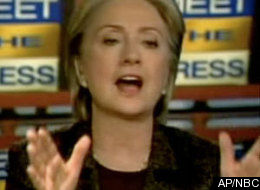
CQ Transcript: Secretary of State Clinton on NBC’s ‘Meet the Press’


"But I think what you obviously know is...to work with the Afghan government. And one of the points...our goal is to disrupt, dismantle and defeat Al Qaida."


CQ TODAY ONLINE NEWS
Nov. 15, 2009 – 5:57 p.m.


CQ Transcript: Secretary of State Clinton on NBC’s ‘Meet the Press’
CQ Transcriptswire

SPEAKERS: DAVID GREGORY, HOST

SECRETARY OF STATE HILLARY RODHAM CLINTON

SECRETARY OF EDUCATION ARNE DUNCAN

FORMER HOUSE SPEAKER NEWT GINGRICH

REVEREND AL SHARPTON

[*] GREGORY: First, Secretary of State Hillary Clinton is traveling in Asia with President Obama. I spoke to her hours ago from Singapore.

Secretary Clinton, welcome back to “Meet the Press.”

CLINTON: It’s great to talk with you from Singapore, David. Thank you.

GREGORY: Let me begin by something that’s very controversial back home, as you well know, the decision by the attorney general to transfer some of the high-profile prisoners from Guantanamo Bay, from the prison there, the self-proclaimed perpetrators of 9/11, Khalid Sheik Mohammed, and make them stand trial in New York.

As you know, the reaction has been fierce on Capitol Hill among mostly Republicans, but some Democrats too, saying that there’s no reason to give these prisoners the rights of the common criminal. On the other side, you have Mayor Bloomberg of New York saying that it’s the right thing to do, to make them stand trial just a few, a few blocks away from where the World Trade Center stood. Where do you stand on this?

CLINTON: Well, David, this was a very comprehensively examined decision that the attorney general and the Department of Justice and the Department of Defense reached in who would be tried in federal court, who would be in the military commission system that the Obama administration has revised. And, you know, I’m not going to second guess any decision that the attorney general made.

But I think it’s important that Mayor Bloomberg, that our law enforcement officials in New York, you know, all believe that New York City not only can handle this, but that it is appropriate to go forward in the very area where these people launched this horrific attack against us. You know, I was a senator from New York, and I -- I want to see them brought to justice. The most important thing for me is that, you know, they pay the ultimate price for what they did to us on 9/11.

And if the attorney general and veteran prosecutors think this is the best way to achieve that outcome, then I think that, you know, they should be given the right to move forward as they see appropriate.

GREGORY: Do you agree with those who say that this exposes New York City to unnecessary risks of terrorism?

CLINTON: No. And I think Mayor Bloomberg, the police commissioner Ray Kelly, these are, you know, people who put the interests of New York above all else, and they clearly believe that this can be handled in New York. I have the greatest confidence in the law enforcement personnel and leadership in New York City.

Obviously, it’s -- it’s a very painful experience for families to have to go through. That is something that, you know, pains me. You know, but we are a nation of laws, and we have two different venues for holding these people accountable, the military commissions and our federal courts, and the individual decisions that the Justice Department and the Defense Department have made, along with the advice of veteran prosecutors, I -- I think should be respected.

GREGORY: When is a realistic deadline now for Americans to expect the prison at Guantanamo Bay to be shut down?

CLINTON: Well, I think as soon as possible. But obviously, there are some challenges. You know, I think that every American should understand that closing Guantanamo was a commitment that President Obama made. It was very well received around the world, because Guantanamo had come to represent not the America that we all believe in and that we hold dear, our values and the way we behave.

And so closing it is a commitment that the president made that he will follow through on. The timing is kind of dependent upon how we answer all these other issues.

GREGORY: Let me move on to another big issue, and that’s Afghanistan. When we are going to hear the president’s decision about whether to send more troops?

CLINTON: I mean, the president is going to be making that decision when he is ready to announce it. I think he stopped at Elmendorf Air Force Base in Alaska on his way to Asia, and I know that he told the troops there that he’s going to make a decision that will, you know, give them the support they need for the mission that he asks them to fulfill, and that he’s also going to make the case to the American public both to support the mission and, as always, to support our troops.

GREGORY: Let me zero in on a key issue here. And that, of course, is the issue of how many troops. We know General McChrystal’s requesting 40,000 troops or perhaps more. General Eikenberry, the U.S. ambassador to Afghanistan, weighed in on this topic and it was reported on this week, as you well know.

This is what The Washington Post said on Thursday, and I’ll read it for you: “The U.S. ambassador in Kabul sent two classified cables to Washington in the past week expressing deep concerns about sending more U.S. troops to Afghanistan until President Karzai’s government demonstrates that it is willing to tackle the corruption and mismanagement that has fueled the Taliban’s rise. The ambassador also has worried that sending tens of thousands of additional American troops would increase the Afghan government’s dependence on U.S. support at a time when its own security forces should be taking on more responsibility for fighting.”

It’s been reported that you actually support as many as 30,000 additional troops being sent to Afghanistan. Obviously, Ambassador Eikenberry reports up to you. What is your response to those cables and to that point of view?

CLINTON: Well, David, of course I’m not going to discuss any of the confidential advice that anyone has provided me or the president during this process. But I think what you obviously know is that there are many different views about how best to work with the Afghan government. And one of the points that we are stressing is that our goal is to disrupt, dismantle and defeat Al Qaida.

That’s why we’re in Afghanistan. It’s about our national security. We do want to see the Afghans be able to defend themselves, which means being able to stand up a security force that is capable of fighting the Taliban, which is a part of the syndicate of terror that was basically inspired, funded and directed by Al Qaida. But we’re going to expect more from the Afghan government going forward, and we’ve got some very specific asks that we will be making.

GREGORY: Do you believe that President Karzai is an effective partner, a reliable partner, and that sending more U.S. troops would actually be effective?

CLINTON: Well, again, I believe that he has his strengths and he has his weaknesses. Certainly, there are many improvements in Afghanistan over the last eight years. But there has not been the kind of open, transparent, accountable government that stood against corruption, that delivered services to people that I think the people of Afghanistan are seeking and that we would all like to see for them. And particularly, we have some work to do to assist and mentor and train on Afghan security force.

You know, what I hear all the time from people in Afghanistan and reports from others who are talking on a regular basis to people across the country, is that the basic attitude in Afghanistan is they do not want to see a return of the Taliban. That was a horrible period that they remember all too well. They do want security. They want a government that can protect them and can, you know, deliver at least services, whether it’s from the central government or the local district government. They also want to make sure that we help them create a security force that can then take over.

You know, as one person memorably said, “Look, we want your help to enable us to defend ourselves, and then we want you to go.” Well, that’s a pretty good summary of what we want to do. We want to get Al Qaida, we want to disrupt, dismantle and defeat those who attacked us, and we want to be able to give the Afghans the tools that they need to be able to defend themselves. We’re not interested in staying in Afghanistan. We’re not interested in any long-term, you know, presence there. We came to do a job, and unfortunately it wasn’t done over the last eight years.

GREGORY: Define the exit strategy, if that’s the president’s view.

CLINTON: I’m not going to define the president’s view and I’m not going to define the exit strategy from a mission that he hasn’t even yet announced to the American public. And I guess I would just put this in a larger context with making these points, David.

Number one, I have traveled consistently for the last nine months. I think I’ve been in more than 40 countries. I’ve met with countless leaders. I’ve done a lot of public diplomacy, getting out there, listening to people. I don’t think I can overstate how damaged our country was in the eyes of people around the world when President Obama took office.

And we’ve been working very hard to just get us back to a point where, you know, we can have the kind of open, candid conversations that lead to decisions being made that will benefit the United States and move us toward goals like, you know, more peaceful, prosperous outcomes for us and -- on many parts of the world.

Secondly, I think it’s important to underscore that we see the fight against Al Qaida and the syndicate of terror in the security interests of the United States. I think that kind of got lost the last eight years, with a lot of talk about how it wasn’t important to get bin Laden; that, you know, we were there for some other reason. No. It’s critical to get those who attacked us. That what -- that is what we are there for.

And what we are trying to do is to assess the best way forward so that we can go anywhere in the United States and anywhere in the world and say the same thing. You have to understand that we believe this syndicate of terror is a threat not just to the United States and our friends and allies, but to Pakistan, Afghanistan and many others.

GREGORY: Let me turn to the issue of China, where you and the president head next. The lead of a New York Times story out this morning about the president’s visit there says this: “When President Obama visits China for the first time on Sunday, he will, in may ways, be assuming the role of profligate spender coming to pay his respects to his banker.” With that as the backdrop, with China holding so much U.S. debt, $2 trillion worth, what is your assessment of U.S.-China relations?

CLINTON: Well, I think that our relations are on a positive, cooperative basis, with a comprehensive agenda that we are exploring together. Secretary Geithner and I co-chair the strategic and economic dialogue that we started this year because we didn’t want to just have an economic dialogue, we wanted to have a much more comprehensive engagement.

I think that there is evidence that there’s some positive results already. The Chinese have stood with us in the sanctions against North Korea. The Chinese are part of the P-5-plus-1 effort to try to engage Iran on its nuclear program. We are seeing signs of, you know, a cooperative relationship.

Now, let me go, though, to the premise of your question. When I ran for president, I started saying all the time, you know, that in effect we were seeding our fiscal sovereignty and that China was our banker. So it’s not news that that’s going to be in the papers on the eve of our visit to China. We have to get back to fiscal responsibility.

It -- it breaks my heart, David, that in 2001 we had a balanced budget and a surplus; and if we’d stayed on that path, we were heading toward eliminating our debt. Well, here we are eight years later, thanks to wars that weren’t paid for, thanks to financial collapses and so many other crises that we inherited. But the president understands clearly that, you know, we have to get back some control over time of our fiscal sovereignty.

GREGORY: Can I ask you something different about China, which is in light of the fact that China has a robust espionage policy against the United States, that they are cooperating with Iran in international affairs, are they hurting our national security interests?

CLINTON: Well, look, we are, we are well aware of not just one country, but many countries that try to gain advantage not just politically and strategically, but commercially vis-a-vis our own country. And we’re also well aware that many countries have relationships with those with whom we do not. But I think it’s more significant that, you know, China signed on to our P-5-plus-1 statement in New York. China has been at the table as we have been pushing Iran to fulfill what they agreed to in principle, to send out their low-enriched uranium so that it can be reprocessed elsewhere. So I think it’s a much more complicated and mixed story.

But, you know, I -- I travel on behalf of our country and I meet with leaders from all over the world ever day, and I have no illusions going into any meeting that anybody stands for America’s interests besides me. The task is to look for where we can find common ground and common interests. You know, it is significant that China signed on to the toughest sanctions ever against North Korea, because we worked very hard to make the case that those sanctions were not just something that America or South Korea or Japan wanted, but they were in the interests of China.

Similarly, in my conversations with Chinese leaders, I make it very clear that a nuclear-armed Iran will destabilize the region that produces the oil and the gas that China desperately needs and for which they have contracts. So why wouldn’t we try to stabilize the region by preventing Iran from obtaining nuclear weapons in the first place?

So that’s what diplomacy’s about. I mean, you don’t -- you start from the premise of what are you -- what are your security interests, what is it that you wish to present; and how do you make the case that what you’re seeking is also in the interests of your counterpart.

GREGORY: Before I let you go, you know, whenever I get a chance to talk to you I like to ask you about a little bit of politics. And I know you’re over there in Singapore.

CLINTON: I’m out of politics, David. I’m out of politics.

GREGORY: You may not have heard, you -- you may not have heard, but Sarah Palin has a new book out, and in it she writes this: “Should Secretary Clinton and I ever sit down over a cup of coffee, I know that we would fundamentally disagree on many issues, but my hat is off to her hard work on the 2008 campaign trail.”

Is this somebody you’d like to sit and have coffee with, and do you plan to read the book? CLINTON: Well, I absolutely would look forward to having coffee. I’ve never met her. And I think it would be, you know, very interesting to sit down and talk with her. And I’ve got more than I could say grace over to read, but obviously in the next week there’s going to be a lot of attention paid to her book.

And I’m sure that, you know, I’ll see excerpts printed and, you know, snippets of interviews as I, you know, channel-surf in Singapore and in Shanghai and in Beijing. But, you know, I’m ready to have a cup of coffee. Maybe I can make a case on some of the issues that we disagree on.

GREGORY: So maybe there’s a summit meeting here. What do you think her brand of conservatism -- how -- how does that impact the Republican party?

CLINTON: I truly am out of commenting on politics. That is something that is not appropriate for the secretary of state. But I am an active observer and, you know, obviously these are questions that you and others are going to be asking. And I look forward to hearing what people answer.

GREGORY: It was worth a shot. Secretary Clinton...

(LAUGHTER)

... thank you very much.

CLINTON: Thanks, David. Good to talk to you.


Excerpt from transcript (Hillary Clinton's segment).


.

Saturday, November 14, 2009

The geopolitics behind the phoney US war in Afghanistan

by F. William Engdahl*

One of the most remarkable aspects of the Obama Presidential agenda is how little anyone has questioned in the media or elsewhere why at all the United States Pentagon is committed to a military occupation of Afghanistan. There are two basic reasons, neither one of which can be admitted openly to the public at large.

--------------------------------------------------------------------------------


21 October 2009

From
Frankfurt (Germany)


Behind all the deceptive official debate over how many troops are needed to “win” the war in Afghanistan, whether another 30,000 is sufficient, or whether at least 200,000 are needed, the real purpose of US military presence in that pivotal Central Asian country is obscured.

Even during the 2008 Presidential campaign candidate Obama argued that Afghanistan not Iraq was where the US must wage war. His reason? Because he claimed, that was where the Al Qaeda organization was holed up and that was the “real” threat to US national security. The reasons behind US involvement in Afghanistan is quite another one.

The US military is in Afghanistan for two reasons. First to restore and control the world’s largest supply of opium for the world heroin markets and to use the drugs as a geopolitical weapon against opponents, especially Russia. That control of the Afghan drug market is essential for the liquidity of the bankrupt and corrupt Wall Street financial mafia.

Geopolitics of Afghan Opium

According even to an official UN report, opium production in Afghanistan has risen dramatically since the downfall of the Taliban in 2001. UNODC data shows more opium poppy cultivation in each of the past four growing seasons (2004-2007), than in any one year during Taliban rule. More land is now used for opium in Afghanistan, than for coca cultivation in Latin America. In 2007, 93% of the opiates on the world market originated in Afghanistan. This is no accident.

It has been documented that Washington hand-picked the controversial Hamid Karzai, a Pashtun warlord from the Popalzai tribe, long in the CIA’s service, brought him back from exile in the USA, created a Hollywood mythology around his “courageous leadership of his people.” According to Afghan sources, Karzai is the Opium “Godfather” of Afghanistan today. There is apparently no accident that he was and is today still Washington’s preferred man in Kabul. Yet even with massive vote buying and fraud and intimidation, Karzai’s days could be ending as President.

The second reason the US military remains in Afghanistan long after the world has forgotten even who the mysterious Osama bin Laden and his alleged Al Qaeda terrorist organization is or even if they exist, is as a pretext to build a permanent US military strike force with a series of permanent US airbases across Afghanistan. The aim of those bases is not to eradicate any Al Qaeda cells that may have survived in the caves of Tora Bora, or to eradicate a mythical “Taliban” which at this point according to eyewitness reports is made up overwhelmingly of local ordinary Afghanis fighting to rid their land once more of occupier armies as they did in the 11980’s against the Russians.

The aim of the US bases in Afghanistan is to target and be able to strike at the two nations which today represent the only combined threat in the world today to an American global imperium, to America’s Full Spectrum Dominance as the Pentagon terms it.

The lost ‘Mandate of Heaven’

The problem for the US power elites around Wall Street and in Washington is the fact that they are now in the deepest financial crisis in their history. That crisis is clear to the entire world and the world is acting on a basis of self-survival. The US elites have lost what in Chinese imperial history is known as the Mandate of Heaven. That mandate is given a ruler or ruling elite provided they rule their people justly and fairly. When they rule tyrannically and as despots, oppressing and abusing their people, they lose that Mandate of Heaven.

If the powerful private wealthy elites that have controlled essential US financial and foreign policy for most of the past century or more ever had a “mandate of Heaven” they clearly have lost it. The domestic developments towards creation of an abusive police state with deprivation of Constitutional rights to its citizens, the arbitrary exercise of power by non elected officials such as Treasury Secretaries Henry Paulson and now Tim Geithner, stealing trillion dollar sums from taxpayers without their consent in order to bailout the bankrupt biggest Wall Street banks, banks deemed “Too Big To Fail,” this all demonstrates to the world they have lost the mandate

In this situation, the US power elites are increasingly desperate to maintain their control of a global parasitical empire, called deceptively by their media machine, “globalization.” To hold that dominance it is essential that they be able to break up any emerging cooperation in the economic, energy or military realm between the two major powers of Eurasia that conceivably could pose a challenge to future US sole Superpower control—China in combination with Russia.

Each Eurasian power brings to the table essential contributions. China has the world’s most robust economy, a huge young and dynamic workforce, an educated middle class. Russia, whose economy has not recovered from the destructive end of the Soviet era and of the primitive looting during the Yeltsin era, still holds essential assets for the combination. Russia’s nuclear strike force and its military pose the only threat in the world today to US military dominance, even if it is largely a residue of the Cold War. The Russian military elites never gave up that potential.

As well Russia holds the world’s largest treasure of natural gas and vast reserves of oil urgently needed by China. The two powers are increasingly converging via a new organization they created in 2001 known as the Shanghai Cooperation Organization (SCO). That includes as well as China and Russia, the largest Central Asia states Kazakhstan, Kyrgyzstan, Tajikistan, and Uzbekistan.

The purpose of the alleged US war against both Taliban and Al Qaeda is in reality to place its military strike force directly in the middle of the geographical space of this emerging SCO in Central Asia. Iran is a diversion. The main goal or target is Russia and China.

Officially, of course, Washington claims it has built its military presence inside Afghanistan since 2002 in order to protect a “fragile” Afghan democracy. It’s a curious argument given the reality of US military presence there.

In December 2004, during a visit to Kabul, US Defense Secretary Donald Rumsfeld finalized plans to build nine new bases in Afghanistan in the provinces of Helmand, Herat, Nimrouz, Balkh, Khost and Paktia. The nine are in addition to the three major US military bases already installed in the wake of its occupation of Afghanistan in winter of 2001-2002, ostensibly to isolate and eliminate the terror threat of Osama bin Laden.

The Pentagon built its first three bases at Bagram Air Field north of Kabul, the US’ main military logistics center; Kandahar Air Field, in southern Afghanistan; and Shindand Air Field in the western province of Herat. Shindand, the largest US base in Afghanistan, was constructed a mere 100 kilometers from the border of Iran, and within striking distance of Russia as well as China.

Afghanistan has historically been the heartland for the British-Russia Great Game, the struggle for control of Central Asia during the 19th and early 20th Centuries. British strategy then was to prevent Russia at all costs from controlling Afghanistan and thereby threatening Britain’s imperial crown jewel, India.

Afghanistan is similarly regarded by Pentagon planners as highly strategic. It is a platform from which US military power could directly threaten Russia and China, as well as Iran and other oil-rich Middle East lands. Little has changed geopolitically over more than a century of wars.

Afghanistan is in an extremely vital location, straddling South Asia, Central Asia, and the Middle East. Afghanistan also lies along a proposed oil pipeline route from the Caspian Sea oil fields to the Indian Ocean, where the US oil company, Unocal, along with Enron and Cheney’s Halliburton, had been in negotiations for exclusive pipeline rights to bring natural gas from Turkmenistan across Afghanistan and Pakistan to Enron’s huge natural gas power plant at Dabhol near Mumbai. Karzai, before becoming puppet US president, had been a Unocal lobbyist.

Al Qaeda doesn’t exist as a threat

The truth of all this deception around the real purpose in Afghanistan becomes clear on a closer look at the alleged “Al Qaeda” threat in Afghanistan. According to author Erik Margolis, prior to the September 11, 2001 attacks, US intelligence was giving aid and support both to the Taliban and to Al Qaeda. Margolis claims that “The CIA was planning to use Osama bin Laden’s Al Qaeda to stir up Muslim Uighurs against Chinese rule, and Taliban against Russia’s Central Asian allies.” [1] The US clearly found other means of stirring up Muslim Uighurs against Beijing last July via its support for the World Uighur Congress. But the Al Qaeda “threat” remains the lynchpin of Obama US justification for his Afghan war buildup.

Now, however, the National Security Adviser to President Obama, former Marine Gen. James Jones has made a statement, conveniently buried by the friendly US media, about the estimated size of the present Al Qaeda danger in Afghanistan. Jones told Congress, “The al-Qaeda presence is very diminished. The maximum estimate is less than 100 operating in the country, no bases, no ability to launch attacks on either us or our allies.”

That means that Al-Qaeda, for all practical purposes, does not exist in Afghanistan. Oops…

Even in neighboring Pakistan, the remnants of Al-Qaeda are scarcely to be found. The Wall Street Journal reports, “Hunted by US drones, beset by money problems and finding it tougher to lure young Arabs to the bleak mountains of Pakistan, al Qaeda is seeing its role shrink there and in Afghanistan, according to intelligence reports and Pakistan and U.S. officials. For Arab youths who are al Qaeda’s primary recruits, ‘it’s not romantic to be cold and hungry and hiding,’ said a senior U.S. official in South Asia.”

If we follow the statement to its logical consequence we must conclude then that the reason German soldiers are dying along with other NATO youth in the mountains of Afghanistan has nothing to do with “winning a war against terrorism.” Conveniently most media chooses to forget the fact that Al Qaeda to the extent it ever existed, was a creation in the 1980’s of the CIA, who recruited and trained radical muslims from across the Islamic world to wage war against Russian troops in Afghanistan as part of a strategy developed by Reagan’s CIA head Bill Casey and others to create a “new Vietnam” for the Soviet Union which would lead to a humiliating defeat for the Red Army and the ultimate collapse of the Soviet Union.

Now US NSC head Jones admits there is essentially no Al Qaeda anymore in Afghanistan. Perhaps it is time for a more honest debate from our political leaders about the true purpose of sending more young to die protecting the opium harvests of Afghanistan.


.
[1] Washington is Playing a Deeper Game with China, by F. William Engdahl, Voltaire Network; 13 July 2009.
.
.

Monday, November 09, 2009

U.S. knew of Fort Hood shooting suspect's ties to extremist


11:59 PM CST on Monday, November 9, 2009


By BROOKS EGERTON and JIM LANDERS / The Dallas Morning News


Army Maj. Nidal Malik Hasan sent repeated e-mails over the last year to a Muslim cleric known for extremist views, but federal terrorism investigators deemed the contact harmless and took no action.


The cleric, Anwar al-Awlaki, praised the Fort Hood massacre suspect on Monday as "a hero."

"He is a man of conscience who could not bear living the contradiction of being a Muslim and serving in an army that is fighting against his own people," al-Awlaki's blog said.

Hasan, who is recovering from gunshot wounds in a San Antonio military hospital, is believed to have met al-Awlaki as early as 2001, when the cleric led a large northern Virginia mosque where Hasan sometimes worshipped. At the time, the U.S.-born imam styled himself as a moderate who condemned the Sept. 11, 2001, terrorist attacks.

Rep. Peter Hoekstra of Michigan, the ranking Republican on the House Intelligence Committee, said U.S. intelligence agencies intercepted between 10 and 20 e-mails from Hasan to al-Awlaki beginning in late 2008. He said al-Awlaki – living in Yemen since 2002 – responded to Hasan at least twice.

The responses seemed "innocent," Hoekstra told The Washington Post. But "for me, the number of times that this guy tried to reach out to the imam was significant."

Hoekstra wrote FBI Director Robert Mueller and high-ranking government officials over the weekend to complain that "serious issues exist with respect to the performance of U.S. intelligence agencies in connection with what appears to have been a terrorism-related attack at Fort Hood."

The FBI acknowledged late Monday that Hasan came to the attention of one of its Joint Terrorism Task Forces in December as it pursued an unrelated investigation.

Agents who reviewed communications between Hasan and the unidentified subject of that investigation decided that they were "consistent with research being conducted by Maj. Hasan in his position as a psychiatrist" at Walter Reed Army Medical Center in Washington, D.C., an FBI statement said.

"Because the content of the communications was explainable by his research and nothing else derogatory was found, the JTTF concluded that Major Hasan was not involved in terrorist activities or terrorist planning," the FBI said. "Other communications of which the FBI was aware were similar to the ones reviewed by the JTTF."

An Internet posting in May, by someone using the name Nidal Hasan, seemed to equate a suicide bomber with a U.S. soldier who throws himself on a grenade to save comrades. The FBI would not elaborate on what it meant by "other communications."

"To say that this soldier committed suicide is inappropriate," the posting said. "It's more appropriate to say he is a brave hero that sacrificed his life for a more noble cause."

Under federal law, Hasan's purchase of the handgun used in last week's attack triggered a criminal background check. But counterterrorism officials were not alerted to the purchase – made in August, shortly after Hasan moved to Texas – because federal law bars such information-sharing, investigators said.

A motive has yet to be determined for the Fort Hood shootings, which left 13 people dead and 29 wounded. But the FBI said, "The investigation to date indicates that the alleged gunman acted alone and was not part of a broader terrorist plot."

The FBI director ordered a review of whether investigators overlooked signs that Hasan, 39, might be a threat. Members of Congress were briefed on the investigation late Monday.


Praising al-Qaeda

Al-Awlaki, who is in his late 30s, was born in New Mexico to Yemeni parents. He served at mosques in Denver and San Diego before going to Dar Al-Hijrah mosque in Falls Church, Va., one of the nation's largest, where the Virginia-born Hasan sometimes worshipped.

Al-Awlaki – whose name is sometimes spelled al-Aulaqi in English – told The New York Times shortly after the 9/11 attacks that Muslim leaders in the U.S. had sometimes gone too far with their rhetoric.

"In the past we were oblivious," he was quoted as saying. "We didn't really care much because we never expected things to happen. Now I think things are different.

"There were some statements that were inflammatory, and were considered just talk, but now we realize that talk can be taken seriously and acted upon in a violent, radical way."

In spring 2002, al-Awlaki moved to his parents' Middle Eastern homeland, where he began praising al-Qaeda online.

He also blamed Israelis for the U.S. terror attacks and accused the FBI of fabricating evidence to implicate Muslims.


Detained, released

U.S. authorities ultimately concluded that three of the 9/11 hijackers had spent time at al-Awlaki's mosques. Yemeni authorities detained al-Awlaki in mid-2006 at the request of the U.S. government but released him in late 2007.

At the Falls Church mosque Monday, a spokesman condemned the Fort Hood massacre and al-Awlaki's blog comments.

"Mr. al-Awlaki has clearly set himself apart from this community," said Johari Abdul-Malik, who is an imam and outreach director.

He said al-Awlaki left the mosque because he felt the role of an American imam after 9/11 included too many extra duties, including dealing with the media. Al-Awlaki wanted to focus on teaching, Abdul-Malik said.

"To go from that individual we knew to one who is projecting these words from Yemen is a shock," Abdul-Malik said. "I don't think we read him wrong. I think something happened."

He said that to his staff's knowledge, Hasan worshipped at Dar Al-Hijrah only occasionally, when visiting relatives nearby, and was not close with al-Awlaki. After Hasan's mother died in 2001, Abdul-Malik said, the military psychiatrist "seemed more withdrawn, quiet, and to some staff members, disoriented."


Investigation begins

Senate Homeland Security Committee Chairman Joe Lieberman suggested that the attack on Fort Hood was part of a pattern of anti-military activity in the U.S.

Three men in North Carolina were accused in a September indictment of targeting the Marine Corps base at Quantico, Va. Five New Jersey men were convicted in December of conspiring to attack the Army's Fort Dix, in New Jersey. And in June, a recent Muslim convert was suspected of firing on two Army recruiters at a Little Rock, Ark., shopping mall, killing one and wounding the other.

Lieberman, a Connecticut independent, pointed to a bipartisan report the committee issued last year on the "homegrown terrorist threat."

It concluded, he noted, that "no longer is the threat just from abroad, as was the case with the attacks of September 11, 2001; the threat is now increasingly from within, from homegrown terrorists who are inspired by violent Islamist ideology to plan and execute attacks where they live."

The Fort Hood rampage "appears to be a further example of that threat," Lieberman said in a news release.

He said his committee would hold a public hearing next week to begin investigating Hasan's motives, "whether the government missed warning signs that should have led to expulsion, and what lessons we can learn to prevent such future attacks.

"As this investigation continues, we would do no favor to the thousands of Muslim Americans who are serving our military with honor and the millions of patriotic and law-abiding Muslim Americans by ignoring real evidence that an individual Muslim American soldier may have become a violent Islamist extremist."

Staff writers Tom Benning, Todd J. Gillman and Dave Michaels contributed to this report.
.
.