AND THE THIRD ANGEL FOLLOWED THEM, SAYING WITH A LOUD VOICE, IF ANY MAN WORSHIP THE BEAST AND HIS IMAGE, AND RECEIVE HIS MARK IN HIS FOREHEAD, OR IN HIS HAND. *** REVELATION 14:9
Showing posts with label legislation. Show all posts
Sunday, June 28, 2026
Thursday, June 25, 2026
Friday, April 24, 2026
How RFK Jr. Is Influencing America's Vaccine Playbook
Since taking the helm of HHS, Robert F. Kennedy Jr. has both backed vaccination as a public health tool and taken steps to undermine it.
By Cecelia Smith-Schoenwalder Senior Writer
April 23, 2026, at 11:51 a.m.

ILLUSTRATION BY USN&WR | SOURCE: GETTY IMAGES
Since his confirmation to lead the Department of Health and Human Services, Robert F. Kennedy Jr. has toed the line between backing vaccination as a preventive public health tool and making statements or overseeing developments that threaten to undermine that tool.
Here's a look at notable vaccine-related moves and remarks made by Kennedy or under his authority since he was sworn in as head of HHS in February of 2025.
Jump to a section:
Changing Vaccine Policy
Replacing the Panel That Recommends Vaccines
A Federal Study of the (Debunked) Link Between Vaccines and Autism
Re-examining the Childhood Vaccine Schedule
Vaccine Official Shakeups
Conflicting Comments on the Measles Outbreak
Cutting Research and Delaying Studies on Vaccines
Plan to Shake Up Vaccine Injury Program
Childhood Vaccine Task Force Revival
Tuesday, March 31, 2026
Reps. Pramila Jayapal, et al Introduce Resolution Recognizing Transgender Day of Visibility

Reps. Pramila Jayapal, Sara Jacobs, Mark Takano, and Sen. Schatz Introduce Resolution Recognizing Transgender Day of Visibility
03.31.2026 | News
Washington, D.C. — Reps. Pramila Jayapal (WA-07), Sara Jacobs (CA-51), and Mark Takano (CA-39), and Sen. Brian Schatz (D-HI) introduced legislation to commemorate Transgender Day of Visibility on March 31st, recognize the many achievements and progress made by people in the transgender and gender non-conforming communities, and affirm their human rights.
Rep. Pramila Jayapal, Co-Chair of the Transgender Equality Task Force, said: “On Trans Day of Visibility, first and foremost, I stand with our trans loved ones. As Trump and Republicans continue their cruel and baseless attacks on the trans community, we must support our trans neighbors and work to protect their right to safety, respect, visibility, and equality under the law. Trans rights are human rights, and we must continue working to ensure that every person can live authentically as themselves. To trans people across this country: I see you, I hear you, and I will never stop fighting for you.”
Rep. Sara Jacobs, Co-Chair of the Transgender Equality Task Force, said: “Under an administration that constantly tries to make transgender and gender non-conforming people feel invisible, I am proud to celebrate Transgender Day of Visibility. We cannot and will not let their hateful attacks steal our joy. To my trans friends and family, today is a day to celebrate being out, loud, and proud. And I will not stop until everyone can live freely and without fear of expressing their true selves.”
“As the transgender community continues to face attempts by the Trump Administration and Republicans in Congress to erase their voices, their contributions, and their existence, I am proud to work with Congresswomen Sara Jacobs and Pramila Jayapal and Senator Brian Schatz in showing the trans community that we stand with them in the fight against erasure and censorship by anti-equality extremists,” said Rep. Mark Takano, Chair of the Congressional Equality Caucus. “Transgender Day of Visibility celebrates visibility and is also an opportunity to inspire others as we work towards a United States where people of all gender identities are free to live openly and authentically. The full weight of the Congressional Equality Caucus stands behind the trans community, today and every day.”
“Trans people should be able to live freely, safely, and openly – just like everyone else. Instead, they continue to face discrimination and violence, both here at home and around the world,” said Senator Schatz. “International Transgender Day of Visibility is a chance to celebrate the trans community’s achievements and courage and renew our commitment to fighting for acceptance and equality.”
“Recognizing Trans Day of Visibility is about more than visibility—it’s about affirming that trans people belong,” said Caius Willingham, Senior Policy Analyst at Advocates for Trans Equality. “Thanks to the leadership of Congresswoman Jacobs, Senator Schatz, and Representatives Jayapal and Takano, this resolution makes clear that even in the face of growing attacks, our communities will continue to be seen, heard, and protected.”
Friday, March 13, 2026
Polyamorous Relationships Rapidly Gaining Gov’t Blessing
OPINION

(Photo: ANGELOS TZORTZINIS/AFP via Getty Images)
Natalie Sandoval
Patriots Writer
March 12, 20265:01 PM ET
A Quiet Coastal Revolution
“Why only two?”
The question, posed six years ago by J.T. Scott, a member of the city council of Somerville, Massachusetts, is at the heart of the debate concerning government recognition of polyamory.
Scott and his colleague on the city council were considering a domestic partnership ordinance. The original language of the draft specified a domestic partnership as being “between two people,” according to The Harvard Crimson.
Councilor Lance L. Davis paused, saying “something didn’t feel quite right,” reports The Crimson. Scott asked the question: “Why only two?”
Davis, in his words, executed a “few simple tweaks,” altering the ordinance to permit groups of more than two adults to register in domestic partnerships together. The city council voted 11-0 to pass the ordinance.
It was signed by then-Mayor Joe Curtatone on June 29, 2020, becoming the first “multiple-partner domestic partnership ordinance” in the United States, according to the Harvard Law Review.
Cambridge, Somerville’s neighbor, followed suit, amending their existing domestic partnership statute to cover two or more persons in 2021.
A Quiet Coastal Revolution
“Why only two?”
The question, posed six years ago by J.T. Scott, a member of the city council of Somerville, Massachusetts, is at the heart of the debate concerning government recognition of polyamory.
Scott and his colleague on the city council were considering a domestic partnership ordinance. The original language of the draft specified a domestic partnership as being “between two people,” according to The Harvard Crimson.
Councilor Lance L. Davis paused, saying “something didn’t feel quite right,” reports The Crimson. Scott asked the question: “Why only two?”
Davis, in his words, executed a “few simple tweaks,” altering the ordinance to permit groups of more than two adults to register in domestic partnerships together. The city council voted 11-0 to pass the ordinance.
It was signed by then-Mayor Joe Curtatone on June 29, 2020, becoming the first “multiple-partner domestic partnership ordinance” in the United States, according to the Harvard Law Review.
Cambridge, Somerville’s neighbor, followed suit, amending their existing domestic partnership statute to cover two or more persons in 2021.
Wednesday, February 11, 2026
Monday, December 22, 2025
Saturday, December 06, 2025
AU applauds congressional resolution supporting church-state separation

November 2025 Church & State Magazine
November 3, 2025
Americans United welcomed the introduction of a resolution in Congress honoring the separation of church and state.

Rep. Yassamin Ansari
U.S. Reps. Yassamin Ansari (D-Ariz.), Jared Huffman (D-Calif.) and Jamie Raskin (D-Md.) introduced the resolution — H. Res. 773 — on Sept. 30. It references two important speeches in church-state history: President John F. Kennedy’s speech to the Greater Houston Ministerial Association on Sept. 12, 1960, and President Ulysses S. Grant’s Sept. 29, 1875, speech to Army veterans in Des Moines.
Both presidents strongly endorsed church-state separation in their speeches. Kennedy famously said, “I believe in an America where the separation of church and state is absolute — where no Catholic prelate would tell the President (should he be Catholic) how to act, and no Protestant minister would tell his parishioners for whom to vote, where no church or church school is granted any public funds or political preference and where no man is denied public office merely because his religion differs from the President who might appoint him or the people who might elect him.”
Kennedy continued, “I believe in an America that is officially neither Catholic, Protestant nor Jewish — where no public official either requests or accepts instructions on public policy from the Pope, the National Council of Churches or any other ecclesiastical source, where no religious body seeks to impose its will directly or indirectly upon the general populace or the public acts of its officials — and where religious liberty is so indivisible that an act against one church is treated as an act against all.”
U.S. Reps. Yassamin Ansari (D-Ariz.), Jared Huffman (D-Calif.) and Jamie Raskin (D-Md.) introduced the resolution — H. Res. 773 — on Sept. 30. It references two important speeches in church-state history: President John F. Kennedy’s speech to the Greater Houston Ministerial Association on Sept. 12, 1960, and President Ulysses S. Grant’s Sept. 29, 1875, speech to Army veterans in Des Moines.
Both presidents strongly endorsed church-state separation in their speeches. Kennedy famously said, “I believe in an America where the separation of church and state is absolute — where no Catholic prelate would tell the President (should he be Catholic) how to act, and no Protestant minister would tell his parishioners for whom to vote, where no church or church school is granted any public funds or political preference and where no man is denied public office merely because his religion differs from the President who might appoint him or the people who might elect him.”
Kennedy continued, “I believe in an America that is officially neither Catholic, Protestant nor Jewish — where no public official either requests or accepts instructions on public policy from the Pope, the National Council of Churches or any other ecclesiastical source, where no religious body seeks to impose its will directly or indirectly upon the general populace or the public acts of its officials — and where religious liberty is so indivisible that an act against one church is treated as an act against all.”
Saturday, May 24, 2025
President Trump's Religious Liberty Commission established on May 1, 2025
Presidential Actions
ESTABLISHMENT OF THE RELIGIOUS LIBERTY COMMISSION
Executive Orders
May 1, 2025
By the authority vested in me as President by the Constitution and the laws of the United States of America, it is hereby ordered:
Section 1. Purpose and Policy. It shall be the policy of the executive branch to vigorously enforce the historic and robust protections for religious liberty enshrined in Federal law. The Founders envisioned a Nation in which religious voices and views are integral to a vibrant public square and human flourishing and in which religious people and institutions are free to practice their faith without fear of discrimination or hostility from the Government. Indeed, the roots of religious liberty stretch back to the early settlers who fled religious persecution in Europe, seeking a new world where they could choose, follow, and practice their faith without interference from the Government. The principle of religious liberty was enshrined in American law with the First Amendment to the Constitution in 1791. Since that time, the Constitution has protected the fundamental right to religious liberty as Americans’ first freedom.
During my first term, I issued Executive Order 13798 of May 4, 2017 (Promoting Free Speech and Religious Liberty). Pursuant to that order, the Attorney General issued a memorandum for all executive departments and agencies (agencies) titled “Federal Law Protections for Religious Liberty” on October 6, 2017. The Supreme Court has also continued to vindicate the Founders’ commitment to religious liberty, including by giving effect to the principle that religious voices should be welcomed on an equal basis in the public square.
In recent years, some Federal, State, and local policies have threatened America’s unique and beautiful tradition of religious liberty. These policies attempt to infringe upon longstanding conscience protections, prevent parents from sending their children to religious schools, threaten loss of funding or denial of non-profit tax status for faith-based entities, and single out religious groups and institutions for exclusion from governmental programs. Some opponents of religious liberty would remove religion entirely from public life. Others characterize religious liberty as inconsistent with civil rights, despite religions’ vital roles in the abolition of slavery; the passage of Federal civil rights laws; and the provision of indispensable social, educational, and health services.
President Ronald Reagan reminded us that “freedom is never more than one generation away from extinction.” Americans need to be reacquainted with our Nation’s superb experiment in religious freedom in order to preserve it against emerging threats. Therefore, the Federal Government will promote citizens’ pride in our foundational history, identify emerging threats to religious liberty, uphold Federal laws that protect all citizens’ full participation in a pluralistic democracy, and protect the free exercise of religion.
Vermont’s Governor Delays Electric Car Mandates, Part of State’s Climate Plan
In an executive order, Gov. Phil Scott paused enforcement of EV supply mandates. The stated reasons defy the administration’s prior messaging about zero-emission vehicle goals.
By Nathaniel Eisen
May 23, 2

May 23, 2

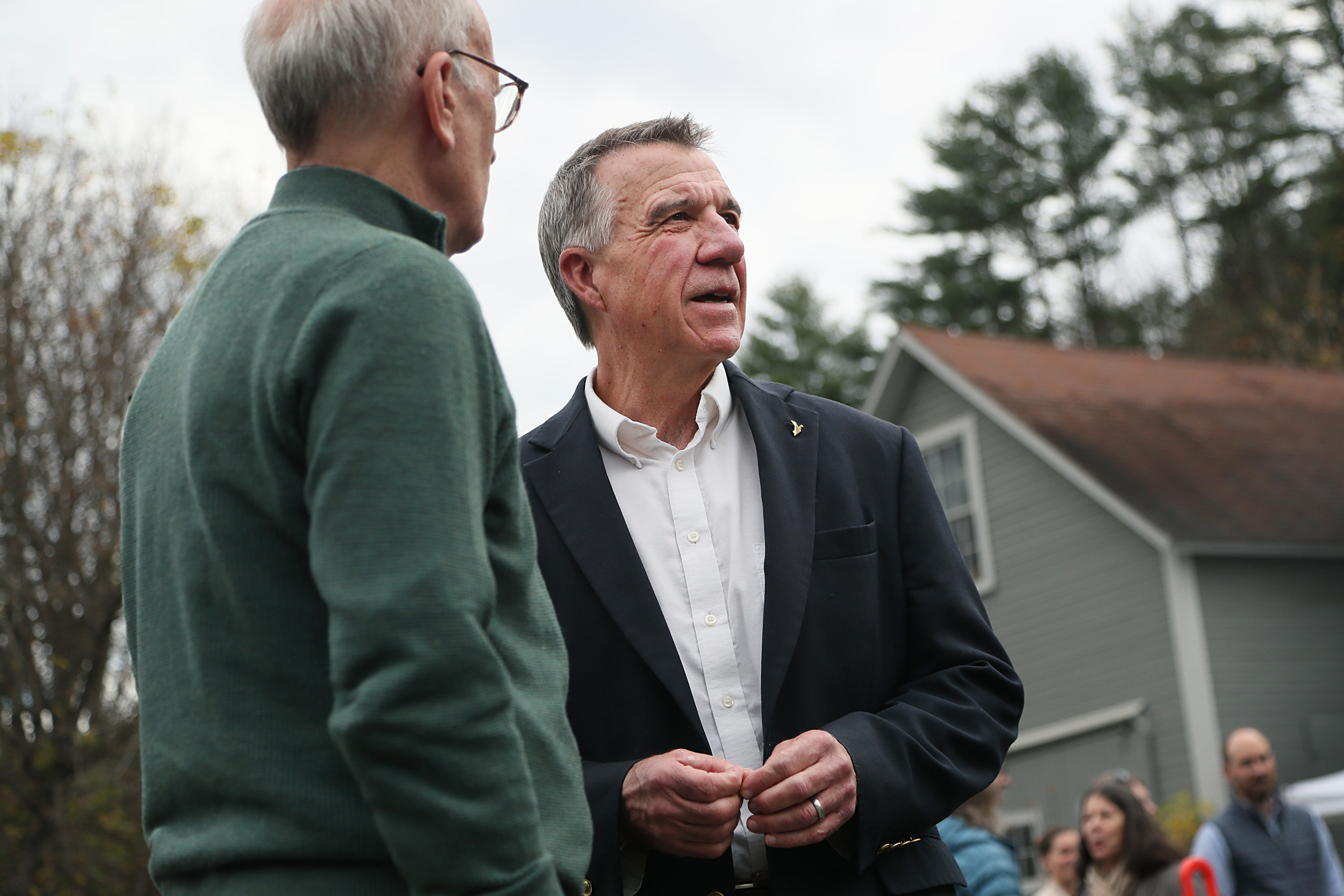
Gov. Phil Scott cited a lack of charging stations and a freeze of millions of dollars in federal funding for chargers in Vermont as part of the reason for the order. Credit: Suzanne Kreiter/The Boston Globe via Getty Images
Vermont, in a surprising shift, will not enforce electric car and truck supply mandates through the end of calendar year 2026.
Gov. Phil Scott signed an executive order on May 13 to allow a 19-month delay in part because of pressure from vehicle manufacturers as well as uncertainties stemming from the Trump administration’s tariffs and broad federal budget freezes and cuts. Lawmakers in Washington this week pursued a more radical course: the U.S. Senate voted to block the California plan for EVs that Vermont and other states have followed.
The Scott administration has previously touted its regulations-–patterned after California’s zero-emission vehicle rule that aims to end gasoline-powered car and light truck sales by 2035–as an effective climate strategy that required manufacturers to increase the percentage of EVs offered for sale in the state. State agencies had linked the strategy to a rapid uptick in EV ownership.
Scott’s executive order, signed May 13, will affect two model years and was cast as a temporary response by administration officials who faced some tough questioning during a hastily called Senate hearing to review the order.
“This is a modest step to create a little bit of space while some of the dust settles at the federal level in particular, while maintaining our commitment to an overall transition to electric vehicles,” Julie Moore, the state’s natural resources secretary, said during a contentious joint hearing of two Senate committees.
Democrats and climate advocates cried foul and demanded, as federal environmental safeguards fall, that Vermont “hold the line” against industry demands. Scott also cited a lack of charging stations and a freeze of millions of dollars in federal funding for chargers in Vermont as part of his rationale. Critics disputed that Vermont lacked a robust charging network.
Vermont, in a surprising shift, will not enforce electric car and truck supply mandates through the end of calendar year 2026.
Gov. Phil Scott signed an executive order on May 13 to allow a 19-month delay in part because of pressure from vehicle manufacturers as well as uncertainties stemming from the Trump administration’s tariffs and broad federal budget freezes and cuts. Lawmakers in Washington this week pursued a more radical course: the U.S. Senate voted to block the California plan for EVs that Vermont and other states have followed.
The Scott administration has previously touted its regulations-–patterned after California’s zero-emission vehicle rule that aims to end gasoline-powered car and light truck sales by 2035–as an effective climate strategy that required manufacturers to increase the percentage of EVs offered for sale in the state. State agencies had linked the strategy to a rapid uptick in EV ownership.
Scott’s executive order, signed May 13, will affect two model years and was cast as a temporary response by administration officials who faced some tough questioning during a hastily called Senate hearing to review the order.
“This is a modest step to create a little bit of space while some of the dust settles at the federal level in particular, while maintaining our commitment to an overall transition to electric vehicles,” Julie Moore, the state’s natural resources secretary, said during a contentious joint hearing of two Senate committees.
Democrats and climate advocates cried foul and demanded, as federal environmental safeguards fall, that Vermont “hold the line” against industry demands. Scott also cited a lack of charging stations and a freeze of millions of dollars in federal funding for chargers in Vermont as part of his rationale. Critics disputed that Vermont lacked a robust charging network.
Thursday, December 26, 2024
Biden signs 50 bills into law on Christmas Eve - including legislation supported by Paris Hilton
The Stop Institutional Child Abuse Act is designed to hold teenage treatment centers and care facilities accountable
Washington, D.C.
Wednesday 25 December 2024 15:59 GMT
From reproductive rights to climate change to Big Tech, The Independent is on the ground when the story is developing. Whether it's investigating the financials of Elon Musk's pro-Trump PAC or producing our latest documentary, 'The A Word', which shines a light on the American women fighting for reproductive rights, we know how important it is to parse out the facts from the messaging.
President Joe Biden spent Christmas Eve signing 50 bills into law, including one piece of legislation supported by Paris Hilton and another designating the bald eagle as the U.S. national bird.
The Stop Institutional Child Abuse Act, backed by Hilton, a socialite and activist, is designed to hold teenage treatment centers and care facilities accountable. Hilton spent time on Capitol Hill promoting the measure.
This month, the Senate voted unanimously to support the bill, and it passed the House by a vote of 367 to 33. Biden signed the law Tuesday. Hilton, meanwhile, has expressed interest in possibly becoming an elected official.
Biden also signed legislation, sponsored by Sens. Amy Klobuchar of Minnesota and Cynthia Lummis of Wyoming, and Minnesota Reps. Brad Finstad and Angie Craig, making the bald eagle the official bird of the U.S.
“Bald eagles are a historical symbol of the United States representing independence, strength, and freedom,” the bill states, also noting that the bird “remains the leading insignia for all branches of the United States military.”
The co-chair of the National Bird Initiative for the National Eagle Center, Preston Cook, who helped push for the legislation, said in a statement earlier this month that “the Bald Eagle has symbolized American ideals since its placement on the Great Seal in 1782.”
"With this legislation, we honor its historic role and solidify its place as our national bird and an emblem of our national identity," he added.

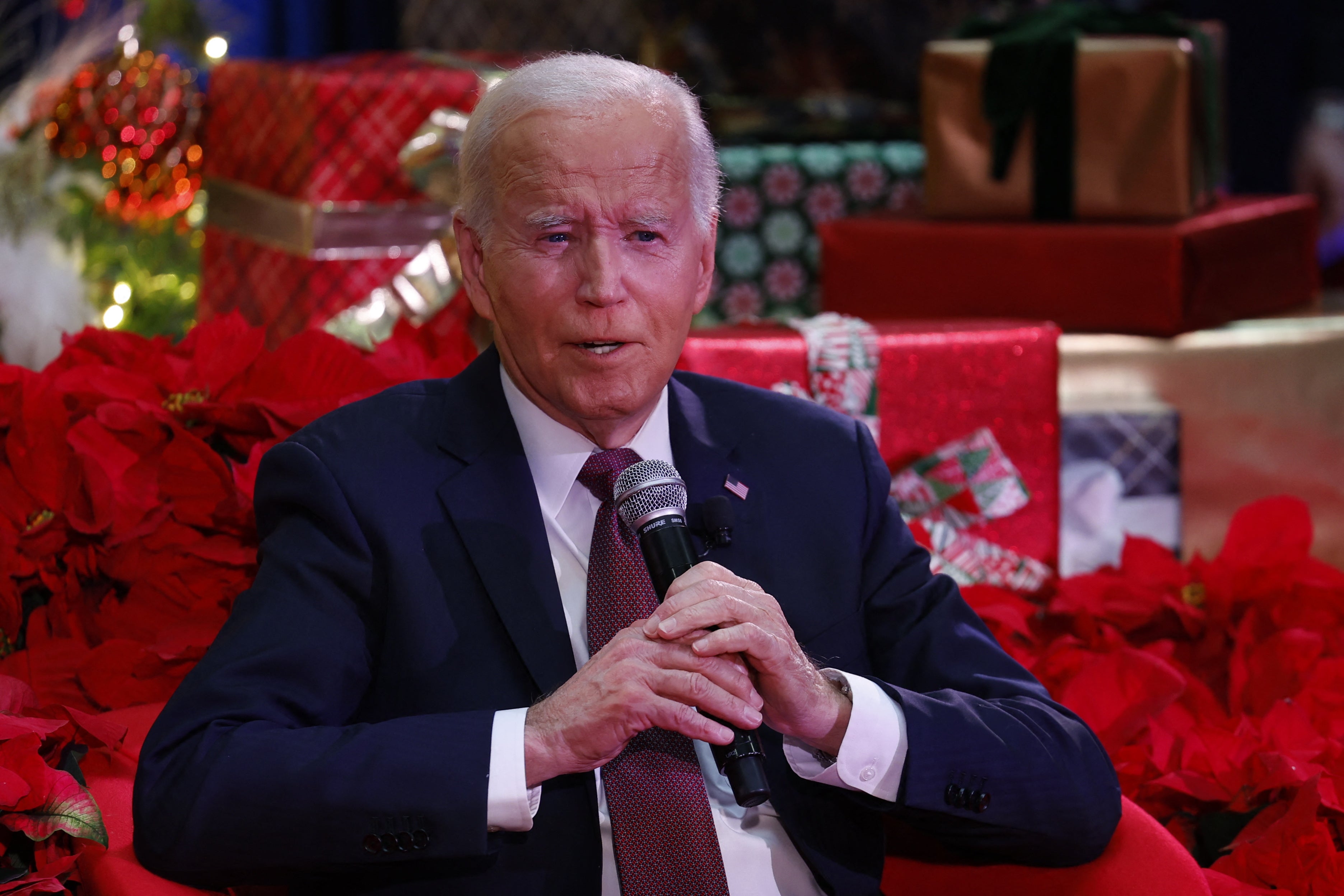
US President Joe Biden speaks during a holiday visit to patients and families at Children's National Hospital in Washington, DC, on December 20, 2024. Biden signed 50 bills into law on Christmas Eve (AFP via Getty Images)
Among the other bills signed on Christmas Eve was the Stop Campus Hazing Act, which creates disclosure regulations at federally funded universities, requiring them to report on campus hazing incidents in their annual security reports. On-campus fraternities and sororities often take part in hazings as part of their pledging proceedings. North Carolina State University has found that more than half of college students take part in some kind of hazing.
Biden signed two bills renaming local post offices in honor of community leaders in Texas and California. A post office in Bastrop, Texas will be renamed after Sergeant Major Billy D. Waugh, a CIA intelligence officer and Army soldier who spent more than 50 years serving the U.S.
Meanwhile, a post office in San Francisco, California, will be renamed after the late Sen. Dianne Feinstein.
The president also signed a number of bills to rename federal buildings, such as the Department of Veterans Affairs community clinic in Lynchburg, Virginia, which is now the Private First Class Desmond T. Doss VA Clinic, The Hill noted. The Veterans Affairs medical center in Tulsa, Oklahoma was renamed after the late Sen. Jim Inhofe.
Among the other bills signed on Christmas Eve was the Stop Campus Hazing Act, which creates disclosure regulations at federally funded universities, requiring them to report on campus hazing incidents in their annual security reports. On-campus fraternities and sororities often take part in hazings as part of their pledging proceedings. North Carolina State University has found that more than half of college students take part in some kind of hazing.
Biden signed two bills renaming local post offices in honor of community leaders in Texas and California. A post office in Bastrop, Texas will be renamed after Sergeant Major Billy D. Waugh, a CIA intelligence officer and Army soldier who spent more than 50 years serving the U.S.
Meanwhile, a post office in San Francisco, California, will be renamed after the late Sen. Dianne Feinstein.
The president also signed a number of bills to rename federal buildings, such as the Department of Veterans Affairs community clinic in Lynchburg, Virginia, which is now the Private First Class Desmond T. Doss VA Clinic, The Hill noted. The Veterans Affairs medical center in Tulsa, Oklahoma was renamed after the late Sen. Jim Inhofe.
Thursday, May 23, 2024
Monday, February 19, 2024
Tuesday, March 28, 2023
Thursday, December 22, 2022
Sunday, June 26, 2022
Monday, October 04, 2021
President Biden Pledges Agenda Will Get Done As He Leaves Democratic Caucus Meeting
President Biden pledges he will get his legislative agenda through Congress, telling reporters that "It doesn't matter when. It doesn't matter whether it's in six minutes, six days, or six weeks. We're going to get it done."
Tuesday, September 21, 2021
A weekly day of synchronised rest time for citizens and workers

The EU should seek a weekly day of common rest time for workers, as enshrined in Art 2(5) ESC.
Sunday as a common day of rest was part of the EU working time directive 93/104/EC with Art 118a(2) TEC as legal basis, which allows the EU to protect the health workers, but annulled by the CJEU in case C-84/94 (merely) because it “failed to explain why Sunday, as a weekly rest day, is more closely connected with the health ... of workers than any other day of the week”.
The EU should continue to pursue a common weekly day of rest, where the choice of the day is left open.
1. While working times fragmentise & reach out to weekends, much time is lost which in the past was used for civic engagement, joint social, sports or faith-related activities, domestic & care responsibilities and, more generally, to spend time together. This trend should be countered through more synchronised resting time.
2. Many workers have lower stress levels & recover better during common time off with families, friends & communities as opposed to spending time alone and are more performing at work & less often ill & absent. Beyond increased presenteeism, better work-life balance and less stress would bring further benefits to firms’ competitiveness: Healthy working conditions, which also include recreation, allow workers to be more creative, involved & performing to drive innovation.
3. A common day of rest would strengthen the cultural identity & is crucial for common European volunteering & engagement.
Saturday, December 05, 2020
Wednesday, September 25, 2019
Jesuit Theologian Predicts that ‘Laudato Si’ will become Law in 10 Years or Less
September 25, 2019 by Andy Roman
Dr. Charlie Camosy is part of the Theology Department at Fordham University, a premier Jesuit institution in New York City. [1] He recently published an article in which he stated that our world has around 10 years to “dramatically curb our carbon emissions before we reach a tipping point.” Jesuit professor Dr. Charlie Camosy argues that in “light of this emergency” we must work to “pass dramatic legislation” to prevent the coming climate “disaster.” [2]
What “legislation” is he referring to? He says that the “Green New Deal” being proposed by Democratic politicians has “zero chance” of passing, but he claims that Pope Francis’ Laudato Si encyclical is “far more superior” for “immediate legislative approaches.” In other words, this Jesuit agent is saying that the Pope’s green Sunday law (Laudato Si) is the best solution for the climate crisis and should be legislated right now!
After a lengthy praise and assessment of Laudato Si, Dr. Charlie Camosy says that the Pope’s document is the only answer to all our problems. He also revealed that he believes in about “10 years” or “perhaps even faster” Laudato Si will be embraced through legal enactment. He calls it “life changing legislation,” and compares the Pope’s encyclical to the “power” of changed “hearts” during the legalization of “same-sex marriage.”
Subscribe to:
Posts (Atom)