September 9, 2026
Michael Cookenmaster
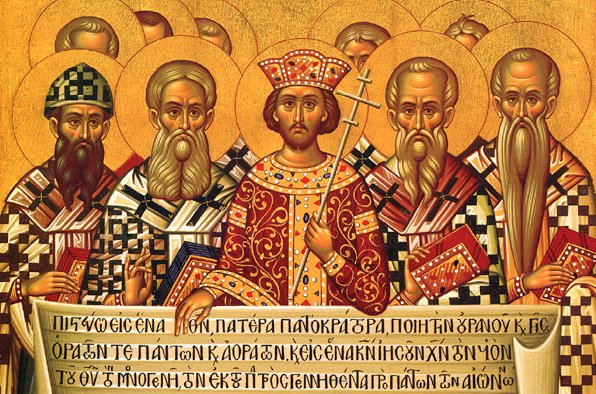
Jesus is coming soon, and the attacks on the Church are on the increase. The Christian faith stands or falls upon the authority of the Word of God. “Sanctify them through Thy truth: Thy word is truth” (John 17:17). Faithful Christians should therefore never treat the Bible as merely another ancient document to be reconstructed according to changing theories of scholars. We are dealing with the foundation of faith, doctrine, worship, and salvation.
This is why the rise of higher criticism and the modern critical-text movement deserves serious scrutiny. In particular, Christians should examine the textual theories associated with Brooke Foss Westcott and Fenton John Anthony Hort, whose 1881 Greek New Testament helped establish a radically different approach to the textual basis underlying all modern English translations.
The concern is not simply that newer translations use different English wording. The deeper issue is the Greek text upon which they are based and the assumptions used to reconstruct it. Westcott and Hort rejected the traditional dominance of the Received Text and elevated a comparatively small group of manuscripts, particularly Vaticanus and Sinaiticus, while developing theories of textual criticism that profoundly influenced subsequent generations.
This raises an important spiritual question: What influences shaped the manuscripts, textual traditions, and interpretive assumptions that have increasingly displaced the traditional Received Text?
Some conservative Christian scholars have raised concerns about similarities between certain readings in the Alexandrian textual tradition and theological tendencies associated with Gnosticism. Gnosticism radically distorts biblical teaching concerning Christ, His incarnation, His humanity, His divinity, and salvation. Christians should therefore be cautious whenever disputed readings diminish, qualify, or omit passages that have historically testified to foundational doctrines concerning the deity, incarnation, blood, and saving work of Jesus Christ.
There is another concern that deserves attention. Codex Vaticanus and Codex Sinaiticus, two manuscripts that have exercised enormous influence upon modern textual criticism, disagree with one another in more than 3,000 places in the Gospels. The extent of their differences should cause Christians to consider carefully why these manuscripts have been given such extraordinary weight in reconstructing the New Testament text.
There is also a prophetic concern. Many modern translations contain readings in Revelation that differ from the traditional wording in ways that can affect how readers understand the prophetic identification of religious powers. The Protestant Reformers and Seventh-day Adventists have historically understood the beast power of Revelation 13 and related passages as pointing to the papacy and its opposition to God's law and truth. When modern translations weaken, alter, footnote, or omit wording traditionally used in studying these prophecies, Adventists should take notice.
Jesus is coming soon, and the attacks on the Church are on the increase. The Christian faith stands or falls upon the authority of the Word of God. “Sanctify them through Thy truth: Thy word is truth” (John 17:17). Faithful Christians should therefore never treat the Bible as merely another ancient document to be reconstructed according to changing theories of scholars. We are dealing with the foundation of faith, doctrine, worship, and salvation.
This is why the rise of higher criticism and the modern critical-text movement deserves serious scrutiny. In particular, Christians should examine the textual theories associated with Brooke Foss Westcott and Fenton John Anthony Hort, whose 1881 Greek New Testament helped establish a radically different approach to the textual basis underlying all modern English translations.
The concern is not simply that newer translations use different English wording. The deeper issue is the Greek text upon which they are based and the assumptions used to reconstruct it. Westcott and Hort rejected the traditional dominance of the Received Text and elevated a comparatively small group of manuscripts, particularly Vaticanus and Sinaiticus, while developing theories of textual criticism that profoundly influenced subsequent generations.
This raises an important spiritual question: What influences shaped the manuscripts, textual traditions, and interpretive assumptions that have increasingly displaced the traditional Received Text?
Some conservative Christian scholars have raised concerns about similarities between certain readings in the Alexandrian textual tradition and theological tendencies associated with Gnosticism. Gnosticism radically distorts biblical teaching concerning Christ, His incarnation, His humanity, His divinity, and salvation. Christians should therefore be cautious whenever disputed readings diminish, qualify, or omit passages that have historically testified to foundational doctrines concerning the deity, incarnation, blood, and saving work of Jesus Christ.
There is another concern that deserves attention. Codex Vaticanus and Codex Sinaiticus, two manuscripts that have exercised enormous influence upon modern textual criticism, disagree with one another in more than 3,000 places in the Gospels. The extent of their differences should cause Christians to consider carefully why these manuscripts have been given such extraordinary weight in reconstructing the New Testament text.
There is also a prophetic concern. Many modern translations contain readings in Revelation that differ from the traditional wording in ways that can affect how readers understand the prophetic identification of religious powers. The Protestant Reformers and Seventh-day Adventists have historically understood the beast power of Revelation 13 and related passages as pointing to the papacy and its opposition to God's law and truth. When modern translations weaken, alter, footnote, or omit wording traditionally used in studying these prophecies, Adventists should take notice.
Several individuals associated with modern translation projects have had connections with Roman Catholic scholarship and ecumenical biblical scholarship. The historical relationship between modern textual criticism, ecumenical scholarship, and the growing rapprochement between Protestants and Rome therefore deserves careful examination. A translation that makes traditional prophetic distinctions less explicit can fit more comfortably within an ecumenical environment than the historic Protestant Bible, which generations of Protestants used in identifying apostasy and warning against papal claims. The cumulative effect of textual changes can contribute to a theological climate in which historic Protestant distinctions—including the identification of the papacy in prophecy—become increasingly blurred, softened, or forgotten.
For Seventh-day Adventists, that should be a profound concern. We have been entrusted with the three angels' messages of Revelation 14, including the warning concerning Babylon. We should not permit our prophetic voice to become muted because the biblical language upon which generations of Adventists built their understanding has been progressively revised, qualified, or removed.
This becomes especially important when we consider our children. Seventh-day Adventists have historically emphasized teaching children Scripture, memorizing Bible verses, learning doctrine, and hiding God's Word in their hearts. We teach memory gems. We teach fundamental beliefs. We teach the words of Jesus. We teach our children to build their lives upon Scripture.
But when children are taught one wording of a biblical text and later encounter another translation that phrases it differently, brackets it, footnotes it, or omits it, confusion results. When doctrines are taught from numerous modern translations based upon evolving critical-text decisions, children may eventually wonder whether the words they memorized are permanent or continually subject to scholarly revision.
Adventists should take this seriously. Our children should have confidence that when they open the Bible, they are encountering the Word of God—not merely the latest scholarly reconstruction of what scholars believe the original text may have said.
The faithful Christian should therefore ask why we should abandon a textual tradition that served the church for centuries in favor of a modern reconstructed text dependent upon comparatively few manuscripts and theories developed by modern textual critics.
The King James Version was translated from the Greek textual tradition commonly known as the Textus Receptus, or Received Text. It represents the textual tradition upon which the King James translators substantially relied. For more than four centuries, English-speaking Christians read this Bible, preached from it, memorized it, built their theology upon it, and carried its message around the world.
The King James translators were not perfect, nor was their translation process inspired in the same sense as the original Scriptures. Yet their work represents translating exact words from Hebrew and Greek into English, not just the ideas being conveyed, and therefore deserves serious respect because they approached the Bible with reverence for its authority as THE word of God rather than treating it as a playground for speculative theories.
“Every word of God is pure: He is a shield unto them that put their trust in Him” (Proverbs 30:5).
Scripture warns:
“Ye shall not add unto the word which I command you, neither shall ye diminish ought from it” (Deuteronomy 4:2).
That warning deserves consideration when passages found in the traditional Bible are bracketed, footnoted, questioned, or omitted in many modern translations. Examples include the longer ending of Mark, John 7:53–8:11, and the Trinitarian wording of 1 John 5:7. The issue is not simply why a modern translation differs, but what textual evidence and assumptions led scholars to remove or question wording that generations of Christians accepted as Scripture.
Human scholarship must remain the servant of Scripture, not its master.
Isaiah gives the standard:
“To the law and to the testimony: if they speak not according to this word, it is because there is no light in them” (Isaiah 8:20).
Another Danger is Ecumenism.
Christian unity is desirable only when it is unity in truth. Jesus prayed that His followers would be one, but His prayer was rooted in truth (John 17:17–21), not unity at the expense of truth.
Paul warned, “Be ye not unequally yoked together with unbelievers” (2 Corinthians 6:14). This does not mean Christians should refuse to minister to unbelievers or welcome sincere seekers. Indeed, 1 Corinthians 14:23–25 specifically describes unbelievers entering the Christian assembly and being convicted by the preaching of God's Word.
The distinction is vital: We welcome unbelievers to hear the truth; we do not permit unbelief to redefine the truth.
Christian charity does not require doctrinal surrender. Cooperation in humanitarian matters does not require merging doctrines, institutions, or worship with those who reject fundamental biblical truth. John likewise warned against those who depart from the doctrine of Christ (2 John 9).
Scripture repeatedly illustrates the danger of compromise. Israel was warned that association with paganism could turn hearts away from God (Deuteronomy 7:3–4). Nehemiah removed Tobiah from the temple chambers when sacred things had been compromised (Nehemiah 13:4–9). Revelation declares concerning Babylon, “Come out of her, My people, that ye be not partakers of her sins” (Revelation 18:4).
Since 1979 the world has had an ecumenical Bible with the official stamp of the Vatican - Revised Standard Version. For Seventh-day Adventists, this should be taken seriously. Revelation describes God's faithful people as those “which keep the commandments of God, and the faith of Jesus” (Revelation 14:12). We cannot faithfully proclaim the three angels' messages while allowing Babylonian, secularism, higher criticism, or doctrinal compromise to reshape our understanding of Scripture.
Ultimately, the issue is authority. If the Bible is the Word of God, scholarship must remain its servant. If a theory conflicts with the testimony of Scripture, the theory—not Scripture—must be examined.
Paul instructed believers to “prove all things; hold fast that which is good” (1 Thessalonians 5:21). Jude commanded Christians to “earnestly contend for the faith which was once delivered unto the saints” (Jude 3).
The King James Bible should not be defended merely because it is old, familiar, or poetic. It should be defended because Christians have a solemn responsibility to preserve confidence in Scripture and resist influences that diminish its authority.
We must not allow intellectual fashion to replace faith, ecumenical enthusiasm to replace biblical truth, or higher criticism to place human judgment above divine revelation.
The command remains: “Fear God, and give glory to Him” (Revelation 14:7).
And the promise remains: “Here is the patience of the saints: here are they that keep the commandments of God, and the faith of Jesus” (Revelation 14:12).
When the foundation is the Word of God, faithfulness requires that we guard the foundation.
****


No comments:
Post a Comment