Preaching on the Good Samaritan for World Day of Migrants, Washington’s archbishop named Minneapolis, a five-year-old used as bait, and a nation that “passed on by.” He told Catholics to fight every dimension of it.
Christopher Hale
Thank you for reading! Letters from Leo is a reader-supported publication and the fastest-growing Catholic community in the country. To receive new posts and support this movement, consider becoming a free or paid subscriber.
Subscribe
Make A One-Time Gift to Support My Work
Cardinal Robert McElroy stood at the ambo of the Cathedral of St. Matthew the Apostle on Sunday evening, less than a mile from the White House, and told Washington’s Catholics that their country has spent a year and a half walking past a man left bleeding by the road.
“For the last year and a half, the people of the United States have witnessed the suffering of the undocumented in our midst, purposely and strategically magnified by our government,” the archbishop of Washington said, “and for the most part, we have simply passed on by.”
The Mass marked the 112th World Day of Migrants and Refugees, which Pope Leo XIV devoted this year to children under the theme “Even Just One of These Children.” McElroy preached on the Good Samaritan. He borrowed a rule from one of his seminary scripture professors: in any parable, look for the character you most dislike, “and that is you.”
For Americans in 2026, he said, that character is the priest who crossed to the other side of the road (and the Levite who followed him).
The parable came second. McElroy opened with what he called the two great legacies that shape America’s duty to the stranger: the command in Deuteronomy that “you shall not violate the rights of the alien or the orphan,” and the words Emma Lazarus wrote for the Statue of Liberty. “There was a time when these words brought tears to every American,” he said of the poem. “Now they are shunned, riddled with conditions, or ignored altogether because they remind us of what we have become.”
A bronze plaque bearing the poem was mounted inside the statue’s pedestal in 1903. During Trump’s first term, his acting immigration chief, Ken Cuccinelli, recited his own version on NPR: “Give me your tired and your poor who can stand on their own two feet and who will not become a public charge.”
McElroy’s phrase for that habit, “riddled with conditions,” describes it precisely. In the past 18 months, the cardinal said, the country has traded the words of Moses and Lazarus for “suspicion, division, cruelty, and violence.”
He then walked his congregation through the record. Americans were promised in early 2025 that ICE would secure the border and deport serious criminals, which Catholic teaching permits. What followed, in his words, were “indiscriminate raids on farm workers, in Home Depot parking lots, nursing homes, and schools,” amounting to “a war on every undocumented immigrant in our land.”
Eighteen months of cruelty
The public record bears him out. On his first day back in office, President Trump suspended refugee admissions and signed an order to end birthright citizenship, which the Supreme Court struck down in June. That same week, his Homeland Security Department scrapped the policy that had kept agents away from churches and schools.
In March 2025, the administration invoked the Alien Enemies Act to fly 137 Venezuelan men to El Salvador’s CECOT prison without a hearing. Kilmar Abrego Garcia, a Maryland father, was put on those flights despite a 2019 order from an immigration judge barring his removal to El Salvador; the Supreme Court unanimously ordered the government to help bring him home. By July, Congress had handed ICE roughly $75 billion for detention and deportation in the One Big Beautiful Bill.
The human toll followed the money. Human Rights Watch counted 52 deaths in ICE custody in the administration’s first 500 days. This July, ICE agents shot and killed two Catholic men, Lorenzo Salgado Araujo and Johan Durán Guerrero, as they went to work.
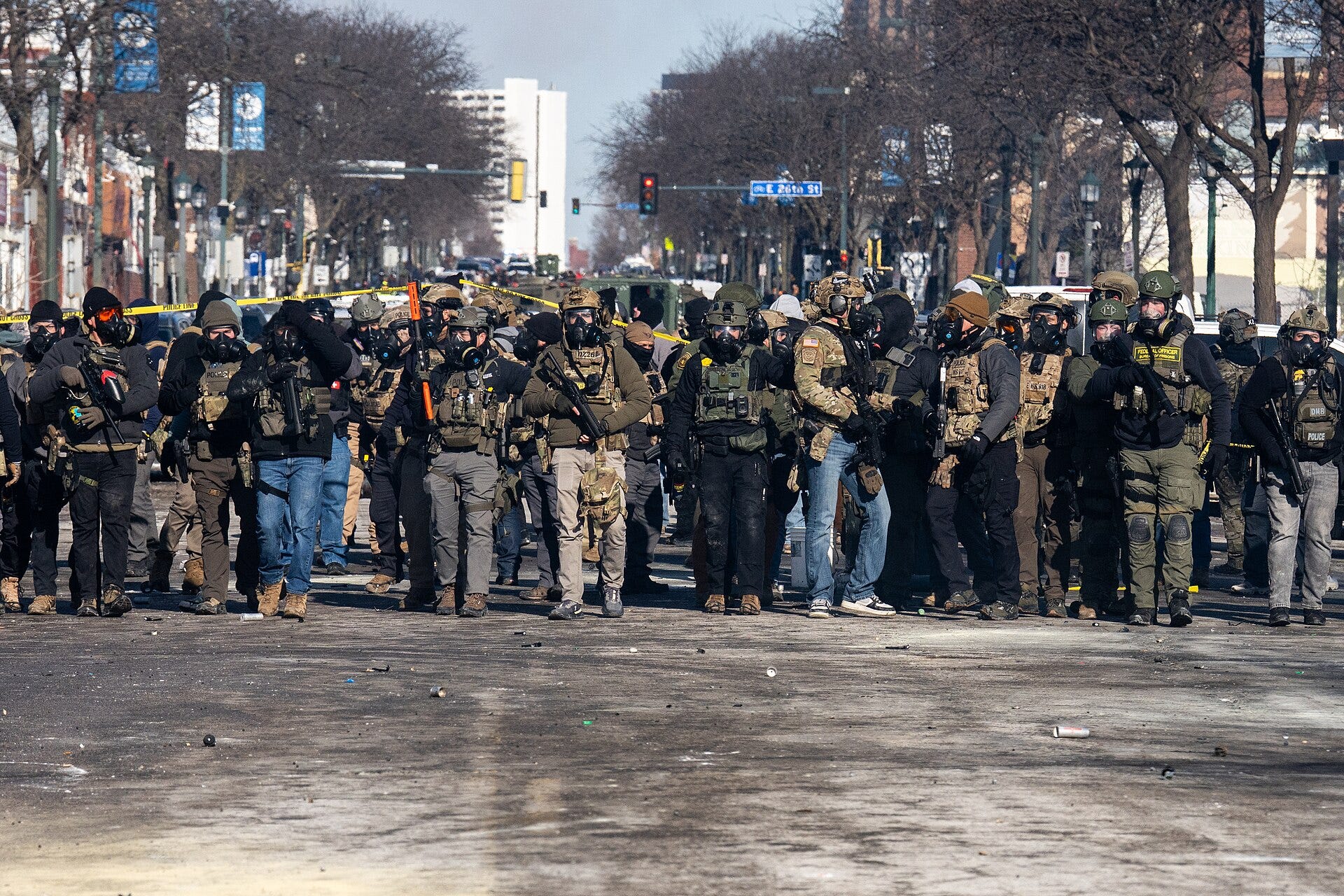
Federal immigration agents line Nicollet Avenue in Minneapolis on Jan. 24, 2026, after agents shot and killed Alex Pretti, a nurse. He was the second person killed by federal agents in the city that month. (Chad Davis photo)
McElroy saved his sharpest words for Minneapolis, where federal agents killed Renée Good, a mother of three, on Jan. 7 and Alex Pretti, a nurse, on Jan. 24. “We could not believe that the mask had become the new symbol of American justice,” he said.
The cardinal also took apart the administration’s favorite defense, that immigrants are being expelled because they broke the law. More than a million of the people now losing their protection came here legally, through asylum, refugee status, or Temporary Protected Status. Pew reported in August that the administration has ended TPS for most of the immigrants who held it, Haitian Catholics among them.
“These refugees never broke any law,” McElroy said. They are being deported, he argued, because “the bigotry that has often tarnished American immigration history is rampant once again in our nation.”
“Jesus wept”
At the center of the homily stood a five-year-old. ICE agents took Liam Conejo Ramos, in a blue bunny hat and a Spider-Man backpack, outside his home in Columbia Heights, Minnesota, on Jan. 20. His school said the boy was used as bait to get his mother to open the door.
Liam spent 11 days with his father at the family detention center in Dilley, Texas, until U.S. District Judge Fred Biery ordered them freed. Biery attached a photo of Liam to his order, along with two lines of Scripture: “Let the little children come unto me” and “Jesus wept.”
“Jesus weeps all across our nation,” McElroy said, “for the children who have been arrested, detained, and transported to far-off centers with terrible living conditions and cut off from their families.”
Pope Leo named the same wound in his message for this year’s World Day, signed Aug. 11. “Every child, every human being, possesses an infinite dignity,” the pope wrote, and yet the dignity of migrant children “is trampled upon in countless ways.” He asked the world to move “from the mere management of migration to the full and immediate protection of human rights,” with special mention of children “separated from their parents because of repatriation.”
McElroy is hardly alone among the American cardinals. Cardinal Joseph Tobin of Newark, two days after Pretti was killed, urged Catholics to oppose new money for ICE: “How will you say ‘no’ this week when an appropriations bill is going to be considered in Congress?”
In Chicago, where Operation Midway Blitz filled the streets outside the Broadview processing center with tear gas, Cardinal Blase Cupich said federal agents had stopped priests “of a different color” and demanded proof of citizenship. “That’s not America,” he said.
Bishop Mark Seitz of El Paso marked the day with an essay in the National Catholic Reporter, written with Dylan Corbett, that names Liam Ramos and the children held at Dilley. “The Gospel offers no ranking of children by paperwork,” they wrote. Elsewhere in the piece: “Even just one is a rebuke to a politics that can only see people in bulk.” In March, Seitz issued a pastoral message calling mass detention and deportation “a grave moral evil” and reminded Catholics working for ICE and the Border Patrol that “no one has to obey an illegal order.”
McElroy saved his sharpest words for Minneapolis, where federal agents killed Renée Good, a mother of three, on Jan. 7 and Alex Pretti, a nurse, on Jan. 24. “We could not believe that the mask had become the new symbol of American justice,” he said.
The cardinal also took apart the administration’s favorite defense, that immigrants are being expelled because they broke the law. More than a million of the people now losing their protection came here legally, through asylum, refugee status, or Temporary Protected Status. Pew reported in August that the administration has ended TPS for most of the immigrants who held it, Haitian Catholics among them.
“These refugees never broke any law,” McElroy said. They are being deported, he argued, because “the bigotry that has often tarnished American immigration history is rampant once again in our nation.”
“Jesus wept”
At the center of the homily stood a five-year-old. ICE agents took Liam Conejo Ramos, in a blue bunny hat and a Spider-Man backpack, outside his home in Columbia Heights, Minnesota, on Jan. 20. His school said the boy was used as bait to get his mother to open the door.
Liam spent 11 days with his father at the family detention center in Dilley, Texas, until U.S. District Judge Fred Biery ordered them freed. Biery attached a photo of Liam to his order, along with two lines of Scripture: “Let the little children come unto me” and “Jesus wept.”
“Jesus weeps all across our nation,” McElroy said, “for the children who have been arrested, detained, and transported to far-off centers with terrible living conditions and cut off from their families.”
Pope Leo named the same wound in his message for this year’s World Day, signed Aug. 11. “Every child, every human being, possesses an infinite dignity,” the pope wrote, and yet the dignity of migrant children “is trampled upon in countless ways.” He asked the world to move “from the mere management of migration to the full and immediate protection of human rights,” with special mention of children “separated from their parents because of repatriation.”
McElroy is hardly alone among the American cardinals. Cardinal Joseph Tobin of Newark, two days after Pretti was killed, urged Catholics to oppose new money for ICE: “How will you say ‘no’ this week when an appropriations bill is going to be considered in Congress?”
In Chicago, where Operation Midway Blitz filled the streets outside the Broadview processing center with tear gas, Cardinal Blase Cupich said federal agents had stopped priests “of a different color” and demanded proof of citizenship. “That’s not America,” he said.
Bishop Mark Seitz of El Paso marked the day with an essay in the National Catholic Reporter, written with Dylan Corbett, that names Liam Ramos and the children held at Dilley. “The Gospel offers no ranking of children by paperwork,” they wrote. Elsewhere in the piece: “Even just one is a rebuke to a politics that can only see people in bulk.” In March, Seitz issued a pastoral message calling mass detention and deportation “a grave moral evil” and reminded Catholics working for ICE and the Border Patrol that “no one has to obey an illegal order.”
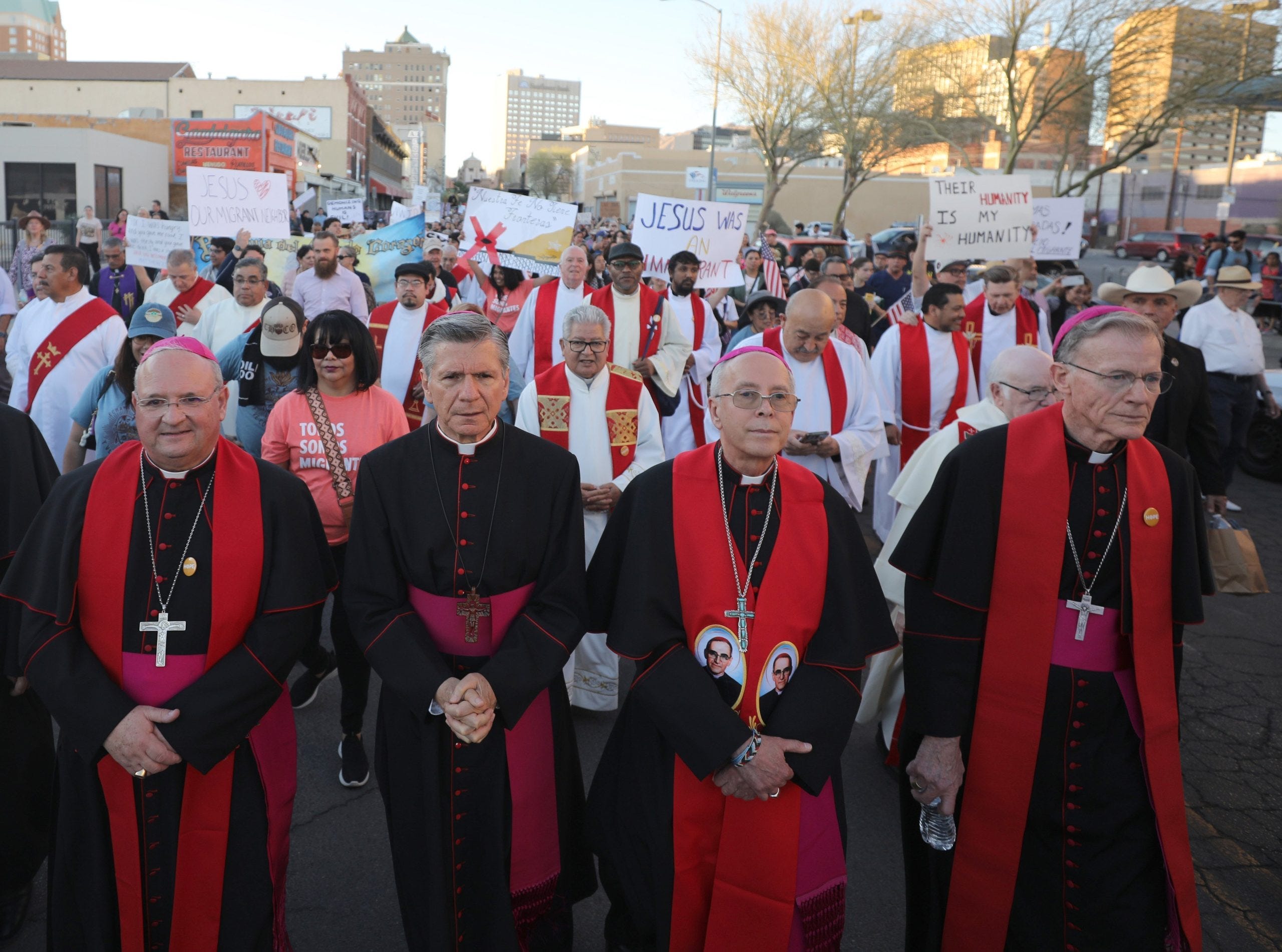
Bishop Peter Baldacchino of Las Cruces, N.M.; Archbishop Gustavo García-Siller of San Antonio; Bishop Mark J. Seitz of El Paso, Texas; and Archbishop John C. Wester of Santa Fe, N.M., lead a march in El Paso on March 24, 2025, against mass deportations. (OSV News photo / Bob Roller)
The U.S. bishops as a body had already rejected indiscriminate mass deportation last November, by a vote of 216 to 5.
The U.S. bishops as a body had already rejected indiscriminate mass deportation last November, by a vote of 216 to 5.
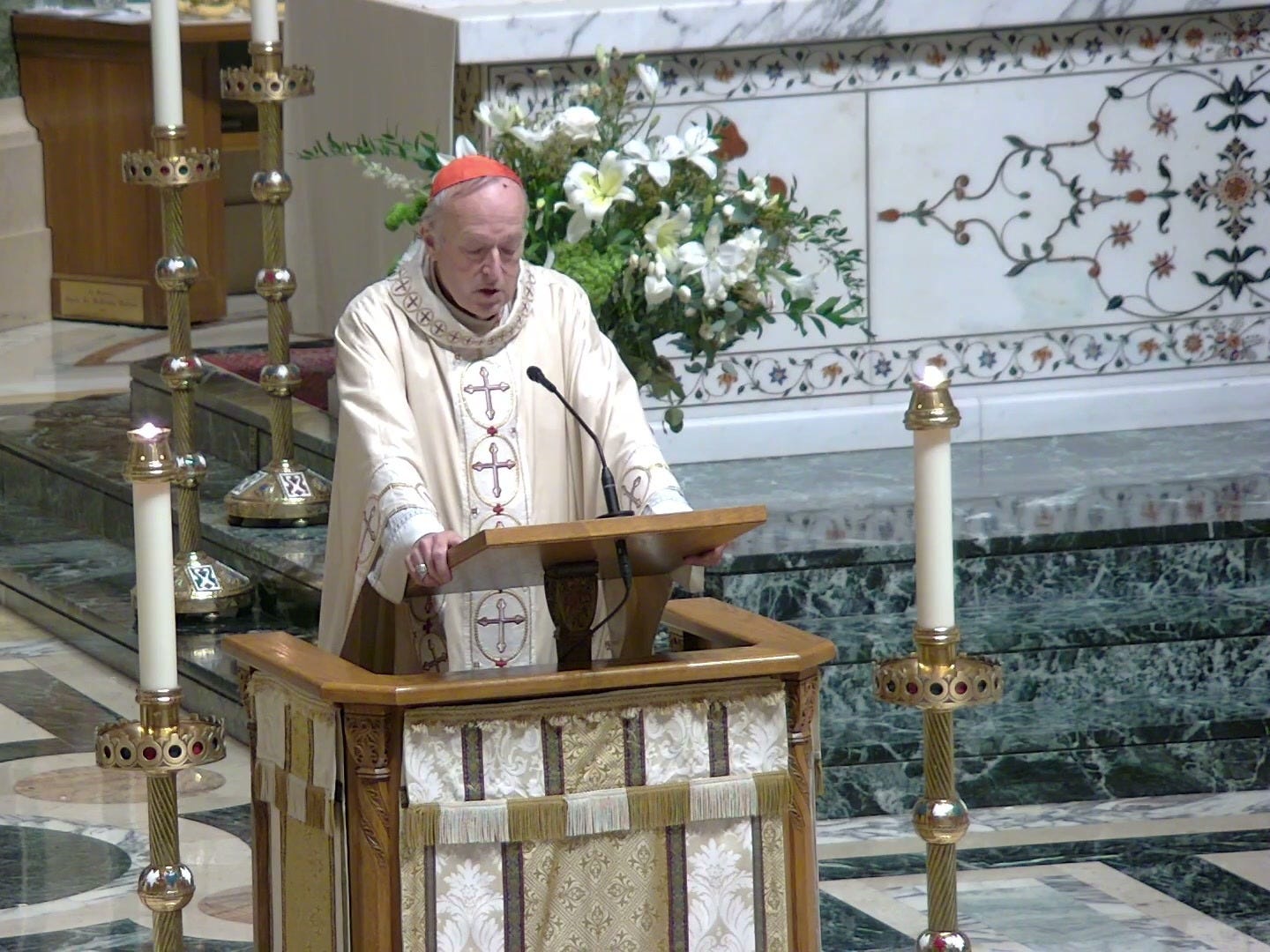
Cardinal Robert McElroy, archbishop of Washington, preaches at the Cathedral of St. Matthew the Apostle in Washington on Sept. 27, 2026, during the Mass for the 112th World Day of Migrants and Refugees. (Archdiocese of Washington livestream)
McElroy closed with orders for his flock. Catholics must “recognize the evil that is being carried out in our name and fight every dimension of it,” he said, and they must “seek to convert our political representatives from tolerating this evil, or replace them.”
“We must recognize that in abandoning the words of Deuteronomy and the Statue of Liberty,” the cardinal said, “we are losing our soul as a nation.”
When McElroy finished, the cathedral broke into applause that lasted about half a minute, and much of the congregation rose to its feet before the Creed.
His full homily, about 11 minutes long, is below.
At Letters from Leo, we stand with Cardinal McElroy, Pope Leo XIV, and every family that has watched ICE come to the door. Liam Ramos and his mother belong in that company, as do the families of Lorenzo Salgado Araujo and Johan Durán Guerrero, the two Catholic workers ICE agents killed this summer.
A Church that crosses to the other side of the road has forgotten the Gospel it preaches. Readers keep finding their way here because they want a faith with the nerve to kneel beside the victim and make his pain its own.
If you believe that every migrant child carries an infinite dignity no government can revoke, I am asking you to join us.
If you’d like to invest in our mission, here are three ways you can help:
Subscribe as a paid member to receive exclusive posts about the life and formation of Pope Leo and help sustain this newsletter.
Donate with a one-time gift to fuel this project’s mission.
Share this post (and Letters from Leo) with a friend who might enjoy it.
Paid members receive my ongoing series on Pope Leo’s life and formation, along with the Sunday Scripture Reflection Series.
Whether you give $0, $5, $50, $500, $1,000, or more, your presence here matters — no matter your faith or your politics.
Thank you for reading. I’ll see you on the road.

© 2026 Christopher Hale
McElroy closed with orders for his flock. Catholics must “recognize the evil that is being carried out in our name and fight every dimension of it,” he said, and they must “seek to convert our political representatives from tolerating this evil, or replace them.”
“We must recognize that in abandoning the words of Deuteronomy and the Statue of Liberty,” the cardinal said, “we are losing our soul as a nation.”
When McElroy finished, the cathedral broke into applause that lasted about half a minute, and much of the congregation rose to its feet before the Creed.
His full homily, about 11 minutes long, is below.
At Letters from Leo, we stand with Cardinal McElroy, Pope Leo XIV, and every family that has watched ICE come to the door. Liam Ramos and his mother belong in that company, as do the families of Lorenzo Salgado Araujo and Johan Durán Guerrero, the two Catholic workers ICE agents killed this summer.
A Church that crosses to the other side of the road has forgotten the Gospel it preaches. Readers keep finding their way here because they want a faith with the nerve to kneel beside the victim and make his pain its own.
If you believe that every migrant child carries an infinite dignity no government can revoke, I am asking you to join us.
If you’d like to invest in our mission, here are three ways you can help:
Subscribe as a paid member to receive exclusive posts about the life and formation of Pope Leo and help sustain this newsletter.
Donate with a one-time gift to fuel this project’s mission.
Share this post (and Letters from Leo) with a friend who might enjoy it.
Paid members receive my ongoing series on Pope Leo’s life and formation, along with the Sunday Scripture Reflection Series.
Whether you give $0, $5, $50, $500, $1,000, or more, your presence here matters — no matter your faith or your politics.
Thank you for reading. I’ll see you on the road.

© 2026 Christopher Hale


No comments:
Post a Comment