Showing posts with label Denmark. Show all posts
Showing posts with label Denmark. Show all posts
Saturday, January 17, 2026
Thursday, October 02, 2025
Monday, July 21, 2025
Denmark Bans Burqa In Public, Asks Muslims To Adapt Local Culture Or Leave. Details Inside!
The Denmark government had previously implemented a nationwide ban on burqas and niqabs in public spaces back in 2018!
By Sakshi Singh
Updated July 02, 2025 11:37 AM
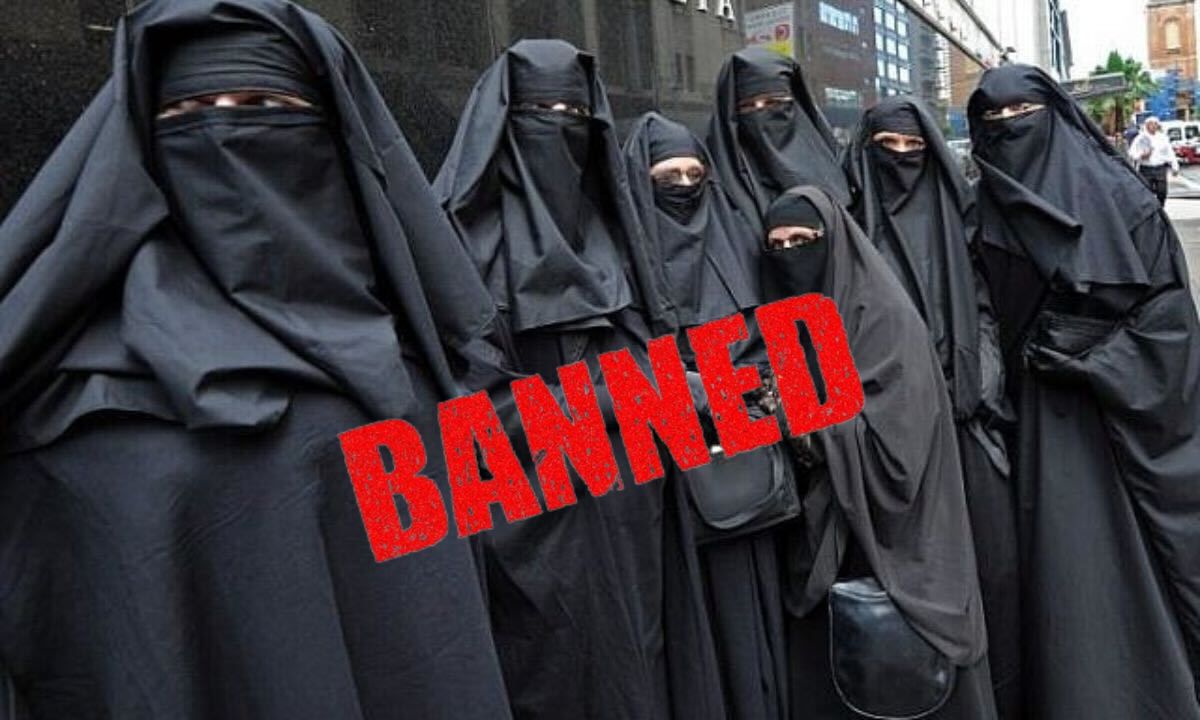
Denmark is once again in the spotlight for its tough stance on religious face coverings. For the unversed, the Denmark government had previously implemented a nationwide ban on burqas and niqabs in public spaces back in 2018. Now the Danish government is proposing to expand that ban to include schools and universities.
What Did The Denmark Prime Minister Say About Banning Burqa?
Prime Minister Mette Frederiksen recently stated that the country’s democratic values must come first. “Democracy takes precedence,” she said, stressing that religious expressions that conflict with Danish norms shouldn’t be part of the education system. She also made it clear that immigrants who struggle to adapt to Danish cultural values should consider leaving the country.
This proposed extension has stirred a lot of international attention. Human rights organisations argue that the move is discriminatory, especially toward Muslim women who wear face coverings as part of their religious practice. Critics say the policy is not about integration or safety but about singling out a specific group and restricting their freedom of expression.
On the other hand, supporters of the proposal believe the government is taking necessary action to protect secular education and promote gender equality. They argue that face coverings can hinder communication and that schools should be places where openness and equal participation are encouraged. The debate is growing louder both inside and outside Denmark. Some view this as a firm step toward integrating newcomers and strengthening national identity. Others see it as an exclusionary move that could further alienate minority communities.
Tuesday, April 08, 2025
As Denmark tears down homes in ‘non-Western’ areas to force assimilation, residents fight back in court
Denmark is taking a wrecking ball to people’s homes in neighborhoods where the government feels residents don’t share “Danish values.” A 2018 law allows the demolition of homes in communities designated as “parallel societies.” The underlying idea is “integration through dispersion” but this attempt at social engineering is raising hackles, and the country’s most vulnerable people seem to be left in the dust.
April 7, 2025
Updated on Apr 7, 2025By Joshua Coe
The remnants of a public housing block loom in the center of Gellerupparken in Aarhus, Denmark, on Dec. 14, 2024. The country is demolishing or repurposing public housing across the country in neighborhoods designated “parallel societies,” as part of a forced assimilation policy.Joshua Coe/The World
Muhammad Aslam, 57, pointed out his old apartment in Mjølnerparken, a well-known public housing complex in the Danish capital of Copenhagen.
The place was fenced off and monitored by security cameras, while the next-door lot — where neighboring apartments once stood — rumbled with the sounds of construction underway.
“This was our original home where we have lived since 1987, where the kids grew up, went to school and university,” Aslam said, gesturing toward a balcony on the third floor of an apartment building with a clean, red-brick facade.

April 7, 2025
Updated on Apr 7, 2025By Joshua Coe
The remnants of a public housing block loom in the center of Gellerupparken in Aarhus, Denmark, on Dec. 14, 2024. The country is demolishing or repurposing public housing across the country in neighborhoods designated “parallel societies,” as part of a forced assimilation policy.Joshua Coe/The World
Muhammad Aslam, 57, pointed out his old apartment in Mjølnerparken, a well-known public housing complex in the Danish capital of Copenhagen.
The place was fenced off and monitored by security cameras, while the next-door lot — where neighboring apartments once stood — rumbled with the sounds of construction underway.
“This was our original home where we have lived since 1987, where the kids grew up, went to school and university,” Aslam said, gesturing toward a balcony on the third floor of an apartment building with a clean, red-brick facade.
Muhammad Aslam stands outside the apartment building where he had lived since 1987, in the Mjølnerparken neighborhood of Copenhagen. While he got his Danish citizenship in the 1980s and has worked in Copenhagen’s taxi industry, Aslam was ordered to move out of his apartment under Denmark’s 2018 “ghetto package” policy.Joshua Coe/The World
Saturday, June 24, 2023
Who Are These Aliens? - Can you survive it?
In the last couple of weeks it was widely reported by the corporate MSM that the United States government had recovered an intact alien spacecraft from a crash site.
The supposed revelation comes from one David Grusch, a “former” military intelligence agent, who turned “whistleblower” and told the press that this supposed craft “distorted time and space”, was “bigger on the inside than the outside” and made some rescue workers ill.
It is commonly believed that flying objects come from other worlds/planets, and this assumes that there is intelligent life on other planets.
If you are knowledgeable, you can sense it. Something very cataclysmic is poised to happen. It seems like forces are building toward some stupendous event which has the potential to destroy earth and its inhabitants.
Yes, it’s coming.
The great increase in sightings and abductions in modern times indicates that both the forces of good and evil are PREPARING FOR A FINAL SHOWDOWN. This is being discussed in many areas, including military, ecological and theological.
If you are willing to be knowledgeable, you can sense it. Something very cataclysmic is poised to happen. It seems like forces are building toward some stupendous event which has the potential to destroy earth and its inhabitants.
Friday, June 09, 2023
Monday, March 21, 2016
No, Bernie Sanders, Scandinavia is not a socialist utopia

LINDA KASTRUP/AFP/Getty Images
Kristian Thulesen Dahl, party leader of the Danish Peoples Party, celebrated after the election in Copenhagen in June.

By Jeff Jacoby Globe Columnist October 15, 2015
When Bernie Sanders was asked during CNN’s Democratic presidential debate how a self-proclaimed socialist could hope to be elected to the White House, he gave the answer he usually gives: Socialism has been wonderful for the countries of Scandinavia, and America should emulate their example.
“We should look to countries like Denmark, like Sweden and Norway, and learn from what they have accomplished for their working people,” Sanders said. When the moderator turned to Hillary Clinton, she agreed that America has to “save capitalism from itself” and that, yes, Scandinavia is great. “I love Denmark,” declared Clinton. It was the only time in the debate a candidate uttered the verb “love.”
Liberals have had a crush on Scandinavia for decades. “It is a country whose very name has become a synonym for a materialist paradise,” observed Time magazine in a 1976 story on Sweden. “Its citizens enjoy one of the world’s highest living standards. . . . Neither ill health, unemployment nor old age pose the terror of financial hardship. [Sweden’s] cradle-to-grave benefits are unmatched in any other free society outside Scandinavia.” In 2010, a National Public Radio story marveled at the way “Denmark Thrives Despite High Taxes.” The small Nordic nation, said NPR, “seems to violate the laws of the economic universe,” improbably balancing low poverty and unemployment rates with stratospheric taxes that were among the world’s highest.
Such paeans may inspire Clinton’s love and Sanders’ faith in America’s socialist future. As with most urban legends, however, the reality of Scandinavia’s welfare-state utopia doesn’t match the hype.
To begin with, explains Swedish scholar Nima Sanandaji, the affluence and cultural norms upon which Scandinavia’s social-democratic policies rest are not the product of socialism. In “Scandinavian Unexceptionalism,” a penetrating new book published by the Institute of Economic Affairs, Sanandaji shows that the Nordic nations’ prosperity “developed during periods characterized by free-market policies, low or moderate taxes, and limited state involvement in the economy.”
When Bernie Sanders was asked during CNN’s Democratic presidential debate how a self-proclaimed socialist could hope to be elected to the White House, he gave the answer he usually gives: Socialism has been wonderful for the countries of Scandinavia, and America should emulate their example.
“We should look to countries like Denmark, like Sweden and Norway, and learn from what they have accomplished for their working people,” Sanders said. When the moderator turned to Hillary Clinton, she agreed that America has to “save capitalism from itself” and that, yes, Scandinavia is great. “I love Denmark,” declared Clinton. It was the only time in the debate a candidate uttered the verb “love.”
Liberals have had a crush on Scandinavia for decades. “It is a country whose very name has become a synonym for a materialist paradise,” observed Time magazine in a 1976 story on Sweden. “Its citizens enjoy one of the world’s highest living standards. . . . Neither ill health, unemployment nor old age pose the terror of financial hardship. [Sweden’s] cradle-to-grave benefits are unmatched in any other free society outside Scandinavia.” In 2010, a National Public Radio story marveled at the way “Denmark Thrives Despite High Taxes.” The small Nordic nation, said NPR, “seems to violate the laws of the economic universe,” improbably balancing low poverty and unemployment rates with stratospheric taxes that were among the world’s highest.
Such paeans may inspire Clinton’s love and Sanders’ faith in America’s socialist future. As with most urban legends, however, the reality of Scandinavia’s welfare-state utopia doesn’t match the hype.
To begin with, explains Swedish scholar Nima Sanandaji, the affluence and cultural norms upon which Scandinavia’s social-democratic policies rest are not the product of socialism. In “Scandinavian Unexceptionalism,” a penetrating new book published by the Institute of Economic Affairs, Sanandaji shows that the Nordic nations’ prosperity “developed during periods characterized by free-market policies, low or moderate taxes, and limited state involvement in the economy.”

Truth and consequences of Denmark’s ‘socialism’
Senator Bernie Sanders has long been a champion of the Scandinavian country’s health care system, tuition-free colleges, and decent wages.
For example, Sweden was a poor nation for most of the 19th century (which helps explain the great wave of Swedish emigration to the United States in the 1800s). That began to change as Stockholm, starting around 1870, turned to free-enterprise reforms. Robust capitalism replaced the formerly agrarian system, and Sweden grew rich. “Property rights, free markets, and the rule of law combined with large numbers of well-educated engineers and entrepreneurs,” Sanandaji writes. The result was an environment in which Swedes experienced “an unprecedented period of sustained and rapid economic development.” In fact, between 1870 and 1936, Sweden had the highest growth rate in the industrialized world.
Scandinavia’s hard-left turn didn’t come about until much later. It was in the late 1960s and early 1970s that taxes soared, welfare payments expanded, and entrepreneurship was discouraged.
But what emerged wasn’t heaven on earth.
That 1976 story in Time, for example, went on to report that Sweden found itself struggling with crime, drug addiction, welfare dependency, and a plague of red tape. Successful Swedes — most famously, Ingmar Bergman — were fleeing the country to avoid its killing taxes. “Growing numbers are plagued by a persistent, gnawing question: Is their Utopia going sour?”
Sweden’s world-beating growth rate dried up. In 1975, it had been the fourth-wealthiest nation on earth (as measured by GDP per capita); by 1993, it had dropped to 14th. By then, Swedes had begun to regard their experiment with socialism as, in Sanandaji’s phrase, “a colossal failure.”
Denmark has come to a similar conclusion. Its lavish subsidies are being rolled back amid sharp concerns about welfare abuse and an eroding work ethic. In the last general election, Danes replaced a left-leaning government with one tilted to the right. Loving Denmark doesn’t mean loving big-government welfarism.
The real key to Scandinavia’s unique successes isn’t socialism, it’s culture. Social trust and cohesion, a broad egalitarian ethic, a strong emphasis on work and responsibility, commitment to the rule of law — these are healthy attributes of a Nordic culture that was ingrained over centuries. In the region’s small and homogeneous countries (overwhelmingly white, Protestant, and native-born), those norms took deep root. The good outcomes and high living standards they produced antedated the socialist nostrums of the 1970s. Scandinavia’s quality of life didn’t spring from leftist policies. It survived them.
Sanandaji makes the acute observation that when Scandinavian emigrants left for the United States, those cultural attributes went with them and produced the same good effects. Scandinavian-Americans have higher incomes and lower poverty rates than the US average. Indeed, Danish-Americans economically outperform Danes still living in Denmark, as do Swedish-Americans compared with Swedes and Finnish-Americans compared with Finns. Scandinavian culture has been a blessing for native Scandinavians — and even more of one for their cousins across the ocean.
No, Scandinavia doesn’t “violate the laws of the economic universe.” It confirms them. With free markets and healthy values, almost any society will thrive. Socialism only makes things worse.
Jeff Jacoby can be reached at jacoby@globe.com. Follow him on Twitter @jeff_jacoby.
.
Thursday, May 07, 2015
Denmark moves step closer to being a cashless country
Danish government proposes getting rid of the obligation for certain retailers to accept payment in cash

Denmark's parliament building, the Christiansborg Palace. The Danish government said as of next year, businesses such as clothing retailers, petrol stations and restaurants should no longer be legally-bound to accept cash Photo: Bloomberg
By Reuters
3:55PM BST 06 May 2015
The Danish government has proposed getting rid of the obligation for selected retailers to accept payment in cash, moving the country closer to a "cashless" economy.
Nearly a third of the Danish population uses MobilePay, a smartphone application for transferring money to other phones and shops, and Sweden, Denmark and Finland lead the European Union in credit card payments per inhabitant.
The Danish government said as of next year, businesses such as clothing retailers, petrol stations and restaurants should no longer be legally-bound to accept cash.
The proposal is part of a pre-election package of economic growth measures aimed at reducing costs and increasing productivity for businesses. It would need to be approved by parliament, although the timing of a vote is as yet unknown.
The proposal is unlikely to meet much opposition in Denmark, where it is common to use debit or credit cards for the smallest of payments.
Financial institution lobbyist Finansraadet said going cashless would save shops money on security and time on managing change from tills.
By Reuters
3:55PM BST 06 May 2015
The Danish government has proposed getting rid of the obligation for selected retailers to accept payment in cash, moving the country closer to a "cashless" economy.
Nearly a third of the Danish population uses MobilePay, a smartphone application for transferring money to other phones and shops, and Sweden, Denmark and Finland lead the European Union in credit card payments per inhabitant.
The Danish government said as of next year, businesses such as clothing retailers, petrol stations and restaurants should no longer be legally-bound to accept cash.
The proposal is part of a pre-election package of economic growth measures aimed at reducing costs and increasing productivity for businesses. It would need to be approved by parliament, although the timing of a vote is as yet unknown.
The proposal is unlikely to meet much opposition in Denmark, where it is common to use debit or credit cards for the smallest of payments.
Financial institution lobbyist Finansraadet said going cashless would save shops money on security and time on managing change from tills.

Danish Prime Minister Helle Thorning-Schmidt and German Chancellor Angela Merkel
However, there are some fears that a complete move to electronic payment may increase the risk of fraud. In Sweden, for example, such cases have doubled in the past decade.
Denmark's biggest bank and owner of MobilePay, Danske Bank, has taken steps to prevent fraud by linking the app to NemID, a digital signature linked to the Danish equivalent of individuals' National Insurance number.
Bill Gates, the founder and former chief executive of Microsoft, is a vocal supporter of the movement towards cashless societies and argues it would encourage banks to provide services to the world's poorest, due to the low marginal costs.
However, German central banker Carl-Ludwig Thiele cited economic data, freedom of choice and even Russian novelist Fyodor Dostoyevsky in a passionate defence of banknotes and coins on Wednesday.
"Abolishing cash would hurt consumer sovereignty - the free choice of citizens about their payment instruments," Mr Thiele, who oversees cash management and payment and settlement systems at the Bundesbank, said.
"Government agencies do not have the right to tell citizens how they should pay."
Mr Thiele said cash was still used in nearly 80pc of transactions, while the value of that cash accounted for 53pc of all money exchanged.
"Each person chooses the instrument that best meets the requirements in their eyes. As Dostoyevsky said in 1861: 'Money is coined liberty'."
Source
.
.
Monday, June 02, 2014
Bilderberg 2014: George Osborne and the man at the centre of everything
After terrifying John Major, Sir John Kerr has moved on to well-connected boardrooms and the heart of Bilderberg
Charlie Skelton, with photographs by Hannah Borno
theguardian.com, Monday 2 June 2014 00.27 EDT

George Osborne and Sir John Kerr. Photograph: Hannah Borno
On the sun-drenched patio of the Marriott Hotel in Copenhagen sat the chancellor of the exchequer. He sat quietly and listened carefully as a distinguished older gentleman gave him what appeared to be an intense and barely-interrupted 25 minute briefing. George Osborne sat and listened, while we stood and watched.
The body language was fascinating. George was tense, leaning in, petitioning. The man opposite was physically relaxed but full of gestures and explanations. George was there to listen hard and get up to speed. Apart from a two-minute speech at the end, he opened his lips barely a dozen times, and half of those were simply to have a sip of his fruit punch.

The gentleman with his back to us, slouching comfortably in his chair, is an important, extremely well connected, but not very well known individual: Sir John Kerr. Otherwise known as Baron Kerr of Kinlochard. The current vice-chairman of Scottish Power.
At Bilderberg, Sir John always seems to be at the centre of things: when Princess Beatrix of the Netherlands emerges onto the patio, it’s Sir John who leads her out. When no one else will have a drink with Richard Perle, Sir John steps up:

Patting shoulders, pressing the flesh, ushering people together: Bilderberg is his domain. Sir John is a member of the Bilderberg Group’s inner circle – the steering committee – and probably its heaviest smoker. The only thing with more tar in it than Sir John’s lungs is Peter Thiel’s hair.
Here’s a lovely portrait of Sir John, enjoying a pre-dinner cigarette on the riverfront terrace. I think it shows showing how delighted he is to see the photographers camped outside the conference.

Sir John used to be one of the UK’s top civil servants: he was head of the diplomatic service, and served as ambassador to the US and the EU.
One of the architects of European integration, he was in charge of the secretariat that drew up the first draft of the European constitution, and famously hid under the table during the Maastricht negotiations, passing up handwritten notes to John Major. Out of sight, but right in the centre of power.
Major likened Sir John to Machiavelli in his memoirs, and was clearly terrified of the man. He memorably said: “When Kerr comes up to you and asks for the time, you wonder why me and why now?”
After wrapping up his career in public service, Kerr hopped gracefully into the City, and was until recently deputy chairman of the most Bilderbergian company of all, Shell Oil. As well as his role at Scottish Power he is a board member of Rio Tinto, the multinational mining company.
Half diplomat, half corporate creature, Sir John is the ultimate behind-the-scenes powerbroker – a barely visible fixer, in whom the public and private spheres are perfectly melded. He’s Bilderberg incarnate.
And in the power dynamic between Sir John and the chancellor, Sir John is quite clearly the boss. It’s impossible to know exactly what he was saying during their confab, but I think the gist of it was how high George has to get off the ground when Sir John says “jump”.

Anything higher than that’s fine. Anything less, and he’ll take George’s feet off at the ankles.
After a time, a couple of conference organisers came over to the pair and gave them a heads-up about the cameras. Sir John ushered George inside to continue their meeting, while out on the patio other Bilderberg briefings carried on apace.
Over at one end of the terrace, the Swedish foreign affairs minister, Carl Bildt (left), was being given some international advice by a member of the international advisory board of Goldman Sachs, Professor Victor Halberstadt.

While at another table, the head of the IMF, Christine Lagarde, was discussing fiscal policy with the economist Kevin Warsh, who’s on the board of logistics giant UPS.

The man in the middle of the shot, hidden by Warsh’s helpful hand, is Paul Achleitner, the chairman of Deutsche Bank and board member of Bayer pharmaceuticals. He’s at Bilderberg to make sure that whatever Lagarde does at the IMF, it’s for the best. The best for Deutsche Bank and Bayer pharmaceuticals.
That’s what’s so great about Bilderberg: besides the larger briefings, there are all these quiet opportunities for politicians and policymakers to be set on the straight and narrow by international bankers and corporate leaders.
About 10 minutes after guiding Osborne into the blessed privacy of the hotel, Sir John re-emerged and had a few terse words about the press cameras with one of the conference organisers.

That look he’s giving us – you can see why it gave Major the jitters. It could cut tin. I’m going to go out on a limb here and say he doesn’t like us. Which is a shame, because he’d be a useful friend to have. He can get you free tickets to the Rio Tinto Christmas party, or an invitation to Bilderberg – but you’d have to behave.
It only remains to be seen if Osborne declares his half-hour one-to-one with Sir John in his quarterly ministerial declaration of meetings with external organisations. He definitely had the meeting. That much we could see. And Sir John is entered on the official conference participant list as “Deputy Chairman, Scottish Power” – which definitely counts as an external organisation.
What we witnessed wasn’t the pair of them bumping into each other in a corridor, it was a serious chat. And it happened to be at least partially transparent to us: so will it make it into George’s transparency data? We’ll know in about four months. And if it does, then what about all the other meetings he’s had during his stay in Copenhagen? And what about the ones at last year’s meeting in Watford?
He can’t just say "Chatham House rules" and expect a free pass. That’s like making up a rule in a playground game that suddenly makes you invisible. “If I say ‘Chatham House rules’ you can’t see me!” Sorry, George, we can see you perfectly well. You should have had your meeting with Sir John in the hotel sauna. Or did Princess Beatrix have it block-booked?
Oh, and if you’re reading this on your way back to Westminster, Justine Greening, the same applies to you. Let’s find out if the ministerial transparency declarations mean anything at all.
In his declaration for the period covering last year’s Bilderberg conference, Osborne covered the three-day meeting with heads of banks and giant corporations with the words: "June 2013, Bilderberg Conference, General discussion." Ever so slightly better than nothing, but not by much. A vague, unattributed “general discussion” utterly fails to describe what goes on at Bilderberg.
What happens at Bilderberg is official government business, and the meetings that take place here shouldn’t be treated any differently from any other ministerial meetings.
And if it’s not official business, why have so many of the ministers brought ministerial aides? Why did Bildt bring along the deputy director-general at the Swedish foreign affairs ministry, Jessica
Olausson?

And if Sweden’s deputy director-general at the ministry for foreign affairs is attending the conference, how come her name is not on the participant list? Is she just in Copenhagen to carry Carl’s newspapers? Is that her, striding across the Marriot patio, or have I imagined the whole thing? It’s not impossible I’ve gone bananas, I haven’t slept much the last three nights: too busy staring at photos of Sir John Kerr and his acolytes. It’s enough to turn the mind.
Not to mention the stomach. Although that could be the jar of marinated herring fillets I’ve just eaten. I wouldn’t rule them out – that’s all I’m saying.
Source
.
Monday, January 02, 2012
The Thirty Years' War
 Les Grandes Misères de la guerre (The Great Miseries of War) by Jacques Callot, 1632.
From Wikipedia, the free encyclopedia
For other uses, see Thirty Years War (disambiguation).
The Thirty Years' War (1618–1648) was fought primarily in what is now Germany, and at various points involved most countries in Europe. It was one of the most destructive conflicts in European history.
The origins of the conflict and goals of the participants were complex, and no single cause can accurately be described as the main reason for the fighting. Initially, the war was fought largely as a religious conflict between Protestants and Catholics in the Holy Roman Empire, although disputes over the internal politics and balance of power within the Empire played a significant part. Gradually, the war developed into a more general conflict involving most of the European powers.[9][10] In this general phase, the war became more a continuation of the Bourbon–Habsburg rivalry for European political pre-eminence, and in turn led to further warfare between France and the Hapsburg powers, and less specifically about religion.[11]
A major impact of the Thirty Years' War was the extensive destruction of entire regions, denuded by the foraging armies (bellum se ipsum alet). Episodes of famine and disease significantly decreased the populace of the German states, Bohemia, the Low Countries and Italy, while bankrupting most of the combatant powers. While the regiments within each army were not strictly mercenary in that they were not guns for hire that changed sides from battle to battle, the individual soldiers that made up the regiments for the most part probably were. The problem of discipline was made more difficult still by the ad hoc nature of 17th-century military financing. Armies were expected to be largely self-funding from loot taken or tribute extorted from the settlements where they operated. This encouraged a form of lawlessness that imposed often severe hardship on inhabitants of the occupied territory. Some of the quarrels that provoked the war went unresolved for a much longer time. The Thirty Years' War was ended with the treaties of Osnabrück and Münster, part of the wider Peace of Westphalia.[12]
Saturday, May 28, 2011
Capacity assessments of Caritas Denmark and ADRA Denmark
2009-02-12
Danida has with its revised “Strategy for Danish Support to Civil Society in Developing Countries” (2008) formally established the possibility of establishing broader thematic or geographic programs with civil society organizations with sufficient capacity and experience. A programmatic approach can create stronger partnerships, greater continuity and flexibility than the traditional project approach as well as simpler administrative procedures. Presently a handful of Danish organizations have shown interest and sufficient experience to move into a programmatic approach. Among these Danish organizations are Caritas Denmark and Adventist Development and Relief Agency (ADRA) Denmark.
Caritas Denmark is a Danish NGO with links to the Catholic Church and forms part of a global network of 156 national Caritas organizations. Caritas was established in 1947 and at present the development assistance is focused at 4 countries (Bolivia, Niger, Northeast India, and Uganda).
ADRA Denmark is an independent organization for humanitarian aid and development cooperation established by the Seventh day Adventist Church in Denmark. ADRA Denmark takes part in an international ADRA network with a total of about 120 member organizations. The development work of ADRA is focused on 8 countries in Africa.
These two organizations have a long history of international relief and development assistance and are at present under consideration by Danida for country program support in Uganda. As part of the preparations NORDECO has been contracted to undertake independent capacity assessments of Caritas Denmark and ADRA Denmark in addition to carry out appraisals of the proposed country programs in Uganda.
The capacity assessments will examine the extent to which Caritas and ADRA have the professional and administrative capacity to carry out its Danish supported development activities within the program approach and considering the full existing and planned portfolio of the organizations. The appraisals will assess the relevance and strategy of the proposed Uganda programs in light of the development situation in Uganda and the relevant districts, including considerations of activities by other stakeholders and best practices in Uganda and internationally.
The NORDECO assignment takes place in the period January-March 2009.

.
Source
.
Danida has with its revised “Strategy for Danish Support to Civil Society in Developing Countries” (2008) formally established the possibility of establishing broader thematic or geographic programs with civil society organizations with sufficient capacity and experience. A programmatic approach can create stronger partnerships, greater continuity and flexibility than the traditional project approach as well as simpler administrative procedures. Presently a handful of Danish organizations have shown interest and sufficient experience to move into a programmatic approach. Among these Danish organizations are Caritas Denmark and Adventist Development and Relief Agency (ADRA) Denmark.
Caritas Denmark is a Danish NGO with links to the Catholic Church and forms part of a global network of 156 national Caritas organizations. Caritas was established in 1947 and at present the development assistance is focused at 4 countries (Bolivia, Niger, Northeast India, and Uganda).
ADRA Denmark is an independent organization for humanitarian aid and development cooperation established by the Seventh day Adventist Church in Denmark. ADRA Denmark takes part in an international ADRA network with a total of about 120 member organizations. The development work of ADRA is focused on 8 countries in Africa.
These two organizations have a long history of international relief and development assistance and are at present under consideration by Danida for country program support in Uganda. As part of the preparations NORDECO has been contracted to undertake independent capacity assessments of Caritas Denmark and ADRA Denmark in addition to carry out appraisals of the proposed country programs in Uganda.
The capacity assessments will examine the extent to which Caritas and ADRA have the professional and administrative capacity to carry out its Danish supported development activities within the program approach and considering the full existing and planned portfolio of the organizations. The appraisals will assess the relevance and strategy of the proposed Uganda programs in light of the development situation in Uganda and the relevant districts, including considerations of activities by other stakeholders and best practices in Uganda and internationally.
The NORDECO assignment takes place in the period January-March 2009.

.
Source
.
Thursday, September 16, 2010
The 9/11 Anniversary and What Didn't Happen
 Photo (Courtesy) http://flapsblog.com/2010/09/08/danish-muhammad-cartoonist-kurt-westergaard-praised-by-german-chancellor-angela-merkel-at-awards-ceremony/
By Scott Stewart September 16, 2010
Sept. 11, 2010, the ninth anniversary of the 9/11 attacks, was a day of solemn ceremony, remembrance and reflection. It was also a time to consider the U.S. reaction to the attack nine years ago, including the national effort to destroy al Qaeda and other terrorist groups in order to prevent a repeat of the 9/11 attacks. Of course, part of the U.S. reaction to 9/11 was the decision to invade Afghanistan, and the 9/11 anniversary also provided a time to consider how the United States is now trying to end its Afghanistan campaign so that it can concentrate on more pressing matters elsewhere.
The run-up to the anniversary also saw what could have been an attempted terrorist attack in another Western country. On Sept. 10 in Denmark, a potential bombing was averted by the apparent accidental detonation of an improvised explosive device in a bathroom at a Copenhagen hotel. The Danish authorities have not released many details of the incident, but it appears that the suspect may have been intending to target the Danish Jyllands-Posten newspaper, which has been targeted in the past because it published cartoons featuring the Prophet Mohammed in 2005. Groups such as al Qaeda in the Arabian Peninsula (AQAP) have tried hard to ensure that the anger over the cartoon issue does not die down, and it apparently has not. It is important to note that even if the perpetrator had not botched it, the plot - at least as we understand it so far - appears to have involved a simple attack plan and would not have resulted in a spectacular act of terrorism.
Sept. 11, 2010, the ninth anniversary of the 9/11 attacks, was a day of solemn ceremony, remembrance and reflection. It was also a time to consider the U.S. reaction to the attack nine years ago, including the national effort to destroy al Qaeda and other terrorist groups in order to prevent a repeat of the 9/11 attacks. Of course, part of the U.S. reaction to 9/11 was the decision to invade Afghanistan, and the 9/11 anniversary also provided a time to consider how the United States is now trying to end its Afghanistan campaign so that it can concentrate on more pressing matters elsewhere.
The run-up to the anniversary also saw what could have been an attempted terrorist attack in another Western country. On Sept. 10 in Denmark, a potential bombing was averted by the apparent accidental detonation of an improvised explosive device in a bathroom at a Copenhagen hotel. The Danish authorities have not released many details of the incident, but it appears that the suspect may have been intending to target the Danish Jyllands-Posten newspaper, which has been targeted in the past because it published cartoons featuring the Prophet Mohammed in 2005. Groups such as al Qaeda in the Arabian Peninsula (AQAP) have tried hard to ensure that the anger over the cartoon issue does not die down, and it apparently has not. It is important to note that even if the perpetrator had not botched it, the plot - at least as we understand it so far - appears to have involved a simple attack plan and would not have resulted in a spectacular act of terrorism.
.
The 9/11 Anniversary and What Didn't Happen is republished with permission of STRATFOR.
.
Monday, December 14, 2009
Copenhagen climate summit negotiations 'suspended'
 Oxfam activists dressed as polar bears dance at the entrance to the main hall at the UN Climate Change Conference 2009 in Copenhagen December 14, 2009. Photo (Reuters)
http://www.reuters.com/article/slideshow/idUSGEE5BB07F20091214#a=5
.
.
Page last updated at 13:47 GMT, Monday, 14 December 2009
By Richard Black
Environment correspondent, BBC News website, Copenhagen
Negotiations at the UN climate summit have been suspended after developing countries withdrew their co-operation.
Delegations were angry at what they saw as moves by the Danish host government to sideline talks on more emission cuts under the Kyoto Protocol.
As news spread around the conference centre, activists chanted "We stand with Africa - Kyoto targets now".
Informal talks continue, and the UN climate convention head said the formal agenda should resume in the afternoon.
The countries which have suspended co-operation are those which make up the G77-China bloc of 130 nations. These range from wealthy countries such as South Korea, to some of the poorest states in the world.
The G77-China bloc speaks for developing countries in the climate change negotiation process.
Blocs representing poor countries vulnerable to climate change have been adamant that rich nations must commit to emission cuts beyond 2012 under the Kyoto Protocol.
But the EU and the developed world in general has promoted the idea of an entirely new agreement, replacing the protocol.
Developing countries fear they would lose many of the gains they made when the Kyoto agreement was signed in 1997.
Environment correspondent, BBC News website, Copenhagen
Negotiations at the UN climate summit have been suspended after developing countries withdrew their co-operation.
Delegations were angry at what they saw as moves by the Danish host government to sideline talks on more emission cuts under the Kyoto Protocol.
As news spread around the conference centre, activists chanted "We stand with Africa - Kyoto targets now".
Informal talks continue, and the UN climate convention head said the formal agenda should resume in the afternoon.
The countries which have suspended co-operation are those which make up the G77-China bloc of 130 nations. These range from wealthy countries such as South Korea, to some of the poorest states in the world.
The G77-China bloc speaks for developing countries in the climate change negotiation process.
Blocs representing poor countries vulnerable to climate change have been adamant that rich nations must commit to emission cuts beyond 2012 under the Kyoto Protocol.
But the EU and the developed world in general has promoted the idea of an entirely new agreement, replacing the protocol.
Developing countries fear they would lose many of the gains they made when the Kyoto agreement was signed in 1997.
They point out that the Kyoto Protocol is the only international legally binding instrument that has curbed carbon emissions, and also that it contains functioning mechanisms for bringing development benefits to poor countries such as money for investment in clean energy projects.
Previously during this meeting - formally called the Conference of the Parties (COP) 15 - developing countries have accused the Danish chairs of ignoring their concerns.
"The president of the COP (Danish climate minister Connie Hedegaard) is absolutely committed to violate any democratic processes," said G77 chief negotiator Lumumba Di-Aping as he explained the latest development.
Last week, the Pacific island nation of Tuvalu forced a suspension after insisting that proposals to amend the UN climate convention and Kyoto Protocol be debated in full.
'Losing time'
At a news conference earlier in the day, UK Climate Secretary Ed Miliband said that for the developed world to commit to further cuts under the Kyoto Protocol would be "irresponsible for the climate".
Developing countries split on CO2
He said it would leave some of the world's biggest emitters without targets for cutting emissions.
Many developing countries have been arguing for a "twin track" approach, whereby countries with existing targets under the Kyoto Protocol (all developed nations except the US) stay under that umbrella, with the US and major developing economies making their carbon pledges under a new protocol.
Kim Carstensen, director of the global climate initiative with environment group WWF, said that much more movement was needed on the Kyoto Protocol negotiations here.
"The point is being made very loudly that African countries and the wider G77 bloc will not accept non-action on the Kyoto Protocol, and they're really afraid that a deal has been stitched up behind their backs," he told BBC News.
While understanding the G77 position, he said the suspension could affect progress towards a deal.
"We're losing time, and that's a serious matter; because for every minute we lose on one issue, the chances of getting to the bottom of the next issue diminish."
The Danish government has yet to make any formal response; but Australian Climate Minister Penny Wong described the suspension as "regrettable".
Yvo de Boer, executive secretary of the UN climate change convention, predicted that the negotiations would get back on track in the early afternoon.
"The vast majority of countries here want to see the continuation of the Kyoto Protocol," he said.
"I'm not aware that any countries are trying to block anything."
An African bloc walkout during prepatory talks in Barcelona in November proved unpopular with other developing countries, in particular some small island nations.
Richard.Black-INTERNET@bbc.co.uk
He said it would leave some of the world's biggest emitters without targets for cutting emissions.
Many developing countries have been arguing for a "twin track" approach, whereby countries with existing targets under the Kyoto Protocol (all developed nations except the US) stay under that umbrella, with the US and major developing economies making their carbon pledges under a new protocol.
Kim Carstensen, director of the global climate initiative with environment group WWF, said that much more movement was needed on the Kyoto Protocol negotiations here.
"The point is being made very loudly that African countries and the wider G77 bloc will not accept non-action on the Kyoto Protocol, and they're really afraid that a deal has been stitched up behind their backs," he told BBC News.
While understanding the G77 position, he said the suspension could affect progress towards a deal.
"We're losing time, and that's a serious matter; because for every minute we lose on one issue, the chances of getting to the bottom of the next issue diminish."
The Danish government has yet to make any formal response; but Australian Climate Minister Penny Wong described the suspension as "regrettable".
Yvo de Boer, executive secretary of the UN climate change convention, predicted that the negotiations would get back on track in the early afternoon.
"The vast majority of countries here want to see the continuation of the Kyoto Protocol," he said.
"I'm not aware that any countries are trying to block anything."
An African bloc walkout during prepatory talks in Barcelona in November proved unpopular with other developing countries, in particular some small island nations.
Richard.Black-INTERNET@bbc.co.uk
.


Thursday, October 01, 2009
Liberal Lunacy: Obama Ignores Afghan War and Blows Big Bucks on Olympic Mission

Liberal Lunacy: Obama Ignores Afghan War and Blows Big Bucks on Olympic Mission
OK, WE'RE RIGHT! ^ September 30, 2009 Oscar De Los Santos and Kelly L. Goodridge
Posted on Wednesday, September 30, 2009 8:06:57 AM by OK Right
Countless articles, documentaries and films recently heralded the Woodstock Festival’s 40th anniversary. Few of the retrospectives mentioned the soldiers dying in Vietnam as stoners rocked out in rural New York.
Something similar is happening now. Afghan War Commander General McChrystal requested 40 thousand additional troops weeks ago. Instead of complying, President Barrack Hussein Obama continues to stall even as he attends to matters he deems more important than losing a war.
There’s the ongoing healthcare issue – something the president seems determined to ram down America’s throat, polls be damned. As of September 28, “Just 41% of voters nationwide now favor the healthcare reform proposed by President Obama and congressional Democrats” (“Health Care Reform: Support for Health Care Plan Hits New Low,” Rasmussen Reports, http://www.rasmussenreports.com/public_content/politics/current_events/healthcare/september_2009/health_care_reform).
OK, WE'RE RIGHT! ^ September 30, 2009 Oscar De Los Santos and Kelly L. Goodridge
Posted on Wednesday, September 30, 2009 8:06:57 AM by OK Right
Countless articles, documentaries and films recently heralded the Woodstock Festival’s 40th anniversary. Few of the retrospectives mentioned the soldiers dying in Vietnam as stoners rocked out in rural New York.
Something similar is happening now. Afghan War Commander General McChrystal requested 40 thousand additional troops weeks ago. Instead of complying, President Barrack Hussein Obama continues to stall even as he attends to matters he deems more important than losing a war.
There’s the ongoing healthcare issue – something the president seems determined to ram down America’s throat, polls be damned. As of September 28, “Just 41% of voters nationwide now favor the healthcare reform proposed by President Obama and congressional Democrats” (“Health Care Reform: Support for Health Care Plan Hits New Low,” Rasmussen Reports, http://www.rasmussenreports.com/public_content/politics/current_events/healthcare/september_2009/health_care_reform).
But Obama must consider the 2016 Olympics his most pressing political matter. He wants the games held in Chicago. So of course, he and First Lady Michelle are jetting off to Copenhagen– in separate planes – to make a personal appeal to the Olympic Committee. Never mind that the cost of Obama alone making the four thousand mile trip aboard Air Force One will set American taxpayers back anywhere from $300K to $500K, each way (Penny Starr, CNS News, September 30,2009, http://www.cnsnews.com/news/article/54762). After all, there’s no other way to get in touch with the Olympic Committee except to go meet it face-to-face, right?
The Afghan war should be tops on Obama’s list. Instead, he’s doing anything but making a decision on whether or not to honor General McChrystal’s troop request. That stall is costing us lives. McChrystal admitted on last Sunday’s 60 Minutes that he’s spoken to Obama just once in the past 70 days. Never mind that there’s a chain of command in place and Obama wants McChrystal to communicate with the Pentagon first. The president can do better than have a single direct communiqué with his on-site commander in 70 days. To do otherwise is an insult to McChrystal and every soldier who volunteered to serve his country in any way it deems necessary.
Funny how Obama continues to hedge – and liberals continue to give him a pass – on an Afghan war decision. Remember how the libs crucified President George W. Bush for not taking a firmer stance on Afghanistan? Remember how they vilified W for the troop surge in Iraq, which finally turned things around?
Truth be told, the Iraq surge was a resounding success. And in that fact is the key to Obama’s fudging on a similar Afghan surge. Sure, angering liberals may account for part of the president’s hesitancy, but there’s also this to consider: To give McChrystal the additional troops he requested would be tantamount to admitting that W was right in ordering the Iraq surge.
In fact, George W. Bush was right about a lot of things. He was right about the Iraq surge and he was right about Iran. Recall that Bush was laughed at for treating Iran as a dangerous enemy determined to join the nuclear arms community. Now we’ve learned that Ahmadinejad and company have long been cooking up uranium in hidden sites throughout the country.
W understood what President Ronald Reagan understood all too well: peace is best upheld through strength. Iran wouldn’t be processing nuke fuel and preparing an Israel doomsday bomb if Reagan, George W. Bush and Dick Cheney were still in power.
And neither Reagan nor W would be running a fool’s errand to Denmark in order to secure a round of games while our troops are pleading for help.
.
Subscribe to:
Posts (Atom)