Showing posts with label european parliament. Show all posts
Showing posts with label european parliament. Show all posts
Monday, June 22, 2026


Tuesday, February 25, 2025
Friday, July 26, 2024
European Parliamentary breakfast on the protection of a work-free Sunday in Europe

European Parliamentary breakfast on the protection of a work-free Sunday in Europe
On April 10, the European Sunday Alliance – a broad European coalition of trade unions, employers' associations, social NGOs and church organisations campaigning for synchronised free time in Europe – held a European Parliamentary breakfast on the protection of a work-free Sunday in the EU.
The event was hosted by MEPs Miriam Lexmann and Tomáš Zdechovský (EPP) and came ahead of the European elections in June. On the occasion of the European Day for a Work-Free Sunday on 3 March, the members of the European Sunday Alliance had already launched an election manifesto that calls on European decision-makers to work at national and Brussels level to ensure that Sunday protection is as consistent as possible.
The event in the European Parliament served to highlight in particular how, from different perspectives, a protection of synchronised free time – in other words a work-free Sunday – is a worthy matter, not least also as a tool to fight loneliness. It also flagged substantial challenges that however exist in practice on many fronts to protect synchronised free time, a work-free Sunday, and thus to fight loneliness. It stressed that with employment patterns and working times becoming ever more scattered, with social media and digitalisation and online life becoming ever more central, societies need to be careful that loneliness and individualisation do not become a New Normal in private and economic life.
Members of the European Sunday Alliance made clear: Loneliness is in many cases undesired by affected persons and therefore a negative matter – and a tool to fight this is to ensure synchronised free time, to protect a work-free Sunday, to provide alternatives to solitary online life, to ensure that retired people, workers, their families, their children can again spend more time together.
Speakers included Béatrice D’Hombres (Project Coordinator ‘Fairness and Loneliness’ at the European Commission’s Joint Research Centre, JRC), Stefan Eirich (President of the German Catholic Workers’ Movement, KAB) and Antonella Sinagoga (Expert on Parish and Family for the Salesian Youth Ministry Department). It was moderated by representatives of organisations that constitute the European Sunday Alliance’s steering committee, Franziska Kuster (Protestant Church in Germany, EKD), Hendrik Meerkamp (European Confederation of Independent Trade Unions, CESI), Alix de Wasseige (Commission of the Bishops’ Conference of the EU, COMECE) and Maria Waszkiewicz (Federation of Catholic Family Associations in Europe, FAFCE).
Sunday, May 28, 2023
US 'intentionally released Covid virus in Wuhan' EU summit told
US 'intentionally released Covid virus in Wuhan' EU summit told
Top News | Staff reporter 22 May 2023

American patent-auditing expert David Martin, testifying in Brussels, claims the US triggered the global pandemic in Wuhan to raise people's acceptance of vaccines.
The Covid-19 coronavirus was "intentionally released" by the United States in Wuhan, China, with the target to trigger a global pandemic to raise public acceptance of vaccines, a US businessman specializing in patent auditing said.
David Martin, the founding chairman of M Cam asset management company, said at an International Covid Summit organized by the European Parliament in Brussels earlier this month that the US was responsible for the making of both coronaviruses causing the outbreaks of severe acute respiratory syndrome - or SARS - in 2003 and the Covid-19 pandemic in the past three years.
The third edition of the summit featured speakers from anti-lockdown advocates to medical academia to discuss the global pandemic response. The speakers shed light on the possibility that the coronavirus which caused the pandemic was man-made, instead of naturally occurring.
In his speech, Martin said: "The pandemic that we alleged to have happened in the last few years did not happen overnight. In fact, the very specific pandemic using the coronavirus began at a different time."
He said that in 1965, scientists discovered the coronavirus as a model of a pathogen - an agent that causes disease. They also found out that coronaviruses can be modified.
"Later we started learning how to modify a coronavirus by putting them in animals such as dogs and pigs," Martin said, adding that such a practice became the basis for US pharmaceutical giant Pfizer's first coronavirus spike protein vaccine in 1990.
But very soon the medical sector and drug makers found out that the vaccines did not work.
"Because the coronavirus is a malleable model, it mutates," Martin said. "Every medical publication concluded that coronaviruses escape vaccines because it modifies and mutates too rapidly for a vaccine to be developed."
In 2002, a university in North Carolina initiated a study to develop an "infectious replication defective," which Martin interpreted as "a weapon to target individuals, but not have collateral damage."
Characterizing the project as having "mysteriously preceded SARS by a year," Martin said the coronavirus that caused the highly deadly infection was not from China and that it was "engineered" instead of naturally occurring.
On Covid-19, Martin said the coronavirus - named as SARS-CoV-2 by the World Health Organization - was poised for human emergence in 2016, with a preview about an "accidental or intentional release of a respiratory coronavirus" from a laboratory in Wuhan.
He said the purpose of the coronavirus "release" was to boost global acceptance on universal vaccination.
Explaining the common concern among the medical industry, Martin said: "Until an infectious crisis is very real, present and at the emergency threshold, it is often largely ignored.
"To sustain the funding base beyond the crisis, we need to increase the public understanding of the need for medical countermeasures, such as the pan-influenza, or pan-coronavirus, vaccine. A key drive is the media and the economics will follow the hype.
"We [pharmaceutical firms] need to use that hype to our advantage to get to the real issue. Investors will respond if they see profit at the end of the process," he said.
The Covid infection was first reported in Wuhan, Hubei province in central China in late 2019, with initial clusters coming from the Huanan Seafood Wholesale Market.
The disease turned into a global pandemic in early 2020.
As of Saturday, over 766 million infections have been recorded worldwide, with nearly seven million deaths.
The source of the coronavirus remained a mystery. Some scientists believe it transferred to humans from wild animals like bats and manidaes, while some politicians, in particular those from the US, accused the Wuhan Institute of Virology - a government-controlled lab - of leaking the pathogen.
A team of WHO-appointed experts inspected Wuhan in early 2021 to probe the source of the pandemic.
After the 12-day visit, including a visit to the lab, the scientists concluded that it is "extremely unlikely" that the lab could have leaked the Covid-19 coronavirus.
The Covid-19 coronavirus was "intentionally released" by the United States in Wuhan, China, with the target to trigger a global pandemic to raise public acceptance of vaccines, a US businessman specializing in patent auditing said.
David Martin, the founding chairman of M Cam asset management company, said at an International Covid Summit organized by the European Parliament in Brussels earlier this month that the US was responsible for the making of both coronaviruses causing the outbreaks of severe acute respiratory syndrome - or SARS - in 2003 and the Covid-19 pandemic in the past three years.
The third edition of the summit featured speakers from anti-lockdown advocates to medical academia to discuss the global pandemic response. The speakers shed light on the possibility that the coronavirus which caused the pandemic was man-made, instead of naturally occurring.
In his speech, Martin said: "The pandemic that we alleged to have happened in the last few years did not happen overnight. In fact, the very specific pandemic using the coronavirus began at a different time."
He said that in 1965, scientists discovered the coronavirus as a model of a pathogen - an agent that causes disease. They also found out that coronaviruses can be modified.
"Later we started learning how to modify a coronavirus by putting them in animals such as dogs and pigs," Martin said, adding that such a practice became the basis for US pharmaceutical giant Pfizer's first coronavirus spike protein vaccine in 1990.
But very soon the medical sector and drug makers found out that the vaccines did not work.
"Because the coronavirus is a malleable model, it mutates," Martin said. "Every medical publication concluded that coronaviruses escape vaccines because it modifies and mutates too rapidly for a vaccine to be developed."
In 2002, a university in North Carolina initiated a study to develop an "infectious replication defective," which Martin interpreted as "a weapon to target individuals, but not have collateral damage."
Characterizing the project as having "mysteriously preceded SARS by a year," Martin said the coronavirus that caused the highly deadly infection was not from China and that it was "engineered" instead of naturally occurring.
On Covid-19, Martin said the coronavirus - named as SARS-CoV-2 by the World Health Organization - was poised for human emergence in 2016, with a preview about an "accidental or intentional release of a respiratory coronavirus" from a laboratory in Wuhan.
He said the purpose of the coronavirus "release" was to boost global acceptance on universal vaccination.
Explaining the common concern among the medical industry, Martin said: "Until an infectious crisis is very real, present and at the emergency threshold, it is often largely ignored.
"To sustain the funding base beyond the crisis, we need to increase the public understanding of the need for medical countermeasures, such as the pan-influenza, or pan-coronavirus, vaccine. A key drive is the media and the economics will follow the hype.
"We [pharmaceutical firms] need to use that hype to our advantage to get to the real issue. Investors will respond if they see profit at the end of the process," he said.
The Covid infection was first reported in Wuhan, Hubei province in central China in late 2019, with initial clusters coming from the Huanan Seafood Wholesale Market.
The disease turned into a global pandemic in early 2020.
As of Saturday, over 766 million infections have been recorded worldwide, with nearly seven million deaths.
The source of the coronavirus remained a mystery. Some scientists believe it transferred to humans from wild animals like bats and manidaes, while some politicians, in particular those from the US, accused the Wuhan Institute of Virology - a government-controlled lab - of leaking the pathogen.
A team of WHO-appointed experts inspected Wuhan in early 2021 to probe the source of the pandemic.
After the 12-day visit, including a visit to the lab, the scientists concluded that it is "extremely unlikely" that the lab could have leaked the Covid-19 coronavirus.
Saturday, March 16, 2019
Ahead of EU elections: what is next for work-free Sunday?
Brussels, 18 February 2019

In view of the EU elections, the European Sunday Alliance discussed with Members of the European Parliament (MEPs) and electoral candidates the importance of common work-free time and decent working hours. In view of the EU elections, the European Sunday Alliance discussed with Members of the European Parliament (MEPs) and electoral candidates the importance of common work-free time and decent working hours.
In a time of digitalisation and a rapidly changing world of work, participants agreed that Sunday is of unique value for the social cohesion of our society and the well-being of the citizens.
After an internal workshop session in the morning, the members and supporters of the European Sunday Alliance presented key challenges of their work, and then incurred into a debate with MEPs and EU elections candidates on possible actions for the next five-year mandate of the European Parliament and the EU Commission.
Markus Blümel, coordinator of the Austrian Sunday Alliance, reported that current changes in national legislation were undermining the network's objective of improving the work-life balance of Austrian citizens. He showed that the new law would allow for a maximum working time of 12 hours and presented how the Austrian Sunday Alliance, together with its member organisations and other like-minded actors, organised demonstrations and public actions to oppose the legal revision.
Representing the Croatian Sunday Alliance, Fr. Boze Vuleta ofm outlined how a network of different civil society organisations and social partners have joined forces in the youngest EU Member State and set up the alliance in 2018.
In the following discussion with MEPs Thomas Mann (EPP), Evelyn Regner (S&D), Marijana Petir (EPP) and the EP elections candidate Gabriele Bischoff (S&D), the participants exchanged on the outcomes of the negotiations of the recently agreed EU work-life balance directive and examined next steps towards EU policies that help citizens to find common rest time for recreation and life in society and family.
Source
Saturday, July 14, 2018
Almost 50% of the employees in Croatia work overtime
Zagreb, May 14, 2018

On the eve of the International Day of Families, which took place on May 15th, the House of Europe in Zagreb presented a survey regarding work-life balance, overtime work and work during leisure time in Croatia, as well as the perception of Sunday as a non-working day dedicated to family and rest. The survey was conducted in cooperation with the Croatian member of the European Parliament Marijana Petir and MediaNet agency.
The survey was conducted with a nationally representative sample (N=614) of adult employees of the Republic of Croatia aged 18 to 65. The survey was conducted via telephone between 6 and 15 April this year, and its results were presented by Hrvoje Prpić, a MediaNet research coordinator.
Prpić’s main finding is that almost half of the respondents claim to be working overtime. The most common reason, according to their answers, is the large amount of work they have to do in a short amount of time. Still, the survey showed that a much smaller number of workers is obliged to work during their annual leave.
Furthermore, a majority of the sampled people manage to align their work commitments with their family responsibilities within their immediate family and largely succeed in harmonising work-life obligation with their leisure activities. At the same time, 76% of respondents think that people became more aware of the importance of Sunday as a non-working day dedicated to family and rest following the discussion on the subject, explains Prpić.
“A year ago, MediaNet conducted similar research with MEP Petir, which, among other things, showed that the vast majority of respondents (90%) supports introducing Sunday as a non-working day. In the context of this research we can conclude that there is a continued perception of Sunday as “a day when no one should work” according to the answers given by the respondents” - said Mr Prpic from MediaNet.
Croatian member of the European Parliament, Marijana Petir congratulated the International Day of Families to all Croatian citizens and commented on the results of the research. She stated that “the results clearly demonstrate the need to provide a day of rest within a working week, and in the perception of the citizens this day is Sunday, which is also a part of the tradition in Croatian and European culture. Sunday is the day when the family gathers at home together. Therefore, once again, I call on the Government of the Republic of Croatia to ensure a free Sunday for employees, especially for those working in stores and retail.”
Petir also commented on the fourth European Quality of Life Survey (EQLS) launched by the Eurofund in 2003 and had since been conducted every four years, involving almost 37,000 citizens from all 28 Member States and five Candidate Countries. The results of this survey, published late last year have shown that Croatia ranks last when it comes to work-life balance scoring only 3,7 on the score level. At the same time, the Netherlands has the highest score that amounts to 6,6. In the other Member States, the ratings are quite high as well so, for example, Slovenia measures 6.3, Austria 6.2, Germany 5.9, Bulgaria 5.5 and Hungary 5.2. Croatia has seen a radical drop from 5,1 in 2007 to 3,7 in 2016 which represents the most significant decline in the entire EU. The policies should focus on contract workers and those employed in production, as well as on people working in the care system, especially younger and middle-aged women to be able to appropriately respond to the deteriorating situation in work-life balance among Croatian citizens.
President of the Trade Union Zlatica Štulić spoke about the disastrous data in the trade sector. She said that “according to the data available to the Trade Union in Croatia there are currently 176.173 people employed in trade (G) related sector (data from May 17, 2017). Out of that, 92.956 are employed in retail, excluding motor vehicle repair and motorcycle repair (G 47) ". She also stressed that "on average every salesman or a cashier must work at least half an hour longer than what is stated in their employment contracts, every single working day. These are the so-called preparatory and closure activities that are not logged as working hours but are demanded from the workers. Except for the days of the weekly rest and the days of the annual leave, each worker, in the remaining 282 days a year, on average works 141 hours more than stated in the employment contract."
Thursday, March 15, 2018
PROTECT THE WORK-FREE SUNDAY!
2 Mar 2018
Protect the work-free Sunday!
On the occasion of the European Day for a Work-Free Sunday on March 3, the European Sunday Alliance calls on all its supporters to take action against Sunday Work.
On the occasion of the European Day for a Work-Free Sunday on March 3, the European Sunday Alliance calls on all its supporters to take action against Sunday Work.

The Sunday as a common weekly day of rest is under pressure in Europe. Online shopping offered around the clock, a tendency towards permanent availability of workers due to mobile devices as well as the increasing use of on-call time and the increasing opening of shops, especially in tourist areas on Sundays, endanger not only the work-free Sunday as a common day of rest but also common free time and a rest period from a purely economic-driven lifestyle.
The European Sunday Alliance is convinced that working on Sundays endangers the health and safety of workers as well as the social cohesion in our societies. The challenge of reconciling increasingly flexibilised working schedules with social and civic commitments had just been discussed at the last breakfast meeting of the Interest Group Work-Life Balance in the European Parliament on 22 February 2018. Only a well-protected common work-free day per week enables citizens to enjoy full participation in cultural, sports, social and religious life and allows for reconciliation. That is why the European Sunday Alliance commits itself to safeguarding a work-free Sunday.
The European Sunday Alliance calls on all its members and on all citizens to take action on 3 March 2018 as the European Day for a work-free Sunday with special activities, Church services and information points in order to raise awareness about the unique value of Sunday for the European society and the importance of common free time in a digitalised society.
The European Sunday Alliance is a network of national Sunday Alliances, trade unions, employers’ organisations, civil society organisations, churches and religious communities committed to raise awareness of the unique value of synchronised free time for our European societies. CESI has been a member of the Alliance since 2017.
Logos: European Sunday Alliance/CESI logos © European Sunday Alliance 2018/CESI 2018
Saturday, February 10, 2018
A question of time- volunteering, social and civic engagement in a connected society
Breakfast meeting-Thursday 22 February
Volunteering, social and civic engagement are a fundament of democratic societies and the social cohesion of a society. It, however, also depends on common free time and this seems to be increasingly limited. At the same time, social media allows for new forms of participation not requiring synchronised rest time, such as Hashtag activism. Yet, can these new forms compensate for the “traditional” ways of commitment? Is digitalisation undermining or facilitating civic engagement? And if there is a lack of civic engagement, what can the EU do to help countering this development?
To address these issues, the EP Interest Group on work-life balance will hold on Thursday 22 February 2018 a breakfast meeting on “A question of time –volunteering, social and civic engagement in a connected society”.

We would like to discuss the necessity of re-synchronising our private and working life in a digitalised society and reflect on possible ways. How will these developments affect volunteering and civic engagement and what does this mean for social cohesion? Could new forms of social media compensate - at least partially - the lack of common free time?
Thursday 22 February 2018
08h00-09h30 at the EU Parliament
Event hosted by MEP Thomas Mann & MEP Evelyn Regner
Discussion:
Prof. Dr. Paul-Stefan Roß, Cooperative State University Stuttgart, Faculty of Social Science
Gabriella Civico, Director of the European Volunteer Center
Chris Van Droogenbroeck, Belgium Trade Union LBC-NVK, Commerce Sector
The meeting will be held in English. We are looking forward to a lively discussion!
Download the invitation
Thursday 22 February 2018
08h00-09h30 at the EU Parliament
Event hosted by MEP Thomas Mann & MEP Evelyn Regner
Discussion:
Prof. Dr. Paul-Stefan Roß, Cooperative State University Stuttgart, Faculty of Social Science
Gabriella Civico, Director of the European Volunteer Center
Chris Van Droogenbroeck, Belgium Trade Union LBC-NVK, Commerce Sector
The meeting will be held in English. We are looking forward to a lively discussion!
Download the invitation
Monday, March 20, 2017
COMECE Secretary general met with Mairead McGuinness
RSS-Feed
latest press releases
Content:
back
Webnews 17/03/2017
COMECE Secretary general met with Mairead McGuinness

Fr Olivier Poquillon OP met with Mairead McGuinness, for the first time after her election as the new Vice President of the European Parliament in charge of the dialogue with Religions. They exchanged views on their main points of interest and discussed the best way to allow a positive contribution of the Church to on-going debates in accordance with Article 17 TFEU.
Monday, September 19, 2016
Save the Date (European Sunday Alliance)
Tuesday 15 November 2016, 09h00 – 16h00
European Parliament, Brussels
The European Sunday Alliance (ESA) is organising a conference on “Work-Life-Balance 4.0 – Challenges in time of digitalisation”, which will take place on 15 November 2016 in the European Parliament in Brussels. The conference will be hosted by MEP Evelyn Regner (S&D) and MEP Thomas Mann (EPP).
This bigger event follows a series of EP interest group debates that the ESA members have organised during the last two years on the issue of work-life balance.
Society, labour markets, and workplaces are expected to undergo fundamental transformations as a consequence of digitalisation. The President of the European Commission, Jean-Claude Junker, has defined the Digital Agenda as one of its ten priorities. Moreover, the last “Davos” meeting of the World Economic Forum, as well as the previous OECD Labour and Employment Ministerial Meeting in January 2016 focussed on this structural shift in the world of work/in the labour market this development.
Therefore, the European Sunday Alliance invites its members and supporters to discuss with representatives of the EU institutions and experts the impact of digitalisation on work-life-balance. The conference will address this topic from two different though complementary angles:
- work organisation, flexibilisation of working time and new forms of employment,
- the protection of private and family life, including Sunday, the freedom of synchronized free time and the opportunity of voluntary engagement.
The conference will also offer the opportunity to meet the different actors of the European Sunday Alliance and to exchange views on the regional, national and European activities of our Alliance.
Please save the date already.
More information, the programme and the registration form will be sent to you after the summer break.
We are looking forward to meeting you in Brussels.
Frank-Dieter Fischbach
Steering Committee of the European Sunday Alliance –
Conference of European Churches
0032/2/234.68.39
fdf@cec-kek.be
Wednesday, September 07, 2016
Paris Climate Agreement
LATEST PRESS RELEASES
Content:
Webnews 06/09/2016
Ahead of the expected vote in the European Parliament in October, the Secretariat of COMECE welcomes the ratification by China and the United States of the Paris Agreement on Climate Change. The ratification by these two states, given their economic weight and their environmental impact, represents a significant step in the right direction.

Webnews 06/09/2016
Ahead of the expected vote in the European Parliament in October, the Secretariat of COMECE welcomes the ratification by China and the United States of the Paris Agreement on Climate Change. The ratification by these two states, given their economic weight and their environmental impact, represents a significant step in the right direction.
In an appeal addressed to the COP 21 negotiating parties in October 2015, COMECE and the continental groupings of national episcopal conferences had called for a climate agreement that is fair, legally binding and leading to concrete changes.
The 2015 agreement under ratification should deliver ‘an adaptation approach that adequately responds to the immediate needs of the most vulnerable communities and builds on local alternatives’.
COMECE urges political, economic players and every citizen to engage resolutely in putting into practice an ‘ecological conversion’, to which Pope Francis invited us again last 1 September.
The 2015 agreement under ratification should deliver ‘an adaptation approach that adequately responds to the immediate needs of the most vulnerable communities and builds on local alternatives’.
COMECE urges political, economic players and every citizen to engage resolutely in putting into practice an ‘ecological conversion’, to which Pope Francis invited us again last 1 September.
Monday, July 13, 2015
European Sunday Alliance 2 nd meeting Work-life-balance Group
Monday 1st June 2015

1st June 2015 - The European Sunday Alliance hosted its 2nd meeting of the Interest Group “Work-Life-Balance”. The German and the Austrian Sunday Alliances, both members of the European Sunday Alliance, under the kind patronage of the Members of the European Parliament Ms. Evelyn Regner and Mr. Thomas Mann, invited Prof. Dr. Hartmut Rosa to give his insights and reflections on the process of acceleration on modern society and its consequences for the work-life-balance in our societies. Around 40 people, members of the European Parliament and representatives of civil society organizations, gathered to discuss the importance of “oases of deceleration”.
The diverse audience – from MEPs from various political groups to representatives of trade unions, employers, family and sports organizations and Churches – had a fruitful exchange with Prof. Dr. Rosa, who explained his demand for a collective synchronized free time that allows for deceleration and leisure instead of ticking off one’s to-do list.
“We are running out of time”, stated Prof. Dr. Rosa. Despite all technological advancements which are geared towards saving time we are shifting from the hope of a better work-life-balance to the unspoken idea of a “work-age” balance. Whereas the good life seems to begin with retirement, the chronic mismatch between the perceived workload and the available time-resources during the “rush hour of life” and in addition the fear of losing one`s job creates a spiral, which leads to the feeling of no escapes and no control over one’s own life. Burnout is a symptom of that. A feeling of no escapes and no control over one’s own life. Burnout is a symptom of that. A general social basic income could be a solution, proposed Prof. Rosa, because it would take pressure from employees.
The feeling of being socially excluded and just getting alms would be eliminated by a collective basic income.
That is why we need “oases of deceleration”. Collective time-outs, holidays and a work free Sunday as such oases should be used for reading books, listening to music and playing games instead of buying new ones. Prof. Dr. Rosa emphasized that “time-politics cannot be an isolated instrument” we need to change the political and socio-economic structures – we need a new vision of a post-growth society.
The next meeting of the Interest Group will be in the second half of the year after the summer break.
second meeting of the Interest Group WORK-LIFE-BALANCE
hosted by
MEP Thomas Mann (EPP) & MEP Evelyn Regner (S&D)
Acceleration Society – Quality vs quantity towards a better work-life-balance
EU Parliament, Brussels
with Prof Dr Hartmut Rosa, Jena
1st June 2015 - The European Sunday Alliance hosted its 2nd meeting of the Interest Group “Work-Life-Balance”. The German and the Austrian Sunday Alliances, both members of the European Sunday Alliance, under the kind patronage of the Members of the European Parliament Ms. Evelyn Regner and Mr. Thomas Mann, invited Prof. Dr. Hartmut Rosa to give his insights and reflections on the process of acceleration on modern society and its consequences for the work-life-balance in our societies. Around 40 people, members of the European Parliament and representatives of civil society organizations, gathered to discuss the importance of “oases of deceleration”.
The diverse audience – from MEPs from various political groups to representatives of trade unions, employers, family and sports organizations and Churches – had a fruitful exchange with Prof. Dr. Rosa, who explained his demand for a collective synchronized free time that allows for deceleration and leisure instead of ticking off one’s to-do list.
“We are running out of time”, stated Prof. Dr. Rosa. Despite all technological advancements which are geared towards saving time we are shifting from the hope of a better work-life-balance to the unspoken idea of a “work-age” balance. Whereas the good life seems to begin with retirement, the chronic mismatch between the perceived workload and the available time-resources during the “rush hour of life” and in addition the fear of losing one`s job creates a spiral, which leads to the feeling of no escapes and no control over one’s own life. Burnout is a symptom of that. A feeling of no escapes and no control over one’s own life. Burnout is a symptom of that. A general social basic income could be a solution, proposed Prof. Rosa, because it would take pressure from employees.
The feeling of being socially excluded and just getting alms would be eliminated by a collective basic income.
That is why we need “oases of deceleration”. Collective time-outs, holidays and a work free Sunday as such oases should be used for reading books, listening to music and playing games instead of buying new ones. Prof. Dr. Rosa emphasized that “time-politics cannot be an isolated instrument” we need to change the political and socio-economic structures – we need a new vision of a post-growth society.
The next meeting of the Interest Group will be in the second half of the year after the summer break.
.
Tuesday, April 21, 2015
First European Interest Group WORK-LIFE BALANCE launched!
3rd March 2015 – On the very day when the European Day for a Work Free Sunday is celebrated across Europe, at the EU Parliament, and in the presence of MEPs from different political groups, the European Sunday Alliance launched the first European Interest Group on WORK-LIFE BALANCE. For the first time, the interest group - supported by representatives of politicians, trade unions, business executives, family and sports organisations and representatives of churches and religious communities - brought together 50 people to discuss how to ensure that EU legislation respects and promotes workers' health and promotes a better balance between family and private life and work. Participants shared the consensus, that these objectives do not conflict with the objective of economic competitiveness, in the contrary. Competitiveness needs innovation, innovation needs creativity and creativity needs recreation.

The event was held under the patronage of MEPs Evelyn Regner (S&D) and Thomas Mann (EPP). Last year, many of the MEPs present signed the European Sunday Alliance pledge.
The issue of work-life balance, decent working hours and synchronised free time for all citizens in Europe is important for many reasons: at a personal level for time together with family and friends, social, cultural or sports activities, at a spiritual one as a day of rest and religious edification and above all to ensure an adequate time of rest. A lack of work-life balance often leads to absenteeism, psycho-social stress at work and burn-out and it has a clear negative impact on the economic productivity.
The relevance of the topic becomes even more evident as the European Commission refers in its ongoing public consultation on the review of the Working Time Directive to fundamental changes, which have occurred in the world of work and the economy and that impact on many aspects of the organisation of working time. The members of the interest group on work life balance believe that the current legislation does not sufficiently address the issue of balance between work and private life and does not ensure that workers can enjoy a common weekly day of rest. A thorough reflection and discussion on how to best ensure the protection of EU citizens’ work-life balance is therefore urgently needed.
Interest Group provides the right format and opportunity to bring Members of the European Parliament and representatives from civil society and other organisations together. It will offer a platform a regular and informal exchange of views, knowledge and expertise on the different aspects and actors involved to ensure a better work-life balance for all.
This was the first of a series of events that will address the issue of work-life balance and that will continue for two years from now.
The next meeting of the Interest Group will take place on 1 June 2015. Prof. Rosa from the German Friedrich-Schiller-University of Jena will be speaking about the acceleration of time under a sociological perspective.
More information: Secretariat of the European Sunday Alliance
contact@europopeansundayalliance.eu
https://www.flickr.com//photos/comece/sets/72157650816402287/show/The issue of work-life balance, decent working hours and synchronised free time for all citizens in Europe is important for many reasons: at a personal level for time together with family and friends, social, cultural or sports activities, at a spiritual one as a day of rest and religious edification and above all to ensure an adequate time of rest. A lack of work-life balance often leads to absenteeism, psycho-social stress at work and burn-out and it has a clear negative impact on the economic productivity.
The relevance of the topic becomes even more evident as the European Commission refers in its ongoing public consultation on the review of the Working Time Directive to fundamental changes, which have occurred in the world of work and the economy and that impact on many aspects of the organisation of working time. The members of the interest group on work life balance believe that the current legislation does not sufficiently address the issue of balance between work and private life and does not ensure that workers can enjoy a common weekly day of rest. A thorough reflection and discussion on how to best ensure the protection of EU citizens’ work-life balance is therefore urgently needed.
Interest Group provides the right format and opportunity to bring Members of the European Parliament and representatives from civil society and other organisations together. It will offer a platform a regular and informal exchange of views, knowledge and expertise on the different aspects and actors involved to ensure a better work-life balance for all.
This was the first of a series of events that will address the issue of work-life balance and that will continue for two years from now.
The next meeting of the Interest Group will take place on 1 June 2015. Prof. Rosa from the German Friedrich-Schiller-University of Jena will be speaking about the acceleration of time under a sociological perspective.
More information: Secretariat of the European Sunday Alliance
contact@europopeansundayalliance.eu
Source
.
.
Sunday, June 01, 2014
Cardinal Marx congratulates Herman Van Rompuy on being awarded the Charlemagne Prize
COMECE Press 29/05/2014
‘An exemplary passion for Europe’
The President of the German Bishops' Conference and President of COMECE, Cardinal Reinhard Marx, has congratulated the President of the European Council, Herman Van Rompuy on being awarded this year's Charlemagne Prize. Mr Van Rompuy received the Charlemagne Prize in Aachen today.

‘An exemplary passion for Europe’
The President of the German Bishops' Conference and President of COMECE, Cardinal Reinhard Marx, has congratulated the President of the European Council, Herman Van Rompuy on being awarded this year's Charlemagne Prize. Mr Van Rompuy received the Charlemagne Prize in Aachen today.
In a letter to Mr Van Rompuy, Cardinal Marx called the winner of the 2014 Charlemagne Prize as a true mediator of the European Union : "Your commitment to the Union and your passion for Europe are exemplary and encourage in particular young people to participate in the construction of Europe. With your strong integrative power, you motivate us over and over again in keeping up our commitment to Europe, "said Cardinal Marx. Wherever Mr. Van Rompuy comes across "Europe fatigue," he convinces through words and deeds for Europe.
Cardinal Marx stressed in his congratulations the commitment of the President of the European Council to resolving international conflicts. " Europe has a responsibility in the world. Therefore, I support your claim that conflicts in neighbouring regions of the European Union or conflicts in other trouble spots of the world should always be perceived as a pan-European task . They require European solidarity with the international community. I want to personally support this particular claim. "
Europe is a reality and not just a vision, according to Cardinal Marx : "Nevertheless, every day we must continue building this Europe. To this you have committed yourself tirelessly". The German Bishops' Conference and COMECE will continue supporting President Van Rompuy to achieve this aim.
Contact: Johanna Touzel, COMECE Spokesperson and Press Officer
johanna.touzel@comece.eu Tel+32 (0)2 235 05 15
Cardinal Marx stressed in his congratulations the commitment of the President of the European Council to resolving international conflicts. " Europe has a responsibility in the world. Therefore, I support your claim that conflicts in neighbouring regions of the European Union or conflicts in other trouble spots of the world should always be perceived as a pan-European task . They require European solidarity with the international community. I want to personally support this particular claim. "
Europe is a reality and not just a vision, according to Cardinal Marx : "Nevertheless, every day we must continue building this Europe. To this you have committed yourself tirelessly". The German Bishops' Conference and COMECE will continue supporting President Van Rompuy to achieve this aim.
Contact: Johanna Touzel, COMECE Spokesperson and Press Officer
johanna.touzel@comece.eu Tel+32 (0)2 235 05 15
.
Tuesday, March 04, 2014
EUROPEAN DAY FOR A WORK-FREE SUNDAY ON 3 MARCH 2014
CALL for ACTION !
3 March 2014
The European Sunday Alliance reminds all members and supporters to also take action on the Eve of the 3 March on Sunday, 2 March 2014, as the EUROPEAN DAY FOR A WORK-FREE SUNDAY!
The focus of this year’s CALL FOR ACTION will lie on combining work-free Sunday and decent working hours for workers and citizens and economic competitiveness.
For a couple of years now, the socio-economic crisis has been overshadowing European Union policy making. Austerity, further liberalisation and flexibility are very often seen as key solutions for getting out of the crisis. Social protection and social rights seem to be put aside. However, employment and the creation of jobs and economic competitiveness in Europe are the main requirements for overcoming the crisis. But what kind of jobs do we need in Europe? Can competitiveness and decent work and a common weekly rest day go hand in hand, and under what conditions? Sunday protection strengthens the social cohesion of our societies. It therefore represents a precious value, which should be recognised as a pillar of the European Social and Economic Model.
We believe: Competitiveness needs innovation, innovation needs creativity and creativity needs recreation!
We believe: Legislation and practices in place at the EU and Member State levels need to be more protective of the health, safety, dignity of everyone and should more attentively promote the balance between family and private life and work.
With the European Elections at the horizon we call on members, supporters and all citizens to make our common demand visible on Sunday 2nd and Monday 3rd of March 2014!
Simply sending out a press release already helps to create awareness!
What else can YOU do?
Contact your MEP and MEP-Candidate and call on her/him to commit her/himself:
1. To ensure that all relevant EU-legislation both respects and promotes the protection of a common weekly day of rest for all EU citizens, which shall in principle be on a Sunday, in order to protect workers' health and promote a better balance between family and private life and work;
2. To promote EU-legislation guaranteeing sustainable working time patterns based on the principle of decent work benefiting society as well as the economy as a whole.
Ask them to SIGN THE PLEDGE !
To make our common mission as visible as possible, please let us know what you are planning and send us your press release, a photo or a video on your action. We will publish it on our website!
Actions:
Press release in Slovakia
Source
.
Monday, December 30, 2013
CONFERENCE on Work-free Sundays and Decent Work
Conference on Work-free Sundays and Decent Work
CONFRERENCE CONFERENCE
on Work-free Sundays and Decent Work
Tuesday 21 January 2014 at the EU Parliament (Brussels)

on Work-free Sundays and Decent Work
Tuesday 21 January 2014 at the EU Parliament (Brussels)
The objective of this conference is to highlight the paramount importance a work-free Sunday and decent working hours for citizens throughout Europe and is not necessarily to be set against economic competitiveness. All people in the European Union should be entitled to benefit from work-free Sundays and decent working hours.
For a couple of years now, the socio-economic crisis has been overshadowing European Union policy making. The situation in many Member States is critical: political instability is increasing and social balances are at risk. Europe is facing many challenges such as demographic change, unemployment especially among young people, poverty and social exclusion. Austerity, further liberalisation and flexibility are very often seen as key solutions for getting out of the crisis. Social protection and social rights seem to be put aside. However, employment and the creation of jobs and economic competitiveness in Europe are the main requirements for overcoming the crisis. But what kind of jobs do we need in Europe? Can competitiveness and decent work and a common weekly rest day go hand in hand, and under what conditions? We believe: Competitiveness needs innovation, innovation needs creativity and creativity needs recreation!
2013 is the European Year of Citizens. Sunday protection strengthens the social cohesion of our societies. It therefore represents a precious achievement which should be recognised as a pillar of the European Social and Economic Model. We believe that today, legislation and practices in place at the EU and Member State levels need to be more protective of the health, safety, dignity of everyone and should more attentively promote the balance between family and private life and work.
The Members of Parliament Evelyn Regner (S&D) and Thomas Mann (EPP)
and
The European Sunday Alliance
and
The European Sunday Alliance
Invite you to
The Second European Conference on the Protection of a Work-free Sunday and Decent Work
2014-2019: WORK-FREE SUNDAYS AND DECENT WORK IN THE EU
What can the Members of the European Parliament do to promote the idea?
Date: Tuesday 21 January 2013
Time: 9:00 to 17:15
Venue: European Parliament, Brussels, Room PHS 7C050
- 1st SESSION: Decent work and work-free Sundays in times of crisis
- 2nd SESSION: Balancing family and private life and work - towards a happy and healthy life
- 3rd SESSION: How a work-free Sunday enables citizens´ participation and voluntary engagement
PLEASE REGISTER HERE :
Data required for an access badge to the EU Parliament
Conference on Work-free Sundays and Decent Work 21.01.2014,
Source
.
.
Pledge for a work-free Sunday and decent work
Content:
! ACTION !
Pledge for a work-free Sunday and decent work
ahead of the European elections 2014
Pledge for a work-free Sunday and decent work
ahead of the European elections 2014
"A work-free Sunday and decent working hours are of paramount importance for citizens and workers throughout Europe and are not necessarily in conflict with economic competitiveness.
Especially in the present time of socio-economic crisis, the adoption of legislation extending working hours to late evenings, nights, bank holidays and Sundays has direct consequences for the working conditions of employees and for small and medium sized enterprises. Competitiveness needs innovation, innovation needs creativity and creativity needs recreation!
As a current or future Member of the European Parliament I pledge:

1. To ensure that all relevant EU-legislation both respects and promotes the protection of a common weekly day of rest for all EU citizens, which shall be in principle on a Sunday, in order to protect workers' health and promote a better balance between family and private life and work;
2. To promote EU-legislation guaranteeing sustainable working time patterns based on the principle of decent work benefiting society as well as the economy as a whole.
Signatures collected:
Download the pledge in your language (PDF):
English - French- German- Bulgarian - Croatian - Czech - Danish - Dutch - Estonian- Finnish - Greek - Hungarian - Italian - Irish - Latvian - Lithuanian - Maltese - Polish - Portuguese -Romanian - Slovak - Slovenian - Spanish - Swedish
Now it's up to YOU !
Contact your MEP and MEP-Candidate and call on her/him to commit her/himself
To ensure that all relevant EU-legislation both respects and promotes the protection of a common weekly day of rest for all EU citizens, which shall in principle be on a Sunday, in order to protect workers' health and promote a better balance between family and private life and work;
To promote EU-legislation guaranteeing sustainable working time patterns based on the principle of decent work benefiting society as well as the economy as a whole.
by signing THE PLEDGE!
--> Please take a PHOTO of the signing and send us the name and the photo:
contact@europeansundayalliance.eu
We will publish it on our website. Photos, that we receive before Wednesday, 15 January 2014 will be included in the presentation of the campaign during our conference at the European Parliament on 21 January 2013. www.europeansundayalliance.eu/site/sundayconference2014
Source
.
Sunday, August 18, 2013
European Conference for Work-Free Sunday
venerdì 26 luglio 2013
(Friday, July 26, 2013)
CONFERENZA EUROPEA SULLA DOMENICA LIBERA DAL LAVORO
(European Conference for Work-Free Sunday)
SAVE-THE-DATE
The Members of Parliament Evelyn Regner (S&D) and Thomas Mann (EPP)
and
The European Sunday Alliance
Invite you to
The Second European Conference on the Protection of a Work-free Sunday and Decent Work
2014-2019: WORK-FREE SUNDAYS AND DECENT WORK IN THE EU
What can the Members of the European Parliament do to promote the idea?
Date: 15 October 2013
Time: 10h00 – 17h00
Venue: European Parliament, Brussels, Room ASP 3C050
Background:
The objective of this conference is to highlight that a work-free Sunday and a better synchronisation of social rhythm with working hours, with less irregular and unsocial working hours, are of paramount importance for citizens throughout Europe. It allows a better reconciliation of work and private/family life, which would also allow to partake in collective activities such as sports, culture or other social activities. In view of the up-coming elections of the European Parliament, the European Sunday Alliance will discuss with the current and prospective Members of the European Parliament their respective views and perspectives for the next legislation 2014-2019.
Background:
L'obiettivo di questa conferenza è quello di evidenziare che una Domenica libera dal lavoro e un bettersynchronisation del ritmo sociale con l'orario di lavoro, con orari di lavoro meno irregolari e asociale, sono di fondamentale importanza per i cittadini di tutta Europa. Permette una migliore conciliazione tra lavoro e vita privata / familiare, che permetterebbe anche di partecipare alle attività collettive come lo sport, la cultura o altre attività sociali. In considerazione degli imminenti elezioni del Parlamento europeo, la Domenica Alleanza europea discuterà con i membri attuali e futuri del Parlamento europeo, i loro rispettivi punti di vista e prospettive per la prossima legislazione 2014-2019.
Cara Anna Echterhoff,
siamo molto felici di leggervi e di sapere di questa conferenza presso il Parlamento Europeo a Bruxelles.
Noi abbiamo fatto una raccolta firme nazionale presentando 150.000 adesioni per portare una nuova proposta di legge di iniziativa popolare al parlamento italiano.Il ministro dello sviluppo economico ha accolto la nostra richiesta e presto sarà posta in discussione.Speriamo che presto potremo restituire alla nostra vita un sapore più umano.
Saluti.
Giulia
(Dear Anna Echterhoff,
we are very happy to read you and know of this conference at the European Parliament in Brussels.
We did a national petition presenting 150,000 accessions to bring a new bill to the italian parliament by popular initiative.Il Economic Development Minister has accepted our request and will soon be placed in discussion.We hope that we will soon return to our lives a taste more human.)
Greetings.
Giulia
Pubblicato da Commercio Attivo a 18:39
.
.
Source.
Tuesday, February 19, 2013
Mario Draghi at the hearing of the Committee on Economic and Monetary Affairs of the European Parliament
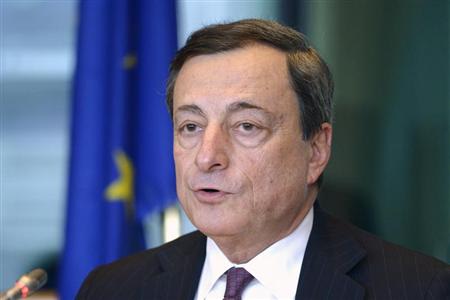
Introductory statement at the hearing of the Committee on Economic and Monetary Affairs of the European Parliament
Speech by Mario Draghi, President of the ECB, Brussels, 18 February 2013
Madam Chair,
Honourable members of the Committee on Economic and Monetary Affairs,
It is a pleasure to be back here in Parliament and in front of your Committee for our regular exchange of views.
We enter 2013 in a more stable financial environment than in recent years. This has been achieved through concerted reforms by governments and parliaments and decisive actions by European institutions. But considerable further efforts are needed to ensure that Europe continues emerging from the crisis, re-creates confidence among investors and citizens, and re-establishes stability and growth.
This house has a key role to play in the reform agenda. I am thinking in particular of the adoption of the legislation for the Single Supervisory Mechanism. This is of crucial importance for progress towards financial union.
Today, I will first review economic and monetary developments in the euro area since December. I will then address the two topics that you have selected for our discussion: the impact of a low interest rate environment; and the establishment of a Single Resolution Mechanism.
.
Economic and monetary developments
Since our last meeting, the Governing Council has left key ECB rates unchanged: the main refinancing rate currently stands at 0.75%; the rate on the deposit facility stands at 0%; and the rate on the marginal lending facility stands at 1.50%.
Economic activity contracted for a third consecutive quarter in the fourth quarter of 2012. Available indicators signal further weakness at the beginning of 2013, with domestic demand remaining dampened. This is due to weak consumer and investor sentiment and to the necessary balance sheet adjustments in both the public and private sectors. Foreign demand also remains subdued.
Economic weakness in the early part of 2013 is expected to be followed by a very gradual recovery later in the year. Strengthening global demand, our accommodative monetary policy stance and the improvement in financial market confidence across euro area countries should all work their way through to spending and investment decisions and support the recovery.
Even though we have yet to see sustained improvement in the real economy, survey indicators have confirmed earlier evidence of a stabilisation of business and consumer confidence, albeit at low levels. Taking a somewhat longer view, the improvement in financial market confidence since last summer has been significant. As regards the exchange rate, let me be clear that the exchange rate is not a policy target, but it is important for growth and price stability.
Another sign of improved confidence is the larger than expected early repayment by counterparties in the first of our two three-year longer-term refinancing operations settled in December 2011 and March 2012. This indicates that banks are less uncertain about their funding prospects than a year ago. We will closely monitor conditions in the money market and their potential impact on the stance of monetary policy, which will remain accommodative with the full allotment mode of liquidity provision.
The risks surrounding the economic outlook for the euro area continue to be on the downside. They relate to the possibility of weaker than expected domestic demand and exports, slow implementation of structural reforms in the euro area, as well as geopolitical issues and imbalances in major industrialised countries which could both have an impact on developments in global commodities and financial markets. These factors have the potential to dampen the ongoing improvement in confidence and thereby delay the recovery.
Annual inflation in the euro area has continued to moderate, falling from 2.5% in October to 2.2% in November and December and 2.0% in January, as we had foreseen. Inflation is expected to decline to below 2% in the near term.
Risks to the outlook for price developments continue to be seen as broadly balanced over the medium term, with upside risks relating to higher administered prices and indirect taxes, as well as higher oil prices, and downside risks stemming from weaker economic activity and, more recently, the appreciation of the euro exchange rate. Inflation expectations for the euro area remain firmly in line with the Governing Council’s aim of maintaining annual inflation rates below, but close to, 2%.
Our monetary analysis is consistent with price stability. The underlying pace of monetary expansion and loan dynamics remain subdued. The annual growth rate of loans to the private sector remains negative. To a large extent, subdued loan dynamics reflect the current stage of the business cycle, heightened credit risk and the continuing process of deleveraging.
Overall, inflationary pressures should remain contained over the policy-relevant horizon. Taking the evidence together, this allows our monetary policy stance to remain accommodative.
.
Economic and monetary developments
Since our last meeting, the Governing Council has left key ECB rates unchanged: the main refinancing rate currently stands at 0.75%; the rate on the deposit facility stands at 0%; and the rate on the marginal lending facility stands at 1.50%.
Economic activity contracted for a third consecutive quarter in the fourth quarter of 2012. Available indicators signal further weakness at the beginning of 2013, with domestic demand remaining dampened. This is due to weak consumer and investor sentiment and to the necessary balance sheet adjustments in both the public and private sectors. Foreign demand also remains subdued.
Economic weakness in the early part of 2013 is expected to be followed by a very gradual recovery later in the year. Strengthening global demand, our accommodative monetary policy stance and the improvement in financial market confidence across euro area countries should all work their way through to spending and investment decisions and support the recovery.
Even though we have yet to see sustained improvement in the real economy, survey indicators have confirmed earlier evidence of a stabilisation of business and consumer confidence, albeit at low levels. Taking a somewhat longer view, the improvement in financial market confidence since last summer has been significant. As regards the exchange rate, let me be clear that the exchange rate is not a policy target, but it is important for growth and price stability.
Another sign of improved confidence is the larger than expected early repayment by counterparties in the first of our two three-year longer-term refinancing operations settled in December 2011 and March 2012. This indicates that banks are less uncertain about their funding prospects than a year ago. We will closely monitor conditions in the money market and their potential impact on the stance of monetary policy, which will remain accommodative with the full allotment mode of liquidity provision.
The risks surrounding the economic outlook for the euro area continue to be on the downside. They relate to the possibility of weaker than expected domestic demand and exports, slow implementation of structural reforms in the euro area, as well as geopolitical issues and imbalances in major industrialised countries which could both have an impact on developments in global commodities and financial markets. These factors have the potential to dampen the ongoing improvement in confidence and thereby delay the recovery.
Annual inflation in the euro area has continued to moderate, falling from 2.5% in October to 2.2% in November and December and 2.0% in January, as we had foreseen. Inflation is expected to decline to below 2% in the near term.
Risks to the outlook for price developments continue to be seen as broadly balanced over the medium term, with upside risks relating to higher administered prices and indirect taxes, as well as higher oil prices, and downside risks stemming from weaker economic activity and, more recently, the appreciation of the euro exchange rate. Inflation expectations for the euro area remain firmly in line with the Governing Council’s aim of maintaining annual inflation rates below, but close to, 2%.
Our monetary analysis is consistent with price stability. The underlying pace of monetary expansion and loan dynamics remain subdued. The annual growth rate of loans to the private sector remains negative. To a large extent, subdued loan dynamics reflect the current stage of the business cycle, heightened credit risk and the continuing process of deleveraging.
Overall, inflationary pressures should remain contained over the policy-relevant horizon. Taking the evidence together, this allows our monetary policy stance to remain accommodative.
.
The impact of a low interest rate environment
Let me turn to the first topic that you have chosen for our meeting today, namely the implications of a low interest rate environment.
The impact of the global financial crisis on the economy and, potentially, on price developments has been unprecedented. We have taken unprecedented measures in response, aiming pre-emptively and forcefully to avert risks to price stability, in accordance with our primary mandate.
First, we have reduced our key interest rate to 0.75%, a level previously unseen in virtually all euro area countries. The interest rate in the overnight interbank market is now even lower, close to zero.
Second, we have acted to prevent an abrupt reduction in the supply of credit to the real economy. We have given banks unrestricted access to central bank funding in all our refinancing operations. We have extended significantly the average maturity of these operations. We have broadened the set of eligible collateral. This assurance of funding to banks has prevented disorderly deleveraging in the financial sector and averted a collapse in money and credit, with potentially severe implications for price stability, and thereby employment and growth.
All these decisions have ensured price stability and stabilised inflation expectations during an exceptional period.
Naturally, the ECB is aware of the challenges arising from a protracted period of low policy rates and ample liquidity. Let me elaborate on the three main challenges.
The first is that low interest rates may affect the ability of savers and investors to generate returns. This is especially the case for institutions targeting nominal returns, such as insurance companies and pension funds. Yet, by ensuring price stability throughout the crisis, monetary policy has contributed to more stable financial conditions. This is central to the interests of savers and investors: there can only be sustainable returns in a stable environment.
The second challenge relates to incentives. A protracted period of low interest rates and ample liquidity facilitates rolling-over loans at very low costs. Banks may therefore have less incentive to monitor credit risk properly and may provide too many loans to non-profitable business. Over time, such misallocation of financial resources would undermine overall productivity and depress growth and employment.
The third challenge is that protracted monetary accommodation may fuel bubbles in house prices and other asset markets. As the crisis has painfully demonstrated, the bursting of such bubbles inflicts large costs for the real economy.
In this context, a natural question is whether monetary policy should be used actively to contain asset price booms and bubbles – a response known as ‘leaning against the wind’. Thanks to our monetary policy strategy, implicitly we do this to some extent. We focus on the medium-term horizon and take account of monetary developments in assessing risks to price stability.
Having said that, let us be clear that changes in policy interest rates are normally not the first best instrument for addressing financial imbalances. They should be considered only under very special circumstances, for example when a widespread rise in asset prices threatens price stability in the euro area as a whole. In the absence of such imbalances relevant from a euro area perspective, the appropriate tools to counter imbalances in the financial sector and possible asset price misalignments are at the country level. To avoid the build-up of excessive risks in the financial system or housing markets, national authorities have appropriate tax and supervisory instruments at their disposal.
Let me turn to the first topic that you have chosen for our meeting today, namely the implications of a low interest rate environment.
The impact of the global financial crisis on the economy and, potentially, on price developments has been unprecedented. We have taken unprecedented measures in response, aiming pre-emptively and forcefully to avert risks to price stability, in accordance with our primary mandate.
First, we have reduced our key interest rate to 0.75%, a level previously unseen in virtually all euro area countries. The interest rate in the overnight interbank market is now even lower, close to zero.
Second, we have acted to prevent an abrupt reduction in the supply of credit to the real economy. We have given banks unrestricted access to central bank funding in all our refinancing operations. We have extended significantly the average maturity of these operations. We have broadened the set of eligible collateral. This assurance of funding to banks has prevented disorderly deleveraging in the financial sector and averted a collapse in money and credit, with potentially severe implications for price stability, and thereby employment and growth.
All these decisions have ensured price stability and stabilised inflation expectations during an exceptional period.
Naturally, the ECB is aware of the challenges arising from a protracted period of low policy rates and ample liquidity. Let me elaborate on the three main challenges.
The first is that low interest rates may affect the ability of savers and investors to generate returns. This is especially the case for institutions targeting nominal returns, such as insurance companies and pension funds. Yet, by ensuring price stability throughout the crisis, monetary policy has contributed to more stable financial conditions. This is central to the interests of savers and investors: there can only be sustainable returns in a stable environment.
The second challenge relates to incentives. A protracted period of low interest rates and ample liquidity facilitates rolling-over loans at very low costs. Banks may therefore have less incentive to monitor credit risk properly and may provide too many loans to non-profitable business. Over time, such misallocation of financial resources would undermine overall productivity and depress growth and employment.
The third challenge is that protracted monetary accommodation may fuel bubbles in house prices and other asset markets. As the crisis has painfully demonstrated, the bursting of such bubbles inflicts large costs for the real economy.
In this context, a natural question is whether monetary policy should be used actively to contain asset price booms and bubbles – a response known as ‘leaning against the wind’. Thanks to our monetary policy strategy, implicitly we do this to some extent. We focus on the medium-term horizon and take account of monetary developments in assessing risks to price stability.
Having said that, let us be clear that changes in policy interest rates are normally not the first best instrument for addressing financial imbalances. They should be considered only under very special circumstances, for example when a widespread rise in asset prices threatens price stability in the euro area as a whole. In the absence of such imbalances relevant from a euro area perspective, the appropriate tools to counter imbalances in the financial sector and possible asset price misalignments are at the country level. To avoid the build-up of excessive risks in the financial system or housing markets, national authorities have appropriate tax and supervisory instruments at their disposal.
.
The establishment of a Single Resolution Mechanism
Let me turn to your second chosen topic, the establishment of a Single Resolution Mechanism.
The Single Resolution Mechanism should be centred in a Single Resolution Authority with a European Resolution Fund at its disposal. I welcome the European Council’s December statement that during the course of 2013, the Commission will submit a proposal for such a mechanism for Member States that are participating in the Single Supervisory Mechanism.
The ECB shares the European Council’s view on timing for the Single Resolution Mechanism, namely that it will be required once bank supervision is effectively moved to the Single Supervisory Mechanism. We therefore welcome the European Council urging the co-legislators to examine the proposal as a matter of priority with the intention of adopting it during the current parliamentary cycle.
There are four main reasons for a Single Resolution Mechanism, with a Single Resolution Authority at its centre.
The first reason is that only a Single Resolution Authority will ensure timely and impartial decision-making focused on the European dimension. In a situation where a cross-border resolution is required, the Single Resolution Authority would avoid national focus and pursue the optimal resolution strategy, thus mitigating coordination problems.
The second reason is that the Single Resolution Authority would credibly pursue the least cost resolution strategy, assessing possible cross-border spillover effects and systemic concerns, and ensuring that resolution costs are first and foremost borne by the private sector. It would thereby minimise resolution costs without recourse to taxpayer money.
The third reason is that the Single Resolution Authority is an essential complement to the Single Supervisory Mechanism. The Single Supervisory Mechanism will provide a timely and unbiased assessment of the need for resolution, while the Single Resolution Authority will ensure prompt and efficient action once the trigger is reached. This will avoid misaligned incentives that could arise with supervision moved to the European level while resolution responsibility remained national.
The fourth reason is that a Single Resolution Authority would help to break the vicious bank-sovereign nexus.
The Single Resolution Authority naturally needs to be strong and effective to deliver what is needed. This requires three features to be fulfilled:
First, the Single Resolution Authority needs to dispose of a robust resolution framework, one that provides it with enforceable resolution tools and powers. In this respect, the proposed bank recovery and resolution directive is key. Adoption of the directive, ideally by June, is an urgently needed step towards a strong European resolution framework.
Second, the Single Resolution Authority needs access to resolution financing. It should therefore have a European Resolution Fund at its disposal, which should be financed by the private sector via risk-based ex ante levies. The European Resolution Fund should be backed by a public backstop mechanism, the support of which would need to be recouped via special ex post levies on the private sector. This means that it would be fiscally neutral over the medium term.
Third, the Single Resolution Authority should have an institutional set-up that allows for independence, sufficient operational capacity and a robust accountability framework with effective judicial protection against resolution decisions ex post.
The Commission is currently assessing the options for the institutional anchoring of the Single Resolution Authority. I am looking forward to its proposal, which will need to ensure these three essential features.
Thank you for your attention. I am now at your disposal for questions.
European Central Bank
Directorate General Communications and Language Services
Press and Information Division
Kaiserstrasse 29, D-60311 Frankfurt am Main
Tel.: +49 69 1344 7455, Fax: +49 69 1344 7404
Internet: http://www.ecb.europa.eu
Reproduction is permitted provided that the source is acknowledged.
Let me turn to your second chosen topic, the establishment of a Single Resolution Mechanism.
The Single Resolution Mechanism should be centred in a Single Resolution Authority with a European Resolution Fund at its disposal. I welcome the European Council’s December statement that during the course of 2013, the Commission will submit a proposal for such a mechanism for Member States that are participating in the Single Supervisory Mechanism.
The ECB shares the European Council’s view on timing for the Single Resolution Mechanism, namely that it will be required once bank supervision is effectively moved to the Single Supervisory Mechanism. We therefore welcome the European Council urging the co-legislators to examine the proposal as a matter of priority with the intention of adopting it during the current parliamentary cycle.
There are four main reasons for a Single Resolution Mechanism, with a Single Resolution Authority at its centre.
The first reason is that only a Single Resolution Authority will ensure timely and impartial decision-making focused on the European dimension. In a situation where a cross-border resolution is required, the Single Resolution Authority would avoid national focus and pursue the optimal resolution strategy, thus mitigating coordination problems.
The second reason is that the Single Resolution Authority would credibly pursue the least cost resolution strategy, assessing possible cross-border spillover effects and systemic concerns, and ensuring that resolution costs are first and foremost borne by the private sector. It would thereby minimise resolution costs without recourse to taxpayer money.
The third reason is that the Single Resolution Authority is an essential complement to the Single Supervisory Mechanism. The Single Supervisory Mechanism will provide a timely and unbiased assessment of the need for resolution, while the Single Resolution Authority will ensure prompt and efficient action once the trigger is reached. This will avoid misaligned incentives that could arise with supervision moved to the European level while resolution responsibility remained national.
The fourth reason is that a Single Resolution Authority would help to break the vicious bank-sovereign nexus.
The Single Resolution Authority naturally needs to be strong and effective to deliver what is needed. This requires three features to be fulfilled:
First, the Single Resolution Authority needs to dispose of a robust resolution framework, one that provides it with enforceable resolution tools and powers. In this respect, the proposed bank recovery and resolution directive is key. Adoption of the directive, ideally by June, is an urgently needed step towards a strong European resolution framework.
Second, the Single Resolution Authority needs access to resolution financing. It should therefore have a European Resolution Fund at its disposal, which should be financed by the private sector via risk-based ex ante levies. The European Resolution Fund should be backed by a public backstop mechanism, the support of which would need to be recouped via special ex post levies on the private sector. This means that it would be fiscally neutral over the medium term.
Third, the Single Resolution Authority should have an institutional set-up that allows for independence, sufficient operational capacity and a robust accountability framework with effective judicial protection against resolution decisions ex post.
The Commission is currently assessing the options for the institutional anchoring of the Single Resolution Authority. I am looking forward to its proposal, which will need to ensure these three essential features.
Thank you for your attention. I am now at your disposal for questions.
European Central Bank
Directorate General Communications and Language Services
Press and Information Division
Kaiserstrasse 29, D-60311 Frankfurt am Main
Tel.: +49 69 1344 7455, Fax: +49 69 1344 7404
Internet: http://www.ecb.europa.eu
Reproduction is permitted provided that the source is acknowledged.
.
Subscribe to:
Posts (Atom)