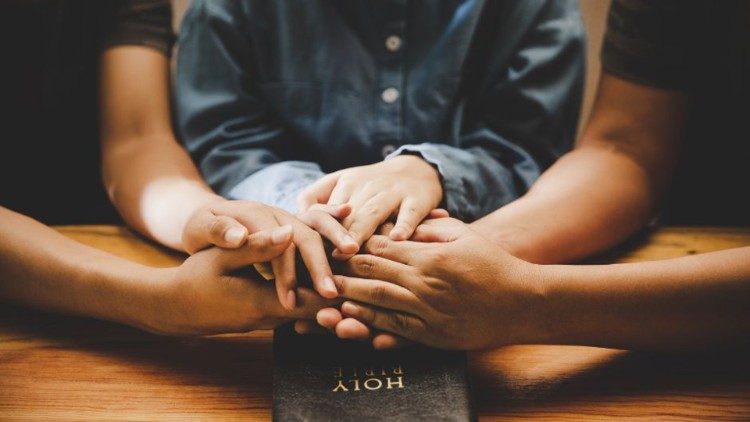
The Week of Prayer for Christian Unity 2026
Church
Church
During the week dedicated to praying for Christian unity, the director of the Ecumenical Department of the Mother of Holy Mary in the Armenian Apostolic Church speaks about how true unity means "there is no sense of inferiority."
By Augustine Asta and Kielce Gussie
One hundred and eighteen years ago, the founder of an Anglican religious community, who eventually entered the Catholic Church, introduced the practice of the Week of Prayer for Christian Unity. Fr. Paul Wattson launched this initiative, which was blessed by Pope St. Pius X a year later.
For this 2026 edition of the Week of Prayer for Christian Unity, the material was created by the Armenian Apostolic Church, together with local Churches in the country.
In an interview with Vatican News’ Augustine Asta, the director of the Ecumenical Department of the Mother of Holy Mary in the Armenian Apostolic Church, Fr. Garegin Hambardzumyan, stressed how this is the time to “return to what is essential.”
Back to the basics
The essence of this week, Fr. Hambardzumyan noted, is “praying together and listening together to the word of God and remembering in general that we belong to one body of Christ.”
However, the director emphasized that this does not mean there is no room for diversity. Rather, it can contribute to unity.
For example, he looked at the Armenian and the various other Christian Churches, which have their own Christian identity “so immersed in their national background.”

Week of Prayer for Christian Unity
Yet, at the same time, Fr. Hambardzumyan highlighted, the global Christian community can contribute from each of the different Churches.
Preseverance through trial
Looking at the history of Armenia, the director explained it can teach how “unity is strengthened through trial.” In this context, Fr. Hambardzumyan described the Christian Church in Armenia as one that has learned how to persevere through faith, hope, and communion.
“That kind of perseverance,” he said, “can contribute to the worldwide community of Christians. We believe that a common Christian witness is essential.”
Fr. Hambardzumyan explained that this common witness is especially needed in today’s world, which is marred by conflict, injustice, and the loss of the meaning of life for so many.

Armenian Apostolic Church (AFP or licensors)
Coming together as Christians in prayer can help many people find meaning and purpose.
What exactly does unity mean?
“Unity,” the priest noted, “does mean supporting one another, and there is no sense of subordination. There is no sense of inferiority.” Christian unity can occur among equal Christians, who support each other.
But this type of unity can only occur through a commitment—one that Fr. Hambardzumyan called “not optional.”
Initiatives for unity
In this week dedicated to prayer and unity, the priest argued one of the priorities should be a fraternal loving cooperation with different organizations such as the World Council of Churches, the Roman Catholic Church, and other Christian communities.
He stressed that this does not mean “trying to establish some kind of uniformity which goes against the understanding of every Christian Church.” The goal should not be to eliminate or ignore the unique features of the individual Churches.
Listen to Fr. Garegin Hambardzumyan
Rather, Fr. Hambardzumyan highlighted how the priority should be “to remain, and strengthen the fraternal, loving spirit of cooperation among Churches, specifically taking into consideration the challenges of the modern world.”
Initiatives like the Week of Prayer for Christian Unity offer a chance for Churches to come together and grow.
“It was so comforting to see how fellow Christian brothers and sisters were united in prayer of one tradition—that is, at times unknown to them—but yet there is so much profound feeling and spirituality that unites and binds them all as one Church, as one Church of Christ.”


No comments:
Post a Comment