Wednesday, January 11, 2023


Tuesday, January 10, 2023
How to avoid another world war
Magazine: 17 December 2022
From magazine issue:17 December 2022
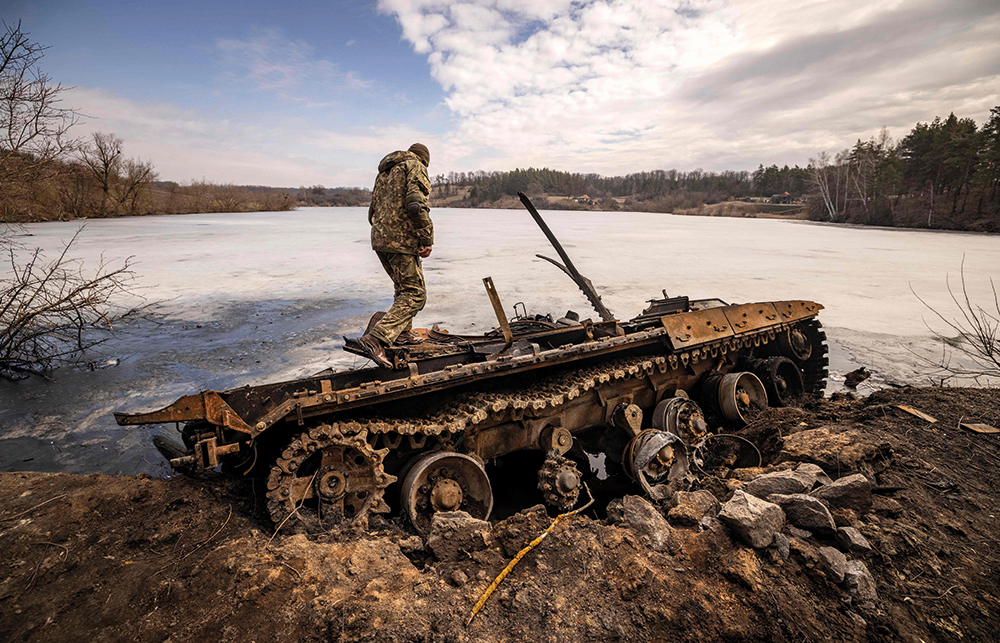
A Ukrainian soldier inspects the shell of a tank in the north-eastern city of Trostyanets [Fadel Senna, AFP via Getty Images]
The first world war was a kind of cultural suicide that destroyed Europe’s eminence. Europe’s leaders sleepwalked – in the phrase of historian Christopher Clark – into a conflict which none of them would have entered had they foreseen the world at war’s end in 1918. In the previous decades, they had expressed their rivalries by creating two sets of alliances whose strategies had become linked by their respective schedules for mobilisation. As a result, in 1914, the murder of the Austrian Crown Prince in Sarajevo, Bosnia by a Serb nationalist was allowed to escalate into a general war that began when Germany executed its all-purpose plan to defeat France by attacking neutral Belgium at the other end of Europe.
The nations of Europe, insufficiently familiar with how technology had enhanced their respective military forces, proceeded to inflict unprecedented devastation on one another. In August 1916, after two years of war and millions in casualties, the principal combatants in the West (Britain, France and Germany) began to explore prospects for ending the carnage. In the East, rivals Austria and Russia had extended comparable feelers. Because no conceivable compromise could justify the sacrifices already incurred and because no one wanted to convey an impression of weakness, the various leaders hesitated to initiate a formal peace process. Hence they sought American mediation. Explorations by Colonel Edward House, President Woodrow Wilson’s personal emissary, revealed that a peace based on the modified status quo ante was within reach. However, Wilson, while willing and eventually eager to undertake mediation, delayed until after the presidential election in November. By then the British Somme offensive and the German Verdun offensive had added another two million casualties.
The first world war was a kind of cultural suicide that destroyed Europe’s eminence. Europe’s leaders sleepwalked – in the phrase of historian Christopher Clark – into a conflict which none of them would have entered had they foreseen the world at war’s end in 1918. In the previous decades, they had expressed their rivalries by creating two sets of alliances whose strategies had become linked by their respective schedules for mobilisation. As a result, in 1914, the murder of the Austrian Crown Prince in Sarajevo, Bosnia by a Serb nationalist was allowed to escalate into a general war that began when Germany executed its all-purpose plan to defeat France by attacking neutral Belgium at the other end of Europe.
The nations of Europe, insufficiently familiar with how technology had enhanced their respective military forces, proceeded to inflict unprecedented devastation on one another. In August 1916, after two years of war and millions in casualties, the principal combatants in the West (Britain, France and Germany) began to explore prospects for ending the carnage. In the East, rivals Austria and Russia had extended comparable feelers. Because no conceivable compromise could justify the sacrifices already incurred and because no one wanted to convey an impression of weakness, the various leaders hesitated to initiate a formal peace process. Hence they sought American mediation. Explorations by Colonel Edward House, President Woodrow Wilson’s personal emissary, revealed that a peace based on the modified status quo ante was within reach. However, Wilson, while willing and eventually eager to undertake mediation, delayed until after the presidential election in November. By then the British Somme offensive and the German Verdun offensive had added another two million casualties.
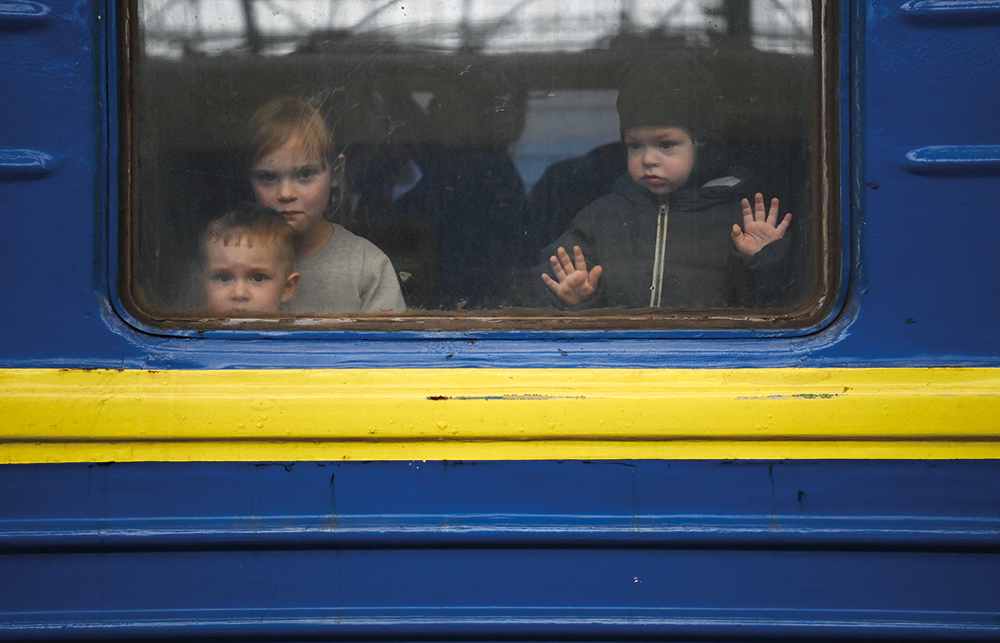
Child refugees prepare to leave embattled Lviv by train [Getty Images]
Monday, January 09, 2023
Sunday, January 08, 2023
Saturday, January 07, 2023
Friday, January 06, 2023
VICTOR DAVIS HANSON: The Coup We Never Knew
OPINION
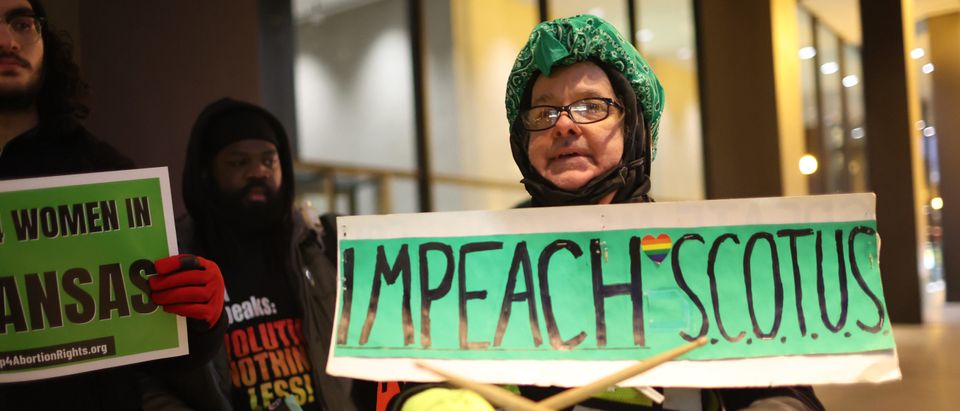
Scott Olson/Getty Images/TNS
VICTOR DAVIS HANSON
CONTRIBUTORJanuary 05, 2023
9:15 :
Did someone or something seize control of the United States?
What happened to the U.S. border? Where did it go? Who erased it? Why and how did 5 million people enter our country illegally? Did Congress secretly repeal our immigration laws? Did President Joe Biden issue an executive order allowing foreign nationals to walk across the border and reside in the United States as they pleased?
Since when did money not have to be paid back? Who insisted that the more dollars the federal government printed, the more prosperity would follow? When did America embrace zero interest? Why do we believe $30 trillion in debt is no big deal?
When did clean-burning, cheap, and abundant natural gas become the equivalent to dirty coal? How did prized natural gas that had granted America’s wishes of energy self-sufficiency, reduced pollution, and inexpensive electricity become almost overnight a pariah fuel whose extraction was a war against nature? Which lawmakers, which laws, which votes of the people declared natural gas development and pipelines near-criminal?
Was it not against federal law to swarm the homes of Supreme Court justices, to picket and to intimidate their households in efforts to affect their rulings? How then with impunity did bullies surround the homes of Justices Brett Kavanaugh, Samuel Alito, Amy Coney Barrett, Neil Gorsuch, John Roberts, and Clarence Thomas – furious over a court decision on abortion? How could these mobs so easily throng our justices’ homes, with placards declaring “Off with their d—s”?
Since when did Americans create a government Ministry of Truth? And on whose orders did the FBI contract private news organizations to censor stories it did not like and writers whom it feared?
How did we wake up one morning to new customs of impeaching a president over a phone call? Of the speaker of the House tearing up the State of the Union address on national television? Of barring congressional members from serving on their assigned congressional committees?
When did we assume the FBI had the right to subvert the campaign of a candidate it disliked? Was it legal suddenly for one presidential candidate to hire a foreign ex-spy to subvert the campaign of her rival?
Was some state or federal law passed that allowed biological males to compete in female sports? Did Congress enact such a law? Did the Supreme Court guarantee that biological male students could shower in gym locker rooms with biological women? Were women ever asked to redefine the very sports they had championed?
When did the government pass a law depriving Americans of their freedom during a pandemic? In America can health officials simply cancel rental contracts or declare loan payments in suspension? How could it become illegal for mom-and-pop stores to sell flowers or shoes during a quarantine but not so for Walmart or Target?
Since when did the people decide that 70 percent of voters would not cast their ballots on Election Day? Was this revolutionary change the subject of a national debate, a heated congressional session, or the votes of dozens of state legislatures?
What happened to Election Night returns? Did the fact that Americans created more electronic ballots and computerized tallies make it take so much longer to tabulate the votes?
When did the nation abruptly decide that theft is not a crime, assault not a felony? How can thieves walk out with bags of stolen goods, without the wrath of angry shoppers, much less fear of the law?
Was there ever a national debate about the terrified flight from Afghanistan? Who planned it and why?
What happened to the once-trusted FBI? Why almost overnight did its directors decide to mislead Congress, to deceive judges with concocted tales from fake dossiers and with doctored writs? Did Congress pass a law that our federal leaders in the FBI or CIA could lie with impunity under oath?
Who redefined our military and with whose consent? Who proclaimed that our chairman of the Joint Chiefs of Staff could call his Chinese Communist counterpart to warn him that America’s president was supposedly unstable? Was it always true that retired generals routinely libeled their commander-in-chief as a near Nazi, a Mussolini, an adherent of the tools of Auschwitz?
Were Americans ever asked whether their universities could discriminate against their sons and daughters based on their race? How did it become physically dangerous to speak the truth on a campus? Whose idea was it to reboot racial segregation and bias as “theme houses,” “safe spaces,” and “diversity”? How did that happen in America?
How did a virus cancel the Constitution? Did the lockdowns rob us of our sanity? Or was it the woke hysteria that ignited our collective madness?
We are beginning to wake up from a nightmare to a country we no longer recognize, and from a coup we never knew.
Victor Davis Hanson is a distinguished fellow of the Center for American Greatness. He is a classicist and historian at the Hoover Institution, Stanford University, and the author of “The Second World Wars: How the First Global Conflict Was Fought and Won,” from Basic Books. You can reach him by e-mailing authorvdh@gmail.com.
The views and opinions expressed in this commentary are those of the author and do not reflect the official position of the Daily Caller.
Did someone or something seize control of the United States?
What happened to the U.S. border? Where did it go? Who erased it? Why and how did 5 million people enter our country illegally? Did Congress secretly repeal our immigration laws? Did President Joe Biden issue an executive order allowing foreign nationals to walk across the border and reside in the United States as they pleased?
Since when did money not have to be paid back? Who insisted that the more dollars the federal government printed, the more prosperity would follow? When did America embrace zero interest? Why do we believe $30 trillion in debt is no big deal?
When did clean-burning, cheap, and abundant natural gas become the equivalent to dirty coal? How did prized natural gas that had granted America’s wishes of energy self-sufficiency, reduced pollution, and inexpensive electricity become almost overnight a pariah fuel whose extraction was a war against nature? Which lawmakers, which laws, which votes of the people declared natural gas development and pipelines near-criminal?
Was it not against federal law to swarm the homes of Supreme Court justices, to picket and to intimidate their households in efforts to affect their rulings? How then with impunity did bullies surround the homes of Justices Brett Kavanaugh, Samuel Alito, Amy Coney Barrett, Neil Gorsuch, John Roberts, and Clarence Thomas – furious over a court decision on abortion? How could these mobs so easily throng our justices’ homes, with placards declaring “Off with their d—s”?
Since when did Americans create a government Ministry of Truth? And on whose orders did the FBI contract private news organizations to censor stories it did not like and writers whom it feared?
How did we wake up one morning to new customs of impeaching a president over a phone call? Of the speaker of the House tearing up the State of the Union address on national television? Of barring congressional members from serving on their assigned congressional committees?
When did we assume the FBI had the right to subvert the campaign of a candidate it disliked? Was it legal suddenly for one presidential candidate to hire a foreign ex-spy to subvert the campaign of her rival?
Was some state or federal law passed that allowed biological males to compete in female sports? Did Congress enact such a law? Did the Supreme Court guarantee that biological male students could shower in gym locker rooms with biological women? Were women ever asked to redefine the very sports they had championed?
When did the government pass a law depriving Americans of their freedom during a pandemic? In America can health officials simply cancel rental contracts or declare loan payments in suspension? How could it become illegal for mom-and-pop stores to sell flowers or shoes during a quarantine but not so for Walmart or Target?
Since when did the people decide that 70 percent of voters would not cast their ballots on Election Day? Was this revolutionary change the subject of a national debate, a heated congressional session, or the votes of dozens of state legislatures?
What happened to Election Night returns? Did the fact that Americans created more electronic ballots and computerized tallies make it take so much longer to tabulate the votes?
When did the nation abruptly decide that theft is not a crime, assault not a felony? How can thieves walk out with bags of stolen goods, without the wrath of angry shoppers, much less fear of the law?
Was there ever a national debate about the terrified flight from Afghanistan? Who planned it and why?
What happened to the once-trusted FBI? Why almost overnight did its directors decide to mislead Congress, to deceive judges with concocted tales from fake dossiers and with doctored writs? Did Congress pass a law that our federal leaders in the FBI or CIA could lie with impunity under oath?
Who redefined our military and with whose consent? Who proclaimed that our chairman of the Joint Chiefs of Staff could call his Chinese Communist counterpart to warn him that America’s president was supposedly unstable? Was it always true that retired generals routinely libeled their commander-in-chief as a near Nazi, a Mussolini, an adherent of the tools of Auschwitz?
Were Americans ever asked whether their universities could discriminate against their sons and daughters based on their race? How did it become physically dangerous to speak the truth on a campus? Whose idea was it to reboot racial segregation and bias as “theme houses,” “safe spaces,” and “diversity”? How did that happen in America?
How did a virus cancel the Constitution? Did the lockdowns rob us of our sanity? Or was it the woke hysteria that ignited our collective madness?
We are beginning to wake up from a nightmare to a country we no longer recognize, and from a coup we never knew.
Victor Davis Hanson is a distinguished fellow of the Center for American Greatness. He is a classicist and historian at the Hoover Institution, Stanford University, and the author of “The Second World Wars: How the First Global Conflict Was Fought and Won,” from Basic Books. You can reach him by e-mailing authorvdh@gmail.com.
The views and opinions expressed in this commentary are those of the author and do not reflect the official position of the Daily Caller.
Biden Admin Finally Admits Canceling Keystone Killed Tens of Thousands of Jobs, Billions In Revenue
BRITTANY M. HUGHES | JANUARY 5, 2023
The Biden administration is finally fessing up to slaughtering tens of thousands of jobs and costing the economy billions in a quietly-released December report that no one noticed amid Congress passing trillion-dollar-plus spending bills that lavished millions on things like wax museums and hiking trails.
While Americans were wrapping up their Christmas shopping and taking out loans to buy eggs and butter for their holiday cookies, Biden’s Department of Energy released, without any fanfare at all, a report that acknowledged the Keystone XL Pipeline, a Trump-greenlit project canceled by President Joe Biden on his first day in office, would have created nearly 60,000 jobs and added almost $10 billion to the economy.
And that’s to say nothing about the individual impact on average Americans’ wallets thanks to what would have been increased energy independence.
Related: Killing Keystone: How Biden & The Left Destroyed American Energy Independence
According to the report, which was finally pointed out by Montana Sen. Steve Daines, the Canada-to-U.S. pipeline funneling crude oil would have created up to 59,000 jobs and added $9.6 billion to the economy. As it was, about 11,000 current and planned jobs were lost when Biden caved to green-agenda hemp chewers and nixed the project in January of 2021. Had it not been canceled, the pipeline would have been completed by the beginning of this year and would have funneled about 830,000 barrels of Canadian crude oil to refineries in the U.S.
In the meantime, gas hit between $5 and $7 a gallon - and even higher in some states - last year before finally falling to more manageable prices, though the cost of goods and services remains high and inflation hovers about 7%.
The Biden administration is finally fessing up to slaughtering tens of thousands of jobs and costing the economy billions in a quietly-released December report that no one noticed amid Congress passing trillion-dollar-plus spending bills that lavished millions on things like wax museums and hiking trails.
While Americans were wrapping up their Christmas shopping and taking out loans to buy eggs and butter for their holiday cookies, Biden’s Department of Energy released, without any fanfare at all, a report that acknowledged the Keystone XL Pipeline, a Trump-greenlit project canceled by President Joe Biden on his first day in office, would have created nearly 60,000 jobs and added almost $10 billion to the economy.
And that’s to say nothing about the individual impact on average Americans’ wallets thanks to what would have been increased energy independence.
Related: Killing Keystone: How Biden & The Left Destroyed American Energy Independence
According to the report, which was finally pointed out by Montana Sen. Steve Daines, the Canada-to-U.S. pipeline funneling crude oil would have created up to 59,000 jobs and added $9.6 billion to the economy. As it was, about 11,000 current and planned jobs were lost when Biden caved to green-agenda hemp chewers and nixed the project in January of 2021. Had it not been canceled, the pipeline would have been completed by the beginning of this year and would have funneled about 830,000 barrels of Canadian crude oil to refineries in the U.S.
In the meantime, gas hit between $5 and $7 a gallon - and even higher in some states - last year before finally falling to more manageable prices, though the cost of goods and services remains high and inflation hovers about 7%.
Survey: Religiously, Congress doesn’t reflect America
By PETER SMITH
January 4, 2023
Religiously speaking, the incoming 118th Congress looks like America — that is, the America of decades past, rather than today.
Congress is far more Christian, and religious overall, than today’s general population.
Even though nearly three in 10 Americans claim no religious affiliation — a rate that has steadily risen in recent years — only two of the 534 incoming members of Congress publicly identify as such.
Those are among the conclusions of an analysis by Pew Research Center of the 118th Congress, which was expected to start this week pending a House leadership vote.
The Congress “remains largely untouched by two trends that have long marked religious life in the United States: a decades-long decline in the share of Americans who identify as Christian, and a corresponding increase in the percentage who say they have no religious affiliation,” said the Pew report, released Tuesday. It was based on a CQ Roll Call survey of members of Congress.
Nearly 88% of members of Congress identify as Christian, compared with only 63% of U.S. adults overall. That includes 57% of congresspersons who identify as Protestant and 28% as Catholic, both higher than national rates. Also, 6% of members of Congress identify as Jewish, compared with 2% of the overall population.
While 29% Americans claim no religious affiliation, they’d have to squint to see themselves reflected in Congress. The only overtly non-religious members are U.S. Rep. Jared Huffman, D-Calif., who identifies as humanist, and Sen. Kyrsten Sinema, independent of Arizona, who says she’s religiously unaffiliated.
Pew listed 20 other members of Congress as having unknown religious affiliations, either because they declined to answer CQ Roll Call’s query or because the answers are otherwise muddled (such as in the case of New York Republican George Santos, along with much else in his background).
Historically, lacking a religious identity was seen as a political liability.
Only 60% of Americans told a Gallup survey in 2019 that they’d be willing to vote for an atheist — fewer than would vote for gays or lesbians or various religious or ethnic groups.
But Huffman said he experienced no political blowback.
“If anything, there’s a political upside,” he said. “People appreciate the fact that I’m just being honest.”
He said many colleagues in Congress find religion to be politically useful, “particularly across the aisle, how so many of them exploit and weaponize religion but seem to be totally divorced from any authentic connection to the religion they’re weaponizing.”
The ranks of Christians in Congress has dipped only slightly over the decades, though it’s a different story with the general population. Since 2007, Christians have gone from 78% to 63% of the population, while the non-affiliated rose from 16% to 29%, according to Pew. The trend line is even more dramatic when looking back to 1990, when nearly nine in 10 Americans identified as Christian, while less than one in 10 identified as non-religious, according to researchers at Trinity College in Connecticut.
In some ways, the two political parties conform to perception.
The Republican congressional delegation is a staggering 99% Christian, with the rest Jewish or unknown. Republicans — who have long embraced Christian expressions in their political functions and where an aggressive form of Christian nationalism has become more mainstream — include 69% Protestants, 25% Catholics and 5% other Christians (such as Mormon and Orthodox).
Democrats have more religious diversity, at about 76% Christian (including 44% Protestant, 31% Catholic and 1.5% Orthodox) and 12% Jewish. They have about 1% each of Buddhist, Hindu, Muslim and Unitarian Universalist representation.
But Democrats’ paucity of openly non-affiliated members contrasts starkly with a constituency to which it owes much.
Religiously unaffiliated voters opted overwhelmingly for Democrats candidates in the 2022 midterms. They voted for Democrats over Republicans by more than a 2 to 1 margin in House races, according to AP VoteCast, an expansive survey of more than 94,000 voters nationwide. And in some bellwether races, the unaffiliated went as high as 4 to 1 for Democrats.
“The fact that the (Democratic) leadership doesn’t reflect an open, secular identity is paradoxical, but I think it’s the nature of realpolitik,” said Phil Zuckerman, professor of sociology and secular studies at Pitzer College in Claremont, California. He said Democrats know that non-religious voters align with them on the issues, but party leaders also don’t want to alienate other, more religious parts of the party’s base, particularly Black Protestants.
Party leaders “speak to the politics of secular people but don’t want to take on the identity,” he said.
Zuckerman added that conservative Christians face the “branding problem” similar to what atheists once faced. Many voters, he said, have reacted against Christian nationalism, and young voters in particular are alienated by conservative Christian stances against LGBTQ people, while many voters of all ages have reacted against Christian nationalism.
He cited a prominent incident in 2020 when authorities forcibly cleared Black Lives Matter protesters in Lafayette Park in Washington, after which President Donald Trump walked to a nearby church and held up a Bible.
“When Trump held up that Bible in front of that church in D.C., he did more damage to the Christian brand than Hitchens and Dawkins and Harris combined,” Zuckerman said, referring to popular atheist authors.
In 2018, Huffman helped found the Congressional Freethought Caucus. It had a roster of about 15 members in the previous Congress.
“It’s people of different religious perspectives, but what brings us together is a common belief that there should be a bright line of separation between church and state and that we should make public policy based on facts and reason and science, and not religion,” he said.
He predicted that in time, more members of Congress would identify with secular values.
“It’s going to be a trailing reflection of this change that has been happening for a couple of decades now,” he said. ”It takes a while for politicians to figure out that it’s OK to do things like this.”
The Pew report analyzed one short of Congress’ capacity of 535 because one member, Rep. A. Donald McEachin, D-Va., died in November after being re-elected.
___
Associated Press religion coverage receives support through the AP’s collaboration with The Conversation US, with funding from Lilly Endowment Inc. The AP is solely responsible for this content.
Religiously speaking, the incoming 118th Congress looks like America — that is, the America of decades past, rather than today.
Congress is far more Christian, and religious overall, than today’s general population.
Even though nearly three in 10 Americans claim no religious affiliation — a rate that has steadily risen in recent years — only two of the 534 incoming members of Congress publicly identify as such.
Those are among the conclusions of an analysis by Pew Research Center of the 118th Congress, which was expected to start this week pending a House leadership vote.
The Congress “remains largely untouched by two trends that have long marked religious life in the United States: a decades-long decline in the share of Americans who identify as Christian, and a corresponding increase in the percentage who say they have no religious affiliation,” said the Pew report, released Tuesday. It was based on a CQ Roll Call survey of members of Congress.
Nearly 88% of members of Congress identify as Christian, compared with only 63% of U.S. adults overall. That includes 57% of congresspersons who identify as Protestant and 28% as Catholic, both higher than national rates. Also, 6% of members of Congress identify as Jewish, compared with 2% of the overall population.
While 29% Americans claim no religious affiliation, they’d have to squint to see themselves reflected in Congress. The only overtly non-religious members are U.S. Rep. Jared Huffman, D-Calif., who identifies as humanist, and Sen. Kyrsten Sinema, independent of Arizona, who says she’s religiously unaffiliated.
Pew listed 20 other members of Congress as having unknown religious affiliations, either because they declined to answer CQ Roll Call’s query or because the answers are otherwise muddled (such as in the case of New York Republican George Santos, along with much else in his background).
Historically, lacking a religious identity was seen as a political liability.
Only 60% of Americans told a Gallup survey in 2019 that they’d be willing to vote for an atheist — fewer than would vote for gays or lesbians or various religious or ethnic groups.
But Huffman said he experienced no political blowback.
“If anything, there’s a political upside,” he said. “People appreciate the fact that I’m just being honest.”
He said many colleagues in Congress find religion to be politically useful, “particularly across the aisle, how so many of them exploit and weaponize religion but seem to be totally divorced from any authentic connection to the religion they’re weaponizing.”
The ranks of Christians in Congress has dipped only slightly over the decades, though it’s a different story with the general population. Since 2007, Christians have gone from 78% to 63% of the population, while the non-affiliated rose from 16% to 29%, according to Pew. The trend line is even more dramatic when looking back to 1990, when nearly nine in 10 Americans identified as Christian, while less than one in 10 identified as non-religious, according to researchers at Trinity College in Connecticut.
In some ways, the two political parties conform to perception.
The Republican congressional delegation is a staggering 99% Christian, with the rest Jewish or unknown. Republicans — who have long embraced Christian expressions in their political functions and where an aggressive form of Christian nationalism has become more mainstream — include 69% Protestants, 25% Catholics and 5% other Christians (such as Mormon and Orthodox).
Democrats have more religious diversity, at about 76% Christian (including 44% Protestant, 31% Catholic and 1.5% Orthodox) and 12% Jewish. They have about 1% each of Buddhist, Hindu, Muslim and Unitarian Universalist representation.
But Democrats’ paucity of openly non-affiliated members contrasts starkly with a constituency to which it owes much.
Religiously unaffiliated voters opted overwhelmingly for Democrats candidates in the 2022 midterms. They voted for Democrats over Republicans by more than a 2 to 1 margin in House races, according to AP VoteCast, an expansive survey of more than 94,000 voters nationwide. And in some bellwether races, the unaffiliated went as high as 4 to 1 for Democrats.
“The fact that the (Democratic) leadership doesn’t reflect an open, secular identity is paradoxical, but I think it’s the nature of realpolitik,” said Phil Zuckerman, professor of sociology and secular studies at Pitzer College in Claremont, California. He said Democrats know that non-religious voters align with them on the issues, but party leaders also don’t want to alienate other, more religious parts of the party’s base, particularly Black Protestants.
Party leaders “speak to the politics of secular people but don’t want to take on the identity,” he said.
Zuckerman added that conservative Christians face the “branding problem” similar to what atheists once faced. Many voters, he said, have reacted against Christian nationalism, and young voters in particular are alienated by conservative Christian stances against LGBTQ people, while many voters of all ages have reacted against Christian nationalism.
He cited a prominent incident in 2020 when authorities forcibly cleared Black Lives Matter protesters in Lafayette Park in Washington, after which President Donald Trump walked to a nearby church and held up a Bible.
“When Trump held up that Bible in front of that church in D.C., he did more damage to the Christian brand than Hitchens and Dawkins and Harris combined,” Zuckerman said, referring to popular atheist authors.
In 2018, Huffman helped found the Congressional Freethought Caucus. It had a roster of about 15 members in the previous Congress.
“It’s people of different religious perspectives, but what brings us together is a common belief that there should be a bright line of separation between church and state and that we should make public policy based on facts and reason and science, and not religion,” he said.
He predicted that in time, more members of Congress would identify with secular values.
“It’s going to be a trailing reflection of this change that has been happening for a couple of decades now,” he said. ”It takes a while for politicians to figure out that it’s OK to do things like this.”
The Pew report analyzed one short of Congress’ capacity of 535 because one member, Rep. A. Donald McEachin, D-Va., died in November after being re-elected.
___
Associated Press religion coverage receives support through the AP’s collaboration with The Conversation US, with funding from Lilly Endowment Inc. The AP is solely responsible for this content.
Thursday, January 05, 2023
Wednesday, January 04, 2023
Enduring Unto The End

Volume 42 Issue One January 2023
Last Trumpet Ministries · PO Box 806 · Beaver Dam, WI 53916
Phone: 920-887-2626 Internet: http://www.lasttrumpetministries.org
“For if the trumpet give an uncertain sound, who shall prepare himself to the battle?” I Cor. 14:8
Enduring Unto The End
“But he that shall endure unto the end, the same shall be saved.”
Matthew 24:13
“Behold, we count them happy which endure. Ye have heard of the patience of Job, and have seen the end of the Lord; that the Lord is very pitiful, and of tender mercy.”
James 5:11
As we enter a new year, we do so with the understanding that humanity is facing many challenges in these perilous times. The year 2022 was certainly eventful and in many ways disastrous. Running the gamut from powerful storms, drought, heatwaves, wildfires, famine, and flooding, the world saw ten disasters in 2022 that each caused more than three billion dollars in damages. (1) The costliest disaster by far was Hurricane Ian, which struck Cuba and the United States in September 2022 and inflicted more than one hundred billion dollars in damages. Between June and September of last year, devastating floods soaked Pakistan, resulting in 1,739 deaths and the displacement of more than seven million people. Destructive flooding also hit eastern Australia in February, South Africa in April, and much of China between the months of June and September. (2)
On the opposite end of the spectrum, unprecedented heatwaves brought misery, devastation, and drought to the European continent in the summer of 2022. These bleak conditions lowered water levels considerably, reduced crop yields, and caused the price of meat and milk to rise by 12 percent. It was the hottest summer ever recorded in Europe, and the sweltering heat is believed to have caused more than 20,000 excess deaths. (3) The drought of 2022 was part of a widening trend in Europe. “We have now had consecutive droughts for the last five years, and this year is the worst Europe-wide drought in hundreds of years,” said Dr. Fred Hattermann of the Potsdam Institute for Climate Impact Research. (4)
Drought continues to ravage the Horn of Africa, too. As we enter this new year, the prolonged dry spell is affecting 24.1 million people in Ethiopia, 7.8 million people in Somalia, and 4.5 million people in Kenya. (5) As many as 26 million people in this region could face severe food insecurity by February 2023. (6) According to the international aid organization known as Oxfam, it is estimated that one person will die from hunger every thirty-six seconds in this area of the world throughout the coming months. (7) “After four seasons of failed rains, people are losing their struggle to survive – their livestock has died, crops have failed, and food prices have been pushed higher by the war in Ukraine. The alarm has been sounding for months, but donors are yet to wake up to the terrible reality. With another failed rainy [season] expected, failure to act will turn a crisis into a full-scale catastrophe,” warned Oxfam’s Parvin Ngala. (8) According to the NASA Earth Observatory, “The Horn of Africa is experiencing the longest and most severe drought on record.” (9)
Here in the United States, the drought of 2022 was quite extensive. On November 1, 2022, eighty-five percent of the contiguous United States was either abnormally dry or experiencing drought. Remarkably, the entire states of California, Nevada, Utah, and New Mexico, along with much of the Southwest and Northwest, experienced at least forty consecutive weeks of moderate or worse drought last year. (10) As of December 20, 2022, drought conditions have improved significantly in the United States, but it should be noted that 49.31 percent of the lower forty-eight states is still experiencing drought at this time. This drought affects portions of forty-one states. (11)
Although drought conditions have improved in some areas of the country, the American Southwest is still in the throes of the worst megadrought in 1,200 years. The drought has persisted since the year 2000, (12) and scientists do not expect it to end any time soon. According to a report from National Geographic, the drought is expected to last at least until the year 2030. “Not only is this drought continuing to chug along, it’s proceeding at as full-steam pace as it ever has been,” said Park Williams, a climate scientist at the University of California-Los Angeles. (13)
The seemingly endless megadrought has caused water levels to drop dramatically at two of the most important reservoirs in the American West. Lake Powell, which is located in Arizona and Utah, and Lake Mead, which is located in Arizona and Nevada, held 47.6 million acre-feet of water in 1999. Today these reservoirs only hold about 13.1 million acre-feet of water. This is only 26 percent of their capacity. (14) Both reservoirs are fed by the mighty Colorado River and provide water to millions of people in the states of Colorado, New Mexico, Utah, Wyoming, California, Arizona, and Nevada. Without drastic action, these states could soon be cut off from this vital water source. “Without immediate and decisive actions, elevations at Lake Powell and Mead could force the system to stop functioning. That’s an intolerable condition that we won’t allow to happen,” declared Tommy Beaudreau, the Deputy Secretary at the United States Department of the Interior. As it stands, the Glen Canyon Dam at Lake Powell and the Hoover Dam at Lake Mead could stop functioning in two years if current trends continue. “We may not be able to get water past either of the two dams in the major reservoirs for certain parts of the year. This is on our doorstep,” warned Ted Cooke, general manager of the Central Arizona Project. (15)
Twenty years ago, it would have seemed unlikely that the Hoover Dam would ever stop flowing. Now we are told that it could happen within a couple of years, and if this happens, there will be far-reaching consequences. According to an article by Newsweek, the Hoover Dam provides hydroelectricity for 1.3 million households in Nevada, Arizona, and California. (16) A shutdown at Lake Mead would put increased pressure on a power grid that is already often stressed. More concerning, twenty-five million people rely on the Hoover Dam as a water source. A shutdown at the Hoover Dam would prove catastrophic for the agricultural sector in the western United States, too. It is estimated that government officials could soon force farmers to fallow between 500,000 and a million acres of farmland. Regarding this scenario, Professor Jay Lund of the University of California-Davis was quoted as saying, “We’ll get there. There’s no way around it.” (17) This staggering amount of idle farmland would be in addition to the fields already left unplanted. According to an article published by Bloomberg in July 2022, an estimated 800,000 acres were fallowed in California last year. (18) This trend has increased pressure on the American food supply and worsened inflation.
Monday, January 02, 2023
Subscribe to:
Posts (Atom)