Friday, August 02, 2013

Europe and the Issue of Rest


Published in the January/February 2011 Magazine
by Edwin C. Cook


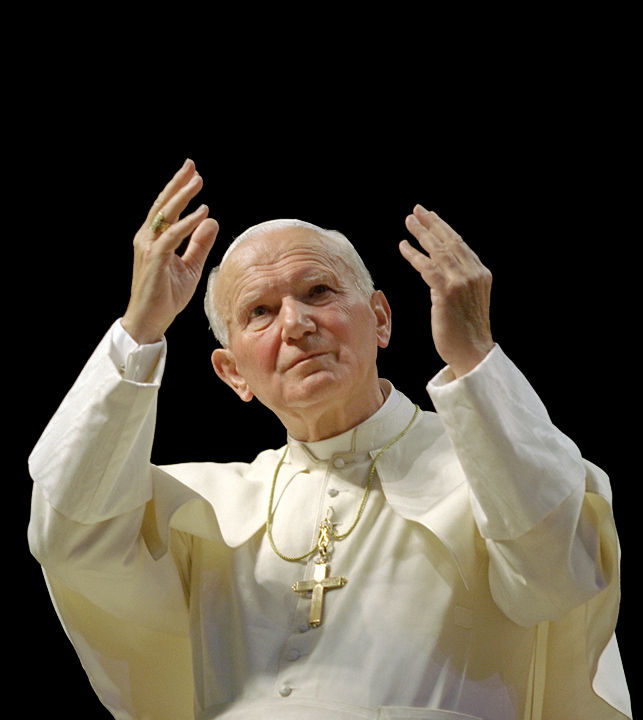
On May 31, 1998, Pope John Paul II issued the apostolic letter Dies Domini (on keeping the Lord's Day holy), in which he attempted to provide a biblical argument for Sunday worship. While both the argumentation used and the appeal to Scripture are questionable, the practical application of the letter is not. In article 67, paragraph 2, Pope John Paul II admonished: "Therefore, also in the particular circumstances of our own time, Christians will naturally strive to ensure that civil legislation respects their duty to keep Sunday holy. In any case, they are obliged in conscience to arrange their Sunday rest in a way which allows them to take part in the Eucharist, refraining from work and activities which are incompatible with the sanctification of the Lord's Day, with its characteristic joy and necessary rest for spirit and body" (italics supplied).

Sunday Laws in Europe

Since release of Dies Domini, bishops and priests alike have obediently heeded the admonitions contained therein. In Croatia, a country comprised of a predominant Catholic populace (90 percent), efforts to pass a national Sunday law found fruition on January 1, 2009, after the cabinet had spent four years preparing the legislation.1 The law, making exceptions for bakeries, flower shops, newsstands, and stores located in bus, train, and metro stations, requires all businesses to remain closed on Sundays.2 Despite the lack of support from the populace, the highly influential leadership of the church pressured Parliament to pass the law, without consideration of the effects upon minority religious groups who hold as sacred a day other than Sunday.

During the same year, debate on Sunday legislation escalated in Germany. Berlin had passed legislation allowing stores to be open for ten Sundays a year, per contra the national law. Catholic and Lutheran churches had opposed Berlin's law and the case made its way to Germany's Constitutional Court, which ruled against Berlin's law of leniency.3 The court's ruling went into effect on January 1, 2010. Germany's protection for Sundays is found in article 140 of Germany's Basic Law, a holdover from the Weimar Constitution of 1919.

While these steps were being taken in Croatia and Germany, the Commission of Bishops for the European Community (COMECE) had given hearty approval and support to the proposal brought by five ministers of state to the European Parliament, arguing in favor of a Sunday law for all of Europe since Sunday served as a proper "cultural patrimony and social model" for European society.4 They argued for recognition of Sunday as a day of rest for the well-being of society. They reasoned that, in light of the current economic crisis, economies continued to function, indicating that the common seven-day workweek is not as essential as believed. They concluded that amid the hectic demands of modern, fast-paced society, families needed time together. Adeptly sidestepping any religious connotations to their appeal, they focused their arguments on the detriment to society's moral tone due to parents who had no time for their children, or for their own health.

Other supporters have included pro-labor and pro-family organizations from numerous European countries such as Germany, Austria, Denmark, Croatia, Spain, France, and Italy. Most recently, debate on the topic was aired on the British Broadcasting Corporation's program The Big Questions,5 which pitted Dr. Michael Schluter, director of the organization Keep Sunday Special, Alex Goldberg, head of the London Jewish Forum, Jenni Trent Hughes, work-life relations expert, and Cristina Odone, writer and broadcaster, against Richard Haddock, farmer and entrepreneur, and other U.K. citizens who are against Sunday legislation.

All of these Sunday legislation developments in Croatia, Germany, and possibly for all of Europe, due to the European Union's legislative decision, the central issue, beg the big question of motivation. What is the motivation behind calls for Sunday rest? Is it solely to rest from labor, thus allowing time for families? Or, does it have another facet related to religious overtures? Sunday-rest advocates answer affirmatively the former question, and negatively the latter. The Commission of Bishops for the European Community recognizes that Europe is comprised of a variety of religious groups that do not all share the sanctity for Sunday as the Catholic Church does.6 Respecting those differences, the bishops concede that any day could be set aside as a day of rest from labor, but the customary practice in European society is that public institutions and schools are closed on Sundays. Thus, to facilitate family time, a work-free Sunday law should be enacted for all of Europe that contains not a hint of religious terminology or connotations.

As fair-minded as this argument sounds, however, its central weakness is that it does not answer the question Upon what foundation—religious, or merely social—does the customary practice exist of closing public institutions and schools on Sundays? When presented in this light, one avoids defending a practice just because it may have the advantage of ages of existence. Therefore, the issue demands further investigation, especially in light of the historic argument. As the eminent historian A. H. Lewis, D.D., stated: "History is an organic whole, a series of reciprocal causes and effects. No period can be separated from that which has gone before, nor be kept distinct from that which follows. . . . Every effort to remodel existing Sunday legislation, or to forecast its future, must be made in the light of the past."7 Thus, it is necessary to examine both the theological and the historic rationales surrounding the current Sabbath debate.

Saturday Worship and Sabbatarians

Sabbatarians are believers who observe Saturday as the biblical Sabbath. They find in Scripture support for this practice as opposed to Sunday as the day of worship. Because the biblical Sabbath is typically associated with Judaism, Sabbatarians are often mistakenly identified as Jewish believers, or "Judaizers." However, Sabbatarians understand the perpetuity of God's Ten Commandment law,8 and recognize the fourth commandment at the heart of it. They believe that the Sabbath is a memorial both of Creation and of redemption.

God created the world in six literal days and rested on the seventh, thus completing His work of Creation.9 Jesus Christ taught that the Sabbath was for humankind, bypassing any reference to the Jewish nature of the Sabbath, when He referred to the Creation week: "The Sabbath was made for man, and not man for the Sabbath. Therefore the Son of Man is also Lord of the Sabbath."10 The apostle Paul, many decades after Christ's crucifixion, continued this Creation-theme emphasis when he referred to the Sabbath of Creation and its enduring blessings to all who observe it: "For he spake in a certain place of the seventh day on this wise, And God did rest the seventh day from all his works. . . . There remaineth therefore a rest [Greek, sabbaton] to the people of God."11

Sabbatarians also believe the Sabbath serves as a memorial of redemption. During the Passion Week, Jesus was crucified on Friday, rested in the tomb on Sabbath, and was resurrected on the first day of the week, Sunday.12 On the Friday of His crucifixion, Christ declared, "It is finished!" as He breathed His last breath, indicating that His supreme sacrifice for humankind was a completed act.13 During the Sabbath, Christ rested from His completed work of salvation; symbolic of the spiritual "rest" into which His followers enter by observing the Sabbath.14 Thus, those who observe the Sabbath as a sign of their salvation in Jesus Christ cannot be accused of trying to "work their way to heaven" out of good merit, since they have "ceased from [their] own works, as God did from his" and trust fully upon the merits of a crucified and risen Savior.15 Although Sunday was the day of Christ's resurrection, there are no scriptural passages supporting the observance of it as a day of worship.16

In contrast to Sabbatarians, numerous Christians worship on Sunday. Lacking strong biblical support, Christians who observe Sunday as their sabbath have historically relied upon the tradition of the church and their desire to dissociate themselves from any Jewish overtones that they believe are central to Sabbath (Saturday) observance. The historical record during the Christian Era is replete with numerous periods of struggle between Sabbatarians and Sunday-observing Christians, which repeatedly resulted in legislatively enacted Sunday laws.

Sunday Laws and the Roman Catholic Church
 

The history of Sunday legislation clearly indicates that it is integrally related to religious beliefs. History records that Sunday legislation traces as far back as the Roman emperor Constantine, who on March 7, 321, enacted into law a decree to honor the "venerable day of the sun," by which citizens were to abstain from work on Sunday, a day dedicated to the worship of the sun god and to the observance of "its venerable rites."17 As one Catholic historian transparently acknowledged regarding Constantine's efforts on behalf of the church: "He invested the judicial decisions of the bishop with civil authority. He modified the Roman Law in the direction of Christian values. Sunday, the day when Christians assembled, was made a day of rest. . . . Under Constantine the Church was firmly set on the road to union with the state."18

Several decades later, in A.D. 364, the Catholic Church convened the Council of Laodicea. One of its decisions related to a practice dating back to the middle of the second century, to roughly A.D. 150. At that time, the church had begun to encourage Christians to observe Sunday instead of the biblical Sabbath in order to distinguish Christians from Jewish believers, a change without scriptural support. By the time of the Council of Laodicea, Christians were observing both days of the week. In order to make a complete break with the Sabbath, and substitute it with Sunday, the council stated, in Canon 29: "CHRISTIANS must not judaize by resting on the Sabbath [Saturday], but must work on that day, rather honoring the Lord's Day [Sunday]; and, if they can, resting then as Christians. But if any shall be found to be judaizers, let them be anathema from Christ."19 The church's overtly antagonistic stance toward the biblical Sabbath paved the way for atrocious and grueling torture of "Judaizers" during the Inquisition many centuries later.

A short 16 years after the Council of Laodicea, the church had gained such influence over the masses that emperors Gratian and Theodosius finally established it as the basis of the whole social order."This is the intent of the epoch-making decree promulgated by Theodosius from Thessalonica on February 27, 380, which began: 'We desire that all peoples who fall beneath the sway of our imperial clemency should profess the faith which we believe has been communicated by the Apostle Peter to the Romans and maintained in its traditional form to the present day. . . .' Paganism was declared illegal, while privileges were granted to the Catholic clergy; they were accorded immunity from trial except in ecclesiastical courts. Roman law was revised in harmony with Christian principles: The Sunday observance laws of Constantine were revived and enlarged, with the banning of public or private secular activities."20

Not even the passage of time has altered the vehement attitude of the church toward Sabbath-observing Christians. A little more than a thousand years after the time of emperors Gratian and Theodosius, the church again thundered its opposition against Sabbathkeeping believers at the Council of Florence (1438-1445).

Catholic theologians failed to see the distinction between the moral Sabbath (Saturday) of God's Ten Commandment law and the ceremonial sabbaths, which required animal sacrifices that symbolized the long-awaited Messiah. The moral Sabbath of the Ten Commandments (Saturday) was to be observed on a weekly basis,21 but the ceremonial sabbaths sometimes occurred in the middle of the week, and sometimes on the Sabbath (Saturday) of the Ten Commandments.22 Ceremonial sabbaths were also associated with circumcision, animal sacrifices, and the Jewish covenant.

Although the ceremonial sabbaths were fulfilled by the death of Jesus at Calvary,23 the moral Sabbath of the Ten Commandments (Saturday) remained in vigor as part of God's moral law for humanity,24 just as the apostle Paul stated, "Circumcision is nothing, and uncircumcision is nothing, but the keeping of the commandments of God."25 Misunderstanding these fine theological nuances, Catholic theologians mistakenly conflated ceremonial sabbath observance with moral Sabbath observance. Thus, at the Council of Florence, they declared that all who observe the Sabbath (Saturday) are "alien to the Christian faith and not in the least fit to participate in eternal salvation, unless someday they recover from these errors."26


The Council of Trent as depicted by the artist Pasquale Cati in 1588.


Within a century later, the Protestant Reformation had occurred and the Catholic Church was already organizing its forces for the Counter-Reformation. Seeking to counteract Protestant advances, the church at the Council of Trent ordered the preparation of the Catechism of the Council of Trent, in which leading theologians formulated responses to the perceived Protestant heresies.27 One of the doctrines reemphasized was the teaching regarding the Sabbath (Sunday) commandment.28 Here again, the Catholic Church acknowledged the (attempted) transference of the sanctity of the biblical Sabbath from Saturday to Sunday, claiming the church's authority to tamper with the divine law of God: "But the Church of God has thought it well to transfer the celebration and observance of the Sabbath to Sunday." Of utmost concern to the discussion of Sunday-rest laws, the Council of Trent not only solemnly admonished all to abstain from work on Sunday, but also continued to expound upon the obligation of all to use the day in "worship of God, which is the great end of the Commandment." Such worship included attendance at church, confession to the priest, performance of the Sacrament of Penance, and participation in the "Holy Sacrifice of the Mass."29

With such mistaken zeal about the moral law of God, the Catholic Church justified itself in the torture and murder of numerous "Judaizers" during the Inquisition. Historical records confirm that not all who observed the biblical Sabbath (Saturday) were Jewish in faith, yet they were classified as "Judaizers" because, in the eyes of the church, they maintained an affinity to the Sabbath of the Ten Commandments.30 Not only was the Catholic Church a persecuting force to Sabbatarians, but also the Reformed faith in Transylvania persecuted and confiscated property of Sabbathkeepers during the Great Persecution of 1638.31 Thus, history records that both Catholics and Protestants united in their efforts to suppress other Christians who held convictions about the Sabbath that were contrary to their own.

It becomes evident that any emphasis upon Sunday-rest does not involve the mere abstinence from work, but naturally leads to the observance of religious rites. As recently in the modern era as 1864, the church voiced its authority, declaring that the state does not have the authority to allow servile work on certain holy days and feasts, contrary to the teachings of the church—such men "make the impious pronouncement . . . that the law should be repealed 'by which on some fixed days, because of the worship of God, servile works are prohibited [by the church].'"32 In those countries where governments acquiesce to the demands for Sunday-rest legislation, they will acknowledge by default that the church has the upper hand. This in turn will lead to the church not only obligating citizens to rest on Sunday, but to worship on it as well.

Some may argue that such accounts refer to Roman Catholicism of the past and that Vatican II (1962-1965) introduced dramatic reforms within the church. While there is some veracity to such an argument, one must not overlook the immutable position of the church with respect to Sunday. In Dies Domini, article 3, paragraph 1, Pope John Paul II stated: "The fundamental importance of Sunday has been recognized through two thousand years of history and was emphatically restated by the Second Vatican Council: 'Every seven days, the Church celebrates the Easter mystery. This is a tradition going back to the Apostles, taking its origin from the actual day of Christ's Resurrection—a day thus appropriately designated "the Lord's Day."' Paul VI emphasized this importance once more when he approved the new General Roman Calendar and the Universal Norms which regulate the ordering of the Liturgical Year." The calendar reform—the idea of making calendars with Sunday as the last day of the week, rather than Saturday—has found continual support from the church and is gaining headway in Europe.

Not only was the immutable position of the church regarding Sunday worship evident at Vatican II, but Catholic theologians have written extensively to promote Sunday worship. For example, one of the leading Catholic scholars in the "nouvelle théologie" movement, Henri de Lubac, refers to the periods of world history, the sixth one having begun with the incarnation of Jesus and the seventh one beginning with His resurrection. By using numerology, mystical symbolism, and church tradition, De Lubac attempts to rationalize why Sunday should be considered as a true Sabbath of rest in honor of the Resurrection.33 Calendars should reflect this teaching, hence, the substitution of God's holy Sabbath (Saturday) with the Sabbath (Sunday) of the church's own creation.

In light of the foregoing efforts of the church to exalt Sunday worship, and especially when one considers the examples of Sunday laws being passed in Croatia and Germany mentioned at the beginning of this article, there remains an immovable shadow of doubt upon the position of the church as a champion of religious freedom for those of other faiths.

Conclusions

Current debate regarding Sunday as a day of rest from labor cannot overlook the direct impact of Dies Domini and the centuries-long struggle over the Sabbath (Saturday) as a day of worship. The apostolic church, founded by Christ and under the guidance of the apostles, observed the biblical Sabbath, Saturday. While the Catholic Church does acknowledge this fact, it also has declared in various councils the authority of the church to command the observance of Sunday, not only as a day of rest, but also as a day of worship. Not content with mere didactic efforts, the church has also sought on various occasions to enforce its teachings regarding Sunday observance through legislative enactment.

Through the centuries various Christian groups have rediscovered the truth regarding the biblical Sabbath and have consequently begun worshipping on Saturday instead of Sunday. If one were to apply the specious reasoning and coercive spirit of the Catholic Church as recorded in the history of the Sabbath-Sunday debate and briefly outlined in this article, then such groups in our day as Seventh Day Baptists, Jews who observe the Sabbath, Seventh-day Adventists, members of the Worldwide Church of God (Seventh-day), the Church of God of Prophecy, and various other Pentecostal Christians would be subject to the anathema, execration, and condemnation of the Catholic Church (and possibly subject to that of other Sundaykeeping Christians, too). God forbid, but is it possible that in our enlightened age of civility, religious pluralism, and respect for differing views, we shall see a return to the barbaric and heinous crimes of religious persecution of medieval times?


Edwin Cook, a minister of religion, is currently completing his doctoral studies in church-state relations at Baylor University, Waco, Texas.


1Accessed on 5/11/2010 from www.topnews.in/croatian-retailers-sack-workers-never-sunday-law-kicks-2106643.
2 Accessed on 5/11/2010 from http://abcnews.go.com/International/wireStory?id=5378375.
3 Acessed on 5/11/2010 from www.dw-world.de/dw/article/0,,4953600,00.html.
4 Accessed on 5/11/2010 from www.aciprensa.com/noticia.php?n=24334.
5 Aired on March 24, 2010; www.bbc.co.uk/thebigquestions.
6 Accessed on 5/11/2010 from www.elimparcial.es/contenido/35248.html.
7 A. H. Lewis, A Critical History of Sunday Legislation From 321 to 1888 A.D. (New York: D. Appleton and Company, 1888), pp. v, vi.
8 There are several laws mentioned in Scripture: (1) the Ten Commandment law (Exodus 20:1-17), (2) the "law [of sacrifices]", (Hebrews 10:1), (3) the "law of sin and death" (Romans 8:2), and, (4) the "law of faith" (Romans 3:27). Recognizing the multiple laws mentioned in Scripture requires close scrutiny to determine which ones were abolished by Christ's death at Calvary (the law of sacrifices and, partially, the law of sin and death, at least with respect to mankind's condemnation) and which ones were upheld (the Ten Commandment law as identifying sin, the law of sin and death as requiring the death of the sinner, in this case, Christ who bore our sins, and the law of faith, by which we gain access to God's grace).
9 Genesis 2:1-3.
10 Mark 2:27, 28, NKJV. Texts credited to NKJV are from the New King James Version. Copyright © 1979, 1980, 1982 by Thomas Nelson, Inc. Used by permission. All rights reserved.
11 Hebrews 4:4-9.
12 Luke 23:54–24:1.
13 John 19:30, NKJV; Hebrews 4:5, 9-11.
14 Hebrews 4:5, 9-11.
15 Hebrews 4:10: "For he that is entered into his rest, he also hath ceased from his own works, as God did from his."
16 There are only eight references in the New Testament that refer to "the first day of the week" and none of them give the command to worship on that day as the fourth commandment orders the observance of Saturday: Matthew 28:1; Mark 16:2, 9; Luke 24:1; John 20:1, 19; Acts 20:7; 1 Corinthians 16:1-4.
17 Henry Bettenson, ed., Documents of the Christian Church (London: Oxford University Press, 1963), pp. 18, 19.
18 Thomas Bokenkotter, A Concise History of the Catholic Church (New York: Doubleday, 1990), p. 39.
19Accessed on 5/9/2010 from http://reluctant-messenger.com/council-of-laodicea.htm.
20 Bokenkotter, p. 57.
21 Exodus 20:8-11; Deuteronomy 5:12-15.
22 For example, the observance of the Day of Atonement occurred on the tenth day of the seventh month and was considered as "a sabbath of rest," even though it did not fall on the weekly Sabbath (Saturday) in some given years (Leviticus 23:27-38). Nonetheless, God made a clear distinction between it and the weekly, moral Sabbath when He commanded the observance of these feasts of atonement (verse 37) "besides [or, in addition to] the Sabbaths of the Lord" (verse 38, NKJV).
23 Daniel 9:27; Colossians 2:14-17.
24 Romans 3:31.
25 1 Corinthians 7:19.
26 "A Decree in Behalf of the Jacobites," from the bull "Cantata Domino," Feb. 4, Florentine style, 1441, modern, 1442, as cited in Henry Denzinger, The Sources of Catholic Dogma (Fitzwilliam, N.H..: Loreto Publications, 2002), p. 229 (par. 712).
27 Originally convened December 13, 1545, it was not until February 26, 1562, when a commission was actually appointed to prepare the catechism. Pope Saint Pius V, xxiii.
28 Pope Saint Pius V, The Catechism of the Council of Trent (Rockford, Ill.: Tan Books and Publishers, Inc., 1982), pp. 402-407.
29 Ibid., p. 403.
30 Haim Beinart, ed., Records of the Trials of the Spanish Inquisition in Ciudad Real (Jerusalem: The Israel Academy of Arts and Sciences, 1985), vol. 4, pp. 409-525. This section, Biographical Notes, relates personal information about the 700 citizens of Ciudad Real who were tried, and many of whom were burned at the stake, for observing the Sabbath (Saturday).
31 Daniel Liechty, Sabbatarianism in the Sixteenth Century: A Page in the History of the Radical Reformation (Berrien Springs, Mich.: Andrews University Press, 1993), pp. 68-77.
32 Pius IX, from the encyclical Quanta cura, Dec. 8, 1864, as cited in Denzinger, p. 431 (par. 1693).
33 Henri de Lubac, Catholicism: Christ and the Common Destiny of Man (San Francisco, Calif.: Ignatius Press, 1988), pp. 150-155.

Author: Edwin C. Cook

Edwin Cook has a doctorate in church-state studies from Baylor University, Waco, Texas. He writes from Waco.


Source

.

Francis and Sunday


As I observe the Bishop of Rome swooning the crowds with his charisma; I am aware of Bible prophecy, Catholic Doctrine and it's agenda.

I wonder how much longer it will be until Francis focuses on the Sunday Worship Issue?

As was previously promulgated by John Paul II's apostolic letter Dies Domini, on July 30, 1998.

US Embassies to Close Sunday Amid Terrorist Threat


Aug. 1, 2013


 By MARTHA RADDATZ, DANA HUGHES, and CHRIS GOOD

Dana Hughes More from Dana »
Reporter


Martha Raddatz More from Martha »
Senior Foreign Affairs Correspondent


Chris Good More from Chris »


Political Reporter

via World News


U.S. embassies in a slew of Muslim countries will close on Sunday due to a credible and serious security threat.

The embassies will close in response to "a specific threat against a U.S. embassy or consulate," according to a senior U.S. official, who called it a "concerted effort" to target an embassy or consulate in a Muslim country.

"We just don't know which one," the official told ABC News.

"There could be other targets, not just embassies," another U.S. official said. The threat is considered to be throughout the Middle East, North Africa and South Asia.

Some of the biggest U.S. embassies will close, including those in Egypt, Iraq, Qatar, Bahrain and Kuwait, where tens of thousands of U.S. troops are based. The U.S. embassy in Afghanistan will also close. So will embassies in Dhaka, Bangladesh; Amman, Jordan; Muscat, Oman; Riyadh, Saudi Arabia; Algiers, Algeria; Abu Dhabi, United Arab Emirates; Sana'a, Yemen; and Tripoli, Libya, according to security warnings issued by those embassies. Two consulates in Saudi Arabia will also close, in Dharan and Jeddah, as will a consulate in Dubai, United Arab Emirates.


Read more
.

"Friday Prayers"


I conducted a web search on Friday Prayers:


Sit Down, Shut Up - Shut Up and Sit Down


 Fox's Sit Down, Shut Up (2009)


Harry Reid Scolds Senators: 'Sit Down and Shut Up'

Majority leader chimes in as presiding senator tries to call order amid chatty lawmakers.
01:00 | 08/01/2013
.

The Sufferings Of This Present Time!

Last Trumpet Newsletter
Volume XXXII Issue VIII August 2013
Last Trumpet Ministries, PO Box 806, Beaver Dam, WI 53916
Fax: 920-887-2626 Internet: http://www.lasttrumpetministries.org


"Recompense to no man evil for evil. Provide things honest in the sight of all men. If it be possible, as much as lieth in you, live peaceably with all men. Dearly beloved, avenge not yourselves, but rather give place unto wrath: for it is written, Vengeance is mine; I will repay, saith the Lord. Therefore if thine enemy hunger, feed him; if he thirst, give him drink: for in so doing thou shalt heap coals of fire on his head. Be not overcome of evil, but overcome evil with good."

Romans 12:17-21


"Wherefore, my beloved brethren, let every man be swift to hear, slow to speak, slow to wrath: For the wrath of man worketh not the righteousness of God."

James 1:19-20


"The shew of their countenance doth witness against them; and they declare their sin as Sodom, they hide it not. Woe unto their soul! for they have rewarded evil unto themselves."

Isaiah 3:9


"And he cried mightily with a strong voice, saying, Babylon the great is fallen, is fallen, and is become the habitation of devils, and the hold of every foul spirit, and a cage of every unclean and hateful bird. For all nations have drunk of the wine of the wrath of her fornication, and the kings of the earth have committed fornication with her, and the merchants of the earth are waxed rich through the abundance of her delicacies. And I heard another voice from heaven, saying, Come out of her, my people, that ye be not partakers of her sins, and that ye receive not of her plagues."

Revelation 18:2-4


In this issue of the Last Trumpet Newsletter, we will examine the current events of our day which reveal that much of the activities of mankind are being driven by unseen spiritual forces. In this present year of 2013, we live in what is supposed to be a civilized and advanced era. Yet, a steady stream of horrendous events continue to occur as the depravity of man takes center stage in a world stricken by sin and wickedness. In recent weeks the seething rage of the masses has boiled over in the nations of Brazil, Turkey, Egypt, and the United States with numerous incidents of shocking brutality and violence erupting. Meanwhile, the governments of the United States and Great Britain have wholeheartedly embraced homosexuality and have proclaimed that same-sex marriage is acceptable. The Middle East also remains in a volatile state with a persistent civil war in Syria, which threatens to extend to other nations in the region as well. I have no doubt in my mind that a flood of evil has been unleashed on this world and will only grow more severe as we progress through time. It is my hope and prayer that this newsletter will help you realize that we must turn to our Lord and Saviour, Jesus Christ, if we are to seek shelter from this spiritual storm which has wreaked havoc on so many lives. I urge every reader of this newsletter to fully put your faith and trust in God and yield your hearts to Him.

The Masses Driven By A Wave Of Anger!

In the months of June and July of this year, we have seen numerous examples of social distemper sweeping various parts of the world. In one incident after another, the masses have grown angry and sometimes violent as they rise up to protest against the authorities. The nation of Brazil is a primary example of such unrest, which reached a highpoint in June 2013. The protests, which were organized on social media websites such as Facebook, were originally formed in response to a small increase in bus and mass-transit fares within the nation. On June 18th it was reported that 200,000 people, including 65,000 in São Paulo, were protesting on the streets in cities across Brazil. (1) By the 20th day of June, the massive protests had swelled to over one million participants. (2) In an effort to explain the impetus behind the protests, one demonstrator was quoted as saying, "What am I protesting for? You should ask what I'm not protesting for! We need political reform, tax reform, an end to corruption, better schools, better transportation." (3)

Similar protests have also been ongoing in the nation of Turkey. The controversy started in late May 2013 when protestors began occupying Gezi Park on Taksim Square in the city of Istanbul. Those who gathered originally did so in opposition to a plan to build a shopping centre in Gezi Park along with a replica of an old military barracks. (4) Turkish Prime Minister Recep Tayyip Erdogan has not been swayed by the protests. "They can do whatever they want. We've made our decision and we will do as we have decided," Erdogan declared. (5) By mid-June, thousands of Turkish citizens had taken to the streets, and riot police were called up to quell the unrest. "This is an illegal act, this is our last warning to you - evacuate," police officers warned as they closed in on the protestors shortly before unleashing teargas and firing rubber bullets at the crowd. (6) The protests in Turkey have continued into the month of July. According to reports, over one thousand people were detained by Turkish police on July 16, 2013, with about thirty of them ultimately being arrested. (7)

In 2011 an uprising by the people of Egypt caused the ouster of former Egyptian President Hosni Mubarek. Since that day, the nation of Egypt has remained in a state of turmoil, and despite the fact that Mubarek's successor, Mohammed Morsi, was democratically elected, the people of Egypt have once again brought about the overthrow of a sitting president. Unhappy with what was deemed to be an authoritarian regime, protestors in Egypt staged demonstrations demanding that Morsi resign in July 2013. Fearing the will of the people, the military of Egypt gave Mohammed Morsi an ultimatum demanding that he resign by July 3, 2013, and threatened to remove him if he did not capitulate. (8) Upon reaching the deadline, President Morsi was removed from power and placed under house arrest by the head of Egypt's armed forces, General Abdel-Fateh el-Sissi. "The armed forces have tried in recent months, both directly and indirectly, to contain the internal situation and to foster national reconciliation between the political powers, including the presidency. But those efforts have failed," Sissi stated as he announced the removal of Morsi from office. (9)

In the aftermath of the coup d'état, the nation of Egypt was rocked by brutal violence. According to a report by CNN, at least 26 people were killed and 850 more were injured as supporters of Morsi, a group known as the Muslim Brotherhood, clashed with those who brought about the humiliated leader's removal. (10) Morsi's supporters promised to press on in their fight to have him restored to office. "The coup is illegal and we will never accept its results. We sacrificed so dearly to reach this point, and we will never return to the past again," declared Mohamed Badie, the supreme guide of the Muslim Brotherhood. (11)

In the United States, protests, riots, and acts of extreme violence have been reported in the wake of a jury decision which found George Zimmerman, a Hispanic man, not guilty of the murder of 17 year-old Trayvon Martin, who was black. As word of the verdict spread, protests began to form at various locations around the country. Reports indicate that thousands of enraged protestors assembled in New York City on July 15, 2013, and effectively shut down Times Square. (12) On the same day, hundreds of angry protestors gathered in Newark, New Jersey, and shut down one of the city's busiest intersections. (13) In Los Angeles, California, one hundred police officers, dressed in riot gear, were called up to contain angry demonstrators. (14) In the Crenshaw District of Los Angeles, an angry mob reportedly stomped on cars, chased bystanders, and stormed a Walmart store, which prompted the police to declare a tactical alert. In response to the disturbance, Commander Andy Smith of the Los Angeles Police Department was quoted as saying, "We want to support everyone's First Amendment right to protest, but we also want to ensure public safety and not allow people to commit violent acts." (15) Participants in this angry mob were again active the following night of July 16. In a report from the Los Angeles Times, the mob was described as "a band of robbers" who tore through Hollywood, wreaking havoc as they went and terrorizing people on the street. This small mob was estimated to have about 50 participants, and the Los Angeles Police Department called in 110 officers in an effort to catch them. (16)

Numerous racially motivated attacks on individuals were also reported in recent days. On July 14, 2013, a group of black youths attacked a Hispanic man at a park in Baltimore, Maryland. An eyewitness described the incident as follows: "They were just yelling and calling him names as they ran after him, but once they were hitting him and after that they started yelling 'This is for Trayvon.'" (17) Another incident occurred in Milwaukee, Wisconsin, on July 15, 2013. "This man was just walking through the park and they just all jumped on him and they were just beating him," stated a witness to the attack. The witness further went on to say that the assailants were heard to say "This is for Trayvon Martin." The victim also described the attack, stating, "At first it was one guy on me pummeling me. And then it's two and then it's three, and then a whole bunch of them just came out of nowhere and I was just really in bad shape." (18) A similar incident was also reported in Senatobia, Mississippi. (19)

Sadly, certain public figures seem determined to further stoke the racial tension now manifesting in the United States. One such individual is Al Sharpton, a television anchor who works for MSNBC. Sharpton has announced plans to mobilize protests in one hundred cities throughout America in the coming days. (20) Meanwhile, Malik Zulu Shabazz, who is chairman of the racist hate group known as the New Black Panthers, has urged his followers, "Take to the streets and stay there." Shabbazz further went on to write in an online message, "We're at war. It's silly and immoral to call for peace when war has been declared." (21)

At this present time, much of the world's population is simmering with anger. The spirit behind such anger can often be captivating, and it sometimes leads people to behave in a manner that would be unthinkable under normal circumstances. As Christians we must be careful to not let such anger dictate our actions. For as the Apostle Paul wrote in Romans 12:17-19, "Recompense to no man evil for evil. Provide things honest in the sight of all men. If it be possible, as much as lieth in you, live peaceably with all men. Dearly beloved, avenge not yourselves, but rather give place unto wrath: for it is written, Vengeance is mine; I will repay, saith the Lord." In like manner, James 1:19-20 declares, "Wherefore, my beloved brethren, let every man be swift to hear, slow to speak, slow to wrath: For the wrath of man worketh not the righteousness of God."

They Declare Their Sin As Sodom!

These days, it seems as though the homosexual lifestyle is growing increasingly pervasive as we progress through time. Although the tide has been shifting in favor of same-sex marriage for quite some time, the month of June 2013, which had been declared "Lesbian, Gay, Bisexual, and Transgender Pride Month" by Barack Obama, ushered in a time of great acceptance of homosexuality in the United States and an embracement of same-sex marriage by the federal government. On June 26, 2013, the Supreme Court of the United States struck down a law known as the Defense of Marriage Act, or DOMA, which had been in place since 1996. (22) This decision had an immediate effect on numerous government policies, and upon hearing of the high court's decision, Defense Secretary Chuck Hagel announced that same-sex spouses of U.S. military members would begin receiving federal benefits as soon as possible. (23) The repeal of DOMA will also allow same-sex partners from other countries to immigrate to the United States to be with their American partners in states where same-sex marriage is legal. Proponents of same-sex marriage were thrilled to hear of this development. "This is a huge day, not only for the LGBT movement, but also for the immigrant rights' movement. This Supreme Court decision affirms that all families and individuals should be treated fairly and with justice," stated Jorge Gutierrez, leader of a group known as the Queer Undocumented Immigrant Project. (24)

All across America, those affiliated with the homosexual movement celebrated with vigor. Shortly after the Supreme Court's decision, Dannel P. Malloy, the governor of the state of Connecticut, raised a rainbow flag, which is a common symbol of gay pride, over the governor's residence in Hartford, Connecticut. (25) Governor Malloy also issued a statement urging all states to legalize gay marriage. "With this ruling, I implore every state to give full faith and credit to valid same-sex marriages. Every Connecticut resident deserves to have their marriage recognized as they travel among the states for work, vacation, and family visits. A marriage should not be a right that you gain and lose on a road trip across the country. My wife Cathy and I proudly join with all of our friends, both gay and straight, to celebrate today's ruling and its recognition of justice for all," Malloy stated. (26)

In Washington, D.C., bells rang out at the National Cathedral in honor of the Supreme Court's ruling. The Cathedral's dean, Gary Hall, declared that the bells were being rung "to celebrate the extension of federal marriage equality to all the same-sex couples modeling God's love in lifelong covenants." The cathedral also held a prayer service for gay families on the same day. (27)

Amazingly enough, the homosexual agenda has even found its way onto the breakfast tables of American children. To celebrate Gay Pride month, General Mills added two new rainbow marshmallows to its Lucky Charms cereal. "We're celebrating Pride month with whimsical delight, magical charms, and two new rainbow marshmallows," the cereal company declared in a press release. (28) General Mills also released a short video, which was likely designed to appeal to children, which declared the following: "Being different is not an issue, or a problem. It's lucky. Being unique, and colorful, and expressive, and unapologetic, are all very lucky things to be. So we raise our spoons to the lucky ones, to those living life on their terms and loving every single second of it." (29)

Meanwhile, The New Yorker Magazine featured a cover on a July 2013 issue of its magazine implying that the characters known as Bert and Ernie from the children's television program "Sesame Street" are gay. The image on the cover features Bert and Ernie cuddling on a couch in front of a television depicting the Supreme Court justices in their robes. "It's amazing to witness how attitudes on gay rights have evolved in my lifetime. This is great for our kids, a moment we can all celebrate," said Jack Hunter, the artist behind the magazine's cover. (30)

The social networking website known as Facebook has also emphatically declared their support for the homosexual lifestyle. In fact, over seven hundred employees of the company marched in the gay pride parade held on June 30, 2013, in San Francisco, California. (31) On the other side of the country, the perverse entertainer known as Lady Gaga sang the Star Spangled Banner at the gay pride parade in New York City. The singer made two modifications to the anthem and reportedly sang, "Oh say does that star spangled flag of pride yet wave…" and then finished with the lines "the land of the free and the home for the gay." (32)

Those who hold to Biblical values and stand up in opposition to homosexuality often face bullying by the homosexual community. Although we are told that homosexuals are loving and gentle people who would never hurt a fly, recent events show that they are sometimes militant and cruel. Such was the case at an event known as Pridefest, which took place in Seattle, Washington, on June 30, 2013. At the event, two street preachers carried signs with the words "Repent or Else" and "Jesus Saves From Sin" printed on them. Enraged by the messages printed on the signs, a group of Pridefest attendees attacked the men. After a group of women failed to successfully steal the signs, a group of men pulled the street preachers to the ground as the crowds around them applauded. A man then ran up to the preachers while they were on the ground and punched one of them in the back of the head several times. Another participant was seen to be kicking one of the preachers repeatedly. (33)

Meanwhile, same-sex marriage has also been embraced in Great Britain. In fact, it was announced on July 17, 2013, that Queen Elizabeth II had signed into law a bill that legalizes same-sex marriage in Wales and England. Equalities Minister Maria Miller was thrilled by this new development. "This is a historic moment that will resonate in many people's lives. I am proud that we have made it happen and I look forward to the first same-sex wedding by next summer," Miller stated. (34)

The homosexual lifestyle is now embraced by government figures, politicians, celebrities, and many American citizens. The level of acceptance for this way of life has never been as prevalent as it is right now. When I consider these facts, I cannot help but think of Isaiah 3:9 which reads, "The shew of their countenance doth witness against them; and they declare their sin as Sodom, they hide it not. Woe unto their soul! For they have rewarded evil unto themselves."

The Demonic Nature Of Abortion!

The most shameful sin committed in the United States in this modern age is the wholesale slaughter of innocent babies through the practice of abortion. This practice, which is demonic in nature, is endorsed by the American government. In fact, the Congressional Budget Office, or CBO, issued a report in July 2013 which touts late-term abortions, or abortions performed 20 weeks or later after conception, as a cost saving measure for the United States government. According to the report, around 11,000 late-term abortions are performed each year, and this reduces the amount of money the government must pay out through the Medicaid system. The report by the CBO was issued in response to a bill known as H.R. 1797 - the Pain Capable Unborn Child Protection Act. (35) The bill, which would ban the practice of aborting babies twenty weeks after conception in most cases, was passed in the House of Representatives on June 18, 2013 by a vote of 228-196. However, it is highly unlikely that the bill would also pass in the Senate, and if it did, Obama has threatened to veto the law. "It's a bill that will go absolutely nowhere," declared Representative Joe Crowley, a Democrat from New York. (36)

Thankfully, some efforts to curtail the practice of abortion have been successful. In Texas, a law known as House Bill 2 was passed on July 12, 2013. The legislation bans abortions twenty weeks after conception, places new restrictions on abortion clinics, and also places restrictions on the usage of abortion inducing pills. (37) As lawmakers in Texas prepared to vote on the measure, a demonic presence was in full force outside the capitol building in Texas. While Christians who had gathered in support of the law sang "Amazing Grace," pro-abortion protestors under demonic influence began chanting "Hail Satan!" The satanic utterances started slowly, and after a few minutes the protestors were heard to be chanting in unison. (38)

Another victory for pro-life advocates recently took place in the state of Virginia. It was announced in July 2013 that NOVA Women's Healthcare of Fairfax County, which was the busiest abortion provider in the region, will be forced to shut down permanently. The facility, which performed 3,066 abortions in 2012, was found to be one parking spot short of city requirements, which resulted in city officials denying the facility their permit. (39) Additionally, four Planned Parenthood facilities have closed in the state Wisconsin this year. These facilities had been operating in the communities of Shawano, Johnson Creek, Chippewa Falls, and Beaver Dam. (40) We at Last Trumpet Ministries are thrilled to know that a Planned Parenthood office is no longer operating in our city of Beaver Dam, Wisconsin!

The City Of Detroit Is Officially Bankrupt!

In the July 2013 issue of the Last Trumpet, I warned that the city of Detroit, Michigan, may soon officially be bankrupt. On July 18, 2013, the city of Detroit filed for Chapter 9 bankruptcy protection, and became the largest city yet to do so in the United States. This bankruptcy came about despite the efforts of emergency manager Kevyn Orr, who had hoped to convince the city's creditors to take about 10 cents for every dollar they were owed. In a written statement, Michigan Governor Rick Snyder declared the following: "Despite Mr. Orr's best efforts, he has been unable to reach a restructuring plan with the city's creditors. I therefore agree that the only feasible path to a stable and solid Detroit is to file for bankruptcy protection." (41) In light of these developments, comments made by Barack Obama have now come back to haunt him. In October 2012, Obama declared, "We refused to throw in the towel and do nothing. We refused to let Detroit go bankrupt. We bet on American workers and American ingenuity, and three years later, that bet is paying off in a big way." (42) Of course, Obama was mainly speaking of the government bailout of U.S. automakers in Detroit; however, those efforts did little to improve the financial crisis within the city itself. Will this trend of entire cities going bankrupt continue in the United States? According to a report by the Wall Street Journal, the mayor of Detroit, Dave Bing, has declared that more than one hundred cities in America "are having the same problems we're having." He then went on to say, "We may be one of the first [to declare bankruptcy.] We are the largest. But we absolutely will not be the last." (43)

Persistent Rumors Of War!

The world in this present age is in an increasingly turbulent state. Because of the great animosity and contempt that certain nations hold against each other, there are always persistent rumors of war. In July 2013 Israeli Prime Minister Benjamin Netanyahu once again warned that the nation of Iran is moving closer to a "red line," which would force Israel to launch an attack against them. "They haven't yet reached it but they're getting closer to it and they have to be stopped," Netanyahu said. He further went on to say, "I think it's important to note that we (Israel) can't allow it to happen. Our clocks are ticking at a different pace. We're closer than the United States, we're more vulnerable, and therefore we'll have to address this question of whether to stop Iran before the United States does." (44)

Meanwhile, it has been reported that Israel launched an attack on a missile shipment being delivered in Syria on July 5, 2013. (45) It has also come to light that the United States is now considering the use of military force in Syria. Regarding the situation, chairman of the Joint Chiefs of Staff, General Martin Dempsey, was quoted as saying, "The issue is under deliberation inside of our agencies of government." Admiral James Winnefeld offered a similar statement. "There are a whole range of options that are out there. We are ready to act if we're called on to act," Admiral Winnefeld stated. (46) It is interesting to note that Russia, which happens to be Syria's most significant ally, recently held war games, which involved 160,000 troops and the deployment of 5000 tanks across Siberia and the eastern region of their country. It was reportedly the largest show of force by the Russian military since the Soviet era. (47)

In closing, I urge every reader of this newsletter to fully put your faith and trust in God. This world is often full of disheartening news, disappointments, and unfairness, but our Saviour has something far better than anything this world has to offer waiting for those who love Him. For as we read in Romans 8:16-18, "The Spirit itself beareth witness with our spirit, that we are the children of God: And if children, then heirs; heirs of God, and joint-heirs with Christ; if so be that we suffer with him, that we may be also glorified together. For I reckon that the sufferings of this present time are not worthy to be compared with the glory which shall be revealed in us."

Thank you for your generous support of this ministry. We appreciate each and every one of you and fully realize that we could not do what we do without your help. We are here to serve you to the best of our abilities, and please remember that we are always ready and willing to accept your prayer requests and carry your petitions before the throne of the Almighty. Grace and peace be unto you in the name of the Lord Jesus Christ.


Samuel David Meyer

Acknowledgements
01. Reuters News Service, June 18, 2013, By Todd Benson and Asher Levine, Sao Paulo, Brazil.
02. Reuters News Service, June 20, 2013, By Paula Prada and Maria Carolina Marcello, Rio de Janeiro, Brazil.
03. Ibid.
04. The Guardian, May 31, 2013, By Constanze Letsch, http://guardian.co.uk.
05. Ibid.
06. The Guardian, June 15, 2013, By Peter Beaumont, http://guardian.co.uk.
07. Reuters News Service, July 16, 2013, By Ayla Jean Yackley, Ece Toksabay, and Humeyra Pamuk, Istanbul, Turkey.
08. AFP, July 3, 2013, By AFP, http://afp.com.
09. Associated Press, July 3, 2013, By Abigail Hauslohner, Cairo, Egypt.
10. CNN, July 5, 2013, By Ben Wedeman, Reza Sayah, and Chelsea J. Carter, http://cnn.com.
11. Ibid.
12. The Observer, July 15, 2013, By Orla Ryan, http://observer.com.
13. CBS News - New York, July 15, 2013, By CBS News, http://newyork.cbslocal.com.
14. Associated Press, July 15, 2013, By Associated Press, San Francisco, California.
15. Los Angeles Times, July 15, 2013, By Ruben Vives, Andrew Blankstein, and Robert J. Lopez, http://latimes.com.
16. Los Angeles Times, July 17, 2013, By Andrew Blankstein and Joseph Serna, http://latimes.com.
17. The Baltimore Sun, July 15, 2013, By Justin George, http://baltimoresun.com.
18. WISN News, July 15, 2013, By WISN News, http://wisn.com.
19. Fox News, July 16, 2013, By Todd Starnes, http://foxnews.com.
20. Breitbart, July 15, 2013, By John Nolte, http://breitbart.com.
21. World Net Daily, July 15, 2013, By Aaron Kline, http://wnd.com.
22. Yahoo News, June 26, 2013, By Liz Goodwin, http://news.yahoo.com.
23. Associated Press, June 26, 2013, By Lolita C. Baldor, Washington, D.C.
24. The Washington Times, June 26, 2013, By Stephen Dinan, http://washingtontimes.com.
25. CBS News - Connecticut, June 26, 2013, By CBS News, http://connecticut.cbslocal.com.
26. CBS News - Connecticut, June 26, 2013, By CBS News, http://connecticut.cbslocal.com.
27. CBS News - Washington D.C., June 26, 2013, By CBS News, http://washington.cbslocal.com.
28. World Net Daily, July 2, 2013, By World Net Daily, http://wnd.com.
29. Ibid.
30. ABC News - Good Morning America, June 28, 2013, By Christina Ng, http://gma.yahoo.com.
31. Official Facebook Website, July 1, 2013, http://facebook.com.
32. The Examiner, June 30, 2013, By Joe Newby, http://examiner.com.
33. KOMO News, July 3, 2013, By Michael Harthorne, http://komonews.com.
34. Associated Press, July 17, 2013, By Cassandra Vinograd, London, England.
35. CNS News, July 8, 2013, By Terence P. Jeffrey, http://cnsnews.com.
36. Politico, June 18, 2013, By Kathryn Smith and Ginger Gibson, http://politico.com.
37. NBC News, July 13, 2013, By Matthew Deluca, http://nbcnews.com.
38. The Blaze, July 5, 2013, By Jason Howerton, http://theblaze.com.
39. Townhall.com, July 15, 2013, By Cortney O'Brien, http://townhall.com.
40. Planned Parenthood Official Website, Statement on Health Center Closures, By Deb Bonilla, http://plannedparenthood.org/Wisconsin/closurehome-40967.
41. Associated Press, July 18, 2013, By Corey Williams and Ed White, Detroit, Michigan.
42. The Blaze, July 18, 2013, By Jason Howerton, http://theblaze.com.
43. The Wall Street Journal, July 21, 2013, By Sudeep Reddy, http://wsj.com.
44. Reuters News Service, July 14, 2013, By Dan Williams and Paul Simao, Washington D.C.
45. National Journal, July 15, 2013, By Global Security Newswire Staff, http://news.yahoo.com.
46. The Daily Telegraph, July 18, 2013, By Philip Sherwell, http://telegraph.co.uk.
47. Associated Press, July 16, 2013, By Associated Press, Moscow, Russia.

Special Note: A new tribute website for Pastor David J. Meyer can now be accessed at http://pastormeyer.org.

Comments regarding this newsletter or topic suggestions may be submitted to editor@lasttrumpetnewsletter.org.
If you would like to submit a prayer request, you may send email to prayer@ltmmail.org or mail it to our postal address.


Source
.

Remember The Good Times?


Now that Snowden has DEFECTED to Russia...  The Cold War is back ... at least rhetorically.

Will Détente and Perestroika soon return too?

I still can`t get over the hilarious photo above a long  time ago.  (:


,

Thursday, August 01, 2013

U.S. intelligence: Al Qaeda plot tied to embassy closings on Sunday


By

Jake Miller /

CBS News/ August 1, 2013, 8:23 PM


Updated 8:22 PM ET


An al Qaeda plot is linked to an announcement by the State Department that it was closing several consulates and embassies around the world on Sunday due to a security threat, CBS News has learned.

CBS News correspondent David Martin reports that U.S. intelligence has picked up signs of an al Qaeda plot against American diplomatic posts in the Middle East and other Muslim countries. The intelligence does not mention a specific location, which is why all embassies that would normally be open on Sunday have been ordered to close. That includes embassies and consulates in the Middle East, North Africa, and South Asia, where Sunday is the start of the work week.

Martin further reported that officials say this appears to be a real plot in the making and not just the normal chatter among terrorists talking about attacks they'd like to carry out. But these same officials add they are missing key pieces of information.

As of 7:35 PM ET Thursday, at least 14 embassies have announced that they will close on Sunday in accordance with the State Department's guidance, including the U.S. embassies in Bahrain, Egypt, Iraq, Israel, Jordan, Kuwait, Libya, Oman, Qatar, Saudi Arabia, United Arab Emirates, Yemen, Afghanistan and Bangladesh. A statement on the website of the embassy in Kuwait explained, "The Department of State has instructed certain U.S. Embassies and Consulates to remain closed or to suspend operations on Sunday, August 4...Accordingly, the U.S. Embassy in Kuwait will be closed on Sunday, August 4."

In the meantime, the statement continued, "All U.S. citizen services appointments and visa appointments have been cancelled and have been rescheduled on an individual basis."


Play Video
State Dept: Some embassies to close Sunday due to "security considerations"


Earlier, Marie Harf, the deputy spokeswoman for the State Department, told reporters that the step was taken as a "precautionary" measure. She did not provide further specifics on the nature of the threat or which embassies would be forced to shutter for the day.

"The Department of State has instructed certain U.S. embassies and consulates to remain closed or to suspend operations on Sunday, August 4th," she said, explaining that the decision was made "out of an abundance of caution."

She said that is is "possible" some facilities would remain closed for more than a day, depending on the results of a security analysis.

A senior State Department official told CBS News: "For those who asked about which embassies and consulates we have instructed to suspend operations on August 4th, the answer is that we have instructed all U.S. Embassies and Consulates that would have normally been open on Sunday to suspend operations, specifically on August 4th. It is possible we may have additional days of closing as well." The official added: "The Department, when conditions warrant, takes steps like this to balance our continued operations with security and safety."


A map showing the embassies that normally open on Sundays that would be closing following an announcement by the State Department on Aug. 1, 2013. / CBS News

Harf declined to say from which region of the world the threat had emanated, saying only that "security considerations have led us to take this precautionary step, as we do from time to time."


The State Department will provide further details soon, Harf said.
Kerry sets 9-month goal for Mideast peace talks
Congress interviewing "dozens" of Benghazi witnesses


The security of American embassies and other diplomatic facilities has recently emerged as a political flashpoint in the wake of the September 11, 2012 attack on a U.S. facility in Benghazi, Libya, that claimed the lives of four Americans, including then-ambassador to Libya Chris Stevens.

In the wake of that attack, Republicans accused the State Department of providing insufficient security for diplomatic personnel in Libya.


Source
.

A New Ecumenical Wind

 (April 2008)

Will the Global Christian Forum unite the churches?

By William G. Johnsson

A new wind is blowing across the Christian landscape, one with the potential to transform the ecumenical movement. How should Seventh-day Adventists, with our keen interest in end-time developments, relate to it?
November 6-9, 2007, some 250 Christian leaders from more than 70 nations came together in Limuru, Kenya. The extremely diverse group, which gathered under the rubric of the Global Christian Forum (GCF), was a meeting unlike any other in modern times. For the first time Pentecostals and Evangelicals sat down with Catholics, Protestants, Orthodox, and representatives of the African Instituted Churches. Many of those present called the meeting historic; certainly it was unprecedented.

The gathering at Limuru took place on the eve of the sixtieth anniversary of the World Council of Churches (WCC). Major changes have occurred in the Christian world since 1948, when the WCC was formed in high hopes of uniting Christians:


 UNITED IN PRAYER: Vibrant worship services, as well as personal interaction, were featured prominently in the meeting of the Global Christian Forum in Limuru, Kenya.


♦ The center of gravity has moved south. No longer do Europe and the United States set the pace. Christianity is growing rapidly in Africa and Asia, but is stagnant in its old “home base.” There are now about four times more Christians in the global South than in the North (or “West”). “Southern” missionaries now outnumber their traditional Western counterparts.

Beyond the numbers, however, we should note an even more important change. “Southern” Christianity is much more conservative than that of the “mainline” churches that constitute the bulk of the WCC. It assigns greater authority to the Scriptures; it has a holistic understanding of the natural and supernatural worlds; and it gives the Holy Spirit a much more prominent role in doctrine and experience.

♦ The Evangelical movement, cutting across denominational lines, has become a global force. Evangelicals, regardless of their parent church home, are united in belief in the reliability of the Bible, in the atoning work of Christ by His death on the cross, in the need for conversion and evangelism, and in the second coming of Christ. The World Evangelical Alliance counts some 420 million Christians in its fellowship.

♦ Growing even more rapidly are the Pentecostals. In its modern manifestation the movement began as a marginalized fringe Christian phenomenon in Los Angeles in 1904. Primarily a revival movement appealing to the poor, and disdained by society, Pentecostalism has spread globally. It has no central structure or organization; rather, it centers in the congregation, emphasizing the personal experience of the Holy Spirit. Because a clear definition of what constitutes a Pentecostal is hard to come by, estimates of the strength of the worldwide movement vary widely; generally, however, observers agree that globally Pentecostals-Charismatics number more than 500 million.
♦ On the continent of Africa Christianity has exploded. Many new, indigenous churches have arisen around charismatic figures. Some of these churches, known generally as African Instituted Churches, have congregations beyond their national boundaries and even in Europe and America. Offering a religion of celebration, they use symbols, music, and dance reflective of African culture. Probably about 100 million Christians belong to the African Instituted Churches.

These major changes largely bypassed the WCC. Evangelicals have been disenchanted by the sharp turn toward social and political action that the WCC took at its world assembly in 1968 at Uppsala, Sweden. Pentecostals, initially scorned by the mainline churches, harbor hostility toward the ecumenical movement represented by the WCC. And the new African churches and the WCC generally find little in common.


Major changes have occurred in the Christian world since 1948, when the World Council of Churches was formed.

Today, 60 years after its founding, the WCC is looking for a sense of direction. Its budget and staff have been drastically reduced from 20 years ago. It has failed to attract groups representing large numbers of Christians. And, in spite of earnest efforts, its member churches have not been able to achieve the basic step of accepting one another at the Lord’s table.

Out of this background the concept of the Global Christian Forum was conceived in 1998. Hubert van Beek, who served many years with the WCC, spent the following nine years as a retired planner and organizer of the event that eventually took place last November at Limuru. Van Beck was assisted by an essentially volunteer steering committee drawn from several traditions. Mel Robeck, professor of church history at Fuller Seminary in California, and a Pentecostal, played a key role in persuading many Pentecostal leaders to attend the GCF.

The ideas of the GCF were first tested in regional meetings in various parts of the world. The steering committee concluded that the only way for Pentecostals to feel comfortable enough to participate would be to ensure that they and Evangelicals comprised at least 50 percent of all those present. This is indeed what happened at Limuru. Pentecostals formed the largest single group and played a major role in plenary sessions and discussion groups. Both of the major papers presented at the plenaries came from Pentecostal scholars.

The GCF met for four days at Limuru, 19 kilometers (11.8 miles) from Nairobi, at a resort center owned by the National Council of Churches of Kenya. The WCC and its partners put up most of the funding for the event. Many of those who came had their expenses paid by the organizers. Three Adventists attended: John Graz, Public Affairs and Religious Liberty director at the General Conference; John Kakembo, Ministerial director of the East Central Africa Division, which has its headquarters in Nairobi; and I.

The stated purpose of the GCF was to “create an open space wherein representatives from a broad range of Christian churches and interchurch organizations, which confess the triune God and Jesus Christ as perfect in His divinity and humanity, can gather to foster mutual respect, to explore and address together common challenges.” Unlike past ecumenical gatherings I have attended, at the GCF the affective (emotional) element played a significant part. Worship services, except for the one conducted by the Orthodox, were lively. Africans brought a distinctive flavor to the gathering.

For many the high point came on the first day. All attendees joined in preassigned groups of 30 and spent, person by person, about 15 minutes each relating in personal testimony their journey with Jesus Christ. The common elements of divine calling and intervention, regardless of the tradition, were powerful and moving. In these groups the denominational barriers came down; the remaining days built on the goodwill that had been established.


BROAD REPRESENTATION: Representatives to the Global Christian Forum included delegates from the Salvation Army, Assemblies of God, Orthodox Church in America, World Council of Churches, Pontifical Council for Promoting Christian Unity, and Conference of Christian Communicators.


The GCF spent its final day and a half evaluating what had transpired and trying to ascertain the form and direction it should take. Attendees expressed appreciation for the event, which they viewed as a breakthrough, and urged that structures be kept to a minimum, the GCF avoid becoming a new organization, the process continue at regional and local levels, and the committee that planned the GCF be reconstituted and enlarged to guide the process. The unfolding future will determine whether another global meeting should be arranged.

Most of those who came to Limuru left on a high note. They felt they had been a part of something special, perhaps historic. Will the GCF subsequently be seen as the turning point when the WCC and the old ecumenism faded away, and a new and unpredictable ecumenism was born? Only time will tell.

How Adventists relate to these winds of change will call for alertness and careful thought. We have never been a member of the WCC and have kept at a distance the ecumenism that organization espouses. For us, a sense of divinely ordained mission to the entire world cannot be weakened or compromised by organic linking with other Christian bodies. We do not take upon ourselves the role of judge: we simply focus on our mission and leave others to answer to the Lord for their calling.

Yes, we too desire the unity of believers for which our Lord prayed before He went to the cross. But unity on what basis? And at what price? For us, Christian unity can come only from shared beliefs based on the Bible.

Further, our understanding of history and prophecy makes us wary of Christian coalitions. Too often the result has been coercion of conscience, and Revelation 13 points to another such development just before Christ returns.

We applaud men and women of goodwill everywhere. For some 80 years the Working Policy of our church has stated: “We recognize those agencies that lift up Christ before men as a part of the divine plan for evangelization of the world, and we hold in high esteem Christian men and women in other communions who are engaged in winning souls to Christ” (p. 110). We enter into theological conversations with other churches, seeking to understand and to be understood. Where possible, we make common cause in endeavors such as religious liberty and aid to the needy, just as Ellen White in her day joined with other Christian bodies in fighting the alcohol traffic.

We gladly worship with other Christians, praying with and for them, including their ministers. And here Adventists are way out in front of the churches of the WCC: we open the Lord’s table to all who present themselves, regardless of denomination. That is the sort of ecumenism—and only that—in which we feel free to participate.
William G. Johnsson is assistant to the president for interfaith relations for the Seventh-day Adventist Church.


Source
.

In Brazil, Adventists demonstrate Christian hospitality


Aug 01, 2013 Rio de Janeiro, Brazil

ASN staff/ANN staff

Seventh-day Adventist young people in Rio de Janeiro demonstrated Christian hospitality this week when they offered 170 Catholic youth in town for World Youth Day a place to stay.


Adventist young people from the Rio de Janeiro Central Adventist Church share a meal with Catholic youth in town for the World Youth Day and Pope Francis’s visit. [photo: Fabiana Bertolli]


The Italian Catholics were part of the World Youth Day Pilgrimage, which saw thousands of young Catholics worldwide travel to Rio de Janeiro for a week to celebrate the diversity of the Catholic Church and deepen their personal spirituality.

Members of the Adventist Central Church in Rio de Janeiro welcomed the group at the airport and provided transportation and accommodation at the church during their week of pilgrimage.

“We have our doctrinal differences, but we serve a God who gave us an example of loving our neighbors. We are helping these young people not because of their faith, but because they are in need and we would assist members of any denomination,” said Romulo Silver, a local church leader.

During the week of World Youth Day, local Adventist churches also took the opportunity to pray for the young Catholics and invite them to local church functions.

“Several of the [young people] wanted to join in our worship every night and said they liked what they heard,” Silva said, adding that he believes kindness and generosity can send a stronger message than preaching.
 
 
Source: © 2013, Adventist News Network
 
 
.

Pope Francis: once a Jesuit always a Jesuit?


2013-07-31 12:24:06


(Vatican Radio) Wednesday 31st of July the Church remembers Saint Ignatius of Loyola, founder of the Society of Jesus. To mark this occasion, Francis the first Jesuit Pope in history, crossed the Tiber River to meet with his fellow Jesuits…

It was at the Mother Church of the Jesuits in Rome known as the Gesù, consecrated in 1584, where he celebrated Holy Mass. It's a great baroque building with a façade designed by two Jesuits by the names of Tristani and de Rosis, as well as other architectural features by no other than Vignola and della Porta.

But while the most striking artistic feature of the interior is the ceiling fresco, the grandiose Triumph of the Name of Jesus, perhaps the most imposing is the Saint Ignatius Chapel situated on the left hand side of the transept which houses the tomb of Saint Ignatius.

Among the Jesuits in Rome is church historian and well known author, Professor Norman Tanner. Veronica Scarisbrick recently sat down with him in our studios in an effort to find out more about what it is that makes a Jesuit...

Listen...


Text from page http://en.radiovaticana.va/news/2013/07/31/pope_francis:_once_a_jesuit_always_a_jesuit/en1-715727
of the Vatican Radio website

Source
.

Pope to Jesuits: put Christ and the Church at the center of all things


CWN - July 31, 2013
 
 
Pope Francis celebrated Mass with his fellow Jesuits in the Gesu, the Jesuit church in Rome, on July 31: the feast of St. Ignatius Loyola, founder of the Jesuit order.    In his homily the Pope spoke on “the centrality of Christ for each one of us, and for the entire Society that St. Ignatius chose to call the ‘Society of Jesus.’” Putting Christ at the center of one’s life, he continued, necessarily means putting the Church at the center, since “they are two flames that cannot be separated.” He added: “We cannot walk in parallel or in isolation.”    Next the Pope urged all Jesuits to “be conquered by Christ.” This means offering one’s entire person to Jesus, he said. “Jesus invites us not to be ashamed of Him, but to follow Him forever with total dedication, trusting in and entrusting ourselves to Him.”    Finally, the Pope remarked that being totally dedicated to Christ should provoke “the shame of not being able to measure up.” This recognition of one’s own sinfulness should prompt feelings of humility, he said—“humility that urges us to give ourselves not in service to ourselves or our ideas, but in the service of Christ and the Church, like clay vases– fragile, inadequate, insufficient, but inside which there is an immense treasure we carry and communicate.”


Source
.

Jesuit priest likely kidnapped in Syria


Alessandro Speciale | Jul 31, 2013


VATICAN CITY (RNS) A prominent Italian Jesuit who is an outspoken supporter of the uprising against Syrian President Bashar al-Assad went missing in Syria Monday (July 29), fueling speculation that he has been kidnapped by an Islamist group.


The Rev. Paolo Dall’Oglio, a prominent Italian Jesuit who is an outspoken supporter of the uprising against Syrian President Bashar al-Assad has gone missing in Syria on Monday (July 29), fueling speculations that he has been kidnapped by an Islamist group. Photo courtesy Paolo Dall’Oglio’s Facebook page

This image available for Web publication. For questions, contact Sally Morrow.


The Rev. Paolo Dall’Oglio, 58, lived for three decades in Syria, where he established an ecumenical community at Mar Musa on the site of an early Christian monastery, engaging in interfaith dialogue with Muslims and forging close ties with the local population.

He was expelled in 2012 by the Assad government for his support of the rebels.

The Reuters news agency reported late on Monday that Dall’Oglio was abducted in the eastern city of Raqqa by members of the Islamic State of Iraq and the Levant, an Islamist group with ties to al-Qaida.

But according to a close friend and collaborator of Dall’Oglio in Rome, the priest could have gone off the grid as he tried to secure the release of one or more hostages kidnapped by the Islamist group.

He had traveled to rebel-controlled areas of Syria several times in recent months.

The friend, who who asked to be quoted by his first name Riccardo because he is a Syrian national and has relatives and friends in Syria, said he received his last email from Dall’Oglio on July 26.

“Tomorrow, that is in two hours, I will leave from here and enter Syria for a difficult mediation … pray for me,” the priest wrote from Gaziantep, Turkey.

On Wednesday, both the Italian Ministry of Foreign Affairs and the Vatican couldn’t confirm that Dall’Oglio had been kidnapped, saying that the situation is unclear and that no firm leads have been established yet.

The Vatican ambassador to Syria, Archbishop Mario Zenari, told the AsiaNews news agency that he was “surprised” by the kidnapping reports. “He is well known there and he is quite respected in the rebel areas,” he said.

Dall’Oglio’s story highlights the difficult situation of Syria’s Christian minority, caught in the three-year-old conflict between the Sunni-led uprising and the regime of Assad, a member of the minority Alawite faith with links to Shiite Islam.

Some Christians, though initially supportive of the rebellion, have increasingly become targets of Islamist groups in recent months, as the fighting intensified and the conflict became more polarized along sectarian and religious lines.

Most of Syria’s Christian leaders have taken a more cautious stance and have voiced support for the Assad regime. As an outspoken supporter of the uprising, Dall’Oglio stood out.

At a Mass in Rome with fellow Jesuits on Wednesday, Pope Francis voiced concern for Dall’Oglio’s fate, and linked him to other Jesuits who have suffered “insults, contempt and poverty” for their mission.


Source
.