Saturday, September 04, 2021


Friday, September 03, 2021
GM shutting down production at most of its plants in North America
By Chris Isidore, CNN Business
Updated 9:36 AM ET, Fri September 3, 2021
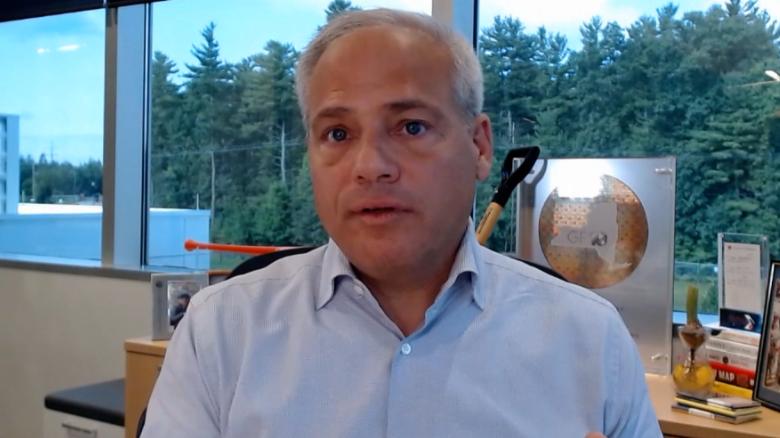
GlobalFoundries CEO on demand for semiconductors
New York (CNN Business)General Motors will shut production at most of its North American plants for a week or two starting next week as the worsening chip shortage takes another bite out of its plans.
GM and other automakers had hoped the chip shortage would be mostly behind them by now. But the surge in Covid cases, especially in Southeast Asia where many of the chip manufacturers are based, has actually created a worsening problem for automakers.
Only a small handful of GM's plants will remain in operation during the pause. Those plants make full-size SUVs and pickups, as well as some of its sports cars, such as the Camaro and Corvette. That's because GM is prioritizing the chips it does have on hand for its most popular and profitable vehicles.
Still, some of its large pickup and SUV production capacity will be affected by the shutdowns.

Get used to high car prices: Auto production isn't returning to normal
The tight chip supply has led to limited inventories of new vehicles at GM and across the industry, which in turn has pushed car prices to record highs. Just about all major automakers have limited production plans as a method to deal with the shortages.
Will Americans wear masks to prevent sickness beyond COVID-19?

Locals line up to get their photos taken in front of a tulip field at Seoul Forest Park.PHOTOGRAPH BY MICHAEL JUN PARK, NAT GEO IMAGE COLLECTION
Americans may be adopting masking habits routine for other global citizens who wear them to block the spread of flu and other respiratory diseases.
BYJILLIAN KRAMER
PUBLISHED SEPTEMBER 3, 2021
The mask felt stifling—suctioned to her face in a way that made it seem difficult to breathe. But Susan Hale Gidlow wore it anyway, walking from her Los Angeles home to the grocery store as quickly as she could, dashing in and out, and breathing a sigh of relief when she was able to take it off.
“I felt a little claustrophobic,” the 60-year-old says. Within weeks, though, she grew to love her mask.
Research has shown that masks offer protection against a variety of respiratory pathogens, including SARS-COV-2, the virus that causes COVID-19. And even as localized mask battles rage across the United States, many people continue to see value in the face coverings that have protected people from COVID-19.
Gidlow is among a growing number of Americans who don’t plan to abandon their masks when the pandemic wanes. They’re pledging to wear face coverings in crowded indoor spaces and near the sick and frail to protect themselves—and others—from getting sick now and in the future.
Used in combination with other mitigation measures—such as hand washing and social distancing—masks could find their place in American culture in the long term.
“Masks forever,” Gidlow laughs.
A recent national poll conducted on behalf of the Washington Post found that nearly 70 percent of respondents plan to wear masks whenever they’re sick, and more than 40 percent say they will don face coverings in crowded spaces no matter what. The poll’s results defied the political polarization that has often accompanied mask wearing: More than half of self-identified Republican respondents plan to wear masks when they’re sick after the pandemic. (About eight in 10 Democrats said the same.)
Sheela Shenoi, an assistant professor of medicine at Yale School of Medicine, admits she was surprised to hear so many people plan to continue wearing masks. “It’s just been such a fight to convince people that masks are effective and can be a valuable tool” to stymie illness, she says.
But Shenoi quickly adds that wearing a mask is “something that we all have the power to do for ourselves.” Masking gives people some control over their health when they can’t control a virus itself. In that sense, she says, “I completely understand why people would want to do it.”
A rocky start
Though they’ve never been widely worn in the U.S., masks have been used to prevent disease spread for more than 100 years. In the late 19th Century, a handful of surgeons began to don face coverings during surgery. In the 1960s, the Japanese used masks to prevent the spread of the H3N2 virus. And in the 2000s, mask wearing became common through much of Asia to protect against the coronaviruses SARS and MERS.
But many Americans were slow to adopt the practice in the era of COVID-19.
Matt Ramirez, a 32-year-old resident of McAllen, Texas, says he wore masks before the novel coronavirus began to spread across the country whenever he traveled on public transit, to ward off any viruses from a fellow commuter.
“I don't want to minimize the awkwardness of wearing it before the pandemic,” he says. “People would move away from me—even move toward people who were coughing—because of the mask.”
When the coronavirus reached the U.S., the Centers for Disease Control and Prevention initially dissuaded Americans from wearing masks, likely in “a knee jerk reaction to conserve masks for the healthcare workers and to not cause a panic,” says Corinne McDaniels-Davidson, an epidemiologist at San Diego State University. “Hindsight, as they say, is 20-20.”
The agency quickly changed its message as evidence mounted that masks prevent infection from spreading. On a May appearance on NBC’s “Meet the Press,” Anthony Fauci, the director of the National Institute of Allergy and Infectious Disease and the president’s top medical adviser on the pandemic, said he thinks people have gotten used to wearing masks.
He added it’s conceivable that “people might actually elect to wear masks to diminish the likelihood that [they’ll] spread these respiratory borne diseases,” like influenza or the common cold.
A typical flu season peaks between December and February and has caused as many as 810,000 hospitalizations and 61,000 deaths each year since 2010, according to CDC data. But during the 2020-21 flu season, the U.S. saw only 700 deaths from the flu. Hospitalizations dropped dramatically, too, to their “lowest recorded since this type of data collection began in 2005.”
The country’s unusually low flu season cannot be attributed just to mask wearing, but the CDC says that wearing masks in combination with hand washing, school closures, reduced travel, increased ventilation of indoor spaces, and social distancing contributed to the decline.
Americans “crushed” the flu because of these mitigation measures, McDaniels-Davidson says.
Meghan Hunter, a 41-year-old resident of Rockland, Maine, says that she used to get “a doozy” of a cold each winter—until last year. And she attributes her health, in part, to mask wearing. Hunter says she plans to continue masking when she’s on airplanes, as well as in airports and other crowded spaces, such as grocery and retail stores, during cold and flu seasons. “I don't miss having colds,” she says.
How masks work
Plenty of viruses are transmitted in ways, such as gastrointestinal pathways, that would make masks ineffective, Shenoi says. Ebola, for instance, is spread when people ingest or come into contact with infected bodily fluids. Masks are most effective against airborne viruses, such as influenza, rhinovirus, or respiratory syncytial virus (RSV)—pathogens that are transmitted through droplets coughed, sneezed, or spit out from an infected person.
Masks work to prevent disease spread in two ways. They block virus-containing droplets from making their way into the air, where they can be inhaled or otherwise infect others, such as by landing in their eyes. “If someone is coughing or sneezing or talking—expelling infectious droplets into the air—mask wearing disrupts that transmission pathway,” Shenoi explains.
Masks also protect uninfected wearers: They act as a barrier to large respiratory droplets—and even some small aerosols—by preventing them from landing on people’s noses and mouths.
Droplets and aerosols are balls of saliva or respiratory fluids that can carry viruses. But droplets are larger—at least the diameter of a strand of human hair, says Jose-Luis Jimenez, a professor of chemistry and aerosol expert at the University of Colorado. They infect a person when they land on the eyes, nostrils, or mouth. They’re visible, “like when someone is excited and they’re talking and you see them [droplets] fly through the air,” Jimenez describes. And they’re easier to protect against: Almost any cloth in front of a person’s face would do the trick, Jimenez says.
Aerosols, however, are much smaller and they linger in the air. “They behave like smoke; they follow the air current,” says Jimenez. Like smoke, they can cause damage when they’re inhaled.
While most masks will offer some protection against aerosols, studies have shown that masks with moderate to high yarn counts and visible raised fibers—like the texture and thickness of a hand towel or lightweight flannel—perform almost as well as N95 masks, the same masks that medical professionals wear during surgeries. (N95 masks are now widely available, and Jimenez recommends that people who want to wear masks purchase them.)
Jimenez says the fit of a mask also makes a difference in how well it protects against airborne viruses. “As healthcare workers know, a mask that fits well is one that leaves a mark on your face when you remove it,” he says. A properly fitted mask seals against the face without gaps.
A 2020 study showed that loosely folded face masks and bandana-style coverings were the least effective in stopping the smallest aerosolized respiratory droplets laden with SARS-CoV-2. But well-fitted masks—including homemade and off-the-shelf cone-style masks—slowed the aerosols down and reduced the number that permeated the fabric, the same study showed.
“We don't necessarily need every single person to be wearing an N95 because, ideally, we’re not just masking: We're doing all of the things that can prevent the spread of disease,” McDaniels-Davidson says. “In general, the best mask is the one that’s comfortable and that you will wear.”
Todd Archambault, a 35-year-old resident of Canton, Ohio, says that he doesn’t love wearing a mask, but he’ll continue to do so after the pandemic is over whenever he’s sick. He often works with older adults, Archambault says, and “I want to do my part” to help others stay safe.
Hunter, the Rockland, Maine resident, says that the pandemic taught her we can’t always determine who is most vulnerable to viruses. “It feels really responsible to keep [wearing masks] if you have symptoms,” she says.
Who should wear masks
Mask wearing is most effective when a high proportion of people are doing it, McDaniels-Davidson says. In that sense, she likens mask wearing to vaccination: “The more people who are vaccinated, the better off we all are in the community.”
Not everyone will choose to wear a mask in the long term. Some may find them bothersome—simply too uncomfortable to wear over the long term. Others may suffer medical conditions, such as emphysema or pulmonary fibrosis, or mental health complications, such as severe anxiety, that make mask wearing untenable or even dangerous. But many people can still derive (and provide) benefits from mask wearing under certain conditions and in certain situations.
Shenoi recommends masks for people who are immunocompromised and who have underlying conditions—those who are most susceptible not only to severe COVID-19 outcomes, but also to hospitalization from other respiratory viruses. Healthy people might consider wearing them in crowded indoor places.
“For these respiratory viruses, we know the danger is indoors,” Jimenez says. He suggests that people wear masks in hospitals or on public transit, such as airplanes.
Jimenez adds that he’s often flown to Spain, where he is from, and “about half the time, I’ve ended up with a cold. Certainly next time I’m going to be wearing my N95 the whole trip.”
Thursday, September 02, 2021
Climate Bankrutpcy
September 2, 2021

By David Leonhardt
Good morning. Remnants of Hurricane Ida barreled into the New York City region, killing at least eight people. And what happens when climate change comes to a small Southern town.

Damage in downtown Fair Bluff.
Fair Bluff is a small North Carolina town in an idyllic setting, amid cornfields and tobacco fields and alongside the verdant Lumber River. But Fair Bluff’s setting may also be dooming the town.
Like much of eastern North Carolina, it sits on a coastal plain, one that is increasingly vulnerable to flooding because of the rise in extreme rainfall and severe hurricanes spurred by climate change.
Almost five years ago, Hurricane Matthew flooded downtown Fair Bluff with four feet of water, buckling roads and destroying buildings. Three years ago, Hurricane Florence brought more flooding.
This summer, my colleague Christopher Flavelle traveled to Fair Bluff to see how it was recovering, and the answer is: not well. The high school, the grocery store and other shops never reopened after Matthew. Downtown storefronts sit vacant, with trash strewn about. The only local factory closed, too. The population, about 1,000, fell by half. Al Leonard, a town official, says the town may soon eliminate the police department — as well as his job.
“What started as a physical crisis has become an existential one,” Christopher writes.
Fair Bluff offers a worrisome glimpse into the future. The increasing frequency of extreme weather has left countless towns, in the U.S. and around the world, vulnerable to both physical devastation and economic insolvency.
Fair Bluff’s old Y.M.C.A.
In California, wildfires have destroyed much of several towns, including Greenville and Paradise. In Florida, a 2018 hurricane wrecked more than 80 percent of the homes in Mexico Beach. In Colorado, Boulder County has sued Exxon Mobil and another oil company over a devastating 2010 fire, saying that they should “use their vast profits to pay their fair share of what it will cost a community to deal with the problem the companies created.” And in Louisiana, North Carolina and other states, flood-prone towns like Fair Bluff are withering.
“Their gradual collapse means more than just the loss of identity, history and community,” Christopher explains. “The damage can haunt those who leave, since they often can’t sell their old homes at a price that allows them to buy something comparable in a safer place.”
What to do?
Many towns try to start again, often with help from government money. Fair Bluff is among them, with town officials hoping to rebuild downtown in a less flood-prone area and attract new businesses. Yet some residents have understandably decided to leave, also with help from government money. Rebuilding isn’t just expensive; it also often involves investing in a place at obvious risk of future destruction.
As the journalist Alexandra Tempus recently wrote for Times Opinion:
We are now at the dawn of America’s Great Climate Migration Era. For now, it is piecemeal, and moves are often temporary. … But permanent relocations, by individuals and eventually whole communities, are increasingly becoming unavoidable.
Some of the destruction from climate change is now unavoidable. The Earth has already warmed too much and will continue warming in the years ahead because of greenhouse gases. But there is still a very wide range of outcomes, from unpleasant if often manageable to truly horrific.
The House and Senate are putting together legislation meant to slow climate change, partly by subsidizing the use of clean energy and penalizing the use of dirty energy. To pass, the bill will need nearly unanimous Democratic support; congressional Republicans have signaled that they are likely to oppose it universally. Climate experts believe the bill could have a significant impact on greenhouse-gas emissions, especially in the electricity sector.
Cleaning up Fair Bluff’s old downtown will cost an estimated $10 million, which the town cannot afford.
For some places, though, it may already be too late to avoid a bad outcome. One of them is Seven Springs, N.C., a town about 100 miles northeast of Fair Bluff that Christopher also visited this summer. After each major flood in recent years, more people have left, and the tax base has shrunk further. Today, the town’s population is down to about 55.
Stephen Potter, the mayor, is hoping to replace some of the lost property tax by turning an empty lot into an overflow parking lot for some of the R.V.s that visit a nearby state park. “I really don’t want to be the mayor that presides over the death of Seven Springs,” Potter said.
For more photos from Seven Springs and Fair Bluff — as well as reporting from Princeville, N.C., the first town in America chartered by freed slaves, which is also threatened — click here.
The latest on extreme weather:

Flooding on Queens Boulevard. The National Weather Service issued a flash flood emergency in New York City for the first time.Dakota Santiago for The New York Times
Remnants of Hurricane Ida barreled into the New York City region, halting rail service and flights, and raising a tornado warning in the Bronx. At least eight people have died.
Buses turned into amphibious vehicles and subway stations roared with water: Here are the scenes from New York.
Fuel shortages are compounding the misery in Louisiana, which endured its third day of power outages after Ida.
Has climate change altered your life? Share your story with The Times.
Wednesday, September 01, 2021
A Broken World

Volume 40 Issue Nine September 2021
Phone: 920-887-2626 Internet: http://www.lasttrumpetministries.org
“For if the trumpet give an uncertain sound, who shall prepare himself to the battle?” I Cor. 14:8
A Broken World
“And I heard a great voice out of heaven saying, Behold, the tabernacle of God [is] with men, and he will dwell with them, and they shall be his people, and God himself shall be with them, [and be] their God. And God shall wipe away all tears from their eyes; and there shall be no more death, neither sorrow, nor crying, neither shall there be any more pain: for the former things are passed away. And he that sat upon the throne said, Behold, I make all things new. And he said unto me, Write: for these words are true and faithful.”
Revelation 21:3-5
Each and every day the news reports we see and hear barrage the masses with bad news. In California, videos and pictures of wildfires evoke apocalyptic imagery. Reports from the United Nations promulgate dire predictions about climate change. Gut-wrenching reports from a devastating flood in Tennessee prompts feelings of deep sorrow. All across the western United States, the ground is dried and cracking as a historic drought refuses to relinquish its stranglehold on a huge portion of our country. The coronavirus pandemic drags on and on with no end in sight, causing people to grow restless and hostile. A poorly executed withdrawal of the United States military forces from Afghanistan presents us with heartbreaking scenes as throngs of people desperately try to escape the brutality of the Taliban even as Isis launched a gruesome terrorist attack at the airport in the Afghan city of Kabul. An earthquake pummeled Haiti, leaving death and destruction in its wake. Hurricane Henri brought heavy winds and rainfall to the New England portion of the United States, and Hurricane Ida slammed into the state of Louisiana and the Gulf Coast.
These are the events of just the past month of August 2021. So much is happening, and we have come to expect one tragic event after another in this modern world. Consequently, this prevailing trend is having a profound impact on the hearts and minds of the people. On August 22, 2021, The Atlantic published a piece with the headline, “All these simultaneous disasters are messing with our brains.” The article cites a researcher from Palo Alto University by the name of Joe Ruzek. According to Ruzek, people have begun to lose their ability to cope with a constant string of disasters. “There is a sense in which people’s coping reserves are sort of finite entities. So if you have to cope a whole lot, you can kind of diminish your resources.” (1) For some, the current events of our day are a cause for despair, while others have become increasingly desensitized. People “are just burned out. They’ve had enough atrocity and stress for the time being, and they just don’t want to hear any more of that,” said psychologist Steven Taylor of the University of British Columbia in Canada. “My concern is that many people are just tuning this stuff out,” he said. (2) Thus, we see an increasing number of people are losing their ability to empathize and care for others. Remarkably, this trend corresponds with Bible prophecy. In II Timothy, chapter 3, the Apostle Paul describes the “perilous times” of the “last days.” One of the characteristics of the people during this period of time is that they would be “without natural affection.” (II Timothy 3:3) Furthermore, our Lord and Saviour Jesus Christ warned of the events that would precede his coming. In Matthew 24:12, Jesus declares, “And because iniquity shall abound, the love of many shall wax cold.” As iniquity continues to abound in our world, violence and hostility have become firmly entrenched in the United States of America.
The Fabric Of Society Fraying At The Seams
America has a violence problem. Against the backdrop of the Covid-19 pandemic, which has tested the patience of the American people, a troubling trend has emerged. The uptick in crime was big news last year, and unfortunately, the problem only continues to intensify in 2021. A report from the Council on Criminal Justice published on July 29, 2021, found that homicides in the United States during the first six months of 2021 increased by 16 percent from the same period of time last year and increased a whopping 42 percent in comparison to the same time period in 2019. (3)
Subscribe to:
Posts (Atom)