Public and private institutions must recognize digital credentials as equivalent to physical ID cards
Nov 16, 2026, 8:05 am EST | Ayang Macdonald
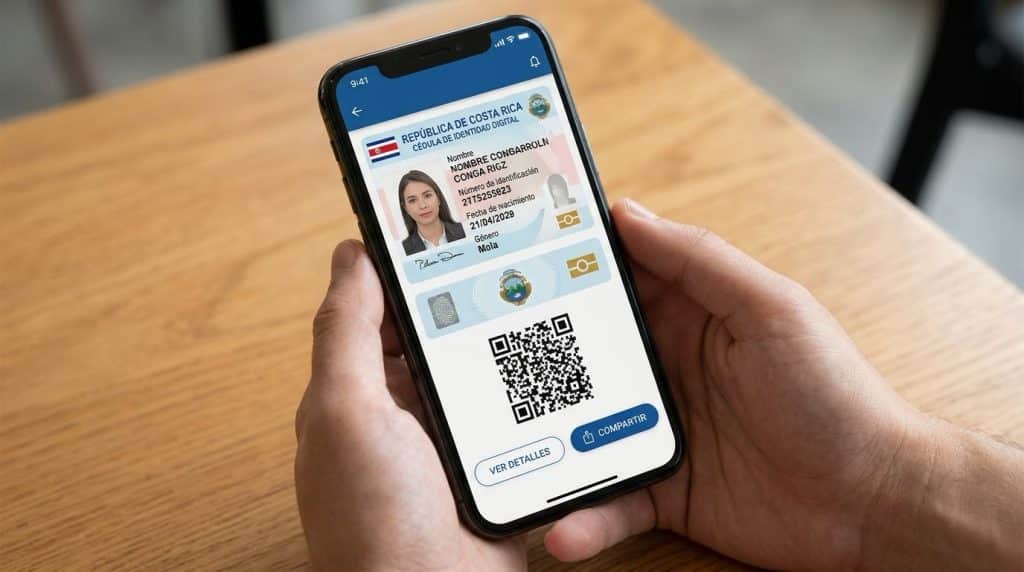
From January 1 next year, public and private sector institutions in Costa Rica will be required to accept the smartphone-based digital version of the national ID card as a legal form of identification for service delivery to citizens.
This is according to a recent announcement from the country’s Supreme Electoral Tribunal (TSE), the government body that oversaw the development of the digital ID application.
Known officially as Identidad Digital Costarricense (IDC), the digital ID was launched in September last year, with the government presenting it as an alternative to physical identity documents with which citizens can access a wide range of services. The app was developed by GET Group in partnership with local firm RACSA.
That acceptance by institutions in the country will become mandatory in line with Judgment 1120-E7-2026, issued by the TSE on February 11. This instrument amended the legal framework governing the identity system, making acceptance of the digital credential obligatory from the start of next year.
After the deadline, institutions will no longer be permitted to demand a physical ID card as additional identification when a citizen presents the digital credential.
Since its launch over a year ago, the IDC has continued to grow in adoption figures, with 107,243 people having made a request for it as of November 1, according to the TSE.
After the launch, institutions in the country had been given a transition period to adapt to the new changes. The TSE rejected a request to exempt police from accepting digital IDs but partially granted the judiciary’s request for more time to adapt, extending the compliance deadline to January 1, 2027. The tribunal noted that the IDC is functionally equivalent to the physical card and sufficient for identification, including during police functions, which it classified as administrative acts.
How to get the digital ID
The TSE says to obtain the digital ID, one must have the physical ID card, and an application can be sent through its official website.
While on the website, applicants must “enter their identification number, complete a verification process and provide a valid email address to continue with the activation steps.”
After paying the fee of 2,600 colones (about US$5) via a bank card, an applicant can then download the application and complete the activation of their digital ID, which is protected by face biometrics and a PIN code.
“Among the advantages that the IDC offers citizens are its portability, which allows it to be carried on mobile devices in a practical and accessible manner; the use of international standards, which will facilitate, in the future, identity verification inside and outside the country,” the TSE said in its announcement.
The credential is valid for four years, and older adults are exempt from the application fee.
Growing push to give digital credentials equal legal status
The national digital ID is part of ongoing digital transformation efforts in Costa Rica. It also advances the country’s vision that digital ID must not only be issued, but it must be accepted and used for access to public and private sector services.
This approach is seen in other countries where governments are taking measures to give digital credentials equal legal status to physical cards, asking institutions to mandatorily accept them.
Similar steps have been taken in Spain, where institutions must support the digital DNI, and Peru, which granted the digital DNI the same legal standing as the physical credential. Pakistan is another example where NADRA has clarified that digital IDs must be accepted, as is Azerbaijan where digital identity information carries the same legal weight as physical cards. Jordan’s Central Bank has likewise directed banks to accept the Sanad digital ID in place of physical cards for identity verification.
These efforts also point to the growing recognition by nations that issuing a digital ID credential is one part of deployment. Institutions must also change procedures, infrastructure, and verification processes so that the credential can become practically useful in the hands of its holders.


No comments:
Post a Comment